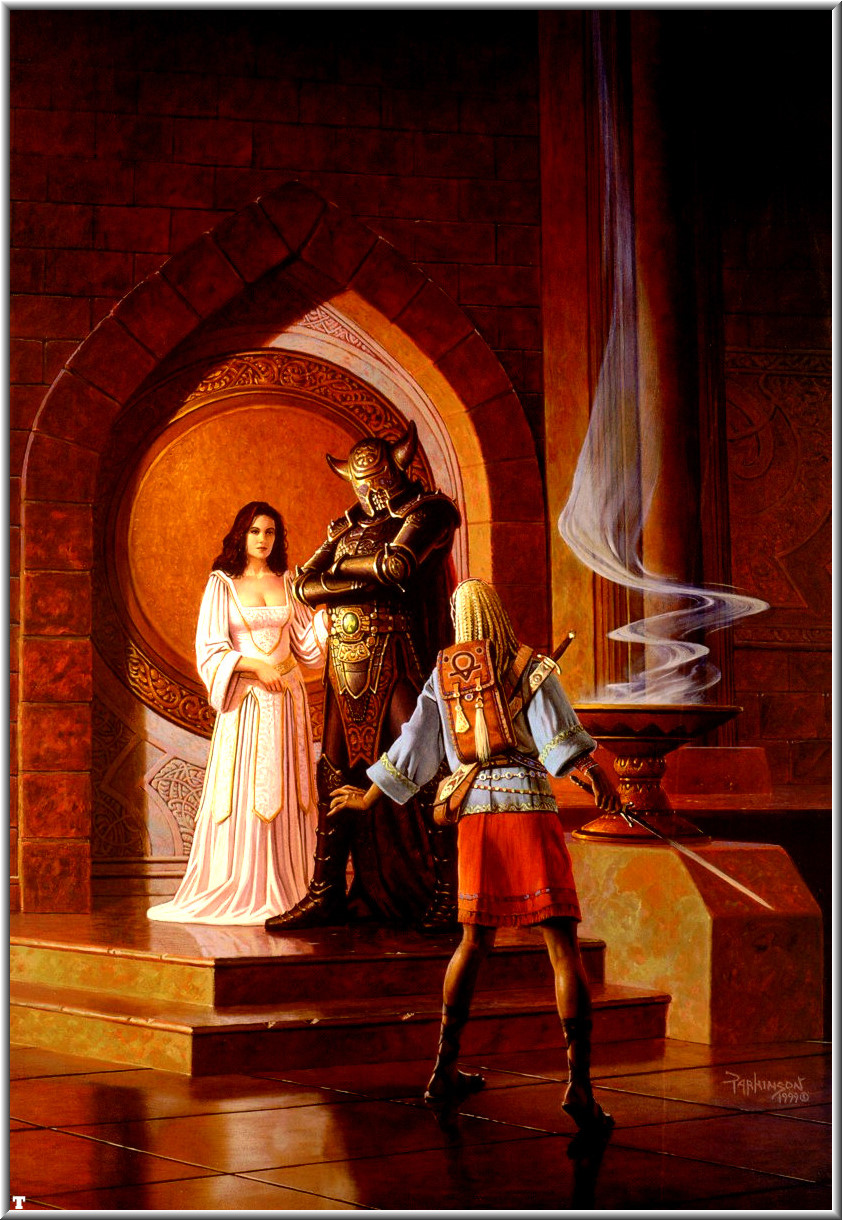
Patricia Briggs was born in 1965. Her joy in storytelling manifested itself early, and scaring her friends (including her husband Mike) was one of her funner hobbies. Patricia kept her story-telling abilities alive through college and her life in Chicago. When she and Mike moved to Montana she got the peace and quiet she needed to finally sit down and write, and she was able to publish Masques in 1993. Then Steal the Dragon followed as her next novel. After that one novel has followed the other. In the Sianim series Wolfsbane was the last one published thus far in 2010.
For best effect, the books should be read in this order: Masques, Wolfsbane, Steal The Dragon, When Demons Walk.
My version of Masques is the reworked one. Patricia Briggs writes a foreword warning the reader of this. Due to the years that had passed since the first edition of Masques, Briggs and her editor felt it appropriate to remove some of the traces of an author’s first attempt. The book is supposed to be full of clichés, but I’m lucky because I would not recognize a cliché if it bit me on the backside of forever.
Geoffrey ae’Magi is gaining in power and followers. Ren, the spymaster of Sianim sends Aralorn off to see about a death-threat to the magician. At the time, Aralorn felt that switching places with one of the other slaves would be a good idea. With green magic as hers, she is able to change her physical appearance. But while at a party the Archmage is holding for various dignitaries, Aralorn changes her mind. She has been placed in a cage wearing the illusion of a snowfalcon form the ae’Magi has created. But one of the visitors seems to see through the illusion. The King of Reth comes up to Aralorn asking if she is in need of help. She says no.
After the party the Archmage asks Aralorn a few questions. His magic is such that he can do the most horrendous things to people and still have them adore him. Aralorn is not sure how long she will be able to endure her stay with him. When she discovers that his plans for her include her demise, she decides to run.
With her companion Wolf and her war-horse Sheen, Aralorn decides to find a way to fight the great and beloved Archmage’s evil magic.
Wolfsbane is a tightly-coupled sequel to Masques, and won’t make much sense by itself. Masques had not been a hit and Steal the Dragon hadn’t done all that well either. Briggs wrote Wolfsbane for her own enjoyment and left the book on her shelf. Eventually, she brushed the dust off it, and got it published.
Wolf has been missing for a few weeks and Aralorn has been dreaming dreams of his childhood. Someone seems to be looking for him in them.
Aralorn’s father has died, and Aralorn goes to attend his funeral. She has been gone from Lyon’s keep for ten years and finds it extra difficult that the circumstances are so sad. When she sees her father’s body, Aralorn discovers that Lyon is not quite dead. Instead, some kind of black magic seems to be involved.
Steal the Dragon is the second book Patricia Briggs wrote. It wasn’t a great hit at the time, but did better than Masques. It has since become more popular.
Steal the Dragon is set a little later than Wolfsbane. Geoffrey ae’Magi is already dead, but not for very long.
In Sianam Ren, the spymaster, decides to send Rialla (former slave from Darran) and Laeth (brother to an important Lord in Darran) to Lord Karsten to try to prevent another murder attempt. Both are highly motivated to do so (Rialla after some convincing) for different reasons.
When they get to Lord Karsten’s keep they play their roles as slave and master. When another attempt at Lord Karsten’s life occurs, they become worried for his safety. Then Rialla’s old master turns up at the keep and the two of them realize that they have probably stepped into a hornet’s nest. It turns out they are correct.
When Demons Walk seems to be a while after the previous three installations in the Sianam series. Like the others, When Demons Walk is light and entertaining reading. Patricia Briggs has her own style that is apparent in all of her novels. She is a good author, the quality of her writing is solid and her characters entertaining.
Sham is an orphan from one of the take-overs of the Prophet of Altis. The Cybellians have taken over Southwood, and Sham is left to thieving. Her master (she is a magician/wizard) does not approve, but he does recognize that other venues might be more dangerous.
Sham is surprised when she meets up with the Lord of Southwood – Lord Kerim. He is more likeable than she had thought, but still one of the enemy. But when attempts are made at various people’s lives (which include killing her master and trying to kill Lord Kerim), Sham put enmity aside and gives a helping hand in finding the culprit.
Hmm. All four books in the Sianim series are interesting additions to Briggs’ archive. I liked them. Like I said, Briggs does solid work. Michael Enzweiller’s maps are a great addition to her website.
Musical writers. What a treat they are. Anne Bishop is one such writer, one who knows how to make all of her chords fit together into a song that satisfies the reader. She manages to portray the darkness in people without stepping into the land of horror. I love dark fantasy when it is performed like this.
Like all of Anne Bishop’s stories, Ephemera is character driven. Generally two or three of them are three-dimensional, while the rest end up complementing the main characters. Ephemera comes from an idea of our outer world reflecting our inner one. What if that were literal? Playing with that idea brought about the Ephemera world (Reading Cafe interview). As we discover in reading these books, the world of Ephemera is ephemeral (transitory). One can never know where one ends up, seeing as one’s heart shows the way.
SEBASTIAN (2007)
German cover
“Long ago, in a time that has faded from memory, a mother’s tears forged the bridge that, ever after, connected the power of the living, ever-changing world to the human heart. – Myth”
Sebastian is a love story, but more than that it is a story about the choices we make. Do we dare to follow our dreams, or will we make “safe” choices? In the end it might not really matter, because the choices we make could very well all be the ones we really want.
Sebastian is an incubus, an incubus who has begun longing for something more than the life he is living right now in the Den of Iniquity. The Den of Iniquity is a place of ever-lasting carnival, a place where people come to fulfill those dark desires they have.
You can relax if you are worried that we are being cast into a place where the sex and violence is explicit. While the Den of Iniquity might well be a place where that is the case, Anne Bishop has been kind enough to keep us as readers away from the details.
Anyways, back to Sebastian. The Den of Iniquity has been his home since he was about 15. His past was not a good one with a succubus mother and wizard father. Sebastian’s mother left early on and his father left Sebastian’s care to others, people who were afraid of incubi. But Sebastian has turned out pretty well, thanks to Nadia, Belladonna and Lee (adoptive family). They have shown him that there is sunshine in a person. Now he wants someone to love.
BELLADONNA (2008)
Australian cover
“Heart’s hope lies with Belladonna.”
The Eater of the World is once more loose in Ephemera, free to wreak havoc where it sees fit. Dreams are invaded, monsters set free and lives are becoming darker due to its influence.
The only hope lies with Belladonna. Glorianna Belladonna is of the old blood, the blood of the Guides and Guardians. Her heritage is one of light and darkness. Only through the combination of the two is there a possibility of winning.
Unfortunately, Belladonna and Lee do not have all of the answers to her search for a solution to the Eater. She sends out a Heart’s Wish to Ephemera with the hope that someone will come with what she needs to save Ephemera.
In a sense that says it all. What price are we willing to pay to save the ones we love? I have no idea myself. In the world of fantasy people are willing to go to extremes to save the world and not just those close to themselves. Sometimes the price could end up being horrendous.
BRIDGE OF DREAMS (2012)
Australian cover
Anne Bishop pulls it off again. This time we get to hear more about Lee.
Ever since Glorianna Belladonna became Belladonna in every sense of the word, Lee has been frustrated, hurt and angry. Part of his anger is at Glorianna for placing herself in this position and for not going back to how she was previously. Another part of his anger is toward Michael, the Magician, for giving Belladonna the chance to make her choice, and for stopping him when Lee wanted to jump in and save her. Quite a bit of his hurt is toward the relationship that has developed between Michael, Glorianna and Sebastian. Why was Sebastian the one to call Belladonna back and not Lee? It seems unfair. Lee feels unwanted, and unable to come to terms with the way things have turned out.
When he stumbles upon wizards trying to invade one of Belladonna’s landscapes, Lee uses a one-shot bridge taking the wizards with him. He ends up in a city called Vision having to endure torture and the insidious whispering of the wizards.
Danyal, the Shaman, is sent to Vision to figure out what needs to be done to save the city from those places that no Shaman is able to see any longer. Shamen are like the Landscapers in that they take care of their landscapes. But unlike Landscapers they do not seem to have access to Bridges. Upon meeting up with other ways of doing things, Danyal is about to have his beliefs about the world challenged.
So, what can I say about Bridge of Dreams? I liked it. I like Anne Bishop’s version of the darkness that lives in all of us. Our shadows balance out the light in us. When we accept both sides of ourselves our potential becomes greater. All three books in the Ephemera series (trilogy?) follow the pattern of Anne Bishop’s other novels. I guess most authors have a unique style of writing (much like musicians), and sometimes that style works. In Bishop’s case I find myself embracing and enjoying her characters. Getting people to care about the characters in a novel seems to be what being an author should be about.
The Pip and Flinx series has spanned 35 years which is quite a long time to follow a series. Alan Dean Foster has written a typically young adult series. They are quite innocent and free of explicit sex and violence. I guess you could say that the Pip and Flinx series is fairly wholesome. Thankfully, Flinx is no angel. He is, however, a good person – for a given definition of good.
The series begins with Flinx as a child on the Planet Moth and ends with Flinx as an adult on the planet Cachalot. He has had many adventures travelling around the galaxy trying to figure out who and what he is. We are in the science fiction world with loads of drama and very little realism. I guess that is part of the charm of the series. Sometimes there is more fantasy in science fiction than there is in fantasy itself. All in all, the Pip and Flinx series has been an enjoyable journey. In spite of the writing being fairly average a lot of the time, I got caught wondering how the whole thing was going to resolve itself.
Flinx (later discovers his name is Philip Lynx) appears for the first time in For Love of Mother Not (1983). For Love of Mother Not was written after the first three books in the series, but for you as a reader it would be a good idea to read For Love of MotherNot first as it explains Flinx’ background.
At the time of For Love of Mother Not, Flinx is not aware of who he is or where he is from. On the planet Moth Mother Mastiff buys Flinx at an auction and raises him as her own. It does not take long for them to discover that there is something unusual about Flinx, and both decide that it is a good idea to keep Flinx’ erratic abilities under wraps.
One night Flinx wakes hearing an emotional distress signal. His empathic abilities are reading loud and clear for once. He goes out into the rain to see who is in trouble and discovers an Alaspin dragon that he names Pip. We never find out how Pip ended up on Moth, nor is it all that important. Pip’s venomous spitting abilities come in handy when the two of them go after Mother Mastiff and her kidnappers.
After having read For Love of Mother Not you go back to the original reading order. Because For Love of Mother Not was written so much later than The Tar-Aim Krang (1972) you will probably notice a couple of discrepancies. You will survive, believe me.
As The Tar-Aim Krang begins Flinx and Pip are still with Mother Mastiff on Moth. They discover a treasure map on a dead man. Flinx meets Bran Tse-Mallory (human) and Truzenzuzex (thranx) for the first time, while acting as their guide. Flinx and Pip end up travelling with the two to the Blight. To get there, they need to go by space-ship. Flinx’ empathic abilities will play an important part in the group’s discoveries.
Foster is not big on explanations of how Flinx and the rest travel from one solar system to another. To him the plot is the important part. Flinx and Pip’s interactions with others and their adventures are what drives this story up, up, up and away.
Flinx is still searching for clues to his ancestry in Orphan Star (1977). During his unwilling stay with the merchant Conda Challis, Conda hinted heavily about Flinx’ parentage. Flinx’ chase brings him into contact with the female Thranx, Sylzenzuzex, who just happens to be the niece of Truzenzuzex. Eventually, the pair of them end up on the edicted planet Ulra-Ujurr, where they meet a highly telepathic race (Ulra-Ujurrians).
Flinx and Pip now have their own space ship – Teacher – making the search for Flinx’s parents a whole lot easier. On their way they acquire a new pet by the name of Abalamahalamatandra (Ab for short). In The End of the Matter (1977) Bran and True turn up out of the blue looking for Ab. What a coincidence. That is the way it is with some authors. The coincidences line up. The human Skua September tells Flinx something of the Meliorare Society and the Qwarm (assassins) are sent after Flinx. Each book takes us a step closer to the end of Flinx’s search.
Love is in the air. Flinx in Flux (1988) shows us a new side of Flinx. I’m hopelessly in love with you, he tells Clarity Held. It cannot be, I’m an experiment. OK. So I exaggerate a bit. But he did tell Clarity Held that due to his experimental state, he felt that the two of them could not be an item. Trouble appears on the horizon in form of Clarity’s boss. He wants what Flinx has, even if he has to kidnap him. But Flinx has these strange abilities, and it might be a bad idea to be mean to him.
By now there are a whole lot of people who want to get to Flinx. There are the authorities who want him for various crimes. The Qwarm want to assassinate him and a few criminal bosses want to use Flinx. As we enter the world of Mid-Flinx (1995) Flinx has become quite a popular person. Maybe the saying “All PR is good PR” isn’t all that correct. To get a break Pip and Flinx go to Midworld. But breaks from trouble only happen to people who are not in adventure novels. On this semi-sentient planet Flinx and Pip learn to respect this dangerous planet, and also find that through this respect they have some protection when the baddies come to get them.
In Reunion (2001) Foster once again throws his heroes Pip and Flinx around the galaxy in search of an answer to Flinx’s heritage. Somehow Flinx thinks that this will make his choice of saviorhood or not easier. Together Pip and Flinx discover more about the Meliorare Society, the eugenicists who experimented with Flinx and other children in their search to create the perfect human.
Due to the information they uncover, Flinx and Pip go to Aan space where the walking lizards live – enemies of both humans and Thranx. Once there, Flinx’s unusual abilities come in handy in uncovering information and keeping himself hidden from the Aan – who would like nothing more than killing a human.
In Flinx’s Folly (2003) Flinx discovers exactly what the Great Emptiness (mysterious force) approaching the Milkyway is. Getting that knowledge almost tore his mind apart, and he would like to avoid repeating the experience. Like all mysterious things, the Great Emptiness has its set of followers. The cult of the Order of Null is set on stopping Flinx permanently. Extinction of life is the goal to have it seems. Fortunately for Flinx, he has loyal friends who want to help him in any way they can. One of these is the love of his life, Clarity Held. I wonder if she really holds clarity.
Flinx is tired of the expectations and just wants to go somewhere peaceful to think. His AI-space-ship Teacher suggests the planet Jast. Jast is where the action in Sliding Scales (2004) takes place. As you’ve probably understood by now, the Pip and Flinx series isn’t so much about Flinx’s search for an identity, nor is it all that much about winning over the Great Emptiness. These books are mainly about the trouble Flinx gets into hopping from place to place.
On Jast three seemingly incompatible races live together in peace. The Vssey, Aan and humans live in apparent harmony though apart. When Flinx upon arrival gets attacked by one of the Aan, he loses his memory and ends up in an Aan artist community. A Vssey rebellion is in the offing, and Flinx and Pip get caught in the middle of it.
In his search for a super-weapon that might destroy the darkness, Flinx has problems with his space-vesse,l and the Teacher has to make an emergency landing on an uncharted planet. In Running From the Deity (2005) Flinx experiences for the first time what it is like to live without his headaches and his empathic abilities going haywire.
The prime directive of the Commonwealth is to not interfere with primitive species, especially when using technology. Flinx breaks that rule and ends up being worshipped as a god. These compatible beings aren’t any nicer than any other species, and two opposing sides on the planet both want Flinx for their own. This leaves Flinx running again.
In 1973 Foster wrote Bloodhype. Flinx appears in the latter half of the novel. In a timeline sort of sense this action and humor filled novel should appear after Running From the Deity and before Trouble Magnet.
Bloodhype is a powerful drug that addicts you the first time and kills you if you do not continue with it. A pretty good deal for the producers, I would think. Pip and Flinx end up trying to stop the Bloodhype industry and end up on the planet Repler. We get to meet the Vom and a revived Tar-Aiym Krang in psionic battle, with the Tar-Aiym Krang more or less on the Commonwealth’s side. So, drugwar and psionic battle make for an interesting scifi adventure.
In Trouble Magnet (2006) a group of street-kids need to be rescued several times by Flinx. Once again Flinx has been side-tracked from his mission to find a solution to the problem of the Great Emptiness. As such, Flinx’s visit to Visaria seems part of a tendency to delay the ending of the series. Flinx’s aim seems to be to see if there is still any good out there worth saving, but Foster did not convince me of those intentions. Not one of his better ones.
With Patrimony (2007) Foster is finally back on track, both in terms of the quality of his writing and with the storyline. Oh, well. What would writers do without faithful readers (or suckers as anyone else would call us)? Flinx and Pip go to the planet Gestalt to follow-up on a clue they received in Trouble Magnet.
In showing his face, Flinx has once again come to the attention of the cult of the Order of Null. This time they are not about to fail in destroying him. Flinx is tracked and finally shot down in a river. His native guide is severely wounded but Flinx and Pip are OK. They are discovered and saved by the native Tlel. Together dangers are faced and Flinx discovers what he has wondered about his father.
Flinx Transcendent (2009) is the last story in the adventures of Pip and Flinx, or the last three stories in one novel. The first part of the story sees Pip and Flinx on the Aan home world. Flinx’s interactions with a young Aan are well-paced and well written.
Flinx is once again with the love of his life, Clarity, and his two friends, Bran and True. Once again, the Order or Null are after Flinx, and he will need the help from all of his friends to survive their attention.
And finally, Flinx faces the Great Emptiness that is speeding its way across the universe towards our galaxy. Flinx still does not know how to defeat it, but fear not, a solution will arise.
And so our journey with Pip and Flinx ends, or maybe not. The Commonwealth is a large place, and while Flinx might not again take main stage, he might very well appear in a smaller role – at least according to some of the speculations out there. I for one am finished with the Commonwealth.
ADAPTATIONS
Tar Aiym Krang (2M) An experiment with sequencers by Mark Earll Music.
Krang (aka Tar-Aiym Krang) music group mentioned by Wikipedia.
Check out University of Wisconsin – Madison’s article on how researchers have taken Leopold’s field notes and reconstructed a “soundscape” of how the chorus of birds must have sounded before all of our modern sound-intrusions.
If there is one thing in this world that has inspired the world of nerddom, it has to be the fantastical writings of J.R.R. Tolkien. While I’m not a Tolkien nerd/geek/fan/cult-member, I understand those who are. I mean, I’m writing a blog mostly about fantasy and science fiction – and I love doing the digging necessary for each article.
Tolkien did not only write “high epic fantasy”. He was first and foremost a Professor of Anglo-Saxon at Oxford. You can see a list of his published material at the Tolkien Library website.
While working as a lexicographer on the New English Dictionary, Tolkien began working on the elven language (primarily based on Finnish and Welsh – go to The Elvish Library to get your Tengwar baptism). At the same time he presented his The Fall of Gandolin. The Fall of Gandolin represents the beginning of what later became The Silmarillion. He ended up at Oxford in 1925, and it was after this that the work on first The Hobbit and then The Lord of The Rings began. (Tolkien Library – biography)
The Hobbit was a hit, making it easier for the publisher to contemplate publishing The Lord of The Rings. But for economic reasons, it was decided that three volumes were necessary. The three volumes were The Fellowship of the Ring, The Two Towers and the Return of the King. My copy is the omnibus containing all three novels and the appendices at the end, appendices that are quite a bit of fun.
Generally, I try to analyze what it is about a book that makes me like it. With The Hobbit it was the adventure of the tale. The Lord of the Rings is rather more difficult to pin down. Part of my liking has to do with the quality of the work. Tolkien nit-picked at details until they fit into his Middle-Earth world. The likeability of all of the characters also plays a great role. Even the “baddies”. The way the story is told, jumping from place to place is frustrating at times but also makes a lot of sense. I absolutely hated it when Tolkien broke from one adventure when things were at their most critical, to visit someone else where he had left them off. But it did keep me reading. I remember the first time I read The Lord of the Rings. I stayed up all night to get through it. Once I get going, The Lord of the Rings is difficult to put down. I have no idea how many times I have read this book, but I have gone through it a few times.
THE FELLOWSHIP OF THE RING
Each book is divided into two parts. The Fellowship of the Ring consists of I: The Ring Sets Out and II: The Ring Goes South.
Bilbo is having his 111th birthday party combining it with Frodo’s 33rd. The whole Shire is looking forward to the celebration as there will be gifts for everyone and enormous amounts of food. As ordered, Gandalf shows up with fireworks for the party.
Bilbo is going to give up the ring, but he is finding it more difficult than he had thought. Somehow, it ends up in his pocket no matter what his intentions are. That is one of the problems with the ring. Once it chooses you as an owner, it will use you up until it feels like letting you go. Now Bilbo has to fight his own desires. In the end he manages to leave the ring with Frodo, his nephew, and Bilbo leaves the Shire with Gandalf.
Originally, the ring had belonged to Sauron. Sauron is a wizard who has gone over to the dark side (like Darth Vader in Star Wars). Now that he has amassed quite a bit of power, he wants his ring back and has sent his minions to search for it. The search has led him to the Shire. Gandalf returns to warn Frodo that he needs to leave the Shire. He does so, and ends up in the company of his friends Sam, Pippin and Merry. They go via the Old Forest to avoid whatever is looking for them.
The Old Forest is ruled by Tom Bombadil. Thankfully, he keeps a close watch over his kingdom and manages to be there for the hobbits when they need him. With his assistance the hobbits are able to get through the Old Forest. Their journey carries them through Barrow-Downs, Bree and Weathertop.
The four hobbits learn quite a bit about themselves, their strengths and weaknesses. Their loyalty to each other increases with their trials. Middle-Earth is not exactly a paradise, free from dangers. Once the Shire is left behind, danger seems to be the word of the day for this little troup. At Bree the hobbits meet up with a ranger called Aragorn. Together, they test the bond between human and hobbits and find out what they all are made of. Eventually, the gang manages to arrive at Rivendell, one of the homes of the elves.
A well-earned rest is taken at Rivendell. Elrond, the elven-leader at Rivendell convenes the Council of Elrond. At the Council, reports are given, and the decision as to what needs to be done next is taken. They decide that the One Ring must be destroyed and once again the hobbits set off. This time there are nine people who set out.
THE TWO TOWERS
As with The Fellowship of the Ring, The Two Towers also consists of two books. Book III is The Treason of Isengard and book IV The Ring Goes East.
This is when Tolkien begins to get seriously annoying. Sadly, he has to because the company has split up and we need to know what happens to each party. Frodo has left the Fellowship and gone down the road he thinks is necessary. Along with him went Sam. For now, we learn very little new about them, but we will later on (of course). This part of the story belongs to Merry and Pippin and the important part they play in furthering the plot.
The group gets split even further. Merry and Pippin are taken by the Uruk-hai. The rest have to make a decision. Try to find Frodo and Sam or follow Merry and Pippin. Merry and Pippin it is. Fortunately for Merry and Pippin, their stay with the Uruk-hai is not an extended one. After their escape they come to Fangorn forest and the Ents. Treebeard’s depiction above is one of the coolest ones I’ve come accross yet. Treebeard is the leader of the Ents, tree-people who have taken a looooong rest (for some of them a permanent one).
Aragorn, Gimli and Legolas come accross tracks that remind them of hobbit feet. They follow them into Fangorn and meet Gandalf again. Meeting him is a shock and a surprise (hah, hah, hah – not telling why). Together they rouse the armies of Rohan and all of them travel on to Helm’s Deep where they are needed.
In the meantime, Frodo and Sam continue on their journey toward Mordor. Who should appear but Gollum. His attraction to the One Ring is strong and he cannot help being pulled towards it. Frodo and Sam get him to promise to guide them to the Black Gate of Mordor.
Once they get to the Black Gate, Gollum finds it easy to convince Frodo and Sam to follow him to a secret entrance into Mordor. By going there, they will avoid guards. As they keep on going, the three-hobbit-group meets up with Faramir and his Rangers. The Rangers help them on their way. Faramir warns Frodo and Sam that Gollum might know more about the secret entrance than he is telling. And he does. Does he ever. But then Gollum is true to the nature that has become his. Possession of the One Ring is all that matters to him. Means justify the end, and what an unpleasant set of means he has awaiting the two hobbits.
THE RETURN OF THE KING
In our last book of The Lord of the Ring trilogy we find the books V: The War of the Ring and VI: The Return of the King.
The Lord of the Rings is not a trilogy for the faint-hearted. From what I’ve heard, that goes for the movies as well (I have not seen them). There is violence, plenty of violence and death. As you have found thus far, people die along the way. How many of these heroes will survive, is not certain at all. But what most of you already know, due to all of the media coverage of the films, is that some of our heroes will make it – all the way to the very end.
But before we get that far, war beckons in another land. A horde of Orcs are attacking Gondor and the people of Gondor are desperate for help. The goal of Gandalf and Aragorn and the rest is to get there in time to make a difference. But when the dreaded Witch King of Angmar arrives on the scene with even more help from Mordor, nothing is certain.
As you will see when you read The Return of the King, plenty has happened to Frodo and Sam. Their journey towards the destruction of the One Ring is proving extremely problematic. Orcs are following their tracks through the desolate landscape of Mordor. Getting from Cirith Ungol to the Crack of Doom is by no means certain. Nothing of value is to be easy for the two friends.
And this is where I leave off. Like I said at the beginning, The Lord of the Rings has been an enjoyable and tense journey, one that I wish everyone could enjoy. I have not seen the films, and I will not do so either. The images evoked by this trilogy through reading, are enough for me. I wish to retain them, not replace them.
For my dyslectic son, the films were the obvious choice and one that he enjoyed. My non-dyslectic son has read the trilogy several times and seen the films and enjoyed all of them. I’m just too old-fashioned, I guess.
1978: Part I of a rotoscoped animation of Lord of the Rings was released by United Artists and directed by Ralph Bakshi. UA considered the film a flop and refused to fund Part II.
1980: Rankin/Bass use the opportunity to give out a televised animation of the Return of the King. It was targeted at a younger audience.
1998: Miramax began a live-action adaptation of The Lord of the Rings, directed by Peter Jackson. New Line Cinema assumed production responsibility and decided that there would be three, not two films. 2001: The Fellowship of the Ring; 2002: The Two Towers; 2003: The Return of the King.
2009: The Hunt for Gollum, a fan film based on elements of the appendices to The Lord of the Rings, was released on the internet in May 2009.
Awards
All three films by Peter Jackson won the Hugo Award for Best (Long-form) Dramatic Presentation in their respective years.
4 Oscars for The Fellowship of the Ring
2 Oscars for The Two Towers
11 Oscars for The Return of the King
Radio
1955: The BBC produced a 13-part-radio adaptation of The Lord of the Rings. It is a very faithful adaptation.
1979: US dramatization subsequently issued on tape and CD.
1981: BBC produced a 26 half-hour-episode adaptation of The Lord of the Rings.
Stage
1990s: Lifeline Theatre in Chicago, Illinois, produced individual plays of each of the three books.
2001-2003: Full-length productions of each of The Fellowship of the Ring (2001), The Two Towers (2002), and The Return of the King (2003) were staged in Cincinnati, Ohio.
2006: Three-hour-stage musical adaptation of The Lord of the Rings by Mirvish Productions opened in Toronto (opened in London 2007).
Music: There are groups playing anything from death-metal to folk music who are fans of Middle-Earth. Some albums are very middle-age while others are far from it.
…Of Forest And Fire…
…Where the Shadows Lie
A Night in Rivendell
All that Glitters
An Evening in Rivendell
At Dawn in Rivendell
Beyond the Western Seas
Complete Songs and Poems
Dol Guldur (album)
Evernight (album)
Firestorm Apocalypse – Tomorrow Shall Know the Blackest Dawn
The First Ring
Forest of Edoras
In Elven Lands
Inspirations of the Middle Earth
Journey of the Dunadan
Landscapes of Middle-earth
Leaving Rivendell
Let Mortal Heroes Sing Your Fame
Lost Tales (album)
Lugburz (album)
Minas Morgul (album)
Mountain Live: The Road Goes Ever On
Music Inspired by Middle Earth
Music of Middle-Earth, Vol. 1: From the Shire to Rivendell
Music of Middle-Earth, Vol. 2: From Khazad-dum to Gondor
Mystic Legends…
Nightfall in Middle-Earth
Nightshade Forests (album)
Oath Bound
Onwards to the Spectral Defile
Sagan om Ringen (album)
Shadow Rising
The Starlit Jewel
Stronghold
Sword’s Song
The Adventures of Tom Bombadil (album)
The Last Alliance (album)
The Lay Of Leithian (album)
The Middle Earth Album
Third Age of the Sun
Unveiling the Essence
Winds of Change
Audio books
1990: Recorded Books published an audio version of The Lord of the Rings, with British actor Rob Inglis.
A soft core porn comedy entitled The Lord of the G-Strings.
The Harvard Lampoon satire Bored of the Rings, and its prequel The Soddit.
A little-known BBC Radio series, Hordes of the Things (1980) attempted to parody heroic fantasy in the style of The Hitchhiker’s Guide to the Galaxy.
A German resynchronization of the Fellowship’s first twenty minutes, called Lord of the Weed – Sinnlos in Mittelerde, portrays the characters as highly drug addicted.
Quickbeam and Bombadil, The Lords of the Rhymes, mix Tolkien’s fantasy world with hip-hop.
Two New York City based authors, Jessica and Chris, parody Tolkien’s work in Once More With Hobbits.
Several former members of Mystery Science Theater 3000 created Edward the Less which parodies the trilogy.
The episode of South Park entitled The Return of the Fellowship of the Ring to the Two Towers spoofs Peter Jackson’s version of the trilogy.
The Lord of The … whatever, a “transcribed electronic text version”, written by the Tolkien fans of the rec.arts.books.tolkien newsgroup as a reply to those who ask where can they download an electronic copy of the book. It has lots of fan in-jokes, like whether Balrogs have wings or not, a long-standing debate in the Tolkien fandom.
Flight of the Conchords claim that their parody Frodo was rejected as a theme song for Peter Jackson’s movies.
The Ring Thing – a Swiss parody of The Lord of the Rings: The Motion Picture Trilogy, however it has received mixed reviews.
MADtv spoofed the series with The Lords of the Bling.
Kingdom O’Magic by Fergus McNeill. He became famous during the eighties for games such as Bored of the Rings (influenced by, but not adapted from, the Harvard Lampoon book) and The Boggit.
Why can’t they just lose the ring in the sink?, humour columnist Dave Barry’s satire.
Dead Ringers, BBC Radio/TV satirical comedy show regularly features Lord of the Rings-themed sketches.
Bobo, a very popular Serbian voice-over video on scene from the first film, which features Boromir and Frodo as gay lovers.
British Comedy duo French & Saunders have also satired and spoofed in detail Peter Jackson’s The Fellowship of the Ring in a BBC 2002 Easter Special entitled The Egg.
A parody entitled teh l0rd of teh Ringz0r has done the rounds of bulletin boards systems.
A Spanish voice-over video of Gollum debating about which is the best football (soccer) video game.
One Man Lord of the Rings A one man show by Charles Ross, reciting and parodying the three films in an hour.
REC Studios’ Fellowship of the Ring A parody starring four people portraying multiple characters each and condensing the first third of the story to under a quarter of an hour.
MTV produced the Lord of the Piercing, a parody about the Council of Elrond, in which Frodo uses the One Ring in a piercing. The 4 minute episode comes as a hidden extra in the first DVD of the 4-disc set of The Fellowship of the Ring.
Fellowship! – A musical parody of The Lord of the Rings
Worth 1,000 – Comical images related to The Lord of the Rings.
50 Reasons Why Lord of the Rings Sucks – Only to be read if no sharp objects are within reach.
Lord of the Rings vs. The Matrix vs. Star Wars – Comical review of the three movies, not to be taken even remotely seriously.
Video games, board games, role playing games, puzzles, card games, a chess set and miniatures games include the themes from Lord of the Rings.
Sheila Kelly Viehl is from South Florida. She is a USAF-veteran with medical experience from both military and civilian trauma centers.
She writes under several names – SciFi as SL Viehl, Romance as Gena Hale and Jessica Hall, Christian Adult Fiction as Rebecca Kelly and Dark Fantasy, Young Adult and Non-fiction as Lynn Viehl.
SHOCKBALL (2001)
Shockball is book no. 4 in the Stardoc series, but the first one I’ve read. Starting here was no problem. These are all pretty much stand-alone novels that concern the doctor Cherijo Viehl. Warning right away. If you do not like descriptive surgery in your novels, you will have a problem with parts of this novel.
Life has a tendency to surprise us. Sometimes the experience is enjoyable and sometimes, well, not so much. Cherijo Viehl is beginning to get used to the idea. But getting used to having wrenches thrown into what she sees as preferable, can make her angry with herself and her surroundings (most commonly with Duncan Reever).
Cherijo and Duncan are married. As far as I’ve understood, this happened after they became interested in each other when Cherijo was Duncan’s slave (albeit not the most slavish slave around). Now they are trying to adjust to each other’s strong personalities. Tensions are bound to rise. Both are the kind who tries to protect those they love, whether that protection is wanted or not.
Shockball begins with Cherijo and Reever on the Joren starvessel Sunlace. Cherijo is an adopted clanmember, and as such under the protection of her clan. Her clan-brother, Xonea, is the captain of the space-ship. His main concern is to keep Cherijo away from trouble, but finds this intention challenged again and again by Cherijo’s repeated refusal to stay away from danger.
In the previous novel, Cherijo and Reever saved a bunch of non-terran slaves from their masters and are in the process of returning them to their planets of origin. While doing this, they are both worried about the ticking bomb that is dragged along on their journey through the stars. Cherijo’s creator, Joseph Viehl, has gifted her with a spaceship, but Cherijo does not believe for one moment that there is nothing wrong with it. She turns out to be correct.
After having run so long from her creator, Cherijo ends up back with him when Joseph has League soldiers kidnap her and Reever from the Jorens. They are taken back to Earth and Joseph immediately finds joy in telling Cherijo about her future. She is to be his mate, something Cherijo finds repugnant. Reever is held captive as guarantee against her cooperation.
Complications arise when a group of underground Navajoes rescue the couple from the laboratory and take them to their lair. There they meet the Night Horse leader Rico (who seems slightly off). Now it is up to Reever and Cherijo to figure out how to get back to the Jorens without getting killed en route. But before they can leave, they also have to find a way to save the Night Horse from themselves.
Shockball is full of action. We tend to go from one scene to the other, quite often ending up with Cherijo having to use her surgical skills. This is a rip-roaring tale of adventure. There are no attempts at trying to explain how the groups are transported between star systems, nor does Viehl try to make sense of how such completely species are different-planet-races are able to interbreed. Instead this is an action novel placed in space. Viehl writes well and manages to entertain us the whole way.
ETERNITY ROW (2002)
In Eternity Row Reever, Cherijo and Marel finally live together as a family on the star vessel Sunlace. Duncan and Cherijo are trying to figure out how to combine parenthood with their duties, as most parents do. Some children are more precocious than others. Marel is one of them. She has a tendency to appear in the oddest places.
Sunlace is taking Hawk home to the planet of his father. When they get to Taerca, everyone they see seems to be suffering some kind of mysterious disease of both mind and body. Hawk has a difficult time when he meets with his father. Like the rest of the population, his father is fanatically invested in the planet-wide religion.
Later Sunlace goes to Oenrall, Dhreen’s home planet. Cherijo had promised him to go there and see if she could figure out what was causing the population’s sterility. Once they get there Cherijo and the people going with her find that the Oenrallians are manic and addicted to a nerve-desensitizer. But this is by no means the Oenrallians main problem.
Cherijo sees it as her duty to discover the cause of both problems. But the universe is not going along with her plans. Challenges are thrown the way of Cherijo and her loved ones, distracting Cherijo from her work as a doctor and researcher.
As with Shockball, Eternity Row is an action-filled novel whose main goal is to entertain. Viehl does this well. I haven’t read past Eternity Row, but did not find it problematic to end the series here. Being stand-alone novels makes it so much simpler to leave a series, although I have to admit to certain amount of curiosity about the future of the family of Brandon, Cherijo and Marel.
I believe I have read every one of Agatha Christie’s mysteries and watched a great many of the series made about Hercule Poirot, Miss Marple and others of her fun characters.
On September 15th 1890, Mary Clarissa Agatha Miller, later known as Agatha Christie, was born in Torquay, Devon, England.
Raised and educated at Ashfield, her parents’ comfortable home, Christie began making up stories as a child. Her mother and her older sister Madge also made up stories: Madge told especially thrilling tales about a fictional, mentally deranged older sister.
Agatha married Colonel Archibald Christie in 1914, before World War I, and had one daughter. While her husband was off fighting in World War I, Christie worked as an assistant in a pharmacy, where she learned about poisons.
She began to write on a dare from her sister and produced her first mystery novel, The Mysterious Affair at Styles (1920), featuring Belgian detective Hercule Poirot, who would appear in 25 more novels during the next quarter century. The novel found modest success, and she continued writing. The Murder…
Here in Norway our national TV channel NRK has sent Potter’s tales from time to time on children’s television (barne-tv). One of the times was while my boys were still young enough to watch children’s television. Potter’s tales are absolutely darling and the artwork lifelike. While Beatrix Potter was a popular writer of children’s books, her influence is also still felt in other areas.
Beatrix Potter was born 1866 to Rupert and Helen Potter. Both were Unitarians and they were both of merchant stock. There was a younger brother Bertrand. The whole family were artistic. Rupert was an amateur photographer.
As girls did not go to school, and the family was wealthy, Beatrix had the advantage of having governesses until the age of 18. Life as a child in a wealthy Victorian family was very different to modern life. Nature was in, and there were no serious protests when Beatrix and Bertrand brought a variety of animals and insects into their school room to study and draw (and have as pets).
During summer holidays the family would go away from London to some country house or other. Beatrix and her brother would roam the landscape, scetch what they saw and study the material. Both became quite good at natural history. But in Victorian times, as today, non-scientists were seldom taken seriously by the scientific community. In spite of the quality of the work that Beatrix would research, she found that being a woman and a non-scholar was greatly to her disadvantage. Her work with fungi (mycology) shows an eye for detail and an understanding of her study objects that has caused the continued use her work in academicae.
In 1902 Potter published her first book about Peter Rabbit, and it soon became immensely popular. Today you can get her collected stories through Amazon with the artwork that she made for her books. I think you will find that Beatrix really knew what her animals were supposed to look like. Along with the very real locations used in her stories, her work is incredible. This is one of the best children’s authors from this period. I cannot praise the quality of her work enough.
One of her great passions in life was the preservation of nature. Once the money started rolling in, Potter began buying up Lakeland properties, restoring them to past glory. Once she died she deeded all of her properties to the National Trust for preservation as far as it was possible. Hill Top was her first purchase and life-long love. Of all of her buildings, it is the one that has been kept as she left it, and Beatrix fans flock there.
Eventually Beatrix married William Heelis, her solicitor. There were no children, but both used all of their energies on the Lakelands, trying to keep it away from investors that they felt would destroy its beauty.
1971: The ballet film was released, The Tales of Beatrix Potter, directed by Reginald Mills. Set to music by John Lanchbery with choreography by Frederick Ashton and performed in character costume by members of the Royal Ballet and the Royal Opera House orchestra. The ballet of the same name has been performed by other dance companies around the world.
1992-1995: The World of Peter Rabbit and Friends is an animated television series based on the works of Beatrix Potter, featuring Peter Rabbit and other anthropomorphic animal characters created by Potter. It was originally shown in the U.K. on BBC between 1992 and 1995 and subsequently broadcast in the U.S. on Family Channel in 1993–1995. The series has also been released on VHS and DVD.
2004: Potter is also featured in a series of light mysteries called The Cottage Tales of Beatrix Potter by Susan Wittig Albert. The eight books in the series start with the Tale of Hill Top Farm (2004).
2006: Chris Noonan directed Miss Potter, a biopic of Potter’s life focusing on her early career and romance with her editor Norman Warne.
I wonder if I came to The Hobbit the same way everybody else has. First I read The Lord of The Rings. I loved it. Then I discovered that Tolkien had written other books and one of them was The Hobbit. I set out on a quest to go through all of his fantasy work. I should probably read some of Tolkien’s academical work as well, but alas. I have wondered at the sense of writing yet another review on the subject. Then I remember how much I liked The Hobbit and I think that there probably is room for another fan out there amongst the 1s and 0es.
“John Ronald Reuel Tolkien was born on January 3, 1892 …. At the age of three his mother brought him and his younger brother, Hilary, back to England. Tolkien’s father died soon afterwards in South Africa …. When he was 12, Tolkien’s mother died, and he and his brother … lived with aunts and in boarding homes …. The young Tolkien … excelled in classical and modern languages … and began to create his own languages….
Tolkien wrote ‘A Middle English Vocabulary’, but it was not published until 1922 …. During this time he began serious work on creating languages that he imagined had been spoken by elves. The languages were based primarily on Finnish and Welsh. He also began his “Lost Tales” a mythic history of men, elves, and other creatures he created to provide context for his “Elvish” languages…
It was also during his years at Oxford that Tolkien would scribble an inexplicable note in a student’s exam book: “In a hole in the ground there lived a Hobbit.” Curious as to what exactly a “Hobbit” was and why it should live in a hole, he began to build a story about a short creature who inhabited a world called Middle-earth. This grew into a story he told his children, and in 1936 a version of it came to the attention of the publishing firm of George Allen and Unwin.” (Tolkien biography, Tolkien Library)
The Shire is an idyllic place to live. Middle-Earth’s rising problems have not yet impacted on the Hobbits living there, and they will not for quite some time. Bilbo Baggins is a seemingly average hobbit. Hobbits are shorter than humans, have furry feet (making foot-wear uncomfortable) and enjoy socializing. Bilbo lives contentedly in his hole in the ground on a hilltop.
Drumroll. Gandalf arrives. Thus far, The Hobbit has been a pleasant children’s tale, not really giving warning of anything nasty about to come. Gandalf is one of the very certain pointers to dangerous things coming one’s way. To begin with Gandalf’s visit is fairly pleasant. But then 13 dwarves appear, for some reason with the belief that Bilbo is supposed to be one of their party searching for the Lonely Mountains and the treasure of the dwarves. After a lot of convincing by Gandalf, both parties decide to give the adventure together a shot.
If you think children should only meet pleasantness, this is probably a good place to end the story. What comes after entails quite a bit of unpleasantness. But the unpleasantness is presented in such a manner that a child would probably want their parent to keep on reading (and you as a parent would want to keep on reading yourself). The Hobbit is certainly not only a children’s tale. It is very much for adults as well. But please do not try to analyze the book. Tolkien himself said that The Hobbit was what it was – no allegories or hidden messages were intended.
I’m not really sure how much to reveal. This is a story that is about to be blown open by the movie industry. But until then, it might only be fair to the reader to keep some things under wrap. Tolkien introduces us to the mythology of England through The Hobbit. I’m certain his children loved the way Tolkien made English mythology so accessible for them. Through The Hobbit and The Lord of Rings we as an audience get to know old English beliefs about the world of the fantastic.
On his journey with the dwarves, Bilbo meets trolls. As a Norwegian I am very familiar with the troll myth. Trolls aren’t cute little key-chain trolls that you can get at souvenir stores. They are ugly, large and quite often stupid. Unfortunately for most of the people they meet, trolls are also capable of smelling their victims and finding them wherever they are. But there is one advantage to be had over trolls, and that is sunlight. They turn to stone if even a ray hits them.
Shape-shifters, on the other hand, are not a common Norwegian myth. Bilbo gets to meet one of them, in the shape of Beorn. As you might guess from the name, Beorn’s other shape is a bear and he is a fierce fighter. He is wary of strangers, but once he takes to you, he is willing to go to great lengths to help you.
The other non-humans that the gang of 15 meets are elves, who are good for a given definition of good. Some of the baddies are wargs (great big hulking wolves), goblins (tend to want to eat you) and Smaug the dragon. Smaugs lair is where the treasure is (otherwise The Hobbit wouldn’t be as fun). Smaug is who we see on the cover above.
As Gandalf had predicted at the beginning of the book, Bilbo would not remain the same person as he went through his adventures. And this prediction comes true. A very changed hobbit meets us at the end of the book. He has discovered that he is capable of a lot more than he had thought possible. And if we absolutely have to look for a moral to this story, I guess that is as good as any. We are capable of more than we think is possible.
——————————–
AWARDS
1938: New York Herald Tribune Children’s Spring Book Festival Award.
For all of you Hobbit-nutters out there, you can now get the Latin version of the book. See Middle-Earth News for information.
Adaptations
Film
1966: A 12-minute film of cartoon stills by Gene Deitch.
1977: an animated version by Rankin/Bass. Nominated for Hugo Award for Best Dramatic Presentation. I’ve seen this several times on national TV and quite like it.
2012: planned release of film-version of the first installation in a three-part story by Metro-Goldwyn-Mayer and New Line Cinema. The Hobbit: An Unexpected Journey; The Hobbit: The Desolation of Smaug; The Hobbit: There and Back Again.
Awards
1978: Romeo Muller won a Peabody Award for his teleplay for the Rankin/Bass The Hobbit.
Stage
1953: First stage production by St. Margaret’s School, Edinburgh. Several others have followed later.
1986: The Hobbit (A Musical) was produced for the stage by Khandallah Arts Theatre in Wellington, New Zealand.
2001: The Atlantic Theatre Festival in Wolfville, Nova Scotia is presenting a production of The Hobbit.
2012: The Hobbit returns to The Maverick Theater in Fullerton, California.
Radio
1968: Radio-adaptation in eight parts for BBC Radio4 by Michael Kilgarriff. Was released on audio cassette in 1988 and on CD in 1997.
Comics
1989: three-part comic-book adaptation by Chuck Dixon and Sean Deming and illustrated by David Wenzel. Published by Eclipse Comics.
Games
1982: The Hobbit, by Beam Software and published by Melbourne House. A copy of the novel was included in each game package.
1999: ME Games Ltd. was offered the licence to run Middle-Earth Play by Mail, an ongoing team-game based on The Hobbit and The Lord of the Rings.
2012: The Hobbit: Boardgame by Fantasy Flight Games.
Awards:
1983: The Hobbit (Beam Software) won the Golden Joystick Award for Strategy Game of the Year in 1983.
1995-1999: Fellows of the Academy of Adventure Gaming Arts and Design awarded the Origin Awards: Best On-going PBM Game: Middle Earth PBM Fourth Age (Game Systems).
1999: ME Games PBM was inducted into the Academy of Adventure Gaming Arts & Design’s Hall of Fame.
Dahl’s childhood was filled with tragedy. His father and sister died when Dahl was three, and he was later brutally abused at his boarding school.
After high school, he traveled widely, joining an expedition to Newfoundland and later working in Tanzania.
In World War II, he joined the Royal Air Force and became a fighter pilot. He flew missions in Libya, Greece, and Syria, and was shot down in the Libyan desert, suffering serious injuries. (He saved a piece of his femur, removed in an operation after the accident, and later used it as a paperweight in his office.)
After he recovered, Dahl was sent to Washington, D.C., as an attachÝ. There, the writer C.S. Forester suggested he write about his war experiences…
First thing to be said about the Haven series is that the books are very easy to read and they do not take long to finish. In this case, easy is meant as a compliment. Both Once Bitten and Twice Dead are addictive. I’ve read them a couple of times and enjoyed them just as much each time. Both are heavy on action and low on romance (although there is plenty of tension between the two main characters). Kalayna Price has done herself proud.
ONCE BITTEN (2008)
German cover
Young Kita is about to discover what it means to be both shape-shifter and vampire. Or does being a vampire cancel out being a shape-shifter? She is also about to discover what it means to crave blood. Let us just say that the longing makes her nauseous.
Once Bitten is the first novel in the Haven series. Kalayna Price is the author of this series. Her books tend to be in the supernatural/ romance/action categories. So too in Once Bitten.
Kita is on the run from Firth, a parallel world for shape-shifters. Her shape is a cat. In spite of her small size she is Dyre (the one to inherit leadership) and her father Torin. Female shape-shifters are forbidden Earth, which is why there are hunters on her tail. But Kita does not want to go back.
Her running takes her to the city of Haven, and Haven takes her into the world of vampires and scholars (magicians). Once Bitten is pretty much about Kita’s entrance into the world of vampires and the impact the change has upon her and her vampire sire, Nathaniel.
TWICE DEAD (2010)
Both Once Bitten and Twice Dead are urban fantasies set in the city of Haven. I found Twice Dead as good as Once Bitten. They are both light, easy, action-filled and fun to read. Kalayna manages to make her characters pretty three-dimensional (especially our main one – Kita). Focus is not placed on world building but on character building. In a novel of this length I find that wise.
In Twice Dead Nicholas is chastised and punished for not making Kita drink enough human and master blood. She is still a cat at heart and really finds the idea repugnant. Rabbit blood is OK, but human? No way. Therefore, the choice is taken away from her.
When the Collector comes to town wanting to question Kita about the deaths in Once Bitten, other deaths begin happening. Vampires are discovered without their heads attached and Kita is being framed for them.
Twice Dead is pretty much about resolving the mystery surrounding these murders, staying away from the hunters from Firth and trying to keep Kita alive. Enjoy.
THIRD BLOOD (2012) – Not yet published. I just wanted to show the planned new cover. Great, huh?
When young Arthur Ignatius Conan Doyle was born in Edinburgh in 1859, I doubt anyone could foresee that he would become famous with time. Even less foreseeable, would be the fact that his fame came from something as silly as detective stories. He was still in medical school when he published his first story in 1879. In spite of publishing non-Sherlockian work, fate struck him when Sherlock was born 1886 in The Tangled Skein/A Study in Scarlet. (Sir Arthur Conan Doyle Literary Estate)
Walter Stanley Paget | Source: The Russian ACD fansite acdoyle.ru
Portrait of Sherlock Holmes by Sidney Paget held at Portsmouth City Museum as part of the Lancelyn Green Bequest. It was published for the first time, in black and white, in the 2008 winter issue of The Sherlock Holmes Journal | Source: artintheblood.com
Sydney Edward Paget became the first illustrator of the Sherlock Holmes’ stories. According to the article by J.D. Milner in The Dictionary of National Biographies, 1912, any similarity between Sherlock Holmes and Mr. Paget’s brother Walter is coincidental. Mr. Doyle was supposed to have wanted Walter as the illustrator of Sherlock Holmes. But life sometimes throws accidents our way and Sydney’s happy accident was the mistake the publisher of the Strand made when he sent his letter of acceptance to “Mr. Paget the illustrator”. (Arion Press)
Sir Arthur Conan Doyle based Sherlock Holmes on his old medical teacher in Scotland, Dr. Joseph Bell. Like Bell, Holmes believed firmly in the need to apply science to crime detection. Dr. Henry Duncan Littlejohn asked Bell to attend an autopsy Littlejohn was performing. Like Sherlock Holmes, Dr. Joseph Bell has an understanding of causes of death like very few. As a result of his deductive capacity in the crime of the stabbing of young Ann Lindsey, Bell was consulted regularly on difficult cases. Very much like Sherlock indeed.
For those poor souls out there who haven’t had the privilege of entering the enchanting world of Sherlock Holmes and Watson, fear not, go to your local library and begin reading. What a yarn-teller Dr. Doyle is.
My first experience with Holmes and Watson must have been in my late teens. I would borrow anything Sherlock that I could find at whichever library was closest. Back then, we weren’t able to use the net to get hold of books that weren’t in our bookstores. But, once I had access to the world wide web, I started looking for beloved authors. In 2007, Wordsworth Editions printed a complete stories with illustrations edition. This is what I have in my home. The Sherlock Holmes bible.
This is quite a large book – 1408 pages long/short (depends on how you look at it). Some of the stories have many illustrations. Others do not. Even though I know that it is an environmentally unsound practice, I am at heart a paper reader, and books like the above are dear to me.
Sir Arthur Conan Doyle, published his first Sherlock Holmes tale in 1887. There are four novels and fifty-six short stories featuring our Sherlock. They span the period 1887-1926.
“At the time they were written, the stories were immensely popular; Conan Doyle famously became tired of his other work being overshadowed by his detective stories and finally killed Holmes off in “The Final Problem” (1893), provoking an intense public outcry. Many people wore black mourning bands, newspapers around the world reported on Holmes’ death or ran obituaries, and over 20,000 people cancelled their subscriptions to Strand Magazine, in which the stories had previously been published. A decade later the author finally gave in and resurrected the detective for another three volumes’ worth of adventures.” (fanlore)
Sherlock Holmes by Jordi Bernet
THE STORIES OF SHERLOCK HOLMES
All of the Sherlock Holmes stories are written in third person by his assistant, John H. Watson MD. As the story goes, Watson met with Holmes after Watson returned from Second Afghan War. Sherlock Holmes was looking for a flat-mate. They agreed to share the apartment at 221b Baker Street.
The Scene of Deduction: 221b Baker Street | Image: Ernest H. Short via Sherlockian | Originally for The Strand Magazine
At first, Dr. Watson had trouble understanding what it was that Sherlock Holmes did. Our first clue was the article Watson read that elicited his response: “What ineffable twaddle!” Watson soon discovers that Holmes has incredible powers of deduction, but that he also suffers from mood-swings. Holmes is a serious drug user and it seems this was not unusual in Victorian times. Breaking the law was not something Holmes hesitated to do. Watson is the epitome of patience and endures what Holmes has to dish out, although he does manage to chastise Sherlock from time to time. Sherlock Holmes begins taking Watson along on his investigations for the Scotland Yard. Together they solve crimes that the Yard struggle with, using Sherlock’s acute powers of observation to aid them.
Proof-reading was not a high priority with Conan Doyle. Inconsistencies appear in his stories about the great detective. These inconsistencies have been the source of several fan-groups on the net. In fact, there is this whole world out on the internet that revolves around Sherlock Holmes’ life, of which I am now part.
Chronological list of Sherlock Holmes stories (Sherlockian.net).
Paper doll cut-outs from modcult.org
——————————————————————–
First edition | Source: Wikipedia
1887 – A Study in Scarlet: Sherlock Holmes and Dr. Watson are introduced to the audience. In A Study in Scarlet Dr. Watson meets Sherlock and they decide to take lodgings together at 221B Baker Street. Holmes dazzles Watson with his observational abilities. When the police consult with Sherlock, Watson is brought along. In A Study in Scarlet a corpse is discovered in an abandoned building. For some reason there is a mysterious sentence drawn in blood on the wall.
A Study in Scarlet was first published in Beeton’s Christmas Annual but did not become as popular as quickly as the later stories.
Wikipedia Commons
1890 – The Sign of the Four (Lippincott’s Magazine): At the time Mr. Sherlock Holmes was born , Victorian England was beginning to school more than the middle- and upper classes. This, of course, led to an increased demand in reading material. The working class were looking for distraction and wanted to read stories. Stories about crime and possibly happy endings. By the time The Sign of the Four came on the scene, Victorian England and the US were ready for it.
Several years after the mysterious disappearance of her father, Mary Morstan discovers an advertisement in a local paper requesting her own address. Her employer advises her to reveal it, and when she does she receives a valuable pearl by post. Presented with these facts and little else, Sherlock Holmes and Dr. Watson must unravel a mystery involving stolen treasure, political rebellion, India, and a pact made by four convicts, in Arthur Conan Doyle s second Sherlock Holmes novel. (Amazon.com)
1984 television series | Wikipedia commons
1891-1892 – The Adventures of Sherlock Holmes: From June 1891 to June 1892 the Strand Magazine published the below short-stories. Watson continues to write about the great detective in his journals. In a sense it might be said that Watson humanizes Holmes. Holmes is, as the previous two stories have made apparent, an isolated character. It would seem that Watson is his only friend.
A Scandal in Bohemia: The king of Bohemia has had an affair with the singer Irene Adler. Apparently she is blackmailing him under the threat of sending a picture of the two of them to his fiancée. The king asks that Sherlock saves him.
The Red-headed League: Holmes and Watson are consulted by a red-headed pawnbroker (oh-oh). A few weeks previously he had responded to an ad for red-headed men. For some bizarre reason he had been hired to copy the Encyclopedia Britannica. One day he arrived at the Place he was doing the copying and a sign hung on the door “The Red-headed League is Dissolved”. Wilson wants Sherlock’s help with discovering what was going on.
A Case of Identity: The fiance of Miss Mary Sutherland has disappeared after abandoning her at the altar. She asks Holmes to discover what has happened to her “Angel”.
The Boscombe Valley Mystery: In Herefordshire a local landowner has been murdered outdoors. Inspector Lestrade asks for Sherlock’s help in solving the crime.
The Five Orange Pips: John Openshaw asks Holmes and Watson for their help in solving the mystery of his uncle Elias Openshaw. After returning to the UK from the US Elias had begun acting strangely until he was finally discovered dead in his garden pool. After refusing to part with some of Elias’ papers, John’s father was found dead.
The Man with the Twisted Lip: Mr. Neville St. Clair has disappeared. Sherlock is trying to discover his whereabouts and if he is even still alive. On the road to discovery Sherlock goes undercover in an opium den. His findings surprise even the deductive genius.
The Blue Carbuncle: In this instance carbuncle refers to a gemstone. The carbuncle was found in the stomach of a Christmas goose. It turns out that gem was stolen from the Countess of Morcar. Holmes and Watson set out to discover how the gem got from the Countess to the stomach of the goose.
The Speckled Band: The Adventure of the Speckled Band is a “locked room” mystery. Helen Stoner’s sister Julia dies under mysterious circumstances. She fears her step-father might have had something to do with the death. When he asks her to move into Julia’s strange room, Helen worries what might happen to her.
The Engineer’s Thumb: Watson brings the case of one of his patients to Sherlock. Mr. Victor Hatherly, a hydraulic engineer, has had his thumb cut off. Hatherly had been taken to a house to check on a hydraulic press. Mr. Hatherly discovers something is off about the place. Aided by a woman at the house he manages to escape, getting his thumb cut off in the process. Mr. Holmes interest is caught.
The Noble Bachelor: The new bride of Lord Robert St. Simon goes missing on the day of their wedding. St. Simon comes to Holmes for help in finding his new bride.
The Beryl Coronet: A well-to-do banker comes to Holmes for help. It seems his son has tried to damage a coronet that was left in the banker’s care as security for a loan. Failure to solve the case will result in public scandal.
The Copper Beeches: Violet Hunter ends up as governess at The Copper Beeches with a strange family. When her situation becomes too bizarre she asks for Holmes’ assistance in figuring out what is going on.
1892-1893: “The first London edition of the Memoirs in 1894 did not include “The Adventure of the Cardboard Box”, although all twelve stories had appeared in the Strand Magazine.” (Wikipedia) It was later brought in from the cold in the British version The Memoris of Sherlock Holmes.
Silver Blaze: This time the famous race horse “Silver Blaze” has disappeared. Where has it gone? Will Sherlock be able to discover who killed its trainer? Well! What do you think?
The Cardboard Box was added in a later edition. Miss Susan Cushing receives a package containing two human ears. I wonder how I would have reacted to that? Lestrade thinks it is a prank while Sherlock thinks a serious crime has been committed. Any guesses as to which theory is the correct one?
The Yellow Face: Mr. Grant Munro has been deceived by his wife, Effie. Effie has been married before she met Grant and had not told him. Her husband and children had died from yellow fever. It is not the omission in and of itself that bothers Mr. Munro, but the fact that she seems to have gone behind his back recently. He fears that her husband might still be alive and asks that Holmes investigate the matter.
The Stock-broker’s Clerk: What do you do when you suspect that your prospective employer might not be legit? You consult Sherlock. Pycroft begins working with the company but feels the offices are rather unprofessional and sparse.
The ‘Gloria Scott’: Sometimes the past comes to bite your behind. Being a Justice of the Peace does not prevent the past from biting Mr. Trevor. Sherlock is unsuspectingly a witness to this bite while visiting the son of Mr. Trevor. He is then brought into the case when Victor Trevor is becoming increasingly worried about his father.
The Musgrave Ritual: A butler is fired by Reginald Musgrave after reading a family document (the Musgrave Ritual). The reason Sherlock is brought into the case is because he is Reginald’s friend and because the butler seems to have disappeared, leaving all of his belongings behind. Another servant has disappeared along with the butler.
The Reigate Squires: After a bout of illness Sherlock goes to stay with Colonel Hayter. While staying there two of Hayter’s neighbors experience crime. One of the neighbors is burgled while the other neighbor is killed. Sherlock takes an interest.
The Crooked Man: Colonel James Barclay is dead. His wife is the main suspect. Sherlock is not certain that is the case. Things might not be as they first appear.
The Resident Patient: The funder of Dr. Percy Trevelyan’s medical practice has become rather odd of late. He seems to be more and more paranoid by the day. Sherlock tries to ask some questions but is rebuffed. Later he is brought back into Travelayan’s situation.
The Greek Interpreter: Watson finally gets to meet Sherlock’s brother, Mycroft. Sherlock claims that Mycroft’s deductive abilities are even more impressive than his own. For once Mycroft needs Sherlock’s help. It seems one of Mycroft’s neighbors, a greek translator, was brought to a mysterious job.
The Naval Treaty: An important naval treaty disappears from the Foreign Office. Of course, the Foreign Office are unable to figure out how it happened and they have to turn to Sherlock. The only suspect seemed to be the commissionaire’s wife who was seen hurrying out of the building at the time of the disappearance.
The Final Problem: Professor Moriarty is introduced in The Final Problem – Sherlock Holmes Arch-nemesis. Sherlock has a love/hate relationship with Moriarty. On one hand Sherlock admires the brain able to confuse him, but on the other he hates Moriarty for the same thing. Moriarty tries to kill Sherlock Holmes several times at the beginning of the story. The competition for the brainiest person award is intense between the two of them.
Publisher: George Newnes Ltd, London, 1902
1902 – The Hound of the Baskervilles: After Sherlock Holmes had died it took Doyle almost ten years to give in to the pressure of writing another story about the great detective. The Hound of the Baskervilles is set before The Final Problem, solving the problem of its publication after the death of Holmes.
“Sir Charles Baskerville is found dead on the grounds of his country house, Baskerville Hall. The cause is ascribed to a heart attack. Fearing for the safety of Sir Charles’s nephew and only known heir, Sir Henry Baskerville, coming from Toronto,Canada to claim his inheritance, Dr James Mortimer travels to London and asks Sherlock Holmes for help.” (Wikipedia)
I think this is my favorite story simply because it was the one that was the spookiest the first time I read it. This little tidbit to go with the blurb: “Gary Larson parodied The Hound of the Baskervilles in a Far Side cartoon, where a parakeet imagined himself as The Parakeet of the Baskervilles.” (Wikipedia) It doesn’t get any funnier than that.
1903-1904 – The Return of Sherlock Holmes: After the publication of The Hound of The Baskervilles, people went wild. Part of that may have been caused by Holmes first appearance on stage in The Play of Sherlock Holmes by William Gillette (below). There was no way out now. Holmes had to be resurrected.
The Empty House: The Empty House brings about the resurrection of Sherlock Holmes. Turns out he was not dead after all. He reveals himself to Watson and asks for Watson’s and Mycroft’s help in dealing with one of Moriarty’s compatriots.
The Norwood Builder: A young lawyer is suspected of killing one of his clients. This client, a builder, had come to John Hector McFarlane’s office to draw up a new will. McFarlane was supposed to the new sole beneficiary. Talk about conflict of interest.
The Dancing Men: Mr. Hilton Cubitt visits Holmes asking him to figure out what a piece of paper with some dancing men on it means. Scribbles of dancing men have been appearing on his property and they seem to be driving his wife nuts. Could it be her past catching up with her?
The Solitary Cyclist: Miss Violet Smith has been offered a well-paid job after her father died and left Violet and her mother in poverty. Her situation there is strange, but the strangest thing has to be the man that seems to be following her around on a bicycle. She has no idea who he is or why he would want to follow her around.
The Priory School: At the Priory School in Northern England a pupil has been kidnapped. The head-master, Dr. Thorneycroft Huxtable, asks Holmes to return with him and look into the matter. Along with the 10-year-old boy the German master is also missing. Sherlock goes with Dr. Huxtable to the Priory.
Black Peter: A man is nailed to the wall by a harpoon. The local police officer is a fan of Sherlock and asks for his help in solving what appears to him as a strange murder. It seemed he had a visitor on the night of his death.
Charles Augustus Milverton: Sherlock is hired to retrieve some compromising letters from a despicable blackmailer. Holmes dislikes Milverton so much that he decides that the letters will be recovered come what may.
The Six Napoleons: A man is running around shattering plaster busts of Napoleon. Then a murder occurs in relationship to one of the shatterings. Lestrade admits to something more than a crazy shatterer going around being a possibility.
The Three Students: A lecturer at St Luke’s College comes to Holmes in connection with a suspected cheater. He had returned to his office one afternoon to find that the proofs to the exam had been left out of place. Sherlock’s job will be to find the sinner.
The Golden Pince-Nez: (Pince-Nez are a type of glasses) Sherlock is brought into a murder that is seemingly motiveless. Willoughby Smith was apparently without an enemy in the world. The murder weapon appears to belong to Smith’s employer.
The Missing Three-Quarter: A key rugby player goes missing. Sherlock’s job is (of course) to find him in spite of the baffling circumstances around the disappearance.
The Abbey Grange: Holmes and Watson rush to a murder scene at the Abbey Grange. Burglars have apparently killed Sir Eustace Brackenstall.
The Second Stain: The Prime Minister asks for Sherlock Holmes’ help in recovering a document. Said document went missing while in the home of the Secretary of State for European Affairs. It would be most unfortunate if the contents became known to the public.
1915 – The Valley of Fear: Sherlock Holmes has an informant within Professor Moriarty’s organization. He does not know the real identity of his informant and has not tried to find out. One day he and Watson receive a letter from this informant. they discover that it has been written in code. Upon deciphering the code they discover that it predicts the murder of a John Douglas. When the police comes to Sherlock’s home, they discover that he already knows about the crime they need his help with. This makes Sherlock’s informant a prime suspect in the minds of the police. As Holmes does not know the identity of his informant he is unable to reveal (nor had he intended to). The murder seems to be a locked-house murder so the suspects would obviously be the people present in the house at the time of the killing.
Wisteria Lodge: Mr. John Scott Eccles turn up at Sherlock’s flat at about the same time as the police. It seems Eccles was present at Wisteria Lodge when his host was beaten to death. Eccles had thought that Garcia had disappeared with the staff as they were all gone in the morning. He remembers seeing his host at around 1 AM.
The Red Circle: A lodger has started worrying his landlady. She comes to Sherlock to ask his help in understanding why her lodger is behaving peculiarly. He keeps strange hours and has made strange requests. Although he pays double her usual rent, Mrs. Warren is becoming worried.
The Bruce-Partington Plans: Mycroft comes to see Sherlock about some missing pages belonging to the plans for the Bruce-Partington submarine. Obviously the government does not want anyone else to have these secret plans. Mycroft does not like to run around and comes to Sherlock so the investigation can be more actively pursued.
The Dying Detective: Sherlock seems to have contracted a rare Asian disease and when Watson is called to attend to him Sherlock has gone without food or drink for three days. One of the very strange demand Holmes makes of Watson is that Watson contact no one but the person Sherlock will name that evening.
The Disappearance of Lady Frances Carfax: In the “good ol’ days” women were not allowed to inherit (like some places even today). Lady Frances Carfax was one such lady. That did not mean she was poor. She owned valuable jewels that she brought with her on her travels and she probably had some kind of income that enabled this travelling. On one such trip Lady Frances goes missing and it turns out her maid had left her employ. In addition a bearded man had been following her around.
The Devil’s Foot: “The Devil did it” or “the Devil made me do it” are sometimes explanations that a used to explain inexplicable actions. It seems Holmes and Watson are up against a particularly crazy murder. They had thought themselves on a holiday, but it turns out to be work when they discover that two brothers appear to have gone insane. While playing whist with their sister they seem to have killed her and kept on playing afterwards.
His Last Bow: A German agent, Von Bork, has gathered a vast amount of intelligence on the British. He is getting ready to leave England for his home-land. All he needs now is the final piece of information from one of his sources.
1921-1927 – The Case-Book of Sherlock Holmes:
The Mazarin Stone: The Mazarin Stone was adapted from the stage play The Crown Diamond. Holmes has been searching for a Crown Diamond. Sherlock suspects a Count Negretto Sylvius of the deed and has even warned Watson that the Count might attempt to murder Holmes.
The Problem of Thor Bridge: This is a triangle crime – a crime of passion. Neil Gibson’s wife is murdered and the governess is suspected of the deed. Not a strange assumption as Mr. Gibson is very much in love with the governess. In spite of the damning evidence, Sherlock finds some things about the case that makes it interesting for him to take it on.
The Creeping Man: Mr. Trevor Bennett and his fiancee Miss Edith Presbury are worried about Edith’s father changing disposition. Professor Presbury has gone from being a nice enough fellow to seeming sly and secretive after returning from a trip to Prague. Even the professor’s dog has noticed the change in behavior.
The Sussex Vampire: Blood and gore, blood and gore. Not really. Sherlock is visited by Mr. Robert Ferguson who thinks he saw his wife sucking the blood of their baby.
The Three Garridebs: Two men with the surname Garrideb contact Sherlock Holmes. They are both interested in a supposed inheritance from another Garrideb in the US.
The Illustrious Client: Miss Violet de Merville has become enganged with the dangerous Baron Adelbert Gruner. Sherlock worries about her fate if she goes through with the marriage and tries to prevent it.
The Three Gables: A dimwitted ruffian warns Sherlock Holmes away from Harrow. The man, Steve Dixie, ends up helping Holmes figure out what happened at Three Gables.
The Blanched Soldier: James M. Dodd is looking for his soldier friend from the Second Boer War, Godfrey Emsworth. Godfrey seems to be missing.
The Lion’s Mane: Sherlock Holmes has retired. That does not stop him from investigating cases for friends. In this case Holmes ends up investigating the mysterious death of the science teacher at his friends’s School, a death that Sherlock and Harold Stackhurst witnessed.
The Retired Colourman: Josiah Amberley’s wife seems to have disappeared with a Dr. Ray Ernest. Mr. Amberley wants them found.
The Veiled Lodger: Sherlock Holmes becomes involved in the case of a mutilated woman after her landlady mentions Abbas Parva to him.
Shoscombe Old Place: Strange things have been happening at the racing stable, Shoscombe Old Place. Sherlock is asked by the head trainer to investigate what they mean.
I suggest you try YouTube on the off-chance someone has managed to upload a copy of these films. There are quite a few of the old ones there. Good luck.
“Sherlock Holmes Baffled”, first screen portrayal of Holmes from 1900
1900: Sherlock Holmes Baffled. “The plot of Sherlock Holmes Baffled is unrelated to Sir Arthur Conan Doyle’s canonical Sherlock Holmes stories; it is likely that the character’s name was used purely for its familiarity with the Public.” (Wikipedia)
1905: Adventures of Sherlock Holmes/Held for Ranson starring Maurice Costello as Sherlock Holmes and H. Kyrle Bellew as Dr. Watson. This film is “usually regarded as the first attempt to film a “serious” Holmes adaptation.” (Wikipedia)
1912: The Copper Beeches (French/British) starring Georges Tréville as Sherlock Holmes. Watson is not part of this adaptation. YouTube has several uploads of the film.
1912: The Beryl Coronet(French/British) starring Georges Tréville as Sherlock Holmes and Mr. Moyse as Dr. Watson.
1912: The Stolen Papers (French/British) starring Georges Tréville as Sherlock Holmes and Mr. Moyse as Dr. Watson.
1912: The Reigate Squires (French/British) starring Georges Tréville as Sherlock Holmes and Mr. Moyse as Dr. Watson.
1914: A Study in Scarlet I starring James Bragington as Sherlock Holmes (there is no Watson in this film).
1914: A Study in ScarletII starring Francis Ford as Sherlock Holmes and John Ford as Dr. Watson was released the day after no. I.
1916:Sherlock Holmesstarring William Gillette as Sherlock Holmes and Edward Fielding as Dr. Watson. This film is supposed to be the only preserved record of Gillette playing Holmes. Gillette had portrayed Holmes 1400 times in three different mediums (stage/radio/film). (IMDb) As inspiration Gillette used A Scandal in Bohemia, The Final Problem, The Copper Beeches and A Study in Scarlet to create his stageplay. The stageplay was later used in the creation of this film.
1916: The Valley of Fear starring H.A. Saintsbury as Sherlock Holmes and Arthur M. Cullin as Watson.
1921: The Beryl Coronet starring Eille Norwood as Sherlock and Hubert Willis as Watson.
1921: A Case of Identity starring Eille Norwood as Sherlock and Hubert Willis as Watson.
1921: The Devil’s Foot (review) starring Eille Norwood as Sherlock and Hubert Willis as Watson. See film here.
1921: The Dying Detective (review) starring Eille Norwood as Sherlock and Hubert Willis as Watson.
1921: The Noble Bachelor starring Eille Norwood as Sherlock and Hubert Willis as Watson.
1921: The Red-Haired League starring Eille Norwood as Sherlock and Hubert Willis as Watson.
1921: The Resident Patientstarring Eille Norwood as Sherlock and Hubert Willis as Watson.
1921: A Scandal in Bohemia starring Eille Norwood as Sherlock and Hubert Willis as Watson.
1921: The Yellow Face starring Eille Norwood as Sherlock and Hubert Willis as Watson.
1921: The Copper Beeches (review) starring Eille Norwood as Sherlock and Hubert Willis as Watson.
1921: The Empty House starring Eille Norwood as Sherlock and Hubert Willis as Watson.
1921: The Priory School starring Eille Norwood as Sherlock and Hubert Willis as Watson.
1921: The Solitary Cyclist starring Eille Norwood as Sherlock and Hubert Willis as Watson.
1921: The Tiger of San Pedro (Wisteria Lodge) starring Eille Norwood as Sherlock and Hubert Willis as Watson.
“Sherlock Holmes” starring William Powell and John Barrymore. This film has recently been restored by Eastman House. Film screenshot (Goldwyn Pictures) PD: Wikipedia
1922: Sherlock Holmes starring John Barrymore as Sherlock Holmes and Roland Young as Dr. Watson.
1922: The Abbey Grange starring Eille Norwood as Sherlock and Hubert Willis as Watson.
1923: The Stone of Mazarin starring Eille Norwood as Holmes and Hubert Willis as Watson.
“The Return of Sherlock Holmes” with Clive Brooks and H. Reeves-Smith
1929:The Return of Sherlock Holmes starring Clive Brook as Holmes and H. Reeves-Smith as Watson. The first Sherlock Holmes film produced with sound but sound disks are not known to survive.
1931: Sherlock Holmes Fatal’ Hour (The Empty House and The Final Problem) starring Arthur Wontner as Holmes and Ian Fleming as Watson.
1931: The Speckled Band starring Raymond Massey as Holmes and Athole Stewart as Watson.
1932: Sherlock Holmes and the Missing Rembrandt (The Adventure of Charles Augustus Milverton) starring Arthur Wontner as Holmes and Ian Fleming as Watson (no prints known to exist).
2007: Sherlock Holmes and the Baker Street Irregulars (BBC Children’s Drama). “A gang of sharp witted street kids save Sherlock Holmes from an accusation of murder and help to foil an audacious robbery while rescuing members of their own gang.” (IMDb) It may well be that the Baker Street Irregulars were inspired by Dr. Doyle’s leadership of his local Catholic gang (Documentary)
2009: Sherlock Holmes with Robert Downey Jr. as Sherlock and Jude Law as Watson. I have seen this. Both Sherlock and Watson were fairly good-looking and the movie itself was a silly look at the Sherlock character. There was plenty of action and I enjoyed it quite a bit.
2010: Sherlock Holmes Baffled: “Sherlock Holmes is baffled when he encounters a burglar who can disappear and gets prank-ed by him with the use of an exploding cigar.” (IMDb) A 3-min-movie.
2011: Sherlock Holmes: A Game of Shadows (review)starring Robert Downey Jr. as Sherlock and Jude Law as Watson. A Game of Shadows is the sequel to the previous Downey jr./Law Sherlock Holmes. I know the critics gave this a luke-warm reception, but I liked it. The interplay between Sherlock and Watson is hilarious and both actors do a good job in portraying the type they set forth in the previous movie.
TV-SERIES
1951: Sherlock Holmes (BBC) starring Alan Wheatley as Holmes and Raymond Francis as Watson.
1954-1955: Sherlock Holmes (US) starring Ronald Howard as Sherlock and Howard Marion-Crawford as Watson.
1964-1968: Sherlock Holmes (BBC) starring Douglas Wilmer/Peter Cushing as Holmes and Nigel Stock as Watson.
1976-1986: Standing Room Only starring various actors as Holmes and Watson
2008-2011: Holmes appears in the episode “Trials of the Demon!” Batman is sent back to Holmes time featuring in a murder mystery.
2010-2012: Sherlock(in a modern day setting but fairly true to the stories). This is a pretty good series. One of my sons and my husband got caught up in it. I watched some of the episodes and thought it was well-played in a strange way (considering the modern setting). Benedict Cumberbatch as Holmes and Martin Freeman as Watson.
2012: Elementaryplaces a modern Sherlock in New York as a recovering addict. Dr. Watson is played by Lucy Liu who is supposed to be his “buddy” making certain Sherlock does not revert to his bad habits from London. I liked it.
NON-ENGLISH SPEAKING FILMS/TV-SERIES
Viggo Larsen as Sherlock Holmes and Holger-Madsen as Dr. Watson
1908: Sherlock Holmes I Livsfar starring Viggo Larsen as Holmes
1909: Den graa dame (The Grey Dame) starring Viggo Larsen as Sherlock Holmes and Holger-Madsen as Dr. Watson.
1912: Le Tresor de Musgraves (link takes you to film) (The Musgrave Ritual) (French/British) starring Georges Tréville as Sherlock Holmes and Mr. Moyse as Dr. Watson.
1912: Flamme d’argent (Silver Blaze) starring Georges Tréville as Sherlock Holmes and Mr. Moyse as Dr. Watson.
1912: Le mystère de Val Boscombe (The Mystery of Boscombe Valley) starring Georges Tréville as Sherlock Holmes and Mr. Moyse as Dr. Watson.
1912: Le ruban moucheté (The Speckled Band) starring Georges Tréville as Sherlock Holmes and Mr. Moyse as Dr. Watson.
1914: Der Hund von Baskerville (German) (strongly comedic) starring Alwin Neuß as Sherlock Holmes. Dr. Watson is absent. This is the first feature length film adaptation of the Sherlock stories. (IMDb)
1991: Sherlock Holmes en Caracas. Venezuelan comedy. Juan Manuel Montesinos as Holmes and Gilbert Dacournan as Watson.
1992: Splhající profesor. Czechoslovakian film. Petr Kostka as Holmes and Victor Preiss as Watson.
2001: The Xango from Baker Street: Portugese comedy. Joaquim de Almeida as Holmes and Anthony O’Donnell as Watson
2012: Holmes & Watson: Madrid Days: Spanish thriller. Holmes and Watson go to Madrid to look for Jack the Ripper. Gary Piquer as Holmes and José Luis García Pérez as Watson.
2012- : Serlok Kholms (review): Russian TV-series starring Igor Petrenko as Sherlock Holmes and the late Andrei Panin as Watson.
Appears in the animated series Soul Eater where he is helped by Excalibur.
1900: Shinwell Johnson becomes a valuable assistant to Sherlock Holmes in London.
1902: One of the earliest known pieces of Sherlockian scholarship appears in the January 23 Cambridge Review, in which Frank Sidgwick questions Watson’s dates in Hound.
1904: Parker Brothers comes out with “Sherlock Holmes” card game.
1906- : Sherlock Holmes in the theatres
1899: William Gillette’s play Sherlock Holmes, or The Strange Case of Miss Faulkner is based on the four stories: A Scandal in Bohemia, The Final Problem, The Copper Beeches and A Study in Scarlet. Gillette travelled around the world with his popular show. Gillette portrayed Sherlock Holmes approximately 1400 times.
1906: Ferdinand Bonn’s play “Sherlock Holmes” opens in Berlin.
1909: Paul Sarauw’s theatrical adaptation of A Study in Scarlet opens in Copenhagen..
1910: Watson’s literary agent, Sir Arthur Conan Doyle, sees his play based on “The Speckled Band” produced in London.
1911: Father Ronald Knox reads his paper, “Studies in the Literature of Sherlock Holmes,” at Oxford.
1915:La Tragedia de Baskerville opens in Bilbao theater.
1957: Baker Street Irregulars meeting appears on network television.
1992: Women are admitted. Because of not being allowed membership previously women had created the club Adventuresses of Sherlock Holmes in the late 1960’s.
Basil Rathbone immortalises Sherlock Holmes on radio
1930-2004: Sherlock Holmes on Radio (Edith Weiser responsible for a majority of the scripts)
1930-1936: The radio adventure begins with William Gillette as Holmes on NBC radio. They also did a feature in 1955 with John Gielgud as Holmes and Sir Ralph Richardson as Watson.
1939-1942: The New Adventures of Sherlock Holmes were played on the Blue Network and featured Basil Rathbone as Sherlock and Nigel Bruce as Dr. Watson.
1943-1946: Saw the show moved to the Mutual Network. Basil Rathbone and Nigel Bruce were still Holmes and Watson.
1947-1949: Tom Conway replaced Basil Rathbone as Holmes while Nigel Bruce continued playing Watson. In its final season Ben Wright was the voice of Sherlock.
1946-1947: ABC jumped at the chance to share the great detective with the public. They ran another round from 1949-1950 and their last in 1956.
1954-2004: BBC radio kept regular shows running using Carlton Hobbs for Holmes and Norman Shelley as Watson the last 17 years of the programme.
The souvenir shop at the Sherlock Holmes Museum in London
1951: At the St. Marylebone Council meeting on 31 October, the decision was made that their “contribution to the 1951 Festival Britain would be an exhibition on Sherlock Holmes” at the Abbey House on Baker Street. After its stint at the Festival of Britain, the exhibition was sent on a tour of the US. “On its return to London, after items loaned by various individuals had been returned most of the remaining artefacts, including the reproduction of the sitting-room, were installed in the Sherlock Holmes Public House in Northumberland Street, a mere stone’s throw from the Turkish Baths frequented by Holmes and Watson. The pub was formally opened on 12th December 1957. The books, magazines and relating to the exhibition returned to Marylebone Library, where they formed the nucleus of the Sherlock Holmes Collection, housed in the then Local History room.” (Westminster Online)
1954: Adrian Conan Doyle and John Dickson Carr publish The Exploits of Sherlock Holmes: The Adventure of the Seven Clocks/The Adventure of the Gold Hunter/The Adventure of the Wax Gamblers/The Adventure of the Highgate Miracle/The Adventure of the Black Baronet/The Adventure of the Sealed Room/The Adventure of Foulkes Rath/The Adventure of the Abbas Ruby/The Adventure of the Dark Angels/The Adventure of the Two Women/The Adventure of the Deptford Horror/The Adventure of the Red Widow
1957: “The 221B sitting room was reconstructed in 1957 at the famous Sherlock Holmes pub in Northumberland Street, Charing Cross, where it remains. My wife and I have looked after it for more than 20 years. The museum at 239 Baker Street (the claim that the address was renumbered as 221B is simply not true) was set up in the late 1980s.” (Roger Johnson)
1958-1982: Eve Titus writes about Basil, the mouse. Basil lives at 221B Baker street and is the detective of the mouse world: Basil of Baker Street/Basil and the Lost Colony/Basil and the Pygmy Cats/Basil in Mexico/Basil in the Wild West
1966-1990: Robert L. Fish creates a parody on Sherlock Holmes in the form of Schlock Homes: The Incredible Schlock Homes/The Memoirs of Schlock Homes/Schlock Homes: The Complete Bagel Street Saga
1970-1979:Michael and Molly Hardwick: The Private Life of Sherlock Holmes/Sherlock Holmes: My Life and Crimes/The Revenge of the Hound/Prisoner of the Devil
1978-2012:Loren D. Estleman: Sherlock Holmes vs. Dracula; or, The Adventures of the Sanguinary Count/Dr. Jekyll and Mr. Holmes/The perils of Sherlock Holmes
1989-2004: The complete Sherlock Holmes stories were played on BBC Radio 4 starring Clive Merrison as Holmes and Michael Williams as Watson. When Williams died in 2001 he was replaced by Andrew Sachs.
1990-2004:Carole Nelson Douglas writes the story of Irene Adler as detective: Goodnight, Mr. Holmes/The Adventuress (formerly Good Morning, Irene)/A Soul of Steel (formerly Irene at Large)/Another Scandal in Bohemia (formerly Irene’s Last Waltz)/Chapel Noir/Castle Rouge/Femme Fatale/Spider Dance
1994-2012: Supposedly a Mary Russel met Sherlock Holmes in 1915 became his apprentice and later his wife. Laurie King writes these stories about Mary Russell and Sherlock. They are: The Beekeeper’s Apprentice/A Monstrous Regiment of Women/A Letter of Mary/The Moor/O Jerusalem/Justice Hall/The Game/Locked Rooms/The Language of Bees/The God of the Hive/Pirat King/Garment of Shadows
1996-2003:Sherlock Holmes and the Red Demon/Sherlock Holmes and the Ice Palace Murders/Sherlock Holmes and the Rune Stone Mystery/Sherlock Holmes and the Secret Alliance/The Disappearance of Sherlock Holmes (features Sherlock and Watson in Minnesota) (Larry Millet)
1998: According to HM Government House Companies House The Sherlock Holmes Museum Ltd. was founded in 1998. But according to WikipediaThe Sherlock Holmes Museum was opened in 1990 and “is situated in Baker Street, bearing the number 221B by permission of the City of Westminster, although it lies between numbers 237 and 241, near the north end of Baker Street in central London close to Regent’s Park.“
AWARDS/RECOGNITION:
1953: Plaque. Erected in Piccadilly on the north wall of the Criterion building, January 3, 1953. “This plaque commemorates the historic meeting at the original Long Bar at this hotel on January 1st, 1881, of Dr. Stamford and Dr. John H. Watson which led to the introduction of Dr. Watson to Mr. Sherlock Holmes.”
1989: Rubber dog toy edition of The Hound of the Baskervilles by “A. Collie Dog”
Patricia Briggs has written the Hurog duology. As you might have surmised from this blog she is quite a prolific writer. Her books fall into the light entertainment category. The Hurog duology’s version of the Briggsian world-creation is placed in a world reeking of the middle-ages with all of its dragons, shape-changers, magicians and various other people.
I absolutely loved the Danish covers. Wow, what a cool dragon. I don’t think I’ve ever seen an interpretation like that. And it fits with the dragon of the story. This is probably one of the better stories that Briggs has written. Ward is a wonderful character, caught in his own trap, yet never quite giving up hope.
Dragon Bones is a stand-alone novel. Its main character is Ward, heir to Hurog. What you need to know about Ward is that his dad was, to put it mildly, a monster. Child-, spouse and animal-abuse were his main hobbies. Until he had managed to damage Ward enough to affect his thinking, he saw Ward as his rival. So when he dies at the beginning of the book, it would be fair to say that Ward did not feel like grieving.
Unfortunately for Ward, the damage done to him had enabled him to pretend to be quite dense. Undoing other people’s perception of himself turns out to be more difficult than Ward would like. Discovering a damsel in distress and the secret of Hurog both play a part in enabling Ward to figure out how to show himself as someone to be trusted. This brings the king’s attention to the Hurog family, driven by his paranoia of the world being against him.
Ward comes across as a believable character. He clearly struggles with the long-term effects of his childhood. But in learning about Hurog’s very secret secret and some truths about the people around him, Ward manages to feel less alone in his struggles. One of the first things Ward must do in getting people to take him seriously is to prove himself a warrior, taking him and a small group accross the kingdom.
The story is told in first-person, through the eyes of Ward. This is part of what makes Ward such a real person, but it also shows us the world around him through his experiences. The people around him are clearly filtered through the life of Ward, making us care more for him and for the people around him. Dragon Bones is quite an enjoyable introduction to the world of Ward of Hurog.
While Dragon Bones is a stand-alone story, Dragon Blood depends on the reader having some knowledge of the world. It continues the story of Ward, and in this case Tisala the rebel, and love of Ward. Neither book is a romance, something I quite enjoy. I’m weird like that. For some reason I both dislike romance in books and yet really enjoy it at times. Romance done the Hurog way is great.
The beginning of Dragon Blood is quite brutal. We come upon Tisala while she is being tortured for information about the rebellion that has been realized in the wake of Ward’s exploits in Dragon Bones. She escapes and runs to Hurog. This implicates Ward in the mind of the king and the king demands that Ward be committed for mental illness. All of this comes on top of Ward having to prove himself politically able to his little kingdom. One might say that Ward’s life has a bit more excitement than is good for a person’s health.
Hurog means dragon, and dragons are showing up on the door-steps of the kingdom once more. Dragons have played an important part in the whole kingdom’s past history, not only Hurog’s. Thankfully neither book is very graphic, enabling them to be read by a younger audience (not too young). Neither violence nor romance is explicit. Upon finishing the Hurog duology, I was left with a sense of wanting more.
<
p>Dragon Bones and Dragon Blood are available as audiobook.
I loved the Journeys of the Catechist. What an excellent trilogy this is. This is Alan Dean Foster at his best. All three novels were of high quality and the characters enjoyable. Fantasy adventure is fun when the author manages to make it work. Our main character Etolje Ehomba takes us through several adventures on his way to fulfill what he sees as his obligation. While there were plenty of adventures and action scenes in the books, for some reason they came across as quiet books to me. Maybe that had to do with all of Etolje’s questions. He does like his questions. Or maybe I like these books because they are different from much of the fantasy and science fiction out there on the market. That probably has to do with the Catechist (teach through questions and answers) part or the story.
When a group of dead men are washed up on the beach near the home of Etolje Ehomba, one of them turns out to be alive but close to death. He charges Etolje to save the Visioness Themary of Laconda who has been abducted by Hymneth the Possessed. Ehomba does as he has been charged despite the protests of his family. Armed with a sword, a spear and a few things that the women of the village have collected for him Ehomba sets off.
Shortly after setting off, Etolje meets up with Simna ibn Sind. Simna ends up following Ehomba on the whole quest. Our suspicions of Etolje’s magical abilities are soon aroused, as he seems able to do miraculous feats. But Etolje never agrees with that description. Instead all credit is given to the collection of things that the women of his village gathered for him.
These two travelling companions’ adventures are like Aesop’s tales. There is a moral behind each encounter. A Catechist is one who teaches by word of mouth. Sometimes Etolje’s tendency to ask questions of everything and everyone, patiently waiting for answers, frustrates Sind. As a reader it gives us insight into the world of Ehomba, and if we are attentive we should certainly begin to see that perhaps Etolje’s village might not be as every other village that he and Simna encounter.
INTO THE THINKING KINGDOMS (1999)
Into the Thinking Kingdoms is book no. 2 in the Journeys of the Catechist trilogy. It begins where Carnivores of Light and Darkness left off. Ehomba is still asking questions and Simna is still complaining about what he sees as a waste of time. Along with them on their journey they have acquired Ahlitah (a feline).
While their environment has changed somewhat, all three still manage to get themselves in and out of trouble. Etolje’s word magic is especially needed when the trio manages to get themselves arrested for thinking and expressing independent thoughts. As in Carnivores of Light and Darkness, each place is left a changed place for having encountered Ehomba, Simna and Ahlitah.
I enjoyed Into The Thinking Kingdoms as much as Carnivores of Light and Darkness. These books show off Foster’s tale-spinning abilities. You need to have read Carnivores of Light and Darkness in order to be able to follow along in the story. Into the Thinking Kingdoms is not a stand-alone book.
A Triumph of Souls is a great conclusion to the Journeys of the Catechist trilogy. The trio, Etolje Ehomba, Simna ibn Sind and Ahlitah, the feline, are still together on their quest to save the Visioness Themaryl from the evil Hymneth the Possessed.
This time they take to the sea to get to their goal. Once again the trio gets themselves in and out of trouble. Some of this trouble is strange indeed. The island with the faceless people is a clear example of Foster’s ability to play with weirdness. Etolje still denies having sorcerous abilities.
When the gang gets to Hymneth the Possessed we meet a person who makes regular fantasy villains look stereotypical. And the ending of the book. What a perfect, yet surprising story this has turned out to be. While there might not have been a great deal of character development on the part of Simna, he feels real. Some pe0ple aren’t really changed by their experiences. Motivations stay the same. Etolje is Etolje. His role seems to be to surprise, and he does that well. As I said earlier, Journeys of the Catechist is an epic fantasy of great quality and it delivers what it promises.
The cannonball bird – a predatory bird that shoots a ball out its mouth killing the victim. I guess it could be a quick death.
With The Long Earth Terry Pratchett and Stephen Baxter have written a tale about mankind’s continued unwise choices given a seemingly unlimited choice in worlds to live on. The funny thing, was that before reading the book I was worried. You all know that Pratchett battles Alzheimer’s and some of the reviews claimed that he had to be well on his way to no more writing. You are sooo wrong.
Pratchett’s insanity is apparent in a great many details of the book. Where Gaiman makes Pratchett’s insanity even more insane, Baxter sort of brought it all down to earth. The lion-tamer did his best to tame the lion. Two science fiction writers need to be a little insane – both apart and together – in their writing. It is part of the charm of the genre. Without the insanity, science fiction would only be fiction, and science fiction is so much more fun.
Off my soap-box and back to The Long Earth. What would happen if humans had millions of earths available to them just a few “steps” away? The Long Earth seems to give a fairly realistic picture of our choices. Because humans are so varied, we would all have different goals. What if some of us weren’t able to “step”, due to some quirk in our brains? This is where it all becomes worrisome. Humans do not handle being left out well. We are silly little buggers.
There are two people we get to know really well, Joshua and Lobsang. Joshua is a natural stepper. Lobsang is an AI supposedly blended with a reincarnated Tibetan mechanic. Together they traverse the millions of earths to find out exactly what it is that is driving trolls and elves from the long earth. Along the way we get a look at various people who have encountered the long earth in its various forms.


 My version of Masques is the reworked one. Patricia Briggs writes a foreword warning the reader of this. Due to the years that had passed since the first edition of Masques, Briggs and her editor felt it appropriate to remove some of the traces of an author’s first attempt. The book is supposed to be full of clichés, but I’m lucky because I would not recognize a cliché if it bit me on the backside of forever.
 WOLFSBANE (2010)
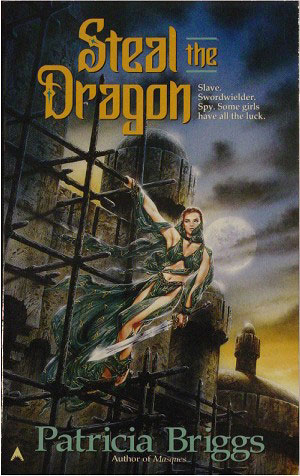 STEAL THE DRAGON (1995)
 When Demons Walk seems to be a while after the previous three installations in the Sianam series. Like the others, When Demons Walk is light and entertaining reading. Patricia Briggs has her own style that is apparent in all of her novels. She is a good author, the quality of her writing is solid and her characters entertaining.
 German cover
 Australian cover


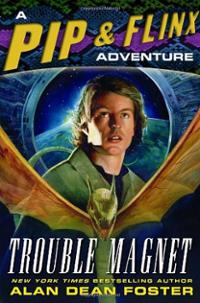


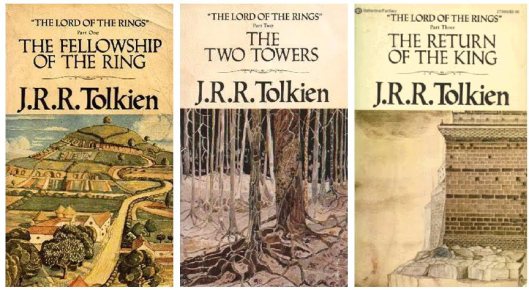


 Shockball is book no. 4 in the Stardoc series, but the first one I’ve read. Starting here was no problem. These are all pretty much stand-alone novels that concern the doctor Cherijo Viehl. Warning right away. If you do not like descriptive surgery in your novels, you will have a problem with parts of this novel.
 In Eternity Row Reever, Cherijo and Marel finally live together as a family on the star vessel Sunlace. Duncan and Cherijo are trying to figure out how to combine parenthood with their duties, as most parents do. Some children are more precocious than others. Marel is one of them. She has a tendency to appear in the oddest places.


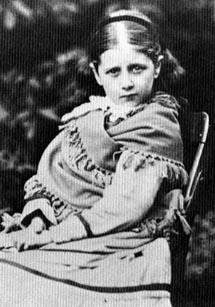 Beatrix Potter was born 1866 to Rupert and Helen Potter. Both were Unitarians and they were both of merchant stock. There was a younger brother Bertrand. The whole family were artistic. Rupert was an amateur photographer.

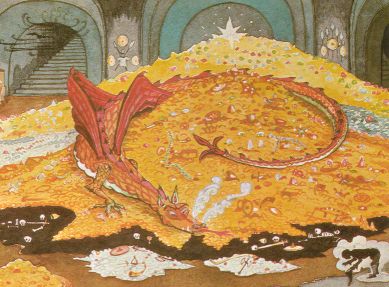


 German cover
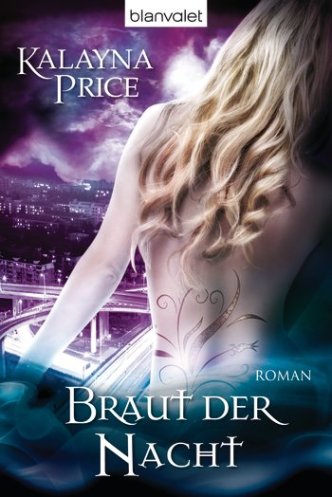 Both Once Bitten and Twice Dead are urban fantasies set in the city of Haven. I found Twice Dead as good as Once Bitten. They are both light, easy, action-filled and fun to read. Kalayna manages to make her characters pretty three-dimensional (especially our main one – Kita). Focus is not placed on world building but on character building. In a novel of this length I find that wise.


 My first experience with Holmes and Watson must have been in my late teens. I would borrow anything Sherlock that I could find at whichever library was closest. Back then, we weren’t able to use the net to get hold of books that weren’t in our bookstores. But, once I had access to the world wide web, I started looking for beloved authors. In 2007, Wordsworth Editions printed a complete stories with illustrations edition. This is what I have in my home. The Sherlock Holmes bible.
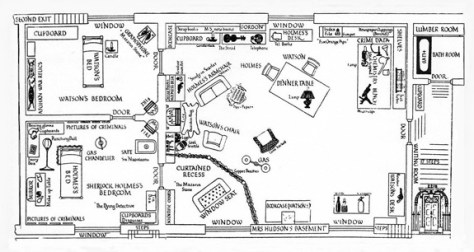


.jpg)


.jpg)


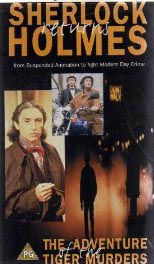


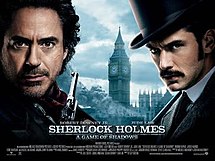


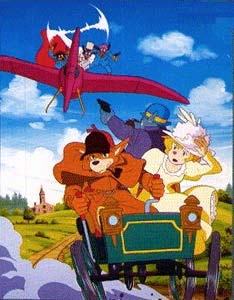
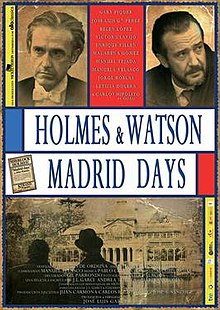



 Into the Thinking Kingdoms is book no. 2 in the Journeys of the Catechist trilogy. It begins where Carnivores of Light and Darkness left off. Ehomba is still asking questions and Simna is still complaining about what he sees as a waste of time. Along with them on their journey they have acquired Ahlitah (a feline).

 humanitysdarkerside