
Category Archives: Fiction

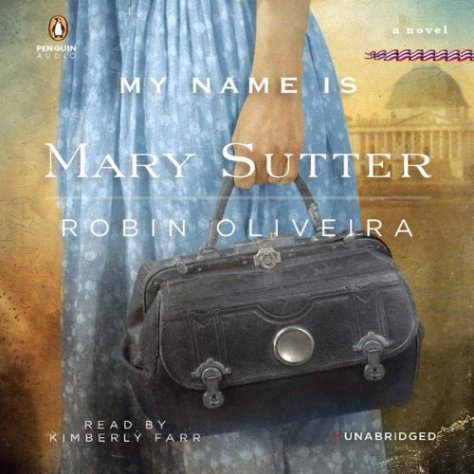
Oliveira, Robin: My Name is Mary Sutter (2010)

My name is Mary Sutter - Robin Oliveira

Even though the story is placed at the time of the Civil War in the US, I imagine Robin Oliveira’s own background as a nurse helped in describing some of the work and attitudes we read about in her novel My Name is Mary Sutter. At this time being a physician and a woman was practically unheard of. Physicians were trained through apprenticeships, and for a man to take in a woman as a student would mean overcoming prejudices. Professionally schooled nurses were also a thing unheard of. Apprenticeships were the way to go if a woman wanted to become a mid-wife or assistant to a physician.

All of this haphazard training of either physicians and nurses left both professions with vast differences in the abilities of the people who had finished their training. Some nurses and doctors made matters worse for their patients while others were miraculous healers.

Mary Sutter’s mother was a mid-wife and Mary had gone along with her on her many trips into the child-bearing population. What Mary learned about herself during those trips was that she would love to become a surgeon and thereby save people who otherwise did not get visited by a physician in time. Due to the above apprentice-shipping she was refused this opportunity and also refused admittance into medical school.

Mary Sutter was nothing if not determined in eventually reaching her goal. The US Civil War presented her with one such path. Washington was desperate for help on the battlefield and many women felt called to duty. Mary Sutter happened to be one of them. Her experience seems representative of the others I have read of. As such Sutter’s experience seems to correspond with the experiences my nurse friends tell me of today. Arrogant doctors, incompetent doctors, miracle doctors and patients who span the gamut from assholes to angels. As a someone who has been a patient I have met nurses of all kinds but mainly wonderful ones. Most of my nurse friends feel a “call” to serve and this is their way of serving others. Amazing people!

War is a gory and horrifyingly brutal affair. Not one gram of glory is present anywhere on the battlefield. But what a school for aspiring doctors and nurses. One doctor Mary Sutter had to work with had to care for more than 100 men. She helped with operations and learned how to treat stitch wounds. Eventually she managed to be sent to the front and learned how to amputate and live with the gore of poor medical hygiene.

I liked her character. Mary was a goal-oriented woman who worked extremely hard to achieve her dreams and she was certainly a woman that I could have looked up to. Inserting extraneous yet historical characters did not work well for me. It was Mary I wanted more of. But my wishes are irrelevant to an author’s work and it isn’t even a complaint just an observation.


Reviews:


Winner of the 2011 Michael Shaara Prize for Excellence in Civil War Fiction


Civil War-Era Women Physicians

Invisible Women Now In Clear Focus

Mary Edwards Walker

Nursing During the US Civil War: A Movement Toward the Professionalization of Nursing
Springing to the Cause

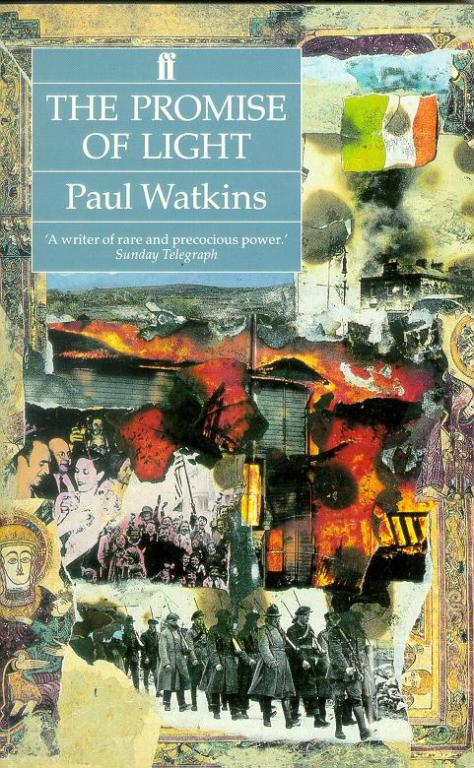
Watkins, Paul: The Promise of Light (1992)

The Promise of Light - Paul Watkins

The Irish War of Independence (Irish: Cogadh na Saoirse) or Anglo-Irish War was a guerrilla war fought between the Irish Republican Army (the army of the Irish Republic) and the British Government and its forces in Ireland. (Wikipedia)

The Promise of Light is for the most part about the above war that happened between 1919 and 1921 and Ben Sheridan’s part in it. However, we also get a look at some of the background for the war and the hostilities that had brought Ben Sheridan to Ireland.

When Ben Sheridan discovers that the man he thought was his biological father isn’t, he also discovers that his adopted father’s background was different from the one he had thought. He and other exiles from the Irish conflict had settled on Rhode Island and tried to gain support for the Irish side of the conflict from the US government. They also collected weapons and money and sent these covertly to Ireland.

Ben Sheridan goes with one of these transports on his way to discover who his biological father was.

Without Ben going to Ireland we would not have had this fictional tale of the Black and Tan war / Anglo-Irish war / Irish war for Independence. Just looking at these three different names for the fighting between 1919 and 1921 shows me how incredibly important the combination of our words is. Words have a great deal of power in forming our world views. Some of the links below use this power in their portrayal of the terrible killings of that time.

Inside my head that is what Paul Watkins shows us with The Promise of Light. We get to see the despair of the innocents and the participants who are brutally murdered and tortured by the other part of the conflict. Except for the people who enjoyed killing, raping and maiming what we are dealing with is a bunch of frightened people who are following some kind of leader. These leaders manage to bring others to their side. Sometimes they use words, sometimes money and sometimes brutality in getting people to support them.

I understand the need to be free of the tyranny of rule by people we feel have no right to rule us. After all I am Norwegian and Norway was used as collateral in wars and went between Danish and Swedish rule for centuries. Then the Germans took us over. But I would stink as a patriotic warrior.

However, I do see how Ben got drawn into the conflict. Chance has the potential of bringing about terrible things in our lives. On his way over to Ireland he did not envision killing others, but that is what he ended up doing. Ben was beaten for the cause and he got to watch people he had befriended killed. He also learned even more about grief than he had thought possible.

Paul Watkins portrayal of this period of Irish history drew me in and kept me reading.


Reviews:


Amazon UK


The Anglo-Irish War (BBC History)

The Black and Tans – who were they? by Tom Toomey

The Irish War of Independence by Noreen Higgins

Timeline of the Irish War of Independence Wikipedia

deRosnay, Tatiana: Sarah’s Key (2007)

Sarah's Key

Sarah’s Key was lent to me by my sister. Serendipity. I found it a page-turner. No question about it. The author manages to switch from present to past without effort. Tatiana deRosnay is a truly gifted author.

Sarah’s Key is about poor little Sarah Starzynski. The Germans come to collect her family. To protect her little brother she locks him in a cupboard and tells him that she will be back in a few hours. Alas. The fates want it otherwise.

There are two time-lines to Sarah’s Key. The first one, of course, follows Sarah. The second time-line follows the story of the journalist, Julia Jarmon, who delves into the story behind a hidden skeleton. Along follows the secrecy behind Jews in France during WWII.

Some truths are painful for a nation to acknowledge. Nevertheless, healing comes through shining a light on both what we want visible and what we want hidden.

The story is wholly fictional, but as Leo Bretholz (Holocaust survivor) says: “The perusal of Sarah’s Key evoked memories of my own experiences during the war in the Vichy zone of France.” It tells a terrible story, one that has happened over and over again in history. It reminds us of how easily we turn our heads from what is happening around us.


French film-adaptation (Elle s’appelait Sarah) in 2010 by Stéphane Marsil (won two awards and had three nominations)


“Holocaust in France was encouraged by French anti-Semitic trends which created a climate where the French offered assistance to the German forces, who without such aid, could not have carried out, to such ends, the Final Solution in France.” (Elizabeth Ciarrocca)