Tag Archives: William Shakespeare

Shakespeare, William: My thoughts

There have been a couple of books that I’ve read lately that reminded me of my experiences with William Shakespeare. These books are: Philippa Ballantines Chasing the Bard and Deborah Harkness’ Shadow of Night.

I feel kind of pretentious in writing about William Shakespeare’s. I will not pretend that I have read all his work, but I have read some. The ones I have read have been fun, annoying, boring and adventurous.

The good ol’ days. Isn’t that what we get told all of the time. “Back when … things were soooooo much better”. Seriously???? I never understood that. What was the Elizabethan period like?

Bloody awful, in my opinion. If you have cleaning OCD, you would have hated living back then. The sanitation systems were non-existent. People threw night pots out their windows and poor person walking beneath. Death rates were high. Life expectancy was low. Women were chattel (pretty much like a lot of places today).

Like today, being wealthy was a whole lot healthier than being poor. Around this time people in William’s England were finally beginning to find their way out of darkness. Due to expansionism and changes in laws, people were somewhat able to change their financial status. Being thrown into jail for what you said was a little less likely. That made it possible for the English renaissance to flower, which is why I get to write about dear old William.

While in High School (Olympus High, SLC, UT) I took a class called “English Litterature”. In it I became acquainted with not only William but a great deal of other great authors from England. But because of his prolificity, William did take up a great deal of time in our classes. We memorised monologues, watched movies and read through plays.

I think maybe my first meeting with Shakespeare came some years earlier. I believe I must have been in 7th grade here in Norway. One day my class visited the local theater and watched a dress-rehearsal of Romeo and Juliet. I seem to remember a spark being lit then, a spark that flared a bit more in high School.

What was there about Shakespeare that could possibly appeal to a 12 year old. Words. The sound of the combination of words. Later, when I had to memorise monologues from Hamlet, the combination of words made it easier for me. Shakespeare combines his words in a way that drove me as a reader onward.

Shakespeare is one of those writers that makes me want to read his texts out loud. The formation of the words in my mouth has a texture that is very appealing. When my ears hear those words they grab on to them and I have what I call a brain orgasm.

You see, being on the autism spectrum is often advantageous (if it isn’t too prevalent). While mine is mild, it is there. I imagine others on the autism spectrum feel the same way about their obsessions. To me it is all about the combination of words.

Shakespeare’s poems and sonnets are more difficult for me to access. Any poem or sonnet for that matter. I suck at analysing and only get the surface stuff. But for me the surface stuff of Shakespeare gives a pretty intense feeling.

As you see below there are sites upon sites about William Shakespeare. Whether or not a person by the name of William Shakespeare wrote all that he has been credited with is irrelevant to me. The most important thing about the works of William Shakespeare is that they have withstood the test of time and can be a guide in our everyday lives if we delve into them. They are full of action, comedy, love, soap, fantasy and tragedy.


Sources:

Harkness, Deborah: Shadow of Night (All Souls) (2012)

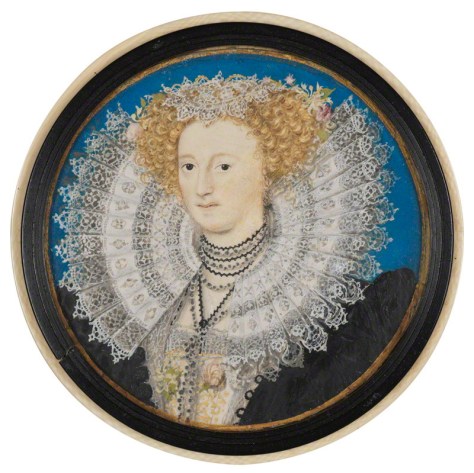
NPG 5994; Mary Herbert, Countess of Pembroke by Nicholas Hilliard
Mary Herbert, Countess of Pembroke by Nicholas Hilliard
watercolour on vellum, circa 1590: NPG 5994
Only for non-commercial use

A Discovery of Witches was one of the many books that my librarian, Ragnhild, recommended to me. I loved it and was highly motivated to read Shadow of Night. Now I have, and am left with a feeling of a book well-written. Deborah Harkness manages the difficult art that putting music to text is. Shadow of Night was one of those books that leaves my husband and children frustrated. I had trouble putting it down and being there for them. Sometimes I wonder if there ought to be a Books Anonymous.

One of my favorite things about Shadow of Night was the knowledge that Deborah showed in her telling of the tale of Diana and Matthew in 1590 Europe (especially England). There was a sense of reverence in the treatment of the milieu. Another excellent thing was my learning a new word. I don’t often have to use a dictionary while reading, but this time I got to. I love that. Her word was so perfect in its context as well (termagant). Thank you for that gift.

Being a 21st century Western woman in Elizabethan England was not easy for Diana. The world for women was so different back then. Being property cannot have made life pleasant for most. Diana left the modern world to seek help in mastering her magic and peace from persecution. What she ended up with was a world where humans were hunting witches.

While Matthew belonged to the richer part of society, Harkness also showed us the poorer side of these times. This was a time of changes in England. Farmers were losing their livelihood, people were moving to the cities seeking employment and poverty was rising. In fact, we are looking at the perfect recipe for a time where scapegoats were looked for. By now, wise women were equated with witch/devil/plagues/curses. Being different was dangerous and no-one was as different as a vampire and a witch together.

Looking for traces of Ashmole 782 turns out to be an extremely difficult task, hindered in part by Diana’s own challenges. Fortunately for Matthew and Diana they have Matthew’s friends (George Chapman, Christopher Marlowe, Thomas Harriot, Sir Walter Raleigh and Lord Northumberland – Henry Percy) from the School of Night to help them.

Diana becomes acquainted with Mary Sidney (Mary Herbert, Countess of Pembroke). Together they work on Sidney’s alchemical projects.

Along with their own challenges in finding peace and education, Matthew’s role as spy for Queen Elizabeth and son of Phillipe de Claremont will bring them face to face with their own demons.

Ballantine, Philippa: Chasing The Bard (2005)

Cover Art by Alex White of the Gearheart

Wow, what a touching novel Chasing The Bard turned out to be. Philippa Ballantine of New Zealand has done an excellent job in portraying that sense of superiority that sometimes comes with privilege in her portrayal of the fey and humans.

William Shakespeare and the Goddess of Battle Sive are both changed in this meeting between fey and human. Shakespeare is born with the Art of the Bard, and the fey need his help in saving them. But enlisting the help of one stubborn male might not be as simple as Sive had thought. For not all in the universe believe that the fey world is the world one should prefer.

There is a dark undertone to this novel that is lightened by Puck, the trickster. One would expect the god of pranks to hold such a role. But as the novel moves along, Puck takes on another dimension, one brought about by disappointment and grief.

Sive’s feelings of superiority remain, yet deteriorate as her own circumstances become more and more dire, while William’s excuses in life will be faced before he can fulfill his “Destiny”.

Well worth the read. I believe Ballantine has gotten another fan.


  • 2006: Sir Julius Vogel Awards: Nominated for the best novel
  • 2009: Sir Julius Vogel Awards: Fan production