Chance brought me to the city of Thaiburley and the street-nick named Tom. Sometimes chance is a wonderful thing and sometimes it isn’t. In this case I found myself liking the writing of Ian Whates and wanted to read the next book of the trilogy.
Thaiburley is a city built in tiers – one hundred of them. At the bottom we find the City Below (often called City of Nightmare by its denizens) and the poorest of the population. Wealth increases as one ascends, until one hits to the top layer – the Upper Heights. This is where the angel-like demons are supposed to reside.
The first two people we meet in City of Dreams & Nightmare are Tylus, our newly-minted Kite Guard, and Tom, our young street-nick. Tylus is out patrolling for the night, while Tom is climbing the many layers of the city so he can get to the top and steal a demon egg. Both stumble onto the apparent murder of a council-man. Thinking Tom is the culprit, Tylus chases him and sees Tom fall off the side of the building. Action-packed from the very beginning.
The adventure continues through the whole book. Tom is chased by the authorities for his assumed part in the murder of councilman Thomas. While running, Tom meets up with Kat – survivor of the Pits (like Rome’s Colosseum). In spite of her young age, Kat is an incredible fighter. Tom on the other hand is very good at not being seen. Both skills will come in handy during the story, because this novel is for the most part about trying to survive against the odds. The baddy of the story, councilman Magnus, sends off his assassin Dewar to tie off Tom. Dewar is another incredible fighter. He has absolutely no qualms and often likes to play with his victims.
Do I recommend this book. I’ll say definitely. City of Dreams & Nightmare was an easy and fun read. Ian Whates certainly knows his craft, and as a reader I always delight in such authors.
This second installment in the trilogy City of a Hundred Rows is as fun to read as City of Dreams & Nightmare was. Once again, we get to meet Tom, Kat, Dewar and Tylus, but this time in different combinations.
Thaiburley’s strange power is failing. The Prime Master sends Tom off to discover the source of the great river Thair in hopes that he will find out just what is causing the failure. Ironically, Dewar the assassin is sent along to protect Tom and his companions. There is no way Ian Whates is going to let this journey be a peaceful one, and we are not disappointed. Here too, are plenty of survival struggles.
Kat, in the meantime, remains in the City Below. There The Soul Thief is killing off people with “talent”. In addition to the Soul Thief the gangs of the under-city are changing, both in structure but also in behavior. This change in gang-life makes life more interesting for Kat, her sister and the Tattooed men. Kat is a great character and her adventures in this book are pretty intense.
Tylus, our Kite-Guard, is sent to the under-city to make something of the City Guard there. Automatically, we know that he is going to have his work cut out for him.
City of Hope & Despair is as much fun as City of Dreams & Nightmare. I like the fact that these books are action-filled and lacking in the gooey factor. Both books deliver what they promise – good old-fashioned adventure. Ian Whates is definitely on my author-plus list.
Maybe the bone-flu is not all it seems to be. As City of Light & Shadow begins, we get a glimpse at what might be the reason behind the disease.
Tom has reached his goal and is left trying to assimilate information in amounts he has never had to before. For such a curious soul, this must be a gift – although a double-edged one. Thais is not exactly what he expected in a god, but how are gods supposed to be anyways.
Dewar wakes up, clearer-headed than he has been in a long time. He knows exactly what he wants to do next. It’s time to go home and take care of some unfinished business.
Kat and her Tattooed men have not given up on getting the Soul Thief. With Tylus and some of his men, they set off into the Stain to kill it.
All the stories come together and we see clearly how they all have something to do with Thaiss. Ian Whates tells an action-filled story, one that kept me reading. City of Light & Shadow is a fun and easy read, just like the other two. The ending left me wondering if this was indeed going to remain a trilogy. Hmmm. In a sense there was closure. On the other hand I was left hanging a bit. Hmmm. Oh well, I like it when authors do that to us readers. It’s kind of cruel, but also a lot more fun for me (kind of). I’ve really enjoyed my journey into the City of a Hundred Rows.
Witches (usually women) are a force to be reckoned with on the Discworld. Nowhere near as flashy as the wizards (usually men), these women often rule their villages with an iron fist and a whole lot of headology. Pratchett describes headology as:
a witch’s way of magically setting fire to a log of wood consists of staring at the log until it burns up from pure embarrassment. As a result it is less energy intensive, which means that a witch can do more than a technically equally powerful wizard. (Discworld Wiki)
Now, imagine headology turned on people. That might frighten a few into behaving who might not otherwise behave.
Granny Weatherwax by Paul Kidby
The strongest headologist of the “good” witches is Granny (Esmeralda) Weatherwax. Her sister, Lilith (below), happens to be one of the “bad” ones. In a world supposedly without a hierarchy, Granny is the unspoken ruler of the witches. In the village of Lancre there is absolutely no doubt she is the boss. That is until an attempted rebellion be some wannabe witches (below). Granny is a dream of a witch. In the trio of Lancre her role is the role of the Crone (although noone would actually call her a “Crone” to her face – no one with their senses intact). Granny’s special ability is to see reality clearer than the rest. Pratchett explains that this is a manner of seeing the world that does not lie to itself including an ability to question not only the world but oneself again and again and again. Young Tiffany Aching seems to be following in Granny’s “footsteps” in this regard (below). What one needs to realize about Granny Weatherwax is that she is always there for you when you need her. Her one weak spot is her cat: “gerrofoutofityoubugger!” (generally called “You”). Considering who the owner of “You” is, I find it easy to believe that she is the only creature who has gotten the better of Greebo. While younger and much smaller than Greebo “You” terrifies him – inasmuch as he is able to be terrified of anything/anyone.
Nanny Ogg and Greebo by Visente
Greebo belongs to Nanny Ogg. Nanny is probably the only person alive who thinks of Greebo as a big softy.
To Nanny Ogg he was merely a larger version of the fluffy kitten he had once been. To everyone else he was a scarred ball of inventive malignancy.
Nanny is the Mother of the threesome in Lancre. Now there is a lady I wouldn’t mind meeting. Her sense of humour is broadminded, raunchy and hilarious. At the same time she rules her brood and their spouses with something akin to terror with a dash of love mixed in. They adore her yet fear her – at least her daughters in law. Nanny Ogg saves Granny from herself when that is needed and functions as Granny’s grounding rod. Not only that but Nanny lightens the mood when Granny feels overwhelmed or as if the people around her are too stupid for their own good. While Granny is the one who scares people Nanny is the one who woos them – until it is time to stop wooing. Nanny’s final job in the trio of witches is to prod Magrat in the direction Nanny feels Magrat ought to go without being as truthful about it as Granny tends to be.
Meek, Mild Magrat by MJ Oboe
Magrat Garlick is an interesting character. She happens to be the “Maiden” of the Lancre coven. At first glance Magrat is a young ditz with a heart of gold and a great belief in crystals and folk wisdom.
Witches aren’t like that. We live in harmony with the great cycles of Nature, and do no harm to anyone, and it’s wicked of them to say we don’t. We ought to fill their bones with hot lead.
But as you see, Magrat has another side as well – like we all do. In Lords and Ladies that side shows up in all its glory.
Unlike Granny Weatherwax and Nanny Ogg, Magrat is not very good at headology. Her forte lies in research and development of herbs and cures (and her crystals of course). She struggles with her self-confidence, but Granny and Nanny make up for that by having an abundance of confidence in themselves. It can’t be easy being the youngest witch when the two older ones in your coven have such strong personalities.
Tiffany Aching and the MacNeegles by Alda Rana
Young Tiffany Aching down down on the Chalk (mountain) is a whole different type of character. She has to take over the responsibility for her mountains when her grandmother (the local witch) dies. The only possible candidate is Tiffany Aching. At 9 her ability to ask uncomfortable questions and her quest for knowledge points to her potential as a great witch down the line. But Tiffany isn’t really worried about the whole witch thing nor is she caught up in the need to be one. Instead she happens to have the gift of making cheese. I know, strange gift for a witch one might say. But witches are practical people who prize such abilities over other more wizard-like gifts. In fact, Tiffany excels so much that one of her cheeses has come alive and become and excellent mouser. Its name is Horace. She is friends with the Nac Mac Feegles, a feat not managed by many.
These four witches are my favorite ones. There are many more that make appearances in Pratchett’s Witches’ series, but Granny, Nanny, Magrat and Tiffany get into so many incredibly weird and funny situations that its impossible not to have them as favorites. The Witches’ series consists of Equal Rites, Wyrd Sisters, Witches Abroad, Lords and Ladies, Maskerade, Carpe Jugulum, The Wee Free Men, A Hat Full of Sky, Wintersmith and I Shall Wear Midnight. As usual Wikipedia gives detailed information about these women, Pratchett’s page is a given source and L-Space has fun details.
Eskarina by Hannah Crosby
EQUAL RITES (1987)
As I stated at the beginning of this post most witches are women and most wizards are men. There are exceptions. Some of those exceptions start with mistaken identity.
Up in the Ramtops a wizard comes awalking using his staff as a guide to where he is going. Bad Ass, the village, is his lucky destination. A child is being born, the eight son of an eight son.
Drum Billet, our wizard, knows he is about to die. Wizards and witches get to have that knowledge. He gives his staff to the son of the smith and dies. One problem. The eight son of the eight son just happens to be a girl, Eskarina Smith. A wizard girl. Oops.
Good thing for young Eskarina Smith (Esk to her friends) that Granny Weatherwax was the midwife that saw her into the world. When Eskarina is 7 her mother decides to send her along with her brothers to Granny. Strange things seem to be happening around the girl whenever she is upset.
When they get to Granny’s, Granny Weatherwax is lying on her bed looking quite dead. Being a witch she wasn’t, she was only out borrowing. Eskarina feels Granny’s undeadness and goes downstairs waiting for Granny to return (while her brothers run off terrified). When she hears loud noises upstairs, even she becomes terrified, runs off, falls down and is met by the staff (yes! the staff came to her).
Granny knows something has to be done, and right away. She decides to take her to the wizards school in Ankh-Morpork, the Unseen University, and enroll the young Eskarina. But getting the girl into this all-male school is going to prove more difficult than Granny had thought.
Adaptations
BBC4 dramatisation of Equal Rites as serial on Woman’s Hour
The future king with the witches
WYRD SISTERS (1988)
“The night was as black as the inside of a cat. It was the kind of night, you could believe, on which gods moved men as though they were pawns on the chessboard of fate. In the middle of this elemental storm a fire gleamed among the dripping furze bushes like the madness in a weazel’s eye. It illuminated three hunched figures. As the cauldron bubbled an eldritch voice shrieked: “When shall we three meet again.”
Here we have the Discworld’s version of MacBeth‘s witches. The mother, the crone and the other one. Or as other people know them, Granny Weatherwax, Nanny Ogg and Maigrat.
King Verence of Lancre is making a discovery. He is about to become a ghost, unable to stop the kidnapping of his child. By a freak accident the child ends up in the arms of Granny Weatherwax and she decides to take a hand in playing with the future and sends the baby off with a troupe of actors.
Fifteen years later.
Words have power. In the “good old days” the jester was the only person at a king’s court who could speak his mind without fear of the consequences (supposedly). These days we have the media. But words have power. We might remember an event or something about the people involved, but as the story gets told and re-told our perception of the event changes. Pratchett’s way of pointing a light at our perceptions and prejudices is a wonder.
Adaptations
1997: Wyrd Sisters was produced as a two-part animated television series, produced by Cosgrove Hall.
House of Gogol by Brer Anansi
WITCHES ABROAD (1991)
“This is a story about stories.
Or what it really means to be a fairy godmother.
But it’s also, particularly, about reflections and mirrors.”
On the Ramtops there was only one witch who was not attending the Sabbat. Desiderata Hollow was making her will. Desiderata is a fairy godmother to princess Emberella. The other one was Lilith (who just happens to be Granny’s sister).
In Genua, the magical kingdom, Lady Lilith de Tempscire loved the idea of travelling through mirrors. After speaking to Desiderata she was glad that there would only be her and the voodoo woman left to fight over Emberellas’s future.
At Lancre the fairy godmother wand is delivered into the hands of Magrat. The note from Desiderata reads:
“I niver had time to Trane a replaysment so youll have to Do. You must goe to the City of Genua. I would of done thys myself only cannot by reason of bein dead. Ella Saturday muste NOTTE marry the prins. PS This is important. PSPS The those 2 Olde Biddys they are Notte to come with Youe, they will onlie Ruine everythin. PSPSPS It has tendincy to resett to pumpkins but you wil gett the hange of it in noe time.”
With this bit of headology, Desiderata guarantees that Nanny (with Greebo) and Granny decide to accompany Magrat on her journey to Genua. As the threesome moves through the lands on their way to Genua, they manage to upset quite a few people. In typical tourist style they are loud and obnoxious and wonder why these people cannot speak properly. But there is also magic battle and voodoo fun to be had.
Adaptations
1999: Witches Abroad stage adaptation by Aaron Birkes played at Aberystwyth Arts Centre Theatre
Lords and Ladies by Marc Simonetti
LORDS AND LADIES (1992)
Magrat, Nanny (with Greebo) and Granny are back in Lancre after being absent for eight months. That worried Magrat. Was the kind-of-agreement between her and Verence still up and running.
Upon her return, Magrat was informed by King Verence that they were to be married at midsummer and that all of the arrangements have been made. No proposal, just a statement. He is the King you see, and Magrat a subject.
A stone circle up in the mountains of Lancre keeps the Dancers in. That is if they are not let out. When people forget about the Dancers, it is an easy matter to lure them into the stone circle, leaving them quite dead.
Esme Weatherwax and Nanny Grogg come to the Dancers and discover that someone has been dancing. Diamanda, Perdita and that girl with the red hair decided that they should teach themselves witching in the absence of the older ladies. About six of them have been going up into the mountains every full moon dancing. When Granny goes borrowing she discovers that there is some kind of mind loose in the kingdom – Elf.
Mustrum Ridicully of the Unseen University worrying about baldness and thinking back to the good old days when he went walking with Esme. When he is invited to the wedding of King Verence and Magrat, Ridicully decides it is time to up into the mountains. With him go the Librarian and the Reader in Invisible Writings, Ponder Stibbons.
1995: Lords and Ladies stage adaptation by Irana Brown
2005: Lords and Ladies German feature length fanfilm. I’ve only been able to find the link to the trailer. So if anyone has a link to the full-length movie, please send.
MASKERADE (1995)
In his dedication Pratchett writes:
“My thanks to the people who showed me that opera was stranger than I could imagine.”
What is Pratchett going to make fun of this time you might ask. Well, the answer is The Phantom of the Opera.
Mr. Goatberger, the publisher, has been sent the manuscript to a book. It wasn’t even on proper paper, and he was filled with apprehension. Then he started reading, kept on reading, and called in his assistant, Mr. Cropper. He began dreaming “the dream of all those who publish books, which was to have so much gold in your pockets that you would have to employ two people just to hold your trousers up.”
Agnes Nitt has come to the Opera House to audition for a part. She might not be the greatest looker, but she has a voice to kill for. When the time comes to select the players, Agnes gets stuck singing for the goodlooking Christine.
Gytha Ogg gets a letter addressed to “The Lancre Witch”, bringing Granny’s temper up a bit. Nanny’s book “The Joye of Snacks” has become a hit, and it turns out the publisher has been a bit complacent about paying Nanny her dues. In fact, he owes her about four or five thousand dollars. They decide to take a trip to Ankh-Morpork and stir up the town a little. That, and convince Agnes to come back to Lancre as the maiden witch. They bring Greebo, Nanny’s cat of terror. His part in this story is amazing.
Reading Maskerade with the Phantom of the Opera playing in my head at the same time was great fun. Terry Pratchett has really nailed it this time.
If you want and incredibly detailed and extensive analysis of Maskerade, I recommend Bewitching Writing by Dorte Andersen at Aalborg University. It seems I’m not the only fan of Terry.
1998: Stephen Briggs stage adaptation of Maskerade.
2006: A stage adaptation of Maskerade by Hana Burešová and Štěpán Otčenášek (partly using adaptation by Stephen Briggs) premiered in Divadlo v Dlouhé, Prague. Pratchett attended the closing performance five years later.
The Carpe Jugulum Cast by Vic Hill
CARPE JUGULUM (1998)
Into the country of Lancre comes an army. An army made up of very small blue men, no higher than six inches tall. Little blue men nobody messes with. Men whose favorite pasttime is fighting anything and anyone.
Not too far from Lancre, four vampires come accross an invitation to the name ceremony of the child of Queen Magrat and King Verence. It is a dangerous thing to invite vampires into your home, whether that be house or kingdom. Sort of gives them free rein. Count Magpyr, his wife and their two children enter Lancre with their servant Igor.
Granny Weatherwax gets called away to a birthing that is in trouble. When she gets there, she has to decide who to save, mother or child. Very few people could make such a choice without trying to share the responsibitility with someone. Flying back towards the castle she notices mist is on its way from Uberwald.
The dwarf Casuanunda is having to resort to highway robbery. But robbing that black coach is not very tempting when he sees how another highway robber is treated. Instead he goes on to Lancre where he has a few aquaintances.
In this novel Pratchett plays with the idea of split personality, references vampire movies of the day, pyramid schemes and good and evil through the Phoenix vs. vampire myths. Pratchett managed to give this novel a slightly creepy feel.
THE WEE FREE MEN (2003) (Skrellingene – 2004) – Locus YA winner 2004
We now leave Lancre behind (for the most part) and enter the world of the Chalk and Tiffany Aching. She is nine years old when we meet her for the first time in The Wee Free Men.
My first meeting with Tiffany (or Petronella in Norwegian) was in Norwegian. I thought I would introduce my youngest to Pratchett and this new book on the market seemed like the thing to read. Was it ever.
When we meet her she is lying by the river tickling the trout on their backs. She liked hearing them laugh. With her on this expedition was her brother Wentworth (Steingrim in Norwegian). Like all little kids he was messy and sticky but easy to be around.
I’m sure you remember the little blue men in Carpe Jugulum. Here they come again, trying to fish. For some reason Tiffany was able to see them. Only witches should be able to see the blue terrors.
Grandma Aching has just died and Tiffany thinks that she might have been a witch. The little blue men turn out to be the Nac Mac Feegle. Since Grandma died they are on the lookout for a new “hag”. Since Tiffany sees them and is able to control them (somewhat) the Nac Mac Feegle tell Tiffany that she is their hag.
They need help for their Kelda (mom). She is ill. Tiffany comes with them to their hole in the ground and checks out things for the boys. Sadly, the Kelda is dying (of old age) and Tiffany needs to be there for the boys until a new Kelda can be found.
When Tiffany’s baby brother disappears, she now has allies in her search for him. The search brings Tiffany and the Nac Mac Feegles into a strange world where Tiffany’s hag-hood is proven.
My youngest son laughed his head off and was really spooked at times. An excellent children’s book in my opinion. They won’t get all the references, but who cares, I probably don’t either. What’s really great about the Tiffany Aching series, is that we get a look at Tiffany’s growth from the beginning. Terry has created a wonderful character in our young Tiffany.
There is a possible film adaptation of The Wee Free Men by Rhianna Pratchett (Terry’s daughter) in the inning.
More laughter came for my son in “A Hat Full of Sky“. Those Nac Mac Feegle names are genius. I read them in Norwegian (in one of our dialects of course) and I couldn’t help myself. I giggled along. Pratchett has so many of those giggle moments and then all of a sudden a belly-laugh comes along. All part of his godhood status for me I guess.
Tiffany is now an apprentice to Miss Level. On their way there, Tiffany and Miss Tick are attacked by a hiver (powerful, dangerous creature). At the cottage of Miss Level, Tiffany discovers that Miss Level is in fact two-bodied and that there is a ghost cleaning her house. During her stay Tiffany has to fight the Hiver, but fortunately she does not have to battle alone all of the time. Help is to be found in many places.
We get a great look at the life of an eleven year old torn out of her old life, having to go to boarding school (so to speak). Everything is new. Not everyone is nice. On top of that she has the Nac Mac Feegle and the Hiver. Growing up must come quickly then. Pratchett does an excellent job at looking at the development of Tiffany’s identity. She emerges as someone who has integrity and the willingness to question herself. She’s actually a pretty good role-model for young people.
By now I think we’ve seen that Tiffany is not the kind of girl who is ruffled by just anything. It takes a bit more than normal to get her uncomfortable. Being wooed by the Wintersmith is one of those things. In “Wintersmith” Tiffany does a foolish thing. At the dark morris dance welcoming winter, Tiffany finds herself drawn into the dance. Ooops. Wrong person.
This means the Wintersmith (who brings winter) meets Tiffany rather than the Summer Lady and is enchanted by her. Double oooops.
All of a sudden green stuff sprouts underneath Tiffany’s feet and the Cornucopia appears. Tiffany seems to have taken on at least one of the Summer Lady’s abilities. Her friends Roland, Nac Mac Feegles and Granny Weatherwax have to help Tiffany get out of her new bind.
While her new teacher, miss Treason, is kind of creepy Tiffany manages to learn a lot from her, not least all which color of cheese she does not like.
I’ve seen from commentaries that some people think Wintersmith too childish. Sometimes I wonder if I’m reading the same books as other people or if I’m expecting different things from the books. I find all of the characters delightful, even crazy old Treason. Terry’s writing is up to its usual standard and as a brainwashed cultmember of the Pratchettian cult I’m sold.
OK. Now we come to the last book in the Witches and Tiffany series: I Shall Wear Midnight. For some reason I found it poignant. You know how sometimes you get a feeling of being thankful that you’ve read a book? Well, Midnight and Snuffare both Pratchett books that gave me that quiet feeling. I was moved.
Tiffany is now grown up (15) and is working the Chalk as its only witch in a climate of growing suspicion and hate.
When the Baron of the county dies, she is accused of killing him. Tiffany travels to Ankh-Morpork to inform Roland of his father’s death. As usual the Nac Mac Feegles follow Tiffany into town.
Tiffany’s fight this time is against the Cunning Man. Once again we get a battle between the almost good against the practically evil.
My love for this book could also be due to its darker tone. This darker tone fits the books well.
While the third and final book in the Nulapeiron Sequence, “Resolution” lacks the brilliance of “Context“, “Resolution” is certainly a well-crafted book. Meaney’s work is moving, engaging and interesting. He manages to braid his thoughts on time and space into the text in a manner that fits in with the rest of the book. This is quite a feat.
Tom Corcorigan leads a complicated life. He’s on top or he’s at the bottom of the social ladder. His life is never the same from moment to moment. Love, friendship and home can change in an instant. I’m glad I’m not he. As in the previous books, we also get a look into the lives of the pilots.
In “Context” the Blight was defeated. But Tom is certain the war has not been won. He is worried that the Anomaly, the mother of the Blights, is on its way to Nulapeiron. There is no-one else that will believe him when he tries to convince them of the seriousness of the situation. Losing his demesne has made life a bit more challenging for him and Elva, but when his friend Corduven dies that all changes. Now they finally have the chance to influence matters. And what do you know, the Anomaly appears. From there on the action is non-stop.
The Nulapeiron is an intense series. The reader is drawn into Meaney’s world and kept there by the force of his words. His science fiction is fun and weird.
Molly Moon is a delightful character. I started reading her adventures to my son, and he fell in love with the series. Molly Moon is for children, but as an adult reading to my child I had fun.
We read them in Norwegian, but Byng is an English writing author. Molly Moon is a young orphan who discovers her incredible ability with hypnosis. With this gift, she improves the living conditions at her orphanage, controls her bullies and makes her life a little better. As she moves along in the series, Molly discovers that she has an enemy who is out to best her. She gets to travel in time, both backwards and forwards. During these travels she has the assistance of her two faithful (for the most part) friends: the dog Petula and the boy Rocky.
Our translation was a good one. The various translators have done a good job in making the Molly Moon adventures exiting and funny. We laughed a lot and I was forced to finish the scary parts before I could put the book down. My son did not have to work hard to convince me.
“Pelle, the Conqueror” begins on the first of May 1877. Lasse Karlsson from Tommelia in Sweden arrives with his son Pelle at Bornholm in Denmark. They are fleeing poverty and starvation and try to find a decent living. Instead they are treated as indentured servants. As Pelle learns Danish, life becomes easier, but he and his father continue to be treated as outsiders. They refuse to give up their dream of a better life in Denmark.
In one sense you could call “Pelle” auto-biographical. Nexø (1869-1954) knew poverty from the inside. When he was 8, his family moved to Bornholm in hopes of having a safer life. Through this inside experience we get to follow Pelle and his father and friends through tragedy, comedy and success. There is an optimism inherent in these four books (mine is an omnibus) that has us identifying with Pelle’s fight to conquer his life.
Nexø writes beautifully. He brings the reader into the text and gives of himself to us. The journey through Pelle’s life is an amazing journey from a life of terrible circumstances into a life of possibilities. With warmth and generosity my heart was warmed by the excellence of Nexø’s text.
Barnes & Nobles seems to have the best price on this omnibus, consisting of 4 books: Boyhood; Apprenticeship; The Great Struggle; Daybreak.
Andre Norton’s “style is clean and simple. She doesn’t digress into an examination of minutiae, of either exterior or interior worlds. With graceful economy she hands the reader the very hearts of her characters, and cleanly etches her settings – like an artist who can suggest the whole shape of an object by the thickness of the line with which she draws. The result are lean, rich stories that move.” Linda Taddeo
“The Forerunner Factor” is an omnibus containing “Forerunner” and “Forerunner: The Second Venture”. Andre Norton’s books talk about the Forerunners. They are those who went before and have left artefacts that noone understands. We desire what they were and had.
In “Forerunner” we meet Simsa, the orphan. She lives in the Burrows, the slums in the spaceport-city on the planet Kuxortal. Her looks are exotic with iridescent blue-black skin and white hair. As many of Norton’s other protagonists, Simsa has a telepathic bond with her batlike zorsal but does not truly communicate with them. The adventure begins when she gets involved with a spaceman in search of his brother. Together they end up running for their lives. Eventually they come into contact with a Forerunner artefact and, what do you know, Simsa is revealed as one.
In “Forerunner: The Second Venture” Simsa escapes captivity, crash landing on another world where life does not seem viable. She comes into intelligent life, manages to communicate with it and discovers that the Forerunners have also been there. In this novel Simsa has two goals. First and foremost she seeks to remain herself. The second is to survive without recapture.
I’ve now read “Paradox” for the third time and am still enjoying it as much as the first. Because I’m a dork, I just realised that there are two more books to this series. Well, well, live and learn.
From the above I’m sure you can tell that I really liked “Paradox“. We get a large dash of philosophy, some biology, sociology, lots of action and a thoroughly likeable protagonist. Tom Corrigan is at the centre of our attention throughout the whole novel. He raises himself through the various layers of society through hard work, luck and other people’s ambition. There is no sugar-coating of our hero. He rises to the greatest heights and falls to the deepest depths of hell. Meaney is a really good writer.
Nulapeiron is a strange world. Semi-alive dwellings and vehicles. Subterranean demesnes layered from the poorest to the richest. At the very top we find the Oracles.
Tom Corrigan is witness to the brutal killing of a woman by the militia. She just happens to the same woman who gave him a small, seemingly insignificant info-crystal. Shocked to his core, Tom realises that she is one of the mythical Pilots.
This info-crystal, along with the Oracle Gerard, are the two things that push Tom onto a path that will take him to his destiny.
So, one billion people live in countries that are dirt poor. One billion! 1 000 000 000! The really strange thing is that global poverty is falling, except for in the poorest states (50) where the opposite is the case. Some of these countries, like Malawi, have always been at the bottom but others, like Sierra Leone, have only recently arrived there.
What Paul Collier explores in The Bottom Billion is why there does not seem to be an easily pinpointed answer to the question of why this is the case. Neither is the solution one simple answer. In order to find an answer Collier has had to turn to researching statistical data. Through that data, he tries to answer the following questions:
What are the possible causes of some countries staying at the bottom?
What, if anything, can be done to change that?
To get to those answers Collier looks at countries plagued by civil war, countries without natural resources, countries that have bad neighbors, poorly governed countries and latecomers to the international market.
This book is well worth reading. It certainly changed my way of thinking of the countries that are stuck in such terrible poverty. All I had to do (extremely difficult for me) is keep in mind that statistics are open to interpretation.
Sometimes a gem just drops into your lap. Our library had a book sale and I bought a bag of books for 50NOK. Inside I found this collection of essays from 1986. In connection with the end of UN’s 1975-1985 this status report was created. In it we find women who meet other cultures and report on what they see. This book was sponsored and compiled by New Internationalist, a cooperative specializing in social justice and world development issues. In addition to publishing its own magazine, it collaborates with the UN and other organizations to produce a wide range of press, television, and educational materials.
The essayists are:
Toril Brekke of Norway meets Kenyan women whose husbands have travelled to the cities to find work.
Angela Davis of the US travels to Egypt where virginity is of prime importance.
Anita Desai travels from India to Norway to investigate gender roles.
Buchi Emecheta of Nigeria travels to the United States to investigate the impact of the education boom on sex roles
Marilyn French of the US investigates the difference between middle-class and poor Indian women.
Germaine Greer of Australia meets the women of Cuba, women who are considered both active comrades and sex-objects.
Elena Poniatowska of Mexico investigates the effects of the sexual revolution on the women of Adelaide, Australia.
Nawal El Saadawi of Egypt meets women involved in political activities seeking to change the definition of family and society.
Manny Shirazi of Iran investigates the impact Soviet socialism has had on the female relatives she meets.
Jill Tweedy of England meets the first generation of literate women in Indonesia

 CITY OF DREAMS & NIGHTMARE (2010)
 CITY OF HOPE & DESPAIR (2011)
 CITY OF LIGHT & SHADOW (2012)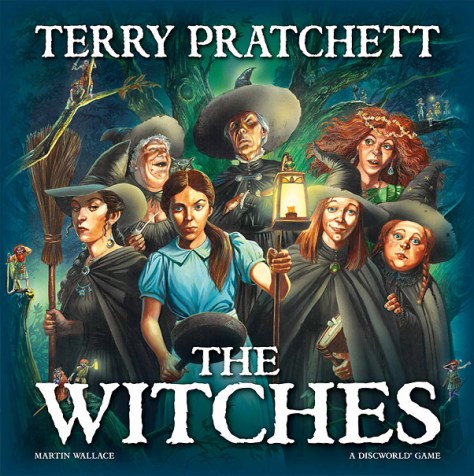

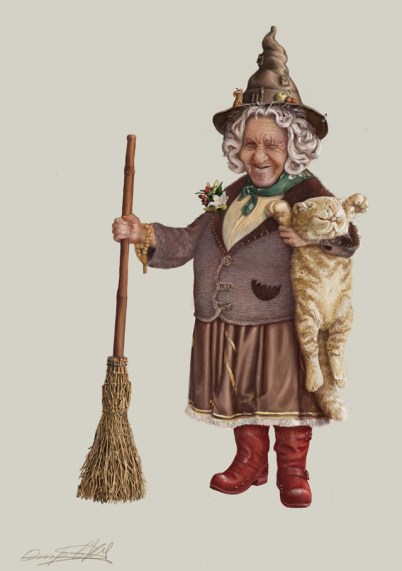


 MASKERADE (1995)



 “Pelle, the Conqueror” begins on the first of May 1877. Lasse Karlsson from Tommelia in Sweden arrives with his son Pelle at Bornholm in Denmark. They are fleeing poverty and starvation and try to find a decent living. Instead they are treated as indentured servants. As Pelle learns Danish, life becomes easier, but he and his father continue to be treated as outsiders. They refuse to give up their dream of a better life in Denmark.
 “The Forerunner Factor” is an omnibus containing “Forerunner” and “Forerunner: The Second Venture”. Andre Norton’s books talk about the Forerunners. They are those who went before and have left artefacts that noone understands. We desire what they were and had.


 humanitysdarkerside