Tag Archives: #Prejudice

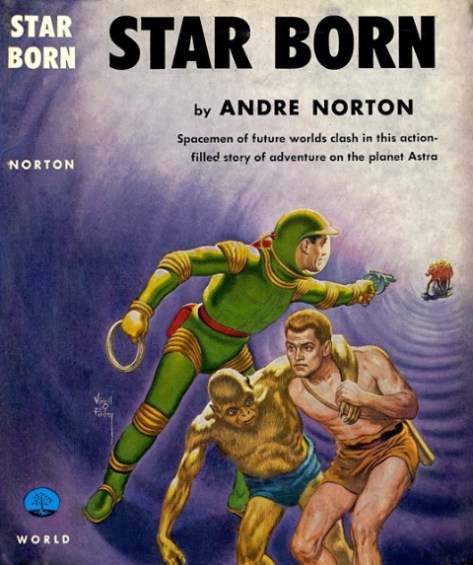
Norton, Andre: Star Born (Astra series) (1957)

Star Born Andre Norton
1957 cover painted by Virgil Finlay

Star Born was written in 1957 and is the second novel of the Astra series. As such, you might expect it to be extremely dated. That’s the good thing about Andre Norton. Her focus is on the characters not on technology. Not that it would have mattered in the end, not really. I found Star Born among my books and discovered that I hadn’t read it. Shocker, but a pleasant surprise.

Our two main protagonists in Star Born are Raf Kurbi from Terra and Dalgard Nordis from Homeport. Like so many of Norton’s characters a rite of passage is what starts off the book.

Dalgard is the descendant of Terran escapees. Many generations ago they came to the planet Astra. There they found a race of people who communicated through telepathy. Telepathic communication is another of Norton’s favorites. These two groups learn to live next to each other in peace and with time the Terran stock evolve their telepathic abilities to the extent that they can communicate with the telepathic creatures on Astra. Dalgard is traveling with Sssuri, a member of the Merfolk, and his knife-brother. Together they are on a journey of exploration – rite of passage.

One of the deserted bases of “Those Others” is the goal of the two travellers. “Those Others” are the ancient enemies of the Merfolk and other creatures on Astra. In olden times the Merfolk were enslaved by “Those Others” but through rebellion they managed to hit the Others hard.

Star Born switches between Dalgard’s story and Raf’s. Raf has come from Terra along with a crew. Four of them set out to investigate some ruins that they had seen during landing. It turns out that they meet up with the Others. Raf is uncomfortable about this meeting. For some reason his guard is up. When they go with the Others to explore one of the ruins, they come upon Dalgard. Now the stories blend together and we get to see what happens when two young men hold the fate a world in their hands.

The newcomers from Terra display all of the classic symptoms displayed in meeting with aliens. Meeting as described in science fiction anyways as I do not know of any real life meetings with aliens. Fear, prejudice, and violence go together it seems in such situations.

Young adults are probably Norton’s target group. Most of her books are written for them. That is clearly reflected in the language. There is no swearing, graphic violence or sex scenes. Quite refreshing in a sense. While Star Born isn’t one of my favorite Norton books, it was an easy read.


NOTE: This title has entered the “Public Domain” and is therefore open to any publisher that wants to print it. Many “Print on Demand” publishers have started to release this title. This site has chosen to ignore these published versions and only concentrate on estate sanctioned materials.”

The Project Gutenberg has a complete version of Star Born for free – for those who are interested.


Star Born has been translated to:

  • German:  Flammen über Astra
  • Russian: Звездная стража [Star Guard]
  • Russian (in combination with The Stars Are Ours!) Астра [Astra]

Sources:


Other reviews:

Asimov, Isaac: Elijah Bailey/Robot series

Isaac Asimov was my introduction to science fiction. I imagine he has been for a lot of people. The libraries here in Norway didn’t have a lot of fantasy/science fiction material in my youth. But there were a few robot anthologies with Isaac. I fell in love.

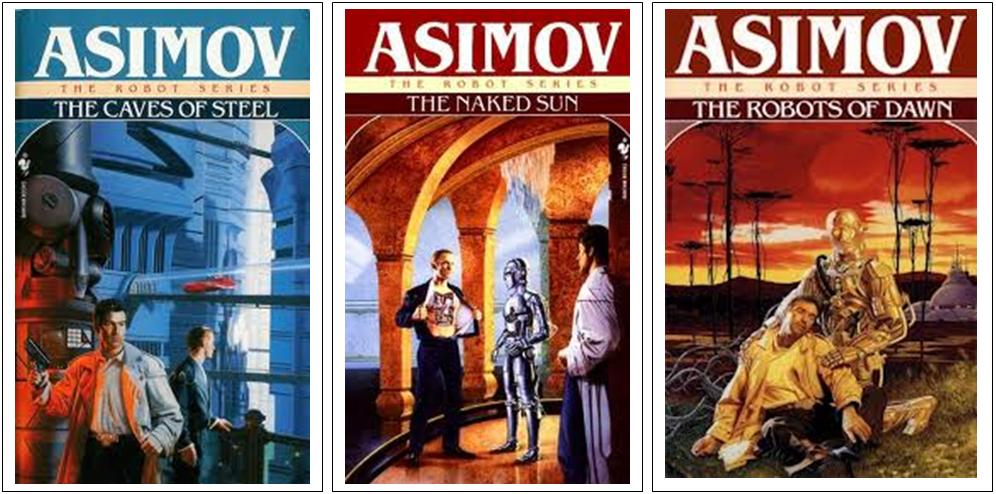
It’s incredible to me that Asimov began the Foundation series in 1942. I would begin my reading with the Robot series (Elijah Bailey series). These four books give the reader an excellent starting point for understanding Foundation: The Caves of SteelThe Naked Sun, The Robots of Dawn, and Robots and Empire (these are links to Wikipedia so spoiler warning is necessary).

michael whelan_isaac asimov_the caves of steel.jpg

Michael Whelan – Caves of Steel

The Caves of Steel (1954) is the very beginning of the Foundation series. Far into the future (approx. 3000 years) mankind has discovered hyper-travel and has emigrated to the stars. Fifty planets, known as the Spacer worlds, have been terraformed and enjoy a low density of humans. Robots are used for labor intensive jobs. In the meantime Earth is over-populated and have passed laws against the use of robots. Elijah Bailey lives on Earth in one of the domed cities.

A Spacer ambassador has been found murdered outside his domicile. Elijah is forced to go work with his partner, R. Daneel Olivaw, a human-looking robot. Unfortunately one of things Elijah holds against Daneel is the fact that he looks just like the murder victim. On their journey of discovery they end up visiting the Spacer worlds.

Some of the themes Asimov explores in this combination of sci-fi and mystery are over-population, technology and prejudice.

The-Robots-Series-1

The Naked Sun (1957) brings us to the world of Solaria. Solaria is a planet where the population is kept at 20000 and robots serve the human population. In fact robots outnumber the humans greatly. This time the victim is a genetic specialist in the birthing center of the planet. On a planet where contact between people is kept at a minimum, we get a real locked-room mystery. Once again Elijah and Daneel need to solve the murder mystery.

In the Elijah books robots are for the most part treated as property and expected to do as their masters say. When Elijah calls the robot “Boy” it might be seen as Asimov’s way of breaching the topic of racism/slavery/prejudice. Asimov was agoraphobic and as such Solaria would probably be the exact opposite of his heaven. Elijah certainly has to struggle quite a deal with his own agoraphobia in this novel. We also get a look at the way we tend to make assumptions without enough information. The rest of Solaria just “knows” that Gladia has to be guilty of the crime, but Elijah is not as certain of that.

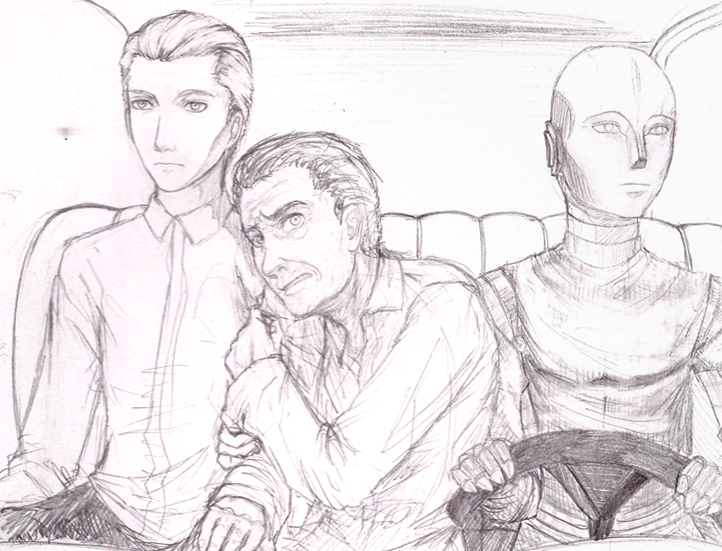
Daneel, Elijah and Giskard in hovercraft by Seabird

In The Robots of Dawn (1983) we once again meet Gladia from Solaria. She has settled on the planet Aurora. A roboticide has occurred and Elijah and Daneel need to find the killer. R. Jander Panell was another humaniform robot created by Han Fastolfe. The robots of Aurora are incredibly lifelike and their interaction with their humans can be quite intimate.

To aid in their investigation, Daneel and Elijah are assisted by another of Fastolfe’s creations, R. Giskard Reventlov. They discover that Jander was a member of Gladia’s staff. In fact, she considered him her husband. Some of the possibilities for motives are jealousy, power and greed. While Asimov’s Robot books are mysteries, they are also an exploration of sociological possibilities. The impact of technology (in this case robots) is one of Asimov’s recurrent themes. How far do we take technology or let technology take us? The Robots of Dawn is also very much about human relationships. How much do we let our urges, the taboos of society and our individualism steer our lives?

The Zeroth Law by Hera of Stockholm

Robots and Empire (1985) is the final book in the Elijah Bailey/Robot series. By this time Elijah has died and we encounter one of his descendants, Daneel Giskard. In it we get a step closer to Asimov’s Foundation series – a natural continuation of the Elijah/Robot’s series.

For most of the Spacer population Earth people are seen as vermin. They have been forbidden emigration to other planets and are forced to stay on over-populated, capped earth.

However, Earth people are overcoming their agoraphobia and are using faster-than-light transportation to get to planets away from the Spacer Empire. These “Settlers” see the Earth as something to revere. One of these Settlers is Daneel Giskard.

On a trade journey Daneel discovers that Solaria seems empty of humans. The robots are left, still working with their previously assigned jobs. Gladia Delmarre is still alive on Aurora and she is asked by Daneel to help figure out what has happened on Solaria. She brings R. Daneel and R. Giskard to aid in the investigation.

Once again Asimov explores the theme of technology and its effect on humans. The ending of Robots and Empire was quite touching and a fitting end to the Robot series. When you read the Foundation series, you will see just how Robots and Empire merges these two series. These books are a treat. While they are dated in some respects, their themes are incredibly relevant today.

Marsh, Kate: Ghost of a Chance (2008)

ghostofachanceKate Marsh is a pseudonym for Katie MacAlister. As far as I can tell, “Ghost of a Chance” is the only book that is written under this pseudonym. Ghost is a mystery, a regular who-dun-it. The characters in Ghost are fun and the plot clever. The world created by Marsh is interesting and quirky.

Karma Marx is half poltergeist (father) and half human. As such she is especially well qualified to clean out haunted houses. But rather than send the haunters off to oblivion, Karma has a tendency to let them into her own house.

Unfortunately for Karma, she is married to Spider (a man of all qualities undesired). To get him out of her life, she agrees to clean out one last haunted house. Through nefarious means Spider has managed to get a hold of house with an existing owner (albeit a poltergeist). Adam, the poltergeist, is NOT interested in being cleared out of his house, nor is he interested in getting his house-guests cleared either.

In a true locked-house mystery fashion all the combatants gather, the house is locked down, and murder occurs. Karma has to discover who killed her husband: her father, her foster child, Spider’s partner or Adam and his house-guests.

McDermott, J.M.: Never Knew Another (2011)

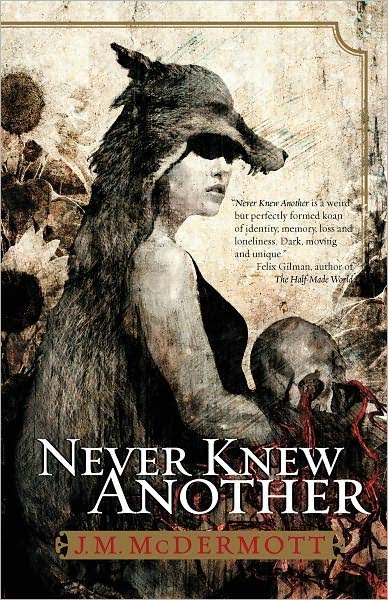
Never Knew Another” is the first book in the Dogsland trilogy. What a dark and moving novel. We’re not left with a lot of hope for our protagonist after finishing this book. I’ve read complaints about the sudden ending, but I felt it was just right. The cover art fits incredibly well with the mood of the book.

There is no warning. Right off the bat the memories of Jona are drawn out of his skull by the Walker. Walkers are servants of the goddess Erin dedicated to hunting and killing the seed of the demon Elishta. Demon children, half human-half demon, are considered extremely dangerous, polluting whatever they come into contact with. Walkers are wolves with the ability to change into humans. Their ability to “merge into the mind of a dead man” is essential in their battle against half-demons. While delving into the memories of Corporal Jona the Walkers discover that there is another demon seed in the city of Dogsland, Rachel Nolander.

With her brother Djoss, Rachel has to hide her parentage from other humans. Burning is considered the best way to get rid of all traces of the evil that she is supposed to represent. Hiding who she is, is not a simple matter. Continuously on the move, only chance (or perhaps fate) brings her into contact with Jona, the only other demon-seed she has met. The hunt of Rachel becomes the prime objective of the Walkers.

Kushner, Ellen: The Privilege of the Sword (2006)

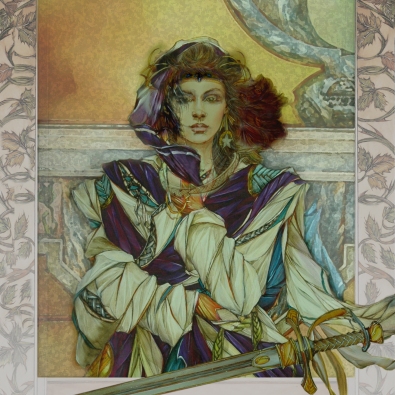
The Privilege of the Sword by Thomas Canty

The Privilege of the Sword” is part of Ellen Kushner’s Riverside stories and is a fun read. Kushner makes this whole world believable. It’s a fantasy book without magic or supernatural creatures. Instead we get a novel set in a time where women were commodities to be bought and sold for money and land.

Katherine, our main character, is sold to her uncle to pay her family’s debts. Her uncle is the decadent Mad Duke Tremontaine, and his plans for his niece do not follow conventional rules. Independence and the ability to defend herself are qualities that he aims to knock into her through sword lessons. Maybe not what Katherine had in mind, but she buckles up and does her best to uphold the agreement that was made between her mother and her uncle.

So, why is this book so good. One reason is that the characters of Katherine and Mad Duke are three-dimensional. Another is the humor and action that fills the novel. The Privilege of the Sword flows somewhere between peaceful and tempestuous.

The Privilege of the Sword is available as audiobook in an unabridged version and narrated by Ellen Kushner,  Barbara Rosenblat, Felicia Day, Joe Hurley,  Katherine Kellgren, Nick Sullivan,  Neil Gaiman

Briggs, Patricia: Moon Called (Mercy Thompson I) (2006)

Moon Called - The last full moon of october

This is the image that I feels illustrates Moon Called best and it shows Mercy (Mercedes) as I had imagined her from the words Patricia Briggs has written about her in Moon Called.

I am a fan of Ms. Briggs’ writing. My adventure with her began with the Hurog saga. Then it sort of developed into a full-fledged love affair and here I am writing about yet another series of hers.

Poor little teen-ager Mac/Alan. Little had he thought about the possibility of werewolves being real. Then all of a sudden he was mauled and changed into one by nefarious people. The Marrok (Bran) calls this rape. To make matters worse, Mac was experimented on and kept in a cage. One day he manages to escape and turns up at Mercedes’ garage (auto-shop). She is a softie and takes him under her wings, eventually introducing him to the Alpha of the Tri-Cities area, Adam Hauptman.

Map created by Michael Enzweiler

Adam and Mercy will according to all the foreshadowing become a couple. Mercy and Adam are very alike, yet incredibly different. She is a shape-shifting coyote, he is the alpha werewolf of the Tri-Cities area. If the two of them decide to become mates, his pack will have to accept Mercy as his second. At least one of the members of the pack seems to have done so already, Warren.

Warren is a sweet-heart. He is a gay were-wolf with an open lifestyle. Meeting Mercy changed his life for the better. For once he met another predator who did not care what gender he loved. Then she introduced him to Adam and Adam accepted him as well. That did not mean that the rest of the pack managed to embrace him as one of their own, but that is the way of the world. We all have different prejudices. Some are more vocal and open about them than others. Sadly, getting to love the person you love is not something we all get to experience.

Just now it really struck me. What if I refused to accept a person because of who they loved? How would that change me and the person I met like that? It is a concept I find terribly confusing.  It would be like me refusing to accept a person because of the color of their skin or hair or eyes. Being on the receiving end of such prejudice must hurt terribly.

Mercy is the kind of person that opens up her heart to a great variety of people. Vampire, werewolf, fae or human matters not. If the other person seems to be decent, then there is room for them in Mercy’s life. Her attitude does create problems when some of her friends meet others of her friends, but Mercy just expects them to be polite to each other no matter how much they might despise each other (vampires vs. werewolves comes to mind). And people often do what Mercy expects. For reasons they do not always understand themselves, Mercy is definitely a person they want to have in their lives. What a gift, and possibly, what a curse.

Her being a mechanic is a bonus for me. As a kid I wanted to be a lot of things and mechanic was one of them. There is something satisfying about being able to take things apart. Sadly, I stink at putting them back together again. Then there is the goo. Goo is the loveliest thing on earth. Mercy gets to fix cars and is a whole lot better at putting them back together again than I am. My “niece” is a mechanic. Even here in Norway it is still unusual for a girl to choose such a career. I absolutely love that my “niece” chose such a line of work. So the idea of a mechanic that happens to be a woman is an added attraction for me.

Just so you know. One of Patricia Briggs series also begins at the time of Moon Called. When Bran sends Charles off to deal with a problem in Chicago the series Alpha and Omega starts.


Amazon Kindle


Reviews:


Moon Called as cartoon:

SKU: C1606902032
Rating: Teen +
Cover: Amelia Woo
Writer: Patricia Briggs, David Lawrence
Penciller/Inker/Colorist: Amelia Woo (digitally painted)
Genre: URBAN FANTASY
Publication Date: March 2011
Format: Comic Book Collection
Page Count: 104+

ISBN-10: 1-60690-203-2
ISBN-13: 978-1-60690-203-5

Just because I like pointing out the obvious. Do the images below remind you of anything? Anything at all??

Layout 1


Gilbert, Martin: The Boys – Triumph Over Adversity (1996)

ForsideWhen I read “The Boy in the Striped Pyjamas” I was once again reminded of the story of 732 Jewish boys and girls whose story Martin Gilbert tells in his “The Boys: Triumph Over Adversity“. One book is from the viewpoint of someone standing outside the suffering while the other one is about the kids who went through hell. I’m not a believer in the many after-life versions of hell, but I am certainly a believer in the human ability to create hell for their fellow humans. In fact, we’re really creative in the many ways we cause others pain, and that worries me.

The Boys: Triumph Over Adversity tells such a story. This is the story of children who (along with their siblings and parents) were uprooted from their homes and dragged into the horrors of the Holocaust. These children were originally from Poland, Czechoslovakia and Hungary. Their lives were the lives of ordinary children with loving parents. As they just below and above ten years old for the most part, these children had no understanding of all of the abrupt changes in their lives. From living in regular homes, they were stuffed into ghettos and then dragged to even worse circumstances.

And then it all ended. No more parents or siblings, all alone in the world after having endured what only few people in the world have had to endure.

After their liberation from the camps, they had to begin rebuilding their lives in Britain. Despite being physically and emotionally drained by their nightmare past, they drew strength from their group. After leaving their hostels, they remained a close-knit and devoted band of siblings. Their families having been destroyed, they created a family among themselves.

So many people ask themselves how something as terrible as the Holocaust could have happened. I doubt there is any one answer to that question. After all, we let history repeat itself all over the world. What I do believe is that we are all capable of becoming something we had never thought was possible. Ervin Staub in his “Roots of Evil” and Max Weber in his “On Bureaucracy” – Iron Cage both try to look at why people are dehumanized and warn us of the consequences.

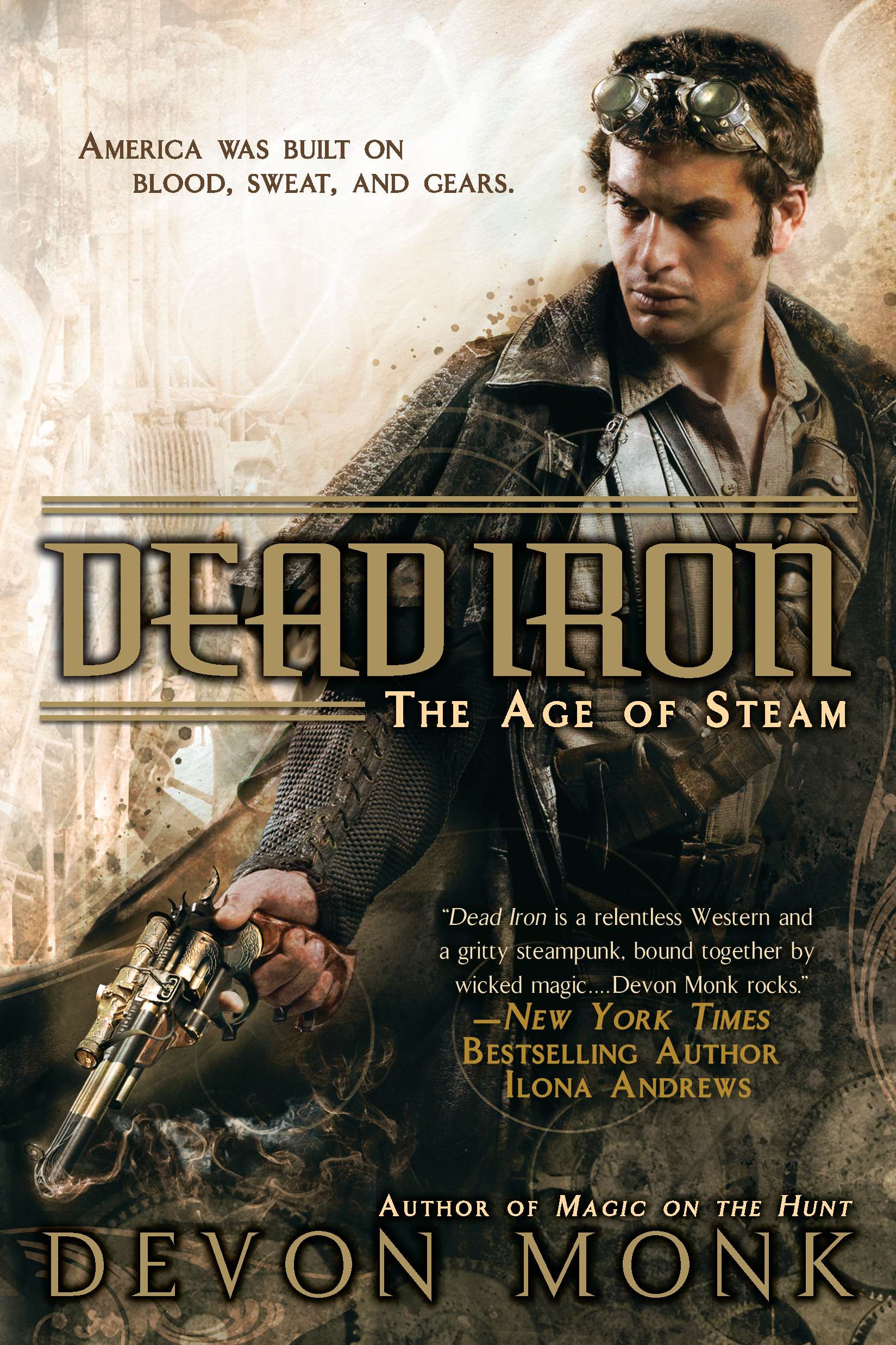
Monk, Devon: Dead Iron (2011)

Dead Iron

The Age of Steam is the new series started by Devon Monk. This time she writes steam-punk (I wonder where they got the word steam-punk?). I don’t really understand why so many fantasy buffs don’t like steam-punk. It’s great fun along with most other fantasy. As Monk is the author, the quality of the book is guaranteed (thankfully). It’s light entertainment (a little heavier than the lightest) and doesn’t strive for moralistic or philosophical preaching. However, Monk does treat her characters as complex beings with dark and light sides. I abhor literature where the goodies are sugar-good and the baddies are black as tar bad. Way to go Monk.

Dead Iron is the first installation in the series about the bounty hunter Cedar Hunt. Cedar has a “slight” health problem that becomes uncontrollable about once a month. To protect others, he lives a bit outside town.

When a small boy goes missing, and the parents go to Cedar for help. After a lot of hesitation he takes on the case. During his search Cedar meets other strange people and a lot of prejudice and fear. In Dead Iron, Monk combines fantasy and technology in a wild-west world where the impact of iron and technology threatens to destroy the presence of magic.

Freeman, Lorna: Covenants (Borderlands I) (2004)

I love Lorna Freeman’s writing. I’ve read the whole Borderlands series several times.

I’ve tried several times to figure out what there is about this series that I like so much. The first thing that comes to mind is the quality of Freeman’s writing. It draws me in and refuses to let me go. In the ocean of average authors, Freeman is a lighthouse. Her books are clean. This is a rare quality today. Explicitness is seemingly sought after by the masses, at least when I consider the many authors out there. No sex and nothing gory. How amazing is that? Along with the naive worldliness of Rabbit, his tricky mentor – Faena Laurel, the respected captain Suiden and his nemesis Slevoic – we get served a story full of action, humor, wisdom and fun. I’m left a happier person each time I read her books.

“Covenants” is book no. 1 in the series about Rabbit. This is the story of how he comes into his magic, his discovery of familial relationships and his willingness to be true to himself.

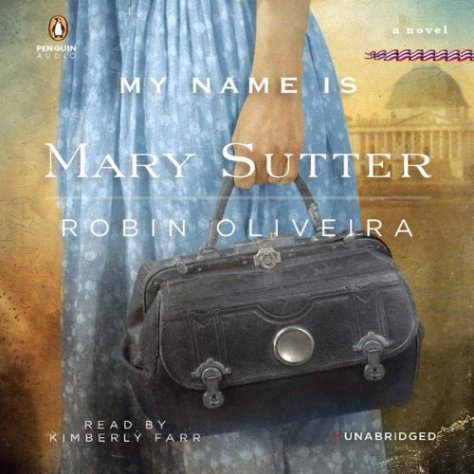
Oliveira, Robin: My Name is Mary Sutter (2010)

My name is Mary Sutter - Robin Oliveira

Even though the story is placed at the time of the Civil War in the US, I imagine Robin Oliveira’s own background as a nurse helped in describing some of the work and attitudes we read about in her novel My Name is Mary Sutter. At this time being a physician and a woman was practically unheard of. Physicians were trained through apprenticeships, and for a man to take in a woman as a student would mean overcoming prejudices. Professionally schooled nurses were also a thing unheard of. Apprenticeships were the way to go if a woman wanted to become a mid-wife or assistant to a physician.

All of this haphazard training of either physicians and nurses left both professions with vast differences in the abilities of the people who had finished their training. Some nurses and doctors made matters worse for their patients while others were miraculous healers.

Mary Sutter’s mother was a mid-wife and Mary had gone along with her on her many trips into the child-bearing population. What Mary learned about herself during those trips was that she would love to become a surgeon and thereby save people who otherwise did not get visited by a physician in time. Due to the above apprentice-shipping she was refused this opportunity and also refused admittance into medical school.

Mary Sutter was nothing if not determined in eventually reaching her goal. The US Civil War presented her with one such path. Washington was desperate for help on the battlefield and many women felt called to duty. Mary Sutter happened to be one of them. Her experience seems representative of the others I have read of. As such Sutter’s experience seems to correspond with the experiences my nurse friends tell me of today. Arrogant doctors, incompetent doctors, miracle doctors and patients who span the gamut from assholes to angels. As a someone who has been a patient I have met nurses of all kinds but mainly wonderful ones. Most of my nurse friends feel a “call” to serve and this is their way of serving others. Amazing people!

War is a gory and horrifyingly brutal affair. Not one gram of glory is present anywhere on the battlefield. But what a school for aspiring doctors and nurses. One doctor Mary Sutter had to work with had to care for more than 100 men. She helped with operations and learned how to treat stitch wounds. Eventually she managed to be sent to the front and learned how to amputate and live with the gore of poor medical hygiene.

I liked her character. Mary was a goal-oriented woman who worked extremely hard to achieve her dreams and she was certainly a woman that I could have looked up to. Inserting extraneous yet historical characters did not work well for me. It was Mary I wanted more of. But my wishes are irrelevant to an author’s work and it isn’t even a complaint just an observation.


Reviews:


Winner of the 2011 Michael Shaara Prize for Excellence in Civil War Fiction


Civil War-Era Women Physicians

Invisible Women Now In Clear Focus

Mary Edwards Walker

Nursing During the US Civil War: A Movement Toward the Professionalization of Nursing

Springing to the Cause