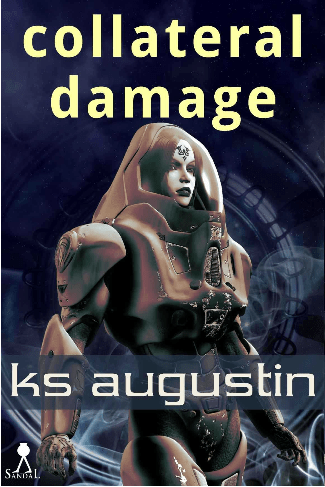
Collateral Damage is an erotic space opera short-story with little emphasis on the realities of space and more on the story between the two characters Meyal and Waryd. The only realistic bit about the Science Fiction lies in the state of the Earth. So, your reason for getting this story would have to be to see what develops between Meyal and Waryd and the story of how big corporations might treat their employees.
Do I believe a large corporation might kill its employee to get out of financial obligations? Hell, yes!!! If there is one thing I have come to realize, it is that the leadership of big corporations will sometimes be so concerned with the financial status of their shareholders and possible deniability that the sky is the limit when it comes to potential nefarious deeds.
Meyal and Waryd both seem like people who want to take care of their families and earn a bunch of money in the doing. Not being supposed to know about the other person and definitely not being allowed to communicate with each other probably only adds spice to their romantic relationship.
The ending of the story leaves me understanding that there is more to come in the future. According to Augustin’s web-site, Collateral Damage could be said to be the origin story of her other work. Collateral Damage was a pretty good story.
Derelictis a proper little horror tale. Even I was able to figure this out. Berg managed to keep the creepiness going throughout the story by little tricks and cues. There was absolutely no doubt in my mind that Derelict was going to have a horror ending, and it did. Cue applause.
While all the horror elements were present in this story about the three space sailors checking out the empty ship, Albert Berg trod the fine line between just enough (for me that is) and too much. I’m guessing my level of dealing with horror is at about the young adult level. Anything tougher than that and I’m frightened out of my knickers. This is one of the serious draw-backs of being a flow addict.
Derelict is about three sailors checking out the seemingly empty Persephone that has docked at their space station on Mars. I would not have liked to be in Warwick’s place as the truth slowly unfolds.
It never ceases to amaze me to find that I am the first person to review a story I like.
When I first saw that Jonas Wakefield was an Imp detective I fell for the abbreviation and thought he was either an Imp or he investigated Imp crimes. He does investigate Imp crimes, but Imp is an abbreviation for implants (the sort that allow you to live your life more or less in virtual reality). Jonas Wakefield is more of a maximalist when it comes to being fitted with the best he can afford in implant technology. His like of staying in virtual reality has made him enough of an expert that people come to him and his semi-partner Reagan King when they need something looked into “over there”.
Reagan King’s profession is funny considering the tendencies of her partner. She happens to be an Imp counselor, meaning that she counsels people who struggle with virtual reality addiction. Each partner depends on the other when their own expertise regarding virtual reality comes to short.
In the story The Death of Jonas Wakefield a husband suspects foul play when his wife disappears in virtual reality. He seeks out Reagan who then calls in Jonas to assist her in this matter. Foul play indeed. As the title suggests Jonas dies and is taken to an appropriate facility afterwards. I enjoyed this strange facility. Fascinating place for a corpse to go to. Not your usual kind of mortuary.
A fun mystery staying true to the genre while including futuristic elements.
Blood Tithe is a serial. Too many questions are left unanswered at the end for it to be anything else. Obviously, I recommend that you begin with this novel. I believe Blood Tithe is Soucy’s first novel and it bears signs of just that. But Soucy manages to overcome most of those problems by keeping his characters interesting and active.
“Once someone is altered, they can gather energy from every living thing. If they take that energy and wrap it around their heart, and then give it to another person, it creates a Blood Tithe. From then on, every time the original person collects more energy, the one he made the Blood Tithe automatically gets their fair share.” Glenn J. Soucy
I have been trying to remember what five-year olds are like while reading Blood Tithe. I can see a person his age falling for the temptation of the forbidden. You do not have to be five to fall for the forbidden. But five is how old Jeremy is when he goes against the commands of his parents and finds his life irrevocably changed. The point in his life when the sins of World War II genetic research comes back to haunt a community. I loved the tension Soucy managed to keep going full pace when Jeremy met Howler and his desperation during their subsequent meetings.
If Jeremy had been my son, would I have become afraid of him? Ideally, my answer should be a resounding no. As most of us end up learning, reality and ideals often do not blend. I really do not know which parent I would have become.
When we meet Jeremy at 13/14 life has become dire. He has done something he feels awful yet justified about in an eye for an eye sort of way.
In choosing to jump from Jeremy as little to Jeremy as teen-ager Glenn Soucy has undertaken a task that many authors shy from for good reason. Blending the two without getting details wrong or messing up on details is where we see that a stricter editor would have made Blood Tithe great.
The Atrocity Archives consists of two stories: The Atrocity Archive and The Concrete Jungle.
“Saving the world is Bob Howard’s job. There are a surprising number of meetings involved.” (The Atrocity Archives)
I have an admission to make. I do not believe I have ever read any Lovecraft but the Chtuluverse reaches far and wide and has many incarnations. Another admission. I am beginning to see that I do not understand what horror literature is. My placing it in this category relies solely upon what Charles Stross himself has said about his novellas.
The Atrocity Archive has to be a math/computer lover’s dream. It mixes real and imagined theories with abandon and we end up with things like “The Church-Turing Theorem”. Even I have heard of Alan Turing. The theorem itself is, of course, fantasy – or is it? Perhaps there really is an organization out there trying to protect us from reaching into the unknown and dragging out brain-eating monsters from parallel universes.
Artwork by Leighton Johns
In the case of The Atrocity Archive this parallel universe is illustrated perfectly by Leighton Johns on Deviantart. As you can see, the worship of Adolph Hitler reached new heights over there. But the lovely monster who has taken over the Nazi-universe wants in to ours, and we really do not want that to happen. Unless you belong to the Order of Null.
As a first field assignment I have to say that Bob Howard has his work cut out for him. Although Angleton (boss-man) did not KNOW what kind of mess he was putting Bob into, he had to at least have an inkling of the extent of the problem. Exactly who or what Angleton is remains a mystery. I find myself curious enough about the man to want to get more of the Laundry series so I can find out more about him.
And that is just Angleton.
I have to say that Charles Stross has a wonderful way with the names of his characters. Scary Spice for one. I just about died when Scary was introduced. Then we have Bob’s flat-mates, Pinky and Brain. Pinky and Brain are uber-intelligent guys whose creative genius (and idiocy) are on par with Leonard of Quirm.
Perhaps this is the main reason I really like Charles Stross. His writing has the exact zing it needs to be both funny and painful. Stross excels at the astoundingly difficult art of satire and I love the way his intelligence radiates his writing dragging me along for the ride.
The Concrete Jungle is of the same quality. In these surveillance times it makes perfect sense to read about CCTV security cameras being taken over to wreak havoc in an area. All in the name of politics. Who cares if a a few people die along the way? You know, proper politics. Oh, the bite.
Once again, Bob Howard is called upon to save the day. Along the way he manages to show me my own “Laundry”. And so I conclude with the words of the master himself:
“The Laundry squats at the heart of a dark web, a collision between paranoia and secrecy on one hand, and the urge to knowledge on the other. Guardians of the dark secrets that threaten to drown us in nightmare, their lips sealed as tightly as their archives. To get even the vaguest outline of their activities takes a privileged takes a trickster-fool hacker like Bob, nosy enough to worm his way in where he isn’t supposed to be and smart enough to explain his way out of trouble. Some day Bob will grow up, fully understand the ghastly responsibilities that go with his job, shut the hell up, and stop digging. But until then, let us by all means use him as our unquiet guide to the corridors of the Fear Factory.” (The Atrocity Archives)
Earth’s Lament is a serial that is both fantasy and science fiction. I love it when an author defies convention and writes the way they want not the way tradition demands.
Old Earth and the one with all of the fantasy creatures are somehow conjoined through an inter-dimensional bridge. This joining of the two earths has created a unit called Mirth.
The people from old Earth seem to have willingly had their memories replaced – except for a few rebellious humans like Jazz.
Jazz is a Monster Collector. It would be unfair to say that she does her job on her own. Her helper is a demon she calls Ship because a demon possesses her ship. Without Ship, Jazz would be toast – burned at that in this short story called Crash Down.
When Jazz utters these words:
“Besides, what could be more boring, self-effacing, and eventless than tracking a lost dog for one of the Welmont elite?”
you know something is bound to happen. Guaranteed!
Off Jazz and Ship go on a tail chasing, ship shooting, dragon, and pirate filled adventure.
The Bloodhound Files was created by Mr. Barant as a social satire. I had no idea of that when I bought the novel. In fact it was not until creating this review that I discovered that fact. However, the feeling of social criticism was there throughout Dying Bites.
No doubt about it, Dying Bites is an action-filled mystery with a whole lot of dark fantasy/science fiction to it. We are talking about a parallel world with an alternate history and lots of paranormal creatures and magic.
Jace Valchek fits into the gung-ho main protagonist mold without all of the gooey romance that some fantasy/science fiction novels glory in – the kind that I never seem to understand. The closest we get to romance would be a couple of thoughts about Cassius and Dr. Pete and some action with Tanaka.
DD Barant uses vampires, werewolves, golems and humans to create a world where racism is based on races rather than silly things like color. In my head it becomes easier to understand the concept of racism. Several of the scenes where Mr. Barant shows us the less pleasant sides of our world become incredibly clear. Two of those scenes are the post-sex scene with Tanaka and the nazi-camp. I found that dialogue well-done.
Other dialogue that I enjoyed greatly was between Jace and Charlie, her partner, and any conversation including Eisfanger. Eisfanger is a wonderfully nerdy person whose greatest assistant is a rat skull called Wittgenstein. I found myself wanting to sit down with Eisfanger and have a chat. Being a nerd myself along with being married to one and having two sons who are nerds makes me predisposed toward nerdy characters – if they are well-written.
Dying Bites was great entertainment with a serious undertone and lots of humour.
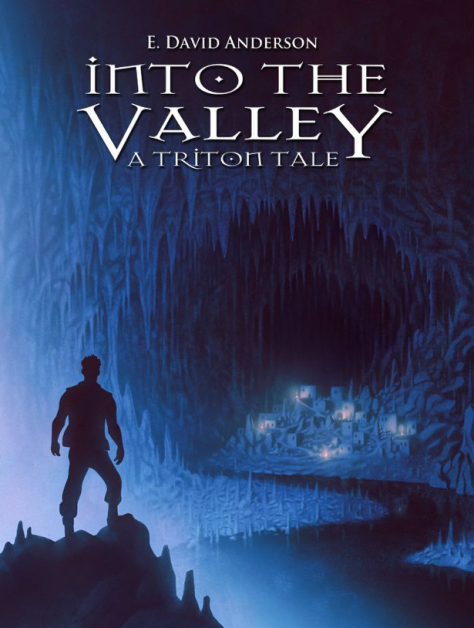
Into the Valley is supposed to be E. David Anderson’s first installation in the Triton series. I believe Into the Valley is Anderson’s first published work. It does not show in its presentation and substance. Into the Valley is an engaging story including elements from Greek mythology and steam-punk (although it might be science fiction instead??).
Every once in a while we make choices that change our whole lives. Lieutenant Aurelian made three of them: Firstly, he escaped his home-island of Akkahellonia. Secondly, Aurelian chose to ignore the advice of the Lighthouse Keeper and his last choice was to dive into the river rather than going across the bridge.
By jumping into the river Aurelian postpones his first meeting with Lord Abraham. Lord Abraham has lovely machines that suck the life out of other people and transfer that life to him instead. Because of his jump into the river Aurelian understands what is going to happen to him before it actually happens.
Aurelian is the kind of young man who believes that one should never give in to whatever life throws at us. Sometimes I am like that myself. At others not at all. How people manage to keep going at all times is beyond me. I know people like Aurelian and I have often wondered how they find the gumption to keep on trying.
“Aston is not what your first choice for a hero would be. He doesn’t fit the stereotype of the (as my favorite label from the “Firefly” series indicates) “big d*** hero” like most in the genre do. He’s the everyman who just happens to get into more than his fair share of tricky situations“
In Seekerthis is how Aston describes himself as well. Aston’s way of making money is as a scavenger pirate and cargo transporter. That means that he cleans up after the pirates if he comes across one of their kills. Not an unknown occupation in today’s world either. Although here we probably just call it the way business is done.
Both Aston and the Seeker are prey to a freelance operator who happens to be the system’s law enforcement service provider. Whoop, dee, doo. Naimakeeda (the seeker) is in as much goo as Aston himself. With his arrival she sees the light at the end of the tunnel appear knowing that it is not a train. I guess there must be some advantage to not being able to avoid knowing what is going on inside people’s heads.
Seeker is a space opera with most of its focus on characters. The one bit of tech that we kind of get to know about is “Jeanie”. Other than that the novella is an adventure story for young adults with pirates that you see and pirates that you do not see. The biggest pirate of them all is the man who is supposed to uphold the law. Tsk, tsk, corrupt politicians – whoever heard of such a thing???
This is a light and easily accessible read in the form of a short-story/novella.
Seven years old. That is how old poor Paige is when the angels take her from her mother and sister and do medical experiments on her. Seven years old is how old Paige is when Penryn manages to rescue Paige and seven years old is how old Paige is when she sees the rejection of her new self from her sister and others. The only one who accepts Paige as she is happens to be her schizophrenic mother. Seven years old. Seven years old.
Paige’s story is the one that affects me the most in World After. Paige’s story is the one that causes my mind to ponder the concept of rejection and how rejection creates invisible wounds in an already visibly wounded body. And Paige’s story is the one that brings to mind the many people out there who have been changed visibly and invisibly themselves. How do I meet them? Am I one of them? How many wounds can a person bear before they become lost?
Penryn and Paige’s mother is a paranoid schizophrenic. Except in The End of Days serial many of her paranoias are real. Now the monsters are here and doing their best to off humanity. My grandmother was a paranoid schizophrenic. From what my father has told of his childhood Susan Ee‘s description of how a paranoid schizophrenic can appear to others seems right on the dot. The pain of the fear a person carries in such a condition is incomprehensible.
Penryn feels guilty at not being able to accept Paige as she is. I believe that is probably a common feeling when a person comes back changed from an accident or war or disease. After all, the person we loved seems to have disappeared. Perhaps they have. Perhaps we just need to see past the wounds and scars. Penryn is only 17 and 17 is awfully young to have experienced what she has. So Penryn carries wounds of her own, although hers are invisible. Her childhood and the responsibilities she ended up with, the first days after the world ended and having an angel steal her little sister would threaten to destroy a person. In part it does. But not completely. Penryn finds short-term solutions to deal with her inner wounds and a way to hold on to hope.
Penryn And The End of Days serial is a difficult serial to read for an old woman due to Susan Ee’s amazing writing. This is definitely a serial I recommend, painful as it is.
You could probably start reading The Bastard Cadre series with The Lord of Frake’s Peak. That is because it goes back to the story of the early days of the reign of Lord Obdurin. As long as you don’t mind the spoilers as the beginning of the novel you should be fine. The only problem with doing this is that you would be reading the best first because Lee Carlon‘s writing has gone from one bastion to the next during these four novels.
I am fairly certain the gods aren’t gods. After I finished reading The Lord of Frake’s Peak I knew that the “whatever they are – not gods” had done all they could to keep humans in ignorance. The Cleansing that had occurred three years before the beginning of The Lord of Frake’s Peak seems like something they would do to keep their secret safe because they felt some person had come too close to the truth. I’m still not clear on whether there are any female gods or if there are genders at all. Whatever the case is there, these so-called gods seem to be amoral beings playing the world and humans for what they can. People like that stink. That is my completely unbiased (snort) opinion.
Lord Obdurin is only one of the many chosen running about doing the gods’ deeds. His god is Rhysin. To become a chosen Lord Obdurin had to get the heart of Rhysin from his predecessor, Lord Benshi. Something terrible seems to happen over time to all of the Chosen. Part of the amorality of the gods seems to enter them and they go from being whatever type of person they used to be to taking on part of the nature of the god. If that is the case, Rhysin must be a brute. Lord Benshi became one and his sons paid a terrible price for it.
Vincent d’Rhyne is the only surviving son of Lord Benshi. He wants nothing to do with Rhysin but is not able to tear himself from the place he grew up. Lord Obdurin spared Vincent for some reason only Obdurin knows when Lord Benshi died. Vincent feels only relief at having his father out of his life. Of the two, Vincent feels that Lord Obdurin is the best alternative. Having read all four installments of The Bastard Cadre I find myself unable to give a clear answer as to whether Vincent trusts in vain.
Trust might be the wrong word, but it seems pretty close to how Vincent feels toward Lord Obdurin. It is as if Vincent trusts that Obdurin will keep him from reaching for the gods. But the reach of the gods might be longer than any of the inhabitants of Carlon’s world might know. Perhaps they are all just part of a huge video game.
Life sometimes feels like that. The joke has been on Vincent so many times that it is becoming more and more difficult for him to remember that life is just a big joke. His ability to stay in the present fluctuates. Considering how traumatized Vincent it is a wonder that he manages to stay there at all.
Poor Eugene. His curiosity is as mine – incorrigible. You just know he is going to get himself into trouble with it. And he does. Does he ever.
This is when he should have stepped from the restroom, allowed the door to swing shut behind him, this is when he should have made a beeline to his brother’s Volvo and never looked back, purged his memory of what had transpired, of the stench, of its source, that wraithlike man who he felt with near certainty was not a man at all. But alas, …
And so the apocalysm begins – with a visit to the bathroom.
The characters were great. I got a pop-idol (not mentioning names) sensation with “perfect” Priscilla describing Lukey Grail. And then we have her little brother Warren! What a wonderful description of just how obnoxious 10 year old siblings can be.
Eugene and the siblings were my favorites. All three of them are incredibly pains, yet somehow likeable.
Luna Perez is the kind of person who has seen the underbelly of life and survived all it has thrown at her thus far. Whether she survives what Eugene brought into the world is difficult to say.
A Pale Horse perfectly illustrates what modern transportation can mean when it comes to disease. The swine-flu comes to mind.
Adam Wolf has stated that A Pale Horse will come in installments. The ending of episode 1 was in a perfect spot. I did not feel as though I was left hanging at all and actually thought it was the end – albeit an abrupt end. Now I know better and will probably get the second installment.
The author warns of R-rated content. There wasn’t – not in Norway anyways. But if you do not like “bad language” you will be in trouble.
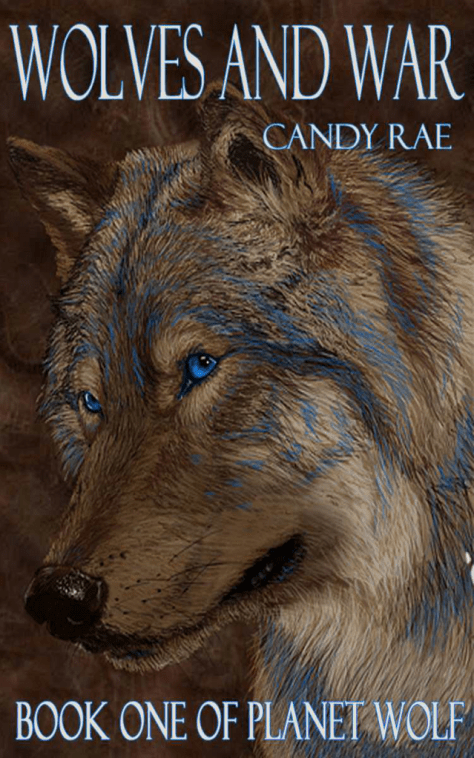
At the outset I want to make you aware of the British English / Scottish English phrasing and spelling in Wolves and War. NOT American English!!! Because of the sometimes young phrasing, I feel Wolves and War is meant for young adults and up. While harsh at times the violence is not descriptive. There is some romance, but it is about as innocent as romance can get. What you do need to remember (sort of a warning) is that Wolves and War is about war and war is anything but nice.
On to the fun stuff.
I really enjoyed Wolves and War. At times I hurt because of the terrible changes to the lives of some of the women and children. War’s nature is gruesome. I have NEVER experienced it myself and am speaking solely as one who reads and listens and watches. What amazes me time and again is what people are willing to put up with if the alternative is death. Often I have wondered why people choose to live rather than kill themselves when their lives become so miserable. Some of the lives on the Southern Continent end up being what I would call gruesome. Yet, somehow life is chosen. Why?
Wolves and War does not answer my why. In fact, it leaves me there with my questions. Ms. Rae has done a brilliant thing in doing that because I do not really want another person to answer all my whys. I don’t even need there to be an answer to my whys.
Wolves and War is a space opera type of Science Fiction – character and world-building is more important than technology.
When the Argyll has to land on the Northern Continent the crew and settlers have to abandon ship before it sinks leaving them without most of their doodads (I know, an extremely technological term). Until war comes to the Northern Continent life is somewhat easier there than on the Southern Continent and the lack of metals is compensated by making tools with a metal-like hardwood. Necessity is the mother of invention even if that invention is a re-invention of old earth weapons. Their smith makes swords, shields, helmets, armour, crossbows and something he calls a contrap:
… was able to fire pre-loaded arrows a fair distance and thirty at a time. The arrows were loaded into a wooded frame he called a magazine that was placed on the main frame of the contraption itself. The firing mechanism was spring-loaded and the magazine was drawn back and then loosed. Distance and trajectory could be altered by the manipulation of wheels and cogs.
All of this preparation would have been impossible without the Aboriginals of the planet of wolves. The Lind are great hulking beasts about the size of a horse but with the look of a wolf about them. They are furry, snouty and have paws. Somehow both the Lind and the Larg of the Southern Continent have developed telepathic abilities along with the ability to form words. The word thing made me think that their snouts must be formed differently from a wolf’s.
What interested the Linds at first about the humans is how humans use their hands and the seeming connection some of the Lind have with some of the humans. Being able to communicate via mind and words is essential in making the humans believe that the Lind are sentient creatures.
Tara is the first human to meet a Lind. Kolyei is a Lind that feels a connection with Tara. Tara is not alone in this ability. On the Northern Continent Tara and Kolyei and Jim and Larya are the two vadeln pairs we get to know most. Tara is only 12 at the time she and Kolyei meet while Jim is in his 40’s. Their Lind bond-person is pretty well matched age wise and this is a good thing as these bonds seem to be for life and so deep that one part does not wish to live if the other party dies. A lot of animal-human bond stories seem to have this as the down-side of bonding. On the up-side is an understanding of the other race’s traits and language along with a deep sense of being loved unconditionally.
I enjoyed the way Ms. Rae tried to not sugar-coat anything for me as a reader. Granted, the fighting was not as gory as fighting really is, but it did not have to be for me to understand the costs of the war between the Southern and Northern Continents. She also did not try to hide the problems that would arise with 20,000 male prisoners escaping into an environment where females are on the run and only 300. When the leader of the prisoners is unscrupulous, well – things go as they pretty much have to go.
Being a colony vessel, the Argyll crew and passengers did not have the same dilemmas nor the same type of people to work with. Without a doubt, that is where I would have wanted to be. Both the North and the South end up with aliens and a landscape that fits with the humans landing there. Any other option would have seen the humans from the Argyll killed and possibly the Lind of the Northern Continent in pretty bad shape as well. As a reader I am glad Ms. Rae chose as she did.
“You’ve met these two clowns, right? Reuben Evans, and Glim Peters. He pointed at each in turn, and the two men pulled cheesy grins. Peters even crossed his eyes. “What names, eh.”
“Says Mikhail,” Peters called. “Who names their kid Mikhail?”
“Ignore him,” Michail said to Francis. “He’s still sore his parents misspelled their feelings at having bore him as a child.”
“What’s that then?”
“Glum.”
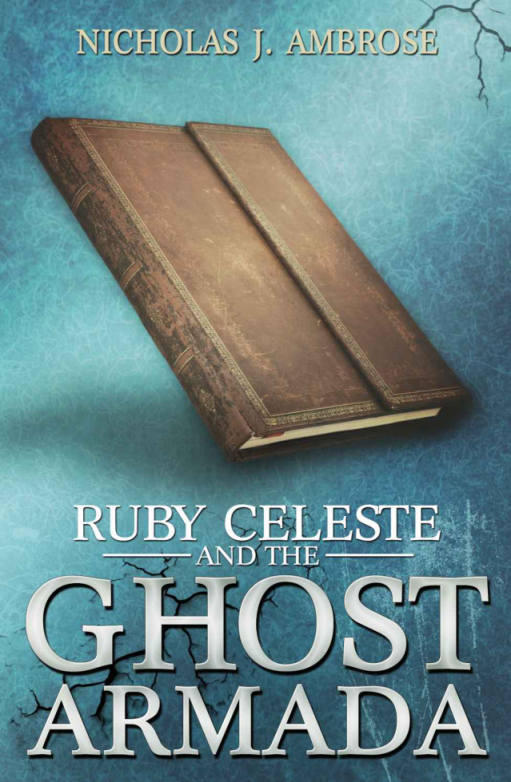
This word-play made me giggle. Ruby Celeste and the Ghost Armada has plenty of humour, plenty of action and a character who seems puffed up with his own importance, to say the least. Rhod Stein is always in the right and he can pretty much do what he wishes. Having had full control of his skyport – floating city – he seems to think that all he encounters will fall in with his plans. Not so.
Poor old Francis Paige is just not having a good day. Being kidnapped from down on earth, taken up into a floating city from which he might fall, ripped from his kidnapper and then chased and shot at is not something he is used to from home.
For having been through what he has, I think Francis pulled himself together quite well. I’m kind of like him. For a time I will bemoan whatever new thing it is that fate has thrown at me. Then I get sick of myself and get on with life as best I can. Francis’ experiences are a bit more extreme than any I have ever experienced. So I feel he deserves a few days to pull himself together.
In his need he finds support with Natasha Brady (the ship’s navigator and possibly the ship’s talk-to person). Natasha is the kind of person that listens and is able to see past angry and fearful expressions. Would that I could always do that. She is exactly what Francis needs to conquer his fears – quite understandable ones for a land-dweller.
We don’t get a whole lot of world-building, but there is some. The Ruby Celeste series is supposed to be a steam-punk universe. But it is not one with a great amount of technical explanations. There are a couple of unusual aspects to it. One of those is that the sky-vessel is powered by something called a Volum.
Like our “household” animals these Volums have been bred to serve the purpose humans want it for. At first I thought that the Volum must be in some sort of slave relationship to humans, but it seems the ones bred for the purpose are content as long as they are fed. I wonder if they have some effect on humans. Benjamin Thoroughgood seemed intensely interested in being with the creature, but whether that was “normal” for any person exposed to a Volum over time or if it was some character trait of Benjamin is impossible to say.
Ruby Celeste was the fourth character that was obvious in the novel. The Volum wasn’t. I just became interested in what it was. Ruby is what I would call a person who draws the attention of others. She isn’t physically intimidating, but that does not stop Ruby from being intimidating when she turns on her engines. Impulsive and stubborn are two words that fit her well. I am very stubborn myself but not exactly impulsive. I am, however, blessed with a son who is and that has brought a great many interesting experiences into my life – as any one who is associated with an impulsive person can attest to. Ruby has one quality that I treasure. She is able to admit when she is wrong and actually apologizes. Being the Captain does not stop her from “eating humble pie”. I both like her and am frustrated by her.
After reading book number one of the Ruby Celeste universe, I would have to say that I had fun reading it and loved the action and humour present.
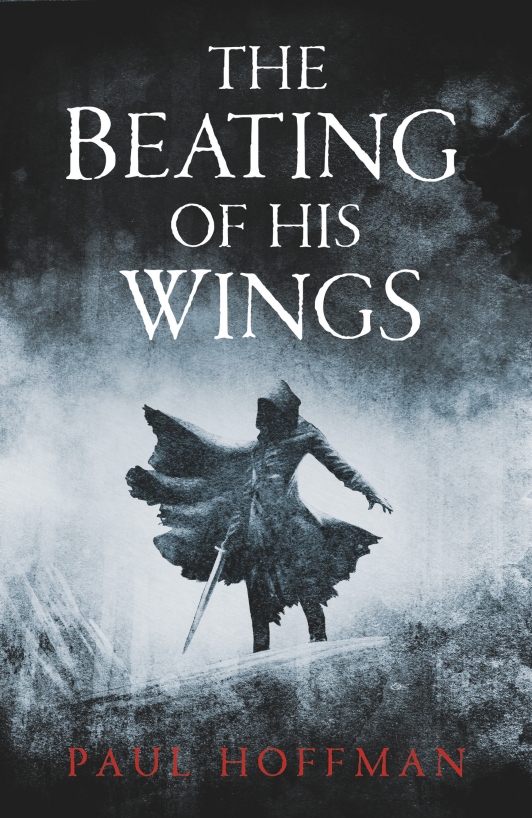
The Left Hand of God trilogy has kept me thinking. I fell hard from book one and Hoffman has kept me going all the way through The Beating of His Wings. I have had to take a couple of days to digest the series properly. Hoffman’s essay at the end of The Beating of His Wings added to my thinking cauldron.
There is something devastating about having reality thrown in my face. What really started me thinking was Hoffman’s description of his Catholic school being less than two miles from Oxford. That got me thinking about my trip to New York ages ago. I’m the kind of person that easily gets distracted from staying on the short and narrow. My mom and I wandered off the beaten path a couple of blocks and started encountering the homeless. Just two blocks away from a regular business street people had to live on the street. That started me thinking about other cities where there are so many homeless that they are everywhere. Cities where the level of crime is so high and the police are part of the criminal world. Onward my thinking went to the discoveries made at the Dozier School for Boys or the abuse found to be rampant in Catholic schools and orphanages.
Back to The Beating of His Wings. What Mr. Hoffman does is hold up a mirror to society. Sure he wraps it in post-apocalyptic paper, but he is basically saying: see the world as it really is. I have friends who claim that my view of the world is too dark. After all, they themselves have not seen or experienced the underbelly of society. What my friends do not realize is that the underbelly of society is in fact the part of the ice-berg that is below water and that they live in the tiny part that remains above the water line. Perhaps one needs to experience the darker side of humanity in order to appreciate just how much space it takes. Or maybe we have to take a closer look at ourselves and our own potential for darkness. I have never really had need or my darker side once I was old enough that I realized it was there. Now, though! I might not have the abilities of the trio of Cale, Henry or Kleist, nor the power or influence of the Materazzi or Vipond, but the wells are there.
While reading all three books I have felt kinship with our trio struggling for survival. They are so incredibly damaged but no more damaged than a great many children of today. And why is the world like this? Well, in the world of Hoffman we see the old story of fanaticism and greed or corruption and power-hunger. On the side-lines are all of the victims of these four drugs, victims whose only concern is survival by any means. And who among us would be able to stay true to our morals and standards once our lives or the lives of our loved ones were on the line?
I sometimes wish the world was different, but perhaps it is as Idris Pukke says to Thomas Cale:
In the paradise that you’ve decided to believe in as your ultimate goal everything comes to you without much trouble and the turkeys fly around ready-roasted – but what would become of people even much less troublesome than you in such a happy place? Even the most pleasant-natured person would die of boredom or hang themselves or get into a fight and kill or be killed by someone who is even more driven to madness by the lack of struggle. Struggle has made us what we are and has suited us to the nature of things so that no other existence is possible. You might as well take a fish out of the sea and encourage it to fly.





 humanitysdarkerside