If you are into macabre humour, you have to read A Holiday Explained. You just have to read about how Santa gets the presents delivered and how the Easter Bunny became hollow. A Holiday Explained is a wonderfully funny and well-written short story – all of three pages long. Well done Mr. York.
Reading this to your kids should be no problem. Kids tend to like the gross and macabre – at least that is what my experience has taught me.
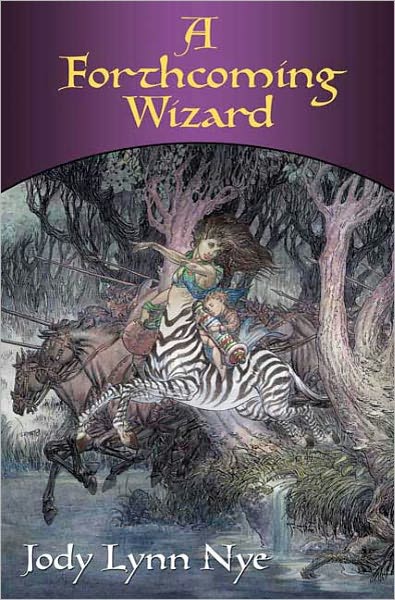
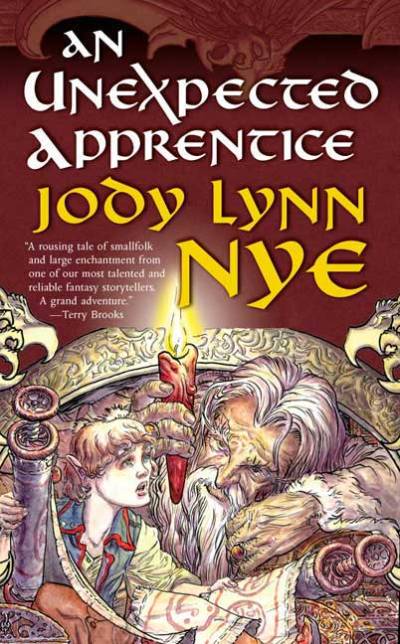
A lot of the books I read remind me of issues that I regularly think about. A Forthcoming Wizard (and An Unexpected Apprentice) reminded me of the many times I have wondered about the concept of racism and the idea of “perfect/ideal”.
Back in the days the Shining Ones took it upon themselves to experiment with the knowledge they had acquired. Like all good scientist they asked themselves the question “I wonder what would happen if …”. Unlike the really good scientists, the Shining Ones forgot to ask themselves the next important question “If I do this, how will it impact …?”. The Shining Ones just went ahead and did what they wanted in the name of furthering their own knowledge often deceiving themselves as to the level of nobility of their choices. Oh, what tangled webs we weave. At one point some of them looked beyond themselves and saw that perhaps they had gone too far in satisfying their curiosity. All of them except Knemet finally came to see that there comes a point in one’s life when one has to acknowledge the consequences of one’s actions.
Is Knemet evil? Maybe amoral would be a better word for it. He doesn’t do things because they are bad. He just does whatever is needed to expedite his wishes. Knemet just wants the Compendium/the Great Book so he can destroy it, thereby ending what he considers his dreary life. But as we already saw in An Unexpected Apprentice, destroying the Compendium will destroy the world. He could care less, and that is why The Great Book must be kept from him.
In my review of An Unexpected Apprentice I posited the hypothesis that the Scholardom could be considered the “bad guy” of the story of Tildi Summerbee. I believe I retract that hypothesis. They base their actions on a certain set of traditions, values, and knowledge. Some of those actions are definitely in the category “bad” in that the actions are incredibly racist. But most of the Scholardom (at least the ones we meet) are teachable. Once they see that their own theories about purity were wrong/misguided, the Knights of Scholardom are willing to try and change.
Tildi continues with her growing pains. Challenging our own traditions and myths hurts. At least I know it did for me. Tildi managed that awful task of asking herself if what she thought was the “right way” might possibly be wrong or just one of many ways. Doing so changes the way she is perceived by others but more importantly how she perceives herself. Her friends both help and hinder her in this process.
The ending of the Tildi Summerbee saga is predictable and almost Disney-like. I think that will be a comfort for the younger audience.
Midway through her 9 a.m. Intro to American Literature course Thursday, University of Nebraska-Lincoln Professor Elizabeth Mabrey suddenly realised that her students would accept, without question, literally any words that came out of her mouth as absolute, incontrovertible fact, sources confirmed.
“I could say that On the Road was an overt metaphor for the Vietnam War and they would jot it down in their notebooks without any hesitation whatsoever,” said Mabrey, adding that, come midterms, her students will, as if on cue, mindlessly regurgitate whatever she tells them, whether it’s that the character of Dean Moriarty is supposed to be a figment of Sal Paradise’s imagination, or that the entire novel is meant to be read backwards.
“I could, honest to God, ask them to tear their copies of the novel in half because that’s what Kerouac ‘intended the reader to do,’ and they would do it. I mean, what…
I used to make fun of feminists because I wanted boys to like me. Back before I met a boy who abused me. Before realizing that I lived in a culture that supported my abuse, and that kept me from questioning it.
TRIGGER WARNING May be triggering for some survivors of sexual violence
At seventeen I met my ex-boyfriend. It was small things at first. He’d put me down and laugh it off.
The first time he raped me I didn’t cry. I was numb. I asked if he realized what he’d done and he had said, matter-of-factly, “All girls get raped at some point.”
“Her friends shot her sympathetic glances, but none of them dared leave their husbands’ or fathers’ sides to be with her.
Smallfolk tradition prevented the girls from going off without permission, even such a small distance. It was only common sense, Tildi had been lectured all the time while growing up. Girls weren’t as strong or as fast as boys. Plenty of dangerous creatures lurked about the Quarters waiting from such a tender young morsel to happen by unprotected – and not all of them were wild animals. That was the rationale her mother had given her for why the custom continued even in cultivated places where there was no reasonable threat. The explanation did not satisfy her, but such matters could only be discussed in private among her companions where the boys couldn’t hear them. Disobedient girls would be made to stand up in meetings with a slate around their necks that read SHAME.”
Even today it can be difficult to find female main characters who stand alone. Or rather female characters who do not need romantic involvement or hero-worship of a male character to keep the story going. Tildi Summerbee in An Unexpected Apprentice manages to be such a character. Perhaps that is not such a surprise considering the society she comes from. In tearing herself loose from the Smallfolk Quarters and setting out on her own, Tildi has to redefine and question the values she has grown up with. Having been orphaned from her entire family is probably a major factor in her seeking her own future independent of the voices of her elders. Sometimes it is when we seemingly have no choices, we find that it is only just now that we have real choices.
I like Tildi. She goes from questioning her right to do anything to being someone who has learned to do without all the things she had previously thought important.
The wizard Nemeth is the reason Tildi and her merry band of 6 set off on their quest to recover “The Book” (really a scroll). My diagnosis is that Nemeth has gone insane from his contact with The Book and from his lust for revenge. I understand his need. Who hasn’t at some point or another wished for the ability to pay back some perceived wrong (whether real or imaginary). Revenge coupled with power over the fabric of the world turns out dire in its effects.
Thankfully Tildi’s merry band is a little more experienced than she. We have the wizards Edynn and her daughter Serafina. Both are accomplished at their craft even though Edynn has centuries more experience than Serafina. The princess Rin is the representative from the centaurs (half horse/half human). She is highly competitive, fun and strong. Tildi ends up having to catch a ride with Rin because of her complete lack of experience in riding any kind of animal. Lakanta is a peddler and a seemingly odd choice for the merry band, but as the story progresses we see that she too represents a group of people that aren’t quite human. Finally we have the Captain Teryn and her soldier Morag. Morag has been magically transformed into a mix of human and something else. For natural reasons he tends to panic when faced with too much magic. The Captain is highly protective of Morag.
There are two more characters that I really enjoyed in An Unexpected Apprentice. One of them is Silvertree. Silvertree is supposed to be the home of the wizard Olen. It is that. But Silvertree is also a person in its own rights. If visitors offend it, Silvertree makes life a whole lot more difficult for them – the way it did with Rin’s brother when he was rude to it. Tildi, on the other, hand gets VIP treatment from Silvertree. I like a tree with a personality.
Magpie is another great character. He lets the world think of him as nothing more than a troubadour with his mind aflutter with silliness. In fact there is a bit more depth to him and he just happens to be the third son of King Solindur of Orontae.
Nemeth isn’t really “the bad guy”. He is just crazy. If I was going to pick a “bad guy”, I would have to choose the Scholardom. Scholardom is such an innocent sounding word. Well-intentioned people can be incredibly dangerous. Getting their hands on The Book is something that must be avoided for these are the people who want to correct all the aberrations of the world. That would mean that any mix of human and other should be changed into human. They find it unfathomable that anyone would actually choose to remain as they are.
I think An Unexpected Apprentice would fit the age range of anyone able to read the Hobbit or Harry Potter. An Unexpected Apprentice is full of humour, of action, warmth, and drama.
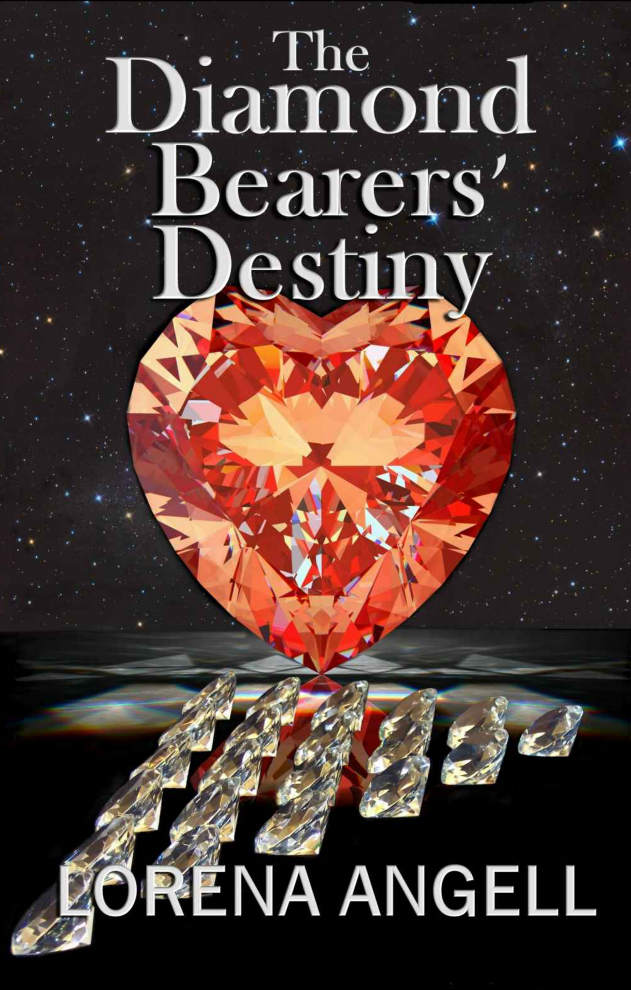
As with the previous covers for The Unaltered serial (need to read them in order) I really like this cover. As the very good thief I am, I stole a compilation of the three others from Angell’s site:
Once upon a time a human became Crimson. She was the first human with a jewel inserted into her heart. Then came Mathea and later on others. With the abilities brought on by being Diamond Bearers these people were able to help humanity survive and to look for unaltered people. Unaltereds are the only ones who can become a Diamond Bearer and the only way to be an unaltered is to have no special powers at all. In the world of Calli Courtnae, Chris Harding and the rest just about every person has some degree of super-natural ability.
Then along comes Freedom (Henry) and General Harding (Chris’ father). Sometimes the combination of two people can bring about amazing results. In Freedom and General Harding’s case these results were amazingly destructive for people who have more than a smidgen of power. Trouble looms.
The Diamond Bearers’ Destiny starts off with an information dump that lets Calli know why Chris acted as he did in The Diamond of Freedom. For the length of the novel the info-dump is too long. I like the manner in which it was done – by having Calli read Chris’ memories.
Calli meets Crimson for the first time when she meets up with Chris and ends up reading his memories. Crimson tries to make Calli understand just how important she views the freedom to choose. Crimson’s explanation of her world-view is not too long in and of itself. On top of the information dump it is. Once Angell spread the philosophical moments with action we once again started moving into the action/thrillerish nature of the other three Unaltered novels.
The Unaltered serial is definitely for young adults. Both violence and romance is kept extremely innocent. I think even the strictest parents would allow their children to read this kind of content.
Although Brand doesn’t get to be as fun this time around, he does get to show off a bit. For those who are interested in romance, there is even some of that. Chris and Calli are a bit mushy for me, but then they have been all along. Very few romantic descriptions avoid my mushy label.
I found the consequence for Diamond Bearers who tried to go against nature interesting. Whether Calli stuffing the diamond into Jonas’ chest qualifies as one such action is a worry for Crimson (and Calli once she gets to know how serious something like that is).
In The Diamond Bearers’ Destiny Deus Ex and General Harding’s are both obsessed with having their own diamonds. Both are driven by fear of some other person being more powerful than themselves. Aahhh, the ever-present lure of power.
Cover art by Alan PollackReligion, faith, beliefs seem to control so much of the world’s humans. We allow ourselves to be steered by goddesses and gods who promise all kinds of things in return for our unfailing loyalty. Political systems seem to have the same kind of hold on people. I see how soldiers willingly put their lives on the line in travelling to far-away countries on the say-so of their leaders. In both instances motivations seem to differ from anything from undying loyalty to simple greed (although greed might not be such a simple matter).
Path of Blood takes us into both these worlds. Yohuac and his absolute loyalty to the nahualli’s and the goddesses and gods of Cemanhuatl is disturbing in its completeness. Reisiltark is no different. Like heroes in a great many young adult sagas she will do anything to save her country from destruction. That she happens to be a more or less “good” person is a lucky thing for Kodu Riik. What if she had made the kind of choices that Upsakes had – who also believed that he was doing the Lady’s will.
In spite of seeing what a terrible person Aare is (and it would take a completely blind and deaf person to avoid that) the Lord Marshal of Kodu Riik is going to swear loyalty to the man the moment he takes the Iisand’s throne. To him it is the throne he is swearing himself to and not the man. But life is never like that. It is always the person we end up swearing ourselves to and the values that person emotes. That is if we are looking at tyrannies, monarchies or dictatorships. Whether we choose to follow that person out of our own free will or because we are forced does not really matter in the end. What matters is what price our loyalty ends up having. I doubt I would have the strength to gainsay a person like Aare. His way of ruling is much too brutal and frightening.
Fortunately there are sometimes alternatives. In the case of Path of Blood we have the followers of Reisiltark and the rest of the rebels. These are the ones that managed to escape the steel grip of Aare’s followers. They have set up camp by Mysane Kosk in the hope of helping Reisiltark heal their land. I think I consider people like these rebels brave. They are the ones who have the courage to stand up to a tyrant and have put their lives on the line for their freedom. Sadly that is the consequence of power-hungry people – one sometimes has to take up weapons to stop them maiming the place one lives in and the people one lives with.
I’m not certain how I feel about Reisiltark herself. I don’t know if I really believe in her. Perhaps she is too much the anguished hero. In that sense she and Yohuac are a perfect match. She fills her role as hero perfectly. Heroes are supposed to be larger than life, have amazing values and be able to make difficult decisions on who has to die when trouble arrives. This very good and very bad cast of people is part of what makes a young adult novel. In my head Path of Fate is very much a young adult novel. There is violence, gore and darkness, BUT very little of it is descriptive and the dark is interspersed with light.
The mid-winter holidays are a difficult time for a lot of people. Some years a lot of religious traditions come together to celebrate what is deemed to be a joyous occasion. At other times the mid-winter holidays becomes a lonely time for a great many. For me the reason X-mas is a difficult time of year for me is because of all of the people I have to deal with and the change from daily routine. After all these years, I have found a way to deal with that. One thing that is in fact becoming increasingly difficult for me to figure out the purpose and sense of is gifts.
When I was little, my parents struggled to make ends meet. At that point in history here in Norway I imagine this was probably more the rule than the exception. X-mas was a welcome time when we children would get things we needed. We children might not appreciate all of our gifts equally, but new things weren’t an everyday occurrence. My parents were happy. It was also a time of plenty food-wise.
Our little family has not had to struggle financially. We aren’t rich by a long stretch but we have always had enough and more. Our children have never really wanted for anything. To me it makes no sense that we should receive gifts that are to us personally. What does make sense is the kind of gift that helps those who need it more in some way.
At the same time I admit to loving book gifts or the gift I got from one of my sisters-in-law this year (a building-set lamp). I cannot help feeling bad about it all though. Which is why posting the below infographic from Ethical Ocean makes sense to me:
The character of Santa Claus is largely based on St. Nicholas of Myra and Sinterklaas of Dutch lore. Both of those figures traveled via a noble, white steed. Yet in some Western cultures, particularly America, Santa Claus travels the world on Christmas Eve delivering gifts in a sleigh pulled by flying reindeer.
In 1812, American author Washington Irving refers to St. Nicholas as “— riding over the tops of the trees, in that self-same wagon wherein he brings his yearly presents to children” in the revised version of A Complete History of New York written under the pseudonym Diedrich Knickerbocker. Yet no mention is made of what propels the wagon. So where did the story of flying reindeer originate?
The first known written account of reindeer in association with the legend of Santa Claus occurred in 1821. That year, New York printer William Gilley published a sixteen page booklet titled A New Year’s Present, to the Little Ones from Five to Twelve Number III : The Children’s Friend by an anonymous author. In the book, reindeer are introduced into the Santa Claus narrative:
Old Santeclaus with much delight
His reindeer drives this frosty night.
O’er chimneytops, and tracks of snow,
To bring his yearly gifts to you.
During an 1822 interview, New York’s Troy Sentinel editor Orville L. Holley questioned Mr. Gilley regarding the booklet’s author and the topic of reindeer. Though he did not identify the author, Mr. Gilley responded:
“Dear Sir, the idea of Santeclaus was not mine nor was the idea of a reindeer. The author of the tale but submitted the piece, with little added information. However, it should be noted that he did mention the reindeer in a subsequent correspondence. He stated that far in the north near the Arctic lands a series of animals exist, these hooven and antlered animals resemble the reindeer and are feared and honored by those around, as you see he claims to have heard they could fly from his mother. His mother being an Indian of the area.”
In 1823, the Troy Sentinel published the poem A Visit From St. Nicholas, commonly known as The Night Before Christmas. The poem features eight flying reindeer pulling Santa’s sleigh and, for the first time, they are identified by name:
When what to my wondering eyes should appear,
But a miniature sleigh and eight tiny reindeer,
With a little old driver, so lively and quick
I knew in a moment it must be St. Nick.More rapid than eagles his coursers they came,
And he whistled and shouted and called them by name;
“Now, Dasher! now, Dancer! now, Prancer and Vixen!
On, Comet! on, Cupid! on, Dunder and Blixem!
To the top of the porch, to the top of the wall!
Now, dash away, dash away, dash away all!”
Though originally called ‘Dunder and Blixem’ in the 1823 publication, Santa’s seventh and eighth reindeer are commonly known as ‘Donner and Blitzen’ today. Dunder and Blixem are Dutch words that translate to thunder and lightning. Some 19th and 20th century publications of the poem substituted the names ‘Donder and Blitzen’, which are German for thunderand lightning, and in other articles during the 20th century, ‘Donner’ replaced the name ‘Donder’. After Johnny Marks penned the song Rudolph The Red-Nosed Reindeer in 1949, based on the story by Robert L. May, the name ‘Donner’ became the most popular spelling for the seventh reindeer originally named ‘Dunder’ in the poem A Visit From St. Nicholas. May’s story and Marks’ song were both well received and Rudolph is without doubt the most famous addition to Santa’s team.
The above information helps determine the first written accounts of reindeer in conjunction with Santa, but how did reindeer come to be associated with Santa Claus in the first place? Many popular Christmas traditions related to Santa Claus were brought to America by Dutch and German immigrants. As the persona of Santa Claus and celebration of Christmas were being developed in the west, customs and myths from foreign lands, including those of Scandinavian and European countries, were incorporated.
As pagans converted to Christianity during the Middle Ages, winter festivals and traditions, as well as popular pagan beliefs, often mingled with Christian celebrations of Christmas. In Norse and Germanic mythology, Thor is the God of Thunder and soars through the sky in a chariot pulled by two magical goats. Thor was highly revered and was arguably the most popular of Norse gods in ancient times. Images and stories of Thor soaring the skies in his sleigh pulled by two large, horned goats may have influenced the creation of Santa’s sleigh and flying, antlered reindeer by those in the west familiar with Dutch or Germanic mythology.
Reindeer were once viewed as mysterious creatures linked to lands in the northern part of the world. Their population was widespread in Scandinavian and Eastern European countries where, during the 18th century, they were domesticated. They were often used in transportation, pulling sleds and sleighs, and are still an important aspect of some indigenous northern European cultures, particularly to the Sámi people (commonly known as Laplanders to non-Europeans).
Taking these bits of knowledge into account, one can see how reindeer might have come to be used in early writings as the wondrous, flying creatures propelling Santa’s sleigh.
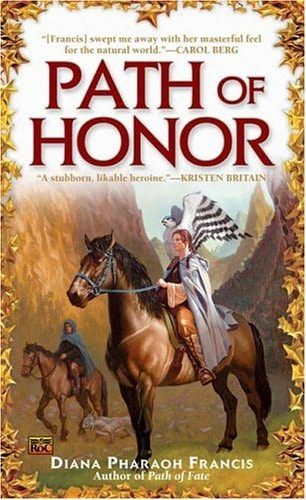
One of the really interesting people in Path of Honor is Verit Aare. Verit Aare is the heir to the throne and eager to replace his father. As his father has been more or less absent the past six months, Aare’s lust for power is growing. Unfortunately for Koduteel (capital) and all of Kodu Riik Verit Aare is a psychopath/sociopath. While a lot of us have psychopathic traits, very few of us reach Aare’s level of sociopathy. According to Psychology Today one needs to show a lack of empathy (cold-heartedness, an inability to feel deeply); show a lack of shame, guilt, fear or embarrassment at ones actions; a tendency to blame others for their own failures, or no shame if confronted; show a strong ability to remain focused on a task; appear charming yet have a tendency toward pathological lying, and they seem comfortable even when found out; incredibly overconfident, as if they cannot fail; impulsive; incredibly selfish and parasitic; lack realistic long-term goals; and finally be prone to violence.
I feel certain most of you would be worried if a person like this lusted for the leadership of your country. Yet Aare seems to fulfil most of these criteria and for me that is the reason I find him especially fascinating and possibly revolting. Take how he treats his sister, the Vertina Emelovi, and what he does to his father’s hostage, Soka.
When Soka was nine years old his father had broken the terms of the hostage agreement. Something had to be done to avenge the wrong and it was decided that Soka would lose an eye. But the Iisand was not able to attend the removal and sent his son, Verit Aare, instead. Aare made the little boy remain awake during the procedure but had Soka drugged so he would remain docile while it went on. Finally, a map of Soka’s father’s lands was sown into the lid of his eye as a reminder of the deal. It had not been the Iisand’s intention that the procedure would be so cruel for the boy, but Aare liked the feeling it gave him.
Once again, Soka is in his power. Naturally, Soka is scared shitless. What will the Verit do to him this time?
On to Verit Aare’s sister. Poor Emelovi. She has to live with the man on a daily basis and he is not a good brother to have. Her fear of him is intense, yet he has kept his father duped as to the depths of his depravity. Perhaps that is because people tend to see what people want to see. Vertina Emelovi, on the other hand, is quite familiar with her brother’s cruelty. He expects nothing but complete submission. If she does not do what he tells her to, she suffers greatly. The first time she was made aware of that was when he killed her puppy because Emelovi had refused to dance with one of his friends. Since then, well. One does what one has to with such a maniac in the vicinity.
Aare does not like Reisil. He does his best to turn the court against her. Lucky him. Sodur (another ahalad-kaaslane team) has made his job much easier. On his part, Sodur did have the best of intentions. But what do intentions help when consequences are what determines the value of them. Poor Reisil, the consequences for her are stinky. Things are looking up for Aare when it comes to using his charisma and power-hunger against her.
Reisil is not completely alone. Kebonsat has come to court Emelovi on the chance an alliance between Kodu Riik and Patvermese might happen. Hmmm. Despite this task, Kebonsat does not forget his friendship with Reisil. Nor has Juhrnus. Reisil is thankful to have two such loyal friends on her side as it seems the rest of the powers of Kodu Riik have turned against her. But friends do turn up in strange places and sometimes lives change because of decisions one has made. She does have the “common people” on her side. But the common people do not have much power. Not really. Like us, the common people in Kodu Riik trust that the powers that be must be interested in the best of the country. Man, we are suckers, aren’t we.
I am a fan of the television series about Chief Inspector Morse that starred John Edward Thaw as Morse and Kevin Whately as Inspector Lewis. I suspect my love for the television series has stopped me from reading the novels by Colin Dexter about the Chief Inspector as I do not want my image of him changed. From experience neither medium translates well into the other.
My love for the original cast made me apprehensive when young Morse was to appear in a pilot episode on television. How on earth were the casters supposed to find an actor who could portray a younger version of Thaw?
Sometimes I am pleasantly surprised and my meeting with Shawn Evans as the young Detective Constable Endeavour Morse and Roger Allam as Detective Fred Inspector Thursday was a delight. Endeavour is everything I could have hoped for and I have enjoyed watching each episode as they have come out.
I find myself needing to mention the music. My goodness the British understand the whole “mood” thing on screen. I love the music in the series. Absolutely love it.
Magic. Not all fantasy books include magic, but a lot of them do. Path of Fate is definitely about magic. We have the bond between the ahalad-kaaslane, Reisil-Tark’s evolving power and the power of the Patvermese magicians. All of these types of magic come together and open up a discussion about power, politics, gods and responsibility.
My rhetoric question of the day is: If you have power, do you also have a responsibility for how that power is used? Hell, yes!!! But just because you have a theoretical responsibility does not mean that translates into having to answer for your use/abuse in the real world. We all know that. Even I know that and I am not the best person in the world when it comes to paying attention to what goes on around me.
Reisil-Tark’s greatest role in Path of Fate seems to be to put a light to the abuses of power going on in and around Kallas during the story. We join her as her own sense of responsibility grows and embeds itself firmly into her mind and heart. Watching her come to realise that the people around her are not what she had thought/hoped for is an interesting process. It hurts when people we trust betray that trust. More difficult is seeing how we, ourselves, betray the trust of others. Reisil-Tark has to come to terms with that side of herself as well. My experience is that the reality of myself is the most difficult one of face. Being able to say that I screwed up or need to change a part of myself hurts. The pain is in many ways similar to the pain I have experienced whenever there has been need for surgery. This is the kind of pain I am sensing from Reisil when she has to come to terms with herself.
Path of Fate is Reisil-Tark’s story. She is an enjoyable character who does her best to deal with the life she has been given. Finding her strength in a world where she is pretty much alone is a process and we get to follow her on that journey.
I have never had such a clear and understandable explanation of what “shitting where we eat”. For someone as literal-minded as myself, I have just thought that it sounds reasonable not to do that. Thank goodness there are people out there who like to do stuff like this.
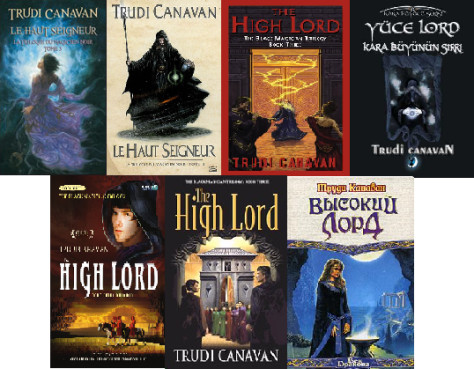
Top left: French cover Top 2 left: French cover Top 2 right: Cover art by Matt Stawicki Top right: Turkish cover Bottom left: Indonesian cover Bottom center: Cover art by Les Petersen Bottom right: Russian cover
My son and I recently finished reading The Black Magician trilogy together. What he discovered is that sometimes favourite characters die. He felt that was kind of cruel of Canavan. It is one thing when the bad guys die, but good guys (especially ones you really like)? Oh, well. It is unlikely this is the last time he experiences this. Despite that, he really enjoyed himself during our adventure. As did I.
The High Lordanswers all our questions about why Akkarin uses black magic. It also shows us that the powers that be sometimes make long-term decisions that are seemingly wise at the time but turn out to be bad for future generations. Accidental deaths can cause a lot of trouble down the road.
I’m still impressed with Sonea. I think that growing up rich and powerful blinds you to the reality that most people live under. Peggy McIntosh discusses this phenomenon in her White Privilege: Unpacking the Invisible Backpack. Sonea growing up in the slums has made her aware of the harsher sides of life and made her more open to the possibility that status quo must change. Even Rothen and Dannyl, who are open-minded for wizards, fail to understand exactly how privileged they are.
My dad grew up under extremely difficult conditions. His mom was a paranoid schizophrenic and his dad disappeared after he had enjoyed German hospitality in prison camp. Torture got the better of him and alcohol was used to self-medicate. That left my dad as the responsible person at home from a very young age. His mom did her best, but, you know, being a paranoid schizophrenic without access to medication does not help in creating stability for your children. My mom’s childhood sucked as well. Her dad was an alcoholic and her mom worked her tail off to provide for them. When my mom has told me what it was like to drag a drunk dad up three stairs to get him inside the apartment – after he had pretty much spent his earnings on booze – well, I wonder how she made it????
But that childhood made them into pretty awesome people who have always been concerned with the greater good. They turned what could have made them bitter into something that helps others each and every day (even when they are now ancient =) ). Like Sonea, not all of their decisions have been wise. But like Sonea, what they have done is try to be true to the motto of “not doing unto others what you would not like to have them do unto you”.
Sonea grew up without her parents but was fortunate enough to get to live with her aunt and uncle. This is probably what saved her (and the rest of the city). Her hunger, poverty, the Purge, being bullied by the other novices and being suspected of everything “bad” by the adult wizards did not stop her from being true to her own values. Sonea’s situation is in no way unique in the world (except for the magic that is). Poverty, war, captivity, orphanhood and homelessness are all part of the lives of a huge amount of children and adults. That people are actually able to rise above their experiences and make the world a better place is amazing. Yet people do it all the time – just like my parents have. Which is why I find Sonea utterly believable. Her decisions regarding Akkarin seem inevitable and sensible considering the kind of person she is.
Picture photoshopped by Lauren Kelly Small
Tayend is my other favorite person of this story. He is our lad from Elyne. While homosexuality was not accepted in Elyne, homosexuals were not persecuted. Unlike Dannyl’s experience in Kyralia. Being a fan of the underdog, I would have thought that Dannyl would be the one to appeal the most to me. But Tayend has an innocence about himself that seems true. When that innocence is challenged, as it is in The Novice, Tayend rises to the occasion. He is loyal to Dannyl, in love with Dannyl and willing to avoid meeting with Dannyl if that is what it takes to protect him from the wrath of the magician’s guild. I wish I could have gotten to know him better.
Cery is back and this time he finds himself with a mysterious customer who seems willing to help him find whatever Sachakans arrive at Imardin. She turns out to be different from what he had originally thought, and that causes friction. But Savara still manages to be of assistance to Cery when he needs her help most. Who to trust or who not to trust when you are a Thief, that is the question.
Reading The Black Magician trilogy with my son was my third time through the series and I still had fun and learned new things about myself and the world.
In The High Lord Trudy Canavan gifted me with really fun words to read. During part of the book she had used the words Sachaka, Akkarin and Takan a lot. My mouth was having so much fun saying those sounds. Sometimes it is really awesome to be an autist (aspergian).










 humanitysdarkerside