Daisy Fay and the Miracle Man was first published as Coming Attractions in 1981. I just had to add the cover for Coming Attractions because it represents coming of age so perfectly. That is in part what Daisy Fay and the Miracle Man is about – coming of age. Daisy Fay gets a typewriter from her grandmother. For those of you who are too young to understand the concept, this is what a typewriter looks like:
I learned to type on one of these and I imagine Fannie Flagg did too. That was what we had to work with in 1981.
What Fannie Flagg does this time is take us into the life of Daisy Fay. Idyllic is not exactly the word I would use for it. Instead we are shown a resilient girl that grows up in a troubled family. Her way of coping with the realities of her life bring us hilarious and sad situations. She gets into trouble time and again. Sometimes with good cause and sometimes due to the idiocy of the adults around her.
Daisy Fay and the Miracle Man is yet another example of the quality of Fannie Flagg’s writing. I think this is the one that my dad liked the most, probably because of the similarities to his own life. Reading Fannie Flag leaves me with hope for a better future and love for the characters I have just said goodbye to.
As a character in this book I can tell you that everything in it really did happen, so I can highly recommend it without any qualms whatsoever. With thisquote from Mrs. Tot Whooten we are once again brought into the universe that one of my favorite authors has created for my and your pleasure.
Fannie Flagg has the gift, the gift I tend to on and on about without being able to define exactly what it is. Most of us have probably experienced the Author Gift at least once. You know those times when you are dragged into a piece of writing while struggling to keep yourself IRL at the same time. What a wonderful time to be a Reader.
Me, I love Aunt Dorothy, our radio-host, and source of information about the happenings in Southern Missouri. She is as complex and well-rounded as a written character can be. Finding her own way around her experiences has made her into the loving and straight-forward (Southern style) person that she is. There is something about the Southern style that is appealing even to this Viking-hearted Norwegian.
“The winner!” screamed Ward McIntire and the audience was on its feet applauding. What glory. What a triumph. Five minutes later Bobby ran into the Trolley Car Diner with gum still sticking to his eyelashes and ears, waving his free-pass book in the air, yelling, “JIMMY … I WON … I DIDN’T GET RATTLED. I WON!” But before Jimmy had a chance to congratulate him he had to run out the door, headed for the drugstore to tell his father. When he got home his mother had to use kerosene to get all the gum out of his hair, and he used up all twenty-five passes in less than a week taking everybody to the movies but he didn’t care. He had blown the biggest bubble in the history of the contest, people said. Maybe the biggest in the entire state. From that day on he felt special.
How can you not love characters like that. Tot, Bobby, Aunt Dorothy, the Oatman Family, Hamm, Charlie and Anna Lee are all characters that interact and add to the quality of Standing in the Rainbow. I hope you get as much pleasure out of reading Standing in the Rainbow as I did.
Prejudice and fear seem to be recurring themes in Patricia Brigg’s novels. Raven’s Shadow is no exception. In this instance, the Travellers are the persecuted people. We see instances of this today. In general there seems to be a lack of trust towards people who do not stay in one place and become part of the community. It makes it a whole lot easier to blame them for something, as our links to them won’t be a strong as they would be towards a neighbor. Such is the world of Travellers in Briggs Raven duology.
Tier and Seraph are our two main protagonists in Raven’s Shadow. We meet Tier as he is on his way home from the war. Tier is a rebel. His father was a baker and the expectation was that Tier would take over the craft. But Tier wanted to see the world and did that. Unfortunately, he also ended up disillusioned about the state of the world.
As he enters a village he see a large bon-fire in the town square. A Traveller was burned suspected of using magic. Inside the town’s inn the citizens have joined in drinking to their “brave deed”. Left behind is a young woman. The innkeeper has decided to sell the girl to the highest bidder. Tier ends up buying her, Seraph a Raven traveller who has no reason to trust Tier. This is the beginning of the journey of Seraph and Tier, a journey fraught with danger and betrayal – you know the spiel. I liked both Raven’s Shadow and Raven’s Strike. While not complicated, they are easy to read.
Tier has been rescued and the family is taking it easy on the way home from the Capitol after the run-in with the wizards. Part of the way, they have chosen to travel with Benoin and his tribe. On the way they come to a village where a shadow creature has killed some of the villagers. The creature is taken care of, but the family soon realises that it is just a symptom of what is happening in the land.
At the same time, Tier seems to be having trouble recovering his magic. It seems to be fraying and drawn away from him. Seraph cannot figure out what the problem is, but slowly the family is being led to the ancient city of Collosae – the city where the Travellers came from.
Raven’s Strike gives us more background information on the Travellers and their roots. This background information turns out to be vital to Tier’s ability to solve the puzzle. The romance between Jes and Hennea takes up a bit of space.
Raven’s Strike tied up a few loose ends and was a good follow-up to Raven’s Shadow. They are both typical examples of Brigg’s writing: light, fun and accessible.
We humans are a fearful lot. If anything or anyone differs from the accepted norm, most of us will find some way to avoid that thing or person. Sometimes we’ll use the opportunity to bully and taunt the person exhibiting “strangeness”. The Hob’s Bargain illustrates this ability to pretend that we know how the world should be, even if that means hurting someone we love.
Aren’s (our protagonist) family is not excepted from this. They have an hereditary clairvoyant ability that sometimes expresses itself in a more magical one. That makes them fodder for the blood magicians – who feed on death. Aren’s brother was wanted as a magician by those in power, but he did not want to consequences of such a choice. Rather than have his death be used by the blood magicians, he chose to suicide.
You can imagine this has affected Aren. It seems she is beginning to experience visions, making her worry about her new husband. When the cottage is broken into, she manages to hide in the food cellar, but Aren knows something is terribly wrong.
While hiding in the cellar, Aren suddenly feels a change in the way magic feels. Something has broken, but she has no idea what – being too busy surviving, and all. From that point on Aren’s visions are clearer and the first one concerns the death of her father and husband. Turns out her whole family is gone. Now Aren has to deal with her grief, her out-of-control magic and the changes in the land and her neighbors.
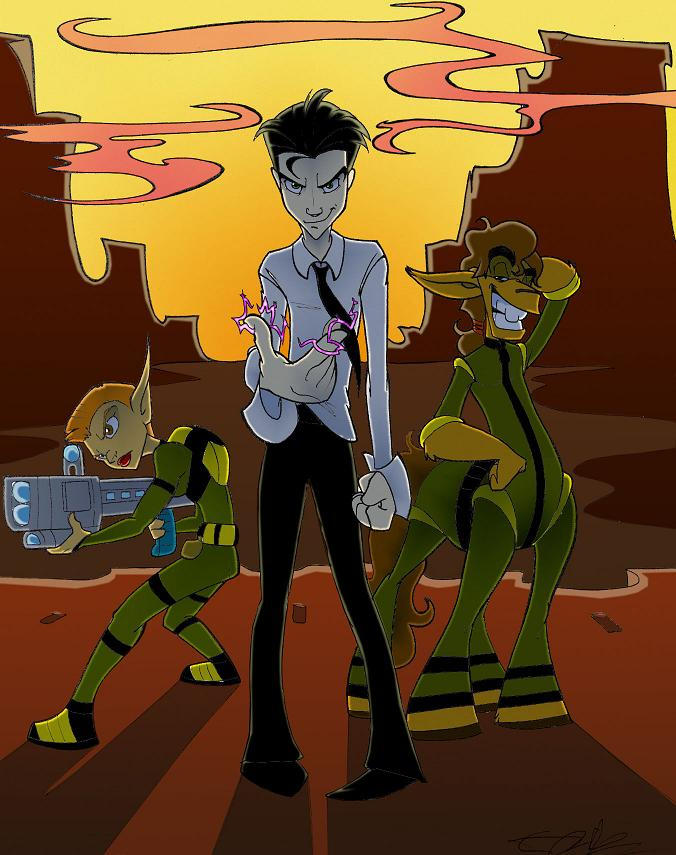
I started reading Artemis Fowl to my oldest son until he got into the whole reading thing himself. Once there, he took over and went through the books below. After I’d thoroughly brainwashed him, I set out to do the same with my youngest – first by reading to him and then through audiobooks. Audiobooks are a miracle for dyslectics. A dyslectic brain is just as brilliant as any other brain, it’s just the whole sorting letters into the right order thing that baffles them. Needless to say, I managed to convert my youngest as well. You’ve probably guessed by now that I’m a fan of Eoin Colfer’s creation of the less than legal character of Artemis.
Artemis Fowl II is the main character of Eoin Colfer’s Artemis Fowl series. Artemis is a teenage criminal mastermind on the lookout for enough gold to restore his family fortune. He considers himself fairly wicked, but as the series progresses we see that there is plenty of good deeds to balance the bad. My kids loved all of the tricks he played on both his friends and enemies. We have not read it yet, but the conclusion to the series was released in July 2012 – The Last Guardian.
Eoin Colfer begins our journey into the world of Artemis Fowl II in the novel Artemis Fowl. Some of the characters we meet will appear in all of the novels while some of them we’ll only see in a few of them. His faithful bodyguard, Butler is one of the characters that will appear again and again.
Artemis is 12 years old. His father is an Irish crime lord, Artemis Fowl, who has disappeared. Through research Artemis thinks he can prove the existence of faeries and when he tracks down The Book of the People he has his proof.
Artemis decodes the book – only natural for someone of his genius – and travels the world looking for locations for a magic-restoring ritual. They discover and capture Captain Holly Short who is out restoring her magic. Holly is then brought to Fowl mansions. The faeries are not pleased with Artemis and sends a crack team (LEP) to recover her.
A graphic novel adaptation was released in 2007. A film adaptation was reported to be in the writing stage in mid-2008, with Jim Sheridan directing.
AWARDS:
W. H. Smith Book Award
British Book Award
Whitbread Book of the Year Award: Shortlist
Lancashire County Library Children’s Book Award: Shortlist
Bisto Book of the Year: Shortlist
New York Times Best-Selling Series
Massachusetts Children’s Book Award Master List (2003)
Bulletin of the Center for Children’s Books Blue Ribbon Award (2001)
In The Arctic Incident, Artemis is a year older (13). We once again meet Butler, Captain Holly Short and Commander Julius Root.
Artemis is set up to take the blame for supplying contraband to goblins. When Artemis and Butler defeat the real baddy, the LEP decides to help Artemis recover his father from the Russian mafia. The rescue group is ambushed by goblins.
It becomes apparent that Opal Koboi of Koboi laboratories is involved somehow, leaving it to Artemis and Holly to figure out how to save the day – both for Artemis’ father and the LEP.
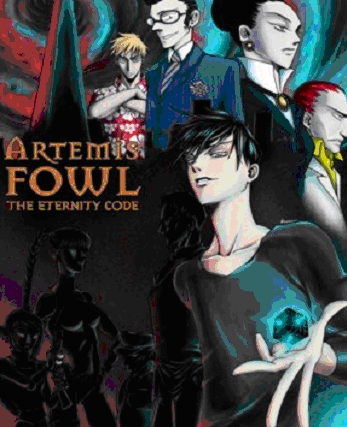
The story in Eternity Code happens shortly after the Arctic Incident. While Artemis has changed somewhat since the first book, he still loves to scheme and steal from the fairies. Artemis has created a supercomputer which he calls the “C-Cube”. It gets stolen and in the process Butler is killed. However, Artemis comes to rescue – along with a bit of fairy magic.
Artemis convinces the fairies to help him recover the Cube and they agree – but with one condition. Artemis is to be left with no memory of the fairy world.
Our lovely Opal Koboi (from The Arctic Incident) has gotten away from the asylum where she was being held by the LEP.
She then sets out to revenge herself on Commander Root, Captain Short, Artemis and Butler.
Holly is desperate for help and turns to Artemis – against the wishes of the LEP. The only problem is that Artemis is left with no memory of the fairy world.
While Artemis likes to think of himself as someone who chooses to do bad, it turns out he is a softy after all. He is still full of trouble and deviousness, but it is difficult to come out of reading the book and not liking Artemis. Mulch provides all the laughs a kid could need.
Artemis and Butler are demonhunting. He is somehow able to predict when a demon materializes. This comes to the attention of our trusted Foaly. This brings Holly and Mulch (who now have their own PI business) into the story.
In the meantime, there is trouble on Hybras (demon island where time is nonexistent). However, it seems that the spell holding Hybras in stasis is fraying and an answer to the problem is needed. Bullying is a favorite pastime, and No1 is one of the victims. He is convinced to come to the human world.
Right now, its glaringly obvious that everyone is going to meet – probably with a huge bang somewhere. The Artemis series does have a habit of loads of action and humor. Thankfully Colfer is keeping up the good work.
When Artemis’ mom contracts a fatal disease, Artemis turns to the fairies for help. Unfortunately the only cure to the disease is through the silky sefaka lemur of Madagascar. It is extinct. The last specimen was killed 8 years ago with the help of Artemis. Talk about the past coming back to haunt you.
Through lies and deception, Artemis gets the fairies to help him time travel. The goal is to save the lemur – hopefully for good. Holly and Artemis go back in time and need to avoid their younger selves.
Everything has a price, so too Artemis’ lies to Holly. Colfer portrays this rather well. He also brings up the issue of the cost of abusing our environment. I find myself wanting to preach here, but The Time Paradox does a much better job of illustrating the issue.
One of the consequences of The Time Paradox is that Artemis is left with a clearer sense of responsibility toward the environment.
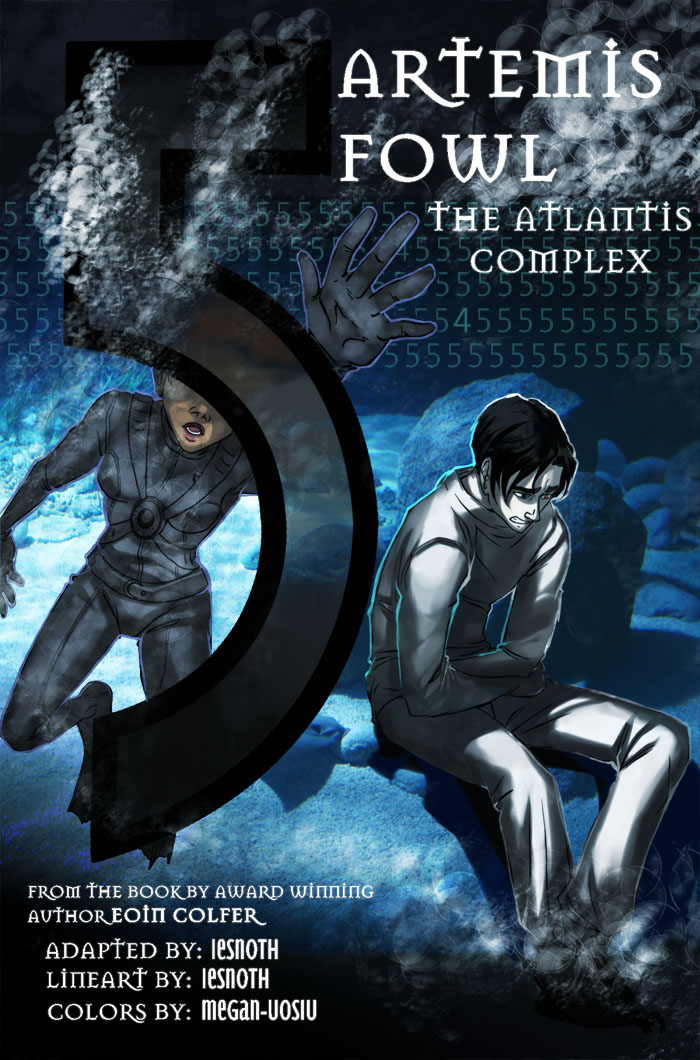
When Artemis unveils the Ice Cube – an invention to stop global warming – the fairies discover that Artemis has developed something called Atlantis Complex (including OCD, paranoia and split personality). Artemis has a break-down during the presentation. Holly and Mulch are left taking care of things, while Artemis is dealing with his episode.
In the meantime, Butler is on an adventure in Mexico. Artemis tricked into travelling to help Butler’s sister. Turns out it was a good thing after all.
This book is a prime example of why I prefer to read books by English writers in English. The Norwegian translator just hasn’t gotten the nuances of the English language. All I have to do is translate back to English, and I discover that the author’s meaning was completely different from the Norwegian translation. I’m going to see if I can get this book in the original language.
All complaints aside, Saving CeeCee Honeycutt is an excellent example of what happens to a child who experiences many years of neglect. CeeCee is a mess by the time her mother is killed while having a psychotic episode. A crazy mom along with an absent dad just doesn’t make for a happy life at 12 years old. Luckily, her neighbor, a lovely Mrs. Odell, was a safe harbour for CeeCee. That and CeeCee’s books made quite a difference to her own sanity, because having a crazy psychotic mom is not something that generally endears people to you.
Fortunately, CeeCee’s great-aunt Tootie steps in and brings CeeCee into her home. This saves CeeCee. Her recovery takes time and some wounds hurt longer than others. But, like Fannie Flag’s books, the ending is happy for CeeCee.
What I really liked about this book is that it shows that it really matters what you do. Tootie could have stayed away and let CeeCee end up in whatever arrangement her dysfunctional dad could have come up with. But she didn’t, and that made all the difference. Tootie wasn’t alone in all of this. Her sister, maid and friends all accepted CeeCee’s presence. That made it easier when CeeCee met the inevitable bumpy people in her road.
I know someone like grand-aunt Tootie. When it was needed, she stepped in and saved two children from a difficult life. It hasn’t been easy, but it has certainly made a difference. This is one of my heroes. Knowing a real life example of CeeCee’s experience, makes the story believable and wonderful to read.
Seanan McGuire (that has to be an Irish/Scottish name) is the author of the October Daye series. She has a great website with all sorts of fun “facts” about fantastical things.
October Daye is part fairy part human. It seems the fairies like to mingle with humans, leaving their off-spring to make it in the world as best they can. This series is full of racism and prejudice. The unfortunate halflings need to hide their fairyhood from the humans and are thought of as “less than” by the fairies.
What I like about the October Daye series is that Seanan knows how to write. I’ve already written about her “Newsfeed” books written under the pseudonym of Mira Grant. You’ll find the quality of writing is as good in these books. The Daye books are lighter in spirit. They are about the parallel magic world of the fairy. Humor and action abound and some romance gets slipped into the text as well. San Fransisco is Toby’s base and love.
I like Toby’s character. She’s quite different from a lot of the urban fantasy characters that are out there. Somehow she seems more believable
ROSEMARY AND RUE (2009)
We meet October (Toby) for the first time in Rosemary and Rue. Living with two cats, Cagney and Lacey, Toby is trying to make it on her own as a changeling in San Francisco.
After getting burned by both sides of her heritage, she’s retreated entirely from the fae community, spending her nights stocking shelves at a San Francisco grocery store and her days asleep in her apartment downtown.
Her days of trying to stay away from the fae community are about to end. When Countess Evening Winterrose phones Toby one evening trying to get help Toby is worried. But Toby wasn’t home when the Countess tried to get hold of her. Next time Toby sees Evening, she is dead. The gaes the Countess placed on Toby makes it inevitable that Toby finds herself yanked back into the world she thought she was leaving behind.
A Local Habitation is the second book in the series about October Daye. It’s important to Toby to maintain contact with her changeling friends. There are all too many of them who find themselves caught between two chairs, unable to fit in anywhere. Fortunately for Toby, she has friends who are part of the pure-blood fae world. One of them is Tybalt, the king of the Cait-Sidhe, and Duke Sylvester Torquill, her liege lord.
Sylvester comes by her apartment seeking Toby’s help. He needs her to go to Fremont, near San Jose. His niece, January, seems to have gone missing, and the Duke wants to know what has happened to her (if anything). January is the Countess of Tamed Lightning, making this something of a diplomatic problem – trying to avoid war with the neighbours. Fortunately, Sylvester does not expect Toby to go alone. Quentin, a teenage Daoine Sidhe, is sent to help Toby if she should need it. Off they go into the land of adventure.
Everything seems to be going well for Toby. Her PI business is busy, she visits with her friends and gets to sleep days. Then her friend (past lover) calls asking to meet her. When a fetch knocks on her door, Toby knows nothing but trouble is coming her way.
An Artificial Night brings Blind Michael into Toby’s life. The Firstborn son of Oberon and Maeve begins claiming the children of the Mists as his own – something he tends to do at regular intervals. Some of these children belong to friends of Toby and she is taking this quite personally.
Her fetch, May Daye, makes her worry about the success of her challenges. That is because fetches only arrive when you are expected to die, giving you the chance to set your life in order. But that will be difficult when Toby is running to one crisis or the other.
Late Eclipses is the fourth book in the October Daye series. After her challenges in An Artificial Night Toby is trying to live as normal a life as she can. But with her fetch, May, living with her, that isn’t exactly easy. May is pretty much Toby’s opposite – bright and cheerful and fond of healthy living.
Then a messenger from the Queen of Mists arrives. Toby is expected in her presence immediately. Toby brings May and her troll friend Danny along to back her up. Even though the Queen is the reason Toby has ended up with her own knowe, she despises Toby for being a changeling. Warned by Tybalt that the Queen is out to get her, it comes as a surprise when the Queen of Mists actually installs her as Countess Winterrose. But Tybalt warns Toby that she is being set-up for something.
In Late Eclipses we learn more about Toby’s mother. There is also relation stuff between Toby and Tybalt/Connor – you know, the whole who will she choose thing. A close personal friend to Toby dies and that brings more loss into Toby’s life – and responsibility.
One Salt Sea begins as Toby is getting a grip on the management of her knowe. The Countess of Wintergreen is taking in refugees and letting changelings take an important role in dealing with the management of her knowe.
Then war threatens between the land and the sea. The sons of the Duke and Duchess of Saltmist have been kidnapped and the Luideag calls in her marker and tells Toby that she needs to find the boys before fighting breaks out. The Queen of Mists is suspected of being behind the kidnappings and Toby needs to both prove that this is not the case and to find the boys before their parents lose their patience.
One thing Seanan is good at is to show that not all consequences are fun for her characters. There will be a lot of that in One Salt Sea. I really liked the sadness along with the humor in this book.
ASHES OF HONOR (2012)
Toby is still recovering from the events of One Salt Sea. After having risked her life time and again, she finally realizes that she needs to ask people for help in doing things. And Toby does ask for help.
When Etienne comes asking for help, Toby brings the whole crew in on the job. His daughter has gone missing. The fact that he did not know of her existence is irrelevant to his wanting the girl back. Her name is Chelsea and she is around 15 years old.
The problem with Chelsea is that her fae side is strong. Her teletransporting is off the scale and it seems she has been kidnapped for nefarious reasons. It is up to Toby to solve the mystery and to recover Chelsea (hopefully alive).
Ashes of Honor was an easy read, like all of the October Daye books. Seanan’s writing is seamless, and that translates to flowing reading for me. I’m dragged down this river of words, not wanting to get off the river. Unfortunately, duty does call and sleep is more and more necessary as I age. Bummer.
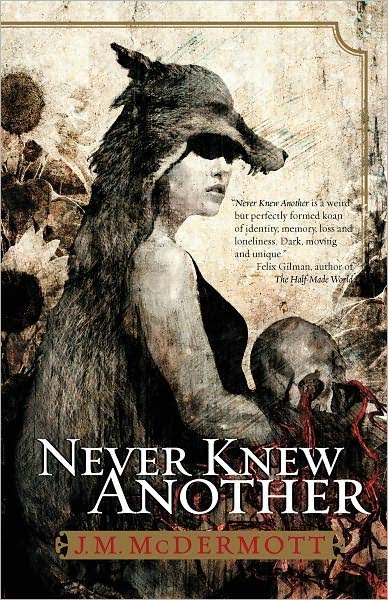
“Never Knew Another” is the first book in the Dogsland trilogy. What a dark and moving novel. We’re not left with a lot of hope for our protagonist after finishing this book. I’ve read complaints about the sudden ending, but I felt it was just right. The cover art fits incredibly well with the mood of the book.
There is no warning. Right off the bat the memories of Jona are drawn out of his skull by the Walker. Walkers are servants of the goddess Erin dedicated to hunting and killing the seed of the demon Elishta. Demon children, half human-half demon, are considered extremely dangerous, polluting whatever they come into contact with. Walkers are wolves with the ability to change into humans. Their ability to “merge into the mind of a dead man” is essential in their battle against half-demons. While delving into the memories of Corporal Jona the Walkers discover that there is another demon seed in the city of Dogsland, Rachel Nolander.
With her brother Djoss, Rachel has to hide her parentage from other humans. Burning is considered the best way to get rid of all traces of the evil that she is supposed to represent. Hiding who she is, is not a simple matter. Continuously on the move, only chance (or perhaps fate) brings her into contact with Jona, the only other demon-seed she has met. The hunt of Rachel becomes the prime objective of the Walkers.
Writing under the pseudonym Mira Grant, Seanan McGuire published the political thriller/zombie trilogy Newsflesh including the books “Feed”, “Deadline” and “Blackout”. I am anything but a zombie fan, but Grant has written a thriller that goes far beyond zombies. We become embroiled in politics and corruption, discussions on freedom of the press and get a look at dysfunctional societies and families. Excellent author that she is, Grant brings her characters alive and gives them depth and color. And the action. My goodness is there ever action in this trilogy. And death. Prepare yourself for a heavy toll on people who made me care about them. Did I say I liked these books??????? Keep on writing under either name and the world will be a better place.
The concept of the Newsflesh trilogy is based on the unforeseen consequences of biological research. By 2014 cancer and the common cold had been defeated. Unfortunately, the side-effect was that when you died you became a zombie and started feeding. Oops. The world was changed forever. The mainstream media fell, Internet news acquired an undeniable new legitimacy, and the CDC rose to a new level of power.
Set twenty years after the Rising, the Newsflesh trilogy follows a team of bloggers, led by Georgia and Shaun Mason, as they search for the brutal truths behind the infection. When Senator Peter Ryman of Wisconsin decides to take a team of bloggers along on his run for the White House, Georgia and Shaun Mason are quick to submit their application. They, along with their friend Georgette “Buffy” M. are selected, and they view this as the chance to launch their careers to a whole new level…that is, if they can survive the campaign trail. Feed follows the Masons and their crew into a world filled with the living dead—and the much more dangerous living.
In Deadline, the members of the After the End Times staff are reeling…none more than Shaun Mason, who can’t figure out what he’s supposed to be doing with his life now that he’s found himself unexpectedly in charge. The arrival of Dr. Kelly Connolly from the CDC provides a new direction, and a possible new route into the conspiracy that caused so much damage just a year before. However, it turns out that Dr. Connolly’s arrival heralds more death and despair for the crew.
The world is getting more and more bizarre by the moment for Shaun and now Georgia. Both of them have had their worlds turned topsy-turvy and struggle to maintain their sanity and belief in humanity. Nothing is as they thought it would be and they are both bruised and battered. But there is hope. Not a great one, but nevertheless. The cost of a free press is clearly portrayed in the courage and sacrifice of the characters of this novel. Sometimes no price is too high to pay to share the truth with the general public.
The series about Calliope Reaper-Jones is urban fantasy. For chick-lit, they’re not half-bad. Calliope is a bit too much of an air-head for my taste, but she has her heart in the right place (at least I hope so). Benson writes well and probably enchants her target group.
The books about Death’s daughter are humorous and lighthearted mysteries with plenty of action and sleuthing.
In Death’s Daughter (2009) we meet a Calliope Reaper-Jones who is trying to suppress the knowledge of her heritage. But when her father is kidnapped, she once again has to return to the family mansion and try to figure out what is going on. To do that, Calliope is going to have to fulfill a quest, one where the competitor is the Devil’s apprentice.
Cat’s Claw (2010) continues where Death’s Daughter left off. She is discovering that trying to keep the family business running is a handful. When she has to pay her debt to Cerberus, Calliope finds herself with her hands full.
Serpent’s Storm (2011) has us back in New York where Calliope is once again trying to fit in with the rest of the world. But it doesn’t matter that Calliope is trying to stay away. Someone still wants to kill her and Calliope is going to have to do her best to stay ahead of the game.
“Coastliners” is yet another book I’ve read in Norwegian. I prefer reading in English if the author writes in English, but when I receive books as gifts here in Norway, they’re going to be in Norwegian.
“Coastliners” was fun. Harris’ characters are flawed and delightful with all of their imperfections.
On the island of Le Devin, off the British coast, the population is ageing and dwindling. The wealthy live on the la Houssinière side, while the poor live on the les Salants side of the island. As usual, the wealthy hold the power and this has been a source of no little resentment from the poorer population.
Les Salants has a serious problem. Each year the ocean comes closer and closer to the houses that hug the cliffs and dunes. Something must be done to redress the problem, but no one knows quite what to do.
Once Madeleine Prasteu arrives at les Salants, things begin to change. She is trying to recover from the death of her mother and goes back to her childhood vacation spot. After a while Mado becomes involved in the attempt to save les Salants and with the help of mysterious Richard Flynn a secret engineering project is underhand.
Wow. This book is gold. “Context” is book no. 2 of the “Nulapeiron Sequence”. As such it is the continuation of the story about Tom Corcorigan. This story keeps getting better and better. Meaney blends philosophy with action and obsession beautifully. In Context he manages to keep the text flowing in a manner above and beyond most authors. What a gift.
Tom is healed from devastating injury. His security chief, Elva comes along. Unfortunately, she is killed on that trip. This becomes a defining moment for Tom. He realises his love/passion/obsession with Elva. When it turns out that somehow Elva has survived, but that her mind has been transferred to the body of her twin sister. Tom goes off hunting Elva. In the process he becomes one of the most important tools in the fight against the Blight.
Of course, there are many stages of learning for Tom. One does not blithely meet with something as powerful as the Blight. One of the many tools aiding Tom is the mu-space crystal that he got hold off in “Paradox“. From it we learn more about Ro and her role in the whole mystery.
Hard-core science fiction has seldom been more fun. Please, please read this trilogy if you have the chance.
When I read “The Boy in the Striped Pyjamas” I was once again reminded of the story of 732 Jewish boys and girls whose story Martin Gilbert tells in his “The Boys: Triumph Over Adversity“. One book is from the viewpoint of someone standing outside the suffering while the other one is about the kids who went through hell. I’m not a believer in the many after-life versions of hell, but I am certainly a believer in the human ability to create hell for their fellow humans. In fact, we’re really creative in the many ways we cause others pain, and that worries me.
The Boys: Triumph Over Adversity tells such a story. This is the story of children who (along with their siblings and parents) were uprooted from their homes and dragged into the horrors of the Holocaust. These children were originally from Poland, Czechoslovakia and Hungary. Their lives were the lives of ordinary children with loving parents. As they just below and above ten years old for the most part, these children had no understanding of all of the abrupt changes in their lives. From living in regular homes, they were stuffed into ghettos and then dragged to even worse circumstances.
And then it all ended. No more parents or siblings, all alone in the world after having endured what only few people in the world have had to endure.
After their liberation from the camps, they had to begin rebuilding their lives in Britain. Despite being physically and emotionally drained by their nightmare past, they drew strength from their group. After leaving their hostels, they remained a close-knit and devoted band of siblings. Their families having been destroyed, they created a family among themselves.
So many people ask themselves how something as terrible as the Holocaust could have happened. I doubt there is any one answer to that question. After all, we let history repeat itself all over the world. What I do believe is that we are all capable of becoming something we had never thought was possible. Ervin Staub in his “Roots of Evil” and Max Weber in his “On Bureaucracy” – Iron Cage both try to look at why people are dehumanized and warn us of the consequences.
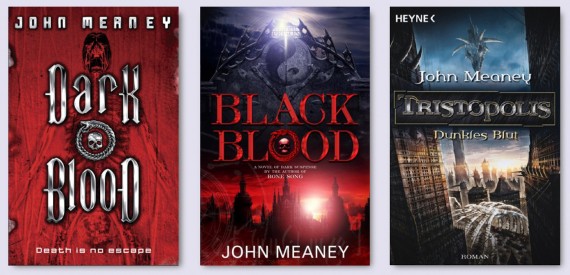
The Tristopolis series about Lieutenant Donal is an incredibly warm and tense mystery. In Bone Song, we see Laura (Donal’s boss and lover) ends up deader and Donal with her heart. “Dark Blood” sets out to discover the whereabouts of the magicians responsible and we follow Donal’s journey towards that end.
We get to see descriptions of loyalty, friendship, love, grief, betrayal and a whole lot of magic throughout the novel. John Meaney is a top-class author who manages to portray a world of complexity and three-dimensionality.
Some of the descriptions inside are quite vivid and that makes me recommend this for teen-aged and upwards. Death-sentences in Tristopolis just aren’t carried out as nicely as the ones on this earth.
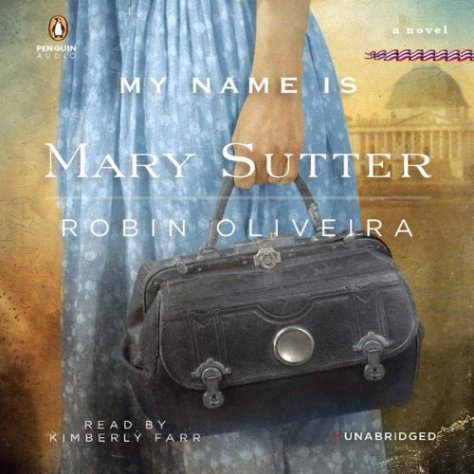
Even though the story is placed at the time of the Civil War in the US, I imagine Robin Oliveira’s own background as a nurse helped in describing some of the work and attitudes we read about in her novel My Name is Mary Sutter. At this time being a physician and a woman was practically unheard of. Physicians were trained through apprenticeships, and for a man to take in a woman as a student would mean overcoming prejudices. Professionally schooled nurses were also a thing unheard of. Apprenticeships were the way to go if a woman wanted to become a mid-wife or assistant to a physician.
All of this haphazard training of either physicians and nurses left both professions with vast differences in the abilities of the people who had finished their training. Some nurses and doctors made matters worse for their patients while others were miraculous healers.
Mary Sutter’s mother was a mid-wife and Mary had gone along with her on her many trips into the child-bearing population. What Mary learned about herself during those trips was that she would love to become a surgeon and thereby save people who otherwise did not get visited by a physician in time. Due to the above apprentice-shipping she was refused this opportunity and also refused admittance into medical school.
Mary Sutter was nothing if not determined in eventually reaching her goal. The US Civil War presented her with one such path. Washington was desperate for help on the battlefield and many women felt called to duty. Mary Sutter happened to be one of them. Her experience seems representative of the others I have read of. As such Sutter’s experience seems to correspond with the experiences my nurse friends tell me of today. Arrogant doctors, incompetent doctors, miracle doctors and patients who span the gamut from assholes to angels. As a someone who has been a patient I have met nurses of all kinds but mainly wonderful ones. Most of my nurse friends feel a “call” to serve and this is their way of serving others. Amazing people!
War is a gory and horrifyingly brutal affair. Not one gram of glory is present anywhere on the battlefield. But what a school for aspiring doctors and nurses. One doctor Mary Sutter had to work with had to care for more than 100 men. She helped with operations and learned how to treat stitch wounds. Eventually she managed to be sent to the front and learned how to amputate and live with the gore of poor medical hygiene.
I liked her character. Mary was a goal-oriented woman who worked extremely hard to achieve her dreams and she was certainly a woman that I could have looked up to. Inserting extraneous yet historical characters did not work well for me. It was Mary I wanted more of. But my wishes are irrelevant to an author’s work and it isn’t even a complaint just an observation.



 I learned to type on one of these and I imagine Fannie Flagg did too. That was what we had to work with in 1981.







 ROSEMARY AND RUE (2009)
 A LOCAL HABITATION (2010)
 AN ARTIFICIAL NIGHT (2010)
 ONE SALT SEA (2011)


 “
“
 humanitysdarkerside