You know that feeling you get when its been ages since you read a book and then you discover again why you’ve kept it in your library. Julie E. Czerneda has been such a discovery. What a delight. Czerneda has the flowing ability. It’s like listening to good music reading her books.
In a sense the plot is pretty basic. Someone gets screwed and they set out to right the wrong. In Julie’s Trade Pact Cycle books this happens in a universe where the different races of intelligent life have joined in a Trade Pact. There are outsiders. One of these is the Clan – a group of people (look pretty much like humans) who have the ability to travel the M’hir (a place outside of regular space) and telepathic abilities. Some of the members of the Clan are extremely powerful and one of these is Sira – our female protagonist.
The Clan oppose her attraction to Jason Morgan, and Sira herself is afraid of what her power might do to this telepathic human. She is right to fear her own power. When Sira is attacked by the Clan, Sira sends Morgan off to recover what was stolen. Unfortunately a lot of her fury with the Clan is sent along and Morgan is having to fight the urge to express this anger through the book.
As Jason is sent off, Sira transports herself to the only place she feels she will be safe – the Drapsk space ship. She is correct. She is indeed safe on the Drapsk vessel, but that safety also brings a new set of problems Sira’s way. The Drapsk are very good at getting things their own way, and that way includes Sira’s time.
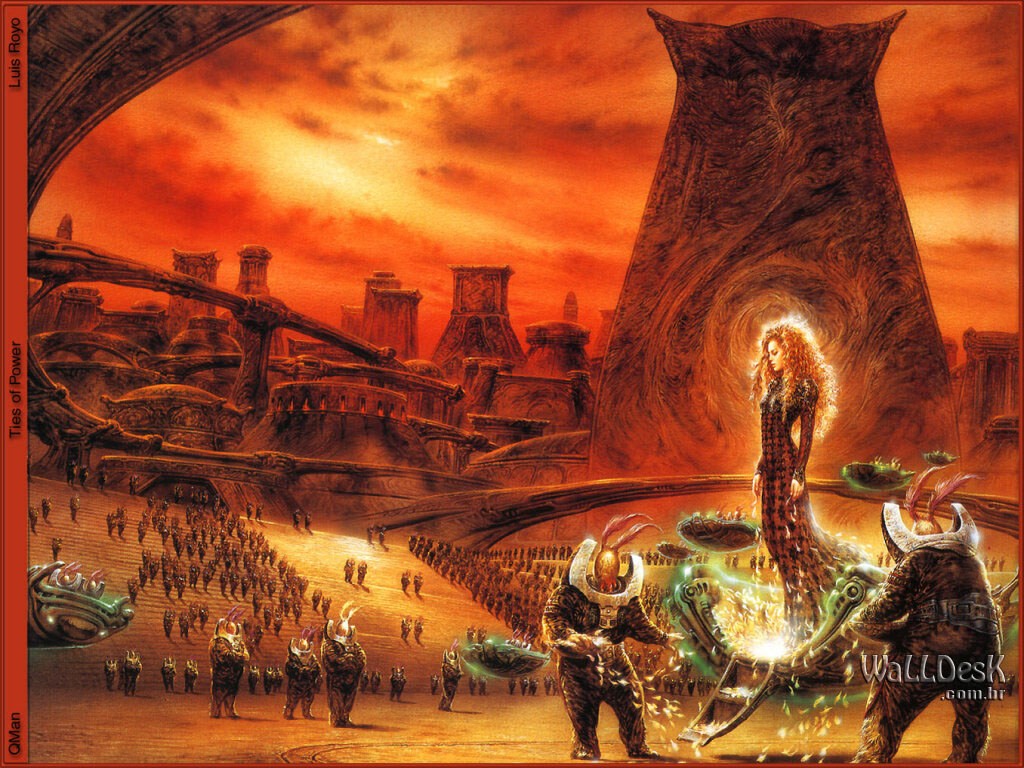
To Trade The Stars continues a few months from where Ties of Power left off. Sira and Jason continue to trade but discover that somehow Jason’s telepathic abilities have become known. This is making it difficult to get good jobs. One does turn up for Morgan at Kimmicle (miner’s world), leaving Sira free to go to Plexis and Huido by M’hir. When she gets there, she ends up being kidnapped. We all know that Jason will turn the universe inside out to find her. He is not going to be alone in this search.
In the meantime Rael and Barac from the previous are stuck on Drapskii continuing what Sira began. They are both understandably frustrated with the Drapsk as the Drapsk are of a different species. When Barac gets a call for help from Huido, he leaps at the chance.
Once again I liked the prose of Julie. She writes seamlessly. Once again, I’ve found an author that has the gift of flow. Her books are just shy of 500 pages and that might hinder some from reading her books. Don’t worry, they are available as audiobooks at audible.com.
Samuel Vimes is a beautiful character. He grew up in Cockbill Street, the poorest area of Ankh-Morpork. They were so poor that while they had practically nothing to eat, at least their floors were clean enough to eat off. Getting into the Night Watch was quite a change for Sam. Now he had money for food. Being a guard runs in Vimes’ family. In fact one of his ancestors, old Stoneface, beheaded the last king of the city. Vimes’ worldview is that everyone is guilty of some kind of crime.
Nobby, Colon, Carrot, Vimes and the Librarian by William Bradford
Our first proper meeting with Captain Samuel Vimes occurs with him falling over drunk into one of Ankh-Morpork’s streets. It had been a hard day for the Watch. Poor old Herbert Gaskin had broken one of the fundamental rules of being a guard. He forgot to run away from trouble. Now the most despised group of men in the entire city consisted of only three men: himself, Sergeant Colon and Nobby.
In the meantime a young man is heading for the city with “all the openness, sincerity and innocence of purpose of an iceberg drifting into a major shipping lane.” Carrot is the name of this young man, due to the color of his hair but also due to the shape of his body. One day at sixteen his dad sat him down and told him he was not the six-foot dwarf he had always thought he was. Human was his race. His dwarven parents had in fact found him in the woods next to a burned out carriage. Now it is time for him to depart and seek his fortune as a watch-man in Ankh-Morpork. With him his father sends a sword, a dwarven woolen shirt, a golden cod-piece and The Laws And Ordinances of The Cities of Ankh and Morpork.
The Unique and Supreme Lodge of the Elucidated Brethren of the Ebon Night have a plan to overthrow the Patrician. They are going to summon a dragon. Against all odds they actually succeed in calling one forth. It turns out that this is a double-edged sword. Now that they have called the dragon forth, the dragon figures out a way to get back on its own.
One of the themes that we will encounter again and again in the Watch series is the power play between Vimes and Vetinari (patrician). Vetinari plays Vimes like the strings on a guitar. Carrot is the person who manages quite well to live between a rock and a hard place. His literal interpretation of the laws of Ankh-Morpork and his ability to own any situation makes it possible for him to soften Vimes’ explosiveness after meetings with Vetinari.
Adaptations
1992: BBC4 produced a 6-episode serial dramatisation by Michael Butt of Guards! Guards!
Edward d’Eath’s father has just died, leaving him the thirty-seventh Lord d’Eath and an assassin to boot. Unfortunately his father had not left Edward any money. Quite a single-minded person whose belief in a King as ruler of Ankh-Morpork was quite fervent. Coincidentally, he stumbles upon Corporal Carrot, who just happens to look like one of the old Kings. Edward sets about trying to get Carrot and kinghood into fashion.
Captain Vimes is retiring from the police to marry Sybil Ramkin, Countess and the richest woman in Akh-Morpork. He is about to become one of the posh, a gentleman of leisure. But Vimes is finding it difficult to let go of policing.
Thankfully, an important artifact disappears from the Assassin’s Guild. The mystery must be solved. But the Assassin’s Guild aren’t interested in help from the Watch. Vimes loves the chase and the opportunity to get out onto the streets again. The chase after the weapon/artifact turns out to be both challenging and bloody.
Gaspode the wonder dog makes his appearance in Men-at-Arms. Gaspode the talking dog (too much time at the UU can change someone). He is rather keen on Angua (the werewolf).
In Men-at-Arms Pratchett plays with our biases. Here we get to see racism in all its “glory”. Even though the cops in the Watch are only supposed to be cops, they still have to overcome biases towards each other. Like so many others of the Discworld books, Men-at-Arms looks at the power of belief. We get a look at what that belief makes it possible for people to do.
2000: Stage adaptation of Men At Arms by Stephen Briggs
Feet of Clay (1996)
1996: Winner of SFX award for best SF/Fantasy Original Novel
1997: Nominated for 1997 Locus Awards – best Fantasy novel
Commander Sir Samuel Vimes is shaving, thinking on the horrors he has to face as a gentleman. People doing things for him, formal dinners and not being able to sit with the servants any longer playing cards and drinking beer. And then: “There was a flicker in the glass. He moved sideways and ducked. The mirror smashed. There was the sound of feet somewhere beyond the broken window, and then a crash and a scream.” The Assassin’s Guild are at it again. Some of the other gentle-people of the city do not want Vimes alive, and the Assassin’s Guild keeps on trying to do their job.
Captain Carrot has made it through his first two years in Ankh-Morpork. The love of his life is Corporal Angua, a werewolf, whose bad-hair days he takes in his stride. She is quite handy to have around when people want scaring. So when some incredibly thick thieves rob Ironcrust’s Dwarf Bakery she does just that – earning the “respect of the community.”
The body of Father Tubelcek is discovered. The watch have just hired their new alchemist, a dwarf by the name of Cheery Littlebottom. She is sent along to investigate the clues she discovers, of which one of them is a strange light in the dead eyes of Father Tubelcek.
Weirdly enough, it turns out Nobby is posh. He has his own coat of arms and has now become a peer. Poor guy, how is he going to deal with this? With increasing desperation it seems.
Adaptation
2007: Stage adapatation of Feet of Clay by Stephen Briggs.
An Ankh-Morporkian and a Klatchian fisher are both at the scene when a strange island rises above the sea. Both immediately lay claim to the island and this leads to a dispute between Ankh-Morpork and Klatch. The Klatchian crown prince is sent to Ankh-Morpork and diplomacy ensues (kind of). One of the funniest scenes Terry has ever written comes when Vimes has to lead a parade. The whole thing came alive in my head and I almost fell over laughing.
An assassination attempt is made on the prince and the Klatchian embassy declare war against Ankh-Morpork. Vetinari resigns and Lord Rust takes over. He is slightly eager for war and his decision leads to Vimes and the gang ending up in the Klatchian desert.
At the same time Vetinari, Colon, Nobby and Leonard of Quirm take a u-boat ride to the island and then to Klatch. Nobby ends up having the time of his life with “nubile” women. This is also an extremely funny scene. Poor Nobby. But while there is plenty of humor in the foursome’s trip, there is also a serious reason for their trip (obviously since Vetinari is involved).
Uberwald – the land of vampires, werewolves, trolls and dwarves, is becoming restless. Something very important is happening in a few weeks time. A new Low King is being crowned, and that is causing fighting in Ankh-Morpork. With 50000 dwarves living in the city, people are bound to notice that something is going on.
The old grievances between trolls and dwarves have not yet been resolved and large areas are controlled as fiefdoms by vampire or werewolf clans. Into this “suet pudding” Vetinari plans to send an ambassador for Ankh-Morpork, and he wants to send the Duke of Ankh. Cunning man that he is, Vetinari had already spoken to Lady Sybil about it. Vimes knew when he was beaten.
The replica of the Scone (dwarf throne) is stolen from The Dwarf Bread Museum. Vimes finds an aboundance of clues, to many in his opinion. To him it is a stupid crime that does not feel stupid.
Vimes goes off to Uberwald, leaving Carrot in charge of the city. Thankfully, Sybil is along. She will take care of the negotiations, while Vimes will represent Ankh-Morpork in his unique style.
Angua discovers that her xenophobic brother Wolfgang has decided to take over Uberwald. She leaves Ankh-Morpork and Carrot to stop Wolfgang. Carrot makes a difficult choice. He chooses love over duty and goes after Angua. This time Colon is left in charge of the Watch – a recipe for disaster.
The Fifth Elephant follows these three journeys – Vimes and Sybil/Carrot and Angua/Colon as head of Watch.
In a sense, The Fifth Elephant is a love story. Sometimes the choice is between the people we love, duty and tradition. Can we have it all?
The Night Watch for the most part happens in the past. Through a freak accident, Vimes is thrown back to the time when he was a younger man and new to the Watch. Along for the ride is Carcer, a cold-blooded murderer. Carcer’s goal in the past is to kill Sybil, thereby wounding Sam beyond repair. Sam’s goal on the other hand is to make the city safer from people like Carcer. To do that he has to establish a new identity as his old self cannot know who he is. Luckily/unluckily Vimes assumes the identity of John Keel, his old sergeant. John Keel has been killed by Carcer. Vimes knows that changing the past will also affect his future. There might not be a wife and child-to-be when he gets home to modern Ankh-Morpork. But Vimes is who he is and cannot leave the Watch or his old self in their old shape.
Unfortunately, Carcer joins the Unmentionables. They are the secret police, carrying out the whims of Lord Winder (patrician of the time). This often includes people going missing, torture and terror. Vimes sets out to make life difficult for both Carcer and the Unmentionables.
Would we try to change the past if we could? Many of us probably would. In trying to influence his younger self to be a better copper, Vimes changed himself. But the big lines of the city. Hmmm – read and see. Corruption and incompetence are dangerous qualities in rulers, but also in the ones set to carrying out the rules. So, what happens when Vimes sets out to change his old world, trying to make it a better place?
———————————-
2008: BBC Radio 4 2008 radio adaptation dramatised by Robin Brooks
2004: Night Watch stage adaptation by Stephen Briggs
Dribble the dragon, Samuel Vimes, Sam Jr. by Kiriban
Vimes really, really does not like Vampires. Until now he has refused to have any of them on the Watch. That choice is taken away from him by his “beloved” Vetinari. Sally is employed to assist in the investigation around the death of the dwarven demagogue, Grag Hamcrusher. Apparently a troll is the culprit. Sergeant Angua and Captain Carrot are the other Watch member assigned to the case.
Corporal Nobbs and Sergeant Colon get the job of investigating the disappearance of a 50-foot painting titled The Battle of Koom Valley. The discovery of the disappearance leads to several things happening. Trolls vs. dwarves, assassination attempts, a Kube and the Summoning Dark all lead to Vimes, Sybil, Young Sam, Wilikins, and several members of the Watch going to the Koom Valley where Vimes discovers the secret of the valley.
Young Sam has become the mainstay of Vimes’ life. This will prove essential in keeping Vimes alive and sane. Family is all to him. Vimes’ dedication to peace is strong throughout the book, as can be seen clearly in his fight with the Summoning Dark. Racism is prevalent in the book through the animosity between dwarves and trolls. Once again we are confronted by our own biases. One might even replace racism with religious conflict: Protestant/Catholic (Ireland) or political conflict: Palestine/Israel.
Samuel Vimes and one of his weapons (dragon) by Jan Pospisil(Perfect)
Snuff’s focus is for the main part on Vimes and his family. Lady Sybil makes him take a family vacation to her mansion Crundells. Of course Wilikins comes along. Here all is peaceful and Sam is enjoying being able to concentrate on being with his wife and son. But that is not the way things stay. The house-staff seems to hate Sam and Vimes nose is itching with the smell of wrong-doings.
Samuel discovers a grotto of goblins living nearby. For some inexplicable reason the local gentry seems to hate/despise/revile the goblins and treat them as disposables. When the murder of a local blacksmith occurs, all of a sudden the whole country side is involved. On his side, Vimes has Sybil, Wilikins, a young police officer called Upshot and the goblins. Against him are Lord Rust (who has interests in the area) and most of the local gentry and quite a few of the peasants.
It’s time to call in the cavalry. While he has no jurisdiction at Crundell, Vimes is able to ask his people to investigate certain aspects of his discoveries. The Watch does not play a large part in Snuff, but they are present.
I was touched by Snuff. In a sense I felt as though I was saying goodbye to Samuel Vimes, Duke of Ankh-Morpork and Commander of the Watch. Pratchett writing has gotten darker as the years have passed for the Discworld. The topics are no longer solely focused on making fun (in his gentle way) of current sci-fi and fantasy fashions, but very much on personal development and the conflicts people meet in life. The slavery of the goblins in Snuff very much reminded me of the slavery that has gone on and is going on in the world. Somehow people find it in themselves to treat others as nothing. Rising up to fight this slavery, both on a large and a small-scale is incredibly difficult. Thankfully Pratchett always leaves us with a sense of hope that things might get better.
Witches (usually women) are a force to be reckoned with on the Discworld. Nowhere near as flashy as the wizards (usually men), these women often rule their villages with an iron fist and a whole lot of headology. Pratchett describes headology as:
a witch’s way of magically setting fire to a log of wood consists of staring at the log until it burns up from pure embarrassment. As a result it is less energy intensive, which means that a witch can do more than a technically equally powerful wizard. (Discworld Wiki)
Now, imagine headology turned on people. That might frighten a few into behaving who might not otherwise behave.
Granny Weatherwax by Paul Kidby
The strongest headologist of the “good” witches is Granny (Esmeralda) Weatherwax. Her sister, Lilith (below), happens to be one of the “bad” ones. In a world supposedly without a hierarchy, Granny is the unspoken ruler of the witches. In the village of Lancre there is absolutely no doubt she is the boss. That is until an attempted rebellion be some wannabe witches (below). Granny is a dream of a witch. In the trio of Lancre her role is the role of the Crone (although noone would actually call her a “Crone” to her face – no one with their senses intact). Granny’s special ability is to see reality clearer than the rest. Pratchett explains that this is a manner of seeing the world that does not lie to itself including an ability to question not only the world but oneself again and again and again. Young Tiffany Aching seems to be following in Granny’s “footsteps” in this regard (below). What one needs to realize about Granny Weatherwax is that she is always there for you when you need her. Her one weak spot is her cat: “gerrofoutofityoubugger!” (generally called “You”). Considering who the owner of “You” is, I find it easy to believe that she is the only creature who has gotten the better of Greebo. While younger and much smaller than Greebo “You” terrifies him – inasmuch as he is able to be terrified of anything/anyone.
Nanny Ogg and Greebo by Visente
Greebo belongs to Nanny Ogg. Nanny is probably the only person alive who thinks of Greebo as a big softy.
To Nanny Ogg he was merely a larger version of the fluffy kitten he had once been. To everyone else he was a scarred ball of inventive malignancy.
Nanny is the Mother of the threesome in Lancre. Now there is a lady I wouldn’t mind meeting. Her sense of humour is broadminded, raunchy and hilarious. At the same time she rules her brood and their spouses with something akin to terror with a dash of love mixed in. They adore her yet fear her – at least her daughters in law. Nanny Ogg saves Granny from herself when that is needed and functions as Granny’s grounding rod. Not only that but Nanny lightens the mood when Granny feels overwhelmed or as if the people around her are too stupid for their own good. While Granny is the one who scares people Nanny is the one who woos them – until it is time to stop wooing. Nanny’s final job in the trio of witches is to prod Magrat in the direction Nanny feels Magrat ought to go without being as truthful about it as Granny tends to be.
Meek, Mild Magrat by MJ Oboe
Magrat Garlick is an interesting character. She happens to be the “Maiden” of the Lancre coven. At first glance Magrat is a young ditz with a heart of gold and a great belief in crystals and folk wisdom.
Witches aren’t like that. We live in harmony with the great cycles of Nature, and do no harm to anyone, and it’s wicked of them to say we don’t. We ought to fill their bones with hot lead.
But as you see, Magrat has another side as well – like we all do. In Lords and Ladies that side shows up in all its glory.
Unlike Granny Weatherwax and Nanny Ogg, Magrat is not very good at headology. Her forte lies in research and development of herbs and cures (and her crystals of course). She struggles with her self-confidence, but Granny and Nanny make up for that by having an abundance of confidence in themselves. It can’t be easy being the youngest witch when the two older ones in your coven have such strong personalities.
Tiffany Aching and the MacNeegles by Alda Rana
Young Tiffany Aching down down on the Chalk (mountain) is a whole different type of character. She has to take over the responsibility for her mountains when her grandmother (the local witch) dies. The only possible candidate is Tiffany Aching. At 9 her ability to ask uncomfortable questions and her quest for knowledge points to her potential as a great witch down the line. But Tiffany isn’t really worried about the whole witch thing nor is she caught up in the need to be one. Instead she happens to have the gift of making cheese. I know, strange gift for a witch one might say. But witches are practical people who prize such abilities over other more wizard-like gifts. In fact, Tiffany excels so much that one of her cheeses has come alive and become and excellent mouser. Its name is Horace. She is friends with the Nac Mac Feegles, a feat not managed by many.
These four witches are my favorite ones. There are many more that make appearances in Pratchett’s Witches’ series, but Granny, Nanny, Magrat and Tiffany get into so many incredibly weird and funny situations that its impossible not to have them as favorites. The Witches’ series consists of Equal Rites, Wyrd Sisters, Witches Abroad, Lords and Ladies, Maskerade, Carpe Jugulum, The Wee Free Men, A Hat Full of Sky, Wintersmith and I Shall Wear Midnight. As usual Wikipedia gives detailed information about these women, Pratchett’s page is a given source and L-Space has fun details.
Eskarina by Hannah Crosby
EQUAL RITES (1987)
As I stated at the beginning of this post most witches are women and most wizards are men. There are exceptions. Some of those exceptions start with mistaken identity.
Up in the Ramtops a wizard comes awalking using his staff as a guide to where he is going. Bad Ass, the village, is his lucky destination. A child is being born, the eight son of an eight son.
Drum Billet, our wizard, knows he is about to die. Wizards and witches get to have that knowledge. He gives his staff to the son of the smith and dies. One problem. The eight son of the eight son just happens to be a girl, Eskarina Smith. A wizard girl. Oops.
Good thing for young Eskarina Smith (Esk to her friends) that Granny Weatherwax was the midwife that saw her into the world. When Eskarina is 7 her mother decides to send her along with her brothers to Granny. Strange things seem to be happening around the girl whenever she is upset.
When they get to Granny’s, Granny Weatherwax is lying on her bed looking quite dead. Being a witch she wasn’t, she was only out borrowing. Eskarina feels Granny’s undeadness and goes downstairs waiting for Granny to return (while her brothers run off terrified). When she hears loud noises upstairs, even she becomes terrified, runs off, falls down and is met by the staff (yes! the staff came to her).
Granny knows something has to be done, and right away. She decides to take her to the wizards school in Ankh-Morpork, the Unseen University, and enroll the young Eskarina. But getting the girl into this all-male school is going to prove more difficult than Granny had thought.
Adaptations
BBC4 dramatisation of Equal Rites as serial on Woman’s Hour
The future king with the witches
WYRD SISTERS (1988)
“The night was as black as the inside of a cat. It was the kind of night, you could believe, on which gods moved men as though they were pawns on the chessboard of fate. In the middle of this elemental storm a fire gleamed among the dripping furze bushes like the madness in a weazel’s eye. It illuminated three hunched figures. As the cauldron bubbled an eldritch voice shrieked: “When shall we three meet again.”
Here we have the Discworld’s version of MacBeth‘s witches. The mother, the crone and the other one. Or as other people know them, Granny Weatherwax, Nanny Ogg and Maigrat.
King Verence of Lancre is making a discovery. He is about to become a ghost, unable to stop the kidnapping of his child. By a freak accident the child ends up in the arms of Granny Weatherwax and she decides to take a hand in playing with the future and sends the baby off with a troupe of actors.
Fifteen years later.
Words have power. In the “good old days” the jester was the only person at a king’s court who could speak his mind without fear of the consequences (supposedly). These days we have the media. But words have power. We might remember an event or something about the people involved, but as the story gets told and re-told our perception of the event changes. Pratchett’s way of pointing a light at our perceptions and prejudices is a wonder.
Adaptations
1997: Wyrd Sisters was produced as a two-part animated television series, produced by Cosgrove Hall.
House of Gogol by Brer Anansi
WITCHES ABROAD (1991)
“This is a story about stories.
Or what it really means to be a fairy godmother.
But it’s also, particularly, about reflections and mirrors.”
On the Ramtops there was only one witch who was not attending the Sabbat. Desiderata Hollow was making her will. Desiderata is a fairy godmother to princess Emberella. The other one was Lilith (who just happens to be Granny’s sister).
In Genua, the magical kingdom, Lady Lilith de Tempscire loved the idea of travelling through mirrors. After speaking to Desiderata she was glad that there would only be her and the voodoo woman left to fight over Emberellas’s future.
At Lancre the fairy godmother wand is delivered into the hands of Magrat. The note from Desiderata reads:
“I niver had time to Trane a replaysment so youll have to Do. You must goe to the City of Genua. I would of done thys myself only cannot by reason of bein dead. Ella Saturday muste NOTTE marry the prins. PS This is important. PSPS The those 2 Olde Biddys they are Notte to come with Youe, they will onlie Ruine everythin. PSPSPS It has tendincy to resett to pumpkins but you wil gett the hange of it in noe time.”
With this bit of headology, Desiderata guarantees that Nanny (with Greebo) and Granny decide to accompany Magrat on her journey to Genua. As the threesome moves through the lands on their way to Genua, they manage to upset quite a few people. In typical tourist style they are loud and obnoxious and wonder why these people cannot speak properly. But there is also magic battle and voodoo fun to be had.
Adaptations
1999: Witches Abroad stage adaptation by Aaron Birkes played at Aberystwyth Arts Centre Theatre
Lords and Ladies by Marc Simonetti
LORDS AND LADIES (1992)
Magrat, Nanny (with Greebo) and Granny are back in Lancre after being absent for eight months. That worried Magrat. Was the kind-of-agreement between her and Verence still up and running.
Upon her return, Magrat was informed by King Verence that they were to be married at midsummer and that all of the arrangements have been made. No proposal, just a statement. He is the King you see, and Magrat a subject.
A stone circle up in the mountains of Lancre keeps the Dancers in. That is if they are not let out. When people forget about the Dancers, it is an easy matter to lure them into the stone circle, leaving them quite dead.
Esme Weatherwax and Nanny Grogg come to the Dancers and discover that someone has been dancing. Diamanda, Perdita and that girl with the red hair decided that they should teach themselves witching in the absence of the older ladies. About six of them have been going up into the mountains every full moon dancing. When Granny goes borrowing she discovers that there is some kind of mind loose in the kingdom – Elf.
Mustrum Ridicully of the Unseen University worrying about baldness and thinking back to the good old days when he went walking with Esme. When he is invited to the wedding of King Verence and Magrat, Ridicully decides it is time to up into the mountains. With him go the Librarian and the Reader in Invisible Writings, Ponder Stibbons.
1995: Lords and Ladies stage adaptation by Irana Brown
2005: Lords and Ladies German feature length fanfilm. I’ve only been able to find the link to the trailer. So if anyone has a link to the full-length movie, please send.
MASKERADE (1995)
In his dedication Pratchett writes:
“My thanks to the people who showed me that opera was stranger than I could imagine.”
What is Pratchett going to make fun of this time you might ask. Well, the answer is The Phantom of the Opera.
Mr. Goatberger, the publisher, has been sent the manuscript to a book. It wasn’t even on proper paper, and he was filled with apprehension. Then he started reading, kept on reading, and called in his assistant, Mr. Cropper. He began dreaming “the dream of all those who publish books, which was to have so much gold in your pockets that you would have to employ two people just to hold your trousers up.”
Agnes Nitt has come to the Opera House to audition for a part. She might not be the greatest looker, but she has a voice to kill for. When the time comes to select the players, Agnes gets stuck singing for the goodlooking Christine.
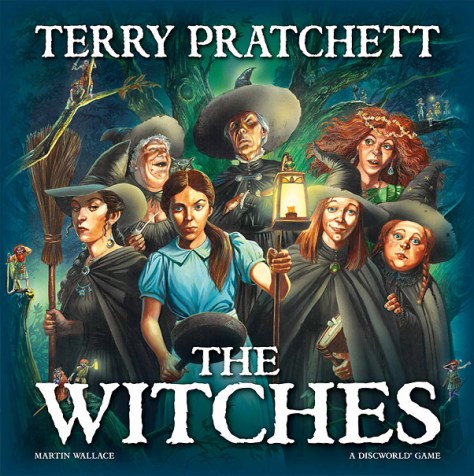
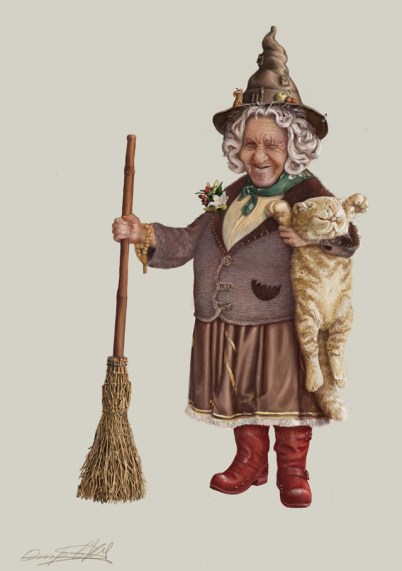
Gytha Ogg gets a letter addressed to “The Lancre Witch”, bringing Granny’s temper up a bit. Nanny’s book “The Joye of Snacks” has become a hit, and it turns out the publisher has been a bit complacent about paying Nanny her dues. In fact, he owes her about four or five thousand dollars. They decide to take a trip to Ankh-Morpork and stir up the town a little. That, and convince Agnes to come back to Lancre as the maiden witch. They bring Greebo, Nanny’s cat of terror. His part in this story is amazing.
Reading Maskerade with the Phantom of the Opera playing in my head at the same time was great fun. Terry Pratchett has really nailed it this time.
If you want and incredibly detailed and extensive analysis of Maskerade, I recommend Bewitching Writing by Dorte Andersen at Aalborg University. It seems I’m not the only fan of Terry.
1998: Stephen Briggs stage adaptation of Maskerade.
2006: A stage adaptation of Maskerade by Hana Burešová and Štěpán Otčenášek (partly using adaptation by Stephen Briggs) premiered in Divadlo v Dlouhé, Prague. Pratchett attended the closing performance five years later.
The Carpe Jugulum Cast by Vic Hill
CARPE JUGULUM (1998)
Into the country of Lancre comes an army. An army made up of very small blue men, no higher than six inches tall. Little blue men nobody messes with. Men whose favorite pasttime is fighting anything and anyone.
Not too far from Lancre, four vampires come accross an invitation to the name ceremony of the child of Queen Magrat and King Verence. It is a dangerous thing to invite vampires into your home, whether that be house or kingdom. Sort of gives them free rein. Count Magpyr, his wife and their two children enter Lancre with their servant Igor.
Granny Weatherwax gets called away to a birthing that is in trouble. When she gets there, she has to decide who to save, mother or child. Very few people could make such a choice without trying to share the responsibitility with someone. Flying back towards the castle she notices mist is on its way from Uberwald.
The dwarf Casuanunda is having to resort to highway robbery. But robbing that black coach is not very tempting when he sees how another highway robber is treated. Instead he goes on to Lancre where he has a few aquaintances.
In this novel Pratchett plays with the idea of split personality, references vampire movies of the day, pyramid schemes and good and evil through the Phoenix vs. vampire myths. Pratchett managed to give this novel a slightly creepy feel.
THE WEE FREE MEN (2003) (Skrellingene – 2004) – Locus YA winner 2004
We now leave Lancre behind (for the most part) and enter the world of the Chalk and Tiffany Aching. She is nine years old when we meet her for the first time in The Wee Free Men.
My first meeting with Tiffany (or Petronella in Norwegian) was in Norwegian. I thought I would introduce my youngest to Pratchett and this new book on the market seemed like the thing to read. Was it ever.
When we meet her she is lying by the river tickling the trout on their backs. She liked hearing them laugh. With her on this expedition was her brother Wentworth (Steingrim in Norwegian). Like all little kids he was messy and sticky but easy to be around.
I’m sure you remember the little blue men in Carpe Jugulum. Here they come again, trying to fish. For some reason Tiffany was able to see them. Only witches should be able to see the blue terrors.
Grandma Aching has just died and Tiffany thinks that she might have been a witch. The little blue men turn out to be the Nac Mac Feegle. Since Grandma died they are on the lookout for a new “hag”. Since Tiffany sees them and is able to control them (somewhat) the Nac Mac Feegle tell Tiffany that she is their hag.
They need help for their Kelda (mom). She is ill. Tiffany comes with them to their hole in the ground and checks out things for the boys. Sadly, the Kelda is dying (of old age) and Tiffany needs to be there for the boys until a new Kelda can be found.
When Tiffany’s baby brother disappears, she now has allies in her search for him. The search brings Tiffany and the Nac Mac Feegles into a strange world where Tiffany’s hag-hood is proven.
My youngest son laughed his head off and was really spooked at times. An excellent children’s book in my opinion. They won’t get all the references, but who cares, I probably don’t either. What’s really great about the Tiffany Aching series, is that we get a look at Tiffany’s growth from the beginning. Terry has created a wonderful character in our young Tiffany.
There is a possible film adaptation of The Wee Free Men by Rhianna Pratchett (Terry’s daughter) in the inning.
More laughter came for my son in “A Hat Full of Sky“. Those Nac Mac Feegle names are genius. I read them in Norwegian (in one of our dialects of course) and I couldn’t help myself. I giggled along. Pratchett has so many of those giggle moments and then all of a sudden a belly-laugh comes along. All part of his godhood status for me I guess.
Tiffany is now an apprentice to Miss Level. On their way there, Tiffany and Miss Tick are attacked by a hiver (powerful, dangerous creature). At the cottage of Miss Level, Tiffany discovers that Miss Level is in fact two-bodied and that there is a ghost cleaning her house. During her stay Tiffany has to fight the Hiver, but fortunately she does not have to battle alone all of the time. Help is to be found in many places.
We get a great look at the life of an eleven year old torn out of her old life, having to go to boarding school (so to speak). Everything is new. Not everyone is nice. On top of that she has the Nac Mac Feegle and the Hiver. Growing up must come quickly then. Pratchett does an excellent job at looking at the development of Tiffany’s identity. She emerges as someone who has integrity and the willingness to question herself. She’s actually a pretty good role-model for young people.
By now I think we’ve seen that Tiffany is not the kind of girl who is ruffled by just anything. It takes a bit more than normal to get her uncomfortable. Being wooed by the Wintersmith is one of those things. In “Wintersmith” Tiffany does a foolish thing. At the dark morris dance welcoming winter, Tiffany finds herself drawn into the dance. Ooops. Wrong person.
This means the Wintersmith (who brings winter) meets Tiffany rather than the Summer Lady and is enchanted by her. Double oooops.
All of a sudden green stuff sprouts underneath Tiffany’s feet and the Cornucopia appears. Tiffany seems to have taken on at least one of the Summer Lady’s abilities. Her friends Roland, Nac Mac Feegles and Granny Weatherwax have to help Tiffany get out of her new bind.
While her new teacher, miss Treason, is kind of creepy Tiffany manages to learn a lot from her, not least all which color of cheese she does not like.
I’ve seen from commentaries that some people think Wintersmith too childish. Sometimes I wonder if I’m reading the same books as other people or if I’m expecting different things from the books. I find all of the characters delightful, even crazy old Treason. Terry’s writing is up to its usual standard and as a brainwashed cultmember of the Pratchettian cult I’m sold.
OK. Now we come to the last book in the Witches and Tiffany series: I Shall Wear Midnight. For some reason I found it poignant. You know how sometimes you get a feeling of being thankful that you’ve read a book? Well, Midnight and Snuffare both Pratchett books that gave me that quiet feeling. I was moved.
Tiffany is now grown up (15) and is working the Chalk as its only witch in a climate of growing suspicion and hate.
When the Baron of the county dies, she is accused of killing him. Tiffany travels to Ankh-Morpork to inform Roland of his father’s death. As usual the Nac Mac Feegles follow Tiffany into town.
Tiffany’s fight this time is against the Cunning Man. Once again we get a battle between the almost good against the practically evil.
My love for this book could also be due to its darker tone. This darker tone fits the books well.
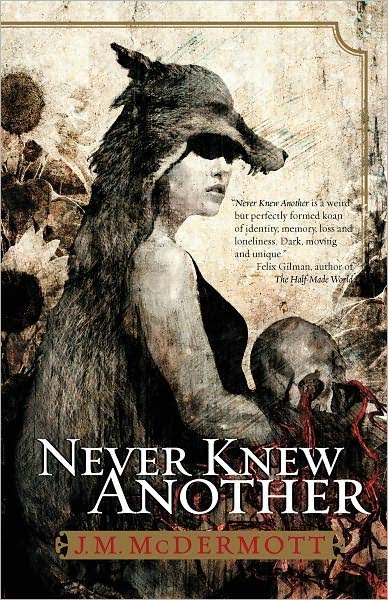
“Never Knew Another” is the first book in the Dogsland trilogy. What a dark and moving novel. We’re not left with a lot of hope for our protagonist after finishing this book. I’ve read complaints about the sudden ending, but I felt it was just right. The cover art fits incredibly well with the mood of the book.
There is no warning. Right off the bat the memories of Jona are drawn out of his skull by the Walker. Walkers are servants of the goddess Erin dedicated to hunting and killing the seed of the demon Elishta. Demon children, half human-half demon, are considered extremely dangerous, polluting whatever they come into contact with. Walkers are wolves with the ability to change into humans. Their ability to “merge into the mind of a dead man” is essential in their battle against half-demons. While delving into the memories of Corporal Jona the Walkers discover that there is another demon seed in the city of Dogsland, Rachel Nolander.
With her brother Djoss, Rachel has to hide her parentage from other humans. Burning is considered the best way to get rid of all traces of the evil that she is supposed to represent. Hiding who she is, is not a simple matter. Continuously on the move, only chance (or perhaps fate) brings her into contact with Jona, the only other demon-seed she has met. The hunt of Rachel becomes the prime objective of the Walkers.
The fantasy adventure series about the elven seeker Raine Benares consists of six books. These are:
Magic Lost, Trouble Found (2007)
Armed & Magical (2008)
The Trouble With Demons (2009)
Bewitched & Betrayed (2010)
Con & Conjure (2011)
All Spells Break Loose (2012)
Entertainment and adventure are the main focus of the books. There is action, some romance, more action and humor. Shearin writes well and manages to hold my interest through all six books. “Magic Lost” was a bit rusty, but the books have gotten better and better.
Raine is a fun adventure character. She is a finder of things lost and people missing. But what Raine finds best is trouble. Action and adventure begins right off the bat. Focus is mainly on the adventure and not so much on world building or character building. But as the plot unfolds, so does Raine (and her compatriots).
Her favorite companion in trouble is her cousin, Phelan, and her friend Tam (a goblin mage). As we move further into the series Mychael (Paladin) and Pieras (almost brother) assist more and more in getting Raine out of trouble. For the main part trouble is focused on a pendant called the Saghred (has its own mind). For some reason the Saghred attaches itself to Raine, and as Raine soon discovers the Saghred is not conducive to a peaceful life. From that point on, Raine becomes involved in an international crisis, internal goblin politics, an elven uprising and so on.
Sarah’s Key was lent to me by my sister. Serendipity. I found it a page-turner. No question about it. The author manages to switch from present to past without effort. Tatiana deRosnay is a truly gifted author.
Sarah’s Key is about poor little Sarah Starzynski. The Germans come to collect her family. To protect her little brother she locks him in a cupboard and tells him that she will be back in a few hours. Alas. The fates want it otherwise.
There are two time-lines to Sarah’s Key. The first one, of course, follows Sarah. The second time-line follows the story of the journalist, Julia Jarmon, who delves into the story behind a hidden skeleton. Along follows the secrecy behind Jews in France during WWII.
Some truths are painful for a nation to acknowledge. Nevertheless, healing comes through shining a light on both what we want visible and what we want hidden.
The story is wholly fictional, but as Leo Bretholz (Holocaust survivor) says: “The perusal of Sarah’s Key evoked memories of my own experiences during the war in the Vichy zone of France.” It tells a terrible story, one that has happened over and over again in history. It reminds us of how easily we turn our heads from what is happening around us.
French film-adaptation (Elle s’appelait Sarah) in 2010 by Stéphane Marsil (won two awards and had three nominations)

 TRADE THE STARS (2002)
![[nightwatch.jpg]](https://humanitysdarkerside.com/wp-content/uploads/2012/07/nightwatch.jpg)





 MASKERADE (1995)




 humanitysdarkerside