There are tons of reviews of Seraphinaout there. Seriously, tons. Most of them praise Rachel Hartman’s writing to heaven and with good reason. Believe it or not, this is actually Hartman’s first novel. Her grasp of the flow is amazing. This is definitely an author to follow.
What genre is this? Well, that is a toughie. Like The Intergalactic Academy blog points out in their review, there are reasons one might suspect the world of Seraphina lies not only in a fantasy universe but also in a science fiction one. You would be surprised at the number of stories out there that seem to be fantasy (and are) but end up having a basis in humans having come to another world.
One of the traditional conflicts between humans and dragons in Seraphina has to do with humans invading the continent of the dragons. This might be one hint as to the otherworldliness of humans. The other is as TIA points out some of the vocabulary.
How the wars began in the first place is not commonly known, but as Seraphina is lucky enough to have a dragon music teacher (Omra) she learns of these matters. That her father happens to be the local expert on the treaty between humans and dragons has given Seraphina more knowledge than the usual citizen. There is a reason for her father’s expertise. He is the father of a girl who is half-dragon/half-human. Seraphina’s mixed race must be hidden from the knowledge of both dragons and humans as such a relationship is thought of as disgusting. But it is interesting that such a relationship is even possible. Perhaps that means that a dragon’s transformation into human is on a genetic level.
When peace was forged, one of the consequences was that dragons could no longer be among humans in dragon form. Dragons society seems to be ruled by logic rather than emotion. To them becoming human is a shock to the system as they are drenched in feelings they do not understand. Emotions are forbidden and all memories pertaining to such emotions are excised upon returning to dragon form. Such excision could mean that the dragons have some form of advanced technology unless the excision happens through some kind of paranormal ability.
Seraphina’s mother took human form and fell in love with Seraphina’s father. Seraphina was the result of that match. Sadly, Seraphina’s mother died at child-birth. Child-birth is the time her father discovered that Seraphina’s mother was a dragon. This has to do with the color of dragon’s blood. Seraphina herself showed no sign of the match until puberty. At that time she gained scales on parts of her body and a gigantic degree of self-disgust. In fact, her disgust ended up being so strong it led to self-harm. I have absolutely no trouble understanding why the self-harming happened. When one’s difference is so readily identifiable, the temptation to remove it must be staggering.
There are some positive factors in Seraphina’s life. Her music teacher Omra has stuck with her since her dragonhood was revealed. With him she does not have to fear revealing her forbidden race. As I said earlier, Omra is Seraphina’s music teacher. When Seraphina showed the same kind of talent her mother had had, Seraphina was permitted lessons if they were held out of sight of her father. Music has led her to the position she now holds – as the assistant to the court composer.
Seraphina is our protagonist. An excellent protagonist. She has depth and character in a way that only the British can manage to convey. Understatement seems to be something the Brits get through their mother’s milk. Hartman attacks a great deal of society’s crueller sides gently and with enough of a sting that the reader feels it. (I feel it) Such writers are a miracle to me, something I can admire yet never aspire to be.
I believe I have said a thing or two about British humour and here I go again – YEAH! I LOVE British humour. It beats every other country’s, including my own.
From 1990-1993 I had the great pleasure of watching Stephen Fry and Hugh Laurie play the delightful characters of Jeeves and Wooster. Jeeves and Wooster are characters that were devised in the brilliant mind of P.G. Wodehouse and thankfully the television series retains the goofyness of Wooster and the dry, sarcastic and brilliant ways of his valet Jeeves.
It was love at first sight and set me wondering if this Wodehouse was worth checking out. YES. The insanity of the characters of the British upper-class is carried through all of Wodehouse’s stories about this eccentric duo.
For once, I will recommend that you both watch the series and read the books (audio or otherwise).
P.G. Wodehouse 1904 (23 yrs)
P.G. Wodehouse was an English humourist who wrote plays, novels, short stories, poems, song lyrics and journalistic articles. His Jeeves and Blandings Castle short stories and novels began in 1915 (Extricating Young Gussie). Wodehouse continued writing about the quirky characters in this world until 1974 (Aunts Aren’t Gentlemen), the premier character being Jeeves.
The inferiority complex of old Sippy (1926) Illustration by Charles Crombie
Jeeves, wonderful Jeeves. Jeeves is the valet of Bertram Wilberforce Wooster (“Bertie” to friends). This means that Jeeves is the personal servant of Wooster. However, Wooster does at times lend him out to friends as a butler. Which is why there are more stories with Jeeves than there are with Wooster.
Basically, the plot of each story is that either Bertie, or one of his friends, gets into trouble. After they have thoroughly enmeshed themselves, Jeeves rescues them from themselves. They come to Jeeves (or ask Bertie to ask him) for advice on some problem or other.
I hope you will enjoy this zany duo as much as I have. Get the television series, get the novels and get the audio-books. They are all hilarious. I haven’t seen the films listed below, so you will have to get a review of them elsewhere.
As with Sherlock and Christie’s characters, Wodehouse’s have been depicted a great many times (see below).
Novels and short stories
The Man With Two Left Feet Photo Credit Wikipedia
The Man with Two Left Feet (1917) – a collection of short stories of which one of them is about Bertie and Jeeves.
My Man Jeeves (1919): A collection of short stories by Wodehouse. Four of these stories were about Jeeves and Wooster. One of the others – Helping Freddie – was rewritten for the US market in a collection of short stories called Carry On, Jeeves. Its name was changed to Fixing it for Freddie and Jeeves and Wooster made an appearance.
Leave It to Jeeves, was reprinted in Carry on, Jeeves as The Artistic Career of Corky: “Bertie’s friend Corky fancies himself a portrait painter but until a commission materializes he is totally dependent on his rich uncle for support. Now Corky wants to marry and there is the delicate matter of how to introduce the girl to his uncle without getting cut off. Bertie turns to Jeeves to come up with a plan. He comes up with a good one and it works but not quite in the way expected.”
Jeeves and the Unbidden Guest: “Lady Malvern, a friend of Wooster’s dreaded Aunt Agatha, drops in one morning and manages to deposit her twenty something son Motty to his care while she tours the country and its prisons to gather material for a book. Jeeves is distant at the moment because Wooster has taken to an unsuitable hat and tie. It turns out that Motty intends to live in a most riotous manner while mum is away creating all manner of complications. Eventually Jeeves comes to the rescue.” (Listening Books)
Jeeves and the Hard-boiled Egg: “An adventure involving Jeeves, Wooster and ‘Bicky’, whose uncle, the Duke of Chiswick, has the potential to be a wealthy benefactor to his nephew. Unfortunately, the Duke is what’s known in the right circles as a ‘hard-boiled egg’ – ie ‘notoriously the most prudent spender in England’. When Bicky contacts Bertie, our jaunt begins.” (Listening Books)
The Aunt and the Sluggard: “Rocky Todd is the laziest American on Long Island. His aunt desires to experience the glamor of New York. Now, when Rocky is pushed into the night life on pain of disinheritance, it threatens to destroy him, (or at least, inconvenience him irreparably). Can Jeeves find a way to serve the aunt and save the sluggard?” (Listening Books)
The Inimitable Jeeves (1923)—A semi-novel consisting of eighteen chapters, originally published as eleven short stories (some of which were split for the book):
Jeeves in the Springtime: “Bingo Little is in love with Mabel and wants to marry her. He needs his uncle’s approval so that the latter will not only not cut off his allowance, but will, in fact, increase it.”
Aunt Agatha Takes the Count (Pearls Mean Tears): “Aunt Agatha intends to engage Bertie to “a nice quiet girl” named Aline Hemmingway. Bertie is forced to spend some time with Aline and her brother, Rev. Sidney Hemmingway, but finds them dreary. After Sidney loses money at the races, he borrows £100 from Bertie with Aline’s pearl necklace on deposit. Coincidentally, Aunt Agatha’s pearl necklace goes missing.” (Wikipedia)
Scoring Off Jeeves (Bertie Gets Even): Aunt Agatha’s goal for Bertie is that he marry. She feels he is a wastrel. The chosen girl is Honoria Glossop. Honoria Glossop is the daughter of the renowned nerve specialist Sir Roderick Glossop and his wife Lady Glossop.
Sir Roderick Comes to Lunch: Aunt Agatha is still trying to marry off Bertie to Honoria. In fact Bertie seems to have become engaged to her. But when Sir Roderick comes to check out his daughter’s fiancee he finds himself wondering if Bertie is completely loony.
Jeeves and the Chump Cyril: “Aunt Agatha breaks her icy silence, and asks Bertie to look after a fellow Englishman, Cyril, who is visiting in New York. She only has one stipulation: keep Cyril off the American stage. But by the time Bertie gets the imperiling word, Cyril lands a part in a musical comedy. And with Jeeves turning a bit of a cold shoulder after a bust up over some purple socks, what’s a Wooster to do?” (Classic Tales)
Comrade Bingo: “Richard “Bingo” Little falls in love with the daughter of a left-wing (probably communist or socialist) leader called Charlotte Corday Rowbotham. In an attempt to get close to her, Little joins the group, called the Heralds of the Red Dawn, whose aims are to “massacre the bourgeoisie, sack Park Lane and disembowel the hereditary aristocracy”. This is more than a little at odds with our chums Jeeves and Wooster.” (Listening Books)
The Great Sermon Handicap: Bertie’s cousin Eustace offers to let Bertie in on a money-making scheme that he and Claude have come up with. Bingo is already at Twing. Bertie and Jeeves decide to og down to Twing and find out what this money-making scheme is all about.
The Purity of the Turf: “Bertie’s Uncle George wishes to marry a young waitress. Aunt Agatha is dismayed and, through Bertie, offers the girl ₤100 to break off the engagement; instead, however, Bertie meets Maud Wilberforce, who has a connection with his uncle.” (Wikipedia)
The Metropolitan Touch: Bingo has once again fallen in love, but she does not seem the least bit interested in him. He asks that Bertie and Jeeves come help him win the heart of the love of his life.
The Delayed Exit of Claude and Eustace: “Aunt Agatha wants to pack her wayward nephews Claude and Eustace Wooster off to Africa but both have fallen in love with a singer at a nightclub Bertie took them to the night before, and sneak back from the docks to Bertie’s place to pursue her.” (Wikipedia)
Bingo and the Little Woman (Bridegroom Wanted): “Bingo Little wants to marry a waitress so needs his uncle’s blessing. Bertie is pushed into helping him by pretending to be author Rosie M. Banks again.” (Wikipedia)
Jeeves Takes Charge: Uncle Willoughby guest-stars in this story. The one constant in Bertie’s life is Aunt Agatha’s attempt to marry him off to a suitable young woman. Once again she is at it and Jeeves has to step in and save Bertie.
The Artistic Career of Corky (Leave It To Jeeves): “The first fully recognizable Jeeves and Bertie story. Bertie’s cousin arrives in New York lured by the bright lights of Broadway, forcing his dreaded Aunt Agatha to make an unscheduled visit to America. A struggling artist needs help in a romantic intrigue.” (Listening Books)
Jeeves and the Unbidden Guest: “Bertie receives a surprise visit from the writer Lady Malvern and her son Wilmot. A friend of Bertie’s Aunt Agatha, Lady Malvern requests that Wilmot stay with Bertie for a couple of weeks whilst she is away in America. Bertie agrees, to find that the seemingly mild-mannered Wilmot may have a wilder side, especially when it comes to alcohol!” (Listening Books)
Jeeves and the Hard-boiled Egg: “An adventure involving Jeeves, Wooster and ‘Bicky’, whose uncle, the Duke of Chiswick, has the potential to be a wealthy benefactor to his nephew. Unfortunately, the Duke is what’s known in the right circles as a ‘hard-boiled egg’ – ie ‘notoriously the most prudent spender in England’. When Bicky contacts Bertie, our jaunt begins.” (Listening Books)
The Aunt and the Sluggard: “Rocky Todd is the laziest American on Long Island. His aunt desires to experience the glamor of New York. Now, when Rocky is pushed into the night life on pain of disinheritance, it threatens to destroy him, (or at least, inconvenience him irreparably). Can Jeeves find a way to serve the aunt and save the sluggard?” (Listening Books)
The Rummy Affair of Old Biffy: Jeeves has a niece whose name is Mabel. She “falls in love with Charles Edward “Biffy” Biffen during an ocean voyage. An old friend of Bertie’s, Biffy is so absent-minded that he subsequently forgets everything but her first name and that he successfully proposed to her. Feeling she has been toyed with, Mabel breaks off the engagement.” (Wikipedia)
Without the Option: Bertie comes into trouble with the law due to a misadventures involving a policeman’s helmet. He then has the great misfortune to meet a girl with intentions toward him. Jeeves will have to come to the rescue once again.
Fixing It for Freddie: In its original version Fixing It for Freddie was called Helping Freddie. Helping Freddie did not contain Bertie and Jeeves, but in Fixing It for Freddie they appear. Bertie attempts to reunite his friend Freddie With ex-fiancee Elizabeth. Inevitably things go wrong.
Clustering Round Young Bingo: “Bingo Little, friend of butler Jeeves’ master Bertie Wooster and a member of the Drones Club, is also a hopeless romantic. Our heroes Jeeves and Wooster often try to help him into or out of romantic entanglements but to little avail, or at least they often make matters worse!” (Listening Books)
Bertie Changes His Mind: Bertie Changes His Mind is the only story that is narrated by Jeeves. In it Bertie decides he wants children and in order to do so he has to marry. Jeeves is very much against such an arrangement and we get so see just how much control Jeeves has over Bertie.
Jeeves and the Impending Doom: “Bertie Wooster finds himself on a losing streak and lands himself at the mercy of his aunts, Dahlia and Agatha, and only Jeeves is capable of extricating him from disaster.” (Amazon)
The Inferiority Complex of Old Sippy: As usual one of Bertie’s friends need the help of Bertie (well really Jeeves). Sipperly is in love with the poetess Gwendolen Moon. Add to that, his ex-headmaster, Waterbury, insistings that Sipperley insert his writings into the magazine. But Sipperly’s inferiority complex keeps him from both tasks. Jeeves and Wooster are as usual at odds about Bertie’s acquisitions.
Jeeves and the Yule-tide Spirit: Bertie Wooster receives an invitation to spend Christmas at Skeldings Hall, home of Bobbie Wickham and Lady Wickham. Aunt Agatha telephones Bertie to inform him that Sir Roderick Glossop will also be at Skeldings, and she wishes Bertie to make a good impression on Sir Roderick. (Bertie had previously been engaged to Sir Roderick’s daughter Honoria Glossop.) (Wikipedia)
Jeeves and the Song of Songs: Tuppy greatest desire is to become betrothed to Cora Bellinger. Sadly, he has abandoned Aunt Dahlia’s daughter Angela and Aunt Dahlia is not pleased. Jeeves is called in to help.
Episode of the Dog McIntosh (Jeeves and the Dog McIntosh): Aunt Agatha has an Aberdeen called McIntosh. For some reason she has left Bertie in charge of him. Bertie discovers that one of his guests, Roberta Wickham, has given McIntosh to the stage producer Blumenfield’s son and is desperate to get McIntosh back. Once again Jeeves comes to the rescue.
The Spot of Art (Jeeves and the Spot of Art): While in the US, Bertie and Jeeves meet Tuppy Glossop who is again up to his shenanigans. Meanwhile, Bertie is currently engaged to Gwladys Pendlebury, who like all his girlfriends, brings trouble into Bertie’s life. Add in Bertie’s troublesome cousins shipped to him by Aunt Agatha and Jeeves has his hands full.
Jeeves and the Kid Clementina: Bobby Wickham gets Bertie take her and her kid cousin, Clementina, to dinner, and also to get him to drive Clementina back to school, where he is caught by a policeman while sitting in a tree on the school property.
The Love That Purifies (Jeeves and the Love That Purifies): Aunt Dahlia’s chef Anatole is the envy of her friends and aquaintances. She has entered into a wager that places her in danger of losing the lovely Anatole for a while.Obviously she does not want this to happen and asks Bertie (or more specifically Jeeves) for help.
Jeeves and the Old School Chum: Bingo Little has finally settled into married bliss in an inherited estate by Norwich. Mrs. Bingo’s friend, Laura Pyke, visits the newlyweds and it appears as if she and Bingo do not become fast friends. Bertie brings Jeeves along to visit the couple.
The Indian Summer of an Uncle: Aunt Agatha is a very class-conscious woman and when Uncle George falls in love with a mere waitress she sends Bertie and Jeeves to solve this case of what she considers a grasping woman.
The Ordeal of Young Tuppy (Tuppy Changes His Mind): Tuppy Glossop seems to fall in love all the time and Bertie and Jeeves have to come ablazing to save him from himself. This time he has chosen a dog enthousiast.
As you might have guessed by now, Jeeves pretty much runs Bertie’s life. Every once in a while Bertie rebels and this time it takes the form of playing the banjolele. Jeeves is, to put it mildly, displeased with his boss and leaves his service for that of one of Bertie’s friends.
Jeeves’ replacement Brinkley is not at all up to Jeeves’ high standards and he and Bertie come to heads several times throughout the story. When Bertie comes into contact with Jeeves again through his friend Chummy things are off and running.
We are back at Brinkley Court the home of Aunt Dahlia (Bertie’s favorite aunt). Once again we are entangled in confusing relationships and expectations from relatives. Bertie decides that he is much better qualified to give advice to his friends and forbids Jeeves to interfere. But we all know that Bertie is probably the least qualified person on this planed to give advice on relationships and he begs Jeeves to swoop in and save the day once more.
The Code of the Woosters – Russian Cover 1992 translation
As with all of Wodehouse’s novels about Jeeves and Wooster The Code of the Woosters is a satiric look at pre-WWII upper-classes and their shenanigans. This time Aunt Dahlia desperately wants a cow-creamer. Until writing this article I did not know what a cow creamer was. Now I do:
It seems this cow-creamer should have belonged to Uncle Tom, but, instead, was purchased by Sir Watkyn Bassett. “Aunt Dahlia insists that Bertie steal it back, but Sir Watkyn and his companion Rodrick Spode are on to him. To make matters worse, Stephanie Byng also has an ingenious plot to endear her fiance to her uncle (none other than Sir Watkyn) that entails Bertie stealing the cow-creamer. And she’s willing to use blackmail. Damned if he does the deed and damned if he doesn’t (or rather beaten to a pulp by Spode) Bertie needs Jeeves’s assistance more desperately than ever.” (Wodehouse Russia)
“Bertie is persuaded to brave the home of his fearsome Aunt Agatha and her husband Lord Worplesdon, knowing that his former fiancée, the beautiful and formidably intellectual Lady Florence Craye will also be in attendance. What ensues will come to be remembered as The Steeple Bumpleigh Horror, with Bertie under constant threat of engagement to Craye, violence from her oafish suitor Stilton Cheesewright, the unfortunate interventions of her young brother Edwin and unnamed peril from the acid tongue of Aunt Agatha. Only the masterful Jeeves can save the day.” (Wikipedia)
“Having dispatched Aunt Agatha’s young son Thos to his seaside Borstal, Bertie Wooster intends to pay a visit to Deverill Hall, Hampshire, to lend a hand with the village entertainment. Before he sets off, his old pal Catsmeat has a favour to beg: will he ensure that his beloved Gertude is never alone with the eligible Esmond Haddock? Bertie agrees. He must also ensure that the Deverill aunts, of which there are many, think highly of Gussie Fink-Nottle so that the engagement between Gussie and the dreadful Madeline Bassett remains intact. So Bertie, fearless to the end, poses as Gussie for the duration. So far, so complicated. The plot thickens even further, however, when ‘Gussie’ awakes the next morning only to be told that there is a new guest at Deverill: someone called Bertie Wooster…” (Russian Wodehouse Society)
Ring for Jeeves (Photo credit: Wikipedia)
Ring for Jeeves (1953)—Only novel without Bertie (US title: The Return of Jeeves), based on the play Come On, Jeeves: what is the opening chapter of the UK edition becomes chapter 5 in the US edition, with other chapters being re-arranged accordingly (Wikipedia)
“The story opens with Jeeves’s employer, Bertie Wooster, having enrolled in a school that teaches the idle rich how to fend for themselves. In his absence he has allowed Jeeves to offer his services to William “Bill” Rowcester, the impoverished 9th Earl of Rowcester, whose stately home, Rowcester Abbey, is an encumbrance for which the Earl is seeking a buyer. Jeeves becomes embroiled in a complicated affair involving ‘fake’ bookies, stolen gems, a wealthy American widow and a big game hunter, but, as in all Jeeves novels, the imperturbable valet succeeds in resolving matters to the satisfaction of all parties.” (Wikipedia)
Jeeves and the Feudal Spirit (Photo credit: Wikipedia)
“Bertie gets himself into an utter pickle when he and Jeeves share Aunt Dahlia’s hospitality with the loathesome G. D’Arcy Cheesewright (aka Stilton) and his on/off fiancee Florence. Add to this combination a fake plot to rob Aunt Dahlia of her pearls and the scene is set for calamity…” (Russian Wodehouse Society)
1st UK edition Photo credit: Wikipedia
A Few Quick Ones (1959) — One short story in a book of ten
The plot of Doing Clarence a Bit of Good (1958) became the basis for Jeeves Makes an Omelette. (A Brief Guide to Jeeves and Wooster)
Aunt Dahlia sends Bertie off on a mission again. In order to get Cornelia Forthergill to write a piece for Dahlia’s magazine Mylady’s Budoir he is going to have to get rid of Cornelia’s father-in-law’s painting Venus. What could possibly go wrong?
Previously Bertie and Sir Roderick Glossop have not seen eye to eye but Jeeves in the Offing sees a change in their relationship. The two of them have met when Bertie seeks solace at his Aunt Dahlia’s due to Jeeves going on holiday. Plenty of trouble lands at Brinkley Court at the same time as Bertie and Bertie is going to have a struggle to fit all the pieces together.
Once again matrimonial bliss is threatened while Bertie stays at Totleigh Towers. He is not at fault. Instead Medeline Fink-Nottle puts Gussie on a vegetarian diet. Various other plots need to be solved by Jeeves, such as winning a fiance, artwork and culinary attractions.
Jeeves and the Greasy Bird first published 1965-12 Playboy (US) / 1967-01 Argosy (UK)
Jeeves and the Greasy Bird: As usual one of Bertie’s friends is having a problem with his love-life. Honoria has to get married before Sir Roderick’s fiance will marry him. Aunt Dahlia and the duo get involved in getting Honoria and Blair Eggleston (young Author who writes for aunt Dahlia’s magasine) together.
“Political dynamite threatens to explode in Market Snodbury. At Junior Ganymede, the top club for gentlemen’s gentlemen, each member is instructed to write into a famous book the ghastly habits and foibles of their employers, as a warning, and possibly a deterrent, to those entering their employ. Unsurprisingly, the celebrated work contains numerous pages about the eccentricities of one Bertram Wooster. Imagine the horror if the book fell into the wrong hands…” (Russian Wodehouse Society)
“The two editions have slightly different endings. Wodehouse’s American editor gave the US edition its title and rewrote the last page, adding Jeeves’ disclosure about the eighteen pages from the Junior Ganymede Club Book, and his expressed desire to remain permanently in Wooster’s employment.” (Wikipedia)
1st Edition Photo credit: Wikipedia
Aunts Aren’t Gentlemen (1974) (US title: The Cat-nappers) – Wodehouse’s last Jeeves and Wooster novel completed by him before his death in 1975.
Bertie has discovered a mysterious rash and is advised by his doctor to retire to the country to recover. Once in Maiden Eggesford with Jeeves and his aunt Dahlia chaos and confusion ensues, this time involving horses and cats.
Most of these stories are available for free on the net.
Films
Thank You, Jeeves! (1936) — Arthur Treacher as Jeeves, and David Niven as Bertie, meet a girl and help her brother stop two spies trying to get his secret plans. The film has almost nothing to do with the book of that title. Although Treacher looks the part, the script calls on him to play the character as unhelpful and rather unpleasant, with none of the trademark brilliance of the literary Jeeves.
Step Lively, Jeeves! (1937) — two swindlers con Arthur Treacher as Jeeves, claiming he has a fortune waiting for him in America, where Jeeves meets some gangsters. Bertie does not appear, Jeeves is portrayed as a naive bumbler, and the film has nothing to do with any Wodehouse story.
By Jeeves (2001) — A recorded performance of the musical, released as a video (with UK Martin Jarvis as Jeeves and US John Scherer as Bertie). It also aired on television.
Plays
Come On, Jeeves (opened 1954, still presented from time to time as of 2008 under its name or as Ring for Jeeves)—A 1952 play by Guy Bolton and Wodehouse (adapted into the 1953 novel Ring for Jeeves), opened 1954 in Worthing, England (cast unknown), published in 1956.
(Come On, Jeeves—1952 play with Guy Bolton, adapted 1953 into Ring for Jeeves, produced 1954, published 1956)
Television
The World of Wooster (1965-1967) Ian Carmichael as Wooster and Dennis Price as Jeeves
The World of Wooster (30 May 1965 to 17 November 1967, 20 episodes of 30 minutes)—A half-hour comedy series for BBC1 (with Dennis Price as Jeeves, and Ian Carmichael as Bertie, plus Derek Nimmo playing Bingo Little).
Jeeves and Wooster (22 April 1990 to 20 June 1993, 23 episodes of 55 minutes)—A hit ITV series starring double-act Fry and Laurie (with Stephen Fry as Jeeves, and Hugh Laurie as Bertie).
Musicals
Jeeves (22 April 1975 to 24 May 1975, 38 performances)—An unsuccessful musical loosely based on Wodehouse, opened in London (with Michael Aldridge as Jeeves, and David Hemmings as Bertie). Music by Andrew Lloyd Webber, Lyrics & Book by Alan Ayckbourn and based on the Wodehouse book: “Code of The Woosters.”
By Jeeves (1 May 1996 to 12 February 1997; 28 October 2001 to 30 December 2001, 73 performances)—A more successful complete rewrite of the earlier version, opened in London (with Malcolm Sinclair as Jeeves, and Steven Pacey as Bertie), and premiered in the U.S. in November 1996 (with Richard Kline as Jeeves, and John Scherer as Bertie). It was produced again in 2001 on Broadway (with Martin Jarvis as Jeeves, and Scherer as Bertie), with one recorded performance released as a video film and aired on TV.
Radio
What Ho, Jeeves! (1972 to 1981)—A popular BBC Radio 4 series adapting various Jeeves stories (with Michael Hordern as Jeeves, and Richard Briers as Bertie).
The Code of the Woosters (2006)—A BBC Radio 4 dramatisation of The Code of the Woosters (with Andrew Sachs as Jeeves, and Marcus Brigstocke as Bertie).
Comics
Alan Moore and Kevin O’Neill: “What Ho, Gods of the Abyss!”
In Alan Moore’s comic The League of Extraordinary Gentlemen: Black Dossier, Jeeves and Bertie appear in the segment “What Ho, Gods of the Abyss?” in which elements of Wodehouse are mixed with H.P. Lovecraft. Bertie recounts the story of the arrival of Mi-Go to Brinkley court and the possession of Aunt Dahlia by Cthulhu. Jeeves once again saves the day and drives off the Lovecraftian menaces.
The world is unfair. I am lucky and live in a country where water is abundant while people in other countries die of thirst. How is that fair?
Not only that. I live in a country that thus far has been lucky enough to have harvested the income necessary to keep Norway out of the financial crisis that has hit so many other countries hard. How is that fair? While we here in Norway are doing well, people in other countries are having to move in with their parents again, losing their jobs and not able to pay their debts. How is that fair?
Even here in Norway there is plenty of unfair stuff. My children are lucky and have parents who are well-educated and who are lucky enough to be finished with our debts. They have grown up with safe and boring parents. How can this be fair, when there are children here in Norway who live in difficult circumstances and lack the opportunities that our children have?
I have a son that struggles with Aspergers. How is that fair, when others don’t?
Life is a joke. It really is. Most of all it isn’t fair, not for anyone. We do not deserve our lives, we just have them. That is all. Luck of the draw.
“It’s not fair that you get a free lunch when my mom has to work to pay for mine.”
That’s what I told a classmate at age 10.
In this view I was like a lot of conservatives.
In his book, Why Americans Hate Welfare, Martin Gilens found that while most want to fight poverty, many don’t like welfare, feeling the recipients are lazy and undeserving.
George Lakoff studies how language affects the mind. He says conservative morality is based on the notion that people should have “liberty to seek their self interest and their own well-being without worrying or being responsible for the well-being or interest of anybody else,” especially since — in their view — welfare fosters a “culture of dependency.”
All we need is equal opportunity, right?
Until taking a high school course taught by a conservative economist and a liberal political scientist, presenting opposing views…
Sheila Kelly Viehl is from South Florida. She is a USAF-veteran with medical experience from both military and civilian trauma centers.
She writes under several names – SciFi as SL Viehl, Romance as Gena Hale and Jessica Hall, Christian Adult Fiction as Rebecca Kelly and Dark Fantasy, Young Adult and Non-fiction as Lynn Viehl.
SHOCKBALL (2001)
Shockball is book no. 4 in the Stardoc series, but the first one I’ve read. Starting here was no problem. These are all pretty much stand-alone novels that concern the doctor Cherijo Viehl. Warning right away. If you do not like descriptive surgery in your novels, you will have a problem with parts of this novel.
Life has a tendency to surprise us. Sometimes the experience is enjoyable and sometimes, well, not so much. Cherijo Viehl is beginning to get used to the idea. But getting used to having wrenches thrown into what she sees as preferable, can make her angry with herself and her surroundings (most commonly with Duncan Reever).
Cherijo and Duncan are married. As far as I’ve understood, this happened after they became interested in each other when Cherijo was Duncan’s slave (albeit not the most slavish slave around). Now they are trying to adjust to each other’s strong personalities. Tensions are bound to rise. Both are the kind who tries to protect those they love, whether that protection is wanted or not.
Shockball begins with Cherijo and Reever on the Joren starvessel Sunlace. Cherijo is an adopted clanmember, and as such under the protection of her clan. Her clan-brother, Xonea, is the captain of the space-ship. His main concern is to keep Cherijo away from trouble, but finds this intention challenged again and again by Cherijo’s repeated refusal to stay away from danger.
In the previous novel, Cherijo and Reever saved a bunch of non-terran slaves from their masters and are in the process of returning them to their planets of origin. While doing this, they are both worried about the ticking bomb that is dragged along on their journey through the stars. Cherijo’s creator, Joseph Viehl, has gifted her with a spaceship, but Cherijo does not believe for one moment that there is nothing wrong with it. She turns out to be correct.
After having run so long from her creator, Cherijo ends up back with him when Joseph has League soldiers kidnap her and Reever from the Jorens. They are taken back to Earth and Joseph immediately finds joy in telling Cherijo about her future. She is to be his mate, something Cherijo finds repugnant. Reever is held captive as guarantee against her cooperation.
Complications arise when a group of underground Navajoes rescue the couple from the laboratory and take them to their lair. There they meet the Night Horse leader Rico (who seems slightly off). Now it is up to Reever and Cherijo to figure out how to get back to the Jorens without getting killed en route. But before they can leave, they also have to find a way to save the Night Horse from themselves.
Shockball is full of action. We tend to go from one scene to the other, quite often ending up with Cherijo having to use her surgical skills. This is a rip-roaring tale of adventure. There are no attempts at trying to explain how the groups are transported between star systems, nor does Viehl try to make sense of how such completely species are different-planet-races are able to interbreed. Instead this is an action novel placed in space. Viehl writes well and manages to entertain us the whole way.
ETERNITY ROW (2002)
In Eternity Row Reever, Cherijo and Marel finally live together as a family on the star vessel Sunlace. Duncan and Cherijo are trying to figure out how to combine parenthood with their duties, as most parents do. Some children are more precocious than others. Marel is one of them. She has a tendency to appear in the oddest places.
Sunlace is taking Hawk home to the planet of his father. When they get to Taerca, everyone they see seems to be suffering some kind of mysterious disease of both mind and body. Hawk has a difficult time when he meets with his father. Like the rest of the population, his father is fanatically invested in the planet-wide religion.
Later Sunlace goes to Oenrall, Dhreen’s home planet. Cherijo had promised him to go there and see if she could figure out what was causing the population’s sterility. Once they get there Cherijo and the people going with her find that the Oenrallians are manic and addicted to a nerve-desensitizer. But this is by no means the Oenrallians main problem.
Cherijo sees it as her duty to discover the cause of both problems. But the universe is not going along with her plans. Challenges are thrown the way of Cherijo and her loved ones, distracting Cherijo from her work as a doctor and researcher.
As with Shockball, Eternity Row is an action-filled novel whose main goal is to entertain. Viehl does this well. I haven’t read past Eternity Row, but did not find it problematic to end the series here. Being stand-alone novels makes it so much simpler to leave a series, although I have to admit to certain amount of curiosity about the future of the family of Brandon, Cherijo and Marel.
I have one complaint about the series – Where is the next book????? My goodness, this series was riveting. Kirstein needs to keep on writing – well, actually, in all selfishness, I need her to keep on writing. I think this was my third read-through and I was still captured by the writing and held prisoner until the end.
THE STEERSWOMAN’S ROAD (2003)
Rosemary KirsteinSteerswoman’Road is an omnibus containing The Steerswoman and The Outskirter’sSecret. In it Kirstein tells the story of the friendship between Rowan, the Steerswoman, and Bel, the Outskirter. Rowan and Bel meet right at the beginning while they are both about their own business. Bel has been travelling with other Outskirters and Rowan has been investigating strange blue jewels that are neither cut nor dug up.
Steerswoman are men and women who travel around the land asking questions and answering them. One must tell the true answer to any question and the Steerswomen must also do so. If one refuses to answer a Steerswoman, they can ban you. That means that no matter what the question you ask is, they will not answer it. Strange rule, but as knowledge is their whole purpose perhaps not.
Rowan’s questions about the jewels seem to have stirred up interest from the wrong parties. Thankfully, she and Bel have decided to travel together for a while because the next day brings an attack. From that point on there is tension, action, betrayal, discovery, friendships and travel. In fact, Rowan’s search for the truth of these blue jewels brings her into the Outskirts.
The Outskirter is about this part of her journey of discovery, and The Outskirter is just as exciting as The Steerswoman. The Outskirters are nomads who live at the border of where people can actually survive. Every day for them is about destroying and seeding the land so humans can live there. Steerswomen are unfamiliar territory to the Outskirters, yet Rowan manages to gain their trust and help them in her own way. The importance of her work becomes clearer and clearer as the role of the wizards in the attacks on Rowan begins to make a strange sort of sense. Rowan is also beginning to realize that perhaps wizards aren’t quite as wizardly as she had thought.
We as readers should have started realizing this long ago. What does not make sense to Rowan and the regular citizens of both the Outskirts and the Inland does to us. This is a science fiction series that to begin with might seem to be a fantasy one. Quite a few science fiction books are like that. The meeting between different sorts of technologic knowledge can, after all, make it seem like magic is afoot. Pressing a button on the wall to make light in the ceiling is pretty magical if you ask me – and I know how it all happens.
Rowan and Bel have parted ways (on friendly terms). Bel is in the Outskirts spreading the bad news, and Rowan has ended up at the Annex in the town of Alameth looking for more information about Slado and the wizards. The Annex is a mess. Mira, the last Steerswoman living there, had not cared one whit about her duties. She was tired of being a Steerswoman and left everything a mess when she died. Now Rowan has to try to find desperately needed information in this chaos. On top of that the townspeople have problems accepting Rowan because she is so different from Mira.
When Rowan meets Janus, a Steersman who resigned the job and was considered lost, she is happy and confused. He was one of her oldest friends and Rowan finds the ban on him difficult in their conversations. After a while, Rowan begins to suspect that things are quite complicated with Janus.
The Lost Steersman is every bit as suspenseful as The Steerswoman’s Road. Kirstein keeps the standard of her writing amazingly high. It goes against the grain, but I think I’m going to put her along with Pratchett. Their styles are completely different. However, they both manage to involve me as a reader in some very serious topics with skills beyond anything I could aspire to.
Rowan and Bel are once again together in their adventures. The Outskirts have been warned and Rowan is finally beginning to get somewhere in her search for the answers to Slade. All roads lead to Rome, it is said. In the Inlands, all roads seem to lead to Donner. To Donner Rowan and Bel go and there they unexpectedly meet Will – our lovable wanna-be apprentice – from the first book.
Will is on the run from Corvus, trying to hide in Donner and looking for revenge on the wizards. Rowan and Bel are overjoyed at meeting their old friend and seek to help him in his quest. But, as would be expected from an adventure novel, things never turn out as one would wish. Will is surprised at Rowan’s grasp of “magic”. Because he knows so much more about science than she, he tends to be a bit overbearing with her. Just because she doesn’t have the background Will has, certainly does not mean that she is without the ability to infer and deduce. After all, her whole life has been about the quest for knowledge – a true addict.
Unfortunately the next book in this series has not come out yet. Aaaargh. Please, Kirstein! We need the next installment! I love the intelligence and wit of Rosemary Kirstein. She actually expects me as a reader to think and doesn’t divert my attention with loads of sex and violence. Sex and violence can be fun, but this is sooooo much more thrilling.
Nominated for a Locus Award for best science fiction novel in 1978
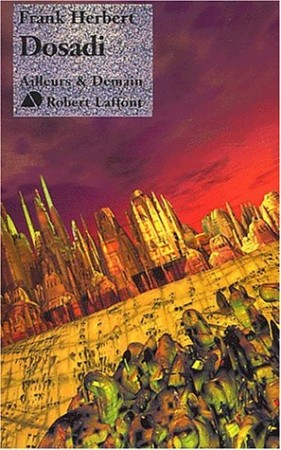
The Dosadi Experiment takes place in the same universe as The Whipping Star, but can be read on its own.
I dipped my toes into the waters of Frank Herbert’s writing with The Dosadi Experiment. It’s been ages and ages, back in the days of the dinosaurs, so I cannot really remember what I thought, but it must have been positive because I kept on exploring Herbert’s world. I reread The Dosadi Experiment from time to time, and each time I discover new bits to love. As I change, so does my understanding of The Dosadi Experiment, and that is a sign of a classic to me.
The ConSentiency is composed of many species who have different abilities. The Taprisiots provide instant mind-to-mind communication between two minds anywhere in the universe. The Caleban provide instantaneous travel between any two points in the universe.
Our extremely intelligent and empathic Saboteur Extraordinary, Jorj X. McKie, gets an assignment that he soon discovers is probably a set-up. He is sent by the agency to Dosadi as their “best”. Compared to those already living on Dosadi, he was like an infant in swaddling clothes.
What he discovers on Dosadi is shocking in its blatant disregard of any and all ConSentiency regulation. Dosadi has been placed behind an impenetrable barrier called “The God Wall”. Humans and Gowachin have been dumped together in numbers that defy description. The planet itself is poisonous except for a narrow valley, containing the city “Chu”, containing nearly 89 million citizens.
Senior Liator Kaila Jedrik starts a war and Jorj becomes a pawn in her hope of saving the population of Dosadi.
Chance brought me to the city of Thaiburley and the street-nick named Tom. Sometimes chance is a wonderful thing and sometimes it isn’t. In this case I found myself liking the writing of Ian Whates and wanted to read the next book of the trilogy.
Thaiburley is a city built in tiers – one hundred of them. At the bottom we find the City Below (often called City of Nightmare by its denizens) and the poorest of the population. Wealth increases as one ascends, until one hits to the top layer – the Upper Heights. This is where the angel-like demons are supposed to reside.
The first two people we meet in City of Dreams & Nightmare are Tylus, our newly-minted Kite Guard, and Tom, our young street-nick. Tylus is out patrolling for the night, while Tom is climbing the many layers of the city so he can get to the top and steal a demon egg. Both stumble onto the apparent murder of a council-man. Thinking Tom is the culprit, Tylus chases him and sees Tom fall off the side of the building. Action-packed from the very beginning.
The adventure continues through the whole book. Tom is chased by the authorities for his assumed part in the murder of councilman Thomas. While running, Tom meets up with Kat – survivor of the Pits (like Rome’s Colosseum). In spite of her young age, Kat is an incredible fighter. Tom on the other hand is very good at not being seen. Both skills will come in handy during the story, because this novel is for the most part about trying to survive against the odds. The baddy of the story, councilman Magnus, sends off his assassin Dewar to tie off Tom. Dewar is another incredible fighter. He has absolutely no qualms and often likes to play with his victims.
Do I recommend this book. I’ll say definitely. City of Dreams & Nightmare was an easy and fun read. Ian Whates certainly knows his craft, and as a reader I always delight in such authors.
This second installment in the trilogy City of a Hundred Rows is as fun to read as City of Dreams & Nightmare was. Once again, we get to meet Tom, Kat, Dewar and Tylus, but this time in different combinations.
Thaiburley’s strange power is failing. The Prime Master sends Tom off to discover the source of the great river Thair in hopes that he will find out just what is causing the failure. Ironically, Dewar the assassin is sent along to protect Tom and his companions. There is no way Ian Whates is going to let this journey be a peaceful one, and we are not disappointed. Here too, are plenty of survival struggles.
Kat, in the meantime, remains in the City Below. There The Soul Thief is killing off people with “talent”. In addition to the Soul Thief the gangs of the under-city are changing, both in structure but also in behavior. This change in gang-life makes life more interesting for Kat, her sister and the Tattooed men. Kat is a great character and her adventures in this book are pretty intense.
Tylus, our Kite-Guard, is sent to the under-city to make something of the City Guard there. Automatically, we know that he is going to have his work cut out for him.
City of Hope & Despair is as much fun as City of Dreams & Nightmare. I like the fact that these books are action-filled and lacking in the gooey factor. Both books deliver what they promise – good old-fashioned adventure. Ian Whates is definitely on my author-plus list.
Maybe the bone-flu is not all it seems to be. As City of Light & Shadow begins, we get a glimpse at what might be the reason behind the disease.
Tom has reached his goal and is left trying to assimilate information in amounts he has never had to before. For such a curious soul, this must be a gift – although a double-edged one. Thais is not exactly what he expected in a god, but how are gods supposed to be anyways.
Dewar wakes up, clearer-headed than he has been in a long time. He knows exactly what he wants to do next. It’s time to go home and take care of some unfinished business.
Kat and her Tattooed men have not given up on getting the Soul Thief. With Tylus and some of his men, they set off into the Stain to kill it.
All the stories come together and we see clearly how they all have something to do with Thaiss. Ian Whates tells an action-filled story, one that kept me reading. City of Light & Shadow is a fun and easy read, just like the other two. The ending left me wondering if this was indeed going to remain a trilogy. Hmmm. In a sense there was closure. On the other hand I was left hanging a bit. Hmmm. Oh well, I like it when authors do that to us readers. It’s kind of cruel, but also a lot more fun for me (kind of). I’ve really enjoyed my journey into the City of a Hundred Rows.
Samuel Vimes is a beautiful character. He grew up in Cockbill Street, the poorest area of Ankh-Morpork. They were so poor that while they had practically nothing to eat, at least their floors were clean enough to eat off. Getting into the Night Watch was quite a change for Sam. Now he had money for food. Being a guard runs in Vimes’ family. In fact one of his ancestors, old Stoneface, beheaded the last king of the city. Vimes’ worldview is that everyone is guilty of some kind of crime.
Nobby, Colon, Carrot, Vimes and the Librarian by William Bradford
Our first proper meeting with Captain Samuel Vimes occurs with him falling over drunk into one of Ankh-Morpork’s streets. It had been a hard day for the Watch. Poor old Herbert Gaskin had broken one of the fundamental rules of being a guard. He forgot to run away from trouble. Now the most despised group of men in the entire city consisted of only three men: himself, Sergeant Colon and Nobby.
In the meantime a young man is heading for the city with “all the openness, sincerity and innocence of purpose of an iceberg drifting into a major shipping lane.” Carrot is the name of this young man, due to the color of his hair but also due to the shape of his body. One day at sixteen his dad sat him down and told him he was not the six-foot dwarf he had always thought he was. Human was his race. His dwarven parents had in fact found him in the woods next to a burned out carriage. Now it is time for him to depart and seek his fortune as a watch-man in Ankh-Morpork. With him his father sends a sword, a dwarven woolen shirt, a golden cod-piece and The Laws And Ordinances of The Cities of Ankh and Morpork.
The Unique and Supreme Lodge of the Elucidated Brethren of the Ebon Night have a plan to overthrow the Patrician. They are going to summon a dragon. Against all odds they actually succeed in calling one forth. It turns out that this is a double-edged sword. Now that they have called the dragon forth, the dragon figures out a way to get back on its own.
One of the themes that we will encounter again and again in the Watch series is the power play between Vimes and Vetinari (patrician). Vetinari plays Vimes like the strings on a guitar. Carrot is the person who manages quite well to live between a rock and a hard place. His literal interpretation of the laws of Ankh-Morpork and his ability to own any situation makes it possible for him to soften Vimes’ explosiveness after meetings with Vetinari.
Adaptations
1992: BBC4 produced a 6-episode serial dramatisation by Michael Butt of Guards! Guards!
Edward d’Eath’s father has just died, leaving him the thirty-seventh Lord d’Eath and an assassin to boot. Unfortunately his father had not left Edward any money. Quite a single-minded person whose belief in a King as ruler of Ankh-Morpork was quite fervent. Coincidentally, he stumbles upon Corporal Carrot, who just happens to look like one of the old Kings. Edward sets about trying to get Carrot and kinghood into fashion.
Captain Vimes is retiring from the police to marry Sybil Ramkin, Countess and the richest woman in Akh-Morpork. He is about to become one of the posh, a gentleman of leisure. But Vimes is finding it difficult to let go of policing.
Thankfully, an important artifact disappears from the Assassin’s Guild. The mystery must be solved. But the Assassin’s Guild aren’t interested in help from the Watch. Vimes loves the chase and the opportunity to get out onto the streets again. The chase after the weapon/artifact turns out to be both challenging and bloody.
Gaspode the wonder dog makes his appearance in Men-at-Arms. Gaspode the talking dog (too much time at the UU can change someone). He is rather keen on Angua (the werewolf).
In Men-at-Arms Pratchett plays with our biases. Here we get to see racism in all its “glory”. Even though the cops in the Watch are only supposed to be cops, they still have to overcome biases towards each other. Like so many others of the Discworld books, Men-at-Arms looks at the power of belief. We get a look at what that belief makes it possible for people to do.
2000: Stage adaptation of Men At Arms by Stephen Briggs
Feet of Clay (1996)
1996: Winner of SFX award for best SF/Fantasy Original Novel
1997: Nominated for 1997 Locus Awards – best Fantasy novel
Commander Sir Samuel Vimes is shaving, thinking on the horrors he has to face as a gentleman. People doing things for him, formal dinners and not being able to sit with the servants any longer playing cards and drinking beer. And then: “There was a flicker in the glass. He moved sideways and ducked. The mirror smashed. There was the sound of feet somewhere beyond the broken window, and then a crash and a scream.” The Assassin’s Guild are at it again. Some of the other gentle-people of the city do not want Vimes alive, and the Assassin’s Guild keeps on trying to do their job.
Captain Carrot has made it through his first two years in Ankh-Morpork. The love of his life is Corporal Angua, a werewolf, whose bad-hair days he takes in his stride. She is quite handy to have around when people want scaring. So when some incredibly thick thieves rob Ironcrust’s Dwarf Bakery she does just that – earning the “respect of the community.”
The body of Father Tubelcek is discovered. The watch have just hired their new alchemist, a dwarf by the name of Cheery Littlebottom. She is sent along to investigate the clues she discovers, of which one of them is a strange light in the dead eyes of Father Tubelcek.
Weirdly enough, it turns out Nobby is posh. He has his own coat of arms and has now become a peer. Poor guy, how is he going to deal with this? With increasing desperation it seems.
Adaptation
2007: Stage adapatation of Feet of Clay by Stephen Briggs.
An Ankh-Morporkian and a Klatchian fisher are both at the scene when a strange island rises above the sea. Both immediately lay claim to the island and this leads to a dispute between Ankh-Morpork and Klatch. The Klatchian crown prince is sent to Ankh-Morpork and diplomacy ensues (kind of). One of the funniest scenes Terry has ever written comes when Vimes has to lead a parade. The whole thing came alive in my head and I almost fell over laughing.
An assassination attempt is made on the prince and the Klatchian embassy declare war against Ankh-Morpork. Vetinari resigns and Lord Rust takes over. He is slightly eager for war and his decision leads to Vimes and the gang ending up in the Klatchian desert.
At the same time Vetinari, Colon, Nobby and Leonard of Quirm take a u-boat ride to the island and then to Klatch. Nobby ends up having the time of his life with “nubile” women. This is also an extremely funny scene. Poor Nobby. But while there is plenty of humor in the foursome’s trip, there is also a serious reason for their trip (obviously since Vetinari is involved).
Uberwald – the land of vampires, werewolves, trolls and dwarves, is becoming restless. Something very important is happening in a few weeks time. A new Low King is being crowned, and that is causing fighting in Ankh-Morpork. With 50000 dwarves living in the city, people are bound to notice that something is going on.
The old grievances between trolls and dwarves have not yet been resolved and large areas are controlled as fiefdoms by vampire or werewolf clans. Into this “suet pudding” Vetinari plans to send an ambassador for Ankh-Morpork, and he wants to send the Duke of Ankh. Cunning man that he is, Vetinari had already spoken to Lady Sybil about it. Vimes knew when he was beaten.
The replica of the Scone (dwarf throne) is stolen from The Dwarf Bread Museum. Vimes finds an aboundance of clues, to many in his opinion. To him it is a stupid crime that does not feel stupid.
Vimes goes off to Uberwald, leaving Carrot in charge of the city. Thankfully, Sybil is along. She will take care of the negotiations, while Vimes will represent Ankh-Morpork in his unique style.
Angua discovers that her xenophobic brother Wolfgang has decided to take over Uberwald. She leaves Ankh-Morpork and Carrot to stop Wolfgang. Carrot makes a difficult choice. He chooses love over duty and goes after Angua. This time Colon is left in charge of the Watch – a recipe for disaster.
The Fifth Elephant follows these three journeys – Vimes and Sybil/Carrot and Angua/Colon as head of Watch.
In a sense, The Fifth Elephant is a love story. Sometimes the choice is between the people we love, duty and tradition. Can we have it all?
The Night Watch for the most part happens in the past. Through a freak accident, Vimes is thrown back to the time when he was a younger man and new to the Watch. Along for the ride is Carcer, a cold-blooded murderer. Carcer’s goal in the past is to kill Sybil, thereby wounding Sam beyond repair. Sam’s goal on the other hand is to make the city safer from people like Carcer. To do that he has to establish a new identity as his old self cannot know who he is. Luckily/unluckily Vimes assumes the identity of John Keel, his old sergeant. John Keel has been killed by Carcer. Vimes knows that changing the past will also affect his future. There might not be a wife and child-to-be when he gets home to modern Ankh-Morpork. But Vimes is who he is and cannot leave the Watch or his old self in their old shape.
Unfortunately, Carcer joins the Unmentionables. They are the secret police, carrying out the whims of Lord Winder (patrician of the time). This often includes people going missing, torture and terror. Vimes sets out to make life difficult for both Carcer and the Unmentionables.
Would we try to change the past if we could? Many of us probably would. In trying to influence his younger self to be a better copper, Vimes changed himself. But the big lines of the city. Hmmm – read and see. Corruption and incompetence are dangerous qualities in rulers, but also in the ones set to carrying out the rules. So, what happens when Vimes sets out to change his old world, trying to make it a better place?
———————————-
2008: BBC Radio 4 2008 radio adaptation dramatised by Robin Brooks
2004: Night Watch stage adaptation by Stephen Briggs
Dribble the dragon, Samuel Vimes, Sam Jr. by Kiriban
Vimes really, really does not like Vampires. Until now he has refused to have any of them on the Watch. That choice is taken away from him by his “beloved” Vetinari. Sally is employed to assist in the investigation around the death of the dwarven demagogue, Grag Hamcrusher. Apparently a troll is the culprit. Sergeant Angua and Captain Carrot are the other Watch member assigned to the case.
Corporal Nobbs and Sergeant Colon get the job of investigating the disappearance of a 50-foot painting titled The Battle of Koom Valley. The discovery of the disappearance leads to several things happening. Trolls vs. dwarves, assassination attempts, a Kube and the Summoning Dark all lead to Vimes, Sybil, Young Sam, Wilikins, and several members of the Watch going to the Koom Valley where Vimes discovers the secret of the valley.
Young Sam has become the mainstay of Vimes’ life. This will prove essential in keeping Vimes alive and sane. Family is all to him. Vimes’ dedication to peace is strong throughout the book, as can be seen clearly in his fight with the Summoning Dark. Racism is prevalent in the book through the animosity between dwarves and trolls. Once again we are confronted by our own biases. One might even replace racism with religious conflict: Protestant/Catholic (Ireland) or political conflict: Palestine/Israel.
Samuel Vimes and one of his weapons (dragon) by Jan Pospisil(Perfect)
Snuff’s focus is for the main part on Vimes and his family. Lady Sybil makes him take a family vacation to her mansion Crundells. Of course Wilikins comes along. Here all is peaceful and Sam is enjoying being able to concentrate on being with his wife and son. But that is not the way things stay. The house-staff seems to hate Sam and Vimes nose is itching with the smell of wrong-doings.
Samuel discovers a grotto of goblins living nearby. For some inexplicable reason the local gentry seems to hate/despise/revile the goblins and treat them as disposables. When the murder of a local blacksmith occurs, all of a sudden the whole country side is involved. On his side, Vimes has Sybil, Wilikins, a young police officer called Upshot and the goblins. Against him are Lord Rust (who has interests in the area) and most of the local gentry and quite a few of the peasants.
It’s time to call in the cavalry. While he has no jurisdiction at Crundell, Vimes is able to ask his people to investigate certain aspects of his discoveries. The Watch does not play a large part in Snuff, but they are present.
I was touched by Snuff. In a sense I felt as though I was saying goodbye to Samuel Vimes, Duke of Ankh-Morpork and Commander of the Watch. Pratchett writing has gotten darker as the years have passed for the Discworld. The topics are no longer solely focused on making fun (in his gentle way) of current sci-fi and fantasy fashions, but very much on personal development and the conflicts people meet in life. The slavery of the goblins in Snuff very much reminded me of the slavery that has gone on and is going on in the world. Somehow people find it in themselves to treat others as nothing. Rising up to fight this slavery, both on a large and a small-scale is incredibly difficult. Thankfully Pratchett always leaves us with a sense of hope that things might get better.
As you can see from the above map, the Discworld consists of many countries and continents. Each country has its own culture and religion. From my reading there are three books in Terry Pratchett’s Discworld series that are specifically about religion and culture. These three stories are about the countries of Djelibeybi (Pyramids) – try saying it, Omnia (Small Gods) and Zlobenia vs. Borogravia (Monstrous Regiment).
Pyramids consists of four books: The Book of Going forth, The Book of the Dead, The Book of the New Sun and The Book of 101 Things a Boy Can Do.
As a young boy Pteppic was sent to Ankh-Morpork by his father, King Teppicymon XXVII. The Assassin’s Guild had accepted him as their student. The reason they had chosen the assassins’ school was because it offered the best all-round education in the world.
At home all Teppic had was a kingdom two miles wide and onedred and fifty miles long. Its stronger neighbors only tolerated their existence because anything else would lead to war between the two countries.
Assassin profile By Cathy
Djelibeybi’s days of glory were over. Now all they had to attract visitors was pyramids – enough pyramids to bankrupt the country.
Teppic’s stay was Ankh-Morpork is a success. He survived his finals (assassin’s school finals can be quite deadly) through knowledge and a great deal of luck. The test was to arrive alive and well at a site and then kill someone. He passed by accident.
Then Teppic’s father dies and Teppic becomes King Teppicymon XXVIII and has to go back to Djelybeybi. When he gets there he discovers that the High Priest Dios pretty much runs the country. Any change that Teppic wants to bring in to Djelibeybi, like plumping, is fought. All Teppic is supposed to do is get a consort and bring an heir into the world. Most importantly, a new pyramid has to be raised and his father’s pyramid has to be capped.
Pratchett plays with time and space in Pyramids. The pyramid of Teppic’s father has become so large that upon capping, Djelibeybi comes out of alignment with the rest of the disc. Chaos ensues in Djelibeybi as the dead come alive and the kingdom’s various gods want a part in ruling the kingdom. The power of belief is strong on the Discworld. There gods gain power through their believers. If the people believe the pharaoh is a god, then the pharaoh has godlike powers. Egyptian mythology along with Christianity get their fair share of Pratchett’s attention.
1989: Winner of BSFA
SMALL GODS (1992)
On the Discworld there are gods for everything. On Wikipedia you’ll find a list over the gods and their function. They come in all shapes and sizes. Lack of belief decreases power while belief increases the power of the gods. If they have no believers, the gods are small gods crying out for belief.
History has to be observed. Otherwise it’s not history. It’s just … well, things happening one after another.
This is why history has its own caretakers making sure things happen as they should. These caretakers live in a hidden valley in the Ramtops. The 493rd Abbot sends his most experienced monk, Lu-Tze, to Omnia to make certain that nothing messes up the course of history.
Brutha and Om By Thaumivore
In Omnia the time of the 8th prophet was imminent. The Church of the Great God Om has “very punctual prophets. You could set your calendar by them, if you had one big enough.” Brutha, the novice monk hears a voice. This voice is trying to get his attention. Due to a lack of belief Om finds itself stripped of power and has therefore become one of the Small Gods. When Brutha discovers that the voice he has been hearing in his head belongs to a small tortoise, Brutha is astounded. No less astounded does he become when the tortoise wants to see the High Priest. A mere novice will never be allowed into such august company.
Waiting for Vorbis By danseusenoire
Vorbis, the Deacon, is the head of the Quisition. Their job is to do all those things that need to be done that other people would rather not do. Their methods of garnering information were like the Spanish Inquisition’s, rather unpleasant. Along with General Iam Fri’it of the Divine Legion and Bishop Drunah of the Congress of Iams Vorbis is planning on forcing the word of Om on the Ephebians. Once Ephebe has been converted, the way onward to Djel and Tsort lies open.
Religion and its inquisitions, philosophy, and the battle between reason and belief end up on the playground of Pratchett’s satiric hand. Terry gives us a look at how some people seek power to the extent that they will do anything to gain it.
Some gods are crazier than others. In Borogravia Nuggan passes decrees that are increasingly bizarre. Borogravians are ruled by the Abominations – a list of taboos: no garlic, no cats, ginger hair is out and so are six-buttoned shirts, chocolate and the color blue. You can see that being a Borogravian can be a challenge for the most devout. Due to these Abominations Borogravia is constantly at war with their neighbors.
Even though women aren’t allowed pants, Polly dons them, cuts her hair short and sets off after her brother Paul, who has gone missing in the Borogravian army. She needs him back at the family pub so the pub won’t be passed on to their terrible cousin if their dad dies. All she has to do is join the Borogravian army.
French cover art by Marc Simonetti
The recruiting sergeant and his corporal assistant Strappi give Polly (or Oliver Perks as she calls herself) a shilling to kiss and a picture of the queen. Along with Polly, several other recruits join up: a vampire, one troll, an Igor and humans. Strangely enough all the of the recruits have very light voices. The tiny regiment makes their way toward the keep where the enemy is based. Guess who we get to meet there.
Commander Samuel Vimes has been sent to Zlobenia to figure out how to deal with Borogravia. To Vimes Borogravia is just another criminal that has to be dealt with as such, and he is going to treat Zlobenia and Borogravia as he would two scrappers back in Ankh-Morpork.
As you can probably imagine the main themes of Monstrous Regiment are the battle between the sexes and repressive religions. Deprivations caused by a war-happy country are only all too apparent in this story. Along with young males, food and clothing are scarce. We don’t have to look too far back into our own histories to see how all of these themes are sadly relevant for us.
The characters in Monstrous Regiment are delightful. The lengths these women go to in order to hide their gender is funny (socks in pants etc.). Their reactions to discovering the true identities of their compatriots and the difficulties that come with hiding their gender create weird scenes (especially in relation to Lieutenant Blouse – an incredibly inept soldier).
ADAPTATION
2004: Monstrous Regiment adapted for stage by Stephen Briggs
2011: Monstrous Regiment trailer fanfilm by Michelle
Witches (usually women) are a force to be reckoned with on the Discworld. Nowhere near as flashy as the wizards (usually men), these women often rule their villages with an iron fist and a whole lot of headology. Pratchett describes headology as:
a witch’s way of magically setting fire to a log of wood consists of staring at the log until it burns up from pure embarrassment. As a result it is less energy intensive, which means that a witch can do more than a technically equally powerful wizard. (Discworld Wiki)
Now, imagine headology turned on people. That might frighten a few into behaving who might not otherwise behave.
Granny Weatherwax by Paul Kidby
The strongest headologist of the “good” witches is Granny (Esmeralda) Weatherwax. Her sister, Lilith (below), happens to be one of the “bad” ones. In a world supposedly without a hierarchy, Granny is the unspoken ruler of the witches. In the village of Lancre there is absolutely no doubt she is the boss. That is until an attempted rebellion be some wannabe witches (below). Granny is a dream of a witch. In the trio of Lancre her role is the role of the Crone (although noone would actually call her a “Crone” to her face – no one with their senses intact). Granny’s special ability is to see reality clearer than the rest. Pratchett explains that this is a manner of seeing the world that does not lie to itself including an ability to question not only the world but oneself again and again and again. Young Tiffany Aching seems to be following in Granny’s “footsteps” in this regard (below). What one needs to realize about Granny Weatherwax is that she is always there for you when you need her. Her one weak spot is her cat: “gerrofoutofityoubugger!” (generally called “You”). Considering who the owner of “You” is, I find it easy to believe that she is the only creature who has gotten the better of Greebo. While younger and much smaller than Greebo “You” terrifies him – inasmuch as he is able to be terrified of anything/anyone.
Nanny Ogg and Greebo by Visente
Greebo belongs to Nanny Ogg. Nanny is probably the only person alive who thinks of Greebo as a big softy.
To Nanny Ogg he was merely a larger version of the fluffy kitten he had once been. To everyone else he was a scarred ball of inventive malignancy.
Nanny is the Mother of the threesome in Lancre. Now there is a lady I wouldn’t mind meeting. Her sense of humour is broadminded, raunchy and hilarious. At the same time she rules her brood and their spouses with something akin to terror with a dash of love mixed in. They adore her yet fear her – at least her daughters in law. Nanny Ogg saves Granny from herself when that is needed and functions as Granny’s grounding rod. Not only that but Nanny lightens the mood when Granny feels overwhelmed or as if the people around her are too stupid for their own good. While Granny is the one who scares people Nanny is the one who woos them – until it is time to stop wooing. Nanny’s final job in the trio of witches is to prod Magrat in the direction Nanny feels Magrat ought to go without being as truthful about it as Granny tends to be.
Meek, Mild Magrat by MJ Oboe
Magrat Garlick is an interesting character. She happens to be the “Maiden” of the Lancre coven. At first glance Magrat is a young ditz with a heart of gold and a great belief in crystals and folk wisdom.
Witches aren’t like that. We live in harmony with the great cycles of Nature, and do no harm to anyone, and it’s wicked of them to say we don’t. We ought to fill their bones with hot lead.
But as you see, Magrat has another side as well – like we all do. In Lords and Ladies that side shows up in all its glory.
Unlike Granny Weatherwax and Nanny Ogg, Magrat is not very good at headology. Her forte lies in research and development of herbs and cures (and her crystals of course). She struggles with her self-confidence, but Granny and Nanny make up for that by having an abundance of confidence in themselves. It can’t be easy being the youngest witch when the two older ones in your coven have such strong personalities.
Tiffany Aching and the MacNeegles by Alda Rana
Young Tiffany Aching down down on the Chalk (mountain) is a whole different type of character. She has to take over the responsibility for her mountains when her grandmother (the local witch) dies. The only possible candidate is Tiffany Aching. At 9 her ability to ask uncomfortable questions and her quest for knowledge points to her potential as a great witch down the line. But Tiffany isn’t really worried about the whole witch thing nor is she caught up in the need to be one. Instead she happens to have the gift of making cheese. I know, strange gift for a witch one might say. But witches are practical people who prize such abilities over other more wizard-like gifts. In fact, Tiffany excels so much that one of her cheeses has come alive and become and excellent mouser. Its name is Horace. She is friends with the Nac Mac Feegles, a feat not managed by many.
These four witches are my favorite ones. There are many more that make appearances in Pratchett’s Witches’ series, but Granny, Nanny, Magrat and Tiffany get into so many incredibly weird and funny situations that its impossible not to have them as favorites. The Witches’ series consists of Equal Rites, Wyrd Sisters, Witches Abroad, Lords and Ladies, Maskerade, Carpe Jugulum, The Wee Free Men, A Hat Full of Sky, Wintersmith and I Shall Wear Midnight. As usual Wikipedia gives detailed information about these women, Pratchett’s page is a given source and L-Space has fun details.
Eskarina by Hannah Crosby
EQUAL RITES (1987)
As I stated at the beginning of this post most witches are women and most wizards are men. There are exceptions. Some of those exceptions start with mistaken identity.
Up in the Ramtops a wizard comes awalking using his staff as a guide to where he is going. Bad Ass, the village, is his lucky destination. A child is being born, the eight son of an eight son.
Drum Billet, our wizard, knows he is about to die. Wizards and witches get to have that knowledge. He gives his staff to the son of the smith and dies. One problem. The eight son of the eight son just happens to be a girl, Eskarina Smith. A wizard girl. Oops.
Good thing for young Eskarina Smith (Esk to her friends) that Granny Weatherwax was the midwife that saw her into the world. When Eskarina is 7 her mother decides to send her along with her brothers to Granny. Strange things seem to be happening around the girl whenever she is upset.
When they get to Granny’s, Granny Weatherwax is lying on her bed looking quite dead. Being a witch she wasn’t, she was only out borrowing. Eskarina feels Granny’s undeadness and goes downstairs waiting for Granny to return (while her brothers run off terrified). When she hears loud noises upstairs, even she becomes terrified, runs off, falls down and is met by the staff (yes! the staff came to her).
Granny knows something has to be done, and right away. She decides to take her to the wizards school in Ankh-Morpork, the Unseen University, and enroll the young Eskarina. But getting the girl into this all-male school is going to prove more difficult than Granny had thought.
Adaptations
BBC4 dramatisation of Equal Rites as serial on Woman’s Hour
The future king with the witches
WYRD SISTERS (1988)
“The night was as black as the inside of a cat. It was the kind of night, you could believe, on which gods moved men as though they were pawns on the chessboard of fate. In the middle of this elemental storm a fire gleamed among the dripping furze bushes like the madness in a weazel’s eye. It illuminated three hunched figures. As the cauldron bubbled an eldritch voice shrieked: “When shall we three meet again.”
Here we have the Discworld’s version of MacBeth‘s witches. The mother, the crone and the other one. Or as other people know them, Granny Weatherwax, Nanny Ogg and Maigrat.
King Verence of Lancre is making a discovery. He is about to become a ghost, unable to stop the kidnapping of his child. By a freak accident the child ends up in the arms of Granny Weatherwax and she decides to take a hand in playing with the future and sends the baby off with a troupe of actors.
Fifteen years later.
Words have power. In the “good old days” the jester was the only person at a king’s court who could speak his mind without fear of the consequences (supposedly). These days we have the media. But words have power. We might remember an event or something about the people involved, but as the story gets told and re-told our perception of the event changes. Pratchett’s way of pointing a light at our perceptions and prejudices is a wonder.
Adaptations
1997: Wyrd Sisters was produced as a two-part animated television series, produced by Cosgrove Hall.
House of Gogol by Brer Anansi
WITCHES ABROAD (1991)
“This is a story about stories.
Or what it really means to be a fairy godmother.
But it’s also, particularly, about reflections and mirrors.”
On the Ramtops there was only one witch who was not attending the Sabbat. Desiderata Hollow was making her will. Desiderata is a fairy godmother to princess Emberella. The other one was Lilith (who just happens to be Granny’s sister).
In Genua, the magical kingdom, Lady Lilith de Tempscire loved the idea of travelling through mirrors. After speaking to Desiderata she was glad that there would only be her and the voodoo woman left to fight over Emberellas’s future.
At Lancre the fairy godmother wand is delivered into the hands of Magrat. The note from Desiderata reads:
“I niver had time to Trane a replaysment so youll have to Do. You must goe to the City of Genua. I would of done thys myself only cannot by reason of bein dead. Ella Saturday muste NOTTE marry the prins. PS This is important. PSPS The those 2 Olde Biddys they are Notte to come with Youe, they will onlie Ruine everythin. PSPSPS It has tendincy to resett to pumpkins but you wil gett the hange of it in noe time.”
With this bit of headology, Desiderata guarantees that Nanny (with Greebo) and Granny decide to accompany Magrat on her journey to Genua. As the threesome moves through the lands on their way to Genua, they manage to upset quite a few people. In typical tourist style they are loud and obnoxious and wonder why these people cannot speak properly. But there is also magic battle and voodoo fun to be had.
Adaptations
1999: Witches Abroad stage adaptation by Aaron Birkes played at Aberystwyth Arts Centre Theatre
Lords and Ladies by Marc Simonetti
LORDS AND LADIES (1992)
Magrat, Nanny (with Greebo) and Granny are back in Lancre after being absent for eight months. That worried Magrat. Was the kind-of-agreement between her and Verence still up and running.
Upon her return, Magrat was informed by King Verence that they were to be married at midsummer and that all of the arrangements have been made. No proposal, just a statement. He is the King you see, and Magrat a subject.
A stone circle up in the mountains of Lancre keeps the Dancers in. That is if they are not let out. When people forget about the Dancers, it is an easy matter to lure them into the stone circle, leaving them quite dead.
Esme Weatherwax and Nanny Grogg come to the Dancers and discover that someone has been dancing. Diamanda, Perdita and that girl with the red hair decided that they should teach themselves witching in the absence of the older ladies. About six of them have been going up into the mountains every full moon dancing. When Granny goes borrowing she discovers that there is some kind of mind loose in the kingdom – Elf.
Mustrum Ridicully of the Unseen University worrying about baldness and thinking back to the good old days when he went walking with Esme. When he is invited to the wedding of King Verence and Magrat, Ridicully decides it is time to up into the mountains. With him go the Librarian and the Reader in Invisible Writings, Ponder Stibbons.
1995: Lords and Ladies stage adaptation by Irana Brown
2005: Lords and Ladies German feature length fanfilm. I’ve only been able to find the link to the trailer. So if anyone has a link to the full-length movie, please send.
MASKERADE (1995)
In his dedication Pratchett writes:
“My thanks to the people who showed me that opera was stranger than I could imagine.”
What is Pratchett going to make fun of this time you might ask. Well, the answer is The Phantom of the Opera.
Mr. Goatberger, the publisher, has been sent the manuscript to a book. It wasn’t even on proper paper, and he was filled with apprehension. Then he started reading, kept on reading, and called in his assistant, Mr. Cropper. He began dreaming “the dream of all those who publish books, which was to have so much gold in your pockets that you would have to employ two people just to hold your trousers up.”
Agnes Nitt has come to the Opera House to audition for a part. She might not be the greatest looker, but she has a voice to kill for. When the time comes to select the players, Agnes gets stuck singing for the goodlooking Christine.
Gytha Ogg gets a letter addressed to “The Lancre Witch”, bringing Granny’s temper up a bit. Nanny’s book “The Joye of Snacks” has become a hit, and it turns out the publisher has been a bit complacent about paying Nanny her dues. In fact, he owes her about four or five thousand dollars. They decide to take a trip to Ankh-Morpork and stir up the town a little. That, and convince Agnes to come back to Lancre as the maiden witch. They bring Greebo, Nanny’s cat of terror. His part in this story is amazing.
Reading Maskerade with the Phantom of the Opera playing in my head at the same time was great fun. Terry Pratchett has really nailed it this time.
If you want and incredibly detailed and extensive analysis of Maskerade, I recommend Bewitching Writing by Dorte Andersen at Aalborg University. It seems I’m not the only fan of Terry.
1998: Stephen Briggs stage adaptation of Maskerade.
2006: A stage adaptation of Maskerade by Hana Burešová and Štěpán Otčenášek (partly using adaptation by Stephen Briggs) premiered in Divadlo v Dlouhé, Prague. Pratchett attended the closing performance five years later.
The Carpe Jugulum Cast by Vic Hill
CARPE JUGULUM (1998)
Into the country of Lancre comes an army. An army made up of very small blue men, no higher than six inches tall. Little blue men nobody messes with. Men whose favorite pasttime is fighting anything and anyone.
Not too far from Lancre, four vampires come accross an invitation to the name ceremony of the child of Queen Magrat and King Verence. It is a dangerous thing to invite vampires into your home, whether that be house or kingdom. Sort of gives them free rein. Count Magpyr, his wife and their two children enter Lancre with their servant Igor.
Granny Weatherwax gets called away to a birthing that is in trouble. When she gets there, she has to decide who to save, mother or child. Very few people could make such a choice without trying to share the responsibitility with someone. Flying back towards the castle she notices mist is on its way from Uberwald.
The dwarf Casuanunda is having to resort to highway robbery. But robbing that black coach is not very tempting when he sees how another highway robber is treated. Instead he goes on to Lancre where he has a few aquaintances.
In this novel Pratchett plays with the idea of split personality, references vampire movies of the day, pyramid schemes and good and evil through the Phoenix vs. vampire myths. Pratchett managed to give this novel a slightly creepy feel.
THE WEE FREE MEN (2003) (Skrellingene – 2004) – Locus YA winner 2004
We now leave Lancre behind (for the most part) and enter the world of the Chalk and Tiffany Aching. She is nine years old when we meet her for the first time in The Wee Free Men.
My first meeting with Tiffany (or Petronella in Norwegian) was in Norwegian. I thought I would introduce my youngest to Pratchett and this new book on the market seemed like the thing to read. Was it ever.
When we meet her she is lying by the river tickling the trout on their backs. She liked hearing them laugh. With her on this expedition was her brother Wentworth (Steingrim in Norwegian). Like all little kids he was messy and sticky but easy to be around.
I’m sure you remember the little blue men in Carpe Jugulum. Here they come again, trying to fish. For some reason Tiffany was able to see them. Only witches should be able to see the blue terrors.
Grandma Aching has just died and Tiffany thinks that she might have been a witch. The little blue men turn out to be the Nac Mac Feegle. Since Grandma died they are on the lookout for a new “hag”. Since Tiffany sees them and is able to control them (somewhat) the Nac Mac Feegle tell Tiffany that she is their hag.
They need help for their Kelda (mom). She is ill. Tiffany comes with them to their hole in the ground and checks out things for the boys. Sadly, the Kelda is dying (of old age) and Tiffany needs to be there for the boys until a new Kelda can be found.
When Tiffany’s baby brother disappears, she now has allies in her search for him. The search brings Tiffany and the Nac Mac Feegles into a strange world where Tiffany’s hag-hood is proven.
My youngest son laughed his head off and was really spooked at times. An excellent children’s book in my opinion. They won’t get all the references, but who cares, I probably don’t either. What’s really great about the Tiffany Aching series, is that we get a look at Tiffany’s growth from the beginning. Terry has created a wonderful character in our young Tiffany.
There is a possible film adaptation of The Wee Free Men by Rhianna Pratchett (Terry’s daughter) in the inning.
More laughter came for my son in “A Hat Full of Sky“. Those Nac Mac Feegle names are genius. I read them in Norwegian (in one of our dialects of course) and I couldn’t help myself. I giggled along. Pratchett has so many of those giggle moments and then all of a sudden a belly-laugh comes along. All part of his godhood status for me I guess.
Tiffany is now an apprentice to Miss Level. On their way there, Tiffany and Miss Tick are attacked by a hiver (powerful, dangerous creature). At the cottage of Miss Level, Tiffany discovers that Miss Level is in fact two-bodied and that there is a ghost cleaning her house. During her stay Tiffany has to fight the Hiver, but fortunately she does not have to battle alone all of the time. Help is to be found in many places.
We get a great look at the life of an eleven year old torn out of her old life, having to go to boarding school (so to speak). Everything is new. Not everyone is nice. On top of that she has the Nac Mac Feegle and the Hiver. Growing up must come quickly then. Pratchett does an excellent job at looking at the development of Tiffany’s identity. She emerges as someone who has integrity and the willingness to question herself. She’s actually a pretty good role-model for young people.
By now I think we’ve seen that Tiffany is not the kind of girl who is ruffled by just anything. It takes a bit more than normal to get her uncomfortable. Being wooed by the Wintersmith is one of those things. In “Wintersmith” Tiffany does a foolish thing. At the dark morris dance welcoming winter, Tiffany finds herself drawn into the dance. Ooops. Wrong person.
This means the Wintersmith (who brings winter) meets Tiffany rather than the Summer Lady and is enchanted by her. Double oooops.
All of a sudden green stuff sprouts underneath Tiffany’s feet and the Cornucopia appears. Tiffany seems to have taken on at least one of the Summer Lady’s abilities. Her friends Roland, Nac Mac Feegles and Granny Weatherwax have to help Tiffany get out of her new bind.
While her new teacher, miss Treason, is kind of creepy Tiffany manages to learn a lot from her, not least all which color of cheese she does not like.
I’ve seen from commentaries that some people think Wintersmith too childish. Sometimes I wonder if I’m reading the same books as other people or if I’m expecting different things from the books. I find all of the characters delightful, even crazy old Treason. Terry’s writing is up to its usual standard and as a brainwashed cultmember of the Pratchettian cult I’m sold.
OK. Now we come to the last book in the Witches and Tiffany series: I Shall Wear Midnight. For some reason I found it poignant. You know how sometimes you get a feeling of being thankful that you’ve read a book? Well, Midnight and Snuffare both Pratchett books that gave me that quiet feeling. I was moved.
Tiffany is now grown up (15) and is working the Chalk as its only witch in a climate of growing suspicion and hate.
When the Baron of the county dies, she is accused of killing him. Tiffany travels to Ankh-Morpork to inform Roland of his father’s death. As usual the Nac Mac Feegles follow Tiffany into town.
Tiffany’s fight this time is against the Cunning Man. Once again we get a battle between the almost good against the practically evil.
My love for this book could also be due to its darker tone. This darker tone fits the books well.
The Foundation series continues on from the Elijah Bailey series. The reason I call it a continuation of the series becomes apparent as one reads the books (too much of a spoiler to tell). If you go to Wikipedia, they will tell all. Having said that, their page carries quite an excellent description of the books along with analysis and links. For another in-depth analysis of Asimov’s work go to Wimmer & Wilkins’ blog. Asimov’s home page contains more general information about his life’s work.
Isaac Asimov brought fresh air into science fiction when he arrived on the scene in the 40’s. He wasn’t afraid of taking a hard look at the possible future of mankind based on what he knew of the day’s theories on sociology and psychology. The Foundation series is considered one of the most important contributions to the field of science fiction, a well-deserved opinion.
PRELUDE TO FOUNDATION (1988) AND FORWARD THE FOUNDATION (1993)
Cover for Polish Prelude to Foundation by Slawek Wojtowicz
The Foundation series was started in the 1940’s, but for easier reading you should start with Prelude to Foundation and Forward the Foundation. In Prelude we meet Hari Sheldon, the inventor of psychohistory. Hari’s goal was to be able to predict the general future of humanity, and during a conference he presents his fledgling theory to fellow scientists on the planet Trantor. Unfortunately the Empiror finds Hari’s theories a threat and begin to persecute him. This makes it necessary for Hari to flee, and his flight takes him around Trantor. In Forward the story of how Hari develops his theory continues. Sadly for Hari, the people he loves die off (naturally and unnaturally). Hari refuses to give up and finally develops what ends up being called the Seldon Plan, a way to save the future of humankind.
FOUNDATION (1951) / FOUNDATION AND EMPIRE (1952) / AND SECOND FOUNDATION (1953)
Cover for Polish Prelude to Foundation by Slawek Wojtowicz
After this introduction to the future Galactic Empire, The Foundation Trilogy with the books Foundation, Foundation and Empire and Second Foundation, follow. These are Asimov’s first installments in the Foundation history. When you read these books, please keep in mind that the series was written well before Wikipedia or the internet came into existence. As such, they seem a bit dated. Some of the theory can be tedious, but the adventures and people we meet are quite fun. The titles are a dead give-away, so we know well ahead of time that the Foundation is bound to survive. But we know nothing about the road taken.
In Foundation and Empire the leaders of the Foundation has become corrupt. The internal strife that arises from that makes the organisation susceptible to “The Mule”. The Mule advances, conquering planet after planet, making the Empire deviate from Seldon’s plan. The Foundation does not have it in them to win over the Mule, and desperately some of the members begin seeking a rumoured Second Foundation.
The title Second Foundation kind of gives it away. In this novel we are going to discover the rumoured savior of the Empire while enjoying adventure, science and social interaction. The only way to kill the Mule is by allowing members of the Foundation to find members of the Second Foundation. But this also reveals the fact that there is a Second Foundation and that its nature is somewhat different to the First one’s. Herein lies the conflict.
Foundation’s Edge by Michael Whelan
FOUNDATION’S EDGE (1982) AND FOUNDATION AND EARTH (1986)
And so we come to the two final books in the Foundation series: Foundation’s Edge and Foundation and Earth. We meet Golan Trevize as main protagonist in both books. He is convinced the Second Foundation has survived the attempt to exterminate its members, and goes looking for them. His search brings him to many planets and finally to the ancient planets (no longer on any star-chart) of Solaria, Aurora and Melpomenia. Each journey brings Trevize closer to a conclusion that may or may not satisfy the reader. I felt ambiguous, and that seems to be the intent of the author.
1966 – Best All-time Novel Series Hugo Award for the Foundation series
1983 – Hugo Award for Best Novel for Foundation’s Edge
1983 – Locus Award for Best Science Fiction Novel for Foundation’s Edge
1996 – A 1946 Retro-Hugo for Best Novel of 1945 was given at the 1996 WorldCon to “The Mule“, the 7th Foundation story, published in Astounding Science Fiction
While the third and final book in the Nulapeiron Sequence, “Resolution” lacks the brilliance of “Context“, “Resolution” is certainly a well-crafted book. Meaney’s work is moving, engaging and interesting. He manages to braid his thoughts on time and space into the text in a manner that fits in with the rest of the book. This is quite a feat.
Tom Corcorigan leads a complicated life. He’s on top or he’s at the bottom of the social ladder. His life is never the same from moment to moment. Love, friendship and home can change in an instant. I’m glad I’m not he. As in the previous books, we also get a look into the lives of the pilots.
In “Context” the Blight was defeated. But Tom is certain the war has not been won. He is worried that the Anomaly, the mother of the Blights, is on its way to Nulapeiron. There is no-one else that will believe him when he tries to convince them of the seriousness of the situation. Losing his demesne has made life a bit more challenging for him and Elva, but when his friend Corduven dies that all changes. Now they finally have the chance to influence matters. And what do you know, the Anomaly appears. From there on the action is non-stop.
The Nulapeiron is an intense series. The reader is drawn into Meaney’s world and kept there by the force of his words. His science fiction is fun and weird.
Wow. This book is gold. “Context” is book no. 2 of the “Nulapeiron Sequence”. As such it is the continuation of the story about Tom Corcorigan. This story keeps getting better and better. Meaney blends philosophy with action and obsession beautifully. In Context he manages to keep the text flowing in a manner above and beyond most authors. What a gift.
Tom is healed from devastating injury. His security chief, Elva comes along. Unfortunately, she is killed on that trip. This becomes a defining moment for Tom. He realises his love/passion/obsession with Elva. When it turns out that somehow Elva has survived, but that her mind has been transferred to the body of her twin sister. Tom goes off hunting Elva. In the process he becomes one of the most important tools in the fight against the Blight.
Of course, there are many stages of learning for Tom. One does not blithely meet with something as powerful as the Blight. One of the many tools aiding Tom is the mu-space crystal that he got hold off in “Paradox“. From it we learn more about Ro and her role in the whole mystery.
Hard-core science fiction has seldom been more fun. Please, please read this trilogy if you have the chance.
Andre Norton’s “style is clean and simple. She doesn’t digress into an examination of minutiae, of either exterior or interior worlds. With graceful economy she hands the reader the very hearts of her characters, and cleanly etches her settings – like an artist who can suggest the whole shape of an object by the thickness of the line with which she draws. The result are lean, rich stories that move.” Linda Taddeo
“The Forerunner Factor” is an omnibus containing “Forerunner” and “Forerunner: The Second Venture”. Andre Norton’s books talk about the Forerunners. They are those who went before and have left artefacts that noone understands. We desire what they were and had.
In “Forerunner” we meet Simsa, the orphan. She lives in the Burrows, the slums in the spaceport-city on the planet Kuxortal. Her looks are exotic with iridescent blue-black skin and white hair. As many of Norton’s other protagonists, Simsa has a telepathic bond with her batlike zorsal but does not truly communicate with them. The adventure begins when she gets involved with a spaceman in search of his brother. Together they end up running for their lives. Eventually they come into contact with a Forerunner artefact and, what do you know, Simsa is revealed as one.
In “Forerunner: The Second Venture” Simsa escapes captivity, crash landing on another world where life does not seem viable. She comes into intelligent life, manages to communicate with it and discovers that the Forerunners have also been there. In this novel Simsa has two goals. First and foremost she seeks to remain herself. The second is to survive without recapture.
“The Privilege of the Sword” is part of Ellen Kushner’s Riverside stories and is a fun read. Kushner makes this whole world believable. It’s a fantasy book without magic or supernatural creatures. Instead we get a novel set in a time where women were commodities to be bought and sold for money and land.
Katherine, our main character, is sold to her uncle to pay her family’s debts. Her uncle is the decadent Mad Duke Tremontaine, and his plans for his niece do not follow conventional rules. Independence and the ability to defend herself are qualities that he aims to knock into her through sword lessons. Maybe not what Katherine had in mind, but she buckles up and does her best to uphold the agreement that was made between her mother and her uncle.
So, why is this book so good. One reason is that the characters of Katherine and Mad Duke are three-dimensional. Another is the humor and action that fills the novel. The Privilege of the Sword flows somewhere between peaceful and tempestuous.



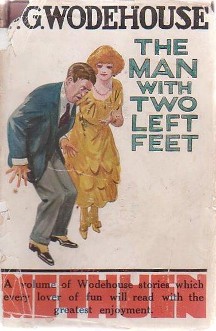


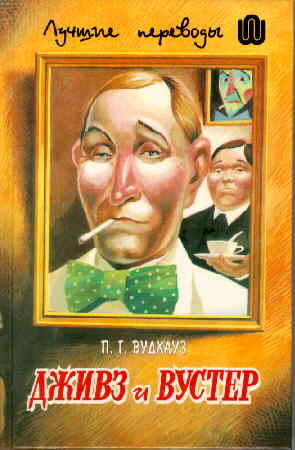




 Thank You, Jeeves! (1936)
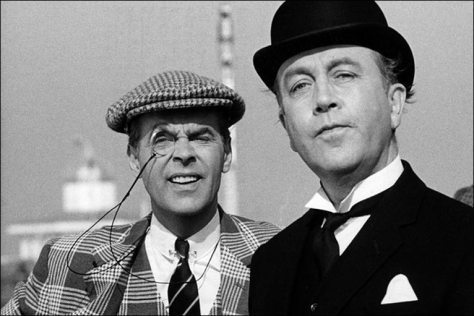


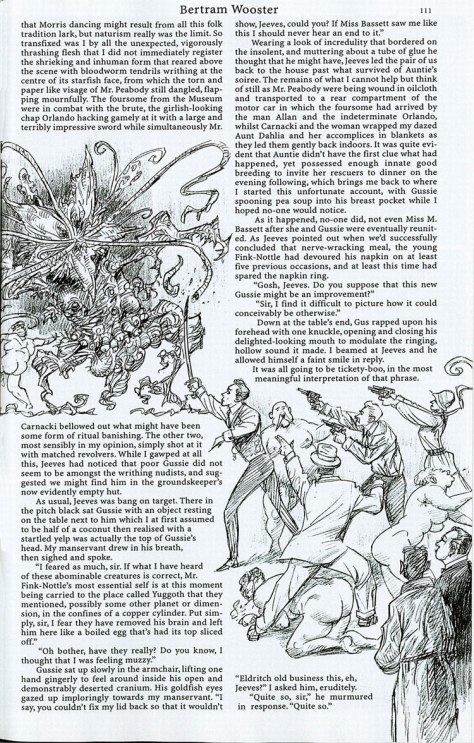

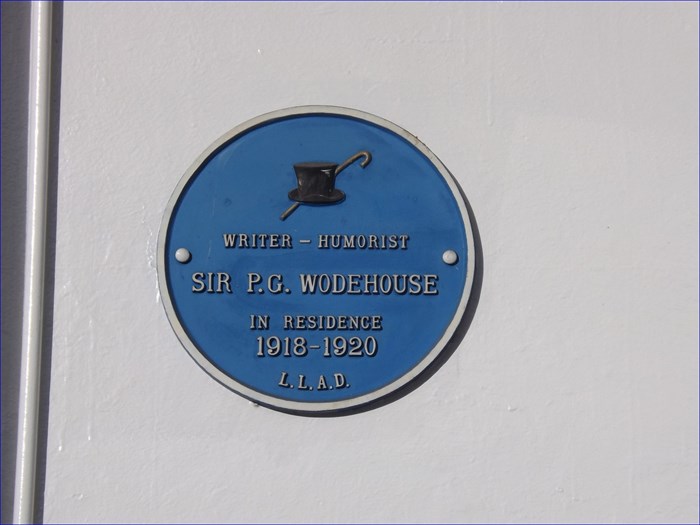


 Shockball is book no. 4 in the Stardoc series, but the first one I’ve read. Starting here was no problem. These are all pretty much stand-alone novels that concern the doctor Cherijo Viehl. Warning right away. If you do not like descriptive surgery in your novels, you will have a problem with parts of this novel.
 In Eternity Row Reever, Cherijo and Marel finally live together as a family on the star vessel Sunlace. Duncan and Cherijo are trying to figure out how to combine parenthood with their duties, as most parents do. Some children are more precocious than others. Marel is one of them. She has a tendency to appear in the oddest places.
 I have one complaint about the series – Where is the next book????? My goodness, this series was riveting. Kirstein needs to keep on writing – well, actually, in all selfishness, I need her to keep on writing. I think this was my third read-through and I was still captured by the writing and held prisoner until the end.
 THE LOST STEERSMAN (2003) –
  THE LANGUAGE OF POWER (2004) –
 CITY OF DREAMS & NIGHTMARE (2010)
 CITY OF HOPE & DESPAIR (2011)

![[nightwatch.jpg]](https://humanitysdarkerside.com/wp-content/uploads/2012/07/nightwatch.jpg)



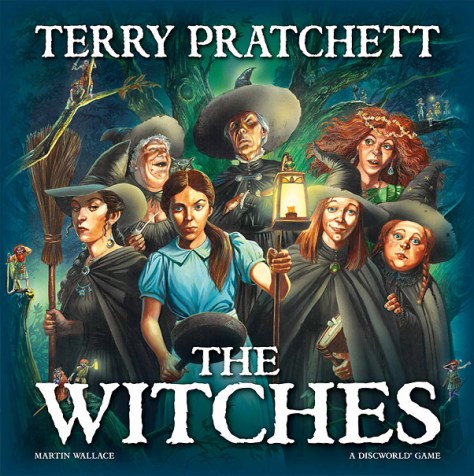

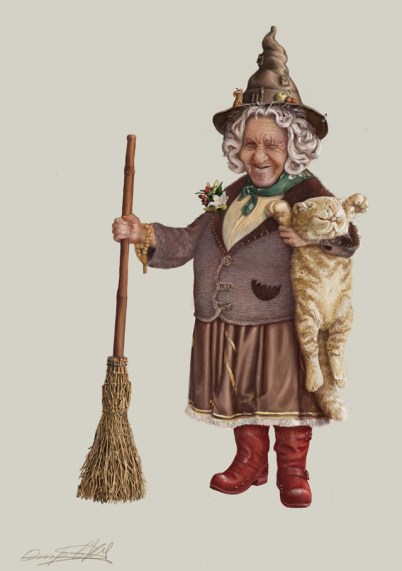


 MASKERADE (1995)


 “The Forerunner Factor” is an omnibus containing “Forerunner” and “Forerunner: The Second Venture”. Andre Norton’s books talk about the Forerunners. They are those who went before and have left artefacts that noone understands. We desire what they were and had.
 humanitysdarkerside