Terry Pratchett: Long live the King. The King is dead.

This slideshow requires JavaScript.

Yesterday, Terry Pratchett died, only 68 years old. All of 68 years old. I’m guttered.

Once Pratchett told us about his Alzheimer, my intellect told me we would only have a few years more of him. Now that the moment has arrived, those years seem too short for a person who became a dear friend.

I never met Mr. (Sir) Pratchett. Or maybe I did. His books, his documentary and his speeches have all made my days brighter. All revealed a side I, the public, could partake of.

When Snuff and She Wears Midnight came out, and I had completed the books, I remember just sitting there needing to digest the stories. They felt like a first goodbye from Terry. Then came the public appearances when people had to read his speeches out loud for him. Writing them weren’t the problem, as long as someone else could type his dictation. As long as another person could read out loud what he had dictated. Alzheimer had taken the ability to recognize physical objects.

I miss him. Already! Hopefully, the love of the world will bring some small comfort to his near and dear ones.

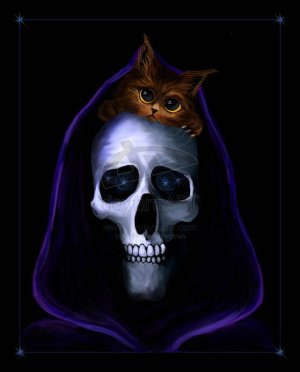
Artist: Aville
Artist: Aville

“Sometimes I get nice letters from people who know they’re due to meet him (Death) soon, and hope I’ve got him right.
Those are the kind of letters that cause me to stare at the wall for some time.”
― Terry Pratchett, The Art of Discworld


Rust, Angelika: Once a Rat (Istonnia III) (2014)

once-a-rat - Angelika Rust

Angelika Rust displays one of my favorite traits in an author. She evolves and improves over time. Once a Rat shows just how far Rust has come in her writing. The only thing she continues to do that annoys me is to overuse the word “whom”.

“It’s worse than I thought,” she groaned, rolling onto her back. “It isn’t innocence, it’s honor. You’re the son of a rich bastard of a trader and a madwoman. Whom, for fire’s sake did you inherit your honor from?”

Honor is a strange concept. For one thing, honor varies from person to person. There does seem to be a common denominator across nations, namely that to be considered honorable, one must keep promises/oaths made. Nivvo seems to have honor as an in-born character trait. Such a trait makes Nivvo perfect for some roles but disqualifies him when breaking promises might be needed. There are several high-status professions, in real life and in Istonnia, involving deception and deceit, that Nivvo could not fill.

In Once a Rat Nivvo is sent on a joint mission for the Regent and Underlord of Istonnia in the hopes that Istonnia might be saved from more fighting. Being the kind of story that Once a Rat is, the likelihood of Nivvo surviving that mission is in doubt. But Nivvo accepts that as his duty. Part of that duty has to do with his promises to obey Vicco, but Nivvo also seems to feel that his relationship with the Regent obliges him to serve Istonnia as best he can.

Part of his mission terrifies him. Practical experience of slavery turns out to be completely different from the theoretical understanding of its nature.

“…, he knew they’d come back to haunt him for the rest of his life … a child, little more than a toddler, on his hands and knees, and a soldier stomping on the tiny fingers till they broke with a sickening crunch … a woman his own age, tears streaming from her closed eyes as a slave handler cut her clothes away to reveal her body to a customer … a man hugging the pole he was tied to, screaming relentlessly as a lash opened up gash after gash on his already scarred back …”

Slavery, the objectification of people taken to extremes. The real world still embraces slavery and most of us are quietly complicit in letting it carry on. Nivvo’s mission is to get to the person trying to work against slavery in Baredi and help that person succeed. But the odds are against the abolitionists.

There are some very angry people left in Istonnia. Choosing to smother his loved ones in protectiveness happens to be one of Nivvo’s greatest failings. Even Vilores is kept in the dark. Shame on Nivvo and his father for breaking that law once again.

While Nivvo is gone Cambrosi is having fun trying to stay alive. Fedoro is helping him. Someone in his organization is trying to overthrow the Underlord. If it works, then Istonnia seems doomed to enter what might become a civil war.

Plenty of action, some violence, some sex – neither very explicit.

Definitely recommended.


Once a Rat available at Amazon US

Turner, Chris: Magical Entities Are Not For Sale (Fantastic Realms) (2011)

Magical Entities Are Not for Sale - Chris Turner

Magical Entities is a cute story that seems to intend to teach children the importance of keeping their promises even when keeping them is difficult.

Radpa, has chosen Klarys to take over his store. But she must prove herself worthy of this task. Klarys is only nine when she begins this life-long journey. Sometimes she falls short of her potential. But that is OK because Radpa just expects her to keep on trying. And she does.

There is no violence, no swearing and no sexual content. I have set it as children’s literature.

Recommended.


Reviews:


Magical Entities Are Not For Sale available on Booktracks (audio)

Hurley, Kameron: God’s War (The Bel Dame Apocrypha I) (2011)

God’s War, huh. On Religious Tolerance you will find recent religious conflicts around the world. I counted 25. While most of those wars are across religious lines, some of them (Iraq, Pakistan and Somalia) are, like the 3000 year long World War on Umayma, about interpretations of a faith. As far as we can tell, the people on Umayma had the same origins and values upon leaving Earth. If a time ever comes when humans are able to terraform and populate another planet, war will probably ensue as soon as people manage to settle down. Humans do seem to like their wars.

Terraforming (or engineering) a planet would be a long and complicated process. The time span required and the amount of genetic tinkering needed for humans to be able to live on a far flung planet has to be staggering. While every person needs some degree of engineering in some fashion to survive, there are inhabitants of Umayma who have changed more than others.

Bugs and their magicians are two. Something in their genetic make-up makes certain people able to communicate with bugs. Talking to bugs could be useful here on Earth. On Umayma, bug-talking is vital to existence as bugs are used in most arenas of life. From food, to fuel, to engines, to clothing, to lighting, and so the list goes on. Magicians are not equal. One of our main characters, Rhys, is less equal in the area of bug-control than others.

Shape-shifters is the other strange product of tinkering (possibly). There is a legend that they are a product of the union of Angels and humans. Hurley doesn’t tell us that shape-shifters have been made by genetic engineers, so my understanding is just a guess.

“The war still raged along the ever-changing border with Chenja. Nyx started up her storefront with the dancer and tech in Punjai, a border city at the heart of the bounty-hunting business. While she was in prison, Punjai had been swallowed by the Chenja for six months, the “liberated” by a couple of brillian Nesheenian magicians and an elite terrorist-removal unit. All of the city’s prayer wheels were burned and the old street signs were put back up. There had been air raids and rationing and a couple of more poisoned waterworks, but, as ever, the war was just life, just how things clicked along – one exhausting burst and bloated body at a time.”

Three thousand years of constant killing has to do something to a population and the environment. Umayma is certainly no paradise with areas of it contaminated by biological bombs, human disease carriers and the drafting of men to the front lines. Nasheen and Chenja have solved the dearth of male genetic availability in two different ways. In Nasheen they rely on artificial insemination and breeding tanks for new generations. In Chenja they use a more traditional method of one male to many females to get the job done. Rhys is from Chenja.

Nyx is the goddess of night, the daughter of Chaos, and also the name of our main character. Our Nyx is unpredictable, loyal to those she cares about, principled and passionate. However, values created by people in times of peace or the powerful are not hers. I truly adore Nyx. Hurley portrays her strength and vulnerability in a manner that I can believe and that appeals to me. Definitely my favorite character of the story, and maybe my all-time favorite character.

Rasheeda (shape-shifter) is one loony bird. Holy cow, that woman has sanity issues. No wonder Nyx is wary of her. Bel dames might be sanctioned by the queen, but some of them do messy wet-work with lust and gusto. Creepy lady.

Definitely recommended. Definitely.


Reviews:


God’s War available at Amazon UK

Omnibus at Amazon US

Rust, Angelika: A Rat for a Rat (Istonnia II) (2014)

A Rat for a Rat - Angelika Rust

Everyone self-harms in one way or another. Calling ourselves names or making ourselves less is one way we love to harm our self-confidence. Others self-harm through physical means. In the there and then, self-harming usually relieves some kind of pressure or stress. Long-term, though, we damage ourselves. Taken to extremes we might even lose body parts or become permanently damaged in other ways. Autistic people know about self-harming that may come a part of a stim.

The Baredians see women as doormats. To them, women are to be used without regard for their feelings, growth or well-being. In A Rat for a Rat we meet Miniri, a seriously troubled girl. She is addicted to self-harm, even if that self-harm means putting herself in the way of being trampled on and sexually abused by the Baredi. Imagine what a person like that could get up to in striving to fill the void inside of her.

Healers are revered people in Istonnia. They may go where no other person may and expect no harm to come to them. Like all work groups, some healers are more popular than others. Inna Malduri is definitely lowest on the totem pole and only the worst students get sent to her. Which is why Anniscia is shocked when she is sent to be Malduri’s  apprentice. You see, Anniscia happens to be at the top of her class and feels she is much to good to serve the poorer part of town. She is about to be exposed to a side of life of life she is unused to.

The Regent, being used to living out in the desert with his group of followers, is having trouble adjusting to politics and people who have different goals. He forgets that in politics revealing the identity of people you love is dangerous to yourself and the one you care for, at least if that person is to be a secret. The world is not supposed to know that Nivvo is his son, but the Regent is not able to avoid reaching out to him.

Nivvo tries to protect his father and brother by being absent. He knows the way the city works and what a wonderful weapon Vicco Cambrosi gains in knowing how much the Regent cares about his long-lost son. Both father and son suffer from a need to over-protect, a trait that exasperates the people around them.

Reka is the one who is most annoyed by this father and son interaction. If she could beat some sense into their heads, she would. Instead she treats both like the brats they are. Nivvo is used to her way of showing anger. The Regent, however, is used to getting his own way, and is at a loss about what to do when Reka treats him the way she does.

A Rat for a Rat was an action-filled and fun story that also dealt with consequences that may arise from our actions.

Definitely recommended.


Reviews:


A Rat for a Rat available at Amazon US

Rust, Angelika: Ratpaths (Istonnia I) (2013)

Yes, I went looking for ratpaths and the history of the Sicilian Cosa Nostra. There really was no choice after reading what Ms. Rust had to say about her inspiration for the story.

Poverty is something I think about a lot. Not because I am poor, but because I have escaped it. My dad could have been Nivvo. When his father was arrested for underground work during WWII, my grandmother slowly but surely went mad with paranoia. My dad would have been six at the time his father was arrested and his little sister four. They went from getting by to being hungry a lot. But things never became as dire as they did for Nivvo and his mom (and soon after his sister).

I suppose this is one reason why I like Nivvo so much. There is no doubt in my mind that given the right/wrong people in his life, my dad could have become a Nivvo. Whether his sister would have been a Reka I do not know. Both characters are survivors and very likeable. Both love each other and do their best to take care of each other – and others in need. Again this is very much like my father and his sister.

Reka has grown up without her mother and was taken care of by a poor fire priest. At the beginning of the story, Bappo Andori had died not many months previously. At this point Reka is thirteen years old. In many places today being thirteen and poor grows you up awfully fast. With the help of Nivvo’s contractor, she gains control of the estate and keeps up the good work for the homeless.

Nivvo is a thief and a good one. The underworld’s boss, Vicco Cambrosi, wants Nivvo as part of his organization, but that would mean loss of freedom to choose assignments. Nivvo does not want this, but fears a point may be reached when he no longer has a choice.

Ratpaths is for the most part about Nivvo stealing a person, and the mess that makes of life in Istonnia and Nivvo’s life. Ratpaths also gives us a look at Nivvo’s past and gently prods us toward realizing a vital thing about him. Ratpaths was a fun and flowing story.

Definitely recommended.


Reviews:


Ratpaths available on Amazon


The Daily Mail: The secret world of Italy’s other Mafia. Jim Shelley goes underground to uncover the organisation that is scarier than La Cosa Nostra

The Seattle Times: Going underground: In Vienna, a maze of tunnels and cellars beneath the city contains variety of treasures

Wikipedia: Sicilian Mafia

Duncan, Dave: Paragon Lost (A Chronicle of the King’s Blades) (2002)

If you were a bodyguard, how far would you go to protect your charge? Would you allow yourself to be raped? How about teaching friendly nations how your own people fight? Could you live with watching the other side maim and kill others because you needed to get your charge to a certain place? To what extent would you be able to hide all of these abilities behind a cheerful, charming and helpful exterior? Hmmmm.

These were some of the more serious sides to the story of Paragon Lost. Perhaps it is a good thing magic made it geas-like for the Blades to use all of their abilities. Sometimes life might make it difficult to do what needs to be done in order to save the reputation of a nation or the secrets of a nation.

Once a Blade is bonded to their ward, with a sword through their heart, no less, they seem to become irresistible to their objects of interest. Beaumont would probably never have had any problems in that area. The guy is charming and intelligent – a dangerous combination. Oak resembles his chosen name. Solid, both of body and psyche. Arkell appears weak, almost invisible, but he is anything but. He is also the most learned of the trio.

All three have to make difficult choices on their way to pick up Princess Tasha with Lord Wassail. Wassail’s health is terrible. But Wassail has no higher wish than that to fulfill his monarch’s charges. The four of them have to make changes to plans, travel through extremely dangerous areas and try to leave those areas without being harmed.

There is humor, tension, despair and action in Paragon Lost. Dave Duncan takes us into his imagination and gives us a great romp. This is great entertainment, but not solely entertainment.

Definitely recommended.


Reviews:


Paragon Lost can be found at Harper Collins


Translation:

German: Die Verlorene Klinge (Des Königs Klingen #4)


Beck, Simon: Snow Art (2014)

Snow Art - Simon BeckFor some time now, I have followed the snow artist, Simon Beck, on Facebook.

Simon Beck considers himself part of a tradition of land-art that has gone on for thousands of years. By stepping his designs into snow or raking them into sand he keeps an art tradition alive. Short-lived as each artwork is, Beck tries to photograph them as soon as he finishes his projects. As he tells himself, his shortest lived snow art was gone the next morning.

In his Ted Talk below, Mr. Beck explains how he works. By listening to him we get an understanding of how crop circles are made, and he shows us pictures of one of his own crop “circles”.

Why a person would choose to work with an ephemeral art form is something I have difficulty understanding. Yet many artists do. Mr. Beck’s pictures of his work makes them more permanent. In Snow Art we get to see a collection of ten years worth of wonderful art made from walking through the snow.

Definitely recommended


Reviews:


Snow Art can be found on Simon’s website

We’re Women with Autism – Not Mystical Imps, Sprites or Fairies….. Get it right.

Yup. She says it the way it is again.

seventhvoice's avatarSeventh Voice

Artwork by Devushka Artwork by Devushka

Sorry to disappoint all of those who wish to believe that Women with Autism are made out of some kind of unique fairy dust that endows all of us with “special talents” or “super powers”, because we are not magical beings.

We are Women Wired Differently…. not Women Wired Magically.

Please stop confusing our different skill sets, ie, our tendency to focus on the finer details of life that often make us more likely to pick up on the inconsistencies that are usually hidden within the bigger picture that people present to us, with being the equivalent of having a “super power”, “gift”, “unearned talent” or whatever else some would like to call it.

The truth is, that for us, our intense focus on fine details, whilst it may have started out as a fascination, has also become a survival mechanism.

Our intense focus is not magical…

View original post 473 more words

Interview With Former British Paratrooper, Victor Gregg

Victor Gregg talks about his experiences during WWII. He states firmly that he blames only the decision makers for the atrocities of the war. The reason he has come forward at such a late time of his life is because he sees that nothing changes. The people are still being lumbered with the horrible decisions being made by governments. Gregg also states categorically that he is no pacifist, but that someone needs to speak up for all the victims.

Highly recommended.

Nesbø, Jo: Police/Politi (Harry Hole X) (2013/2014)

I read Police/Politi in Norwegian.

Some reviewers felt Police was too violent for them. All of Jo Nesbø’s mysteries are dark literature. He delves into the murky and seedy side of people and society. Police deals with consequences and corruption. This time Nesbø looks at corruption within the Norwegian police force. Not only the leaders seem to have trouble staying within the framework of the law. Some of its officers define the law in a manner that allows it to make sense to them. Justice, is after all not the purpose of the law. The purpose of the law is the law and how to define it.

Police was in no way a philosophical work. Entertainment and commentary seems to have been Nesbø’s purpose in writing it. However, I do not have a clue as to what his purpose was because I have read none of his interviews only some of the reviews out there. But it does raise some questions. The nature of corruption being one of them.

What we are willing to sacrifice on the alter of power? If there is one subject that keeps on popping up in stories and research papers, power seems to be it. Sometimes in the form of helplessness – as that poor gay kid must have felt when he came out to Bellman and got beaten up for it. At other times it comes in the form of wanting more power over others. Having power over Berntsen was never enough for Bellman. And sometimes power is portrayed as something we hope to get through others, kind of like the hope Ulla was left with once she and Michael had met in the hotel.

Nesbø also takes a closer look at another reason people kill. Love can influence people’s choices. My definition of love might not fit your. When the love of one person was killed many years ago, that person felt a need for revenge. Revenge took a long time coming, but once it arrived it was certainly thorough. Harry Hole came back to policing due to the path revenge wandered on.

Jo Nesbø is sneaky. Not until seconds or minutes before the culprit was revealed did I figure out who the killer was. No wonder with all the shady characters in the land of Nesbø’s imagination. Just as when I watch magicians, I was fooled by Jo Nesbø’s misdirection. Every time an author manages to trick me I am both pleased and annoyed at the same time.

What I like with police procedurals like Police is that there are no magic solutions to finding a culprit. Harry Hole certainly has Poirot-like qualities in his intuitive ability to see what others cannot. However, Harry makes mistakes and depends on his crew to find the data needed to draw his conclusions. My enjoyment of a mystery/thriller increases with the type of craftsmanship that Nesbø shows.

Warning: Descriptive violence

I had fun. Definitely recommended.


Reviews:


Police is available at bokkilden.no / amazon (various countries) / others


Translations (Original language Norwegian – my edition) Politi:

Take the Red Pill: The Truth Behind the Biology of Sex

I found this (http://www.aboutkidshealth.ca/En/HowTheBodyWorks/SexDevelopmentAnOverview/CongenitalAdrenalHyperplasiaCAH/Pages/ThePraderScale.aspx) version of the Prader Scale easier to relate to.

I did not know how complicated and fluid gender is. Great article.

Luz Delfondo's avatarDisrupting Dinner Parties

Morpheus offers the pills in the MatrixThis is the first part of a series about the complex biological realities of sex. Though the posts build on one another, each can be understood alone.

Content note: this post contains images and language that may not be safe for work.

1. Introduction

I first learned about the social construction of sex from a lovely trans woman named Kiki.

She said, “You may have heard before that gender is socially constructed, while sex is biological. But I’m here to tell you that what you’ve heard isn’t true. Sex is socially constructed too. So are you ready for the truth? Are you going to take the red pill or the blue pill?”

Three years later, I was diagnosed by my gynecologist with polycystic ovarian syndrome (PCOS), which means that my body produces hormones intermediate between “typical men” and “typical women.” What I learned from Kiki gave me context in which to understand…

View original post 2,954 more words

Staveley, Brian: The Emperor’s Blades (Chronicle of the Unhewn Throne I) (2013)

In spite of its length, I found The Emperor’s Blades an easy and quick read. Brian Staveley wrote in a manner that drove me on as a reader. My entry into this world happened due to falling for the excerpt offer. I had fun and consider this a great first novel.

Now that I’m reviewing it, I’m kind of wondering why Brian Staveley was lauded to the extent that he has been. He brings nothing new to the field of epic fantasy. His main characters are fairly stereotypical as well.

The daughter of the emperor, Adara, behaves in a manner that does not fit with her upbringing and education. Her youth (20 years old) and recently murdered father (emperor) excuses some things, but someone with the political savvy she is supposed to have, the various political arenas attended while growing up and the testament written by her father indicates a person with less stereotypical behavior.

Kaden, the oldest son, was fun. He is the heir to the throne (the boy with the golden eyes) and three years younger than his sister. He has been kept completely away from the machinations at court and all need for frippery has been beaten, toiled and starved out of him. The Shin monastery is an ascetic and violent one. All of this is to teach him the art of emptying his mind of all emotions over a length of time. The novices are taught to endure pain of almost all kinds. How they actually manage to have an overweight and out of shape novice at the monastery is a mystery to me.

Valyn (the youngest sibling) has been trained to be a team leader for 8 years. A team leader of the Kettral. Kettral is both name of the bird used for transportation and the group of killers these kids are training to be. His upbringing is no less brutal than his brother, although self-control seems to be a trait the Kettral does not train their charges in. At first I pictured these kids being trained in the manner Seals are trained. Their physical training is certainly on par with that. But the cohesion, obedience and understanding seem to be lacking. Granted, Valyn is only 15, but he has been at this for eight years already. As impressionable as kids at the time that he was sent to the Kettral, these qualities should have been like breathing to novices.

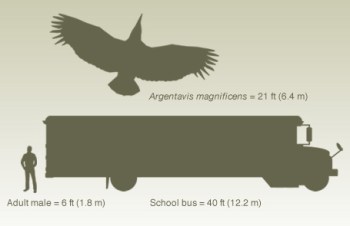
The other problem I had with the Kettral were the birds themselves. Details, I know, but I am autistic and details is what I get hung up in. Imagine how huge a bird that is supposed to carry 5 people has to be. One on top and 4 that are carried in harnesses.

Source: National Geographic

An ostrich can carry a person. But it cannot fly. The problem with a bird flying around with people hanging off it has to do with the weight of the person, the weight of the bird and the bird’s wing span. Some things can improve the likelihood of the bird being able to carry one person – lower gravity, density of air, level of oxygen and so on. But being able to fly with people on its back and hanging in harnesses is impractical biologically and physics-wise. Not even the world’s largest bird, the Giant Teratorn (extinct), would have been able to do such a thing. I will concede to magic being a part of the Kettral’s abilities, but five (5) humans. I’m having a hard time with that.

But like I said at the beginning Mr. Staveley’s writing made the story fun in spite of the “new author” problems. Fun and uncomplicated.

Definitely recommended.


Reviews:


The Emperor’s Blades available at Amazon UK


Translations:

Sagara, Michelle: Cast in Secret (Chronicles of Elantra III)

Once again, my son and I have finished reading a book together. He enjoyed the first two books of the Chronicles of Elantra, which is why we just finished the third one, Cast in Secret. My son’s conclusion about Cast in Secret was to get me to begin reading the next in line. He laughed a couple of times, giggled some and seemed touched by certain parts of the story. I had similar feelings in about the same places of the story as he did.

Kaylin’s attention deficit disorder is a good thing for us, the readers. This way Sagara has an excuse to introduce us to concepts Kaylin missed in class. Even though Kaylin knows she needs to learn certain principles about magic and ought to know more about racial relationships in Elantra, she seems to struggle with the same inability to pay attention to subjects she considers irrelevant to her job as I do. In social settings this proves a problem for her, and Lord Sanabalis is clear on her being a long way from ready to meet the Emperor (unless she wishes to be eaten). Some people need to learn from experience rather than theory (well, actually, I think that most of us only get true learning through experience). Kaylin needs this more than most people. This inability to learn any other way tends to get her into trouble.

I like Michelle Sagara writing about a person like this. With one dyslexic son, one autistic son and one autistic mother in this family, we are all stuck in that mode. My reading ability, age and gender have probably all contributed to the theoretical understanding I have of people. Face to face encounters can go really well, but like Kaylin I tend to break social rules. Admittedly, some of that disobedience comes from not seeing the importance of the rules, but there again Kaylin, I and both of my sons find common ground. Other rules are broken because we do not understand them.

Words. Such a powerful tool. And what a difficult tool it is to wield. Sagara does a great job portraying the difficulties that arise from not understanding what is being taught. Kaylin has a theoretical understanding of what the Tha’laani are, but she is petrified of them. Her terror is a common one in humanity – fear of the unknown. In this sense, all humans are autistic. But just because a race is physically able to read your secrets, does not mean that they want to. Unfortunately, we humans seem wired to think that if a person is born a certain way, then that means that they wish to wield that “power” over you. We seldom stop to think that the other person might be just as afraid of us, disgusted with us or simply does not care about who and what we are. I suppose that comes from our ego-centrism.

Thankfully, Kaylin is also the kind of person who tries her hardest to face her fears. Facing our fears is so stinking hard. But sometimes a situation arises that forces us to do so. And what do we usually discover? Well … The answer is given considering the story and the obviousness of the question. In Kaylin’s case, the Tha’laani children helped her face and overcome her fears . Children are great fear-breakers that way – if we let them be.

Definitely recommended.

—————————————————————

Reviews:

—————————————————————

Cast in Secret available at Scribd.com

—————————————————————

My review of:

  1. Cast in Shadow
  2. Cast in Courtlight

—————————————————————

Translations:

Le secret d’Elantra: T1 – Le Cycle d’Elantra

Jeter, K.W.: Madlands (1991/2012)

Madlands is in many ways similar to the underbelly of Los Angeles (and any city with major power players) of today. Identrope is the creator and most powerful person of this dystopian version of Los Angeles. K.W.’s version is considered cyberpunk, and that may be true. At least it would seem that way as the net of the city is explained in greater detail in a section of the story.

This explanatory section is the only downside of Madlands. During it Mr. Jeter fell from dystopia into teacher’s voice. The setting itself was a dream about a teacher/student situation, and preaching might be considered relevant in such an environment. But it felt out of place to me.

Strangely enough, and wonderfully fitting to the story of Madlands, the most powerful person in Los Angeles (downtown) today is supposed to be Tim Leiweke of the Anschutz Entertainment Group.

Entertainment is what Identrope does to boost his opinion of himself and to gather worshipers in a city you may enter but can not leave. It’s not that anyone tries to hold you back from leaving. What high Identrope exudes keeps you staying until the side-effects of his miasma of madness kills you.

We hear a lot about Identrope, but he makes few appearances. I suppose that is as it should be when part of his power lies in what he has to offer in the way of highs and entertainment. Our main character is Identrope’s deputy, Trayne.

Part of Madland’s appeal has been brought about by Trayne. It seems the US is a little low on entertainment. Trayne started a dancing group and for some reason that group made people want to listen to whatever invitations Identrope made on television and follow through on them by donating money and traveling to LA to be near their god.

Surreal is one sensation I felt while reading the story. Madlands also came through as a great piece on power. Clearly, the people who had power wanted more (even Trayne) and those who were without were disposable tools on the way there. One of those power structures happened to be the KKK. I have to admit that I was not aware of the influence the KKK had (and possibly) have in Southern California. Power is such a lure and few use it appropriately (for the best of as many as possible). I have trouble understanding why people hunger for more and more power. Madlands shows us a place where there are people who apparently never get enough of it.

Definitely recommended.


Reviews:


Madlands available for free at Amazon Kindle (per 01 Feb 2014)


Translation:


San Diego’s Ku Klux Klan 1920-1980

Spartacus Educational

The 1922 Ku Klux Klan Inglewood raid

Use public libraries