Tag Archives: #Comingofage

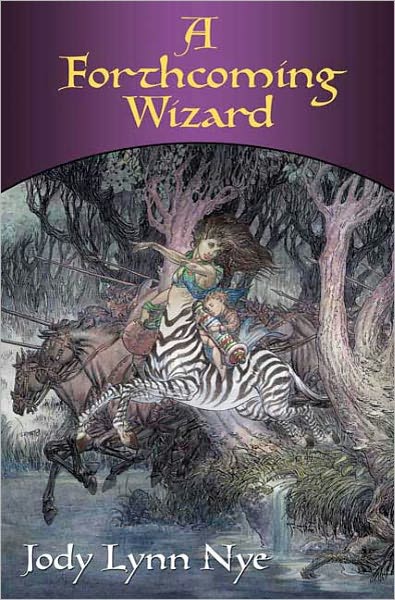
Nye, Jody Lynn: A Forthcoming Wizard (Tildi Summerbee II) (2009)

A-Forthcoming-Wizard-150841-d4902f8679c2f83a8362

A lot of the books I read remind me of issues that I regularly think about. A Forthcoming Wizard (and An Unexpected Apprentice) reminded me of the many times I have wondered about the concept of racism and the idea of “perfect/ideal”.

Back in the days the Shining Ones took it upon themselves to experiment with the knowledge they had acquired. Like all good scientist they asked themselves the question “I wonder what would happen if …”. Unlike the really good scientists, the Shining Ones forgot to ask themselves the next important question “If I do this, how will it impact …?”. The Shining Ones just went ahead and did what they wanted in the name of furthering their own knowledge often deceiving themselves as to the level of nobility of their choices. Oh, what tangled webs we weave. At one point some of them looked beyond themselves and saw that perhaps they had gone too far in satisfying their curiosity. All of them except Knemet finally came to see that there comes a point in one’s life when one has to acknowledge the consequences of one’s actions.

Is Knemet evil? Maybe amoral would be a better word for it. He doesn’t do things because they are bad. He just does whatever is needed to expedite his wishes. Knemet just wants the Compendium/the Great Book so he can destroy it, thereby ending what he considers his dreary life. But as we already saw in An Unexpected Apprentice, destroying the Compendium will destroy the world. He could care less, and that is why The Great Book must be kept from him.

In my review of An Unexpected Apprentice I posited the hypothesis that the Scholardom could be considered the “bad guy” of the story of Tildi Summerbee. I believe I retract that hypothesis. They base their actions on a certain set of traditions, values, and knowledge. Some of those actions are definitely in the category “bad” in that the actions are incredibly racist. But most of the Scholardom (at least the ones we meet) are teachable. Once they see that their own theories about purity were wrong/misguided, the Knights of Scholardom are willing to try and change.

Tildi continues with her growing pains. Challenging our own traditions and myths hurts. At least I know it did for me. Tildi managed that awful task of asking herself if what she thought was the “right way” might possibly be wrong or just one of many ways. Doing so changes the way she is perceived by others but more importantly how she perceives herself. Her friends both help and hinder her in this process.

The ending of the Tildi Summerbee saga is predictable and almost Disney-like. I think that will be a comfort for the younger audience.


Reviews:


My review of An Unexpected Apprentice

Tony Attwood – The Pattern of Abilities and Development for Girls with Asperger’s Syndrome

We really do need to do more research when it comes to girls and autism/aspergers. Is the visibility of male Aspergers the reason they are used as a template for what a female Asperger should be?

seventhvoice's avatarSeventh Voice

527915_430995843644687_2020405065_n

The overwhelming majority of referrals for a diagnostic assessment for Asperger’s Syndrome are boys. The ratio of males to females is around 10:1, yet the epidemiological research for Autistic Spectrum Disorders suggests that the ratio should be 4:1. Why are girls less likely to be identified as having the characteristics indicative of Asperger’s Syndrome? The following are some tentative suggestions that have yet to be validated by academic research, but they provide some plausible explanations based on preliminary clinical experience.

It appears that many girls with Asperger’s Syndrome have the same profile of abilities as boys but a subtler or less severe expression of the characteristics. Parents may be reluctant to seek a diagnostic assessment if the child appears to be coping reasonably well and clinicians may be hesitant to commit themselves to a diagnosis unless the signs are conspicuously different to the normal range of behaviour and abilities.

We…

View original post 1,649 more words

Lindskold, Jane: Wolf’s Head, Wolf’s Heart (Firekeeper Saga II) (2002)

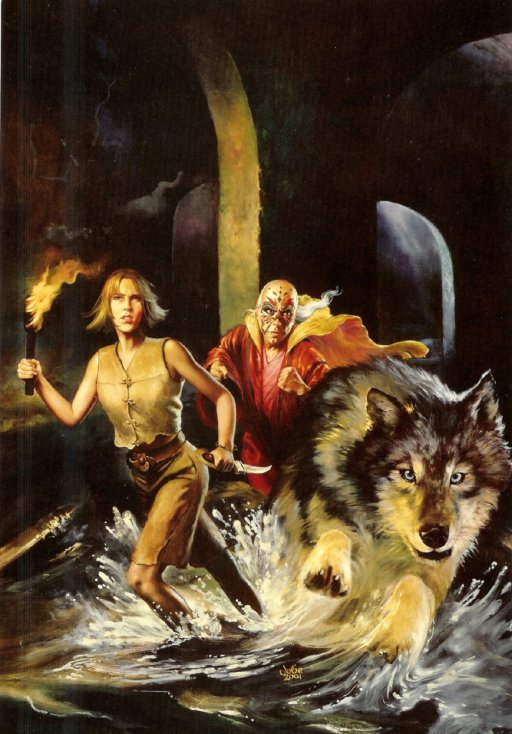
WolfsHeadWolfsHeart-hc
Hard cover for: Wolf’s Head, Wolf’s Heart
Cover artist: Julie Bell
WolfsHeadWolfsHeart-pb
Cover artist: Julie Bell

As you can tell I had a difficult time choosing between hardcover and paperback cover art, so I added them both.

Having begun reading to my son about Firekeeper we kept on going. Believe it or not, but quite a bit of snuggle time goes into around 600 pages worth of story. 600 pages is a lot of words. Sometimes I think the two of us get so caught up in how words and sentences connect that we forget to pay as much attention as we ought to. In my world that is only possible when the writing is tight and attention is paid to how writing is similar to music. Sometimes we have to laugh when I have trouble figuring out how to pronounce a name or two. What we do then is have a discussion on pronunciation and come to an agreement.

On to content. The Firekeeper Saga is about politics and relationships and coming of age if it is about anything. Sure there is action and fighting, but this is not what the series is about. I love action fantasy and science fiction and I love stories like the Firekeeper saga.

Wolf’s Head, Wolf’s Heart is still about Firekeeper and Blind Seer’s emerging role as ambassadors between humans and Royal kind. On that journey some of Firekeeper’s illusions about the superiority of the Royal kind are torn down. Blind Seer seems more of the adult than Firekeeper in this regard and is in fact one of the people who challenges Firekeeper’s previous beliefs.

Derian is another favorite of this tale. I imagine Lindskold has made certain that I be aware of him. Derian is Carter made Counselor, a role he had never imagined and feels overwhelmed by. He is easily Firekeeper’s favorite human friend and a very faithful one.

Waln Endbrook is a really good bad guy. He is the ultimate bully – afraid of letting go of power and ready to step on anyone who gets in his way – especially if they are weaker than he is. One of the more fascinating parts of Waln’s character was the mental acrobatics he was willing employ in order to avoid blaming himself for anything. It was always something the other person had done or said that brought about trouble. I hate meeting these people in real life because they scare the shit out of me. But I have also learned, the hard way, the necessity of seeming strong around them.

Elise and Doc are the “hopeless romance” carriers of the series. Poor guys. So in love and yet bound by the strictures of society from having any kind of romantic attachment. Politics sure do stink at times.

We are also introduced to Firekeeper’s adorable adopted brother Edlin Norwood. Hugh Laurie in Bertie Wooster exemplifies just how I imagine Edlin speaks.


Reviews:


  • Published: August 24, 2002
  • File Size: 1100 KB
  • Print Length: 620 pages
  • Language: English
  • ASIN: B003G93YE6
  • ISBN-10: 031287426X
  • ISBN-13: 978-0312874261

My review of Through Wolf’s Eyes

Leckman, J.R.: Pursuit (The Legend of Kimberly) (2012)

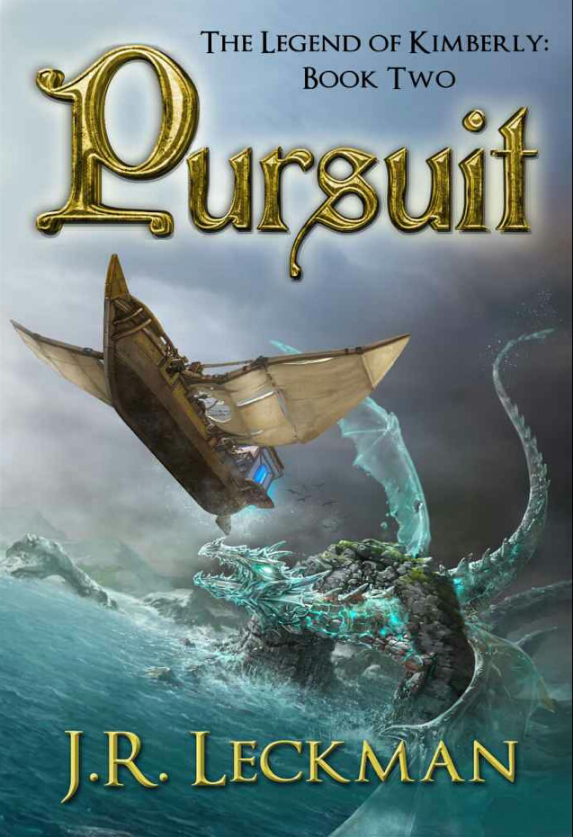
Pursuit
Cover art by Georgi Markov

I have placed this cover among my favorites (see slide show). Markov has captured one of the scenes of the story perfectly.

So, here we are with book no. 2 of The Legend of Kimberly, Pursuit. According to the author: “The Legend of Kimberly series is really about growing up and learning that life, even a fairy tale one, is never what you expect of it.” I think that all of us who have been through this process can attest to that statement.

Kimberly grew up very quickly in Inheritance, at least physically, when she was unceremoniously dumped in Auvierra. Mentally she had quite a bit of catching up to do. Through her friendship with the “fox” Ip and the troupe she ends up wandering and fighting with she finally gets an understanding of what fairly healthy relationships are like and she gains the strength to continue her fight against the cruelty that others wish to inflict on her and others.

Fighting for the “light side” continues to be part of Kimberly’s job in Pursuit. This time she has to get her friend Serra away from those freaking zealots that appeared in Inheritance and kidnapped Serra. The Brotherhood of Zor are possessed with defining anything non-human or non-conformative as demons or as being possessed by demons. These guys are nuts from my point of view but filled with the light of truth from their own point of view.

The first chapter has a wonderfully gross description of Kimberly’s encounter with the macklejacks. I must admit that I am partial to such vivid detail of muck and smells. Action-filled and humorous first pages.

Poor uncle Ben – Kimberly’s uncle. He is about to get the shock of his life. When he discovers that he is the son of an apparently insane author father and then discovers that dad really wasn’t crazy after all life can only get worse. Then he meets a mermaid. After that the Brotherhood. Oh, boy, his introduction to Auvierra stinks. Unfortunately, this makes becoming a family for Ben and Kimberly more difficult.

We have some seriously crazy people in Pursuit. In addition to the Brotherhood a wizard with an evil imagination joins the kabal (hold-over from Inheritance). His compatriot is an assassin/con-artist who loves to torment others. I’m not sure if we can add his walking staff to the evil cabal but he/it too has some serious issues. For those of you who like nasty, I am certain Maitlan’s fate is right up your alley.

J.R. Leckman writes well, really well. He remains in the flow for the most part and has an action-pace that almost takes my breath away. Add to that all of the strange characters and abilities and we have a cauldron filled to the top with a delicious word-stew. Good job.


Reviews:


  • Published: Aug. 01, 2012  
  • Words: 57,370 (approximate)
  • Print Length: 161 pages           
  • Language: American English           
  • ISBN: 9781476239446
  • ASIN: B008RQLEHW

My review of Inheritance

Keller, Robert E.: The Eye of Divinity (Knights) (2011)

Knights
Cover art by Carolina Mylius

The Eye of Divinity is probably for 10-years and up. The story is a serial as there was no closure at the end of The Eye of Divinity.

You will see from the reviews below that readers had extremely mixed views on the quality of the novel. That is not without reason.

Lannon – our protagonist – is the kind of character that you either get or do not get in my opinion. His family exhibits passive aggressive behavior toward each other and Lannon carries that with him through the novel. Later on in The Eye of Divinity we discover the reason for their reactions toward each other.

In some ways this is a typical coming of age tale. Lannon shows growth and eventually realises that he is the only one who is able to change what he is into a different version of himself. Getting through the growing up years is in some ways a dreadful experience for all of us. Carrying the baggage of a dysfunctional family only makes it worse.

To say that Cordus, Taris and Furlus are disappointed at the quality of the potential Dark Watchman they are bringing back with them to the Tower would be no exaggeration. And, you know, I get why. There is nothing special about Lannon. His personality is wishy-washy and he has no unique talents. In fact, nothing at all points toward his potential knighthood. One reviewer called Lannon a noodle.

I liked The Eye of Divinity. Most of that has to do with Lannon. He was so hopeless, yet every once in a while a tiny glimmer of spine shone through.


Reviews:


Sold by Amazon

Drake, David: Sea Hag (1988)

Cover by Larry Elmore

David Drake is an author that has been in the business for ages. I have this really strange relationship with his work. For some bizarre reason I usually imagine that I am not going to enjoy what he has written. And what happens? I’m sucked in every time. EVERY time! And still I expect not to like his writing. Slow learner I guess.

The Sea Hag was no exception. I thought, “nah, I don’t like David Drake” …. What a joke. Of course I like David Drake. I always do. And I did.

When I started reading Sea Hag I thought it was a fantasy tale. That is intentional from the author’s side (see link). In addition to being a fantasy, it is also science fiction. You will see why, when you read the novel.

Dennis discovers his father has made a promise to the Sea Hag in exchange for a wish. But Dennis’ father tries to get out of his promise. When Dennis discovers what the promise was and that his father has no intention of keeping it, Dennis sets off to somehow make up for his father’s failure. What we end up with in The Sea Hag is a hero’s journey. As his helper/side-kick we have Chester. Dennis and Chester are odd. I don’t know how else to describe them.

Dennis starts off like most of us – terribly naive. His ideas of what it takes to make it in the big world are off by a long-shot and he is incredibly lucky to have Chester along. At the same time Dennis is plucky. He has that combination of stubbornness and stupidity that a hero needs. By stupidity I mean the inability to see when something is supposed to be impossible.

Like all heroes’ tales the journey of Dennis and Chester brings us a great deal of unlikely scenes. I just love the stuff heroes survive, this hero too. The duo is loveable.

Did I like The Sea Hag. Hell, yes. Of course, I did. David Drake has ended up writing a book that he says people either hate or love. I am in the second category.

Cheek, Kater: Mean Little Kitty/Waiting Room at the Hero League (2011)

The really great thing about crazy authors is that they are hilarious. I couldn’t help visualising the scene in Mean Little Kitty where the mom in the story looked for her son all over the place and ended up naked on the roof. I’m serious, you just have to read Kater Cheek’s family description.

Waiting Room at the Hero League was the same. Ms. Cheek made the whole thing seem real and brought me into her story. I loved the powers the super-heroes had. That and the ruckus they just happened to cause. Priceless.

Flagg, Fannie: Daisy Fay and the Miracle Man (1992)

Cover photo: Corbis

Daisy Fay and the Miracle Man was first published as Coming Attractions in 1981. I just had to add the cover for Coming Attractions because it represents coming of age so perfectly. That is in part what Daisy Fay and the Miracle Man is about – coming of age. Daisy Fay gets a typewriter from her grandmother. For those of you who are too young to understand the concept, this is what a typewriter looks like:

I learned to type on one of these and I imagine Fannie Flagg did too. That was what we had to work with in 1981.

What Fannie Flagg does this time is take us into the life of Daisy Fay. Idyllic is not exactly the word I would use for it. Instead we are shown a resilient girl that grows up in a troubled family. Her way of coping with the realities of her life bring us hilarious and sad situations. She gets into trouble time and again. Sometimes with good cause and sometimes due to the idiocy of the adults around her.

Daisy Fay and the Miracle Man is yet another example of the quality of Fannie Flagg’s writing. I think this is the one that my dad liked the most, probably because of the similarities to his own life. Reading Fannie Flag leaves me with hope for a better future and love for the characters I have just said goodbye to.

Adina, Shelley: Lady of Devices (2011)

lady_of_devices_shelleyadina_cover_500x800Cover art by Ann Bui Ngyuen

Lady of Devices is Shelley Adina’s first novel in the Magnificent Devices’ series. This steampunk novel is set in an alternate Victorian era. As usual with steampunk novels, steam runs the world. Steam is the hot thing, the Power alternative that will last forever.

We meet Lady Trevalyan, a 17-year old with decidedly unconventional interests. No embroidery for this girl.

I’ve always liked spunky female characters. Women who dare defy whatever society deems as feminine behavior. Claire is one such lady.

When her father shoots himself because of bad investments, the family is left with a lot less money than they had hoped. Claire has to choose between waiting for her mother to find her a husband or try to make a living. She decides to make a living and sets out to explore her possibilities.

Claire soon discovers that the “real world” can be dangerous, especially if you are a woman. This is where her spunkiness comes in handy. This girl has grit. She just screams a bit in her head and gets on with whatever she has to do to survive.

What can I say, I am a sucker for these kinds of portrayals. There is no denying I want my female characters to be strong. I also want my authors to write in a manner that engages my interest and keeps it. Shelley Adina manages to do just that. Her sentences tie together wonderfully and her images are hilarious.

“Claire Trevelyan closed her eyes as a gobbet of reddish-brown foam dripped off the ceiling and landed squarely on the crown of her head. It dribbled past her ears and onto the pristine sailor collar of her middy blouse, and thence, gravity having its inevitable effect, down the blue seersucker of her uniform’s skirt to the floor.” It’s practically so I can feel the goo running down my head.

Ford, Jamie: The Hotel on the Corner of Bitter and Sweet (2009)

Wow. Sad in a happy way this novel. I’ve read the Norwegian version of it. There are a couple of translation hiccups but the translator has done an excellent job.

People are strange and we have a dark side, a side we seldom like seen in the light of day. The treatment of Japanese-Americans during WWII illustrates this dark side of humanity. Letting ourselves be ruled by our fears is incredibly tempting. I cannot count the times I have allowed my own fears to rule my decisions.

The Hotel on the Corner of Bitter and Sweet gives an excellent account of what it must have been like to be a child during this time. Henry (Chinese-American) has to watch his father be completely ruled by his old hatreds and fears of the Japanese. Seeing him forget that people who just happen to be of Japanese heritage are also Americans was difficult for Henry. Falling in love with Keiko and having to stand up to his father while 12/13 years old must have been horrifyingly difficult for a young boy. Yet Henry did.

Such courage.

The beauty of this novel lies in Ford’s touching depiction of a difficult subject. While the novel is fiction the internment was not. Panama Hotel is there and people were placed in camps with razor wire around them and soldiers pointing at the prisoners with armed weapons. This is also who we are.

Wooley, Emma M.: What it’s Like Being a Teen Girl (October 22, 2012)

Emma M. Wooley shares an incredibly important message about what it means to be a teen-girl on her blog. Folks, this is what it is like for most girls out there. Girls are treated as objects, and continue to be after their teen-years. It’s just the way things are right now.

But they do not have to be. Each of us has the responsibility to teach pre-teens and teenagers (boys and girls) that some things are off-limits. Talk about sex, boundaries and being wanted with your kids.

If you are a teen-age girl:

YOUR BODY = YOU DECIDE!

Norton, Andre: Star Born (Astra series) (1957)

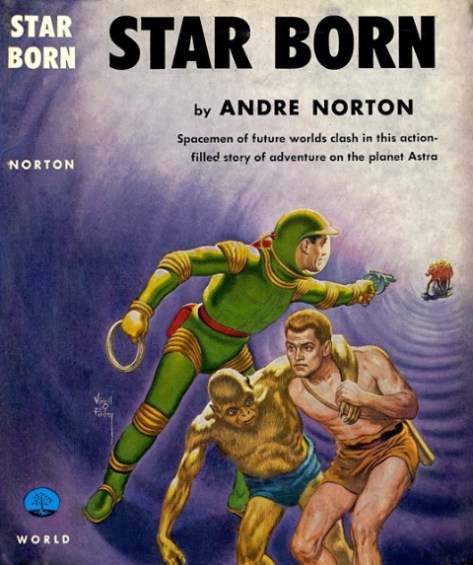
Star Born Andre Norton
1957 cover painted by Virgil Finlay

Star Born was written in 1957 and is the second novel of the Astra series. As such, you might expect it to be extremely dated. That’s the good thing about Andre Norton. Her focus is on the characters not on technology. Not that it would have mattered in the end, not really. I found Star Born among my books and discovered that I hadn’t read it. Shocker, but a pleasant surprise.

Our two main protagonists in Star Born are Raf Kurbi from Terra and Dalgard Nordis from Homeport. Like so many of Norton’s characters a rite of passage is what starts off the book.

Dalgard is the descendant of Terran escapees. Many generations ago they came to the planet Astra. There they found a race of people who communicated through telepathy. Telepathic communication is another of Norton’s favorites. These two groups learn to live next to each other in peace and with time the Terran stock evolve their telepathic abilities to the extent that they can communicate with the telepathic creatures on Astra. Dalgard is traveling with Sssuri, a member of the Merfolk, and his knife-brother. Together they are on a journey of exploration – rite of passage.

One of the deserted bases of “Those Others” is the goal of the two travellers. “Those Others” are the ancient enemies of the Merfolk and other creatures on Astra. In olden times the Merfolk were enslaved by “Those Others” but through rebellion they managed to hit the Others hard.

Star Born switches between Dalgard’s story and Raf’s. Raf has come from Terra along with a crew. Four of them set out to investigate some ruins that they had seen during landing. It turns out that they meet up with the Others. Raf is uncomfortable about this meeting. For some reason his guard is up. When they go with the Others to explore one of the ruins, they come upon Dalgard. Now the stories blend together and we get to see what happens when two young men hold the fate a world in their hands.

The newcomers from Terra display all of the classic symptoms displayed in meeting with aliens. Meeting as described in science fiction anyways as I do not know of any real life meetings with aliens. Fear, prejudice, and violence go together it seems in such situations.

Young adults are probably Norton’s target group. Most of her books are written for them. That is clearly reflected in the language. There is no swearing, graphic violence or sex scenes. Quite refreshing in a sense. While Star Born isn’t one of my favorite Norton books, it was an easy read.


NOTE: This title has entered the “Public Domain” and is therefore open to any publisher that wants to print it. Many “Print on Demand” publishers have started to release this title. This site has chosen to ignore these published versions and only concentrate on estate sanctioned materials.”

The Project Gutenberg has a complete version of Star Born for free – for those who are interested.


Star Born has been translated to:

  • German:  Flammen über Astra
  • Russian: Звездная стража [Star Guard]
  • Russian (in combination with The Stars Are Ours!) Астра [Astra]

Sources:


Other reviews:

Barraclough, Lindsey: Long Lankin (2011)

Long Lankin - Lindsey Barraclough

Lamkin, Bold Lamkin, Bold Lantern, Bolakin, False Linfinn and Long Lankin are some of the titles belonging to the story of the mason who builds a castle, is cheated of his fee and who then exacts a bloody revenge (A.L. Lloyd). I have included below what is thought to be the original ballad along with one of the musical interpretations of the story.

Long Lankin is Lindsey Barraclough’s first novel. Whatever hiccups it might suffer from are compensated by Barraclough’s excellent prose. For a new author her flow was a delight.

Horror stories are not my forte simply because I am too easily frightened by authors stringing words together in that manner, but Long Lankin is within my endurance limit. Barraclough’s ability to convey the creepiness and uneasiness of the horror story did affect me in the manner the author probably intended.

During their stay at great-auntie Ida’s, Cora and Mimi encounter a mystery of terrible dimensions. As all children ought, Cora and Mimi venture into places they should not. Auntie Ida has not explained why they need to stay away from certain places, thinking to spare them from a terrible truth. Even though I promised myself that I would never do such a thing to my own children, I too have been guilty of doing underestimating them. Auntie Ida is going to discover what I did. Telling the truth is generally the wisest.

With their new friends, Peter and Roger, the four children set out to explore the church and the graveyard, and our horror story begins. Cora is the hero of this story. She is the one who is responsible for looking after her little sister. This is the age-old duty of older siblings. But keeping Mimi safe becomes increasingly difficult.

Cora and Mimi become embroiled in the history of the village, the history of the church and the history of their Auntie’s old house Guerdon Hall. Some places are the perfect settings for a horror tale. Old manors struggling to keep themselves together would qualify in my mind. Another such location can be old churches and graveyards, perhaps even forests and marshes. Long Lankin has three of these: Guerdon Hall, of course. The church close to the house and the nearby marsh.

Choices may have far-reaching consequences, sometimes centuries into the future. Everything has a cost. Payment must be made one way or another. Friendship, family, loss, grief can be some of the price extracted. Cora and Mimi coming to stay with Auntie Ida happens to be one of these long-term costs. I love the way Barraclough brings the old ballad into her story in tiny drips along the way. The Lay of Lambert Lanikin is frightening enough on its own. Add the terror of the future that Barraclough shares, and we can all huddle under our covers waiting for the wolf under our bed to jump onto it.

What a creepy good time I had!

Exactly what age group this falls into is difficult to say. According to the author, she did not have a particular age group in mind when she wrote Long Lankin.


Reviews:


Long Lamkin, 2008; By Wong Mei Sheong;
Long Lamkin, 2008;
By Wong Mei Sheong;
Thought to be the original version
Belinkin was as gude a mason
As e’er pickt a stane;
He built up Prime Castle,
But payment gat nane.
The lord said to his lady,
5 When he was going abroad,
“O beware of Belinkin,
For he lyes in the wood.”
The gates they were bolted,
Baith outside and in;
10 At the sma’ peep of a window
Belinkin crap in.
“Gude morrow, gude morrow,”
Said Lambert Linkin.
“Gude morrow to yoursell, sir,”
15 Said the fause nurse to him.
“O whare is your gude lord?”
Said Lambert Linkin.
“He’s awa to New England,
To meet with his king.”
20 “O where is his auld son?
Said Lambert Linkin.
“He’s awa to buy pearlings,
Gin our lady ly in.”
“Then she’ll never wear them,”
25 Said Lambert Linkin.
“And that is nae pity,”
Said the fause nurse to him.
“O where is your lady?”
Said Lambert Linkin.
30 “She’s in her bouir sleepin’,”
Said the fause nurse to him.
“How can we get at her?”
Said Lambert Linkin.
“Stab the babe to the heart
35 Wi’ a silver bo’kin.”
“That wud be a pity,”
Said Lambert Linkin.
“Nae pity, nae pity,”
Said the fause nurse to him.
40 Belinkin he rocked,
And the fause nurse she sang,
Till a’ the tores o’ the cradle
Wi’ the red blude down ran.
“O still my babe, nurice,
45 O still him wi’ the knife.”
“He’ll no be still, lady,
Tho’ I lay down my life.”
“O still my babe, nurice,
O still him wi’ the kame.”
50 “He’ll no be still, lady,
Till his daddy come hame.”
“O still my babe, nurice,
O still him wi’ the bell.”
“He’ll no be still, lady,
55 Till ye come down yoursell.”
“It’s how can I come doun,
This cauld frosty nicht,
Without e’er a coal
Or a clear candle licht?”
60 “There’s twa smocks in your coffer,
As white as a swan;
Put ane o’ them about you,
It will shew you licht doun.”
She took ane o’ them about her,
65 And came tripping doun;
But as soon as she viewed,
Belinkin was in.
“Gude morrow, gude morrow,”
Said Lambert Linkin.
70 “Gude morrow to yoursell, sir,”
Said the lady to him.
“O save my life, Belinkin,
Till my husband come back,
And I’ll gie ye as much red gold
75 As ye’ll haud in your hat.”
“I’ll not save your life, lady,
Till your husband come back,
Tho’ you wud gie me as much red gold
As I could haud in a sack.
80 “Will I kill her?” quo’ Belinkin,
“Will I kill her, or let her be?”
“You may kill her,” said the fause nurse,
“She was ne’er gude to me;
And ye’ll be laird o’ the Castle,
85 And I’ll be ladye.”
Then he cut aff her head
Fra her lily breast bane,
And he hung ‘t up in the kitchen,
It made a’ the ha’ shine.
90 The lord sat in England A-drinking the wine:
“I wish a’ may be weel
Wi’ my lady at hame;
For the rings o’ my fingers
95 They’re now burst in twain!”
He saddled his horse,
And he came riding doun;
But as soon as he viewed,
Belinkin was in.
100 He hadna weel stepped
Twa steps up the stair,
Till he saw his pretty young son
Lying dead on the floor.
He hadna weel stepped
105 Other twa up the stair,
Till he saw his pretty lady
Lying dead in despair.
He hanged Belinkin
Out over the gate;
110 And he burnt the fause nurice,
Being under the grate.

Tores. The projections or knobs at the corners of old-fashioned cradles, and the ornamented balls commonly found surmounting the backs of old chairs. Motherwell.


 Sites of interest:


Watkins, Paul: The Promise of Light (1992)

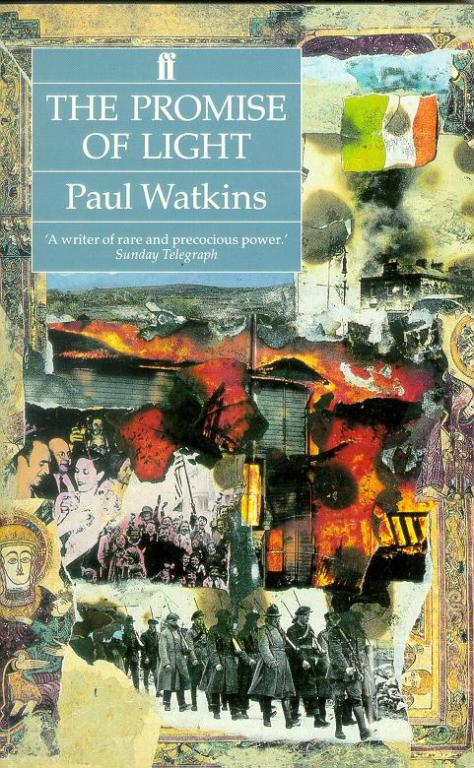
The Promise of Light - Paul Watkins

The Irish War of Independence (Irish: Cogadh na Saoirse) or Anglo-Irish War was a guerrilla war fought between the Irish Republican Army (the army of the Irish Republic) and the British Government and its forces in Ireland. (Wikipedia)

The Promise of Light is for the most part about the above war that happened between 1919 and 1921 and Ben Sheridan’s part in it. However, we also get a look at some of the background for the war and the hostilities that had brought Ben Sheridan to Ireland.

When Ben Sheridan discovers that the man he thought was his biological father isn’t, he also discovers that his adopted father’s background was different from the one he had thought. He and other exiles from the Irish conflict had settled on Rhode Island and tried to gain support for the Irish side of the conflict from the US government. They also collected weapons and money and sent these covertly to Ireland.

Ben Sheridan goes with one of these transports on his way to discover who his biological father was.

Without Ben going to Ireland we would not have had this fictional tale of the Black and Tan war / Anglo-Irish war / Irish war for Independence. Just looking at these three different names for the fighting between 1919 and 1921 shows me how incredibly important the combination of our words is. Words have a great deal of power in forming our world views. Some of the links below use this power in their portrayal of the terrible killings of that time.

Inside my head that is what Paul Watkins shows us with The Promise of Light. We get to see the despair of the innocents and the participants who are brutally murdered and tortured by the other part of the conflict. Except for the people who enjoyed killing, raping and maiming what we are dealing with is a bunch of frightened people who are following some kind of leader. These leaders manage to bring others to their side. Sometimes they use words, sometimes money and sometimes brutality in getting people to support them.

I understand the need to be free of the tyranny of rule by people we feel have no right to rule us. After all I am Norwegian and Norway was used as collateral in wars and went between Danish and Swedish rule for centuries. Then the Germans took us over. But I would stink as a patriotic warrior.

However, I do see how Ben got drawn into the conflict. Chance has the potential of bringing about terrible things in our lives. On his way over to Ireland he did not envision killing others, but that is what he ended up doing. Ben was beaten for the cause and he got to watch people he had befriended killed. He also learned even more about grief than he had thought possible.

Paul Watkins portrayal of this period of Irish history drew me in and kept me reading.


Reviews:


Amazon UK


The Anglo-Irish War (BBC History)

The Black and Tans – who were they? by Tom Toomey

The Irish War of Independence by Noreen Higgins

Timeline of the Irish War of Independence Wikipedia