26 pages of fast-paced urban fantasy is what we get in Hungering Shadows. Short stories can be really fun.
Hungering Shadows is a great action story about a guy who just will not give in to the demonic influences in his life. Instead he hunts them down and brings them in for their reward (with the sometimes help of Father Ralph Lawrence). In this story Alex is on the hunt for two skin walkers (demons who kill a host’s spirit and take over their body).
Bounty hunter central is on/in Haven, a place accessed through a warehouse portal. All bounties are delivered there and rewards picked up. Catching your bounty, though, can be quite challenging. Other bounty hunters can and do get in your way and Alex is no exception to that rule. But Alex lets nothing stop him and his quest for what he feels is right.
Hope you enjoy Hungering Shadows as much as I did.
I’m trying to figure out if the James May of Heartbeatsis the same James May as the one of BBC’s Top Gear. Any takers? I’m not finding any information on him out there.
It was not the cover that made me buy this short story but rather the blurb. It contains the words evil, sword and stop nightmare. Yup, that will often be all it takes to get me to read.
Heartbeats is part one of what thus far is four parts. I have only read the first and am therefore not certain if that is the end. Each story is about the same length as this one (between 15-20 pages).
Heartbeats is a dark story, one of death and destruction and grief. We meet Stalus at the celebration of the wedding of Duon and Shelly. Except what was to be a happy event has turned into a nightmare, a nightmare that has been part of Stalus’ life for the past thirty years. It is the story of a man growing from utter helplessness to the realisation that he, too, can make a difference. Hopefully Stalus will be able to hold on to his humanity through all he has to do.
I would have to say that this is one of the darker stories I have read. Not so much because of the violence, although the violence is explicit and plenty. But more because of the utter hopelessness that is conveyed through the writing. James May writes well within the flow and writes a story that makes me think about what it must be like to fight against the odds without believing that you will make it.
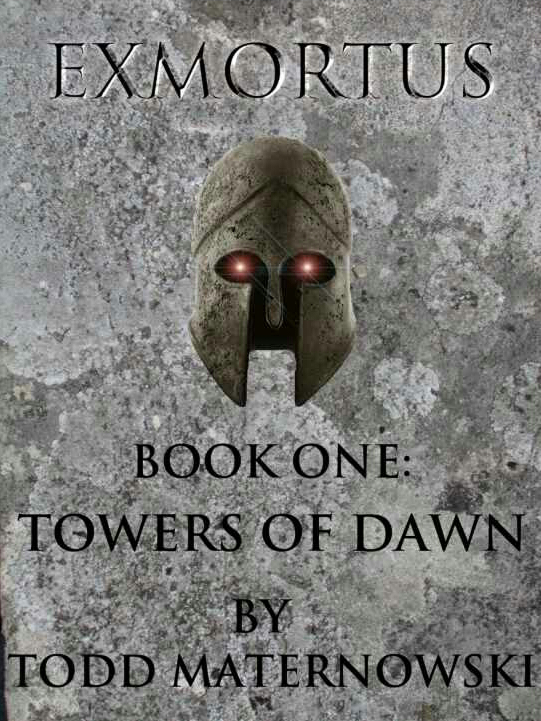
(Exmortus) is NOT intended for children, unless you like your kids reading about grisly murders, sex magic and genocidal demons, in which case, it IS intended for your kids.
Exmortus is in part a coming of age novel. As such I guess you could call it a young adult novel (keeping in mind the above warning). But it is also about the arrogance that comes with believing that you have the correct truth.
The Knights of Exmortus Abbey believe that their path is the correct one. They get to see a whole lot more of the more challenging sides of life than the people living inside the great wall. Ash Xavier is one of the apprentices hoping that he will make the rank of Knight. Ash is incredibly smart and knows it but he has no idea how to apply his knowledge to real life. That is what Speed and Ziggy (the duo) show him while his fellow apprentice, Simon, shows Ash that there are alternative ways of thinking.
Getting his dreams smashed within a few hours is certainly a factor in helping Ash grow. The demons that destroyed the Abbey are on Ash & company’s tails through much of the novel. People they thought they could trust (at least Ash did) show themselves as traitors while people Ash had thought of as evil end up getting Ash & company out of trouble.
We get plenty of action, some philosophising and some enthusiastic sex. The action is graphic at times while the sex is semi-explicit (probably not new to most teenagers).
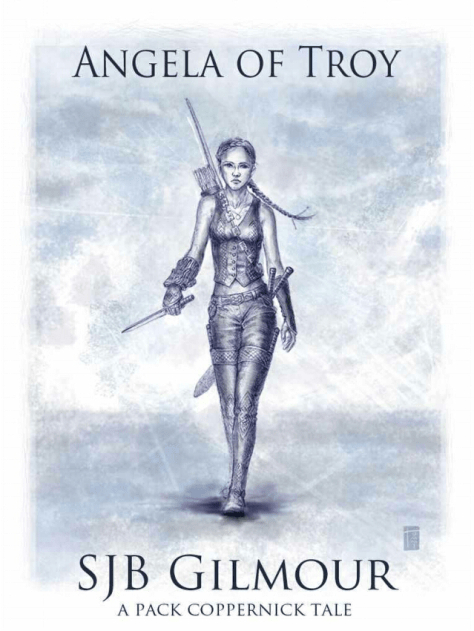
Angela of Troyis the story of an Amazon, necromancer and daughter of Cassandra of Troy and the god Apollo. Her job is to police the supernatural community and make sure that no unnecessary murders are committed.
A rogue werewolf has been on a killing spree and Angela is sent to stop him. To find out who the next victim is supposed to be she turns to a demon. Demons aren’t really Angela’s idea of fun – more like a necessary evil.
What she discovers is that the man she has been sent to hunt, Benjamin McConnell, is out to kill all who were associated with the man who cursed him. I can understand wanting to do that. McConnell has his own protection. If another tries to harm him that damage will be inflicted on the one trying to hurt him. Angela’s superiors must have known of this ability, yet they still sent her off to destroy McConnell.
All in all an interesting short story with a strange set of characters.
Cover design by Mercy Loomis and Jon Connor Images by Morguefile.com
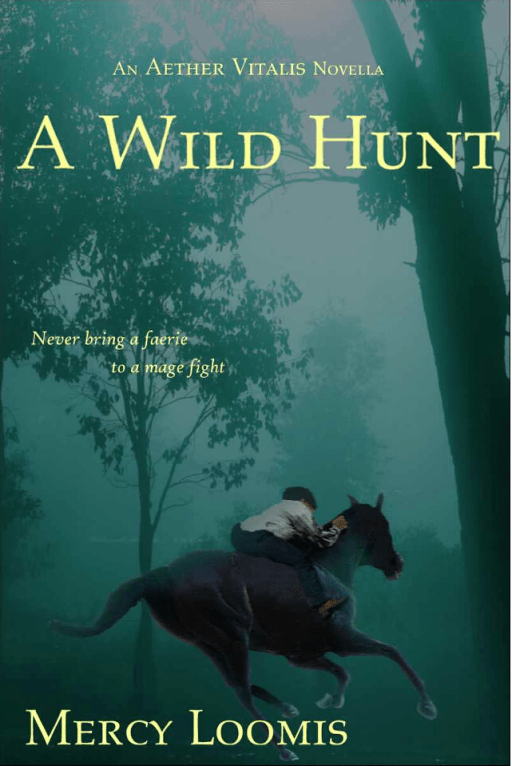
A Wild Hunt is an urban fantasy with paranormal creatures. According to Loomis most of the Aether Vitalis stories are dark. A Wild Hunt could be considered dark fantasy in my opinion.
In A Wild Hunt we deal with death magic and its apparently willing victims. That is what can happen when dark witches are in your neighborhood. Good job the neighborhood watchperson – well skinshifter – is close by.
At the beginning of our tale Ariane Conant seems to be your typical drooling college student. Her job is to protect humans from finding out too much about the faery community. That one of the humans she ends up protecting just happens to be her drool object just ups the ante for her. She goes from an empty-headed drooler to a dangerous woman to cross in a magical battle.
A Wild Hunt was a pretty good short story. There are limits to how much background and info you can cram into a story this size, but Loomis did manage to give us a little. Mainly we had action from the very beginning and the story did not slow down as it went along.
“The classic pulps are oppressively masculine, chock full of male wish fulfillment. That’s all well and good for guys who want to read two-fisted tales of adventure. But where are the ladies to turn? Well, now they have something to scratch that itch.”
It is true that the fantasy pulp market has been mainly written by and probably for males. While using many of the same tools as the masculine species in her writing, Maria Violante has managed to give her protagonist, De La Roca, her own twist. There is plenty of violence in Hunting the Five but is wholly appropriate in its setting.
I do not understand why some reviewers have found the first chapter out of place. Perhaps it has been changed since the time of their reviews or perhaps I just feel differently about her need to get her gun back. Her methods of achieving her goals are anything but gentle but extremely effective.
Alsvior is a fascinating creature. While we see that he has interesting talents there is also a feeling of mystery left behind by the story. Lots of questions in my mind about that horse.
What would it be like to have had to be a mercenary for the Angel for three centuries? 300 years seems an awful long time to pay for whatever you might have done but being told that she has only five kills left before her stay in Hell is over seems like a set-up to me. Something just seems off about that.
De La Roca is something as strange as a demon killing demons for Heaven. How weird is that? She has been told that she is a demon by her personal Angel. Could be, but then again what role would Alsivor play in all of this as he is a tool from heaven. Lots and lots of questions. To me De La Roca seems like a bounty hunter with her soul as the reward for her kills.
Another reviewer felt a Mexican vibe a là Antonio Banderas. That could be. His part in the Mariachi trilogy certain was gritty enough. I think that is what I liked so much about Hunting the Five. Dark and gritty and plenty of action is important ingredients in a novel like this. Hunting the Five is also easy to read. Maria Violante manages to keep herself in the flow for the most part. There are some places where she falls out of it but she manages to pull herself back in.
122 pages isn’t a whole lot but Hunting the Five is after all billed as a novella. Thankfully you can pack a whole lot of fun into 122 pages and Maria Violante has managed to do that.
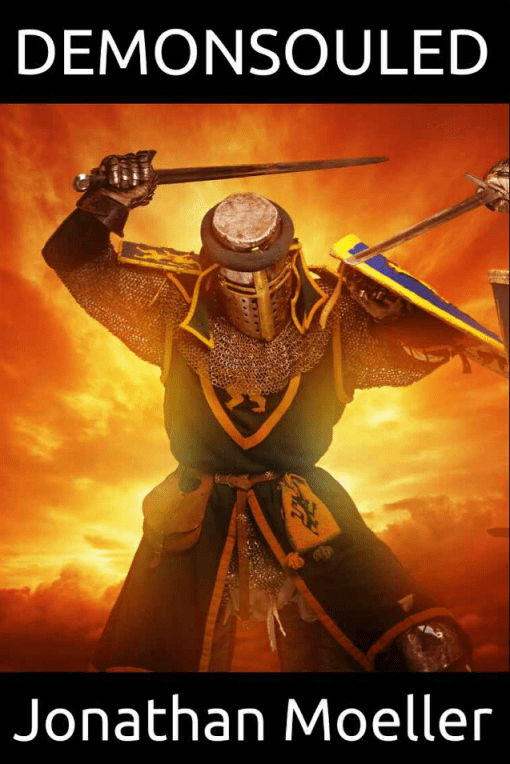
As you can probably see from the section below called reviews I like to check out what other people have to say about an author. Demonsouledsure brought a lot of varied comments and some of what I read made me wonder if the other person and I had even read the same novel. The one I read was the updated and revised edition from 2011. Demonsouled is part of a series and therefore a stand-alone novel.
As the name of my blog indicates, I am fascinated by the darker side of humanity. Part of that translates into an interest in dark (but not horror) litterature. Our struggles to keep within the accepted mores of society are so much more interesting than all of our successes. Which is one (and probably the main) reason I liked Mazael Cravenlock. Like the quote from Schopenhauer at the beginning of Demonsouled says, I firmly believe in the beast that lies within the heart of every man (and woman) just waiting to be let out.
Every time Mazael looks at a person he sees how he could kill that person. For him its just something that happens and that he doesn’t act upon unless he is forced to. In the battles he has fought that ability has certainly come in handy.
Mazael’s older brother is Mitor, Lord of Cravenlock. Mazael is on his way home after an absence of 15 years. He has heard rumours of his brother beeing extremely foolish and he feels the need to find out if Mitor is indeed hiring mercenaries against their over-lord, Richard Mandragon. What do you know? He is.
What we have in Demonsouled is a novel that almost gets the best of Mazael. First of all he wants to get his sister out of her brother’s claws and keep her from Richard Mandragon. Then he feels obliged to figure out where all the disappearing people under the care of Lord Cravenlock have gone to. In addition to that he ends up with the ambassador from the wood-elves on his hands. Mazael’s last wish is for his family to fight Lord Mandragon and he tries to keep his brother from launching an attack. We all know that Mazael is not going to go unchallenged. There is no way Jonathan Moeller is going to make this easy for him. All he does is throw in another challenge in the form of disturbing visions. It makes a person glad she is not a hero in one of his novels.
Sir Gerald Roland is Mazael’s best friend and sticks with him through thick and thin. Along with them follows Gerald’s squire, the 11-year-old Wesson. They take part in most of what happens along Mazael’s journey through Demonsouled, but they do not have the three-dimensionality that Mazael has.
Mazael’s family is nuts – brother and sister both. Totally off their rockers. But Mazael is naive about their development in the fifteen years he has been off to fight. Like a lot of us he wants to see the best in them and defends them when it might have been more constructive to take another look at their behavior. But he, too, learns that families aren’t always what we want them to be.
As I mentioned in Bitten, I had to buy Addictedright away after finishing Bitten.
I’m just going to say right away that Addicted was as well written as Bitten. When I see the quality of writing that Anna Wolfe produces, I fall in love. Whether a novel is for children or adults matters not. Well written is fun to read.
Wolfe writes this about Addicted: “Every now and again, human beings manage to pull these demons through to our side. The human dies, of course, and the demon gets a person shaped suit to live in. We call these creatures the demonridden.” If humans could call in demons – even if they risked dying – we would do it. We just couldn’t help ourselves. There is something inherently self-destructive and curious inside the human psyche.
Callie still lives with Silas trying to learn how to survive with drooling demons wanting her while all the time having to keep control of her “infection”. Their four-person-group is pretty much like a family. Edie is scared of Callie but still acts like a mom or maybe big sister. Mark doesn’t know if he feels Callie is his sister or if he just lusts after her. Silas is Silas – strong, silent dangerous guy with a secret dark past.
In Addicted two parties want to take Callie from Silas. One group has an indirect approach while the other is very direct. They figure they can beat Silas. But Silas is old and wily. The people (witches) he turns to for help aren’t exactly cuddly themselves and they extract a price that he hesitates to pay.
There is an interaction between Callie and Mark that is priceless. More teenagy than this is impossible to be and Silas’ reaction to the scene is perfect.
Like I said in my review of Bitten – it really is cruel of Anna Wolfe to keep us waiting for the next installment.
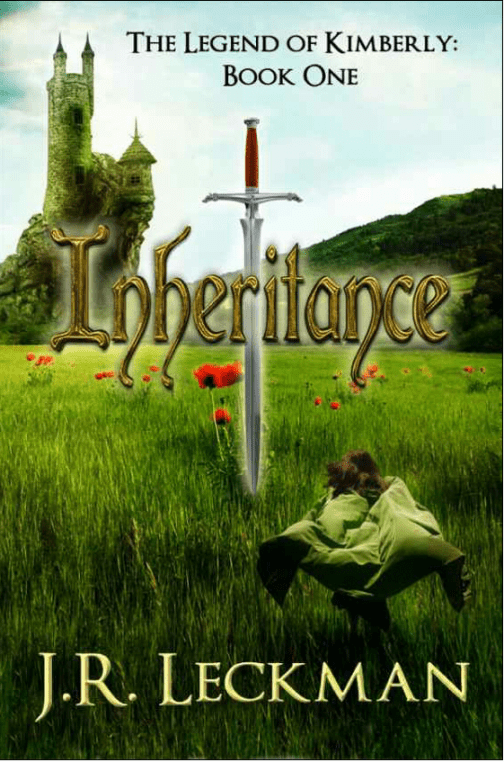
I am really glad I read Inheritanceand doubly glad I am not Kimberly. Her father and brothers are crazy violent. Because of the abusive parts of the novel some of the reviewers out there have disagreed about the age-appropriateness of the story. Kimberly is 14 herself, but I think that kids younger than that would be perfectly fine with Inheritance. As usual my advice is that if you are an adult wanting to get this for a child that you read it yourself first (or read it with whomever the intended audience is).
I wonder what it would be like to know that I was going to die at a specific time? Hal Stone does. He tells his “fox” friend Ip that he will die that same evening. Rather than fight it, he makes certain the last of his preparations are finished.
Hal Stone is the author of a YA fantasy series about the land of Auviarra. His success in the book-world is not reflected in his family. His son, Nathan, is utterly and completely mad/insanse/sociopathic … Just add any adjective in this category and you could describe him. Two of Hal’s grandchildren seem to follow in the shadow of their father while the last one seems to be less under his influence and more under the influence of Hal. This, of course, is Kimberly.
Kimberly is a typical child of an abuser. She will do anything to avoid enraging her father all the time knowing that nothing she does stops his rages when he wants to get at her. Novels like Inheritance make me wonder about the future of such children. Even when she gets to Auviarra, and apparently away from her abusive family, Kimberly still cannot get away from their influence.
Ip transfers his loyalty from Hal to Kimberly. Ip is much more than the fox that Kimberly thinks him. He is a creature originally from Auverria and is some sort of shape-shifter. When Kimberly ends up in Auviarra he comes along for the ride.
I try to remember my mentality at 14. How would I have managed to deal with the life Kimberly has been dealt? Hmmmm. Difficult to say – partly because it has been an eternity since I was 14.
I like Kimberly. I also like the troupe she ends up with. They are a combination of different qualities, making their whole so much more than one of them.
It starts off with a barbrawl between the singer Freya (Gothic Warrior) and Lincoln. She wins. That fight gets Lincoln hired as her group’s (Helbound) body-guard.
This is urban fantasy with a demonic twist. Billy Wong manages to fill his 44 pages with plenty of action. I think it would probably be considered a young adult novel.
What would you do if you one day discovered you had an unexpected ability? Like running fast, really fast. Fast enough to break the world record. It would be a great ability to have if you had to run away from trouble (or maybe to).
Callie Courtnae suddenly discovers this ability and is asked to join a school in Montana that specialises in youth with record-breaking abilities. She goes and discovers that the people at her school are extraordinarily beautiful and a lot quicker than she herself is. Hmmm, I smell a rat.
The premise for A Diamond in my Pocket is pretty good. It is difficult to come up with something new in the world of fantasy. But Angell manages to put a couple of twists in that I don’t think I’ve read before. However, however, however. The characters needed a bit more work and the novel tightening. I wish A Diamond in my Pocket could have fulfilled its potential, because it did have plenty of that.
Diana Rowland keeps on getting better by the book. Touch of The Demon is the best novel thus far in the Kara Gillian series. We have arrived at book no. 5 in the series and have at least one more to go. The other four are: Mark of the Demon, Blood of the Demon, Secrets of the Demon and Sins of the Demon.
The cover is taken from one of the scenes in the novel. This scene is one of the more action-filled ones. Action is something Touch of the Demon has plenty of. There is everything from snow-ball fights to flesh-carving. Some of the violence is quite explicit and so is some of the sex.
When Kara gets stuck in the demon realm, she discovers that her pre-conceptions about demons are quite faulty. I guess we all experience that when we are faced with the objects of our prejudices. Often, we have to revise our point of view. Some of us do it well, while others have to struggle. Kara struggles with the way she views the motives behind various actions.
Another thing I enjoy about Rowland’s writing is the way she deals with concepts of friendship and loyalty. What is friendship? Is it possible to be friends in spite of being from different races? How do you deal with betrayal of epic proportions? Reading Touch of the Demon will answer how Kara views these issues.
Rowland’s writing is tighter than ever and her text is reaching the point of flowiness that I claim is necessary for the exceptional writer.
Musical writers. What a treat they are. Anne Bishop is one such writer, one who knows how to make all of her chords fit together into a song that satisfies the reader. She manages to portray the darkness in people without stepping into the land of horror. I love dark fantasy when it is performed like this.
Like all of Anne Bishop’s stories, Ephemera is character driven. Generally two or three of them are three-dimensional, while the rest end up complementing the main characters. Ephemera comes from an idea of our outer world reflecting our inner one. What if that were literal? Playing with that idea brought about the Ephemera world (Reading Cafe interview). As we discover in reading these books, the world of Ephemera is ephemeral (transitory). One can never know where one ends up, seeing as one’s heart shows the way.
SEBASTIAN (2007)
German cover
“Long ago, in a time that has faded from memory, a mother’s tears forged the bridge that, ever after, connected the power of the living, ever-changing world to the human heart. – Myth”
Sebastian is a love story, but more than that it is a story about the choices we make. Do we dare to follow our dreams, or will we make “safe” choices? In the end it might not really matter, because the choices we make could very well all be the ones we really want.
Sebastian is an incubus, an incubus who has begun longing for something more than the life he is living right now in the Den of Iniquity. The Den of Iniquity is a place of ever-lasting carnival, a place where people come to fulfill those dark desires they have.
You can relax if you are worried that we are being cast into a place where the sex and violence is explicit. While the Den of Iniquity might well be a place where that is the case, Anne Bishop has been kind enough to keep us as readers away from the details.
Anyways, back to Sebastian. The Den of Iniquity has been his home since he was about 15. His past was not a good one with a succubus mother and wizard father. Sebastian’s mother left early on and his father left Sebastian’s care to others, people who were afraid of incubi. But Sebastian has turned out pretty well, thanks to Nadia, Belladonna and Lee (adoptive family). They have shown him that there is sunshine in a person. Now he wants someone to love.
BELLADONNA (2008)
Australian cover
“Heart’s hope lies with Belladonna.”
The Eater of the World is once more loose in Ephemera, free to wreak havoc where it sees fit. Dreams are invaded, monsters set free and lives are becoming darker due to its influence.
The only hope lies with Belladonna. Glorianna Belladonna is of the old blood, the blood of the Guides and Guardians. Her heritage is one of light and darkness. Only through the combination of the two is there a possibility of winning.
Unfortunately, Belladonna and Lee do not have all of the answers to her search for a solution to the Eater. She sends out a Heart’s Wish to Ephemera with the hope that someone will come with what she needs to save Ephemera.
In a sense that says it all. What price are we willing to pay to save the ones we love? I have no idea myself. In the world of fantasy people are willing to go to extremes to save the world and not just those close to themselves. Sometimes the price could end up being horrendous.
BRIDGE OF DREAMS (2012)
Australian cover
Anne Bishop pulls it off again. This time we get to hear more about Lee.
Ever since Glorianna Belladonna became Belladonna in every sense of the word, Lee has been frustrated, hurt and angry. Part of his anger is at Glorianna for placing herself in this position and for not going back to how she was previously. Another part of his anger is toward Michael, the Magician, for giving Belladonna the chance to make her choice, and for stopping him when Lee wanted to jump in and save her. Quite a bit of his hurt is toward the relationship that has developed between Michael, Glorianna and Sebastian. Why was Sebastian the one to call Belladonna back and not Lee? It seems unfair. Lee feels unwanted, and unable to come to terms with the way things have turned out.
When he stumbles upon wizards trying to invade one of Belladonna’s landscapes, Lee uses a one-shot bridge taking the wizards with him. He ends up in a city called Vision having to endure torture and the insidious whispering of the wizards.
Danyal, the Shaman, is sent to Vision to figure out what needs to be done to save the city from those places that no Shaman is able to see any longer. Shamen are like the Landscapers in that they take care of their landscapes. But unlike Landscapers they do not seem to have access to Bridges. Upon meeting up with other ways of doing things, Danyal is about to have his beliefs about the world challenged.
So, what can I say about Bridge of Dreams? I liked it. I like Anne Bishop’s version of the darkness that lives in all of us. Our shadows balance out the light in us. When we accept both sides of ourselves our potential becomes greater. All three books in the Ephemera series (trilogy?) follow the pattern of Anne Bishop’s other novels. I guess most authors have a unique style of writing (much like musicians), and sometimes that style works. In Bishop’s case I find myself embracing and enjoying her characters. Getting people to care about the characters in a novel seems to be what being an author should be about.
Rincewind is one of the funnest and funniest characters of the Discworld. In spite of the
Rincewind is a self-acknowledged coward whose running abilities fit with his cowardice.
He was not the brightest student at the Unseen University. In fact the other wizards claimed that Rincewind is “the magical equivalent to the number zero”. He does have one magical formula in his head – one of the Eight Great Spells. Unfortunately, the formula must never be used.
Rincewind is both the luckiest and unluckiest of characters. Lady Luck is kind of on his side, and Rincewind’s ability to frustrate all of Death’s plans are next to none. In fact, Rincewind’s hourglass of life is the only one that is not hourglass shaped.
Rincewind’s constant companion is the Luggage, a pearwood chest that walks and acts as Rincewind’s bodyguard. During his many unexpected trips to fairly unusual places, Rincewind has great need of this protection.
The first of the Discworld books is The Colour of Magic. In it Terry Pratchett set out to make fun of the many cliches in fantasy and science fiction. When I first started reading The Colour of Magic, I hadn’t gotten that part of it. But when I went back to it with this necessary knowledge, I laughed (well, giggled) a whole lot.
“In a distant and second-hand set of dimensions, in an astral plane that was never meant to fly, the curling star-mists waver and part …”
Right off the tone is set. I must have been terribly dense not to have seen the humour my first time through, but there you are – once an airhead always an airhead.
And so we get our first look at A’Tuin, upon whom the Discworld rests. Now that Pratchett has shown us the glory of his world, it is time for him to give us the story of Rincewind – one of many.
Rincewind meets Twoflower in the Broken Drum. Twoflower is a tourist from the Counterweight Continent. Noticing the stranger’s language problem, Rincewind helps the man and is hired as Twoflower’s guide. Recognizing potential trouble, Rincewind tries to flee the city, but is caught by the Patrician who orders him to protect Twoflower.
Through a series of mishaps, Rincewind and Twoflower end up having to flee Ankh-Morpork. From there their journey takes them into and out of the embrace of Death time and again. They are hunted by trolls, bears, demons, dragons and believers.
A graphic novel, illustrated by Steven Ross and adapted by Scott Rockwell, was published by Corgi in 1992.
The Mob Film Company and Sky One have produced a two-part adaptation, combining both The Colour of Magic and The Light Fantastic broadcast over Easter 2008.
In 1986 Piranha Games published The Colour of Magic as a text adventure game developed by Delta 4.
A video game titled Discworld: The Colour of Magic was released on mobile phones in 2006.
The Light Fantastic begins where The Colour of Magic left off. Rincewind and Twoflower are once again trying to survive one of their stunts.
Back at the Unseen University in Ankh-Morpork something really strange is happening. One of the extremely dangerous magic books is beginning to leak and the wizards are terrified of the consequences. When the leakage causes the UU to be flooded they realise something has to be done.
The book with the Eight Great Spells decides to take matters into its own pages, and rescues Rincewind and Twoflower from their predicament. That does not mean that Rincewind, Twoflower and the Luggage are out of trouble. Indeed, druids, mercenaries, Cohen the Barbarian, Death, the Four Horsemen, trolls, crazed villagers, a magical shop, Things all have to be encountered before they can go home.
If you’ve read a bit of English litterature from the pre-1986 era, you’ll probably recognize the references made in The Light Fantastic. But even without that knowledge, it’s easy to see that Pratchett makes fun of religion, philosophy, insurance and myths.
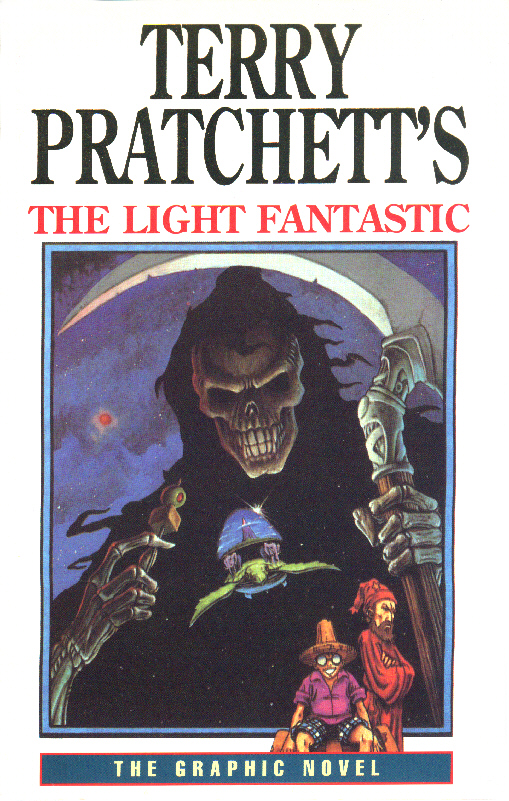
A graphic novel illustrated by Steven Ross and Joe Bennet, was published by Corgi in 1993.
The books are full of references. If you go to L-Space you’ll find annotations, quotations, essays and all sorts of goodies on all of the Discworld books.
A sourcerer is the eight son of an eight son of an eight son. A wizard squared. A source of magic.
Isplore (father of the sourceror) refuses to go with Death when it comes. Instead he decides to steer his son’s destiny by imbuing his wizard’s staff with his spirit. Poor little Coin. His future has already been decided for him by his father.
Back at the Unseen University a new Archchancellor is to be “elected”. Rincewind and the Librarian are working with the books in the library. The books and shelves are restless. As he leaves the library, he notices a couple of other disturbing event. Ravens are cawing and all the vermin is leaving the Unseen University. Rincewind tries to warn the bursar, who unsurprisingly does not believe him.
When he is unable to get the administration to believe that something is afoot, Rincewind does his usual desperate disappearing act. He and the librarian withdraw to the Mended Drum (used to be the Broken Drum).
Parents! What can you do about parents? No matter how much you fight them, somehow they find a way to impose their will. In Sourcery, you’ll see quite a bit of Ipsilore trying to do just that to Coin. Holding all that power is quite a challenge for a boy trying to find his way in the world. His choices will make or break the Discworld.
“Death fancied that he heard, very briefly, the sound of running feet and a voice saying, no a voice thinking oshitoshitoshit, I’m gonna die I’m gonna die I’m gonna DIE!” When he focuses his gaze, all he says is: “OH, … IT’S HIM”. Yes, you’ve guessed it. Death’s favorite non-dier – in fact the only one – Rincewind.
In Ankh-Morpork, something invisible is running through the town, yelling at the top of its voice. The wizards try the Rite of AshkEnte (calling on Death) to find an answer. He tells them that Rincewind is caught in the Dungeon Dimensions, trying to get back home. The likelihood of that happening is a million to one. Hello! This is Rincewind we’re talking about.
What happens then. Well, Rincewind wakes up in a regular human sort of room caught in a magic circle. In fact, he is caught by a pimply teen-aged boy with a fake beard. This kid wants to have mastery of the kingdoms of the world, meet the most beautiful woman who has ever lived and wants to live forever.
He is about to get all wishes fulfilled, but not in the way he expected and both Eric and Rincewind may end up regretting that the conjurations was performed. What Eric Thursley will end up knowing all too much about is deception, bureaucracy and stupidity.
As the gods are playing games, with Fate winning as usual, the Lady turns up. She wants to play Mighty Empires with Fate, letting the dice roll deciding whether fate of luck will rule this time.
Mustrum Ridcully, Archchancellor of UU is called to see the Patrician of Ankh-Morpork. A Pointless Albatross has turned up with a message from the mysterious Agatean Empire, requesting the “Great Wizzard”. Vetinari wants Ridicully to send the Great Wizzard to the Counterweight Continent by tea-time, leaving the Archchancellor six hours to figure out who this wizzard is and get him on his way. Oh dear.
We all know who this “Great Wizzard” is, and Rincewind ends up in the Agatean Empire. Unfortunately Rincewind’s wizardly talents seem to have grown in the telling and he seems sadly wanting for the role Agatean people want him to fill. He is supposed to step in as a leader of the revolution. Well, the Agatean people are in for a surprise and so is Rincewind. Of all the people Rincewind should meet on the Counterweight Continent, Cohen the Barbarian and his compatriots turn up.
It’s winter and cold season in Ankh-Morpork. At the Unseen University the Librarian has caught a bug. Each time he sneezes, he changes shape – into anything. The wizards are at a loss, and the only one who has been able to communicate effectively with the Librarian is, you guessed it, Rincewind.
Rincewind, however, is somewhere else. At the moment he is digging a hole – more or less looking for opals. The other opal miners know him as Strewth. When Strewth uncovers something that looks like a giant opal, the other opal-miners cheer. Then the opal cracks open and lots of little feet appear.
Back at the Unseen University the wizards are their usual bumbling selves looking for Rincewind. Searching has uncovered a window to somewhere delightful. A beach with clear blue water and lies behind a window in the room of the Egregious Professor of Cruel and Unusual Geography. Since they are wizards they climb through. When Mrs. Whitlow arrives with sandwiches, she closes the window and they are all stuck. Now they have to find their way back, somehow, back to the future.
Rincewind/Strewth and the luggage are off on their adventures. One of the funniest ones is a shearing episode with our talented Rincewind. There is also a delightful one that reminds me an incredibly of Priscilla, Queen of the Desert.
The last installment in the Rincewind series is The Last Hero. My copy has been illustrated by Paul Kidby and is beautiful in a Discworldian manner. Vetinari receives a message from the Agatean Empire.
Cohen the Barbarian has set out on a quest with the Silver Horde. “Fingers” Mazda stole fire from the gods and gave it to mankind, and was chained to a rock to be torn open daily by a giant eagle as punishment. As the last heroes remaining on the Disc, the Silver Horde seek to return fire to the gods with interest, in the form of a large sled packed with explosive Agatean Thunder Clay. They plan to blow up the gods at their mountain home, Cori Celesti.
Vetinari organises an effort to stop the Horde and Leonard of Quirm (Vetinari’s tame inventor) to design the Discworld’s second known spacecraft to slingshot under the Discworld and back around the top, landing on Cori Celesti. Rincewind, Carrot and the Librarian are slung off to save the world.







 German cover
 Australian cover


 ‘
‘


 humanitysdarkerside