Tag Archives: #Magic

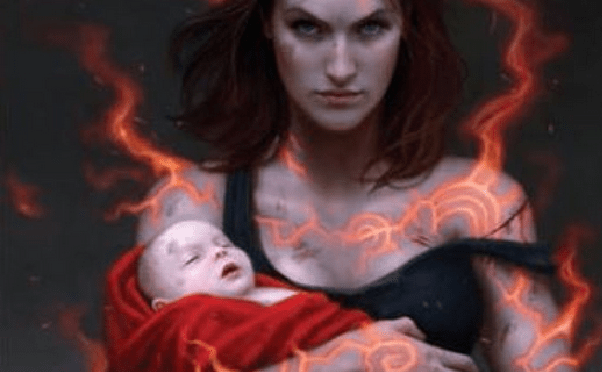
Jensen, Megg: Anathema (Cloud Prophet I) (2011)

Keeping slaves is generally not something people openly admit  today. Many countries continue this practice and my contention is that most states participate in this tradition while closing our minds and eyes to that fact. Traditionally, people have become slaves either through being conquered by another nation, power-hunger or through criminal acts.

Sometimes being conquered happens via false promises. Such is the case with the Serenian island in Anathema. Serenians were lured by promises of help from the Malborn. Once the Malborn were in force on the island, it took ten years for them to eradicate opposition. Criminals were those who would not obey the three “rules” Malborn leaders had set as a condition of harmony between the two people. “Trust, adore and obey” was what the Malborn required from the Serenians. Once you were deemed a criminal you would either be killed or enslaved along with your entire family. Add to that their military prowess, and the Malborn were bound to win.

Reychel remembers nothing but slavery. At fifteen slaves were branded with their master’s mark. This mark and their shaved heads clearly divided slaves from the rest of the population and it also make it extremely difficult for successful escapes to happen. Kandek, her master, is about to lose two of his slaves, one of whom is Reychel. The other is Ivy, Reychel’s best friend. First out is Ivy.  Fortunately for Reychel, her turn comes soon after. Her escape was public and unusual.

When slavery is all a person has known all sorts of things about being a free person had to be learned. There was a whole network set up to help escaped slaves deal with their new status. Blending in was vital. Both of them also had to come to terms with Reychel having magic powers of some sort. Ivy already knew about hers. Her ability to calm others, even to the point of forcing them to do things, becomes an important element of the story. Learning Reychel’s ability is also essential. The reader knows this long before Reychel does.

Another discovery Reychel ends up making is the value of her friendship with Ivy. Why did Ivy want her rescued, and why is Ivy acting so strange now that they are out of slave quarters? Sometimes people have different opinions of what friendship is and what friends are for.

Usually, slaves weren’t worth enough for a master to mount a search for too long. That was the case with Ivy. Reychel, however, was the exception to the rule. Kandek will not give up. If not for the friendship of one of the militia both girls would have been caught within the first weeks. There is a love interest with Marc, the militia guard. Another discovery about Ivy is the result of that interest.

Ivy is a fun character. Reychel is in line with a young adult hero type. So is Marc. All three are important to the story and the action-filled adventure Megg Jensen gives us.

Recommended.


Reviews:


Anathema can be found at Amazon

McCoskey, Scott: Bad Mojo Blues (2014)

Bad Mojo Blues by Scott McCoskeyMerriam-Webster defines mojo as: “a power that may seem magical and that allows someone to be very effective, successful, etc.” Bad Mojo is certainly something Marcus suffers from during the three days that we walk with him.

“The cards were screaming at him to hop a plane to anywhere else … Right now they told him to change his fucking direction and fast.”

But Marcus’ father is dying. If not for that, he would have stayed away from his dysfunctional family another ten years. His mom and dad are conservative Christians, his cousin is a blood-bag to a vampire and his sister (who begged him to come home) keeps away from Marcus. He is thought, by his family, to be dirty and evil  because he practices magic.

Marcus’ relatives aren’t the only dysfunctional people we meet. Old friends try to mess with him, and some of their requests are pretty unfriendly. All, in all, the tarot cards seem to have been correct, this time, in their predictions.

Scott McCoskey has written about a mess of a person and done it in a manner that I enjoyed. This is a self-published book and there were flaws, but McCoskey’s style makes up for that. Bad Mojo Blues is a fun crime-filled novella set in an unnamed small town in South-West New Mexico.

Recommended.


Bad Mojo Blues available at amazon.com

Rowland, Diana: Vengeance of the Demon (Kara Gillian 5) (2015)

“How long have you been able to move potency?”

Pellini exhaled. “Since my senior year in high school.”

“What happened then? Did someone start teaching you?”

He cleared his throat. “Never talked to anyone about this stuff before,” he confessed, then added, “I mean, no people.”

Idris and I both tensed. “What non-people have you talked to about this?” I asked, doing my best to remain outwardly composed.

Pellini licked his lips before speaking. “Shit. I had an imaginary friend when I was little.” A flush darkened his face. “I called him …” He hesitated then took a deep breath and plunged on. “I called him Mr. Sparkly because that’s what he looked like. For as long as I can remember, until I was in second grade, he’d find me when I was in the sandpit in my backyard and take med away.”

“Wait. Away?” I asked. “Where to?” Maybe Mr. Sparkly was just an ordinary creeper?

He chewed his lower lip. “The place I saw him wasn’t like Earth,” he said. “It was like that.” To my shock he gestured toward the nexus. “Energy and colors and light.”


Website Diana Rowland

Cover art Daniel DosSantos

Edghill, Rosemary: The Warslayer: The Incredibly True Adventures of Vixen the Slayer, the Beginning (2002)

http://www.carolheyer.com/fantasy-art.html
Cover art by Carol Heyer

Rosemary Edghill does her usual cracking job writing The Warslayer.

“A terrible power has been unleashed in the land of Erchanen. Long was it prisoned upon the peaks of Grey Arlinn, until foul mischance freed it once more. Now it stalks the plains of Serenthodial, and Great Drathil is no more than an abode of shadows. We are a simple gentle people, without the arts of war, and we knew that only the greatest warrior who ever lived could help our people in their hour of greatest need. You are she.”

Quite understandably, Gloria (Glory) McArdle is a bit skeptical to being approached by three apparently insane (like all conventioneers) fans who are taking fandom to the extreme. What she gets instead is a new world.

It isn’t often a stuffed elephant gets to have a major supporting role, but Gorden, the elephant, does. Glory depends on him for comfort in all the strangeness and he is also in an essential place when one of the Allimir needs him. Or at least Vixen thinks that when she and Belegir are seeking the will of the Oracle. Comfort objects are important tools in emergencies and daily life. I think it is safe to say that Vixen’s new life is traumatic.

Vixen also brings her highly impractical costume including a real and blunt sword. It was thought that, for the sake of realism, the role as Vixen required learning to fight with a real weapon. Well, kind of fight. She discovers that her choreographed moves are of little use and improvisation is a must. In fact, having been an Olympic gymnast is far more important to Glory’s survival.

“The terrace directly below was still clear. It was an eight-foot drop. Glory turned away from the stairs and jumped.

They hated having her do her own stunts on TITAoVtS, because if she got hurt, production stopped dead, but in fact she was damned good at it, and the stuntpeople had taught her a few helpful tricks. She held the sword well out from her body and threw herself into a forward somersault, landing on her feet, crouching to absorb the impact – just like the vaulting horse, that – and backing up quickly against the wall. …”

Getting back to Earth after her arrival on Erchane requires the help of the Oracle. Belegir, the head wizard, goes with her as a guide. When they get there, Glory discovers that the Alimir aren’t as peaceful as they had told her. The walls of the temple are full of paintings of Allimirs’ killing.

“You-told-me-you-didn’t-do-things-like-that-” she growled in a low husky feline rumble, leaning over until she was staring right into his eyes. “You said you didn’t know how!”

Well, once upon a time, the Allimir had been a murdering horde killing everything in their way. Kind of like humans. Then, somehow, the old hero, Cinnas, banished War from Erchanen. But that enchantment only lasted one thousand years. And this magic was what the Allimir wanted Vixen to repeat. Like many of us they wanted another to deal with the consequences of their actions. I guess that fits with how my generation seems to feel about the future of the Earth. NOT our problem! Please solve and fix our mistakes and intentional shit. Because that is how we humans are, isn’t it? But Gloria is fully aware of her limitations.

“Well, cheer up. You’ve got me, now. When She sees that, She oughtta wet herself laughing. C’mon.”

The style of story, sword and sorcerery, kind of gives the ending away. As with most adventure stories the odds seem impossibly stacked against Vixen.

The Warslayer is an odd, yet profoundly pleasing, adventure tale with lots of action, humour and food for thought. Definitely recommended.


Reviews:


The Warslayer available at Amazon UK

Bishop, Anne: The Pillars of the World (Tir Alainn) (2001)

Reading to my daughter continues to be a pleasure. Our journey through the land of fantasy brought us into the world of Anne Bishop and the trilogy The World of the Fae.

The Pillars of the World is the first book of the series. It works well as a stand-alone novel. Bishop takes us in to a world where one man’s fears changed two countries into places where the gap between the powerful and the powerless becomes unbridgeable. Now the turn has come to Sylvalan.

Misogyny is said to be the hatred and dislike of girls or women. Personally, I believe it is more about fear of the perceived power or potential power of women and girls. Add to that a hunger for an increase in one’s own power and a religion or belief-system is born. Adolfo, the Master Inquisitor, the Witch’s Hammer, carries his misogynism and power hunger to extremes.

She’d never heard of the Evil One until Master Adolfo came to stay with Baron Hirstun. But she knew with absolute certainty that there was such a creature, that the Evil One did, indeed, walk the earth.

And its name was Master Inquisitor Adolfo, the Witch’s Hammer.

He was the very breath of Evil with his quietly spoken words and the gentle sadness in his eyes. Those things were the mask that hid a rotted spirit.

Oh, yes, treat the witch gently so that she may repent. Don’t look upon her limbs so that you won’t be swayed by lust.

The soul-rotted bastard just didn’t want those men to see the welts, the cuts, the burns he had inflicted on her to “help” her confess. The hobbles provided a clever excuse for why she couldn’t walk well. And he certainly hadn’t hesitated to indulge his lust. His rod was as much a tool as the heated poker and the thumbscrews.

While many witches in Sylvalan certainly have enough power to defend themselves, they also have a creed that states “do no harm”. Sometimes such beliefs are also taken to extremes. Not even saving themselves or their loved ones will bring the witches to use their magic to harm another person. Many of them end up being murdered after severe torture and forced confessions to crimes never committed. All for the sake of one man’s insatiable hunger and fear and other men’s envy.

Adolfo’s and his inquisitors’ distrust and dislike of the witches spreads to the rest of the population. We all know what happens when people flock together like sheep following the voice they want to hear rather than that little voice inside their own heads screaming STOP! The few who do try to stop what is happening end up being accused of the crime of “consorting with the Evil one” and killed.

All because of one man’s fears.

Not only the inquisitors regard witches as a lower species. The Fae in eastern Sylvalan consider themselves supreme beings of the earth. To take one’s pleasures with one of the non-fae is considered a right, but if a male fae should happen to breed a child upon one of the lesser species children are not taken care of. Female fae place the baby on the door-step of the father not wishing to sully Tir Alainn with mixed breeds. Tir Alainn is the home of the Fae, the place they venture out from when they want to play with those of lesser worth.

Definitely recommended both as a read-alone and read-together book.


Reviews:


Translations:

Norton, Andre: High Sorcery (1970)

Wizard’s World (1967)

His decision had shaken the “hound”. Craike bared teeth in a death’s-head grin. Now the mob would speed up. But their quarry had already chosen a part of the canyon wall where he might pull his tired and aching body up from one hold to another. He moved deliberately now, knowing that, having lost hope, he could throw aside the need for haste. He would be able to accomplish his purpose before they brought a gas rifle to bear on him.

At last he stood on a ledge, the sand and gravel some fifty feet below. For a long moment he rested, steadying himself with both hands braced on the stone. The weird beauty of the desert country was a pattern of violent color under the afternoon sun. Craike breathed slowly; he had regained a measure of control. There came shouts as they sighted him.

He leaned forward and, as if he were diving into the river which had once run there, he hurled himself outward to the clean death he sought.

Through the Needle’s Eye

“She’s a witch, you know!” She teetered back and forth on the boards of the small front porch. “She makes people disappear; maybe she’ll do that to you if you hang around there.”

“Ruthie!” Cousin Althea, her face flushed from baking, stood behind the patched screen. Her daughter was apprehensively quiet as she came out. But I was more interested in what Ruthie had said than any impending scolding.

“Makes people disappear – how?”

“That’s an untruth, Ruthie,” my cousin said firmly. True to her upbringing, Cousin Althea thought the word “lie” coarse. “Never let me hear you say a thing like that about Miss Ruthevan again. She has had a very sad life -“

By a Hair (1958)

Father Hansel had been one of the three Varoff shot out of hand, and there was no longer an open church in the valley. What went on in the oak glade was another matter. First our women drifted there, half ashamed, half defiant, and later they were followed by their men. I do not think the Countess Ana was their priestess. But she knew and condoned. For she had learned many things.

The wise women began to offer more than just comfort of body. It was a queer wild time when men in their despair turned from old beliefs to older ones, from a god of love and peace, to a god of wrath and vengeance. Old knowledge passed by word of mouth from mother to daughter was recalled by such as Mald, and keenly evaluated by the sharper and better-trained brain of the Countess Ana. I will not say that they called upon Odin and Freya (or those behind those Nordic spirits) or lighted the Beltane Fire. But there was a stirring, as if something long sleeping turned and stretched in its supposed grave.

 Ully the Piper

There was only one among them who was not satisfied with things as they comfortably were, because for him there was no comfort. Ully of the hands was not the smallest, nor the youngest of the lads of Coomb Brackett – he was the different one. Longing to be as the rest filled him sometimes with pain he could hardly bear.

He sat on his small cart and watched the rest off to the feasting on May Day and Harvest home; and he watched them dance Rings Around following the smoking great roast at Yule – his clever hands folded in upon themselves until the nails bit sorely into the flesh of his palms.

Toys of Tamisan (1969)

“If you have any wish, tell it to Porpae.” Kas dropped his hold on her arm and turned to the door. “When Lord Starrex wishes to dream, he will send for you.”

“I am at his command,” she mumbled; it was the proper response.

She watched Kas leave and the looked at Porpae. Tamisan had cause to believe that the android was programmed to record her every move. But would anyone here believe that a dreamer had any desire to be free? A dreamer wished only to dream; it was her life, her entire life. To leave a place which did all to foster such a life – that would be akin to self-killing, something a certified dreamer could not think on.

Goodreads


Translations:

  • Italian: Le terre degli incantesimi (1979)

Thater, Glenn G.: The Gateway (Harbinger of Doom 0.5) (2008)

“Talbon!” said Lord Eotrus. “Dispel the mist. Now!”

At his liege’s command, the sorcerer uttered forgotten words of eldritch power; secret words lost to all but the chosen few. The ancient sorcery he called up crushed the unnatural mist back against the night, though the darkness lingered beyond the limits of the soldiers’ torchlight.

“For glory and honor,” shouted Lord Eotrus. “For Odin! For Lomion!”

“For Lomion,” shouted the men.

Glenn G. Thater

Wrede, Patricia C.: Daughter of Witches (Lyra II) (1983)

My copy of Daughter of Witches is the revised version. Daughter of Witches is Patricia C. Wrede’s second story.

Bond servants in Chaldon were servants with only one right: a half-day off every three weeks. Their masters could, in all other respects, treat their bond servants as they would. Ranira, our main character, is one such bond servant. She was bonded for nine years because her parents had been judged and killed for being witches. When we meet her, she has two more years of her bond to serve. She is somewhere in her teens.

When strangers come to Lykken’s inn at Festival time, they ignore the danger they place themselves in. Being foreigners in Drinn at Mid-Winter festival is enough to get you arrested. Hosting foreigners is also enough to get you arrested and sentenced as bond servant. In fact, all of your employees and family are placed in bond service for not having reported your crime. Earlier in the story, Ranira unintentionally offended the priest that is her “arresting officer”. It turns out she offended The High Priest of Chaldon. Her sentence is his way of getting revenge.

“For three days more I will be seated in the place of honor in the Temple, next to the High Priest, while he teaches the people the new rites and leads them in the old ones. Then the High Priest himself will perform the wedding ceremony. And consummate it. Publicly,” she added as an afterthought. She stared resolutely at the door of the cell. She was determined to finish, to make them understand, so that they would leave her to whatever little peace and sanity she could find and cling to. “When he is finished, the god will take me. For two days, Chaldon will walk in my body and speak with my voice, and there will be nothing left of me at all. On the last day of the Festival, when both moons are full and Chaldon has accepted the other sacrifices, the nine High Masters will kill me as well.”

Through history human sacrifice is not uncommon: Aztec, Japan, Serbia, Hawaii, India and Rome are only some places where ritualized human killings were/are practiced. Religion seems to make human sacrifice acceptable to the general populace once propaganda becomes common belief. But I wonder if religion is the only area of sacrifice in human society. What about the squandering of young lives in the fights we have with each other to enforce our own points of view? Or the death penalty?

Anyways. Ranira is not too happy about her future fate. Nor are the strangers once they realize what is going to happen to Ranira. What is about to happen to them as well. Although their fate is probably not the privilege of sacrifice to the god Chaldon, they will likely end up as sacrifices to Drinn’s version of justice. Getting away would seem hopeless yet highly desirable for all of them. Ranira and the strangers now set off on what are narrow escapes, much use of magic and new friendships.

Recommended.


Reviews:


Daughter of Witches at Goodreads

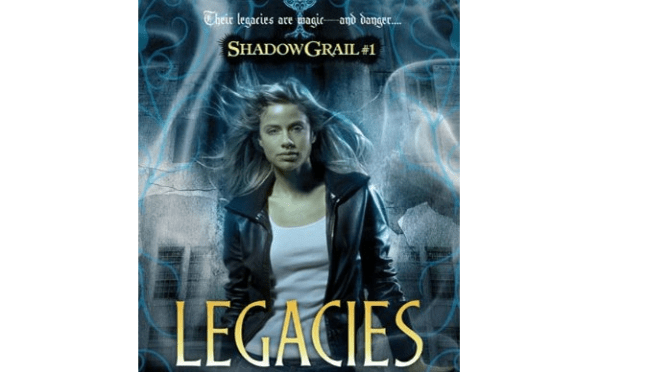
Lackey, Mercedes & Edghill, Rosemary: Legacies (Shadow Grail I) (2010)

“She’s gone, what’s the harm?” Muirin said. She flipped through the manila folder. “Transcripts, notes from the teachers – huh, she was getting better grades in Art than I am – evaluations from her magic coach – Kissyface Bowman always was too easy on anybody with a flashy Water Gift – Demerits …” She stopped suddenly, as she got to the last page, and stared down at the folder in silence.

“What?” Loch said. Muirin simply held the folder out to him mutely.

He took it, and looked down at the last page. Spirit looked over his shoulder. There was just a single page there at the end, something it would be easy to take out and dispose of if for some reason you were going to hand it over to someone. At the top of the page there were several lines of illegible handwriting. The rest of the page was blank.

Except for a large red stamp that said: “Tithed.”

And the date.

Halloween. (Mercedes Lackey and Rosemary Edghill)

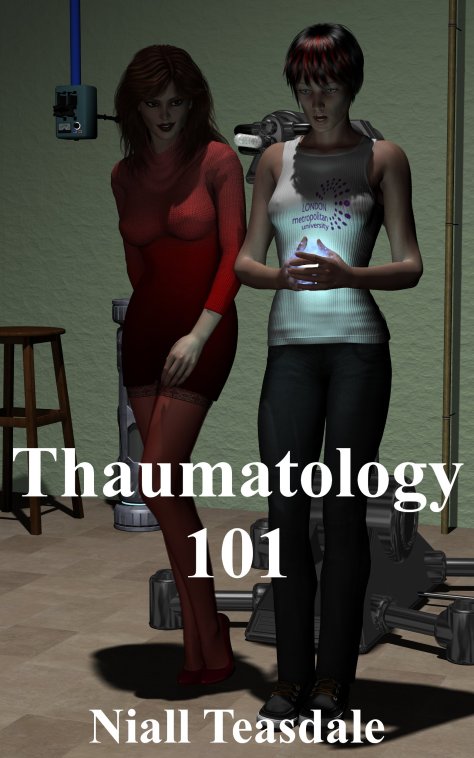
Teasdale, Niall: Thaumatology 101 (2011)

thaumatology-101-Niall Teasdale

Thaumatology 101 is a mystery. Ceridwyn (Ceri) Brent has been hired as a research assistant to Dr. Tennant at the Metropolitan University in London at the High-energy Thaumatology Building. Thaumatology is the magic of Teasdale’s world. Dr. Tennant has been working for a couple of years on finding a solution for the containment of T-Null. It turns out her other assistant, Shane Walters, has hampered her work. After an accident occurs that almost kills Ceri, Ceri and Lily begin searching for an answer to why Shane is out to stop Ceri.

I like the way Teasdale introduces us to the world (and the house) both Ceri and Lily are part of. Thaumatology 101 is very much about the friendship between Lily and Ceri. Ceri experiences major changes in her life during the story and Lily is there to both support and hamper her. Thaumatology 101 celebrates sexuality without being preachy or crude. I found that refreshing. Not being a romance was also great. Violence in the story was toned down. Because of the toned down violence and joyful sexuality, I would call this an older Young Adult urban fantasy tale.  The story is somewhere between a novella and a novel in length (137 pgs).

Recommended.


Reviews:


Thaumatology 101 available at Smashwords, Amazon.com, Amazon.uk

Gee, Emily: The Sentinel Mage (Cursed Kingdoms I) (2011)

Jáume was in his father’s barn when the curse broke free of its dormancy on the easternmost rim of the Seven Kingdoms.

The story of the Sentinel Mage begins with Jáume, eight years old. Ancient magic turns his father into a monster and the boy has to flee to save his life. Reading up on orphaned children showed me that homeless, orphaned pre-teens looking to survive are more common than I thought. That type of homelessness made Jáume’s tale more believable. Where a lot of children would have died from helplessness, Jáume is crafty and cunning. Sometimes he is not proud of what he has to do to live, but he still does them. Choices we seem to be left with, may not be real choices after all. Do or die?

Magic, like the terrible curse, is the reason witches were hunted until thought extinct on the mainland. But complete extinction of a genetic trait when prophecy is around would never be possible for a fantasy trilogy. In life the complete extinction of a genetic trait seems unlikely. Eventually it might turn up again. In the Sentinel Mage that is even more so the case, as Prince Harkeld is about to discover.

Every prophecy needs its tool and these tools are people who vary from the young and innocent to the old and unwilling. Prince Harkeld starts off with power, wealth and a sense of entitlement. He is 22 years old when he meets the feared witches at his father’s court in Osgaard. King Esgar has called him to meet the diplomatic convoy from Rosny in the Allied Lands. When Prince Harkeld hears what the witches (or “mages” as they prefer) have to say about his destiny and his background he is shocked. It turns out the blood of monsters is in him and he needs to choose between honor and his father’s approval. Fortunately for Prince Harkeld, he choses honor. He is not aware of the personal consequences of doing what his father wishes.

Monsters or not, Harkeld is stuck with the mages (or witches as he curses them). A solution to his distrust is found by the mages. However, this solution requires distraction and a certain amount of naivete on Harkeld’s side. Perhaps the mages figure he is distraught enough that he will not discover the discrepancies that occur when Justen appears.

I understood why Harkeld would act like the distrustful, arrogant and annoying person that he was with the mages. His background, the suddenness of his leaving and the shock of his discovery along with the constant fear of discovery and being on the run would all play a part in leaving him a somewhat unlikable person. I’m not certain I cared much for the mages either. They were dishonest toward Harkeld and very open about the possibility of needing only his hands and blood for the fulfillment of the prophecy. Only as a last resort, of course ….

In leaving the castle behind he also leaves his beloved younger sister and two younger brothers behind. Princess Brigitta wants to come with him but Harkeld feels she will be safer with her father. Hmmmm. Time will show. But Harkeld worries. And with cause. Princess Brigitta and her two helpers, armsman Karel and handmaid Yasma were all that were left to protect her brothers, six-year old Rutgar and four-year old Lukas. But eighteen-year old Brigitta is about to encounter her own set of terrible problems leaving her with little will or ability to look after her brothers. She is also all that stands between Yasma and constant abuse. Being a bondservant in Osgaard equates to slavery and terror. At least with the Princess Yasma had escaped daily rape and beatings.

Gee’s writing is what drove the story on. There were some hiccups but for the main part she kept me caught in her words. Recommended.


Reviews:


The Sentinel Mage is available at Amazon, Amazon UK, IndieBound, Barnes and Noble, Book Depository

Larke, Glenda: The Aware (The Isles of Glory I) (2003)

Researcher (Special Class) S. iso Fabold, from the National Department of Exploration of the conquering nation Kell, has come to the Isles of Glory. His project is to discover what he can about its history and beliefs. As part of that mission, he interviews Blaze Halfbreed. It is her story we hear in The Aware. Fabold comments on Blaze’s story at regular intervals. I don’t particularly like Fabold. I find him an annoying, misogynistic git.

Blaze takes us back 50 years to a time before the Change, when magic was known. She telles us of her third visit to the Island of Gorthan Spit. Gorthan Spit is the place where those who have no where else to go end up. Blaze calls it a:

middenheap for unwanted human garbage and the dregs of humanity; a cesspit where the Isles of Glory threw their living sewerage: the diseased, the criminals, the mad the halfbreeds, the citizenless. Without people, Gorthan Spit would have been just an inhospitable finger of sand under a harsh southern sun; with them it was a stinking island hell.

Halfbreeds (children of two people from different islands) seldom survive to adulthood. None of the Isles of Glory wish to admit such children exist. Citizenship is only for the purebred. Usually, halfbreeds are abandoned as soon as their mixed background becomes apparent. Blaze, herself grew up

on the streets of the Hub with a group of other outcasts, mainly children of varying ages. Our home was the old graveyard on Duskset hill, where once upon a time the wealthy of the city had buried their dead in tombs above the ground. The place was ancient, the tombs neglected. They made good hiding places, fine home for a pack of feral street kids with no money and no respectability and, in my case, no history or citizenship.

That childhood, her later tutelage by the Menod and her treatment and training by Keepers laid the groundwork for the kind of adult Blaze Halfbreed became. What she learned was that if she wanted to be looked after Blaze was the one who had to do the looking. No one else could be trusted. And she is fine with that. She has no illusions about being some kind of wonderful person who needs to save her world. That she happens to become a pivot is due to Blaze being in the right/wrong place at the right/wrong time.

Sometimes life is like that. Very few people get to become pivots upon which the fate of the world rests. Choices are made at such times that may or may not change the immediate course of history. Long-term very little changes where humans are involved.

I particularly appreciated a few scenes in The Aware. There is an amputation sequence that takes us through the process. Part of that process is letting us know what chance and amputation patient should have had somewhere like Gorthan Spit. There is also an explanation of how a woman like Blaze would be able to handle a two-handed sword for a longer period of time. There is her size, strength, training and practice. In addition the steel of her sword is more refined and therefore a little lighter than the regular ones of that time. Only blood-debts would get you such a sword if you were not from Calmeter. But Blaze needs to take better care of her weapons.

There was plenty of action, an explanation of the magic, a good description of how the Islands worked politically and practically and good character development.

Recommended.


Reviews:


The Aware available at Scribd.com


Translations:

Gaiman, Neil: The Ocean at the End of the Lane (2013)

Thank you, to my sister-in-law for giving me a copy of The Ocean at the End of the Lane.

In December, right before I turned seven my family moved from Australia to Norway. One of my memories tied to that move is stepping outside the plane into the middle of Norwegian winter. Moving was not something I wanted, and winter did not help.

Soon I was driving slowly, bumpily, down a narrow lane with brambles and briar roses on each side, wherever the edge was not a stand of hazels or a wild hedgerow. It felt like I had driven back in time. That lane was how I remembered it, when nothing else was.

Memory can be triggered by scent, sound and sight. All of a sudden you find yourself re-visiting a time you had forgotten. Neurons spark neurons and whatever filing system you have going for you opens a memory file.

If you’d asked me an hour before, I would have said no, I did not remember the way. I do not even think I would have remembered Lettie Hempstock’s name. But standing in the hallway, it was all coming back to me. Memories were waiting at the edges of things, beckoning to me. Had you told me that I was seven again, I might have half believed you, for a moment.

As others have mentioned, we never discover what the name of the main character is. For the most part he is called “the boy”, and that is how I think of him. Neil Gaiman’s statement that the story is meant for adults fits my feeling while reading the book. There is enough terror (not violent) for a younger audience to enjoy it as well.

At seven years of age, children have little say in their lives. Moving to Norway was not my choice. Nor does the boy have much influence on his own life. There are a few episodes that illustrate this. To me, the episode with the cat stands out the most. Utter disregard of the possibility that the boy might be devastated shocked me. Yet, looking back at my own life, children were presumably fine with whatever the adults chose. In The Ocean at the End of the Lane, adults are judged more believable than the boy. So it is when I look around at the parts of the world I have encountered. My Asperger brain is completely baffled by this phenomenon. When the boy’s enemy states

“And what can you say to her that will make any difference? She backs up your father in everything, doesn’t she.”

I am reminded of many family situations that have crossed my life-path. No matter what one parent does or says, they have the backing of the other. Utterly incomprehensible.

Being without power to decide anything about their lives is something children come to semi-accept. At the same time there is a continuous battle between adults and children to have the ability to decide. We see some of that in The Ocean at the End of the Lane. The boy does not give in to the powers that be, although it might, at first, seem that way to the adults.

The Hempstock women became a safe haven for the boy. For me that is hilarious because some of the most dangerous episodes happen while together with one of them. But they sought to protect him and make his life safer by fighting for him with the means at their disposal. These means aren’t exactly regular ones.

I loved the Hempstock women. I want to be like the Hempstock women.

Definitely recommended.


Reviews:


The Ocean at the End of the Lane can be found at biblio.com


Adaptations:


Trivia:


Translations:

Ward, Matthew: Queen of Eventide (Eventide I) (2015)

Queen of Eventide by Matthew Ward

Queen of Eventide kept me up until I had finished it. It was weird, fun and tense (sometimes all at once). Now that playtime is over, it is time for my review.

Maddie twisted around, wiping blood out of her eyes. She saw only mist, glowing and swirling in the moonlight, but this did nothing to stem her rising panic.

Maddie has reason to panic. She is being chased by several parties and does not know who is for her or who is against her. Keeping knowledge from me, the reader, is a great tool for an author. Mr. Ward wields it well although I do catch on to some things before he reveals them to me.

Nottingham supposedly flourishes with ghosts. Certain signs and portents must be present for some of them to show. In Queen of Eventide, some of these ghosts come from a place called Eventide, and they are of a particularly creepy/frightening nature. All of a sudden a person might find themselves being chased by a huntsman and his wolves. Maddie finds herself being chased several times and for reasons she does not understand. Each time William seems to appear to save her. Or is he really there to save her? Allegiances are an iffy matter in Queen of Eventide.

My favorite character was Charles King. Partly, that has to do with the sense of humor he brings to the story. When Maddie first meets him, he introduces himself as a fortune teller. Maddie tells him she thought fortune tellers were old women and Charles answers:

“Ah, there you have me,” Charles replied. “I am not, in fact, and old woman.” Maddie shot him a long-suffering look, and he pressed hurriedly on. “I do, however, possess a knack for peeking into the future.” He leaned forward, conspiratorially. “I inherited it from my grandmother – who was, you’ll be pleased to know, an old woman.”

Hollows are the strangest and possibly most disturbing creatures of the story. They aren’t creepy because of what they do, but due to what they are. We are talking bizarre. And that is all I can say about them without serious spoilers gotting in the way.

As an Asperger, metaphors can be a challenge. Mr. Ward excels in his use of them. Thankfully most of them are familiar ones. Some of them I use myself. The ones who aren’t add to the humor and fantastical aspect of the story.

Queen of Eventide was well worth the read – as my staying up well into the night is evidence of.

Definitely recommended.


Reviews:


Queen of Eventide is available at Smashwords.com


A copy of the story was given to me by the author


Eventide: [Middle English, from Old English ǣfentīd : ǣfen, evening + tīd, time; see dā- in Indo-European roots.] = aftentid/kveldstid in Norwegian

Sagara, Michelle: Cast in Fury (Chronicles of Elantra IV) (2011)

In our case, my reading to my dyslexic child makes the world of words more accessible to her while also giving us the opportunity to cuddle. But needing to be read to is NOT a prerequisite for reading together. Stories like Cast in Fury are wonderful reading out loud stories because there is so much dialogue. That means that I can shout, whisper, and bring humour to my voice. Fortunately, my daughter still enjoys my voice. We had fun and precious together time, something I am not usually very good at.

I adore Merrin. She is what I would have liked to have been. But I would go insane in the chaos of an orphanage. Having two children of my own has been difficult enough. The other thing she does, that I would also like to be able to do, is to accept any person (no matter breed) as long as they are kind to her children.

I fear I am more like Kaylin. My daughter and I laugh at her attention span. Do we ever recognize ourselves in that. Kaylin’s attention span and her bluntness. Autists aren’t famed for being great liars (although some of us are able to lie). Nor is Kaylin. If anything, she if known for the opposite. These traits bring her into trouble with her teachers and friends, but they are also the traits that keep her going as she searches for a truth she can live with. Truth is strange that way. Depending on who I speak with or what I read, ideas of what truth is and must be varies. Kaylin’s greatest truth is that all children have the potential for “good” or “bad” deeds. Only time will prove what they prefer.

Cast in Fury is in part about the child that Kaylin claims as her own. She was there at his birth and licked some of his birthing fluids off his eyelids (not my kind of thing). That makes her part-mother according the laws of the Pridlea, and Kaylin uses any tool at her disposal to save a child she has met. The little dude is one lucky boy to have Kaylin on his side. Without her, he would be a dead little Leontine cub according to Caste laws. That a child might need killing in order to protect a group from something is not a new phenomenon. Nor do I expect it to become an extinct practice. Killing this Leontine baby is the only wise thing to do according to Leontine tradition and lore. Not only Kaylin is in trouble for trying to save the Leontine cub. Her sergeant, Marcus Kassan, is awaiting his trial for murder because of that same cub.

We had fun reading together. Recommended (both reading together and the story).


Reviews:


Cast in Fury available at Scribd