While the earliest technological items we’ve seen on the Discworld were the iconograph, Moving Pictures takes the technology a step further and uses an imp- and salamander movie camera and projector. However, certain problems occur as a result of the experimentation with new technology, as always happens when people play around with new discoveries.
Consider the case of Thomas Midgley (1889-1944). In 1921 he discovered that lead reduced the engine-knocking in a car-engine significantly and lead was introduced into gasoline. We all know what happened as a result of that. Today we are still struggling with the effects of that discovery. Later on he managed to come up with freon which has had a severe effect on the ozone layer. Why should the Discworld be any different?
The Alchemists by Jameli
Obviously, the place to find inventors on the Discworld has to be at the Unseen University or the Alchemist’s Guild (of whom Leonard of Quirm is a member). Where else could a bunch of people willing to try anything in the name of science be found. The motto of the alchemist’s guild is: All that glitters is gold. Most of their experiments tend to end in loud explosions, causing their building to be in a state of constant repair. Unfortunately for Ankh-Morpork, they have now managed to come up with Octo-cellulose, one of the major factors of the events in Moving Pictures.
Another major event leading to the opportunities had at Holy Wood was the death of the door keeper. You’d think that a place needing a guard for their door, ensuring that it’s kept closed, would be a hint to stay away. But it never is, because curiosity is something that people struggle with. Some of us will always push the big red button just to see what will happen (no matter what the sign says). Once Holy Wood becomes accessible, people are drawn there like flies to honey.
Windle Pon’s wheelchair by SS Moran
Gaspode, the talking dog shows his face again. He gets to have an important part in the book, along with other dogs with suspicious names. Dibbler plays his usual scheming self and Death makes appearances as well in the book. Befuddled, eternal student, Vincent, is our main character. Poor guy. He gets completely sucked into the whole Holy Wood scene. Poor Ridicully and his wizardly gang have to join in the chaos and save the day.
You all know that Pratchett is making fun of Hollywood and the whole film industry (not just there). The glamour, hype, fame and craziness are all seen in one part or another of Moving Pictures.
The road to Hell is paved with good intentions. Our main character William deWorde, estranged from his family, starts out by writing a newsletter for foreign dignitaries. Once the dwarves bring in a press to Ankh-Morpork William ends up with a very popular newsletter called The Times. All of a sudden William is employing a journalist, Sacharissa Cripslock, and a photographer, Otto Chriek, to get enough news.
Poor Otto. Such dedication. Being a vampire with an obsession for photography cannot be easy on one’s health. Good thing he has his vial of blood with him om every assignment. The Times are lucky to have him on their staff in their search for truth.
Competition is bound to arrive on the scene. The Guild of Engravers and Printers are producing a newsletter called the Ankh-Morpork inquirer. In it you’ll find articles on just about anything, whether it be true or not.
In the meantime, a plot against Vetinari is once again going on. The Firm (in the form of Mr. Tulip and Mr. Pin) are doing their best to get him accused of murder. Part of that plot is kidnapping Vetinari, but Vetinari’s dog Mr. Wuffles, gets away. Pin and Tulip need to find Wuffles, but The Times is also on the hunt and De Worde has offered a $ 25 reward for Mr. Wuffles. As usual chaos and mayhem ensue.
Journalism is obviously the theme in The Truth. Media’s function in society should be questioned at every opportunity. There is plenty of power in deciding what the truth is and who should hear it. The intentions of the owners and journalists matter a great deal. The potential for doing great harm or great good hangs as a temptation for the best of them.
The term “Going postal” was coined by Karl Vick in his article “Violence at work tied to loss of esteem”. “Going postal” refers to an employee who becomes so disgruntled with her/his workplace that she/he ends up being violent towards co-workers.
Moist von Lipwig is a conman who has conned one too many, leading to his capture. In our lovely Ankh-Morpork prison he is on death row. Waking up after his so-called hanging, Moist discovers that he has been given a choice: Become postmaster or walk out THAT door. Looking out the door, Moist discovers that the drop is a bit too deep for his preference. Postmaster it is.
Moist von Lipwig as the new director of the Post Office by Nuka-Winch
The postmaster function in Ankh-Morpork has not been filled in decades. The Post Office is overflowing with undelivered mail. There are two employees left, living in the Post Office. They are Junior Postman Tolliver Groat and his assistant Stanley Howler. Moist certainly has his work cut out for him.
Delivering the undelivered mail is only one part of Moist’s problems. Another part is getting people to use the Post Office again, seeing it as a viable option to the Clacks. The Clacks could with a certain portion of good-will be compared to the telegraph. The Grand Trunk Company owns and operated the clacks, and they do not like the fact that the Post Office is coming to life again. In addition to these problems, von Lipwig discovers that the Post Office seems to have come into a sort of life of its own. It has definite opinions and is not afraid to share them – causing some near-death experiences.
Adora Dearheart It might be peaches underneath by The Ink Girl
During his duties Moist meets the golem activist Adora Dearheart. She fights for the freedom of Golem from slave-contracts. Instead they buy themselves free one at a time, through getting proper work-contracts.
Golem activism or the battle against slavery and abuse of workers has been a recurring theme in Pratchett’s books. Is it possible for people to change or do we just need to change their focus. After all it was von Lipwig’s phenomenal abilities as a con-man that made it possible for him to be the kind of Postmaster that Ankh-Morpork needed. Once again Terry takes a look at the function of technology in the world. Is it a thing for the betterment of mankind?
ADAPTATION
2005: Going Postal adapted for stage by Stephen Briggs
2010: Going Postal adapted for television by Richard Kurti and Bev Doyle
This time Vetinari tries to volunteer Moist for the banking business. After all, now that the postal business is up and running, we can’t have Moist with any time on his hands. You never know what he’ll do then. Moist won’t have any of it.
Sadly, life doesn’t always happen the way we would like it to. During his stint at the Royal Bank of Ankh-Morpork the owner’s dog, Mr. Fusspot, found von Lipwig quite likeable. When Topsy Lavish dies, she leaves 50% of the shares to her dog (who already owns 1%), making him Chairdog. Mr. Fusspot is left to Lipwig. Mrs. Lavish is a smart woman and has made sure that Moist knows the Assassin’s Guild have a contract on him if anything should happen to her dear Mr. Fusspot.
Moist van Lipwig is now in the banking business, and banking will never be the same in Ankh-Morpork. Neither will Moist.
Lovely Adela is still trying to help the golem population. She has travelled to the ancient civilization of Um to uncover 4 golden golems who have been buried a very long time. When she returns with them everyone gets a surprise, not least of all Moist’s enemies.
In Making Money Pratchett takes a look at our definition of money and people’s acceptance of monetary value. Banking gets its day in the sun and a well-needed sunning that is.
Mr. Scattering was at work as a night-guard at the Royal Art Museum when he experienced an explosion.
He did not want people to know about the gloriously glittering lady holding a large ball over her head before she vanished.
Smeems, the Candle Knave, makes his rounds every night lighting and refilling the candlesticks. His apprentice, Nutt, is stepping in for Trevor Likely, who seems to have taken ill. Nutts is a keen, gray-skinned fellow who tries to fit in at the UU.
Archchancellor Ridicully is a loud wizard, in a place where wizards generally take up a lot of space. Wizards are, usually, celibate. They find their celibate thoughts challenged when the housekeeper employs lovely and empty-headed Juliet. Glenda, the other housemaid, is frustrated with Juliet’s looks and empty-headedness. Getting her to focus on one task is difficult.
The Crowd Goes Wild by Jess Kat
Ponder Stibbons, a jr. wizard, makes it his life’s mission to protect the universe from Arch-chancellor Ridicully. Sometimes that means unpleasant duties. One of those duties is telling Ridicully that the Archancellor Preserved Bigger’s Bequest is about to engage the UU in traditional sports, the Poor Boys’ Fun. As we all know, the wizards (with the exception of Ridicully) abhor physical exercise. There will be no getting out of if if they want to keep the bequest.
A team will have to be organized and getting to learn the rules of the game will be essential for them. Unfortunately, this football-like game seems to have very few rules. With Vetinari the wizards attempt to set out some rules for the game. After all, they do want to survive. They get their own coach in the form of Mr. Nutt. The wizards even end up with their own cheerleaders.
Pratchett is fond of bringing Shakespeare into the Discworld. Unseen Academicals is no exception. This time Romeo and Juliet, in the form of Trev and Julie, gets Terry’s touch. Poor lovers. They belong to teams who absolutely hate each other.
Samuel Vimes is a beautiful character. He grew up in Cockbill Street, the poorest area of Ankh-Morpork. They were so poor that while they had practically nothing to eat, at least their floors were clean enough to eat off. Getting into the Night Watch was quite a change for Sam. Now he had money for food. Being a guard runs in Vimes’ family. In fact one of his ancestors, old Stoneface, beheaded the last king of the city. Vimes’ worldview is that everyone is guilty of some kind of crime.
Nobby, Colon, Carrot, Vimes and the Librarian by William Bradford
Our first proper meeting with Captain Samuel Vimes occurs with him falling over drunk into one of Ankh-Morpork’s streets. It had been a hard day for the Watch. Poor old Herbert Gaskin had broken one of the fundamental rules of being a guard. He forgot to run away from trouble. Now the most despised group of men in the entire city consisted of only three men: himself, Sergeant Colon and Nobby.
In the meantime a young man is heading for the city with “all the openness, sincerity and innocence of purpose of an iceberg drifting into a major shipping lane.” Carrot is the name of this young man, due to the color of his hair but also due to the shape of his body. One day at sixteen his dad sat him down and told him he was not the six-foot dwarf he had always thought he was. Human was his race. His dwarven parents had in fact found him in the woods next to a burned out carriage. Now it is time for him to depart and seek his fortune as a watch-man in Ankh-Morpork. With him his father sends a sword, a dwarven woolen shirt, a golden cod-piece and The Laws And Ordinances of The Cities of Ankh and Morpork.
The Unique and Supreme Lodge of the Elucidated Brethren of the Ebon Night have a plan to overthrow the Patrician. They are going to summon a dragon. Against all odds they actually succeed in calling one forth. It turns out that this is a double-edged sword. Now that they have called the dragon forth, the dragon figures out a way to get back on its own.
One of the themes that we will encounter again and again in the Watch series is the power play between Vimes and Vetinari (patrician). Vetinari plays Vimes like the strings on a guitar. Carrot is the person who manages quite well to live between a rock and a hard place. His literal interpretation of the laws of Ankh-Morpork and his ability to own any situation makes it possible for him to soften Vimes’ explosiveness after meetings with Vetinari.
Adaptations
1992: BBC4 produced a 6-episode serial dramatisation by Michael Butt of Guards! Guards!
Edward d’Eath’s father has just died, leaving him the thirty-seventh Lord d’Eath and an assassin to boot. Unfortunately his father had not left Edward any money. Quite a single-minded person whose belief in a King as ruler of Ankh-Morpork was quite fervent. Coincidentally, he stumbles upon Corporal Carrot, who just happens to look like one of the old Kings. Edward sets about trying to get Carrot and kinghood into fashion.
Captain Vimes is retiring from the police to marry Sybil Ramkin, Countess and the richest woman in Akh-Morpork. He is about to become one of the posh, a gentleman of leisure. But Vimes is finding it difficult to let go of policing.
Thankfully, an important artifact disappears from the Assassin’s Guild. The mystery must be solved. But the Assassin’s Guild aren’t interested in help from the Watch. Vimes loves the chase and the opportunity to get out onto the streets again. The chase after the weapon/artifact turns out to be both challenging and bloody.
Gaspode the wonder dog makes his appearance in Men-at-Arms. Gaspode the talking dog (too much time at the UU can change someone). He is rather keen on Angua (the werewolf).
In Men-at-Arms Pratchett plays with our biases. Here we get to see racism in all its “glory”. Even though the cops in the Watch are only supposed to be cops, they still have to overcome biases towards each other. Like so many others of the Discworld books, Men-at-Arms looks at the power of belief. We get a look at what that belief makes it possible for people to do.
2000: Stage adaptation of Men At Arms by Stephen Briggs
Feet of Clay (1996)
1996: Winner of SFX award for best SF/Fantasy Original Novel
1997: Nominated for 1997 Locus Awards – best Fantasy novel
Commander Sir Samuel Vimes is shaving, thinking on the horrors he has to face as a gentleman. People doing things for him, formal dinners and not being able to sit with the servants any longer playing cards and drinking beer. And then: “There was a flicker in the glass. He moved sideways and ducked. The mirror smashed. There was the sound of feet somewhere beyond the broken window, and then a crash and a scream.” The Assassin’s Guild are at it again. Some of the other gentle-people of the city do not want Vimes alive, and the Assassin’s Guild keeps on trying to do their job.
Captain Carrot has made it through his first two years in Ankh-Morpork. The love of his life is Corporal Angua, a werewolf, whose bad-hair days he takes in his stride. She is quite handy to have around when people want scaring. So when some incredibly thick thieves rob Ironcrust’s Dwarf Bakery she does just that – earning the “respect of the community.”
The body of Father Tubelcek is discovered. The watch have just hired their new alchemist, a dwarf by the name of Cheery Littlebottom. She is sent along to investigate the clues she discovers, of which one of them is a strange light in the dead eyes of Father Tubelcek.
Weirdly enough, it turns out Nobby is posh. He has his own coat of arms and has now become a peer. Poor guy, how is he going to deal with this? With increasing desperation it seems.
Adaptation
2007: Stage adapatation of Feet of Clay by Stephen Briggs.
An Ankh-Morporkian and a Klatchian fisher are both at the scene when a strange island rises above the sea. Both immediately lay claim to the island and this leads to a dispute between Ankh-Morpork and Klatch. The Klatchian crown prince is sent to Ankh-Morpork and diplomacy ensues (kind of). One of the funniest scenes Terry has ever written comes when Vimes has to lead a parade. The whole thing came alive in my head and I almost fell over laughing.
An assassination attempt is made on the prince and the Klatchian embassy declare war against Ankh-Morpork. Vetinari resigns and Lord Rust takes over. He is slightly eager for war and his decision leads to Vimes and the gang ending up in the Klatchian desert.
At the same time Vetinari, Colon, Nobby and Leonard of Quirm take a u-boat ride to the island and then to Klatch. Nobby ends up having the time of his life with “nubile” women. This is also an extremely funny scene. Poor Nobby. But while there is plenty of humor in the foursome’s trip, there is also a serious reason for their trip (obviously since Vetinari is involved).
Uberwald – the land of vampires, werewolves, trolls and dwarves, is becoming restless. Something very important is happening in a few weeks time. A new Low King is being crowned, and that is causing fighting in Ankh-Morpork. With 50000 dwarves living in the city, people are bound to notice that something is going on.
The old grievances between trolls and dwarves have not yet been resolved and large areas are controlled as fiefdoms by vampire or werewolf clans. Into this “suet pudding” Vetinari plans to send an ambassador for Ankh-Morpork, and he wants to send the Duke of Ankh. Cunning man that he is, Vetinari had already spoken to Lady Sybil about it. Vimes knew when he was beaten.
The replica of the Scone (dwarf throne) is stolen from The Dwarf Bread Museum. Vimes finds an aboundance of clues, to many in his opinion. To him it is a stupid crime that does not feel stupid.
Vimes goes off to Uberwald, leaving Carrot in charge of the city. Thankfully, Sybil is along. She will take care of the negotiations, while Vimes will represent Ankh-Morpork in his unique style.
Angua discovers that her xenophobic brother Wolfgang has decided to take over Uberwald. She leaves Ankh-Morpork and Carrot to stop Wolfgang. Carrot makes a difficult choice. He chooses love over duty and goes after Angua. This time Colon is left in charge of the Watch – a recipe for disaster.
The Fifth Elephant follows these three journeys – Vimes and Sybil/Carrot and Angua/Colon as head of Watch.
In a sense, The Fifth Elephant is a love story. Sometimes the choice is between the people we love, duty and tradition. Can we have it all?
The Night Watch for the most part happens in the past. Through a freak accident, Vimes is thrown back to the time when he was a younger man and new to the Watch. Along for the ride is Carcer, a cold-blooded murderer. Carcer’s goal in the past is to kill Sybil, thereby wounding Sam beyond repair. Sam’s goal on the other hand is to make the city safer from people like Carcer. To do that he has to establish a new identity as his old self cannot know who he is. Luckily/unluckily Vimes assumes the identity of John Keel, his old sergeant. John Keel has been killed by Carcer. Vimes knows that changing the past will also affect his future. There might not be a wife and child-to-be when he gets home to modern Ankh-Morpork. But Vimes is who he is and cannot leave the Watch or his old self in their old shape.
Unfortunately, Carcer joins the Unmentionables. They are the secret police, carrying out the whims of Lord Winder (patrician of the time). This often includes people going missing, torture and terror. Vimes sets out to make life difficult for both Carcer and the Unmentionables.
Would we try to change the past if we could? Many of us probably would. In trying to influence his younger self to be a better copper, Vimes changed himself. But the big lines of the city. Hmmm – read and see. Corruption and incompetence are dangerous qualities in rulers, but also in the ones set to carrying out the rules. So, what happens when Vimes sets out to change his old world, trying to make it a better place?
———————————-
2008: BBC Radio 4 2008 radio adaptation dramatised by Robin Brooks
2004: Night Watch stage adaptation by Stephen Briggs
Dribble the dragon, Samuel Vimes, Sam Jr. by Kiriban
Vimes really, really does not like Vampires. Until now he has refused to have any of them on the Watch. That choice is taken away from him by his “beloved” Vetinari. Sally is employed to assist in the investigation around the death of the dwarven demagogue, Grag Hamcrusher. Apparently a troll is the culprit. Sergeant Angua and Captain Carrot are the other Watch member assigned to the case.
Corporal Nobbs and Sergeant Colon get the job of investigating the disappearance of a 50-foot painting titled The Battle of Koom Valley. The discovery of the disappearance leads to several things happening. Trolls vs. dwarves, assassination attempts, a Kube and the Summoning Dark all lead to Vimes, Sybil, Young Sam, Wilikins, and several members of the Watch going to the Koom Valley where Vimes discovers the secret of the valley.
Young Sam has become the mainstay of Vimes’ life. This will prove essential in keeping Vimes alive and sane. Family is all to him. Vimes’ dedication to peace is strong throughout the book, as can be seen clearly in his fight with the Summoning Dark. Racism is prevalent in the book through the animosity between dwarves and trolls. Once again we are confronted by our own biases. One might even replace racism with religious conflict: Protestant/Catholic (Ireland) or political conflict: Palestine/Israel.
Samuel Vimes and one of his weapons (dragon) by Jan Pospisil(Perfect)
Snuff’s focus is for the main part on Vimes and his family. Lady Sybil makes him take a family vacation to her mansion Crundells. Of course Wilikins comes along. Here all is peaceful and Sam is enjoying being able to concentrate on being with his wife and son. But that is not the way things stay. The house-staff seems to hate Sam and Vimes nose is itching with the smell of wrong-doings.
Samuel discovers a grotto of goblins living nearby. For some inexplicable reason the local gentry seems to hate/despise/revile the goblins and treat them as disposables. When the murder of a local blacksmith occurs, all of a sudden the whole country side is involved. On his side, Vimes has Sybil, Wilikins, a young police officer called Upshot and the goblins. Against him are Lord Rust (who has interests in the area) and most of the local gentry and quite a few of the peasants.
It’s time to call in the cavalry. While he has no jurisdiction at Crundell, Vimes is able to ask his people to investigate certain aspects of his discoveries. The Watch does not play a large part in Snuff, but they are present.
I was touched by Snuff. In a sense I felt as though I was saying goodbye to Samuel Vimes, Duke of Ankh-Morpork and Commander of the Watch. Pratchett writing has gotten darker as the years have passed for the Discworld. The topics are no longer solely focused on making fun (in his gentle way) of current sci-fi and fantasy fashions, but very much on personal development and the conflicts people meet in life. The slavery of the goblins in Snuff very much reminded me of the slavery that has gone on and is going on in the world. Somehow people find it in themselves to treat others as nothing. Rising up to fight this slavery, both on a large and a small-scale is incredibly difficult. Thankfully Pratchett always leaves us with a sense of hope that things might get better.
I know this is about music, but what the hey. Linkin Park have the ability to get into my head and hit my calming button. Chaos calms and this lovely sensation ensues. Books, music and math. Very few bands have that ability. In Linkin Park they have Mike Shinoda, Chester Bennington, Rob Bourdon, Brad Delson, Phoenix and Joe Hahn who in combination made a sound that brings peace. My poor dog isn’t happy when I play them, but she suffers through the noise.
I love their texts. All too often bands seem to have a low opinion of their target group’s intelligence. Linkin Park is different in that regard. I’m including a couple of examples from their album Meteora:
3, Somewhere I belong
When this began
I had nothing to say
And I’d get lost in the nothingness inside of me
I was confused
And I let it all out to find/that I’m
Not the only one with these things in mind
Inside of me
But all the vacancy the words revealed
Is the only real thing I’ve got left to feel
4. Lying from you
I remember what they taught to me
Remember condescending talk
Of who I ought to be
Remember listening to all of that
So I pretended up a person who was fitting in
And now you think this person
Really is me and I’m
(Trying to bend the truth)
But the more I push
The more I’m pulling away
6. Easier to run
It’s easier to run
Replacing this pain with something numb
It’s so much easier to run
Than face all this pain here all alone.
Something has been taken
From deep inside of me
A secret I’ve kept locked away
No one can ever see
Wounds so deep they never show
They never go away
Like moving pictures in my head
For years and years they’ve played.
Anyways, I’m a fan and if you want to listen to a bunch of guys who describe different kinds of pain well – here they are.
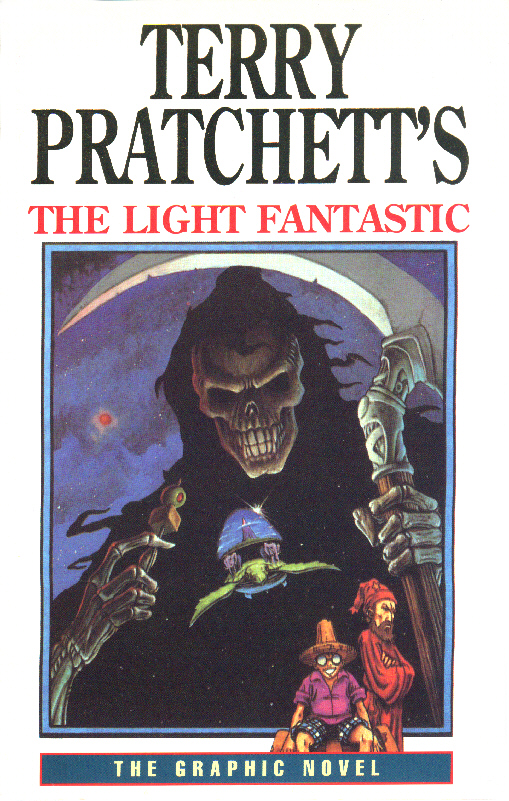
The Grim Reaper in the form of a skeletal body in a black robe, with a scythe and speaking in CAPITAL LETTERS appears for the first time in The Colour of Magic. His job is to collect human souls. Death is the servant of Azrael, the “Death of Universes”. Opposing him are the Auditors, who want nothing more than the end of all life (it’s soooo messy).
At home Death has a servant, Albert and a daughter, Ysabelle. Kittens and swans are his favorite animals and his horse Binky is with him on each collection.
Because of his fascination with humans, Death sometimes leaves his post to seek understanding. This tends to cause problems because humans don’t like to see what they do not understand and the universe likes the souls of dead people collected. The only ones who can see Death for who he is are witches, wizards, cats and children.
In The Art of Discworld Terry tells us that he has received a number of letters from terminally ill fans in which they hope that Death will resemble the Discworld incarnation (he also says that those particular letters usually cause him to spend some time staring at the wall).
While Death appears in the previous books, Mort is the first book in which he becomes a main character.
Mort’s family specialized in distilling wine from reannual grapes. (“Reannual are plants that grow backwards in time. You sow the seed this year and they grow last year.”) These growers tended to be big, serious men, much given to introspection and close examination of the calendar. Mort (the youngest son) on the other hand, was tall, red-haired and freckled, with the sort of body that seems to be only marginally under its owner’s control; apparently built out of knees.
Hopeless as he is, Mort’s father decides to take his son to the hiring fair at Sheepridge. At this hiring fair men looking for work would stand in ragged lines in the centre of the square waiting for a tradesman to hire them as apprentices. Noone seems to want Mort, but just before the clock has struck its final strike at midnight, a prospective tradesman enters the square. It is Death and Mort can see him as he really looks. Mort is hired as an apprentice and Death and Mort ride off on Binky.
And so, Mort is off on the adventure of his life learning all sorts of useful things – like how many shades of black there are and how to walk through walls. Obviously death is a theme of all of the books in the Death series. Terry treats this subject with warmth and a light heart. Death comes to us all, after all. Poor old Death is going through a mid-life crisis, and Pratchett’s gentle mocking of the phenomenon is heartwarming.
Adaptions
1994: The graphic novel, Mort: The Big Comic is illustrated by Graham Higgins.
2004: BBC4 broadcast Mort in 4 parts. Adapted for radio by Robin Brooks. It is re-sent regularly.
The terrible Auditors of Reality have been at it again. To them the fact that Death seems to be developing a personality is the sin beyond sins. So, they decide to retire Death and Death is resigned to that decision. What happens when there is no longer a collector of spirits?
Back at the Unseen University Windle Poons – the oldest wizard – is waiting for his collection by Death. He knows to the minute when this is supposed to happen. But does it? Windle Poons certainly dies, but no one shows up for his spirit, so he decides to go back into his body. This tendency seems to be spreading to other people.
Now that Death has his own hourglass with sand running down, he has decided to make the most of the life left to him. High up in the Ramtops a figure on a horseback turns up. He knocks at the door of Miss Flitworth asking for help. The stranger goes by name Bill Door. The main qualification needed is the ability to use a scythe, and one might say that Bill is excellent at the job.
Back at Ankh-Morpork Cut-Me-Own-Throat Dibbler has discovered something that he thinks will make his fortune (again). This time he has found some strange globes. When they are shaken a cloud of little white snowflakes swirl up in the liquid inside and settle on a tiny model of a famous Ankh-Morpork landmark.
And finally, magic is behaving strangely at the UU. It seems all of the Life drifting accross the Discworld is acting like water building up behind a dam when the sluice gates are shut. Needing a place to go, it manifests itself in all sorts of phenomena. The wizards decide they have to meddle with all of the strangeness.
Terry addresses fate, life, death, consumerism and relationships in Reaper Man. I’ve seen reviews that praise Reaper Man to the sky and others that despair of Pratchett’s writing this books. For my own part, I rather liked the book. It juggles the serious and the silly quite well in the jump between Flitworth and the wizards.
Adaptations
1996: 8-minute animated television adaptation produced by Cosgrove Hall Animation Studios of Reaper Man.
2012: Australian stage adaptation of Reaper Man by Pamela Munt
Mort and Ysabell married and had a baby – a little girl they named Sarah. At age six, Sarah, makes her teachers at Quirm College for Young Ladies extremely nervous. Strangeness tends to happen around the girl and she says the most bizarre things. But Susan didn’t really worry about what other people thought about her. And that continues through the years at school.
Sometimes the gods listen to the words people say. Imp Y Celyn (Buddy) said to his dad: “You don’t know anything! You’re just a stupid old man. But I’m giving my life to music! One day soon everyone will say I was the greatest musician in the world.” In retrospect, perhaps not the wisest words, but they do make for a good story. When he chances upon a pawn shop guitar and becomes possessed by it, rock and roll enters the Discworld. This means some serious hip-rolling and swooning fans. Imp’s band “Music With Rocks In” acquires a manager in Cut-Me-Own-Throat-Dibbler. He tries to do what any good manager would, cash in on the band while keeping them in the dark.
Death has decided to go on another of his walkabouts. Unfortunately, for Susan Sto Helit (Death’s granddaughter) that means leaving boarding school to carry on the family business. Having Death for a grandfather does not make for an easy life and Susan struggles to stay on top of the job. Chaos and mayhem ensue.
Part of the theme of this book is music groups and their managers in all their glory. The generation gap is also something that is experienced at the Unseen University. Ridicully’s thoughts on the younger wizards’ fascination with the new fad is typical. Idealism vs. rationality is a struggle Susan has to face. To let or not to let people die.
Adaptation
1996: An animated mini-series adaptation of Soul Music was produced by Cosgrove Hall Films for Channel 4.
“”Something” began when the Guild of Assassins enrolled Mister Teatime, who saw things differently from other people, and one of the ways that he saw things differently from other people was in seeing other people as things (later, Lord Downey of the Guild said, “We took pity on him because he’d lost both parents at an early age. I think that, on reflection, we should have wondered a bit more about that”).”
At the Unseen University the wizards are standing before a nailed shut door, wondering if they should open it – despite the sign that read “Do not, under any circumstances, open this door”. But curiosity is one of the prevailing “talents” of wizards. Ridicully is one of the more curious ones. The door is opened, and what do they find? Bloody Stupid Johnson has been at it again. A wise person would have closed the door again at this moment, but alas. There are not many wise wizards in Ankh-Morpork.
Susan Sto-Helit is enjoying a quit evening at the home she is governessing at. As usual she has put the fear of something into her employer while the children adore her. All of a sudden images formed in her mind. “A red ball … The sharp smell of snow … And then they were gone, and instead there were …
She knows right then that trouble is afoot, and its name is most likely DEATH. As you can see from the picture, DEATH does make a lovely Hogfather – travelling to all the children calling HO, HO, HO in his own unique style.
Absurdity, chaos and laughter are only some words to describe Hogfather. When the assassin Teatime is sent to kill the Hogfather, you just know you have to buckle up for a crazy ride. Christmas and all of its stranger sides (consumerism and altruism) are all examined. This is the ultimate Christmas story, one that might make you want to believe in Santa Claus again.
Adaptation:
2006: Hogfather adapted by Vadim Jean as a two part TV-serial for SKY
Nanny Ogg is called to a birthing – a very unusual one. Some years later Jeremy Clockson was enjoying dismantling and putting a clock back together again. He’d grown up as a child-prodigy at the Guild of Clockmakers since he was a few days old. Then Lady Myria LeJean with her two troll body-guards steps into his shop. Something about her bothers Jeremy. She wants him to build the most accurate clock in the world.
Miss Susan is a very strict and popular teacher with her pupils. Her main concern is to get her pupils to see things for what they are. But her popularity stems mainly for the class-trips she takes her students on – quite unusual ones that should not be possible. Her view on parents was that there ought to be an exam before they were allowed children. When the Death of Rats comes by to tell her that Death needs her help dealing with the Auditors, she sets off to do her duty.
The Order of Wen or the History Monks have a duty to see that tomorrow happens. One of the novices, Ludd, is causing problems. As a baby, he’d been raised by the Guild of Thieves. Then the monk Soto had stumbled upon Ludd and send him to the temple. There all sorts of unusual things happened our young Ludd. To solve the Master of Novices’ problems, Ludd is placed with another troublemaker – the sweeper Lu Tze. Both Ludd and Lu Tze are surprised by the other.
Going along for a ride with Pratchett is bound to be an insane experience and Thief of Time is no exception to the rule. His way of dealing with events of the day – and usually themes that are relevant no matter when or where one lives (like education, family, duty, propaganda, differences and prejudice) is admirable. It’s the warmth in his work that makes Pratchett so worthwhile to me.
For this blog, I’ve used Wikipedia, L-Space, and the above books as my sources.
Weird. Strange. These are the words that describe this book to me most. So, I had to go on the net to figure out if Philip had written about a LSD trip he’d had or whether the novel was just part of an avant-garde milieu. I can’t really say that I found a satisfactory answer, so this is what it is. While the technology in this books was dated, the book itself could have been written today by someone with the right mind-set (not mine obviously).
The Three Stigmata of Palmer Eldritch was first published in 1965. In it he explores a possible future where humanity has the same questions to deal with today: what is good and what is evil, are drugs bad, how to deal with global warming, how far do we take genetic research.
Palmer Eldritch is a business man who went for a space trip ten years ago. He has now returned and is offering the world Chew-Z (a hallucinogenic). His three stigmata are: his artificial eyes, his artificial teeth and his artificial arm.
His competitor, Leo Bulero, produces the drug Can-D which enables the users to inhabit a shared illusory world.
Barney Meyerson works for Leo as a precog and ends getting involved in competition between Palmer and Leo.
Herlighet, noe så vakkert. Det er nesten ikke til å fatte at noen kan skrive så gripende om et emne som så og si er forbudt. Veien til døden og det som skjer med den døende og de som er rundt den er ikke spesielt vakker i seg selv. Men ordene som Nikolaj bruker for å beskrive fenomenet og måten han knytter dem sammen er jommen meg vakre. Jeg ble helt fanget av denne historien om Emil og hans far Viktor, Viktor som går fra å være frisk og spenstig mann på over 80 år for så å rammes av flere slag og til slutt ligger ved dødens dør. Prossessen mellom disse to menneskene er vel verdt en bok.
Det er spesielt et par stedet jeg må nevne. Jeg ble slått av det Emil tenkte på side 76 i boka om at “han aldri hadde gledet seg nok over de behagelige og flyktige rutinene et familieliv er fylt opp av”. Slik er det vel. Vi skal alltid framover og glemmer å glede oss over her og nå, i de små stundene. I alle fall har jeg det slik.
Neste sted i boka som jeg vil nevne er innlegget som Emil sender til avisen kalt: Gjør opprør, oldinger (s 156-159). Dette er såpass bra at det burde få plass i det politiske miljøet. For det er ingen tvil om at eldre har blitt restene man gjemmer bakerst i kjøleskapet. De skal jo bare kastes ut, så det er ikke så veldig viktig med dem.
Star Born was written in 1957 and is the second novel of the Astra series. As such, you might expect it to be extremely dated. That’s the good thing about Andre Norton. Her focus is on the characters not on technology. Not that it would have mattered in the end, not really. I found Star Born among my books and discovered that I hadn’t read it. Shocker, but a pleasant surprise.
Our two main protagonists in Star Born are Raf Kurbi from Terra and Dalgard Nordis from Homeport. Like so many of Norton’s characters a rite of passage is what starts off the book.
Dalgard is the descendant of Terran escapees. Many generations ago they came to the planet Astra. There they found a race of people who communicated through telepathy. Telepathic communication is another of Norton’s favorites. These two groups learn to live next to each other in peace and with time the Terran stock evolve their telepathic abilities to the extent that they can communicate with the telepathic creatures on Astra. Dalgard is traveling with Sssuri, a member of the Merfolk, and his knife-brother. Together they are on a journey of exploration – rite of passage.
One of the deserted bases of “Those Others” is the goal of the two travellers. “Those Others” are the ancient enemies of the Merfolk and other creatures on Astra. In olden times the Merfolk were enslaved by “Those Others” but through rebellion they managed to hit the Others hard.
Star Born switches between Dalgard’s story and Raf’s. Raf has come from Terra along with a crew. Four of them set out to investigate some ruins that they had seen during landing. It turns out that they meet up with the Others. Raf is uncomfortable about this meeting. For some reason his guard is up. When they go with the Others to explore one of the ruins, they come upon Dalgard. Now the stories blend together and we get to see what happens when two young men hold the fate a world in their hands.
The newcomers from Terra display all of the classic symptoms displayed in meeting with aliens. Meeting as described in science fiction anyways as I do not know of any real life meetings with aliens. Fear, prejudice, and violence go together it seems in such situations.
Young adults are probably Norton’s target group. Most of her books are written for them. That is clearly reflected in the language. There is no swearing, graphic violence or sex scenes. Quite refreshing in a sense. While Star Born isn’t one of my favorite Norton books, it was an easy read.
“NOTE: This title has entered the “Public Domain” and is therefore open to any publisher that wants to print it. Many “Print on Demand” publishers have started to release this title. This site has chosen to ignore these published versions and only concentrate on estate sanctioned materials.”
The Project Gutenberg has a complete version of Star Born for free – for those who are interested.
Star Born has been translated to:
German: Flammen über Astra
Russian: Звездная стража [Star Guard]
Russian (in combination with The Stars Are Ours!)Астра [Astra]
As you can see from the above map, the Discworld consists of many countries and continents. Each country has its own culture and religion. From my reading there are three books in Terry Pratchett’s Discworld series that are specifically about religion and culture. These three stories are about the countries of Djelibeybi (Pyramids) – try saying it, Omnia (Small Gods) and Zlobenia vs. Borogravia (Monstrous Regiment).
Pyramids consists of four books: The Book of Going forth, The Book of the Dead, The Book of the New Sun and The Book of 101 Things a Boy Can Do.
As a young boy Pteppic was sent to Ankh-Morpork by his father, King Teppicymon XXVII. The Assassin’s Guild had accepted him as their student. The reason they had chosen the assassins’ school was because it offered the best all-round education in the world.
At home all Teppic had was a kingdom two miles wide and onedred and fifty miles long. Its stronger neighbors only tolerated their existence because anything else would lead to war between the two countries.
Assassin profile By Cathy
Djelibeybi’s days of glory were over. Now all they had to attract visitors was pyramids – enough pyramids to bankrupt the country.
Teppic’s stay was Ankh-Morpork is a success. He survived his finals (assassin’s school finals can be quite deadly) through knowledge and a great deal of luck. The test was to arrive alive and well at a site and then kill someone. He passed by accident.
Then Teppic’s father dies and Teppic becomes King Teppicymon XXVIII and has to go back to Djelybeybi. When he gets there he discovers that the High Priest Dios pretty much runs the country. Any change that Teppic wants to bring in to Djelibeybi, like plumping, is fought. All Teppic is supposed to do is get a consort and bring an heir into the world. Most importantly, a new pyramid has to be raised and his father’s pyramid has to be capped.
Pratchett plays with time and space in Pyramids. The pyramid of Teppic’s father has become so large that upon capping, Djelibeybi comes out of alignment with the rest of the disc. Chaos ensues in Djelibeybi as the dead come alive and the kingdom’s various gods want a part in ruling the kingdom. The power of belief is strong on the Discworld. There gods gain power through their believers. If the people believe the pharaoh is a god, then the pharaoh has godlike powers. Egyptian mythology along with Christianity get their fair share of Pratchett’s attention.
1989: Winner of BSFA
SMALL GODS (1992)
On the Discworld there are gods for everything. On Wikipedia you’ll find a list over the gods and their function. They come in all shapes and sizes. Lack of belief decreases power while belief increases the power of the gods. If they have no believers, the gods are small gods crying out for belief.
History has to be observed. Otherwise it’s not history. It’s just … well, things happening one after another.
This is why history has its own caretakers making sure things happen as they should. These caretakers live in a hidden valley in the Ramtops. The 493rd Abbot sends his most experienced monk, Lu-Tze, to Omnia to make certain that nothing messes up the course of history.
Brutha and Om By Thaumivore
In Omnia the time of the 8th prophet was imminent. The Church of the Great God Om has “very punctual prophets. You could set your calendar by them, if you had one big enough.” Brutha, the novice monk hears a voice. This voice is trying to get his attention. Due to a lack of belief Om finds itself stripped of power and has therefore become one of the Small Gods. When Brutha discovers that the voice he has been hearing in his head belongs to a small tortoise, Brutha is astounded. No less astounded does he become when the tortoise wants to see the High Priest. A mere novice will never be allowed into such august company.
Waiting for Vorbis By danseusenoire
Vorbis, the Deacon, is the head of the Quisition. Their job is to do all those things that need to be done that other people would rather not do. Their methods of garnering information were like the Spanish Inquisition’s, rather unpleasant. Along with General Iam Fri’it of the Divine Legion and Bishop Drunah of the Congress of Iams Vorbis is planning on forcing the word of Om on the Ephebians. Once Ephebe has been converted, the way onward to Djel and Tsort lies open.
Religion and its inquisitions, philosophy, and the battle between reason and belief end up on the playground of Pratchett’s satiric hand. Terry gives us a look at how some people seek power to the extent that they will do anything to gain it.
Some gods are crazier than others. In Borogravia Nuggan passes decrees that are increasingly bizarre. Borogravians are ruled by the Abominations – a list of taboos: no garlic, no cats, ginger hair is out and so are six-buttoned shirts, chocolate and the color blue. You can see that being a Borogravian can be a challenge for the most devout. Due to these Abominations Borogravia is constantly at war with their neighbors.
Even though women aren’t allowed pants, Polly dons them, cuts her hair short and sets off after her brother Paul, who has gone missing in the Borogravian army. She needs him back at the family pub so the pub won’t be passed on to their terrible cousin if their dad dies. All she has to do is join the Borogravian army.
French cover art by Marc Simonetti
The recruiting sergeant and his corporal assistant Strappi give Polly (or Oliver Perks as she calls herself) a shilling to kiss and a picture of the queen. Along with Polly, several other recruits join up: a vampire, one troll, an Igor and humans. Strangely enough all the of the recruits have very light voices. The tiny regiment makes their way toward the keep where the enemy is based. Guess who we get to meet there.
Commander Samuel Vimes has been sent to Zlobenia to figure out how to deal with Borogravia. To Vimes Borogravia is just another criminal that has to be dealt with as such, and he is going to treat Zlobenia and Borogravia as he would two scrappers back in Ankh-Morpork.
As you can probably imagine the main themes of Monstrous Regiment are the battle between the sexes and repressive religions. Deprivations caused by a war-happy country are only all too apparent in this story. Along with young males, food and clothing are scarce. We don’t have to look too far back into our own histories to see how all of these themes are sadly relevant for us.
The characters in Monstrous Regiment are delightful. The lengths these women go to in order to hide their gender is funny (socks in pants etc.). Their reactions to discovering the true identities of their compatriots and the difficulties that come with hiding their gender create weird scenes (especially in relation to Lieutenant Blouse – an incredibly inept soldier).
ADAPTATION
2004: Monstrous Regiment adapted for stage by Stephen Briggs
2011: Monstrous Regiment trailer fanfilm by Michelle
Witches (usually women) are a force to be reckoned with on the Discworld. Nowhere near as flashy as the wizards (usually men), these women often rule their villages with an iron fist and a whole lot of headology. Pratchett describes headology as:
a witch’s way of magically setting fire to a log of wood consists of staring at the log until it burns up from pure embarrassment. As a result it is less energy intensive, which means that a witch can do more than a technically equally powerful wizard. (Discworld Wiki)
Now, imagine headology turned on people. That might frighten a few into behaving who might not otherwise behave.
Granny Weatherwax by Paul Kidby
The strongest headologist of the “good” witches is Granny (Esmeralda) Weatherwax. Her sister, Lilith (below), happens to be one of the “bad” ones. In a world supposedly without a hierarchy, Granny is the unspoken ruler of the witches. In the village of Lancre there is absolutely no doubt she is the boss. That is until an attempted rebellion be some wannabe witches (below). Granny is a dream of a witch. In the trio of Lancre her role is the role of the Crone (although noone would actually call her a “Crone” to her face – no one with their senses intact). Granny’s special ability is to see reality clearer than the rest. Pratchett explains that this is a manner of seeing the world that does not lie to itself including an ability to question not only the world but oneself again and again and again. Young Tiffany Aching seems to be following in Granny’s “footsteps” in this regard (below). What one needs to realize about Granny Weatherwax is that she is always there for you when you need her. Her one weak spot is her cat: “gerrofoutofityoubugger!” (generally called “You”). Considering who the owner of “You” is, I find it easy to believe that she is the only creature who has gotten the better of Greebo. While younger and much smaller than Greebo “You” terrifies him – inasmuch as he is able to be terrified of anything/anyone.
Nanny Ogg and Greebo by Visente
Greebo belongs to Nanny Ogg. Nanny is probably the only person alive who thinks of Greebo as a big softy.
To Nanny Ogg he was merely a larger version of the fluffy kitten he had once been. To everyone else he was a scarred ball of inventive malignancy.
Nanny is the Mother of the threesome in Lancre. Now there is a lady I wouldn’t mind meeting. Her sense of humour is broadminded, raunchy and hilarious. At the same time she rules her brood and their spouses with something akin to terror with a dash of love mixed in. They adore her yet fear her – at least her daughters in law. Nanny Ogg saves Granny from herself when that is needed and functions as Granny’s grounding rod. Not only that but Nanny lightens the mood when Granny feels overwhelmed or as if the people around her are too stupid for their own good. While Granny is the one who scares people Nanny is the one who woos them – until it is time to stop wooing. Nanny’s final job in the trio of witches is to prod Magrat in the direction Nanny feels Magrat ought to go without being as truthful about it as Granny tends to be.
Meek, Mild Magrat by MJ Oboe
Magrat Garlick is an interesting character. She happens to be the “Maiden” of the Lancre coven. At first glance Magrat is a young ditz with a heart of gold and a great belief in crystals and folk wisdom.
Witches aren’t like that. We live in harmony with the great cycles of Nature, and do no harm to anyone, and it’s wicked of them to say we don’t. We ought to fill their bones with hot lead.
But as you see, Magrat has another side as well – like we all do. In Lords and Ladies that side shows up in all its glory.
Unlike Granny Weatherwax and Nanny Ogg, Magrat is not very good at headology. Her forte lies in research and development of herbs and cures (and her crystals of course). She struggles with her self-confidence, but Granny and Nanny make up for that by having an abundance of confidence in themselves. It can’t be easy being the youngest witch when the two older ones in your coven have such strong personalities.
Tiffany Aching and the MacNeegles by Alda Rana
Young Tiffany Aching down down on the Chalk (mountain) is a whole different type of character. She has to take over the responsibility for her mountains when her grandmother (the local witch) dies. The only possible candidate is Tiffany Aching. At 9 her ability to ask uncomfortable questions and her quest for knowledge points to her potential as a great witch down the line. But Tiffany isn’t really worried about the whole witch thing nor is she caught up in the need to be one. Instead she happens to have the gift of making cheese. I know, strange gift for a witch one might say. But witches are practical people who prize such abilities over other more wizard-like gifts. In fact, Tiffany excels so much that one of her cheeses has come alive and become and excellent mouser. Its name is Horace. She is friends with the Nac Mac Feegles, a feat not managed by many.
These four witches are my favorite ones. There are many more that make appearances in Pratchett’s Witches’ series, but Granny, Nanny, Magrat and Tiffany get into so many incredibly weird and funny situations that its impossible not to have them as favorites. The Witches’ series consists of Equal Rites, Wyrd Sisters, Witches Abroad, Lords and Ladies, Maskerade, Carpe Jugulum, The Wee Free Men, A Hat Full of Sky, Wintersmith and I Shall Wear Midnight. As usual Wikipedia gives detailed information about these women, Pratchett’s page is a given source and L-Space has fun details.
Eskarina by Hannah Crosby
EQUAL RITES (1987)
As I stated at the beginning of this post most witches are women and most wizards are men. There are exceptions. Some of those exceptions start with mistaken identity.
Up in the Ramtops a wizard comes awalking using his staff as a guide to where he is going. Bad Ass, the village, is his lucky destination. A child is being born, the eight son of an eight son.
Drum Billet, our wizard, knows he is about to die. Wizards and witches get to have that knowledge. He gives his staff to the son of the smith and dies. One problem. The eight son of the eight son just happens to be a girl, Eskarina Smith. A wizard girl. Oops.
Good thing for young Eskarina Smith (Esk to her friends) that Granny Weatherwax was the midwife that saw her into the world. When Eskarina is 7 her mother decides to send her along with her brothers to Granny. Strange things seem to be happening around the girl whenever she is upset.
When they get to Granny’s, Granny Weatherwax is lying on her bed looking quite dead. Being a witch she wasn’t, she was only out borrowing. Eskarina feels Granny’s undeadness and goes downstairs waiting for Granny to return (while her brothers run off terrified). When she hears loud noises upstairs, even she becomes terrified, runs off, falls down and is met by the staff (yes! the staff came to her).
Granny knows something has to be done, and right away. She decides to take her to the wizards school in Ankh-Morpork, the Unseen University, and enroll the young Eskarina. But getting the girl into this all-male school is going to prove more difficult than Granny had thought.
Adaptations
BBC4 dramatisation of Equal Rites as serial on Woman’s Hour
The future king with the witches
WYRD SISTERS (1988)
“The night was as black as the inside of a cat. It was the kind of night, you could believe, on which gods moved men as though they were pawns on the chessboard of fate. In the middle of this elemental storm a fire gleamed among the dripping furze bushes like the madness in a weazel’s eye. It illuminated three hunched figures. As the cauldron bubbled an eldritch voice shrieked: “When shall we three meet again.”
Here we have the Discworld’s version of MacBeth‘s witches. The mother, the crone and the other one. Or as other people know them, Granny Weatherwax, Nanny Ogg and Maigrat.
King Verence of Lancre is making a discovery. He is about to become a ghost, unable to stop the kidnapping of his child. By a freak accident the child ends up in the arms of Granny Weatherwax and she decides to take a hand in playing with the future and sends the baby off with a troupe of actors.
Fifteen years later.
Words have power. In the “good old days” the jester was the only person at a king’s court who could speak his mind without fear of the consequences (supposedly). These days we have the media. But words have power. We might remember an event or something about the people involved, but as the story gets told and re-told our perception of the event changes. Pratchett’s way of pointing a light at our perceptions and prejudices is a wonder.
Adaptations
1997: Wyrd Sisters was produced as a two-part animated television series, produced by Cosgrove Hall.
House of Gogol by Brer Anansi
WITCHES ABROAD (1991)
“This is a story about stories.
Or what it really means to be a fairy godmother.
But it’s also, particularly, about reflections and mirrors.”
On the Ramtops there was only one witch who was not attending the Sabbat. Desiderata Hollow was making her will. Desiderata is a fairy godmother to princess Emberella. The other one was Lilith (who just happens to be Granny’s sister).
In Genua, the magical kingdom, Lady Lilith de Tempscire loved the idea of travelling through mirrors. After speaking to Desiderata she was glad that there would only be her and the voodoo woman left to fight over Emberellas’s future.
At Lancre the fairy godmother wand is delivered into the hands of Magrat. The note from Desiderata reads:
“I niver had time to Trane a replaysment so youll have to Do. You must goe to the City of Genua. I would of done thys myself only cannot by reason of bein dead. Ella Saturday muste NOTTE marry the prins. PS This is important. PSPS The those 2 Olde Biddys they are Notte to come with Youe, they will onlie Ruine everythin. PSPSPS It has tendincy to resett to pumpkins but you wil gett the hange of it in noe time.”
With this bit of headology, Desiderata guarantees that Nanny (with Greebo) and Granny decide to accompany Magrat on her journey to Genua. As the threesome moves through the lands on their way to Genua, they manage to upset quite a few people. In typical tourist style they are loud and obnoxious and wonder why these people cannot speak properly. But there is also magic battle and voodoo fun to be had.
Adaptations
1999: Witches Abroad stage adaptation by Aaron Birkes played at Aberystwyth Arts Centre Theatre
Lords and Ladies by Marc Simonetti
LORDS AND LADIES (1992)
Magrat, Nanny (with Greebo) and Granny are back in Lancre after being absent for eight months. That worried Magrat. Was the kind-of-agreement between her and Verence still up and running.
Upon her return, Magrat was informed by King Verence that they were to be married at midsummer and that all of the arrangements have been made. No proposal, just a statement. He is the King you see, and Magrat a subject.
A stone circle up in the mountains of Lancre keeps the Dancers in. That is if they are not let out. When people forget about the Dancers, it is an easy matter to lure them into the stone circle, leaving them quite dead.
Esme Weatherwax and Nanny Grogg come to the Dancers and discover that someone has been dancing. Diamanda, Perdita and that girl with the red hair decided that they should teach themselves witching in the absence of the older ladies. About six of them have been going up into the mountains every full moon dancing. When Granny goes borrowing she discovers that there is some kind of mind loose in the kingdom – Elf.
Mustrum Ridicully of the Unseen University worrying about baldness and thinking back to the good old days when he went walking with Esme. When he is invited to the wedding of King Verence and Magrat, Ridicully decides it is time to up into the mountains. With him go the Librarian and the Reader in Invisible Writings, Ponder Stibbons.
1995: Lords and Ladies stage adaptation by Irana Brown
2005: Lords and Ladies German feature length fanfilm. I’ve only been able to find the link to the trailer. So if anyone has a link to the full-length movie, please send.
MASKERADE (1995)
In his dedication Pratchett writes:
“My thanks to the people who showed me that opera was stranger than I could imagine.”
What is Pratchett going to make fun of this time you might ask. Well, the answer is The Phantom of the Opera.
Mr. Goatberger, the publisher, has been sent the manuscript to a book. It wasn’t even on proper paper, and he was filled with apprehension. Then he started reading, kept on reading, and called in his assistant, Mr. Cropper. He began dreaming “the dream of all those who publish books, which was to have so much gold in your pockets that you would have to employ two people just to hold your trousers up.”
Agnes Nitt has come to the Opera House to audition for a part. She might not be the greatest looker, but she has a voice to kill for. When the time comes to select the players, Agnes gets stuck singing for the goodlooking Christine.
Gytha Ogg gets a letter addressed to “The Lancre Witch”, bringing Granny’s temper up a bit. Nanny’s book “The Joye of Snacks” has become a hit, and it turns out the publisher has been a bit complacent about paying Nanny her dues. In fact, he owes her about four or five thousand dollars. They decide to take a trip to Ankh-Morpork and stir up the town a little. That, and convince Agnes to come back to Lancre as the maiden witch. They bring Greebo, Nanny’s cat of terror. His part in this story is amazing.
Reading Maskerade with the Phantom of the Opera playing in my head at the same time was great fun. Terry Pratchett has really nailed it this time.
If you want and incredibly detailed and extensive analysis of Maskerade, I recommend Bewitching Writing by Dorte Andersen at Aalborg University. It seems I’m not the only fan of Terry.
1998: Stephen Briggs stage adaptation of Maskerade.
2006: A stage adaptation of Maskerade by Hana Burešová and Štěpán Otčenášek (partly using adaptation by Stephen Briggs) premiered in Divadlo v Dlouhé, Prague. Pratchett attended the closing performance five years later.
The Carpe Jugulum Cast by Vic Hill
CARPE JUGULUM (1998)
Into the country of Lancre comes an army. An army made up of very small blue men, no higher than six inches tall. Little blue men nobody messes with. Men whose favorite pasttime is fighting anything and anyone.
Not too far from Lancre, four vampires come accross an invitation to the name ceremony of the child of Queen Magrat and King Verence. It is a dangerous thing to invite vampires into your home, whether that be house or kingdom. Sort of gives them free rein. Count Magpyr, his wife and their two children enter Lancre with their servant Igor.
Granny Weatherwax gets called away to a birthing that is in trouble. When she gets there, she has to decide who to save, mother or child. Very few people could make such a choice without trying to share the responsibitility with someone. Flying back towards the castle she notices mist is on its way from Uberwald.
The dwarf Casuanunda is having to resort to highway robbery. But robbing that black coach is not very tempting when he sees how another highway robber is treated. Instead he goes on to Lancre where he has a few aquaintances.
In this novel Pratchett plays with the idea of split personality, references vampire movies of the day, pyramid schemes and good and evil through the Phoenix vs. vampire myths. Pratchett managed to give this novel a slightly creepy feel.
THE WEE FREE MEN (2003) (Skrellingene – 2004) – Locus YA winner 2004
We now leave Lancre behind (for the most part) and enter the world of the Chalk and Tiffany Aching. She is nine years old when we meet her for the first time in The Wee Free Men.
My first meeting with Tiffany (or Petronella in Norwegian) was in Norwegian. I thought I would introduce my youngest to Pratchett and this new book on the market seemed like the thing to read. Was it ever.
When we meet her she is lying by the river tickling the trout on their backs. She liked hearing them laugh. With her on this expedition was her brother Wentworth (Steingrim in Norwegian). Like all little kids he was messy and sticky but easy to be around.
I’m sure you remember the little blue men in Carpe Jugulum. Here they come again, trying to fish. For some reason Tiffany was able to see them. Only witches should be able to see the blue terrors.
Grandma Aching has just died and Tiffany thinks that she might have been a witch. The little blue men turn out to be the Nac Mac Feegle. Since Grandma died they are on the lookout for a new “hag”. Since Tiffany sees them and is able to control them (somewhat) the Nac Mac Feegle tell Tiffany that she is their hag.
They need help for their Kelda (mom). She is ill. Tiffany comes with them to their hole in the ground and checks out things for the boys. Sadly, the Kelda is dying (of old age) and Tiffany needs to be there for the boys until a new Kelda can be found.
When Tiffany’s baby brother disappears, she now has allies in her search for him. The search brings Tiffany and the Nac Mac Feegles into a strange world where Tiffany’s hag-hood is proven.
My youngest son laughed his head off and was really spooked at times. An excellent children’s book in my opinion. They won’t get all the references, but who cares, I probably don’t either. What’s really great about the Tiffany Aching series, is that we get a look at Tiffany’s growth from the beginning. Terry has created a wonderful character in our young Tiffany.
There is a possible film adaptation of The Wee Free Men by Rhianna Pratchett (Terry’s daughter) in the inning.
More laughter came for my son in “A Hat Full of Sky“. Those Nac Mac Feegle names are genius. I read them in Norwegian (in one of our dialects of course) and I couldn’t help myself. I giggled along. Pratchett has so many of those giggle moments and then all of a sudden a belly-laugh comes along. All part of his godhood status for me I guess.
Tiffany is now an apprentice to Miss Level. On their way there, Tiffany and Miss Tick are attacked by a hiver (powerful, dangerous creature). At the cottage of Miss Level, Tiffany discovers that Miss Level is in fact two-bodied and that there is a ghost cleaning her house. During her stay Tiffany has to fight the Hiver, but fortunately she does not have to battle alone all of the time. Help is to be found in many places.
We get a great look at the life of an eleven year old torn out of her old life, having to go to boarding school (so to speak). Everything is new. Not everyone is nice. On top of that she has the Nac Mac Feegle and the Hiver. Growing up must come quickly then. Pratchett does an excellent job at looking at the development of Tiffany’s identity. She emerges as someone who has integrity and the willingness to question herself. She’s actually a pretty good role-model for young people.
By now I think we’ve seen that Tiffany is not the kind of girl who is ruffled by just anything. It takes a bit more than normal to get her uncomfortable. Being wooed by the Wintersmith is one of those things. In “Wintersmith” Tiffany does a foolish thing. At the dark morris dance welcoming winter, Tiffany finds herself drawn into the dance. Ooops. Wrong person.
This means the Wintersmith (who brings winter) meets Tiffany rather than the Summer Lady and is enchanted by her. Double oooops.
All of a sudden green stuff sprouts underneath Tiffany’s feet and the Cornucopia appears. Tiffany seems to have taken on at least one of the Summer Lady’s abilities. Her friends Roland, Nac Mac Feegles and Granny Weatherwax have to help Tiffany get out of her new bind.
While her new teacher, miss Treason, is kind of creepy Tiffany manages to learn a lot from her, not least all which color of cheese she does not like.
I’ve seen from commentaries that some people think Wintersmith too childish. Sometimes I wonder if I’m reading the same books as other people or if I’m expecting different things from the books. I find all of the characters delightful, even crazy old Treason. Terry’s writing is up to its usual standard and as a brainwashed cultmember of the Pratchettian cult I’m sold.
OK. Now we come to the last book in the Witches and Tiffany series: I Shall Wear Midnight. For some reason I found it poignant. You know how sometimes you get a feeling of being thankful that you’ve read a book? Well, Midnight and Snuffare both Pratchett books that gave me that quiet feeling. I was moved.
Tiffany is now grown up (15) and is working the Chalk as its only witch in a climate of growing suspicion and hate.
When the Baron of the county dies, she is accused of killing him. Tiffany travels to Ankh-Morpork to inform Roland of his father’s death. As usual the Nac Mac Feegles follow Tiffany into town.
Tiffany’s fight this time is against the Cunning Man. Once again we get a battle between the almost good against the practically evil.
My love for this book could also be due to its darker tone. This darker tone fits the books well.
Rincewind is one of the funnest and funniest characters of the Discworld. In spite of the
Rincewind is a self-acknowledged coward whose running abilities fit with his cowardice.
He was not the brightest student at the Unseen University. In fact the other wizards claimed that Rincewind is “the magical equivalent to the number zero”. He does have one magical formula in his head – one of the Eight Great Spells. Unfortunately, the formula must never be used.
Rincewind is both the luckiest and unluckiest of characters. Lady Luck is kind of on his side, and Rincewind’s ability to frustrate all of Death’s plans are next to none. In fact, Rincewind’s hourglass of life is the only one that is not hourglass shaped.
Rincewind’s constant companion is the Luggage, a pearwood chest that walks and acts as Rincewind’s bodyguard. During his many unexpected trips to fairly unusual places, Rincewind has great need of this protection.
The first of the Discworld books is The Colour of Magic. In it Terry Pratchett set out to make fun of the many cliches in fantasy and science fiction. When I first started reading The Colour of Magic, I hadn’t gotten that part of it. But when I went back to it with this necessary knowledge, I laughed (well, giggled) a whole lot.
“In a distant and second-hand set of dimensions, in an astral plane that was never meant to fly, the curling star-mists waver and part …”
Right off the tone is set. I must have been terribly dense not to have seen the humour my first time through, but there you are – once an airhead always an airhead.
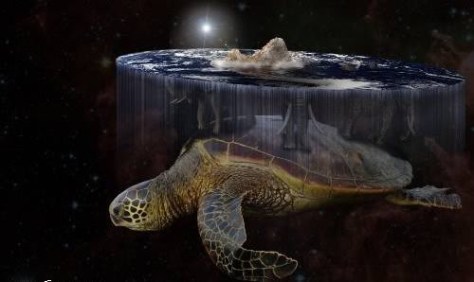
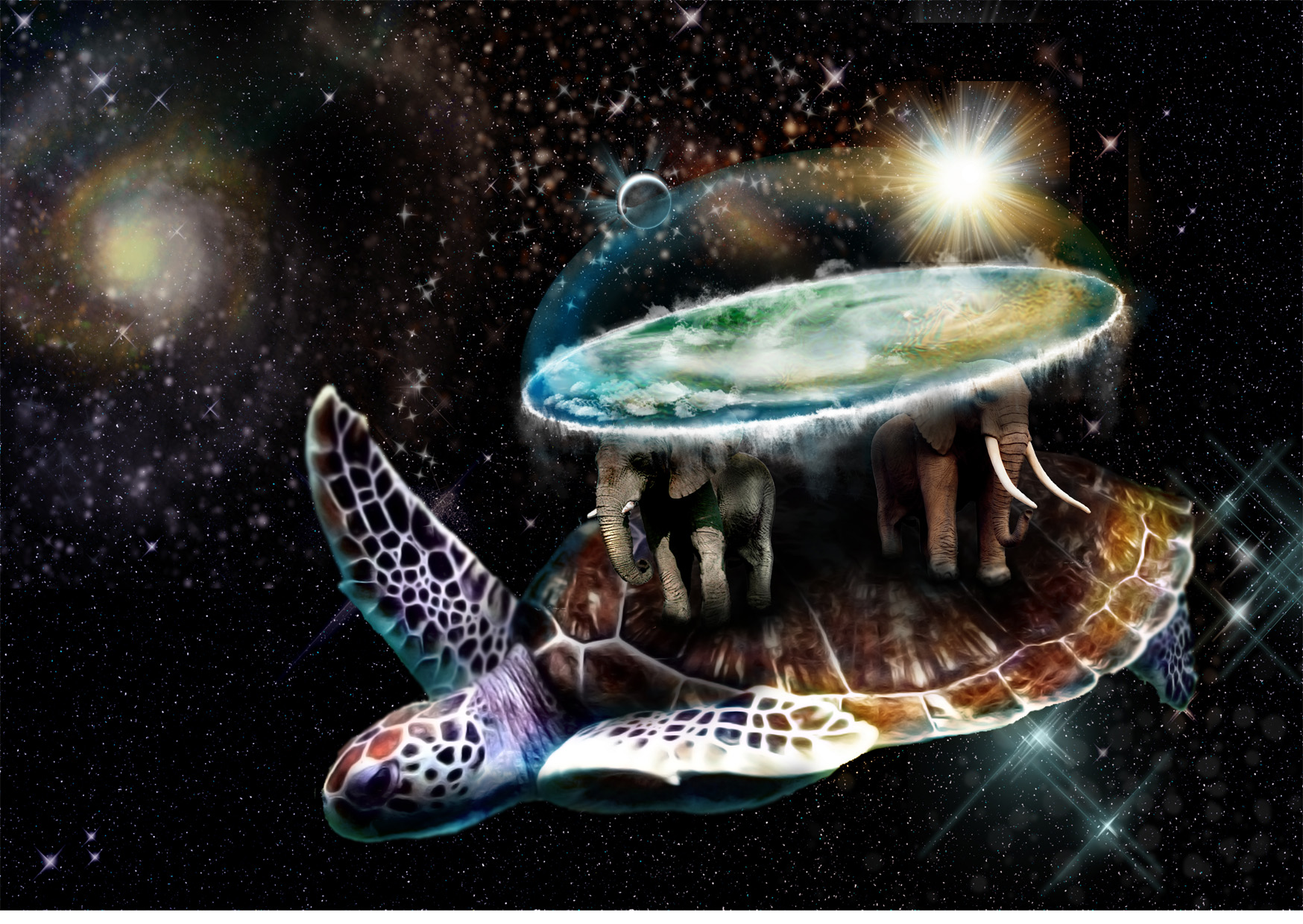
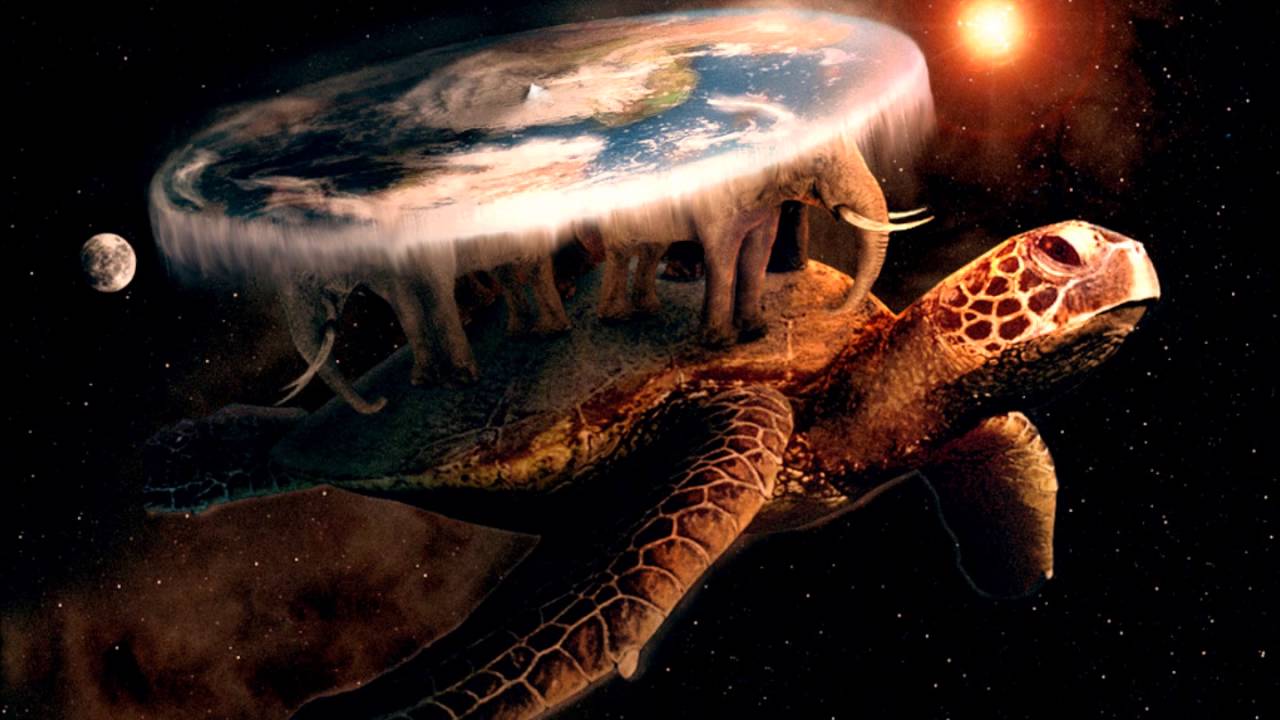
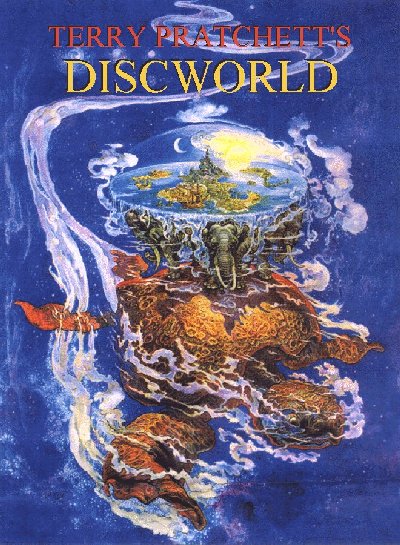
And so we get our first look at A’Tuin, upon whom the Discworld rests. Now that Pratchett has shown us the glory of his world, it is time for him to give us the story of Rincewind – one of many.
Rincewind meets Twoflower in the Broken Drum. Twoflower is a tourist from the Counterweight Continent. Noticing the stranger’s language problem, Rincewind helps the man and is hired as Twoflower’s guide. Recognizing potential trouble, Rincewind tries to flee the city, but is caught by the Patrician who orders him to protect Twoflower.
Through a series of mishaps, Rincewind and Twoflower end up having to flee Ankh-Morpork. From there their journey takes them into and out of the embrace of Death time and again. They are hunted by trolls, bears, demons, dragons and believers.
A graphic novel, illustrated by Steven Ross and adapted by Scott Rockwell, was published by Corgi in 1992.
The Mob Film Company and Sky One have produced a two-part adaptation, combining both The Colour of Magic and The Light Fantastic broadcast over Easter 2008.
In 1986 Piranha Games published The Colour of Magic as a text adventure game developed by Delta 4.
A video game titled Discworld: The Colour of Magic was released on mobile phones in 2006.
The Light Fantastic begins where The Colour of Magic left off. Rincewind and Twoflower are once again trying to survive one of their stunts.
Back at the Unseen University in Ankh-Morpork something really strange is happening. One of the extremely dangerous magic books is beginning to leak and the wizards are terrified of the consequences. When the leakage causes the UU to be flooded they realise something has to be done.
The book with the Eight Great Spells decides to take matters into its own pages, and rescues Rincewind and Twoflower from their predicament. That does not mean that Rincewind, Twoflower and the Luggage are out of trouble. Indeed, druids, mercenaries, Cohen the Barbarian, Death, the Four Horsemen, trolls, crazed villagers, a magical shop, Things all have to be encountered before they can go home.
If you’ve read a bit of English litterature from the pre-1986 era, you’ll probably recognize the references made in The Light Fantastic. But even without that knowledge, it’s easy to see that Pratchett makes fun of religion, philosophy, insurance and myths.
A graphic novel illustrated by Steven Ross and Joe Bennet, was published by Corgi in 1993.
The books are full of references. If you go to L-Space you’ll find annotations, quotations, essays and all sorts of goodies on all of the Discworld books.
A sourcerer is the eight son of an eight son of an eight son. A wizard squared. A source of magic.
Isplore (father of the sourceror) refuses to go with Death when it comes. Instead he decides to steer his son’s destiny by imbuing his wizard’s staff with his spirit. Poor little Coin. His future has already been decided for him by his father.
Back at the Unseen University a new Archchancellor is to be “elected”. Rincewind and the Librarian are working with the books in the library. The books and shelves are restless. As he leaves the library, he notices a couple of other disturbing event. Ravens are cawing and all the vermin is leaving the Unseen University. Rincewind tries to warn the bursar, who unsurprisingly does not believe him.
When he is unable to get the administration to believe that something is afoot, Rincewind does his usual desperate disappearing act. He and the librarian withdraw to the Mended Drum (used to be the Broken Drum).
Parents! What can you do about parents? No matter how much you fight them, somehow they find a way to impose their will. In Sourcery, you’ll see quite a bit of Ipsilore trying to do just that to Coin. Holding all that power is quite a challenge for a boy trying to find his way in the world. His choices will make or break the Discworld.
“Death fancied that he heard, very briefly, the sound of running feet and a voice saying, no a voice thinking oshitoshitoshit, I’m gonna die I’m gonna die I’m gonna DIE!” When he focuses his gaze, all he says is: “OH, … IT’S HIM”. Yes, you’ve guessed it. Death’s favorite non-dier – in fact the only one – Rincewind.
In Ankh-Morpork, something invisible is running through the town, yelling at the top of its voice. The wizards try the Rite of AshkEnte (calling on Death) to find an answer. He tells them that Rincewind is caught in the Dungeon Dimensions, trying to get back home. The likelihood of that happening is a million to one. Hello! This is Rincewind we’re talking about.
What happens then. Well, Rincewind wakes up in a regular human sort of room caught in a magic circle. In fact, he is caught by a pimply teen-aged boy with a fake beard. This kid wants to have mastery of the kingdoms of the world, meet the most beautiful woman who has ever lived and wants to live forever.
He is about to get all wishes fulfilled, but not in the way he expected and both Eric and Rincewind may end up regretting that the conjurations was performed. What Eric Thursley will end up knowing all too much about is deception, bureaucracy and stupidity.
As the gods are playing games, with Fate winning as usual, the Lady turns up. She wants to play Mighty Empires with Fate, letting the dice roll deciding whether fate of luck will rule this time.
Mustrum Ridcully, Archchancellor of UU is called to see the Patrician of Ankh-Morpork. A Pointless Albatross has turned up with a message from the mysterious Agatean Empire, requesting the “Great Wizzard”. Vetinari wants Ridicully to send the Great Wizzard to the Counterweight Continent by tea-time, leaving the Archchancellor six hours to figure out who this wizzard is and get him on his way. Oh dear.
We all know who this “Great Wizzard” is, and Rincewind ends up in the Agatean Empire. Unfortunately Rincewind’s wizardly talents seem to have grown in the telling and he seems sadly wanting for the role Agatean people want him to fill. He is supposed to step in as a leader of the revolution. Well, the Agatean people are in for a surprise and so is Rincewind. Of all the people Rincewind should meet on the Counterweight Continent, Cohen the Barbarian and his compatriots turn up.
It’s winter and cold season in Ankh-Morpork. At the Unseen University the Librarian has caught a bug. Each time he sneezes, he changes shape – into anything. The wizards are at a loss, and the only one who has been able to communicate effectively with the Librarian is, you guessed it, Rincewind.
Rincewind, however, is somewhere else. At the moment he is digging a hole – more or less looking for opals. The other opal miners know him as Strewth. When Strewth uncovers something that looks like a giant opal, the other opal-miners cheer. Then the opal cracks open and lots of little feet appear.
Back at the Unseen University the wizards are their usual bumbling selves looking for Rincewind. Searching has uncovered a window to somewhere delightful. A beach with clear blue water and lies behind a window in the room of the Egregious Professor of Cruel and Unusual Geography. Since they are wizards they climb through. When Mrs. Whitlow arrives with sandwiches, she closes the window and they are all stuck. Now they have to find their way back, somehow, back to the future.
Rincewind/Strewth and the luggage are off on their adventures. One of the funniest ones is a shearing episode with our talented Rincewind. There is also a delightful one that reminds me an incredibly of Priscilla, Queen of the Desert.
The last installment in the Rincewind series is The Last Hero. My copy has been illustrated by Paul Kidby and is beautiful in a Discworldian manner. Vetinari receives a message from the Agatean Empire.
Cohen the Barbarian has set out on a quest with the Silver Horde. “Fingers” Mazda stole fire from the gods and gave it to mankind, and was chained to a rock to be torn open daily by a giant eagle as punishment. As the last heroes remaining on the Disc, the Silver Horde seek to return fire to the gods with interest, in the form of a large sled packed with explosive Agatean Thunder Clay. They plan to blow up the gods at their mountain home, Cori Celesti.
Vetinari organises an effort to stop the Horde and Leonard of Quirm (Vetinari’s tame inventor) to design the Discworld’s second known spacecraft to slingshot under the Discworld and back around the top, landing on Cori Celesti. Rincewind, Carrot and the Librarian are slung off to save the world.
Every once in a while I come across an author that catches my imagination and my love on a great many levels. Terry Pratchett is one such author. He imbues his stories with his love for his craft along with the great talent that he has shared with others ever since he was a young boy.
I hope that some of my love for Pratchett will shine through my posts about his Discworld series (along with his other books that I have reviewed on my blog).My Little Discworld by Annie Msson
An author like Terry could find this Discworld image funny and quite ironic. My little ponies instead of elephants. I have to grin each time I see this. It’s just so silly. A great deal of fan-art and official art has been made relating to the Discworld. Some of it will be included in my posts with links to the artist (if I get it wrong I would really appreciate someone letting me know).
“In a distant and second-hand set of dimensions, in an astral plane that was never meant to fly, the curling star-mists waver and part …
See …”,
and what we see is Great A’Tuin, the turtle that flows through space with four elephants on her back. On top of these four elephants we find the Discworld, a flat earth where you can most certainly find and fall over the end of the world. Hubward and Rimward are the Discworld’s equivalent of N/S/E/W.
The Discworld comprises the largest part of Pratchett’s authorship. How to read the Discworld, what order to read the books in and what topic Terry Pratchett is illustrating in each of his stories is sometimes up for discussion. On his official discussion boards people agree and disagree on the how’s, why’s and whereof’s of this crazy world with its loveable characters. And boy, am I fond of them.
These are my very favorite characters of the Discworld:
From left back row: Death, Susan, Moist, Granny, Vetinari, Ridicully, Rincewind, Carrot and Angua; From front left: Tiffany, Nanny Ogg, Pratchett, Twoflower, Nobby, Vimes sitting on the Luggage; In front: Librarian
Sto Plains
On the Sto Plains we find Ankh-Morpork, Quirm, Sto Lat, Sto Helit, Chirm and Pseudolopolis. Of these the one you see featured most in the Discworld series is Ankh-Morpork. But the others also make an appearance. According to Pratchett (who you may choose to believe or not) nothing on the Discworld should be thought of as a Tellus counterpart (cough, cough). You might struggle a bit doing that, so feel free to compare the Discworld countries with any country on this side of the parallel universe division.
The city/kingdom on Discworld that we as readers visit the most is Ankh-Morpork. Ankh comprises the richer part of the city while Morpork contains the docks, taverns and the poorer side of the city. Vetinari is the city’s tyrant. Under him thieves, assassins and beggars have had to gather into guilds so they can police and train their own members and pay taxes.
Part of but not part of Ankh-Morpork is The Unseen University (UU). The UU is a scary place for the uninitiated. Buildings and grounds are so saturated with magic that nothing seems to remain “normal” (for a given Discworldian value of normal). Which is why the wizards at the UU held so much power until Lord Vetinary arrived. While the wizards consider themselves above the law and taxes, Lord Vetinari is of another opinion. Somehow both parties end up satisfied with their “agreement”.
One of the reasons for the UU being so saturated with magic has to do with their library. In it we find incredibly dangerous books. If you are not careful, some of them will eat you. The Librarian’s job is to make certain that as many people as possible make it out of the Library alive. If a person is stupid enough to damage one of the books, then it might just be the librarian that ends up killing them.
Another great thing about Ankh-Morpork is its diversity. Lord Vetinary decided that their night watch ought to reflect that variety. We find several of its police officers from the land of Uberwald. Carrot and his beloved Angua (werewolf), several of the dwarves, a vampire and trolls seems to prefer the city to their origins. Perhaps that has to do with the nature of Uberwald.
Uberwald is a place where humans are in the minority – prey to two of the other races living there (vampires and werewolves). Dwarves, on the other hand, wish to have as little as possible to do with humans and manage that quite well by staying underground in their amazing cities. Uberwald is not a place to go on vacation, although Vimes actually tries to honeymoon there.
Klatch
Another large portion of the inhabitants of Ankh-Morpork come from the land of Klatch. Strangely enough, Klatch happens to be a traditional enemy of Ankh-Morpork. One would think that they’d be able to conquer Ankh-Morpork, but alas. Ankh-Morpork is like that scrappy little terrier that never lets go, and once you’re in their city you become one of them. Klatch consists of a lot of sand, highly intelligent philosphers and inventors and are seemingly more advanced than Ankh-Morpork. On the above map you will see the exact size of Klatch in relation to Ankh-Morpork.
Visitors to Ankh-Morpork sometimes come from the small mountain country of Lancre. Some of the Discworld’s coolest characters live there. Practicing witches, witches to be, a king and citizens who enjoy living under the protection and terror of the witches live in Lancre. Granny Weatherwax happens to be the unofficial head of all of the witches on the Discworld and she also happens to live in Lancre.
The Agatean Empire
The Agatean Empire is where the Luggage is from. It features in one of the stories about Rincewind. Pratchetts two first stories in the Discworld series has one of its citizens as main character (Two Flower), which is how the Luggage got to the other side of the ocean. The general populace of the Agatean Empire believe that one must not travel outside the great wall the surrounds i due to the vampiric nature of the people living there. Being such a secluded country leaves the rest of the world knowing nothing about them, which is very much against the grain of Lord Vetinary.
Four Ecks also lies across the ocean and is a land where death lies in wait everywhere. Please try to remember that there are no similarities between Discworld and Tellus.
FourEcks, or NOT-Australia, is an extremely dry land for the most part. It’s animals, birds and insects are deadly to such an extent that it is advisable for newcomers to an area to expect the worst. In the Discworld series there is only one story dealing with this strange and deadly continent (Interesting Times – Rincewind series).
This book is a prime example of why I prefer to read books by English writers in English. The Norwegian translator just hasn’t gotten the nuances of the English language. All I have to do is translate back to English, and I discover that the author’s meaning was completely different from the Norwegian translation. I’m going to see if I can get this book in the original language.
All complaints aside, Saving CeeCee Honeycutt is an excellent example of what happens to a child who experiences many years of neglect. CeeCee is a mess by the time her mother is killed while having a psychotic episode. A crazy mom along with an absent dad just doesn’t make for a happy life at 12 years old. Luckily, her neighbor, a lovely Mrs. Odell, was a safe harbour for CeeCee. That and CeeCee’s books made quite a difference to her own sanity, because having a crazy psychotic mom is not something that generally endears people to you.
Fortunately, CeeCee’s great-aunt Tootie steps in and brings CeeCee into her home. This saves CeeCee. Her recovery takes time and some wounds hurt longer than others. But, like Fannie Flag’s books, the ending is happy for CeeCee.
What I really liked about this book is that it shows that it really matters what you do. Tootie could have stayed away and let CeeCee end up in whatever arrangement her dysfunctional dad could have come up with. But she didn’t, and that made all the difference. Tootie wasn’t alone in all of this. Her sister, maid and friends all accepted CeeCee’s presence. That made it easier when CeeCee met the inevitable bumpy people in her road.
I know someone like grand-aunt Tootie. When it was needed, she stepped in and saved two children from a difficult life. It hasn’t been easy, but it has certainly made a difference. This is one of my heroes. Knowing a real life example of CeeCee’s experience, makes the story believable and wonderful to read.
Of Men and Monsters is another novel that belongs in the classic category. It’s not very difficult to see that William Tenn likes to turn things upside down. He is considered one of the foremost satirists of his generation and he is very good at making me think about mankind in a different way. Like all good satires, the ending is bizarre but at the same time believable, given the circumstances described. I’ve seen that others have found the book hilarious, but I can’t say that I did. To me, Of Men and Monsters was more thoughtfully funny.
I couldn’t help thinking of Steinbeck’s Of Mice and Men (one of the most beautifully written books I’ve read) when I read the title. Of Men and Monsters is Tenn’s only full-length novel. I read it one reading, not wanting to put it down. These old-timers were excellent writers.
In Of Men and Monsters the earth has been conquered by gigantic aliens (monsters). Humans have become vermin, living in the walls of the houses of these monsters living like mice, rats and cockroaches off the spoils of the monsters. One of the tribes of men calls itself Mankind. In Mankind lives a boy (soon to be man) called Eric the Only (single child). As part of his initiation as a man, Eric needs to go out into the Monster territory. As his journey progresses he finds betrayal, adventure and love.
People are treated pretty much as we treat our own lab animals. Experiment on them or kill them. Tenn also makes fun of the way people behave when their beliefs self-images are challenged. We pretty much see people behaving as people would, and there really is nothing funnier than that.
The Foundation series continues on from the Elijah Bailey series. The reason I call it a continuation of the series becomes apparent as one reads the books (too much of a spoiler to tell). If you go to Wikipedia, they will tell all. Having said that, their page carries quite an excellent description of the books along with analysis and links. For another in-depth analysis of Asimov’s work go to Wimmer & Wilkins’ blog. Asimov’s home page contains more general information about his life’s work.
Isaac Asimov brought fresh air into science fiction when he arrived on the scene in the 40’s. He wasn’t afraid of taking a hard look at the possible future of mankind based on what he knew of the day’s theories on sociology and psychology. The Foundation series is considered one of the most important contributions to the field of science fiction, a well-deserved opinion.
PRELUDE TO FOUNDATION (1988) AND FORWARD THE FOUNDATION (1993)
Cover for Polish Prelude to Foundation by Slawek Wojtowicz
The Foundation series was started in the 1940’s, but for easier reading you should start with Prelude to Foundation and Forward the Foundation. In Prelude we meet Hari Sheldon, the inventor of psychohistory. Hari’s goal was to be able to predict the general future of humanity, and during a conference he presents his fledgling theory to fellow scientists on the planet Trantor. Unfortunately the Empiror finds Hari’s theories a threat and begin to persecute him. This makes it necessary for Hari to flee, and his flight takes him around Trantor. In Forward the story of how Hari develops his theory continues. Sadly for Hari, the people he loves die off (naturally and unnaturally). Hari refuses to give up and finally develops what ends up being called the Seldon Plan, a way to save the future of humankind.
FOUNDATION (1951) / FOUNDATION AND EMPIRE (1952) / AND SECOND FOUNDATION (1953)
Cover for Polish Prelude to Foundation by Slawek Wojtowicz
After this introduction to the future Galactic Empire, The Foundation Trilogy with the books Foundation, Foundation and Empire and Second Foundation, follow. These are Asimov’s first installments in the Foundation history. When you read these books, please keep in mind that the series was written well before Wikipedia or the internet came into existence. As such, they seem a bit dated. Some of the theory can be tedious, but the adventures and people we meet are quite fun. The titles are a dead give-away, so we know well ahead of time that the Foundation is bound to survive. But we know nothing about the road taken.
In Foundation and Empire the leaders of the Foundation has become corrupt. The internal strife that arises from that makes the organisation susceptible to “The Mule”. The Mule advances, conquering planet after planet, making the Empire deviate from Seldon’s plan. The Foundation does not have it in them to win over the Mule, and desperately some of the members begin seeking a rumoured Second Foundation.
The title Second Foundation kind of gives it away. In this novel we are going to discover the rumoured savior of the Empire while enjoying adventure, science and social interaction. The only way to kill the Mule is by allowing members of the Foundation to find members of the Second Foundation. But this also reveals the fact that there is a Second Foundation and that its nature is somewhat different to the First one’s. Herein lies the conflict.
Foundation’s Edge by Michael Whelan
FOUNDATION’S EDGE (1982) AND FOUNDATION AND EARTH (1986)
And so we come to the two final books in the Foundation series: Foundation’s Edge and Foundation and Earth. We meet Golan Trevize as main protagonist in both books. He is convinced the Second Foundation has survived the attempt to exterminate its members, and goes looking for them. His search brings him to many planets and finally to the ancient planets (no longer on any star-chart) of Solaria, Aurora and Melpomenia. Each journey brings Trevize closer to a conclusion that may or may not satisfy the reader. I felt ambiguous, and that seems to be the intent of the author.
1966 – Best All-time Novel Series Hugo Award for the Foundation series
1983 – Hugo Award for Best Novel for Foundation’s Edge
1983 – Locus Award for Best Science Fiction Novel for Foundation’s Edge
1996 – A 1946 Retro-Hugo for Best Novel of 1945 was given at the 1996 WorldCon to “The Mule“, the 7th Foundation story, published in Astounding Science Fiction
Isaac Asimov was my introduction to science fiction. I imagine he has been for a lot of people. The libraries here in Norway didn’t have a lot of fantasy/science fiction material in my youth. But there were a few robot anthologies with Isaac. I fell in love.
It’s incredible to me that Asimov began the Foundation series in 1942. I would begin my reading with the Robot series (Elijah Bailey series). These four books give the reader an excellent starting point for understanding Foundation: The Caves of Steel, The Naked Sun, The Robots of Dawn, and Robots and Empire(these are links to Wikipedia so spoiler warning is necessary).
The Caves of Steel (1954) is the very beginning of the Foundation series. Far into the future (approx. 3000 years) mankind has discovered hyper-travel and has emigrated to the stars. Fifty planets, known as the Spacer worlds, have been terraformed and enjoy a low density of humans. Robots are used for labor intensive jobs. In the meantime Earth is over-populated and have passed laws against the use of robots. Elijah Bailey lives on Earth in one of the domed cities.
A Spacer ambassador has been found murdered outside his domicile. Elijah is forced to go work with his partner, R. Daneel Olivaw, a human-looking robot. Unfortunately one of things Elijah holds against Daneel is the fact that he looks just like the murder victim. On their journey of discovery they end up visiting the Spacer worlds.
Some of the themes Asimov explores in this combination of sci-fi and mystery are over-population, technology and prejudice.
The Naked Sun (1957) brings us to the world of Solaria. Solaria is a planet where the population is kept at 20000 and robots serve the human population. In fact robots outnumber the humans greatly. This time the victim is a genetic specialist in the birthing center of the planet. On a planet where contact between people is kept at a minimum, we get a real locked-room mystery. Once again Elijah and Daneel need to solve the murder mystery.
In the Elijah books robots are for the most part treated as property and expected to do as their masters say. When Elijah calls the robot “Boy” it might be seen as Asimov’s way of breaching the topic of racism/slavery/prejudice. Asimov was agoraphobic and as such Solaria would probably be the exact opposite of his heaven. Elijah certainly has to struggle quite a deal with his own agoraphobia in this novel. We also get a look at the way we tend to make assumptions without enough information. The rest of Solaria just “knows” that Gladia has to be guilty of the crime, but Elijah is not as certain of that.
In The Robots of Dawn (1983) we once again meet Gladia from Solaria. She has settled on the planet Aurora. A roboticide has occurred and Elijah and Daneel need to find the killer. R. Jander Panell was another humaniform robot created by Han Fastolfe. The robots of Aurora are incredibly lifelike and their interaction with their humans can be quite intimate.
To aid in their investigation, Daneel and Elijah are assisted by another of Fastolfe’s creations, R. Giskard Reventlov. They discover that Jander was a member of Gladia’s staff. In fact, she considered him her husband. Some of the possibilities for motives are jealousy, power and greed. While Asimov’s Robot books are mysteries, they are also an exploration of sociological possibilities. The impact of technology (in this case robots) is one of Asimov’s recurrent themes. How far do we take technology or let technology take us? The Robots of Dawn is also very much about human relationships. How much do we let our urges, the taboos of society and our individualism steer our lives?
Robots and Empire (1985) is the final book in the Elijah Bailey/Robot series. By this time Elijah has died and we encounter one of his descendants, Daneel Giskard. In it we get a step closer to Asimov’s Foundation series – a natural continuation of the Elijah/Robot’s series.
For most of the Spacer population Earth people are seen as vermin. They have been forbidden emigration to other planets and are forced to stay on over-populated, capped earth.
However, Earth people are overcoming their agoraphobia and are using faster-than-light transportation to get to planets away from the Spacer Empire. These “Settlers” see the Earth as something to revere. One of these Settlers is Daneel Giskard.
On a trade journey Daneel discovers that Solaria seems empty of humans. The robots are left, still working with their previously assigned jobs. Gladia Delmarre is still alive on Aurora and she is asked by Daneel to help figure out what has happened on Solaria. She brings R. Daneel and R. Giskard to aid in the investigation.
Once again Asimov explores the theme of technology and its effect on humans. The ending of Robots and Empire was quite touching and a fitting end to the Robot series. When you read the Foundation series, you will see just how Robots and Empire merges these two series. These books are a treat. While they are dated in some respects, their themes are incredibly relevant today.

 Consider the case of Thomas Midgley (1889-1944). In 1921 he discovered that lead reduced the engine-knocking in a car-engine significantly and lead was introduced into gasoline. We all know what happened as a result of that. Today we are still struggling with the effects of that discovery. Later on he managed to come up with freon which has had a severe effect on the ozone layer. Why should the Discworld be any different?


![[nightwatch.jpg]](https://humanitysdarkerside.com/wp-content/uploads/2012/07/nightwatch.jpg)


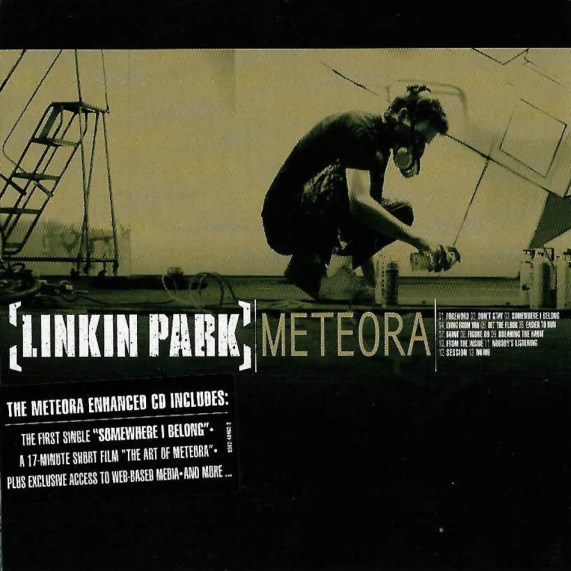
 Death as illustrated by
  Mort (1987)
 Soul Music (1994)


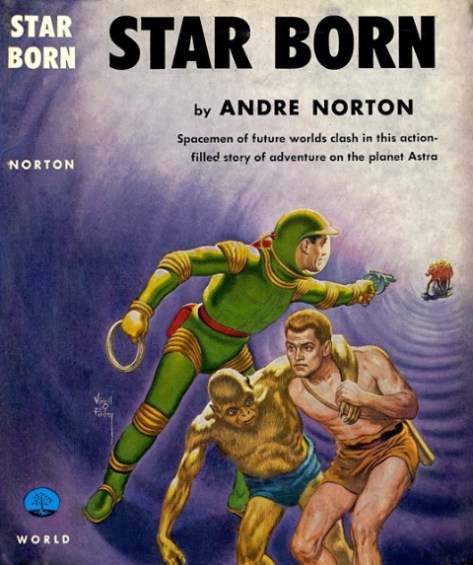



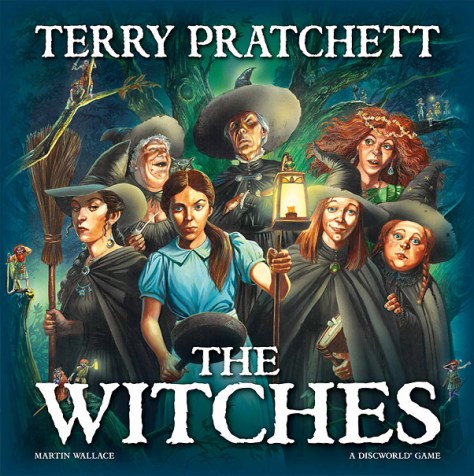

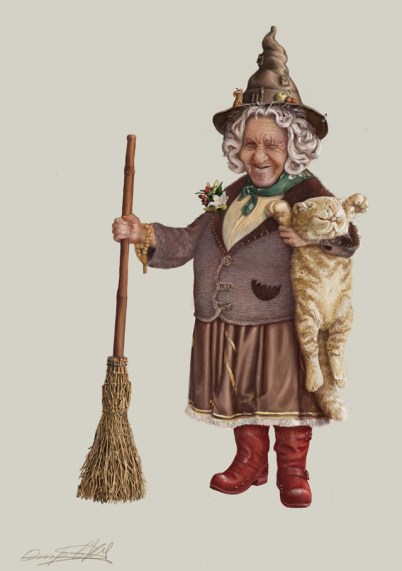


 MASKERADE (1995)


 ‘
‘