Tag Archives: #DarkLiterature

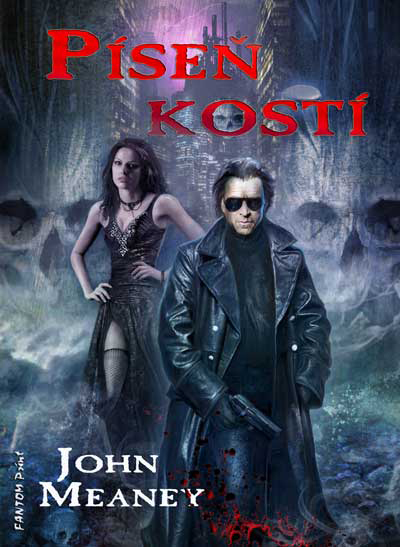
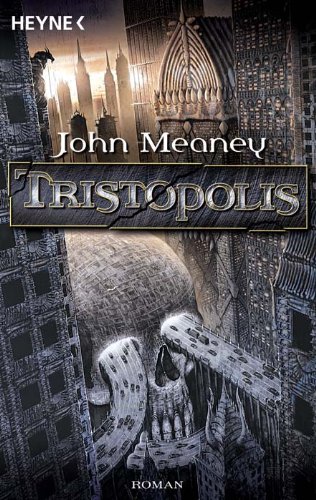
Meaney, John: Bone Song (2007)

My introduction to John Meaney came through the Nulapeiron series with the book Paradox. I was blown away by the quality of the writing. Then I placed the novel on my shelf and sort of forgot about it (I read a lot). Through my library Bone Song came to my attention. Talk about pleasant reunion with an author. This reminder led to the purchase of the remainder of the Nulapeiron Sequence and the later continuation of Tristopolis with Dark Blood.

John Meaney writes a mean book, a novel that draws me into its lair waiting to be consumed by it. And I was. Bone Song was incredibly difficult to put down. Meaney’s description of Tristopolis is beguiling and dark. Atmosphere and personalities light up like a beacon in my mind.

Considering the title of my blog Bone Song is the perfect first novel to review. In it we find the darker side of humanity described in a manner that shows us the lure of power – power-hunger – power-addiction and the concept that some people are more equal than others.

Bone Song is the first book in the Tristopolis series. Tristopolis is the city of Lieutenant Donal Riordan, the good guy in this plot. It is also a city where the dead are sent to give energy to the generators that keep the city running. Zombies, wraiths and gargoyles are only some the races inhabiting this world along with humans, and Donal manages to interact and make friends with them all.

Bone Song is supposedly a horror book but I’m not sure I agree with that assessment. It’s certainly a dark enough world, but it seems bleak rather than horrifying and creepy.

Donal has been assigned to protect an exceptional opera singer who the authorities suspect is on the hit-list of a mysterious serial killer. The job does not go well. Donal gets drawn into a world of deception and betrayal, a world where he has to find someone hidden by powerful connections.

There is murder and mayhem, but Donal shines like a beacon in this book. He’ll kill and maim if he has to, but he’d prefer it if he didn’t. His opponents (mysterious as they are) are quite different. “The end justifies the means” seems to be their motto. This does seem to be the motto of power-addicted people.


Reviews:


Bone Song available on Amazon US

Thater, Glenn G.: The Gateway (Harbinger of Doom 0.5) (2008)

“Talbon!” said Lord Eotrus. “Dispel the mist. Now!”

At his liege’s command, the sorcerer uttered forgotten words of eldritch power; secret words lost to all but the chosen few. The ancient sorcery he called up crushed the unnatural mist back against the night, though the darkness lingered beyond the limits of the soldiers’ torchlight.

“For glory and honor,” shouted Lord Eotrus. “For Odin! For Lomion!”

“For Lomion,” shouted the men.

Glenn G. Thater

Vincent, Steve P.: The Foundation (Jack Emery I) (2015)

The Foundation by Steve P Vincent

When he was finished, he ejected the USB and all signs of the message board vanished from the screen. Chen left the internet café as anonymously as he’d entered, satisfied that everything was in place for the attack. He had no expectation that he’d bring down the Chinese Government, though he did believe that a heavy enough blow could cause a fracture in the monolith. He felt a small degree of guilt for the innocents who’d die, but their lives were the price of vengeance.

One of Norway’s better known war journalists is Åsne Seierstad. Her work has taken her around the world to high-adrenaline and gruesome situations filled with death and dying (and probably long periods of boredom). Jack Emery is one of the huge clan of war journalists and has been to Afghanistan. Right now he has been back a while and wants a new assignment. His boss does not trust him with important work due to a drinking problem Jack developed upon his return. During the course of the story what seemed important enough to send him chasing bottles ends up filling him with regret and self-derision. Not derision for drinking himself to bits but derision for insisting on interpreting the world one way.

Death seems to focus our minds on what each of us considers vital to existence. In Jack’s case that turned him back to the hunt for truth. In a manner of speaking, Jack is our detective and the story is a large-scale whodunit. I suppose all thrillers are that at their base. Mr. Vincent has skillfully added corporations and governments to the whodunit stew and come up with an extremely entertaining story about the shenanigans of countries and corporations.

In my experience, all thrillers that make their characters believable also create a story that becomes probable. Chen provides us with the spark that sets off tension between the United States and China. He is by no means alone in setting the scene for what the countries call a terrorist act. What countries get away with doing (“aggressive military posturing”) independent people/corporations must be punished for. Politics seldom make sense. When it comes to large-scale murder they make even less sense.

As Jack and his fellow journalists poke their heads further and further into the wasp’s nest, their lives become less secure. We all know that is because the perpetrators fear discovery. In this case there are several instigators behind the scenes and none of them want to be found out.

There is plenty of violence (somewhat explicit), loads of action and some sex (not explicit).

Before reading The Foundation (TF), I read Fireplay (see quote). Fireplay is written after TF, but its plot happens before the plot of TF. TF is written in Australian English. Any language oddities you find therein will probably be due to that.

Definitely recommended.


The Foundation was recommended to me by Nathan Farrugia (The Fifth Column)


Reviews:


The Foundation may be found on Goodreads

Gee, Emily: The Sentinel Mage (Cursed Kingdoms I) (2011)

Jáume was in his father’s barn when the curse broke free of its dormancy on the easternmost rim of the Seven Kingdoms.

The story of the Sentinel Mage begins with Jáume, eight years old. Ancient magic turns his father into a monster and the boy has to flee to save his life. Reading up on orphaned children showed me that homeless, orphaned pre-teens looking to survive are more common than I thought. That type of homelessness made Jáume’s tale more believable. Where a lot of children would have died from helplessness, Jáume is crafty and cunning. Sometimes he is not proud of what he has to do to live, but he still does them. Choices we seem to be left with, may not be real choices after all. Do or die?

Magic, like the terrible curse, is the reason witches were hunted until thought extinct on the mainland. But complete extinction of a genetic trait when prophecy is around would never be possible for a fantasy trilogy. In life the complete extinction of a genetic trait seems unlikely. Eventually it might turn up again. In the Sentinel Mage that is even more so the case, as Prince Harkeld is about to discover.

Every prophecy needs its tool and these tools are people who vary from the young and innocent to the old and unwilling. Prince Harkeld starts off with power, wealth and a sense of entitlement. He is 22 years old when he meets the feared witches at his father’s court in Osgaard. King Esgar has called him to meet the diplomatic convoy from Rosny in the Allied Lands. When Prince Harkeld hears what the witches (or “mages” as they prefer) have to say about his destiny and his background he is shocked. It turns out the blood of monsters is in him and he needs to choose between honor and his father’s approval. Fortunately for Prince Harkeld, he choses honor. He is not aware of the personal consequences of doing what his father wishes.

Monsters or not, Harkeld is stuck with the mages (or witches as he curses them). A solution to his distrust is found by the mages. However, this solution requires distraction and a certain amount of naivete on Harkeld’s side. Perhaps the mages figure he is distraught enough that he will not discover the discrepancies that occur when Justen appears.

I understood why Harkeld would act like the distrustful, arrogant and annoying person that he was with the mages. His background, the suddenness of his leaving and the shock of his discovery along with the constant fear of discovery and being on the run would all play a part in leaving him a somewhat unlikable person. I’m not certain I cared much for the mages either. They were dishonest toward Harkeld and very open about the possibility of needing only his hands and blood for the fulfillment of the prophecy. Only as a last resort, of course ….

In leaving the castle behind he also leaves his beloved younger sister and two younger brothers behind. Princess Brigitta wants to come with him but Harkeld feels she will be safer with her father. Hmmmm. Time will show. But Harkeld worries. And with cause. Princess Brigitta and her two helpers, armsman Karel and handmaid Yasma were all that were left to protect her brothers, six-year old Rutgar and four-year old Lukas. But eighteen-year old Brigitta is about to encounter her own set of terrible problems leaving her with little will or ability to look after her brothers. She is also all that stands between Yasma and constant abuse. Being a bondservant in Osgaard equates to slavery and terror. At least with the Princess Yasma had escaped daily rape and beatings.

Gee’s writing is what drove the story on. There were some hiccups but for the main part she kept me caught in her words. Recommended.


Reviews:


The Sentinel Mage is available at Amazon, Amazon UK, IndieBound, Barnes and Noble, Book Depository

Larke, Glenda: The Aware (The Isles of Glory I) (2003)

Researcher (Special Class) S. iso Fabold, from the National Department of Exploration of the conquering nation Kell, has come to the Isles of Glory. His project is to discover what he can about its history and beliefs. As part of that mission, he interviews Blaze Halfbreed. It is her story we hear in The Aware. Fabold comments on Blaze’s story at regular intervals. I don’t particularly like Fabold. I find him an annoying, misogynistic git.

Blaze takes us back 50 years to a time before the Change, when magic was known. She telles us of her third visit to the Island of Gorthan Spit. Gorthan Spit is the place where those who have no where else to go end up. Blaze calls it a:

middenheap for unwanted human garbage and the dregs of humanity; a cesspit where the Isles of Glory threw their living sewerage: the diseased, the criminals, the mad the halfbreeds, the citizenless. Without people, Gorthan Spit would have been just an inhospitable finger of sand under a harsh southern sun; with them it was a stinking island hell.

Halfbreeds (children of two people from different islands) seldom survive to adulthood. None of the Isles of Glory wish to admit such children exist. Citizenship is only for the purebred. Usually, halfbreeds are abandoned as soon as their mixed background becomes apparent. Blaze, herself grew up

on the streets of the Hub with a group of other outcasts, mainly children of varying ages. Our home was the old graveyard on Duskset hill, where once upon a time the wealthy of the city had buried their dead in tombs above the ground. The place was ancient, the tombs neglected. They made good hiding places, fine home for a pack of feral street kids with no money and no respectability and, in my case, no history or citizenship.

That childhood, her later tutelage by the Menod and her treatment and training by Keepers laid the groundwork for the kind of adult Blaze Halfbreed became. What she learned was that if she wanted to be looked after Blaze was the one who had to do the looking. No one else could be trusted. And she is fine with that. She has no illusions about being some kind of wonderful person who needs to save her world. That she happens to become a pivot is due to Blaze being in the right/wrong place at the right/wrong time.

Sometimes life is like that. Very few people get to become pivots upon which the fate of the world rests. Choices are made at such times that may or may not change the immediate course of history. Long-term very little changes where humans are involved.

I particularly appreciated a few scenes in The Aware. There is an amputation sequence that takes us through the process. Part of that process is letting us know what chance and amputation patient should have had somewhere like Gorthan Spit. There is also an explanation of how a woman like Blaze would be able to handle a two-handed sword for a longer period of time. There is her size, strength, training and practice. In addition the steel of her sword is more refined and therefore a little lighter than the regular ones of that time. Only blood-debts would get you such a sword if you were not from Calmeter. But Blaze needs to take better care of her weapons.

There was plenty of action, an explanation of the magic, a good description of how the Islands worked politically and practically and good character development.

Recommended.


Reviews:


The Aware available at Scribd.com


Translations:

Gaiman, Neil: The Ocean at the End of the Lane (2013)

Thank you, to my sister-in-law for giving me a copy of The Ocean at the End of the Lane.

In December, right before I turned seven my family moved from Australia to Norway. One of my memories tied to that move is stepping outside the plane into the middle of Norwegian winter. Moving was not something I wanted, and winter did not help.

Soon I was driving slowly, bumpily, down a narrow lane with brambles and briar roses on each side, wherever the edge was not a stand of hazels or a wild hedgerow. It felt like I had driven back in time. That lane was how I remembered it, when nothing else was.

Memory can be triggered by scent, sound and sight. All of a sudden you find yourself re-visiting a time you had forgotten. Neurons spark neurons and whatever filing system you have going for you opens a memory file.

If you’d asked me an hour before, I would have said no, I did not remember the way. I do not even think I would have remembered Lettie Hempstock’s name. But standing in the hallway, it was all coming back to me. Memories were waiting at the edges of things, beckoning to me. Had you told me that I was seven again, I might have half believed you, for a moment.

As others have mentioned, we never discover what the name of the main character is. For the most part he is called “the boy”, and that is how I think of him. Neil Gaiman’s statement that the story is meant for adults fits my feeling while reading the book. There is enough terror (not violent) for a younger audience to enjoy it as well.

At seven years of age, children have little say in their lives. Moving to Norway was not my choice. Nor does the boy have much influence on his own life. There are a few episodes that illustrate this. To me, the episode with the cat stands out the most. Utter disregard of the possibility that the boy might be devastated shocked me. Yet, looking back at my own life, children were presumably fine with whatever the adults chose. In The Ocean at the End of the Lane, adults are judged more believable than the boy. So it is when I look around at the parts of the world I have encountered. My Asperger brain is completely baffled by this phenomenon. When the boy’s enemy states

“And what can you say to her that will make any difference? She backs up your father in everything, doesn’t she.”

I am reminded of many family situations that have crossed my life-path. No matter what one parent does or says, they have the backing of the other. Utterly incomprehensible.

Being without power to decide anything about their lives is something children come to semi-accept. At the same time there is a continuous battle between adults and children to have the ability to decide. We see some of that in The Ocean at the End of the Lane. The boy does not give in to the powers that be, although it might, at first, seem that way to the adults.

The Hempstock women became a safe haven for the boy. For me that is hilarious because some of the most dangerous episodes happen while together with one of them. But they sought to protect him and make his life safer by fighting for him with the means at their disposal. These means aren’t exactly regular ones.

I loved the Hempstock women. I want to be like the Hempstock women.

Definitely recommended.


Reviews:


The Ocean at the End of the Lane can be found at biblio.com


Adaptations:


Trivia:


Translations:

Decruyenaere, Gilles: I Dreamt of Trees (2015)

I Dreamt of Trees is an amazing first novel. Mr. Decruyenaere has managed that difficult feat of listening to his editors and written tightness and tension into his story. Words flow from one to another drawing me into a dreary and terrible future inhabited by people who are all too believable.

The USS McAdam seems to have been built with every contingency in mind except the humans inhabiting it and the Squelchers. But for the most part it is the humans who are its main problem and also the main theme of the story. We enter the USS McAdam centuries after its launching from a place only guessed at by the general population.

“to think that anyone on the ship actually knew its true origins was just ridiculous; too many centuries had passed since the ship had launched; too many computer malfunctions, human errors, and political shenanigans had transpired for any real proof of Earth to remain.”

The society on the MSS McAdam seems to have been half-way decent during the Prologue. Thirty-five years after the appearance of the Squelchers, life has changed for the entire population of the vessel.

A crisis is a wonderful thing for power-hungry people. What was once unthinkable becomes doable by manipulating a fearful population into wanting to destroy the new “THEM” by any means possible. Even if that entails becoming a strictly stratified and segregated population (“one must make sacrifices”). The “have-nots” are stuck on the Rim-side of a ship-wide sewage moat while the “haves” get to live on the Core-side. Understandably, Core-dwellers will do what is required to remain on their side of the moat.

Core-dwellers are the people the High Command (and true rulers after the revolution) deemed desirable. The High Command tell their puppets, the Council, what attitudes need to be enforced through propaganda and terror. Like many of our own revolutions here on earth, life seldom becomes better for any but the very few. But while life may be terror-laden for Core-dwellers, it is infinitely better than what Rim-dweller endure.

What new regimes need are heroes and “Them”. In this case the major “Them” is obvious. Squelchers are bizarre aliens who zap people into their spaceships when their beams get through the shields of the MSS McAdam. Our new heroes are the Flashers and the Boosterettes.

Flasher Jason Crawford is our main character and seventeen years old. His level of aggression is at a height that is either drug-induced or bred into him. For some reason anger and aggression are seen as a positive qualities for the Flashers (along with youth and short and slender bodies). Everything about Jason screams aggression. His language reveals both his lack of ability to control his temper but also the extremely homophobic and misogynistic nature of his society.

A young girl’s greatest goal is to be able to work in privilege suites as a Boosterette. I strongly doubt dream and reality line up for these young girls. Medical staff are assigned to take care of what is left once the Flashers have “released the pressure”. Thankfully, Mr. Decruyenaere never shows us what goes on in the privilege suites.

Life is going to be full of surprises for young Jason and most of those surprises will shock him. I loved the ending. It was perfect.

Definitely recommended.


I Dreamt of Trees available at:


I was given a copy of this book by the author


Hurley, Kameron: Infidel (Bel Dame Apocrypha II) (2011)

Nyx is a hero I have fallen in love with. As mentioned in my review for God’s War, I am drawn by her passion and love for the people she considers hers. Given the wrong kind of circumstances, my aspergers might have formed me into such a predator. Her emotions are easy to access, and her reasons are simple to understand.

She does her best to protect what is hers. Her ownership of both her people and her country enables Nyx to do what she considers the right thing for her country and her people.

Hurley’s Tirhani is in some ways like my Norway. Norway is a small country known for its apparent peaceful approach to life enabled by the safety of wealth. However, as exporters of arms and ammunition over whose end-location we have no control, we are also guilty of bringing war to other countries. All we have to do is look at the result of the US destruction of both Afghanistan and Iraq. Considering the US is one of our largest customers, this really isn’t something to be proud about. Yet we go about our peaceful lives without giving women and children whose men have been torn out of their lives a single thought. All weapon producing countries whose citizens live fairly peaceful lives share in this destruction.

Rhys and Inaya have settled in peaceful Tirhani hoping that Nyx will never turn up again. Understandable, really, as Nyx represents an excruciating time of both of their lives. But the Beldame rebellion brings them all together effecting a new period of needing to kill or be killed. Who needs enemies when they have a friend like Nyx. Perhaps this is the greatest difference between the three. Rhys and Inaya (and Khos) cling to the idea of not needing to involve themselves in keeping their families safe by keeping the world safe. It is the simplest path to choose in life. I venture in and out of it. Nyx dives head-on into her attempt to keep Umayma as safe as possible.

Once Rhys and Inaya seem to no longer have a choice, they to do their very best to stay alive. Most people seem to wish to live and they will go to great lengths to stay alive. Umayma can be both heaven and hell for its inhabitants. For Nyxnissia, Nasheen and Chenja it seems to be a never-ending hell.


Reviews:

Kameron Hurley on Nyx as a hero


Infidel available at Amazon US


My review of God’s War


Norway Tirhan

Hurley, Kameron: God’s War (The Bel Dame Apocrypha I) (2011)

God’s War, huh. On Religious Tolerance you will find recent religious conflicts around the world. I counted 25. While most of those wars are across religious lines, some of them (Iraq, Pakistan and Somalia) are, like the 3000 year long World War on Umayma, about interpretations of a faith. As far as we can tell, the people on Umayma had the same origins and values upon leaving Earth. If a time ever comes when humans are able to terraform and populate another planet, war will probably ensue as soon as people manage to settle down. Humans do seem to like their wars.

Terraforming (or engineering) a planet would be a long and complicated process. The time span required and the amount of genetic tinkering needed for humans to be able to live on a far flung planet has to be staggering. While every person needs some degree of engineering in some fashion to survive, there are inhabitants of Umayma who have changed more than others.

Bugs and their magicians are two. Something in their genetic make-up makes certain people able to communicate with bugs. Talking to bugs could be useful here on Earth. On Umayma, bug-talking is vital to existence as bugs are used in most arenas of life. From food, to fuel, to engines, to clothing, to lighting, and so the list goes on. Magicians are not equal. One of our main characters, Rhys, is less equal in the area of bug-control than others.

Shape-shifters is the other strange product of tinkering (possibly). There is a legend that they are a product of the union of Angels and humans. Hurley doesn’t tell us that shape-shifters have been made by genetic engineers, so my understanding is just a guess.

“The war still raged along the ever-changing border with Chenja. Nyx started up her storefront with the dancer and tech in Punjai, a border city at the heart of the bounty-hunting business. While she was in prison, Punjai had been swallowed by the Chenja for six months, the “liberated” by a couple of brillian Nesheenian magicians and an elite terrorist-removal unit. All of the city’s prayer wheels were burned and the old street signs were put back up. There had been air raids and rationing and a couple of more poisoned waterworks, but, as ever, the war was just life, just how things clicked along – one exhausting burst and bloated body at a time.”

Three thousand years of constant killing has to do something to a population and the environment. Umayma is certainly no paradise with areas of it contaminated by biological bombs, human disease carriers and the drafting of men to the front lines. Nasheen and Chenja have solved the dearth of male genetic availability in two different ways. In Nasheen they rely on artificial insemination and breeding tanks for new generations. In Chenja they use a more traditional method of one male to many females to get the job done. Rhys is from Chenja.

Nyx is the goddess of night, the daughter of Chaos, and also the name of our main character. Our Nyx is unpredictable, loyal to those she cares about, principled and passionate. However, values created by people in times of peace or the powerful are not hers. I truly adore Nyx. Hurley portrays her strength and vulnerability in a manner that I can believe and that appeals to me. Definitely my favorite character of the story, and maybe my all-time favorite character.

Rasheeda (shape-shifter) is one loony bird. Holy cow, that woman has sanity issues. No wonder Nyx is wary of her. Bel dames might be sanctioned by the queen, but some of them do messy wet-work with lust and gusto. Creepy lady.

Definitely recommended. Definitely.


Reviews:


God’s War available at Amazon UK

Omnibus at Amazon US

Nesbø, Jo: Police/Politi (Harry Hole X) (2013/2014)

I read Police/Politi in Norwegian.

Some reviewers felt Police was too violent for them. All of Jo Nesbø’s mysteries are dark literature. He delves into the murky and seedy side of people and society. Police deals with consequences and corruption. This time Nesbø looks at corruption within the Norwegian police force. Not only the leaders seem to have trouble staying within the framework of the law. Some of its officers define the law in a manner that allows it to make sense to them. Justice, is after all not the purpose of the law. The purpose of the law is the law and how to define it.

Police was in no way a philosophical work. Entertainment and commentary seems to have been Nesbø’s purpose in writing it. However, I do not have a clue as to what his purpose was because I have read none of his interviews only some of the reviews out there. But it does raise some questions. The nature of corruption being one of them.

What we are willing to sacrifice on the alter of power? If there is one subject that keeps on popping up in stories and research papers, power seems to be it. Sometimes in the form of helplessness – as that poor gay kid must have felt when he came out to Bellman and got beaten up for it. At other times it comes in the form of wanting more power over others. Having power over Berntsen was never enough for Bellman. And sometimes power is portrayed as something we hope to get through others, kind of like the hope Ulla was left with once she and Michael had met in the hotel.

Nesbø also takes a closer look at another reason people kill. Love can influence people’s choices. My definition of love might not fit your. When the love of one person was killed many years ago, that person felt a need for revenge. Revenge took a long time coming, but once it arrived it was certainly thorough. Harry Hole came back to policing due to the path revenge wandered on.

Jo Nesbø is sneaky. Not until seconds or minutes before the culprit was revealed did I figure out who the killer was. No wonder with all the shady characters in the land of Nesbø’s imagination. Just as when I watch magicians, I was fooled by Jo Nesbø’s misdirection. Every time an author manages to trick me I am both pleased and annoyed at the same time.

What I like with police procedurals like Police is that there are no magic solutions to finding a culprit. Harry Hole certainly has Poirot-like qualities in his intuitive ability to see what others cannot. However, Harry makes mistakes and depends on his crew to find the data needed to draw his conclusions. My enjoyment of a mystery/thriller increases with the type of craftsmanship that Nesbø shows.

Warning: Descriptive violence

I had fun. Definitely recommended.


Reviews:


Police is available at bokkilden.no / amazon (various countries) / others


Translations (Original language Norwegian – my edition) Politi:

McDermott, J.M.: We Leave Together (Dogsland III) (2014)

We Leave Together - JM McDermott
Coverart by Julien Alday / Coverdesign by Scott R. Jones

We Leave Together marks the end of the story of Joni Lord Jona, Rachel, Djoss, Calipari and the Walkers. The Dogsland trilogy has been terribly painful yet wonderful to read. J.M. McDermott’s prose brought me through the terrors, pain and love expressed in this story about two extremely different yet similar couples.

The Walkers are feared representatives of the goddess Erin. As ham-shifters they are part human and part wolf. Rachel and Jona are half-human and half-demon. Their heritage comes from the Nameless one and expresses itself both in temperament and looks. Both are feared by the general populace.

Similar as they might be, the Walkers and Rachel and Jona are also extremely dissimilar. Rachel and Jona’s half-demon nature makes even their sweat dangerous to other people. Sharing food and drink is impossible because of the effect doing so has on others. Half-demons are hunted down and burned (alive for the most part) along with their properties and very likely any person they might love. The Walkers hunt half-demons and eradicate (as much as possible) any dangerous trace of them.

With Jona’s skull being found at the beginning of the trilogy, we have always known that, for Jona at least, there was never going to be a happily ever after. Considering the nature of Dogsland, happily ever after probably does not happen to any one in the land of McDermott’s mind. But does happily ever after happen even in the real world? Not likely. I suppose there could be a happier after, but never a happily ever after. Humans just aren’t built for it. We all die, we all get sick and we all suffer through pain. Some of us experience more sickness and pain than others, but we all go through such experiences. So too for the citizens of Dogsland.

Homelessness for adults and children, orphans (both homeless and not), class differences, poverty, greed, power-struggles, charity, love, helplessness and need are all visible in Dogsland and our world. Just look around and you will find all of these without needing to look very hard. Djoss becomes one of the helpless ones through his desire to get money quickly. His motives were fine – a better life for himself and his sister. The way he went about it led him into helplessness. Devil-weed is incredibly addictive once you smoke it. Djoss did and now all of his money goes to the drug. Rachel is desperate to get him out of the city with her. But getting out of the city is not a simple thing unless you get hired by a caravan. Who is going to hire a person who is so obviously a drug-addict? Jona wants her to stay because he has fallen for her or possibly the fact that he has finally found another like himself.

So many things work against Jona and Rachel and Djoss. Their own nature, others finding out about that nature and using it against them, having to hide what they are and people hunting them are all factors that make the descent into death for Jona inevitable.

We Leave Together is dark and painful. Somehow it is always the children that get to me.

The boy pulled his dead rat off the fire with two scraps of wood. He picked at it with his bare hands like a hairy chicken wing.

“Where you from, mudskipper?” said Nicola, to the boy.

He shrugged. “Ma said we were from a farm, once.”

“Where’s your ma.”

“I don’t know,” he said.

“Just, you then?”

“I got two brothers. I don’t know where they are, but they’re around.”

Children around the world live in conditions like these. We just don’t see them. Or maybe we choose not to see them. Sometimes they live far enough away from us that we have to make an effort to acknowledge their existence. But even in my wealthy country there are children who know the pangs of hunger unless charity reaches them. What about them? Am I part of the brutality and violence of Dogsland if I choose to ignore that our world is in many ways just like the world of J.M. McDermott?

Did I say We Leave Together was painful? Yes, I believe I did. That area of my chest that aches right before the need to cry engages hurt through most of the story. Definitely recommended.


Reviews:


We Leave Together available at Powell’s

McDermott, J.M.: We Leave Together – page 44

“She felt into the Unity for all the energy hidden in the air, where people live and love and the threads of life swell into one pattern.

In every room – every single room – her breaking heart was not alone.

A thousand upon a thousand snowfalls, and the city weeps in the dark, alone.”

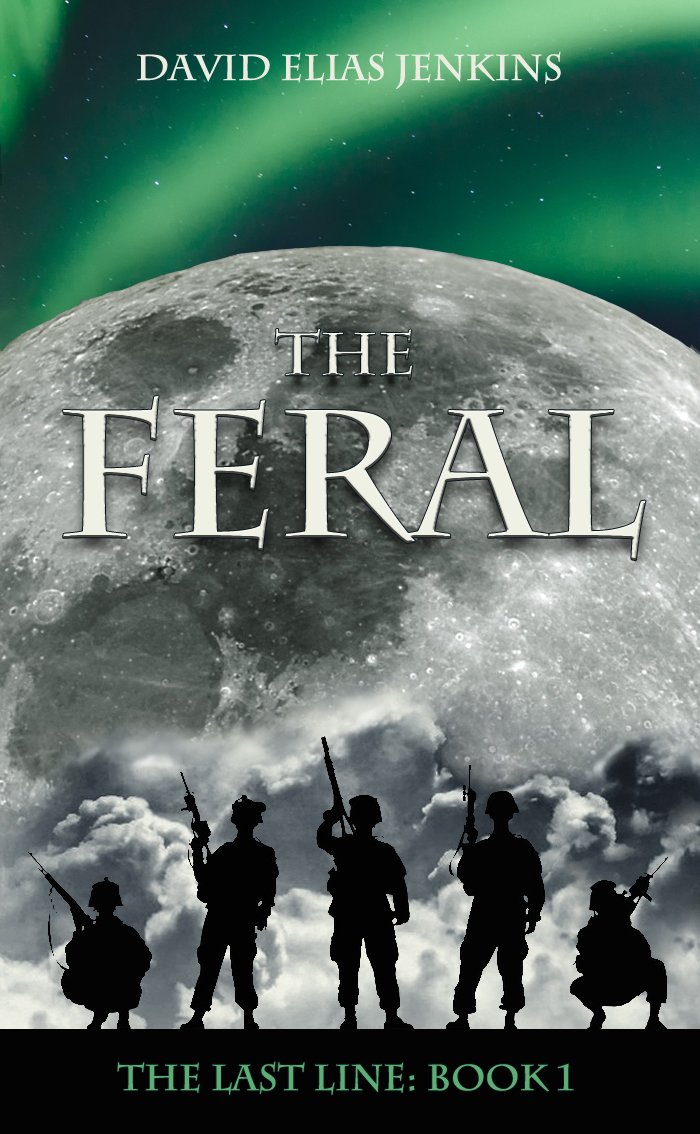
Jenkins, David Elias: The Feral (The Last Line I) (2014)

The Feral - David Elias Jenkins

The life of a soldier in action is a whole lot of wait for a few minutes of terror. This seems to hold true for all who lead adventurous lives. Some of those soldiers are so caught in the grip of adrenaline kicks that they would never ever be able to function in a regular 9-5 job again. The members of the STG (Special Threats Group) Empire one are such adrenaline junkies.

Usher and Isaac Marlowe are the members of that group who stand out the most as three-dimensional people. The rest of the group: Kruger, Charlie, Brock and Christie add flavour to the dynamics of the group and their work. All of them are from different backgrounds. The only thing they have in common is that at one point or another “The Veil” was lifted from their eyes and they had an undeniable encounter with the Unseelie Court (Faery). Since that time the various member have worked toward getting the Unseelie off the Earth and back to whatever parallel world they are from. But the Unseelie have the opposite aim. They wish to invade the Earth, eradicate humans and make the Earth their own home.

Mr. Jenkins introduces a variation on vampires that I loved. More different to the glitter and Oooh-Aaahing of people around the world cannot exist. If there is, please let me know. Amoral, hungry, arrogant and bizarre are only a few terms that describe the vampire we get to meet. Vampires and werewolves are part of the Faery world. That makes more sense than them being converted humans. We even meet a zombie-like creature in the form of the infiltrator Owen Sibelius. This is the kind of zombie I understand.

Soldiers around the world have a tough lot in life. For some reason the public seems to expect them to be invisible. If they see fighting, we do not wish to hear about what effect that action has on them. Killing other people as a job must necessarily affect the person doing the killing. But these people are ordered to accomplish whatever aims their idiotic leaders wish to pursue and are not in a position to constantly question orders they are given – even if those orders make no sense. A soldier who reaches Special Forces level must be aware of the questionable legality of some of their orders, yet they have the mental strength that allows them to follow through. For the Special Threats Group, this is seldom a problem. They know that the enemy is a real threat to them and the rest of humanity, and they want these Faery gone. Sadly, of late, recruitment to the fighting groups is slower than the demise of their members and that leaves these people overworked and in serious need of decompression.

I would make a stinky soldier. Part of that has to do with my autism. Sucky balance, don’t know right from left, problem with orders and will have melt-downs when my sensory system is overloaded. Not great soldier material. In fact, I would probably be one of the first people killed if my country was ever invaded again. But I have the ability to see the necessity of soldier-like people in a world where the definition of peace is something we would kill to be right about. While the Faery are a clearly defined group and more or less easy to spot, humans who believe that the Faery need to own the world are a bit more difficult to separate from regular humans. Empire One also fights to rid the world of humans who (once again) have pitted themselves against humanity by providing the Faery with technology and biology that makes taking over the world easier. Because that is how stupid humans are. We really are. We do it all the time. Just take a look around and you will see how incredibly self-destructive humans are.

Another stinky soldier is Ariel – tasked to infiltrate Isiah Argent’s organization. Poor geek. He does a marvelous and terrified job considering what he has to work with. This is another three-dimensional character that Mr. Jenkins portrays well.

There is one part of the story where I feel the need to comment on believability. In one of the scenes with Kruger something was supposed to take around 1-1.5 hours to finish. Once the two things had been taken, that would not be a likely scenario due to stuff leaving. (As clear as I can make it without spoiling the story.)

Warning on lots of violence and gore. Very dark story. Definitely recommended.

Mr. Jenkins provided me with a copy of The Feral to review or not.


Reviews:


The Feral available at Amazon UK


The Unseelie Court

Williams, Liz: Snake Agent (Detective Inspector Chen I) (2005)

I know very little about PRC and Singapore. My knowledge has greatly increased since before reading about Detective Inspector Chen Wei, the snake agent, of Singapore 3’s Police department. Singapore 3 is a Franchise city. At the beginning DI Chen wonders whether there is another DI Chen in the other Singapores. I would really like to know what that means.

Obviously, Snake Agent would have to be either on a parallel version of Earth or in the near-future. Snake Agent is in the near future. In this near-future people are just moving away from the electric net to a bio-web. I think this belongs to something called biological systems engineering. The way Liz Williams describes the bio-web is true to real life. There is the glossy brochure that states that all of the participants willing and able and loving their job. Then there is the grosser truth of tubing back and front on the people keeping the bio-web going.

After contact between Earth and the super-natural world became visible, communication between them has bettered. Authorized personnel can f.ex. send e-mails between the Underworld (Chinese Hell) and Earth. Snake Agents from Earth and representatives from the Underworld can travel between the two worlds, which is how three of the characters meet.

Some time ago DI Chen rescued his now wife, Inara, from the clutches of her fiance. She had run away and somehow she and her retainer, a Badger, ended up with him. Inara, Chen and the Badger worry that she is still being hunted by the Underworld. Some of the people who could be on her trail are extremely dangerous to the health of the hunted. Turns out Inara is still being hunted by her power-hungry ex-fiancè. The Minister of Epidemics takes his job seriously and looks it. He is a demon willing to go to any length to increase his power.

Inara being kidnapped happens while DI Chen is on the main chase of Snake Agents. Ghosts of young, virtuous girls are disappearing on their way to heaven. The disappearance of one such girl is what led DI Chen to the rest. Unbeknownst to each other, part of Earth’s and part of Hell’s bureaucracy unite in finding the answer to this problem. DI Chen from Earth and Seneschal Zhu Irzh from the Underworld’s Vice Squad accidentally meet and end up kind of working together. At first the two help each other out without telling their bosses. Their working relationship becomes more permanent during Snake Agent. What the two discover can end up making scape-goats out of them.

I had fun with Snake Agent. It was a great read about the distribution of power, gender and the solving of several crimes. I was entertained from page one and out. Definitely recommended.


Reviews:


Snake Agent available at Open Road


An introduction to living in the Chinese cosmos

Hell in Chinese Mythology

The gates to Taizong’s Hell

Doing business in China vs. Singapore

Cultural differences between Singapore Chinese and PRC Chinese

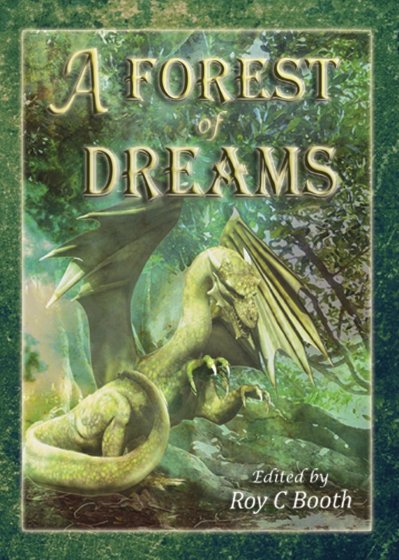
Anderson, Blackthorn & al: A Forest of Dreams (Edited by Roy C. Booth) (2014)

A Forest of Dreams - Anthology edited by Roy C. Booth
Cover art by Drusilla Morgan

I tried to find a link to all of the authors in A Forest of Dreams. As you see below, I couldn’t find them all.

Allan B Anderson: The Trouble with Dragons: This is a funny and cute story all about perspective. In The Trouble With Dragons we find a dragon, a town and knights.

Rose Blackthorn: When Darkness Falls, The Light: Flint Harmattan walks into the camp of Zaelryn and Vaeryn. Vaeryn is suffering from PTSD (an almost constant dissociation). Zaelryn makes sure she stays alive.

Cynthia Booth & Roy C Booth: Trespassers: Jenny, who is on her way to a job, stops at a cafè when her car becomes unsafe to drive. She is offered a ride to a safe place to stay.

Dave D. Burgh: The Bell: This is a really great and strange take on eternal life. Uldo and Emin are fun characters.

Jesse Duckworth: Runaway Clydesdale: A two-headed man, by the name of Clyde and Dale, is an exhibit at a freak show. He grows tired of this life and decides to run away.

Mani Fadn: Songs For Dead Hearts: People getting what they ask for isn’t always a good thing. Poor “young man” (all we ever know him as). A victim of his own abilities and the fickleness of the other villagers.

Jan Goeb: Accounting for Change: Here we find a tale that is about the first days of vampire life.

R.A.M. Graham: Dancing Doll: RAM Graham was the reason I bought A Forest of Dreams. I loved her story about Gwenmere. Dancing Doll surprised me. I love that. A little girl REALLY tries to listen to what her mother has told her to do. She really does. But we all know how tempting some things can be.

Rick Hipps: Squire William’s New Charge: What a great squire to have. Squire Williams is cast in the “teen-ager doing something his elders aren’t able to” role. Squire William’s New Charge is a fairly dark fairy-tale.

Axel Kohagen: Mudwife: I like these slightly creepy stories about consequences. Perhaps it could be said about this story that one should not trust first impressions and maybe even that it might pay sometimes to be less curious.

R. Scott McCoy: Only a Nightmare: Only a Nightmare is hilarious and creepy. Once again, things did not turn out how I expected.

Verna McKinnon: Dragon Toast: Dragon Toast is about the life of familiars and a dragon baby. It is adorable. Tupa is the cutest familiar ever. There is magic, action and adventure. My call is that Dragon Toast is a children’s story.

Angela Meadon: Intrepid Dawn. Not a children’s tale. Nope. More for the Young Adults who are able to read dark stories about monsters from the depths of the ocean.

Michael Merriam: All the Leaves Your Bed. I loved this little story about death, environmentalism and tree-magic.

Druscilla Morgan: The Last Unicorn: This is the story of the bunch that fit me the least. Rufus Armstrong is in charge of what appears to be a dangerous horse with a bump on its forehead.

James Pratt: King Kong Died for Your Sins. Oh my god. King Kong Died for Your Sins is a perfect portrayal of certain parts of our society. James Pratt nailed it. Absolutely hilarious.

Dyfedd Rex: Weapon of Mass Demoralization Test: Another story that I really liked. We get jaded old hunters, the military, overconfident magic-users, succubi and nuns.

Maggie Secara: Jack’s Day Out: We meet an old story-book character some years after the event. Jack and his brother Perian are on their way to visit the Lady when Perian disappears. Some of the other characters from the old story turn up as well.

Daminsen Shentay: In the Weft: Some shopkeepers are a little more dangerous to rob than other shopkeepers. Mitch should have been more careful about checking out the details of this job before agreeing to take it.

Most of these short stories were really great. There were two or three that didn’t fit me all that well, but I imagine they were still well-written. I find it difficult to know if a story that does not fit me is well-written. However, I do recommend A Forest of Dreams if nothing else but for Graham, Merriman, Rex, McCoy and Burgh’s stories. Those were my favorites.


Reviews:


A Forest of Dreams at Amazon US