Tag Archives: #Family

Johnson, Jean: An Officer’s Duty (2012)

Cover art by Gene Mollica. Cover design by Annette Fiore DeFex. Interior text design by Laura K. Corless.

An Officer’s Duty is the second installment of Theirs Not to Reason Why. Like A Soldier’s Duty, An Officer’s Duty is a military science fiction novel that has plenty of action and some military philosophy in it.

Ia is an interesting character to get to know. With the fate of the universe in her hands she is quite driven and tends to forget that she is a human (well, half-human). Fortunately, she has other characters in this novel that keep her grounded.

Being only mortal, Ia knows that she will have to find a way for future generations to take her letters seriously. The answer lies in her ancestry and on her birth-planet Sanctuary. Her brothers and mothers support her in her work and do everything they can to make it possible to save life in the Milky-Way.

Enrolling in officer’s school (the Navy kind) helps Ia accomplish her goal of becoming an officer. Her example, both in school and later on duty, brings the respect needed from her fellow-soldiers. She is brought closer to her goal, step by step and fight by fight.

The goriness from A Soldier’s Duty is reduced. You will have to read A Soldier’s Duty to get the needed background for An Officer’s Duty. That will mean wading through a bit of blood and body-parts. I’ve enjoyed both books of this series thus far. I expect I will get the rest once they hit the market.

Lee, Sharon and Miller, Steve: Dragon Ship (2012)

Cover artist David Mattingly

Sharon Lee and Steve Miller continue their Liaden Universe saga in the form of Dragon Ship.

Dragon Ship continues the story of the Korval Clan’s newest member, Theo Waitley, who we met in Ghost Ship.

Understandably, Theo is still wary about joining with the vessel, Bechimo. Being the first human for centuries who will go through the experience, she has noone to guide her. Bechimo is desperate for a Captain. He has been alone through centuries of trying to hide himself from people who want him themselves or want to destroy him.

On their journey (joined by Clarence 2nd pilot) Theo and Bechimo get to explore their understanding of each other. At the same time they also try to figure out if there is a market for a long run for the Korval Clan. Adventure lies along the route.

As with Ghost Ship, Dragon Ship is an adventure novel taking Theo and her crew from one exciting moment to the next. Lee and Miller’s writing is catchy and aimed at a Young Adult audience.

Cooper, Elspeth: Trinity Rising (2012)

Design Sue Michniewicz, illustration Dominic Harman

I have just been made aware of the difference in the usage of serials and series. The Wild Hunt is a serial. This means that each book ends without the story being finished.

I admit it. I hesitated to read Trinity Rising. No way could Elspeth Cooper live up to the promise of her first novel. Hah, hah, what a joke. Trinity Rising was even better. The hiccups of Songs of the Earth were gone. Trinity Rising grabbed my brain and kept its hold until the end. I loved the characterization and the story.

Savin is a psychopath. Cooper shows his complete lack of empathy through the episodes he appears in. Gair is grief-stricken and functions quite poorly until the end of the novel. Alderan is concerned with the well-being of the many over the well-being of the few. In the end Gair finds it impossible to support this stance. We meet Teia of the Northern tribes. She brings with her new traditions and a deeper understanding of the conflicts between the Empire and the Clans. I found myself becoming fond of her and rooting for her and am looking forward to seeing where The Wild Hunt will go in Cooper’s next novel.

For those of you who find reading sexual content difficult, be warned. Ms. Cooper has written these novels for adults. To me it all fit perfectly together and I recommend this novel to you all.

Lee, Sharon and Miller, Stephen: Ghost Ship (2011)

ghost ship
Cover artist David Mattingly

Ghost Ship is a fun space opera adventure that gives its reader plenty of action that just happens to be placed in a science fiction environment. Sharon Lee and Steve Miller are good at this sort of world building. They have actually been quite good at portraying the Liaden Universe in the few novels I have read.

Ghost Ship is a space vessel with unusual abilities. This vessel is a ghost ship because it keeps hiding from humans in general in its quest to get its pilot onboard. The pilot it has chosen for such a fate is Theo Waitley. Having control of a vessel like Bechimo (its real name) is deemed essential by several parties and some of them shun nothing in their attempt to find and take it over.

While Ghost Ship is essentially an adventure novel, it also deals with FAMILY. As we all know, families can be a boon or a drag. Where do we belong and who do we belong to can be questions we all struggle with at times? I like the way Lee and Miller deal with this issue.

I found reading Ghost Ship a light and fun adventure. It fulfills its promise to me as a reader.

October 14 1975 Trial begins in Amityville murders

I remember reading The Amytiville Horror (1977) as a teen-ager. It had me freaked out. After that the house on the cover of the novel was part of my nightmares for a long time.

While not as paranormal as the novel, the real-life story of the Amytiville family is just as frightening/strange. What motivates a young man to kill his parents and siblings? Craig Hill gives us a look at the story behind the story.

Craig Hill's avatarCraig Hill

On October 14th 1975, Ronald DeFeo Jr. went on trial for the killings of his parents and four siblings in their Amityville, New York, home.

The family’s house was later said to be haunted and served as the inspiration for the Amityville Horror book and movies.

On the evening of November 13, 1974, Ronald “Butch” DeFeo Jr. entered an Amityville bar and told people his parents had been shot inside their home.

Several bar patrons accompanied DeFeo back to his family’s home, at 112 Ocean Avenue, where a man named Joe Yeswit called Suffolk County police to report the crime.

When officers arrived, they found the bodies of Ronald DeFeo Sr., age 43, his wife Louise, 42, and their children Dawn, 18, Allison, 13, Marc, 11, and John, 9.

The victims had been shot dead in their beds.

Ronald DeFeo Jr., 22, initially tried to say the murders were…

View original post 222 more words

Goldfarb, Alex and Litvinenko, Marina: Death of a Dissident – The Poisoning of Alexander Litvinenko and the Return of the KGB (2007)

Alexander LitvinenkoAlexander Litvinenko awaiting death

Death by pulonium-210. Pulonium in the blood is not a pleasant way to go. But then I guess quite a few ways of dying are rather unpleasant. What makes it a sensational death is that Litvinenko was poisoned and quite a few people suspect that it is a political death – like the death of Anna Politkovskaya.

So who was Alexander Litvinenko? Why was it necessary to kill him?

Some of Death of a Dissident is bleak reading. Unsurprising but bleak. The lengths to which some people will go to gain and retain power is frightening. It seems there is always someone who is willing to give up their integrity for gain.

Boris Berezovsky with bodyguards

Warning right away. As you read Death of a Dissident you might keep in mind that one of the writers of the book was Alex Goldfarb. Goldfarb was/is employed by Boris Berezovsky. Goldfarb admits to this relationship at the beginning of the book. Whether it is possible to trust all of the information in Death of a Dissident is something worth asking oneself.

DREPT I LONDON:  Alexander Litvinenko døde etter å ha fått en dødelig dose polonium-210 i kroppen.Alexander before poisoning

In 2000 Litvinenko decided that it was time that he and Marina ran from it before he was arrested once more. After the claims against the FSB leadership, it had become unsafe for him to stay in Russia. With the help of Boris Berezovsky and Alex Goldfarb they left and finally arrived in the UK.

During their drive across Turkey, Alex Goldfarb felt he got to know Sasja. His life had not been a dance on roses and Sasja felt that Marina was the one who ultimately saved him.

Alexander Valterovich Litvinenko was born in 1962 (so a year younger than my brother) in Russia. His route of service went from the Internal Troops of the Minstry of Internal Affairs to the Dzerzhinsky Division of the Soviet Minstry of Internal Affairs. From there he entered the KGB and finally the FSB. He had lived a long life of service to the system and it could not have been easy for him to betray that system.

Before marrying Marina, Litvinenko had been married to Nataliya. Together they had a son and a daughter. In 1994 they would divorce.

Litvinenko’s meeting with Boris Berezovsky changes Sasja’s life Even though he know how much Boris likes money, and that the ends justify his means, Alex sticks with him through thick and thin. This relationship is part of what brings so much trouble into Sasja’s life. When the system wishes to charge Boris with crimes, Alexander’s loyalty to the state gets challenged.

Along with all of the bad military experiences Sasja has in the Chechenian was, experiences with poorly equipped soldiers being asked to do impossible things, Alex is also influenced by the shifting power in the FSB. Deniability was becoming increasingly difficult. When Sasja was arrested after becoming a whistleblower (along with several others) his life in Russia becomes untenable and escape becomes a real option for him and Marina.

Once they get to London, Alexander Litvinenko begins telling his tale of power struggles in Russia – depicting Putin as Mr. Bad while Boris is often the alleged victim. When he is poisoned, one of the claims is that Putin is behind the poisoning.

How much of this book that is truth and how much of it that is fiction is difficult for me to say. Putin is indisputably a bad boy in a country where rules and regulations seem to have taken a vacation. This is a country where survival of the strongest and most brutal is a reality. It is a fascinating story of one man’s journey (along with all of the people around) and well worth reading.

McLeod, Suzanne: The Sweet Scent of Blood (2008)

The Sweet Scent of Blood - Suzanne McLeod

Sometimes I wonder if power is THE most basic of our needs. The power to control our own lives, the power to control our environment and the power to control others.

Take the power to control our own lives. Genvieve Taylor never had power over her life. Her creation was a genetic experiment between two incompatible races. Once that succeeded she was promised to someone extremely powerful and extremely deranged. And finally, at the age of 14 she was injected with a poison (V3) that made her vulnerable to vampires.

Our main character never seriously thinks about giving up the fight for the right to decide what to do with herself and her own life. The Sweet Scent of Blood is for the most part about that battle. And battle it is.

At the beginning of The Sweet Scent of Blood Genny imagines she has achieved a modicum of control over her life, in fact about as much power as most of us can expect to have. She has a job, protection against the vampires, a place to live and friends. Yet power over our own lives is often an illusion. Illusions are easily snatched away by someone more powerful or someone willing to engage the help of the powerful.

Being one of the sidhe fae, a bean sidhe, would normally make Genvieve one of the more powerful people of the world of Suzanne McLeod. But her mixed heritage is unhelpful and Genny’s inability to accept who and what she is acts as a barrier in reaching her potential. In McLeod’s London she also happens to be the only sidhe fae. Sadly, this only makes her more attractive to both those who wish to use her and those who wish to destroy her.

In my mind the only person in The Sweet Scent of Blood who is wholly on Genvieve’s side is Hugh Monroe. Hugh has an intense need to protect those who are in need of help. Genny came into his life when she was infected with V3 and has remained there ever since. His protectiveness made it natural for him to wish to enter the police force. He works as a DI at The New Scotland Yard and happens to be one of the straight cops at that facility. We soon discover that not all who work for the police do so for the same need to protect and serve the public.

The Sweet Scent of Blood starts out as a mystery and ends up as a battle amongst the mighty of Genny’s London. Genvieve seeks the answer to who killed Melissa. Was is Roberto, her boyfriend, or was it another character? Through the story we see that sometimes Genny is aided in her search for answers but for the most part barriers are thrown up, one after the other.

The Sweet Scent of Blood - Suzanne McLeod

In their scrabble to stay on top, the powers that be have decided that the faery are to remain without civil rights. Civil rights is something a great many of us take for granted. I find it comforting to imagine that if something terrible happened to me then I would be safe because Justice would have its day. Sure, it’s just an illusion but one that is legislated for the likes of me. One hundred years ago women did not have the right to vote nor did they have many of the other rights that men did. Disabled could still be sterilized in Norway a long time after that. Many people have sacrificed a great deal to make it possible for me to have the power over my life that I do.

Faery do not. Vampires do, but faery do not. Witches have civil rights, but faery do not. Regular humans have civil rights, but faery do not. Do I have to look far to find people without written legislation to protect them even today? Sadly, no. In The Sweet Scent of Blood the reason for this lack of power lies for the main part in looks. Some of the faery can be frightening looking and some of them are extremely dangerous. Their ethics are unfamiliar to humans. All of these factors have been utilized by the masters of power games in making the faery less powerful.

The Sweet Scent of Blood is one of my re-readables. I know it is supposed to be Suzanne McLeod’s first published novel, but it holds none of the earmarks of a first novel. Indeed she manages to stay on-key throughout the whole story. Definitely recommended.

————————————————-

Reviews:

————————————————-

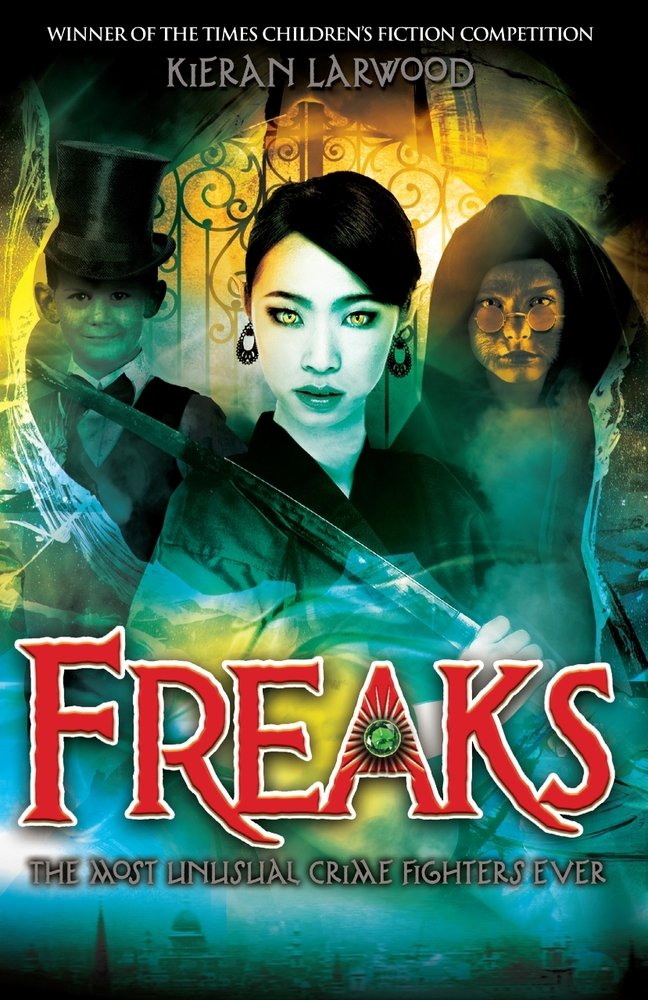
Larwood, Kieran: Freaks (2012)

Freaks cover

Freaks  is a mystery with some very unlikely detectives. Detectives who work in a freak-show are kind of visible wouldn’t you say? It must be difficult to blend in when necessary. But this novel occurs in the chaotic and messy London of the 1800s.

Sheba, the were-something (we don’t know at the beginning of the book exactly what she is) is the main attraction of the Grunchgrindle’s World of Curiosities at the end of Little Pilchton pier. One day a man (Plumpscuttle) buys her and the other attraction (a two-headed sheep) for his own show and takes her to London. There she and the other “freaks” of the show set up for the public every evening.

One evening a mud-lark named Till manages to sneak in and befriend Sheba. When Till goes missing her parents come to the show to ask for help. It turns out Till is not the only one who has disappeared on the mud-flats. Then one day, the gang gets a break in the case.

Freaks is a fun read. It has everything a 10-year old would like. The Monkeyboy likes to throw snot and earwax at the public, a ninja is part of the show and so are rats and a giant. London stinks terribly, there is a monster and the gang gets into strange and dangerous situations. Larwood has written a mystery with plenty of humor and action.

Kieran Larwood‘s daytime job is as a Reception class teacher at a Primary School. After working towards being published for quite a while, Freaks finally won The Times/Chicken House Children’s Fiction Competition 2011 and publication was in the box.

Bishop, Anne: Ephemera

Musical writers. What a treat they are. Anne Bishop is one such writer, one who knows how to make all of her chords fit together into a song that satisfies the reader. She manages to portray the darkness in people without stepping into the land of horror. I love dark fantasy when it is performed like this.

Like all of Anne Bishop’s stories, Ephemera is character driven. Generally two or three of them are three-dimensional, while the rest end up complementing the main characters. Ephemera comes from an idea of our outer world reflecting our inner one. What if that were literal? Playing with that idea brought about the Ephemera world (Reading Cafe interview). As we discover in reading these books, the world of Ephemera is ephemeral (transitory). One can never know where one ends up, seeing as one’s heart shows the way.

SEBASTIAN (2007)

German cover

“Long ago, in a time that has faded from memory, a mother’s tears forged the bridge that, ever after, connected the power of the living, ever-changing world to the human heart. – Myth”

Sebastian is a love story, but more than that it is a story about the choices we make. Do we dare to follow our dreams, or will we make “safe” choices? In the end it might not really matter, because the choices we make could very well all be the ones we really want.

Sebastian is an incubus, an incubus who has begun longing for something more than the life he is living right now in the Den of Iniquity. The Den of Iniquity is a place of ever-lasting carnival, a place where people come to fulfill those dark desires they have.

You can relax if you are worried that we are being cast into a place where the sex and violence is explicit. While the Den of Iniquity might well be a place where that is the case, Anne Bishop has been kind enough to keep us as readers away from the details.

Anyways, back to Sebastian. The Den of Iniquity has been his home since he was about 15. His past was not a good one with a succubus mother and wizard father. Sebastian’s mother left early on and his father left Sebastian’s care to others, people who were afraid of incubi. But Sebastian has turned out pretty well, thanks to Nadia, Belladonna and Lee (adoptive family). They have shown him that there is sunshine in a person. Now he wants someone to love.

BELLADONNA (2008)

Australian cover

“Heart’s hope lies with Belladonna.”

The Eater of the World is once more loose in Ephemera, free to wreak havoc where it sees fit. Dreams are invaded, monsters set free and lives are becoming darker due to its influence.

The only hope lies with Belladonna. Glorianna Belladonna is of the old blood, the blood of the Guides and Guardians. Her heritage is one of light and darkness. Only through the combination of the two is there a possibility of winning.

Unfortunately, Belladonna and Lee do not have all of the answers to her search for a solution to the Eater. She sends out a Heart’s Wish to Ephemera with the hope that someone will come with what she needs to save Ephemera.

In a sense that says it all. What price are we willing to pay to save the ones we love? I have no idea myself. In the world of fantasy people are willing to go to extremes to save the world and not just those close to themselves. Sometimes the price could end up being horrendous.

BRIDGE OF DREAMS (2012)

Australian cover

Anne Bishop pulls it off again. This time we get to hear more about Lee.

Ever since Glorianna Belladonna became Belladonna in every sense of the word, Lee has been frustrated, hurt and angry. Part of his anger is at Glorianna for placing herself in this position and for not going back to how she was previously. Another part of his anger is toward Michael, the Magician, for giving Belladonna the chance to make her choice, and for stopping him when Lee wanted to jump in and save her. Quite a bit of his hurt is toward the relationship that has developed between Michael, Glorianna and Sebastian. Why was Sebastian the one to call Belladonna back and not Lee? It seems unfair. Lee feels unwanted, and unable to come to terms with the way things have turned out.

When he stumbles upon wizards trying to invade one of Belladonna’s landscapes, Lee uses a one-shot bridge taking the wizards with him. He ends up in a city called Vision having to endure torture and the insidious whispering of the wizards.

Danyal, the Shaman, is sent to Vision to figure out what needs to be done to save the city from those places that no Shaman is able to see any longer. Shamen are like the Landscapers in that they take care of their landscapes. But unlike Landscapers they do not seem to have access to Bridges. Upon meeting up with other ways of doing things, Danyal is about to have his beliefs about the world challenged.

So, what can I say about Bridge of Dreams? I liked it. I like Anne Bishop’s version of the darkness that lives in all of us. Our shadows balance out the light in us. When we accept both sides of ourselves our potential becomes greater. All three books in the Ephemera series (trilogy?) follow the pattern of Anne Bishop’s other novels. I guess most authors have a unique style of writing (much like musicians), and sometimes that style works. In Bishop’s case I find myself embracing and enjoying her characters. Getting people to care about the characters in a novel seems to be what being an author should be about.


SOURCES


TRAILERS

Foster, Alan Dean: Pip and Flinx series

The Pip and Flinx series has spanned 35 years which is quite a long time to follow a series. Alan Dean Foster has written a typically young adult series. They are quite innocent and free of explicit sex and violence. I guess you could say that the Pip and Flinx series is fairly wholesome. Thankfully, Flinx is no angel. He is, however, a good person – for a given definition of good.

The series begins with Flinx as a child on the Planet Moth and ends with Flinx as an adult on the planet Cachalot. He has had many adventures travelling around the galaxy trying to figure out who and what he is. We are in the science fiction world with loads of drama and very little realism. I guess that is part of the charm of the series. Sometimes there is more fantasy in science fiction than there is in fantasy itself. All in all, the Pip and Flinx series has been an enjoyable journey. In spite of the writing being fairly average a lot of the time, I got caught wondering how the whole thing was going to resolve itself.

Flinx (later discovers his name is Philip Lynx) appears for the first time in For Love of Mother Not (1983). For Love of Mother Not was written after the first three books in the series, but for you as a reader it would be a good idea to read For Love of Mother Not first as it explains Flinx’ background.

At the time of For Love of Mother Not, Flinx is not aware of who he is or where he is from. On the planet Moth Mother Mastiff buys Flinx at an auction and raises him as her own. It does not take long for them to discover that there is something unusual about Flinx, and both decide that it is a good idea to keep Flinx’ erratic abilities under wraps.

One night Flinx wakes hearing an emotional distress signal. His empathic abilities are reading loud and clear for once. He goes out into the rain to see who is in trouble and discovers an Alaspin dragon that he names Pip. We never find out how Pip ended up on Moth, nor is it all that important. Pip’s venomous spitting abilities come in handy when the two of them go after Mother Mastiff and her kidnappers.

After having read For Love of Mother Not you go back to the original reading order. Because For Love of Mother Not was written so much later than The Tar-Aim Krang (1972) you will probably notice a couple of discrepancies. You will survive, believe me.

As The Tar-Aim Krang begins Flinx and Pip are still with Mother Mastiff on Moth. They discover a treasure map on a dead man. Flinx meets Bran Tse-Mallory (human) and Truzenzuzex (thranx) for the first time, while acting as their guide. Flinx and Pip end up travelling with the two to the Blight. To get there, they need to go by space-ship. Flinx’ empathic abilities will play an important part in the group’s discoveries.

Foster is not big on explanations of how Flinx and the rest travel from one solar system to another. To him the plot is the important part. Flinx and Pip’s interactions with others and their adventures are what drives this story up, up, up and away.

Flinx is still searching for clues to his ancestry in Orphan Star (1977). During his unwilling stay with the merchant Conda Challis, Conda hinted heavily about Flinx’ parentage. Flinx’ chase brings him into contact with the female Thranx, Sylzenzuzex, who just happens to be the niece of Truzenzuzex. Eventually, the pair of them end up on the edicted planet Ulra-Ujurr, where they meet a highly telepathic race (Ulra-Ujurrians).

Flinx and Pip now have their own space ship – Teacher – making the search for Flinx’s parents a whole lot easier. On their way they acquire a new pet by the name of Abalamahalamatandra (Ab for short). In The End of the Matter (1977) Bran and True turn up out of the blue looking for Ab. What a coincidence. That is the way it is with some authors. The coincidences line up. The human Skua September tells Flinx something of the Meliorare Society and the Qwarm (assassins) are sent after Flinx. Each book takes us a step closer to the end of Flinx’s search.

Love is in the air. Flinx in Flux (1988) shows us a new side of Flinx. I’m hopelessly in love with you, he tells Clarity Held. It cannot be, I’m an experiment. OK. So I exaggerate a bit. But he did tell Clarity Held that due to his experimental state, he felt that the two of them could not be an item. Trouble appears on the horizon in form of Clarity’s boss. He wants what Flinx has, even if he has to kidnap him. But Flinx has these strange abilities, and it might be a bad idea to be mean to him.

By now there are a whole lot of people who want to get to Flinx. There are the authorities who want him for various crimes. The Qwarm want to assassinate him and a few criminal bosses want to use Flinx. As we enter the world of Mid-Flinx (1995) Flinx has become quite a popular person. Maybe the saying “All PR is good PR” isn’t all that correct. To get a break Pip and Flinx go to Midworld. But breaks from trouble only happen to people who are not in adventure novels. On this semi-sentient planet Flinx and Pip learn to respect this dangerous planet, and also find that through this respect they have some protection when the baddies come to get them.

Sliding Scales: A Pip & Flinx Adventure By: Alan Dean Foster

In Reunion (2001) Foster once again throws his heroes Pip and Flinx around the galaxy in search of an answer to Flinx’s heritage. Somehow Flinx thinks that this will make his choice of saviorhood or not easier. Together Pip and Flinx discover more about the Meliorare Society, the eugenicists who experimented with Flinx and other children in their search to create the perfect human.

Due to the information they uncover, Flinx and Pip go to Aan space where the walking lizards live – enemies of both humans and Thranx. Once there, Flinx’s unusual abilities come in handy in uncovering information and keeping himself hidden from the Aan – who would like nothing more than killing a human.

In Flinx’s Folly (2003) Flinx discovers exactly what the Great Emptiness (mysterious force) approaching the Milkyway is. Getting that knowledge almost tore his mind apart, and he would like to avoid repeating the experience. Like all mysterious things, the Great Emptiness has its set of followers. The cult of the Order of Null is set on stopping Flinx permanently. Extinction of life is the goal to have it seems. Fortunately for Flinx, he has loyal friends who want to help him in any way they can. One of these is the love of his life, Clarity Held. I wonder if she really holds clarity.

Flinx is tired of the expectations and just wants to go somewhere peaceful to think. His AI-space-ship Teacher suggests the planet Jast. Jast is where the action in Sliding Scales (2004) takes place. As you’ve probably understood by now, the Pip and Flinx series isn’t so much about Flinx’s search for an identity, nor is it all that much about winning over the Great Emptiness. These books are mainly about the trouble Flinx gets into hopping from place to place.

On Jast three seemingly incompatible races live together in peace. The Vssey, Aan and humans live in apparent harmony though apart. When Flinx upon arrival gets attacked by one of the Aan, he loses his memory and ends up in an Aan artist community. A Vssey rebellion is in the offing, and Flinx and Pip get caught in the middle of it.

trouble-magnet-pip-flinx-adventure-alan-dean-foster-hardcover-cover-art

In his search for a super-weapon that might destroy the darkness, Flinx has problems with his space-vesse,l and the Teacher has to make an emergency landing on an uncharted planet. In Running From the Deity (2005) Flinx experiences for the first time what it is like to live without his headaches and his empathic abilities going haywire.

The prime directive of the Commonwealth is to not interfere with primitive species, especially when using technology. Flinx breaks that rule and ends up being worshipped as a god. These compatible beings aren’t any nicer than any other species, and two opposing sides on the planet both want Flinx for their own. This leaves Flinx running again.

In 1973 Foster wrote Bloodhype. Flinx appears in the latter half of the novel. In a timeline sort of sense this action and humor filled novel should appear after Running From the Deity and before Trouble Magnet.

Bloodhype is a powerful drug that addicts you the first time and kills you if you do not continue with it. A pretty good deal for the producers, I would think. Pip and Flinx end up trying to stop the Bloodhype industry and end up on the planet Repler. We get to meet the Vom and a revived Tar-Aiym Krang in psionic battle, with the Tar-Aiym Krang more or less on the Commonwealth’s side. So, drugwar and psionic battle make for an interesting scifi adventure.

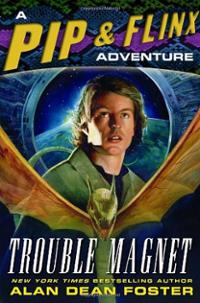
In Trouble Magnet (2006) a group of street-kids need to be rescued several times by Flinx. Once again Flinx has been side-tracked from his mission to find a solution to the problem of the Great Emptiness. As such, Flinx’s visit to Visaria seems part of a tendency to delay the ending of the series. Flinx’s aim seems to be to see if there is still any good out there worth saving, but Foster did not convince me of those intentions. Not one of his better ones.

With Patrimony (2007) Foster is finally back on track, both in terms of the quality of his writing and with the storyline. Oh, well. What would writers do without faithful readers (or suckers as anyone else would call us)? Flinx and Pip go to the planet Gestalt to follow-up on a clue they received in Trouble Magnet.

In showing his face, Flinx has once again come to the attention of the cult of the Order of Null. This time they are not about to fail in destroying him. Flinx is tracked and finally shot down in a river. His native guide is severely wounded but Flinx and Pip are OK. They are discovered and saved by the native Tlel. Together dangers are faced and Flinx discovers what he has wondered about his father.

Flinx Transcendent (2009) is the last story in the adventures of Pip and Flinx, or the last three stories in one novel. The first part of the story sees Pip and Flinx on the Aan home world. Flinx’s interactions with a young Aan are well-paced and well written.

Flinx is once again with the love of his life, Clarity, and his two friends, Bran and True. Once again, the Order or Null are after Flinx, and he will need the help from all of his friends to survive their attention.

And finally, Flinx faces the Great Emptiness that is speeding its way across the universe towards our galaxy. Flinx still does not know how to defeat it, but fear not, a solution will arise.

And so our journey with Pip and Flinx ends, or maybe not. The Commonwealth is a large place, and while Flinx might not again take main stage, he might very well appear in a smaller role – at least according to some of the speculations out there. I for one am finished with the Commonwealth.


ADAPTATIONS

  • Tar Aiym Krang (2M) An experiment with sequencers by Mark Earll Music.
  • Krang (aka Tar-Aiym Krang) music group mentioned by Wikipedia.

Viehl, S.L.: Stardoc

StardocBeyond VarallanEnduranceShockballEternity Row
Rebel IcePlague of MemoryOmega GamesCrystal HealerDream Called Time

Sheila Kelly Viehl is from South Florida. She is a USAF-veteran with medical experience from both military and civilian trauma centers.

She writes under several names – SciFi as SL Viehl, Romance as Gena Hale and Jessica Hall, Christian Adult Fiction as Rebecca Kelly and Dark Fantasy, Young Adult and Non-fiction as Lynn Viehl.

SHOCKBALL (2001)

Shockball is book no. 4 in the Stardoc series, but the first one I’ve read. Starting here was no problem. These are all pretty much stand-alone novels that concern the doctor Cherijo Viehl. Warning right away. If you do not like descriptive surgery in your novels, you will have a problem with parts of this novel.

Life has a tendency to surprise us. Sometimes the experience is enjoyable and sometimes, well, not so much. Cherijo Viehl is beginning to get used to the idea. But getting used to having wrenches thrown into what she sees as preferable, can make her angry with herself and her surroundings (most commonly with Duncan Reever).

Cherijo and Duncan are married. As far as I’ve understood, this happened after they became interested in each other when Cherijo was Duncan’s slave (albeit not the most slavish slave around). Now they are trying to adjust to each other’s strong personalities. Tensions are bound to rise. Both are the kind who tries to protect those they love, whether that protection is wanted or not.

Shockball begins with Cherijo and Reever on the Joren starvessel Sunlace. Cherijo is an adopted clanmember, and as such under the protection of her clan. Her clan-brother, Xonea, is the captain of the space-ship. His main concern is to keep Cherijo away from trouble, but finds this intention challenged again and again by Cherijo’s repeated refusal to stay away from danger.

In the previous novel, Cherijo and Reever saved a bunch of non-terran slaves from their masters and are in the process of returning them to their planets of origin. While doing this, they are both worried about the ticking bomb that is dragged along on their journey through the stars. Cherijo’s creator, Joseph Viehl, has gifted her with a spaceship, but Cherijo does not believe for one moment that there is nothing wrong with it. She turns out to be correct.

After having run so long from her creator, Cherijo ends up back with him when Joseph has League soldiers kidnap her and Reever from the Jorens. They are taken back to Earth and Joseph immediately finds joy in telling Cherijo about her future. She is to be his mate, something Cherijo finds repugnant. Reever is held captive as guarantee against her cooperation.

Complications arise when a group of underground Navajoes rescue the couple from the laboratory and take them to their lair. There they meet the Night Horse leader Rico (who seems slightly off). Now it is up to Reever and Cherijo to figure out how to get back to the Jorens without getting killed en route. But before they can leave, they also have to find a way to save the Night Horse from themselves.

Shockball is full of action. We tend to go from one scene to the other, quite often ending up with Cherijo having to use her surgical skills. This is a rip-roaring tale of adventure. There are no attempts at trying to explain how the groups are transported between star systems, nor does Viehl try to make sense of how such completely species are different-planet-races are able to interbreed. Instead this is an action novel placed in space. Viehl writes well and manages to entertain us the whole way.

ETERNITY ROW (2002)

In Eternity Row Reever, Cherijo and Marel finally live together as a family on the star vessel Sunlace. Duncan and Cherijo are trying to figure out how to combine parenthood with their duties, as most parents do. Some children are more precocious than others. Marel is one of them. She has a tendency to appear in the oddest places.
Sunlace is taking Hawk home to the planet of his father. When they get to Taerca, everyone they see seems to be suffering some kind of mysterious disease of both mind and body. Hawk has a difficult time when he meets with his father. Like the rest of the population, his father is fanatically invested in the planet-wide religion.

Later Sunlace goes to Oenrall, Dhreen’s home planet. Cherijo had promised him to go there and see if she could figure out what was causing the population’s sterility. Once they get there Cherijo and the people going with her find that the Oenrallians are manic and addicted to a nerve-desensitizer. But this is by no means the Oenrallians main problem.

Cherijo sees it as her duty to discover the cause of both problems. But the universe is not going along with her plans. Challenges are thrown the way of Cherijo and her loved ones, distracting Cherijo from her work as a doctor and researcher.

As with Shockball, Eternity Row is an action-filled novel whose main goal is to entertain. Viehl does this well. I haven’t read past Eternity Row, but did not find it problematic to end the series here. Being stand-alone novels makes it so much simpler to leave a series, although I have to admit to certain amount of curiosity about the future of the family of Brandon, Cherijo and Marel.

Lear, Linda: Beatrix Potter: The extraordinary life of a Victorian genius (2007)

Linda Lear has done an amazing job with this biography about Beatrix Potter’s (1866-1943) life.

Here in Norway our national TV channel NRK has sent Potter’s tales from time to time on children’s television (barne-tv). One of the times was while my boys were still young enough to watch children’s television. Potter’s tales are absolutely darling and the artwork lifelike. While Beatrix Potter was a popular writer of children’s books, her influence is also still felt in other areas.

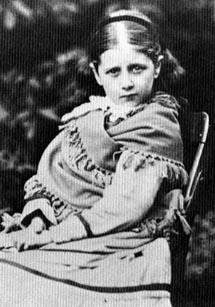
Beatrix Potter was born 1866 to Rupert and Helen Potter. Both were Unitarians and they were both of merchant stock. There was a younger brother Bertrand. The whole family were artistic. Rupert was an amateur photographer.

As girls did not go to school, and the family was wealthy, Beatrix had the advantage of having governesses until the age of 18. Life as a child in a wealthy Victorian family was very different to modern life. Nature was in, and there were no serious protests when Beatrix and Bertrand brought a variety of animals and insects into their school room to study and draw (and have as pets).

During summer holidays the family would go away from London to some country house or other. Beatrix and her brother would roam the landscape, scetch what they saw and study the material. Both became quite good at natural history. But in Victorian times, as today, non-scientists were seldom taken seriously by the scientific community. In spite of the quality of the work that Beatrix would research, she found that being a woman and a non-scholar was greatly to her disadvantage. Her work with fungi (mycology) shows an eye for detail and an understanding of her study objects that has caused the continued use her work in academicae.

In 1902 Potter published her first book about Peter Rabbit, and it soon became immensely popular. Today you can get her collected stories through Amazon with the artwork that she made for her books. I think you will find that Beatrix really knew what her animals were supposed to look like. Along with the very real locations used in her stories, her work is incredible. This is one of the best children’s authors from this period. I cannot praise the quality of her work enough.

One of her great passions in life was the preservation of nature. Once the money started rolling in, Potter began buying up Lakeland properties, restoring them to past glory. Once she died she deeded all of her properties to the National Trust for preservation as far as it was possible. Hill Top was her first purchase and life-long love. Of all of her buildings, it is the one that has been kept as she left it, and Beatrix fans flock there.

Eventually Beatrix married William Heelis, her solicitor. There were no children, but both used all of their energies on the Lakelands, trying to keep it away from investors that they felt would destroy its beauty.


1971: The ballet film was released, The Tales of Beatrix Potter, directed by Reginald Mills. Set to music by John Lanchbery with choreography by Frederick Ashton and performed in character costume by members of the Royal Ballet and the Royal Opera House orchestra. The ballet of the same name has been performed by other dance companies around the world.

1982: the BBC produced The Tale of Beatrix Potter TV-series.

1992-1995: The World of Peter Rabbit and Friends is an animated television series based on the works of Beatrix Potter, featuring Peter Rabbit and other anthropomorphic animal characters created by Potter. It was originally shown in the U.K. on BBC between 1992 and 1995 and subsequently broadcast in the U.S. on Family Channel in 1993–1995. The series has also been released on VHS and DVD.

2004: Potter is also featured in a series of light mysteries called The Cottage Tales of Beatrix Potter by Susan Wittig Albert. The eight books in the series start with the Tale of Hill Top Farm (2004).

2006: Chris Noonan directed Miss Potter, a biopic of Potter’s life focusing on her early career and romance with her editor Norman Warne.

Briggs, Patricia: The Hurog duology

“The Five Kingdoms” by Michael Enzweiler

Patricia Briggs has written the Hurog duology. As you might have surmised from this blog she is quite a prolific writer. Her books fall into the light entertainment category. The Hurog duology’s version of the Briggsian world-creation is placed in a world reeking of the middle-ages with all of its dragons, shape-changers, magicians and various other people.

I absolutely loved the Danish covers. Wow, what a cool dragon. I don’t think I’ve ever seen an interpretation like that. And it fits with the dragon of the story. This is probably one of the better stories that Briggs has written. Ward is a wonderful character, caught in his own trap, yet never quite giving up hope.

DRAGON BONES (2002)

Danish cover by Bent Holm

Dragon Bones is a stand-alone novel. Its main character is Ward, heir to Hurog. What you need to know about Ward is that his dad was, to put it mildly, a monster. Child-, spouse and animal-abuse were his main hobbies. Until he had managed to damage Ward enough to affect his thinking, he saw Ward as his rival. So when he dies at the beginning of the book, it would be fair to say that Ward did not feel like grieving.

Unfortunately for Ward, the damage done to him had enabled him to pretend to be quite dense. Undoing other people’s perception of himself turns out to be more difficult than Ward would like. Discovering a damsel in distress and the secret of Hurog both play a part in enabling Ward to figure out how to show himself as someone to be trusted. This brings the king’s attention to the Hurog family, driven by his paranoia of the world being against him.

Ward comes across as a believable character. He clearly struggles with the long-term effects of his childhood. But in learning about Hurog’s very secret secret and some truths about the people around him, Ward manages to feel less alone in his struggles. One of the first things Ward must do in getting people to take him seriously is to prove himself a warrior, taking him and a small group accross the kingdom.

The story is told in first-person, through the eyes of Ward. This is part of what makes Ward such a real person, but it also shows us the world around him through his experiences. The people around him are clearly filtered through the life of Ward, making us care more for him and for the people around him. Dragon Bones is quite an enjoyable introduction to the world of Ward of Hurog.

DRAGON BLOOD (2002)

Danish cover by Bent Holm

While Dragon Bones is a stand-alone story,  Dragon Blood depends on the reader having some knowledge of the world. It continues the story of Ward, and in this case Tisala the rebel, and love of Ward. Neither book is a romance, something I quite enjoy. I’m weird like that. For some reason I both dislike romance in books and yet really enjoy it at times. Romance done the Hurog way is great.

The beginning of Dragon Blood is quite brutal. We come upon Tisala while she is being tortured for information about the rebellion that has been realized in the wake of Ward’s exploits in Dragon Bones. She escapes and runs to Hurog. This implicates Ward in the mind of the king and the king demands that Ward be committed for mental illness. All of this comes on top of Ward having to prove himself politically able to his little kingdom. One might say that Ward’s life has a bit more excitement than is good for a person’s health.

Hurog means dragon, and dragons are showing up on the door-steps of the kingdom once more. Dragons have played an important part in the whole kingdom’s past history, not only Hurog’s. Thankfully neither book is very graphic, enabling them to be read by a younger audience (not too young). Neither violence nor romance is explicit. Upon finishing the Hurog duology, I was left with a sense of wanting more.


<

p>Dragon Bones and Dragon Blood are available as audiobook.

Gay, Kelly: The Better Part of Darkness (Charlie Madigan) (2009)

Cover art by Christian McGrath

There is something about Charlie that I find appealing. Her life is a mess in so many respects, but she, herself, is a really decent person. Kelly’s writing is, of course, alpha and omega in making the series work and helping me like it. I find it amazing that this is actually Gay’s writing debut.

The Charlie Madigan series is an urban fantasy one. They are meant to entertain. There are issues that come up in the books that are important ones, but like most novels out there on the market this is for the general public and not an esoteric philosophical LSD audience (Ok, that might have been a bit mean).

As with a great deal of the other urban fantasies out there the Charlie Madigan has a male/female action team. Since both Hank and Charlie work together, have a bantering tone between them and look quite good – well …

In The Better Part of Darkness we find ourselves in an Atlanta city in a possible future where scientists have discovered two parallel planes of existence. Surprise, surprise, angels and demons do exist although not exactly in the heaven and hell version that we humans are so fond of. We have been visited by them for thousands of years and they have been using us and the earth as a battleground for working out their differences.

Now that humans know about them, we won’t put up with their nonsense any longer and have laid down the law for them. A police-department has been established dealing especially with extraterrestrials. They are called the ITF (Integration Task Force). Charlie Madigan is one of the officers working for the Department and her partner, Hank.

Pretty early on in The Better Part of Darkness, we find out that Charlie had a dead-then-alive experience that seems to be changing her physically.

Charlie’s partner, Hank, is a siren from Elysia. He has the kind of voice that needs to be dampened, otherwise men and women would throw themselves at his feet and do anything he asked of them. This comes in handy in police-work as people really want to tell him the truth.

Her daughter, Emma, is a highly intuitive child, one with a great degree of empathy. She goes to Hope Ridge, a school for rich kids. Charlie can’t afford it on her salary, but her ex-husband, Will, is paying for it.

When Charlie gets called to her daughters’ school (with her partner Hank) she becomes extremely worried. The victim is Emma’s old baby-sitter, Amanda Mott. At first thought dead, it turns out that Amanda is “just” in a coma of some kind. Making the situation a whole lot worse is the fact that there are several others who have been found like Amanda, and they have all died in the end. It seems all of them have been exposed to a new drug called “ash”. It’s extremely addictive and once it leaves a person’s system, they die.

This is the mystery Charlie and Hank are to investigate. As you might imagine unexpected twists and turns do appear. As stated above, Kelly Gay’s writing is of high quality and kept me reading until the end.


Awards/nominations

2009 SIBA Okra Pick
2010 SIBA Long List Book Award Finalist
2010 RITA finalist, Best First Book
2010 RITA finalist, Best Novel w/Romantic Elements


My reviews on books 1 (The Better Part of Darkness), 2 (The Darkest Edge of Dawn), 3 (The Hour of Dust and Ashes), and 4 (Shadows Before the Sun)

Briggs, Patricia: Raven duology

“Traveller’s Orders” by Robin Walker

RAVEN’S SHADOW (2004)

Prejudice and fear seem to be recurring themes in Patricia Brigg’s novels. Raven’s Shadow is no exception. In this instance, the Travellers are the persecuted people. We see instances of this today. In general there seems to be a lack of trust towards people who do not stay in one place and become part of the community. It makes it a whole lot easier to blame them for something, as our links to them won’t be a strong as they would be towards a neighbor. Such is the world of Travellers in Briggs Raven duology.

Tier and Seraph are our two main protagonists in Raven’s Shadow. We meet Tier as he is on his way home from the war. Tier is a rebel. His father was a baker and the expectation was that Tier would take over the craft. But Tier wanted to see the world and did that. Unfortunately, he also ended up disillusioned about the state of the world.

As he enters a village he see a large bon-fire in the town square. A Traveller was burned suspected of using magic. Inside the town’s inn the citizens have joined in drinking to their “brave deed”. Left behind is a young woman. The innkeeper has decided to sell the girl to the highest bidder. Tier ends up buying her, Seraph a Raven traveller who has no reason to trust Tier. This is the beginning of the journey of Seraph and Tier, a journey fraught with danger and betrayal – you know the spiel. I liked both Raven’s Shadow and Raven’s Strike. While not complicated, they are easy to read.

Raven`s Strike

“Traveller’s map” by Michael Enzweiler

RAVEN’S STRIKE (2005)

Tier has been rescued and the family is taking it easy on the way home from the Capitol after the run-in with the wizards. Part of the way, they have chosen to travel with Benoin and his tribe. On the way they come to a village where a shadow creature has killed some of the villagers. The creature is taken care of, but the family soon realises that it is just a symptom of what is happening in the land.

At the same time, Tier seems to be having trouble recovering his magic. It seems to be fraying and drawn away from him. Seraph cannot figure out what the problem is, but slowly the family is being led to the ancient city of Collosae – the city where the Travellers came from.

Raven’s Strike gives us more background information on the Travellers and their roots. This background information turns out to be vital to Tier’s ability to solve the puzzle. The romance between Jes and Hennea takes up a bit of space.

Raven’s Strike tied up a few loose ends and was a good follow-up to Raven’s Shadow. They are both typical examples of Brigg’s writing: light, fun and accessible.