Tag Archives: #Religion

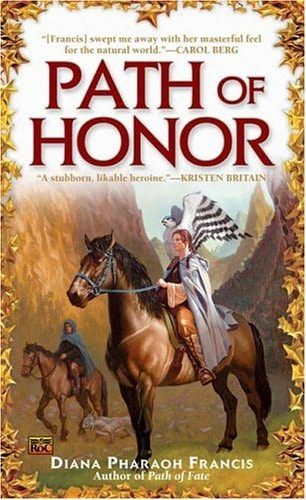
Francis, Diana Pharaoh: Path of Honor (Path of Fate II) (2004)

Path of Honor - Diana Pharaoh Francis
Cover art by Alan Pollack

One of the really interesting people in Path of Honor is Verit Aare. Verit Aare is the heir to the throne and eager to replace his father. As his father has been more or less absent the past six months, Aare’s lust for power is growing. Unfortunately for Koduteel (capital) and all of Kodu Riik Verit Aare is a psychopath/sociopath. While a lot of us have psychopathic traits, very few of us reach Aare’s level of sociopathy. According to Psychology Today one needs to show a lack of empathy (cold-heartedness, an inability to feel deeply); show a lack of shame, guilt, fear or embarrassment at ones actions; a tendency to blame others for their own failures, or no shame if confronted; show a strong ability to remain focused on a task; appear charming yet have a tendency toward pathological lying, and they seem comfortable even when found out; incredibly overconfident, as if they cannot fail; impulsive; incredibly selfish and parasitic; lack realistic long-term goals; and finally be prone to violence.

I feel certain most of you would be worried if a person like this lusted for the leadership of your country. Yet Aare seems to fulfil most of these criteria and for me that is the reason I find him especially fascinating and possibly revolting. Take how he treats his sister, the Vertina Emelovi, and what he does to his father’s hostage, Soka.

When Soka was nine years old his father had broken the terms of the hostage agreement. Something had to be done to avenge the wrong and it was decided that Soka would lose an eye. But the Iisand was not able to attend the removal and sent his son, Verit Aare, instead. Aare made the little boy remain awake during the procedure but had Soka drugged so he would remain docile while it went on. Finally, a map of Soka’s father’s lands was sown into the lid of his eye as a reminder of the deal. It had not been the Iisand’s intention that the procedure would be so cruel for the boy, but Aare liked the feeling it gave him.

Once again, Soka is in his power. Naturally, Soka is scared shitless. What will the Verit do to him this time?

On to Verit Aare’s sister. Poor Emelovi. She has to live with the man on a daily basis and he is not a good brother to have. Her fear of him is intense, yet he has kept his father duped as to the depths of his depravity. Perhaps that is because people tend to see what people want to see. Vertina Emelovi, on the other hand, is quite familiar with her brother’s cruelty. He expects nothing but complete submission. If she does not do what he tells her to, she suffers greatly. The first time she was made aware of that was when he killed her puppy because Emelovi had refused to dance with one of his friends. Since then, well. One does what one has to with such a maniac in the vicinity.

Aare does not like Reisil. He does his best to turn the court against her. Lucky him. Sodur (another ahalad-kaaslane team) has made his job much easier. On his part, Sodur did have the best of intentions. But what do intentions help when consequences are what determines the value of them. Poor Reisil, the consequences for her are stinky. Things are looking up for Aare when it comes to using his charisma and power-hunger against her.

Reisil is not completely alone. Kebonsat has come to court Emelovi on the chance an alliance between Kodu Riik and Patvermese might happen. Hmmm. Despite this task, Kebonsat does not forget his friendship with Reisil. Nor has Juhrnus. Reisil is thankful to have two such loyal friends on her side as it seems the rest of the powers of Kodu Riik have turned against her. But friends do turn up in strange places and sometimes lives change because of decisions one has made. She does have the “common people” on her side. But the common people do not have much power. Not really. Like us, the common people in Kodu Riik trust that the powers that be must be interested in the best of the country. Man, we are suckers, aren’t we.

Then two new powers turn up at court.


Reviews:


My review of Path of Fate
Francis, Diana Pharaoh: Path of Fate I (2003)

Path of Fate - Diana Pharaoh Francis
Cover art by Alan Pollack

Magic. Not all fantasy books include magic, but a lot of them do. Path of Fate is definitely about magic. We have the bond between the ahalad-kaaslane, Reisil-Tark’s evolving power and the power of the Patvermese magicians. All of these types of magic come together and open up a discussion about power, politics, gods and responsibility.

My rhetoric question of the day is: If you have power, do you also have a responsibility for how that power is used? Hell, yes!!! But just because you have a theoretical responsibility does not mean that translates into having to answer for your use/abuse in the real world. We all know that. Even I know that and I am not the best person in the world when it comes to paying attention to what goes on around me.

Reisil-Tark’s greatest role in Path of Fate seems to be to put a light to the abuses of power going on in and around Kallas during the story. We join her as her own sense of responsibility grows and embeds itself firmly into her mind and heart. Watching her come to realise that the people around her are not what she had thought/hoped for is an interesting process. It hurts when people we trust betray that trust. More difficult is seeing how we, ourselves, betray the trust of others. Reisil-Tark has to come to terms with that side of herself as well. My experience is that the reality of myself is the most difficult one of face. Being able to say that I screwed up or need to change a part of myself hurts. The pain is in many ways similar to the pain I have experienced whenever there has been need for surgery. This is the kind of pain I am sensing from Reisil when she has to come to terms with herself.

Path of Fate is Reisil-Tark’s story. She is an enjoyable character who does her best to deal with the life she has been given. Finding her strength in a world where she is pretty much alone is a process and we get to follow her on that journey.


Reviews:


  • Series: Path of Fate (Book 1)
  • Mass Market Paperback: 384 pages
  • Publisher: Roc (November 4, 2003)
  • Language: English
  • ISBN-10: 0451459504
  • ISBN-13: 978-0451459503

Canavan, Trudy: The High Lord (The Black Magician III) (2010)

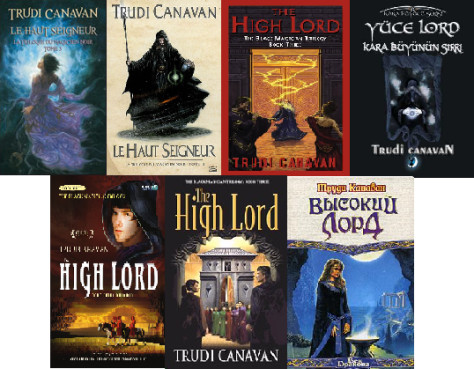
The High Lord - 7 covers
Top left: French cover
Top 2 left: French cover
Top 2 right: Cover art by Matt Stawicki
Top right: Turkish cover
Bottom left: Indonesian cover
Bottom center: Cover art by Les Petersen
Bottom right: Russian cover

My son and I recently finished reading The Black Magician trilogy together. What he discovered is that sometimes favourite characters die. He felt that was kind of cruel of Canavan. It is one thing when the bad guys die, but good guys (especially ones you really like)? Oh, well. It is unlikely this is the last time he experiences this. Despite that, he really enjoyed himself during our adventure. As did I.

The High Lord answers all our questions about why Akkarin uses black magic. It also shows us that the powers that be sometimes make long-term decisions that are seemingly wise at the time but turn out to be bad for future generations. Accidental deaths can cause a lot of trouble down the road.

I’m still impressed with Sonea. I think that growing up rich and powerful blinds you to the reality that most people live under. Peggy McIntosh discusses this phenomenon in her White Privilege: Unpacking the Invisible Backpack. Sonea growing up in the slums has made her aware of the harsher sides of life and made her more open to the possibility that status quo must change. Even Rothen and Dannyl, who are open-minded for wizards, fail to understand exactly how privileged they are.

My dad grew up under extremely difficult conditions. His mom was a paranoid schizophrenic and his dad disappeared after he had enjoyed German hospitality in prison camp. Torture got the better of him and alcohol was used to self-medicate. That left my dad as the responsible person at home from a very young age. His mom did her best, but, you know, being a paranoid schizophrenic without access to medication does not help in creating stability for your children. My mom’s childhood sucked as well. Her dad was an alcoholic and her mom worked her tail off to provide for them. When my mom has told me what it was like to drag a drunk dad up three stairs to get him inside the apartment – after he had pretty much spent his earnings on booze – well, I wonder how she made it????

But that childhood made them into pretty awesome people who have always been concerned with the greater good. They turned what could have made them bitter into something that helps others each and every day (even when they are now ancient =) ). Like Sonea, not all of their decisions have been wise. But like Sonea, what they have done is try to be true to the motto of “not doing unto others what you would not like to have them do unto you”.

Sonea grew up without her parents but was fortunate enough to get to live with her aunt and uncle. This is probably what saved her (and the rest of the city). Her hunger, poverty, the Purge, being bullied by the other novices and being suspected of everything “bad” by the adult wizards did not stop her from being true to her own values. Sonea’s situation is in no way unique in the world (except for the magic that is). Poverty, war, captivity, orphanhood and homelessness are all part of the lives of a huge amount of children and adults. That people are actually able to rise above their experiences and make the world a better place is amazing. Yet people do it all the time – just like my parents have. Which is why I find Sonea utterly believable. Her decisions regarding Akkarin seem inevitable and sensible considering the kind of person she is.

Sonea and The High Lord_by_ceara_finn24-d27a8o2
Picture photoshopped by Lauren Kelly Small

Tayend is my other favorite person of this story. He is our lad from Elyne. While homosexuality was not accepted in Elyne, homosexuals were not persecuted. Unlike Dannyl’s experience in Kyralia. Being a fan of the underdog, I would have thought that Dannyl would be the one to appeal the most to me. But Tayend has an innocence about himself that seems true. When that innocence is challenged, as it is in The Novice, Tayend rises to the occasion. He is loyal to Dannyl, in love with Dannyl and willing to avoid meeting with Dannyl if that is what it takes to protect him from the wrath of the magician’s guild. I wish I could have gotten to know him better.

Cery is back and this time he finds himself with a mysterious customer who seems willing to help him find whatever Sachakans arrive at Imardin. She turns out to be different from what he had originally thought, and that causes friction. But Savara still manages to be of assistance to Cery when he needs her help most. Who to trust or who not to trust when you are a Thief, that is the question.

Reading The Black Magician trilogy with my son was my third time through the series and I still had fun and learned new things about myself and the world.

In The High Lord Trudy Canavan gifted me with really fun words to read. During part of the book she had used the words Sachaka, Akkarin and Takan a lot. My mouth was having so much fun saying those sounds. Sometimes it is really awesome to be an autist (aspergian).


Reviews:


  • Paperback: 656 pages
  • Publisher: Orbit (4 Mar 2010)
  • Language: French
  • ISBN-10: 1841499625
  • ISBN-13: 978-1841499628

My review of:

  1. The Magician’s Guild
  2. The Novice


Meadows, Joshua: Sleeping God (Iyetra I) (2010)

Iyetra 01
Cover art by Joshua Meadows
Iyetra is an episodic series of novellas set in a hybrid sci-fi/fantasy universe.” Each novella can be read as a stand-alone-novella. Sleeping God is the first of the series.

“At the dawn of things, in the eon known as the Whole, Iyetra was a complete, harmonious world and its inhabitants lived with the blessings of the gods, watched over under the authority of the Advent.”

In the usual manner of humans, the Shattering is the effect of our own glorious stupidity. The two opposing factions that led to the Shattering were the Advent that used the gods and magic, and the Imperium that believed in machines and destroying those who could access the powers of the aether. As a result of the fighting between the two opposing factions, the gods chose to shatter Iyetra into pieces. But for some reason they did not want all humans to die out so they made it possible for them to live in the Chaos that came from the shattering. Living on pieces of earth (floaters) the size of cities/countries/continents people go about their lives the way people generally do. 

One of these floaters is Koton, the city that ambassador Tela Niala is supposed to negotiate an agreement with. Koton is led by the Magisterium, the “child” of the Imperium. While the Magisterium is not as fanatical as the Imperium, it does have a rather dim view of those who are able to access the aether.

Why Tela’s father would choose his own magically inclined daughter to travel to the male-dominated, magic-hostile floater Koton is a mystery. Perhaps he is willing to sacrifice her in a gambit to increase his own power-base. After all, even people who supposedly have a lot of power, like Tela’s high ranked senator father, can hunger after more. Tela was annoyed enough at her father that she demanded that the usual group of body-guards be left out. He relented. I found that suspicious as well. Tela’s father had to know something about the situation in Koton that we and she did not.

Tela starts off as an insecure graduate from magic school and becomes someone more comfortable with her own gifts/powers. While it might not be appropriate to call Sleeping God a coming of age story it certainly is a coming of self story. Being thrown into the jaws of death could have that effect on some people. Her father might have landed Tela the job as an ambassador, but in the end Tela earns that title through her own actions.


Reviews


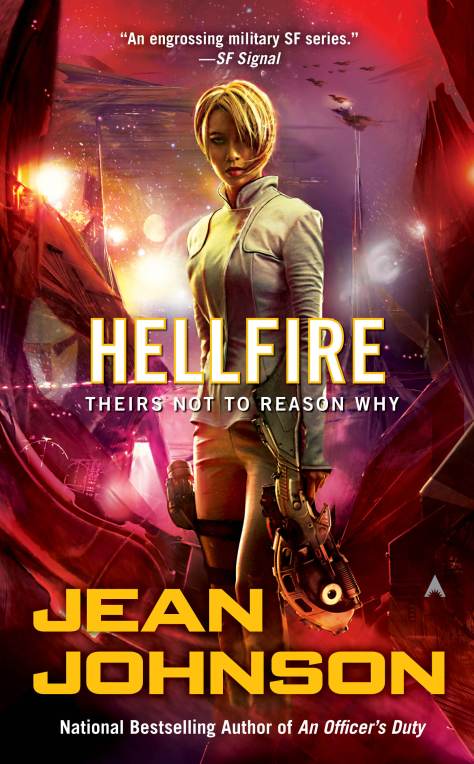
Johnson, Jean: Hellfire (Theirs Not to Reason Why) (2013)

hellfire - larger file
Cover art by Gene Mollica
Cover design by Annette Fiore Defex
Interior text design by Laura K. Corless

I started reading Hellfire and was immediately engrossed in the world of Ia and her Damned. Annoying really when a novel is this good. I believe I actually stayed up until 3 in the morning just because I did not want to go to bed until I knew how Hellfire ended. The ending was a sort of cliff-hanger – in the sense that the story did not end with Hellfire – yet not – in the sense that Hellfire had a conclusion.

…What if you could see the future? What if you foresaw that, three hundred years from your time, your entire galaxy would be destroyed in an overwhelming invasion? What would you do to stop it, when it would all happen long after you were dead and gone? (Jean Johnson)

Me? I don’t know if I would care enough to do anything about it. But what if the experience had been as if I, myself, had experienced the extinction of life? Sad to say, I’m not a particularly noble person. I doubt I could go to the lengths that Ia does in trying to protect the future of her galaxy. I doubt I would stay sane (well, as sane as I will ever be).

Does she see her life as the sacrifice it is? Oh, yes. What she had wanted for herself was to be a singer. Instead she became a soldier on her journey to ready the different breeds of people for the future. A future she would never experience herself. Her motivation? That was what being a pre-cognitive did. Especially being one as strong as she was.

People being the way we are, means we tend to disbelieve anything we have not experienced ourselves. Which is why Ia has let various creatures across the galaxy received snippets of her visions with information on how to avoid the potential future she wishes for them to avoid. This is where Ia’s type of pre-cognition varies from the type of clairvoyance that could be more paradoxical. Ia’s type shows a potential future based on a potential number of choices. By building on her reputation, prophecy by bloody prophecy, Ia has now arrived at Hellfire.

Upon reaching Hellfire Ia has gotten far enough on her journey that she has managed to convince the human authorities of her claims of pre-cognition. All it took was being right a certain number of times and they were more or less on her side. But three hundred years is a long time for most people to keep their minds on. It is the political games here and now that seem to matter, not what some great-, great- … grandchild of ours will be going through. Keeping the military leaders’ minds on what lays ahead is a challenge Ia has to win again and again throughout Hellfire.

With her ship, she and her crew travels around the galaxy recruiting more believers and fighting a whole bunch of battles.

For those of you who like technical details, you will get those. I haven’t a clue as to how likely any of them are, but they are nevertheless interesting.

For those of you who are fans of action and thrills, there are plenty of those as well. The above battles are only part of it. Ia gets herself and her crew out of various tight situations. While we already know that she, herself, has to survive until she has amassed a certain following, we don’t know who else gets to live along with her.

For those of you who like humour, don’t worry. We get plenty of that along with the bleaker moments. Jean Johnson has managed to lighten the story with some witty dialogue.

Finally, for those of you who like romance, there is that as well.

Add to all of this the writing of Jean Johnson and we have a novel that carries its middlehood well. I am certainly looking forward to Damnation.


Review:


  • File Size: 951 KB
  • Print Length: 479 pages
  • Page Numbers Source ISBN: 0425256502
  • Publisher: Ace (July 30, 2013)
  • Sold by: Amazon Digital Services, Inc.
  • Language: English
  • ASIN: B009RYS0PW

My review of:

  1. A Soldier’s Duty
  2. An Officer’s Duty


Reine, S.M.: Paradise Damned (The Descent VII) (2013)

Paradise Damned
Cover art by S.M. Reine
Model photo on cover by Marcus J. Ranum
Paradise Damned is the last novel in The Descent serial. Like all the rest, Paradise Damned is dark. We get plenty of violence. Part of that violence involves abuse of Elise in the Garden of Araboth.

SEPTEMBER 1, 5509 BCE

In the beginning, there was the earth, formless and empty. Darkness hung over the surface of the deep.

And then there was light.

It spilled over the waters, vast and powerful, and its creation severed the unity that had come before. This light was a separate entity from the darkness. Something novel and cruelly different.

The spirits called it “day.” Its opposite was called “night.” Between them was evening and morning – the First Day.

This division marked the end of peace in the universe.

Everything has been pretty much fucked up since then.”

S.M. Reine’s humour seems to fit mine just fine.

Half the fun of writing reviews is the preparatory work I do. This time I felt like checking out the ancient dates in Paradise Damned and ended up with the info at the bottom of this post.

I want to give S.M. Reine a special thanks for coming up with the old women of Oymyakon, Russia. No wonder these ladies are so tough. Oymyakon is so cold that it has the lowest recorded temperature of any permanent village (- 71.2 C). Brrr, not my kind of winter. Here, indeed, “Winter is coming”. Nothing phases these matriarchs. Give them hybrids or Malcolm, and they won’t hesitate to shoot either if they have to.

Paradise Damned is divided into four different stories that tie together. The first is from the good old ancient days, the next is from the good old days, the third is from Limbo with James and the last story occurs in Araboth 2010.

Longevity or immortality is a concept that I have found a lot of people would like to take part in. How would you stay sane? It seems to me that all the people around you would have to be immortal as well. Otherwise, you would have to watch loved ones die over and over all through “eternal life”. I see how people react to such losses already, and have to wonder how you could deal with it on such a time-scale.

Adam seems to stink at it. His one major loss gave him a liking for mayhem. Yatam and Yatai didn’t deal well with it either. In the end they got the release they sought. What about Adam? Will someone relieve him of the burden of life?

Elise is now back to her job of being a false Eve. She isn’t taking to it. Fighting against it brings grooming/training her way in the form of severe mental and physical torture. I wonder if her lifetime of abuse and pain is aiding her or hindering her in keeping hold of who she is?

Sometimes when I read stories about real life people who have gone through stuff like this (not the impossible things but the rest), I wonder how they managed to hold on to themselves through it all. I know it messed up my grandfather who was tortured during WWII. The post traumatic stress was so strong he tried to self-medicate to deal with the mental pain. The face he showed me as a child was that of a gentle and loving man who brought joy to my life. He managed to stay away from alcohol in his meeting with his grand-children.

Granted, Elise is make-believe, but not really. There are people out there who go through grooming/torture in order for another person to achieve some kind of result. Each and every one of these people will end up changed forever. While a lot of them will be able to hold on to themselves, some will not. The question in Paradise Damned is whether Elise manages to stay true to herself and her ideals in spite of what she goes through.

On a lighter tone for me (maybe not for the rest of you), Elise’s arrival at Oymyakon was amazing. I liked what she did and how she did it.

Once again S.M. Reine has done an excellent job.


Review:


  • File Size: 458 KB
  • Print Length: 400 pages
  • Simultaneous Device Usage: Unlimited
  • Publisher: Red Iris Books (June 3, 2013)
  • Sold by: Amazon Digital Services, Inc.
  • Language: English
  • ASIN: B00CWG91QE

My review of:

  1. Death’s Hand
  2. The Darkest Gate
  3. Dark Union
  4. Damnation Marked
  5. Dire Blood
  6. Defying Fate

<

p>5509 BCE: The Byzantine calendar dates creation to 1 September of this year.

4009 BCE: ” placing the creation of Adam no later than 4009 B.C.E.”

3504 BCE: Eve’s creations, angels that are about to hatch, are killed. (Paradise Damned)

3242 BCE: Adam’s need for human replacements for Eve comes about. (Paradise Damned)

Reine, S.M.: Defying Fate (The Descent VI) (2013)

Defying Fate
Cover art by S.M. Reine
Chapter one of Defying Fate reveals exactly who James Faulkner is and has been since 1993. Whereas Elise became a demon, James ended up an angel instead.

There is a need in me to try to understand something about the characters I meet in various fictional and non-fictional works. In Defying Fate it is easy to understand a person like Zane St. Vil. Zane is a kopis with the Union. He is of average intelligence and pleased with the power and firepower the Union brings him. He is a coward at heart and bullyish on the outside. Zane will always do what makes him seem bigger and badder than the rest and if he meets resistance he will use the greatest force possible.

Then we have a person like James. Ultimately, I know that James will do what serves James the best. But what route is he going to take? We are talking about a highly intelligent man with a devious mind and lots of power at hand. He is perfectly willing to harm the people he loves if he thinks it will serve them in the long run, in spite of him never having had the gift of prescience. A person like that is difficult to predict.

I won’t pretend to understand James. His personality has so many twists and turns that I cannot follow along. I imagine part of that personality has come about because he has had to hide his nature from Elise and every other person he has met since his change. Part of it has been with him all along, but as we tend to be the sum of our parts, being an angel would have influence on some of what James does.

Nathaniel is the perfect son for him. This is one powerful kid. James needs a person who exceeds his own abilities so he can stop seeing himself as the epitome of witchcraft. In addition Nathaniel is a 12-year-old in the way that only peeved-off and disappointed 12-year-olds can be. He’d practically worshipped his father ever since he discovered who his father was. Then Nathaniel met the person behind the myths and found that James was not as glorious as he had been made out to be.

Nathaniel is like Elise in many ways. He is fiercely loyal to those he attaches himself to and he will do just about anything for them. In this case that means saving Elise. James says he cannot come along and Nathaniel pretty much says that James has nothing to say in the matter. In the end James brings Nathaniel along because a coming together of choices leaves Hannah dead. Poor Nathaniel.

Gary Zettel is a dedicated and driven leader of the local unit of the Union. He and Allyson are probably the two worst people the Union could have made kopis and apsis. The two of them together are a nuclear bomb waiting to explode. Their potential for destruction is enormous and, like James, they don’t care who gets hurt along the way. Well, James cares, but he still does it. Gary and Allyson on the other hand follow the teaching of “ends justifying the means”. They are also unpredictable.

With a group of people like this Defying Fate can only be one thing – full of thrills. My goodness, Reine writes action well and her descriptions of Malebolge are a delight. Dark, violent and crazy is what Defying Fate is.


Review:


  • File Size: 415 KB
  • Print Length: 432 pages
  • Simultaneous Device Usage: Unlimited
  • Publisher: Red Iris Books (April 4, 2013)
  • Sold by: Amazon Digital Services, Inc.
  • Language: English
  • ASIN: B00C7EPL42

My review of:

  1. Death’s Hand
  2. The Darkest Gate
  3. Dark Union
  4. Damnation Marked
  5. Dire Blood

Reine, S.M.: Dire Blood (The Descent V) (2012)

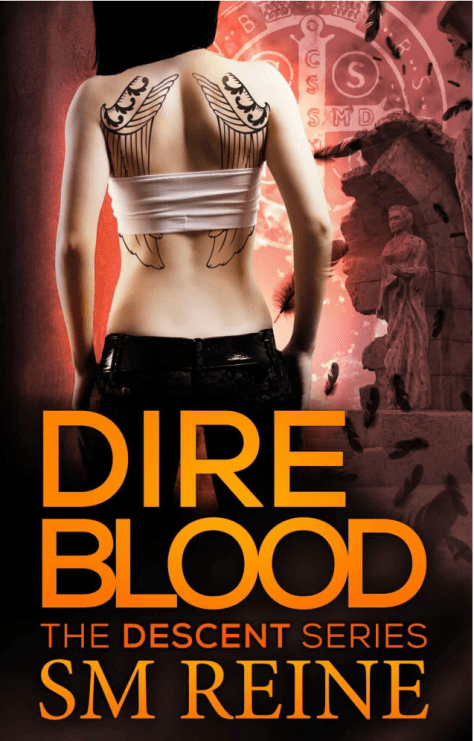
Dire Blood
Cover art S.M. Reine
I’ve had some strange and terrible things happen in my life. Most people have. I grew up in a home with parents who had managed to stray from the original paths their lives might have taken. Instead they changed what they had grown up with into a new type of family life. But the consequences of the lives they had grown up with were there. And let me tell you, their growing up years were extremely difficult. But they changed the script of their lives.

Maybe this is why I prefer Elise over James. Elise continually tries to change what life throws at her into something that will keep the balance between different types of people. James, on the other hand, is driven by his ambition. Both grew up with challenges, although Elise’s seem much more extreme than James’ challenges.

When James was a kid it became apparent that his talent for magic was extreme. At nine years old he taught three girls who were older than he. He thirsted for more knowledge of magic. Conquering magic became his goal in life, no matter what he might end up sacrificing to get there. Sadly, he was good at everything he tried his hand at. I say sadly because in James’ case all of his success turned out to give him a skewed sense of morality (at least it seems that way to me). That affects his relationship with Elise and just about every other person he meets. To him demons are dirty, filthy, evil creatures who deserve only death. Humans are the important breed to him, the ones he needs to protect.

James’ coven has been under the rulership of the angel Metaraon for years and years and years.

Metatron: (Metatetron, Merraton, Metaraon) A great angel honored as the angel of presence, chief of ministering angels, chancellor of heaven, and whom maintained the world.

<

p>The coven has provided Metaraon with girls who are taken to a garden to be with Adam (or Him / God). While James was young Metaraon came to the coven to take away a young girl (Ariane). Metaraon’s ultimate goal was to create “The Godslayer” (yes, you are catching on now, huh? ;= ). Ariane was matched with Isaac Kavenagh in order to create a baby. Ariane became Isaac’s apsis so the two of them would be bound to each other. When Ariane was 16 and Isaac 20 years old Elise was born. And who is Elise supposed to be????

One of Ariane’s co-students was Hannah Pritchard. Hannah later became involved with James and she and James had a son – Nathaniel. If you remember, James found out about Nathaniel in Damnation Marked. James now discovers that Hannah has kept the knowledge of their son from James because of the kind of person James is. That’s got to hurt. James is the god of rationalisation and so manages to keep on finding justification for his actions and ways. Some of the choices he makes bring him and Hannah into great danger. Danger from which Elise is going to have to save them.

As you discovered at the end of Damnation Marked, Elise survived her death. She was changed into a demon of the kind that Yatam and Yatai were. For a kopis that had to suck. All of a sudden she has become what she has fought against her whole life (ever since she was able to hold a falchion). Part of that change has brought confusing urges and a look into other people that she isn’t understanding. So, she is confused, angry and worried.

When Nathaniel turns up, what does she do? Well, in true Elise style she drops everything and goes off to help James. Anthony has stuck with her through thick and thin, but this time he says no thanks and leaves Elise and Nathaniel to the job. And what a job this is turning out to be. Throughout Dire Blood I am reminded of why I like Elise so much (and now Nathaniel as well). Sure, she is a mess, her life has turned up-side-down and she has no idea what is happening to her. So what. Life has to go on and a girl’s got to do what a girl’s got to do. If that means saving James with his magically talented son coming along, then that is what she will do.

Action. Is there action in Dire Blood. Oh, yes. Plenty of that. I had fun with both the action and the background information on our main characters. As usual I loved S.M. Reine’s writing. She does an excellent job with this kind of fantasy.


Review:


  • File Size: 482 KB
  • Print Length: 428 pages
  • Simultaneous Device Usage: Unlimited
  • Publisher: Red Iris Books (December 23, 2012)
  • Sold by: Amazon Digital Services, Inc.
  • Language: English
  • ASIN: B00ASDEHLM

Source: Angelology


My review of:

  1. Death’s Hand
  2. The Darkest Gate
  3. Dark Union
  4. Damnation Marked

Lindskold, Jane: Wolf’s Blood (Firekeeper Sage VI) (2007)

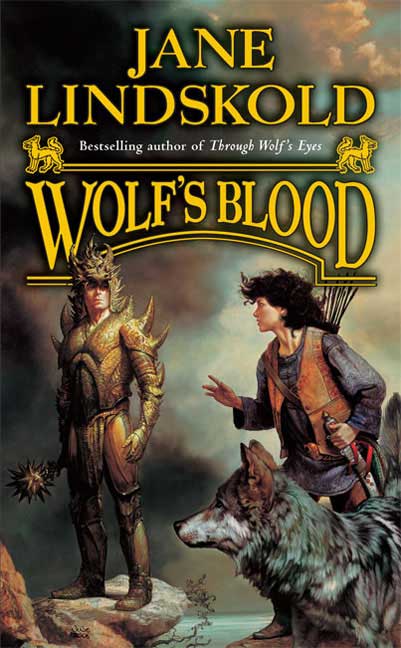
wolf's blood
Cover art by Julie Bell

I really am an airhead. I managed to press publish before anything had been written. Sorry if that confused you all. Here is the “real” version of my review.

I hadn’t bought this last installment of the Firekeeper Saga until my son asked me to. We had read the previous five novels together and he really wanted to know how it was all going to end. Reading together is an experience more people should be able to enjoy. As I have said before, this is one of the major advantages to having a child with dyslexia.

Jane Lindskold made Wolf’s Blood as much fun to read out loud as she had made the other five. Her language is intelligent and her vocabulary varied. Again I found myself forgetting to follow the plot as I got so caught up in the intense experience of tasting Lindskold’s prose. That didn’t really matter because I had cheated and read through the novel on my own before reading it to my son.

One thing I have wondered is how the Firekeeper Saga can appeal to both an eighteen-year old and a 48-year-old at the same time. What is it about these characters that the two of us find so fascinating?

Firekeeper and Blindseer

Part of it most definitely has to do with Firekeeper and Blind Seer. The whole idea of our wolf-girl trying to find her place in human society and making sense of us all works for us. That Firekeeper often finds herself flummoxed by human society is understandable. All of our various religions and political views are confusing and usually you have to be an insider to understand all of the unwritten codes that rule us. She is an alien and will remain an alien for the rest of her life. But Firekeeper is an alien with a foot in human society and with people who love her and Blind Seer to bits.

I’ve been trying to figure out how Firekeeper was changed by querinalo. In Wolf Hunting we see that something did happen to her. My personal belief is that she became even more firmly a wolf in her heart and head because of her chant during her fever. Blind Seer probably did not change much as he beat the crap out of the source of the illness, but his view of himself changed drastically. Having come from a people who hated magic fiercely would make his adjustment to the “new” him a challenge.

Derian

Derian_and_Eshinarvash_by_Fortunes_Favor (1)
Derian and Eshinarvash by Fortunes Favor

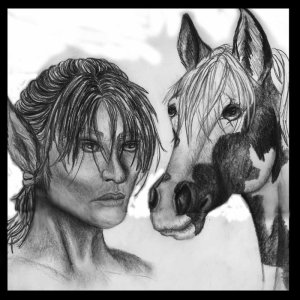
Derian’s change was a bit more visible. This portrait of Derian with Eshinarvash by FortunesFavor shows how he has become a bit more horselike. His ears and forelock are especially telling. Derian struggles terribly to accept his new looks. His greatest fear is how his family will perceive him now that he “looks like a horse”. I would freak out myself if I woke up after an illness and discovered my face and outer extremities had metamorphosed into a blend of human and animal.

Derian also, quite understandably, worries about what women will think of him. Looking past our exteriors seems to be a challenge for a lot of us (myself included). It’s so easy to get hung up in insignificant details all the while forgetting about the significant ones (like personality and temperament). As the saying goes, where there is life there is hope. For Derian this is true (as you will see for yourself when you read Wolf’s Blood).

Perspective

Lindskold presents things from various points of view. Being on the spectrum makes this doubly important to me. I have learned much reading authors like Lindskold. She, too, has been part of a teaching staff who have all helped me understand people.  Perspective changes good guys to bad and vice versa. If there is one thing I have learned in this life of mine, it is that perspective matters.

Enemies

War is a strange thing. King Bryessidan and his compatriots’ desire to take over the gates makes perfect sense. They had convinced themselves that they were being slighted and hindered in their “noble” purpose. Therefore they were justified in planning and executing an attack against the Nexus Islands. Seen from the Nexans’ side that is an erroneous argument, but to the winner goes  the writing of history.

I also found myself understanding Virim. What he did was a terrible thing, but he never intended for querinalo to be so bad. But when it was he took advantage of it and found it difficult to let go of the apparent advantages to its system.

The ending was good. I knew this would be the result, but it needed saying and happening.

Jane Lindskold has been a pleasure to read with my son. The Firekeeper Saga kept him asking for more. Being the fantasy nut that I am, it is a pleasure whenever my sons enjoy the same literature I have enjoyed.


Reviews:


  • Series: Wolf (Book 6)
  • Mass Market Paperback: 736 pages
  • Publisher: Tor Fantasy (January 2, 2008)
  • Language: English
  • ISBN-10: 0765353741
  • ISBN-13: 978-0765353740

My review of:

Gimpel, Ann: Earth’s Requiem (Earth Reclaimed I) (2013)

earth's requiem

Earth’s Requiem is the first installment of the serial Earth Reclaimed. Being a serial, it did what all proper installments of a serial should – ended on a cliff-hanger.

I should probably tell you that there is explicit sex in Earth’s Requiem but no explicit violence. The sex was consensual and safe. Here in Norway teen-agers read this kind of stuff. Other places have other rules.

If you check out Ann Gimpel’s blog, you will see that she has been writing fiction since 2009. She has generally written urban romantic fantasy. Earth’s Requiem is my first meeting with Ann Gimpel and it was sent to me as a reviewer’s copy.

Earth’s Requiem is not urban romantic fantasy. Instead it could be called apocalyptic romantic fantasy. I’m calling it fantasy because we are dealing with the old gods of celt mythology but it might also be deemed science fiction because of the Lemurians who have entered the Earth through gates opened by – you guessed it – humans. We humans are stupid and curious little monkeys. If there is a lever to be pressed, a ritual to be performed or aliens to be contacted we will do our be to do the deed. I’m that dumb myself. When I was a kid I would put a knitting needle into the wall sockets just because my dad had warned me not to. I’ll still do really stupid stuff just because I wonder what would happen if …

Once I started looking for info on the gods in Earth’s Requiem, I became fascinated with Celtic mythology. The celtic gods we get to meet are:

  • Fionn mac Cumhaill: God of wisdom, protection, and divination. A warrior-hunter and god of the wood-lands.
  • Bran the blessed / Benedigeidfran: God of prophecy, the arts, leaders, war, the sun, music, writing.
  • Arawn: God of the underground kingdom of the dead. Revenge, terror and war.
  • Gwydion: Greatest of the enchanters, warrior-magician. Illusion, changes, magics, the sky, healing.
  • Dewi: Dragon goddess

As this is a romance novel all four human-like gods are devastatingly good-looking. Fionn mac Cumhaill is the god we are particularly interested in. He is the paramour of our main protagonist, Aislinn Lenear, whose mother was Tara MacLochlainn. Tara MacLochlainn was thrown into a vortex by one of the new rulers of the Earth when her sanity was insufficient to please the Lemurians. Aislinn’s father had already been killed by one of the Dark gods. The Lemurians and Dark gods fight each other for dominance of the Earth and humans are being used as their tools.

While Aislinn has realised that all she is to the Lemurians is a tool, she has been so wrapped up in her grief that she has been unable to see past that. The compulsion that has been laid upon her and all humans under the thumbs of the Lemurians might have something to do with that inability as well. But after three years, Aislinn meets the above Fionn and he manages to rescue her from that compulsion. Together they spear-head the resistance that includes humans and celtic gods.

It wouldn’t be a romance novel without some pretty complicated inner dialogue about whether or not to love a person, how to love them and all of that other stuff. I always tend to zone out when romance comes along and that is a pity because Ann Gimpel writes well enough to deserve a romance reader that can appreciate romance. I enjoyed the action and the premise of the resistance group and the fascinating stuff this story led me to on the net.

Murray, R.J.: The Event (Tales of the Triad I) (2011)

The Event

If an author is going to create an Apocalyptic event he might as well do it thoroughly. Killing off seven billion people overnight seems to be pretty thorough to me. Messing with the environment and changing the stars and planets we usually see adds to that thoroughness. R.J. Murray shares such an event with us in The Event. The Event appears to be a science fiction tale that slowly but surely leans toward fantasy. Not fantasy as we know it but rather new technology that has to be developed due to the teeny tiny damages wrought by Earth’s changes. Mutated people that have the qualities we find in traditional fantasy adds to the fantasy feel of the story.

As with other apocalyptic tales, we find that the qualities people already have seem to intensify in times of crisis. This is a normal trait in humans. Any type of traumatic event tends to pare down all of our extras leaving some sort of quality central that we draw upon. This is when we see a person run back into a mall again and again saving people’s lives while others break into buildings raiding them of wares, beat up others and do other heinous deeds. People are people whether our skyline changes or not.

The mutations we see are people whose bodies morph into something other than they were used to being (that is, those who did not turn to dust or remain human). Let’s see what we have:

Wizards are people who find themselves younger/stronger/longer-lived and able to handle the tools left from before the apocalypse. All races have their own wizards.

Elves also seem to be long-lived and changed into a stronger/younger version of themselves. But they seem more attuned to plants and living creatures rather than technology.

Dwarves are like the ones in stories: like to live underground and have an affinity for stone. Dwarves are shorter and more compact than humans. They will probably end up being longer-lived as well.

Humans are more numerous than the others and breed easier. There really isn’t much more to say about them.

Goblins are like the goblins we know from epic fantasy. There are various types, sizes and numbers. Most of them live underground or underwater. They too have wizards.

Thankfully Murray hasn’t fallen for the temptation of making people smarter or dumber than they were just because they happen to be elf, wizard, dwarf or goblin. There are qualities that are intensified but if you were dumb as bread before the apocalypse, well, you are going to remain dumb as bread – and probably dead within a very short time. Some of the people have to learn the hard way and for some that means they end up dead.

That probably tells you that it is not all happy endings. In spite of that I would not say that The Event is particularly dark. It is more like the traditional sword/sorcery stories in tone. I’m guessing this is a young adult story. It’s a pretty straight-forward tale without explicit violence or explicit sex. There is action and plenty of it.

Murray builds his world for us showing us how people become what they are and what happens to the Earth itself. By the end I felt pretty comfortable with the whole thing. I felt there was a proper ending although there was a tiny hill-hanger showing me that a continuation was on its way.

A pretty enjoyable tale that looks as if it has great potential.


Reviews:


  • Print Length: 398 pages
  • Sold by: Amazon Digital Services, Inc.
  • Language: English
  • ASIN: B0083CMJ74

McMillin, Dean C.: Shadowslave (The Shadewright Cycle II) (2012)

Image

Dean C. McMillin has written the sequel to Shadewright: Shadowslave. At the beginning of Shadowslave we get a synopsis of the storyline in Shadewright.

Huge brag before we get down to business. It has been a while since I read Shadowslave and I needed to take a quick look before getting back the feeling I had with this world. Don’t you know, I had to sit down and read the whole thing over again. A wild guess might tell you that I really enjoyed McMillin’s writing.

The Shadewright Cycle (at least the first two installments) has some interesting characters and important themes along with tons and tons of action, humour and romance (yeah, I guess I could call it that). I think Shadowslave is fairly dark, but not too dark for young adults. Nor is there very explicit violence or explicit sex in it. There is some gore though in connection with homununculi and a strange baby.

Back to my favorite part – the characters. Arick the Arcwright, Lord of Lightning T’Gantas is my favorite character. He seems kind of “simple” to the people around him. Shadowslave shows us that Arick definitely is not. He does, however, lean toward the clumsy and spectacular and explosive. That man is a wandering accident waiting to happen. Arick has to be the luckiest unlucky guy I have ever had the pleasure of meeting. McMillin made me fall in love. Praise, praise, praise for Arick’s character.

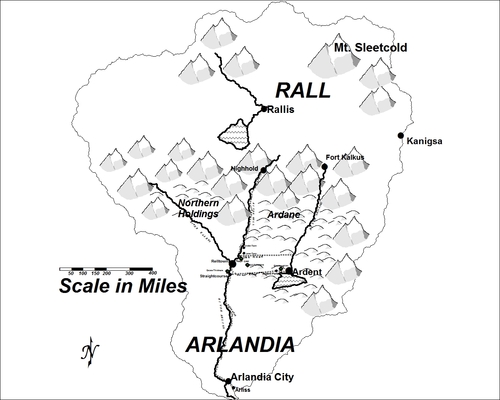
Racism. Hmmm. Plenty of racism in Shadowslave (and Shadewright). The Phantist, Serjeant Despanya Euran and Duskron are all three greyskins. That means that they have grey skin and are somehow tied to the Shadows, with the potential of being shadewrights. The degree of talent varies and Despanya has chosen to deny that side of her completely. Like our own world skin colour matters a great deal in the Shadowworld. Despanya has double-trouble in that she is a woman as well. Because gender does matter in Arlandia and Rall.

Arlandia and Rall

The Phantist is our main character. He worked hard in Shadewright to develop his abilities as a shadewright and became quite proficient and popular because of it. He also got into trouble with a voice he hears emanating from the earth. That threat in his life follows him into Shadowslave along with his meeting another dangerous entity in Shadows. I kind of think of the Phantist as the awkward hero. Maybe it is his character more than any of the others that leads me to think of the Shadewright Cycle as young adult. His tale is a coming of age story in the fantasy way.

Emm-Ma, the Quicklime Girl, is a very strange babysitter with an even stranger child to take care of. The two of them are fascinating characters. I can’t say more. I want to, but I can’t. I liked her though and strangely enough I liked the baby.

Healer Malleck and Colonel Brendan are into genetic tampering. Healer Malleck more than the Colonel. Both are willing to employ pretty bizarre and dangerous tools to get ahead of “the other side”. Sound familiar to any government at all? Is there any government that does not do this??? Two men who are extremely dedicated to their beliefs.

Finally we have Lesander. Or maybe Lesander’s property would be more correct. Something really strange is going on on Arliss Island. The Phantast is essential in figuring out the mystery and Duskron desperately wishes it was not so.


Review: Brian P. McKinley


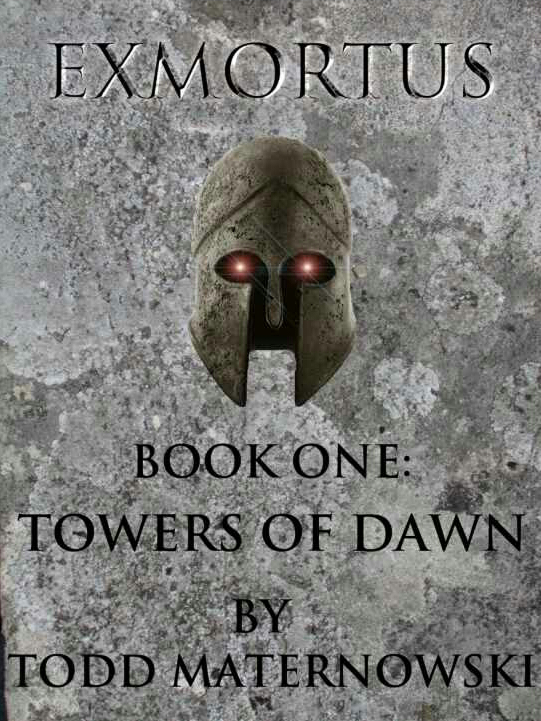
Maternowski, Todd: Towers of Dawn (Exmortus I) (2011)

Exmortus

Todd Maternowski states:

(Exmortus) is NOT intended for children, unless you like your kids reading about grisly murders, sex magic and genocidal demons, in which case, it IS intended for your kids.

Exmortus is in part a coming of age novel. As such I guess you could call it a young adult novel (keeping in mind the above warning). But it is also about the arrogance that comes with believing that you have the correct truth.

The Knights of Exmortus Abbey believe that their path is the correct one. They get to see a whole lot more of the more challenging sides of life than the people living inside the great wall. Ash Xavier is one of the apprentices hoping that he will make the rank of Knight. Ash is incredibly smart and knows it but he has no idea how to apply his knowledge to real life. That is what Speed and Ziggy (the duo) show him while his fellow apprentice, Simon, shows Ash that there are alternative ways of thinking.

Getting his dreams smashed within a few hours is certainly a factor in helping Ash grow. The demons that destroyed the Abbey are on Ash & company’s tails through much of the novel. People they thought they could trust (at least Ash did) show themselves as traitors while people Ash had thought of as evil end up getting Ash & company out of trouble.

We get plenty of action, some philosophising and some enthusiastic sex. The action is graphic at times while the sex is semi-explicit (probably not new to most teenagers).


Reviews:


  • Series: Exmortus
  • Paperback: 156 pages
  • Publisher: CreateSpace Independent Publishing Platform (August 1, 2011)
  • Language: English
  • ISBN-10: 1463788177
  • ISBN-13: 978-1463788179

Hartman, Rachel: Seraphina (2012)

seraphina complete

There are tons of reviews of Seraphina out there. Seriously, tons. Most of them praise Rachel Hartman’s writing to heaven and with good reason. Believe it or not, this is actually Hartman’s first novel. Her grasp of the flow is amazing. This is definitely an author to follow.

What genre is this? Well, that is a toughie. Like The Intergalactic Academy blog points out in their review, there are reasons one might suspect the world of Seraphina lies not only in a fantasy universe but also in a science fiction one. You would be surprised at the number of stories out there that seem to be fantasy (and are) but end up having a basis in humans having come to another world.

One of the traditional conflicts between humans and dragons in Seraphina has to do with humans invading the continent of the dragons. This might be one hint as to the otherworldliness of humans. The other is as TIA points out some of the vocabulary.

How the wars began in the first place is not commonly known, but as Seraphina is lucky enough to have a dragon music teacher (Omra) she learns of these matters. That her father happens to be the local expert on the treaty between humans and dragons has given Seraphina more knowledge than the usual citizen. There is a reason for her father’s expertise. He is the father of a girl who is half-dragon/half-human. Seraphina’s mixed race must be hidden from the knowledge of both dragons and humans as such a relationship is thought of as disgusting. But it is interesting that such a relationship is even possible. Perhaps that means that a dragon’s transformation into human is on a genetic level.

When peace was forged, one of the consequences was that dragons could no longer be among humans in dragon form. Dragons society seems to be ruled by logic rather than emotion. To them becoming human is a shock to the system as they are drenched in feelings they do not understand. Emotions are forbidden and all memories pertaining to such emotions are excised upon returning to dragon form. Such excision could mean that the dragons have some form of advanced technology unless the excision happens through some kind of paranormal ability.

Seraphina’s mother took human form and fell in love with Seraphina’s father. Seraphina was the result of that match. Sadly, Seraphina’s mother died at child-birth. Child-birth is the time her father discovered that Seraphina’s mother was a dragon. This has to do with the color of dragon’s blood. Seraphina herself showed no sign of the match until puberty. At that time she gained scales on parts of her body and a gigantic degree of self-disgust. In fact, her disgust ended up being so strong it led to self-harm. I have absolutely no trouble understanding why the self-harming happened. When one’s difference is so readily identifiable, the temptation to remove it must be staggering.

There are some positive factors in Seraphina’s life. Her music teacher Omra has stuck with her since her dragonhood was revealed. With him she does not have to fear revealing her forbidden race. As I said earlier, Omra is Seraphina’s music teacher. When Seraphina showed the same kind of talent her mother had had, Seraphina was permitted lessons if they were held out of sight of her father. Music has led her to the position she now holds – as the assistant to the court composer.

Seraphina is our protagonist. An excellent protagonist. She has depth and character in a way that only the British can manage to convey. Understatement seems to be something the Brits get through their mother’s milk. Hartman attacks a great deal of society’s crueller sides gently and with enough of a sting that the reader feels it. (I feel it) Such writers are a miracle to me, something I can admire yet never aspire to be.


Reviews:


Lindskold, Jane: Wolf Hunting (Firekeeper Saga V) (2006)

WolfHuntingJB
Cover artist Julie Bell
My favorite Firekeeper cover

When Jane Lindskold got Julie Bell to do the covers for the Firekeeper saga she made the best choice possible. Julie Bell’s wolves and people are incredible (see link above). If you have the chance, you should check out her artwork.

Once again my son and I read about Firekeeper together and once again we were richer for it. I believe this is the only advantage to having a child with a serious case of dyslexia. In spite of his age we get to sit side by side enjoying a story that takes us a to place out of time and away from our world. Both of us have Firekeeper and Blind Seer as our favorite characters. Part of that is due to the kind of fatalism on their part that comes from having to fight for survival since childhood. I believe it also comes from the love that Firekeeper and Blind Seer have for each other.

Another thing that makes the pair my favorite is that they follow their hearts no matter where that might take them. If they feel something is the right thing to do, then they will do it. As they become acquainted with the Meddler they find themselves struggling to discern between what is the influence of the Meddler and what they truly feel is right.

I guess I kind of understand the Meddler’s motives. He is a self-righteous git who takes no responsibility for the consequences of his actions but is convinced that his intentions were all that mattered. The Meddler himself considers Firekeeper a natural born meddler, but the main difference between him and Firekeeper is Firekeeper’s willingness to bear the responsibility for the consequences of whatever actions she might have taken (without putting on a self-righteous mien).

Poor Derian. He is back in Liglim as an ambassador’s assistant and still heart-sore from his short but intense relationship with Rahniseeta in Wolf Captured. My heart warms at the strength of his character. He has had Firekeeper’s back many times during the past five years and will need to rise to the occasion once again. Derian, Firekeeper and Blind Seer are naturals for the quest that is inspired by the Meddler. Along come Truth, the jaguar, and Harjeedian.

Harjeedian is the guy that kidnapped Derian, Firekeeper and Blind Seer in Wolf Captured. He is the human diplomat for the Liglim on the journey. Truth is a divining jaguar who has gone in an out of insanity. In spite of having a shaky hold on reality Truth needs to come along. So does Plik, Bitter, Lovable and Eshinarvash (the wise horse). A strange troupe for sure, but one that represents most of the groups that the gang know of.

Bitter_and_Lovable_by_Fortunes_Favor
Bitter and Lovable by Fortunes Favor

In the above portrait by FortunesFavor Bitter and Lovable are heartwarmingly portrayed. Lovable is as her name states Lovable and in love with shiny things. At first she might come across as your regular ditzy “blonde”, and she is that too. But she is most of all bright and loving. We get to see just how close she and Bitter are in Wolf Hunting when the couple meets up with an incredibly dangerous hunter. Firekeeper and Blindseer love the couple’s wit and courage and deviousness. The two end up being essential to saving Truth and also essential to the well-being of the group that ends up chasing after one of Meddler’s meddlings.

More_Plik_by_SecndLogic
Plik as drawn by Secnd Logic (JRY)

This portrayal of Plik, the maimalodalum that ends up going with the gang to find the twins, shows a version that I agree with. He looks so innocent, but like all innocent-looking raccoons, Plik has another more violent side. As he is maimalodalum that means that there is quite a bit of human in him and we get to see this fairly well. Derian’s first reaction upon seeing Plik is – well I’m sure you can guess. But as time passes Derian sees Plik more and more as the individual that he is rather than the oddity that maimalodali are.

Eshinarvash, the wise horse, first appeared in Wolf Captured. He has chosen to come along as a horse herder and also as a companion to the others. Derian and he develop a close relationship that will come in handy as the story follows the path of Lindskold’s imagination.

These are the main characters of Wolf Hunting. As you see some of them are more unusual than others. But that is the nature of Wise Beasts/Royal Beasts and nutty spirits. I hope you find as much enjoyment with this tale as my son and I did.


Reviews:


My reviews of :