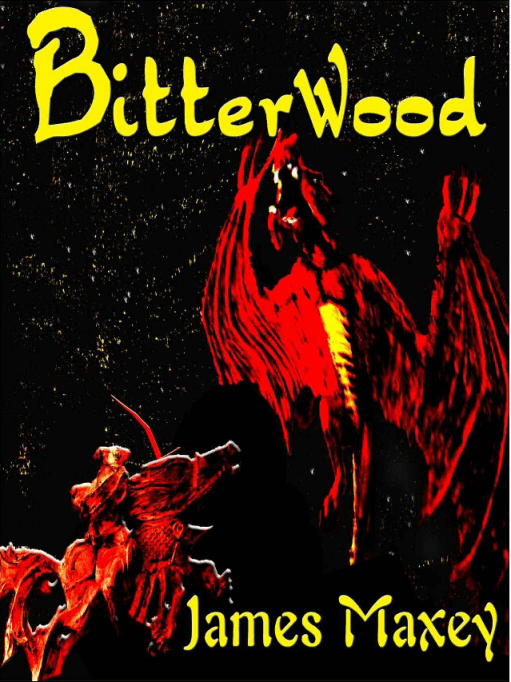
Originally Bitterwood was meant to be a stand-alone novel. I guess sales must have been better than expected and therefore an invitation was extended to James Maxey to expand the tale with Dragonforge and Dragonseed. Due this expansion Maxey now has an edition of Bitterwood that brings the original story more in line with the two other novels. My review is based on the revised edition.
Bant Bitterwood’s mission in life is hunting dragons. Sent by the prophet Hezekiah he believes this is God’s will. Leaving the love of his life behind he sets out and 20 years pass in the turning of a page. While adored by many humans Bitterwood is despised and feared by the dragons who see him as the bad guy. Each story has two sides and we get to have a look at both of them in Maxey’s Bitterwood.
In this tale of action and fantasy set far into the future we see humans made into slaves and dragons more like ourselves than we might like to admit. Karma has bitten humans in their rear ends and shown them (if they only knew) that their meddling with genetics has consequences.
Early on we get to see remnants of previous technology on something that the dragons call the ghost lines. Here dragons fear for their lives for there is a very real danger of them being killed by what is within. Later on in Bitterwood we also come accross surprising pieces of technology. I think one of the reviews below reveals what that is but I shan’t.
Vendevorex (wizard dragon) is the most interesting character of the novel. Perhaps that is because his views correspond with my own in some respects. He is of the faction of dragons that believes that humans should be treated with some decency unlike his extremely feudal king Albekizan. Our own history of slavery and feudalism is reflected in this tale of dragon lords and human slaves. As our own stories tell us, rebellion is part of our past. But as with our history, the consequences of fighting the system can be devastating not only for the rebels.
Another character that I enjoyed a lot was Zanzeroth (tracker dragon). He is ambivalent when it comes to humans and their value. Age is catching up with him and he does not like it. Vanity is not only a human thing in this tale of dragons and humans.
Bitterwood is a good novel. It raises questions that ought to be raised and does so in a highly entertaining manner. Because of some of the reviews on the net I get the feeling my revised edition is quite different to the original. My recommendation is to get the revised edition of the novel.
Strange that not more people seem to have read this novella. The House is a tale that could just as well have been a horror tale if Hudson had twisted it slightly. All of the elements were there.
The dream of eternal life and power to rule the world have been wonderful recipes for all kinds of stories, in this case a science fiction post-apocalyptic tale. I personally do not get why people would want to live forever, nor rule the world. Imagine the boredom and insanity you would probably end up dwelling within. Maybe the yearning for this dream is a form of insanity.
I like this part of T.J. Hudson’s tale. There is certainly an exploration of the lengths some people are willing to go to in order to obtain their desires for more, more, more.
Through Char and Charlotte we get to follow the measures taken to achieve the dream of immortality and complete power and the counter-measures needed to prevent that insanity.
For some reason the reader is warned about The House being written in British English. Does one actually need that warning? I get violence and sex, but British English. Maybe the author is just taking the piss.
I am a layperson about to embark on a journey of interpretation. My family subscribes to a magazine called Teknisk Ukeblad. Every once in a while they have articles that really exite me.
The Interventional Centre, Oslo University Hospital (Espen W. Remme, Per Steinar Halvorsen, Edvard Nærum, Ole Jakob Elle and Erik Fosse)
Vestfold University College (Marc Desmulliez, Lars Hoff, Christopher Grinde, Lars Fleischer, Kristin Imenes, Henrik Jakobsen, Per Øhlckers, Hans-Jørgen Alcker, Morten Grimnes, Einar Halvorsen, Oddvin Arne, and Thomas Halvorsen.)
Department of Cardiology, Oslo University Hospital, Rikshospitalet (Helge Skulstad)
have collaborated in the making of an accelerometer that measures heart motion and is small enough and resistant enough to be stitched on to the heart and remain there post-surgery.
WARNING: Pictures below are of heart surgery on a pig. It is what it is.
Medical science is a field that has changed quite a bit over the past century or so. We now have equipment that makes it possible to make tiny incisions and operate through them. I remember getting my appendix taken out when I was thirteen. That left me with ten stitches and a 5-8 cm scar. Last time I went in for an operation the surgeons cut two 1 cm holes in my stomach (one in my navel) and used one stitch and I was released the same day. Wow! All because of technical doodads that make the impossible possible.
One such doodad is being developed in a cooperative effort between The Interventional Centre, Oslo University Hospital, Norway; Vestfold University College, Tønsberg, Norway; Department of Cardiology, Oslo University Hospital, Rikshospitalet, Oslo, Norway. Thus far (2013) the team has been using pigs to test how well their accelerometers work. These accelorometers are used to measure heart motion during surgery.
An accelerometer is an instrument that measures acceleration. In this instance the accelerometer has moved into the medical realm and in this case to the heart.
In 2004 L. Hoff from Vestfold Univ. Coll., Horten, Norway; O.J. Elle; M. Grimnes; S. Halvorsen; H.J. Alker; and E. Fosse presented their paper called Measurements of heart motion using accelerometers [surgical applications] at the Annual International Conference of the IEEE Engineering in Medicine and Biology Society.
Placed on heart: The accelerometor is stitched on the heart’s surface. It has curved tip that helps hold it in place. The sensor itself is mounted on a flexible substrate that also works as a link to the computer. The cabel is encapsulated in medical silicon to give it electrical isolation and because body tissues and the heart can only be in contact with biocompatible materials. Photo credit: Jørgen SkjelsbækMeasures heart motion: The sensor’s shape is so it can be placed on the heart. The next generation sensors will be a great deal smaller. Photo credit: Jørgen Skjelsbæk
From the first joining of two commercially available two-axis sensors into a three-axis accelerometer work has continued on the development of the three-axis accelerometer. I am not going to go into detail on that development because I am simply utterly unqualified to do so, but I would recommend that you check out this article: Piezoresistive three-axis accelerometer for monitoring heart by Craig Lowrie, Christopher Grinde, Lars Hoff and Marc Desmulliez. Section 3 presents the design of the accelerometer and its operating principle while section 4 presents the sensor fabrication. Today three-axis accelerometers are common, fairly cheap and reliable.
This whole time the researchers and technicians have worked to make the three-axis accelerometer smaller, more reliable, biocompatible, noise resistant and able to withstand the electrical impulses that heart starters give off. So the researchers have really had their work cut out for them.
When the accelerometer is stitched on to the heart it measures the heart’s motion. While anesthesized a pig is cut open, the accelerometer stitched to its heart and motion data recorded. Motion abnormalities, e.g. arrhythmias and fibrillation, are then identified in the motion curves, and confirmed by comparison with synchronously recorded ECG data.
The truly amazing part of the miniaturized accelerometers is that they allow the medical personell to keep a watch on the patient’s heart after the chest cavity has been closed up because the accelerometer still gives off information. That way the chance of discovering a heart-attack at its beginning increases and the survival rate of open heart surgery patients increases.
Not only do the researchers aim to improve the surveillance of post surgery patients, they also wish to make heart transplants in and of themselves redundant. A heart transplant is a brutal affair (see proceedure here).
Sometimes a person’s heart is too weak to pump blood on its own – this can happen while you are waiting for a new heart. When this happens, surgeon goes in and attaches something called a “Left Ventricular Assist Device” (LVAD) to your heart and it assists in or takes over the pumping function of your left ventricle.
By fastening the accelerometer to the heart and having it remain there the LVAD’s effectivity might increase to an extent that the patient is able to continue living a long time without having to struggle with the side-effects of a heart transplant. This is because the accelerometer measures individual heart motion and the doctors are able to adjust the LVAD to the individual and keep their left and right heart ventricles in balance. It would also enable the LVAD to adjust so that increased activity also gives increased blood flow. By connecting the accelerometer to some external source (cell phone) the doctors will have the ability to adjust the LVAD long distance making life a whole lot simpler for the patient. Although the researchers have not quite gotten to that point yet, they are well on their way.
I have to say again that I am a layperson. Whatever mistakes you might find in my article are due to my incompetence and not the work of the researchers behind the miniaturized accelerator for measuring heart motion.
Lars Hoff et al (2004) Measurements of heart motion using accelerometers [surgical applications]; Sensors, 2004. Proceedings of IEEE; p: 1353 – 1354 – vol.3 – Conference Publications; DOI: 10.1109/IEMBS.2004.1403602
Video of a heart transplantation: YouTube; Pr Chavanon, Faculty of Medicine, CHU Grenoble Joseph Fourier University. Music: Pinnacle Studio software
————————–
This Norwegian method has been patented and the Company Cardiaccs AS and HiVe owns the rights to the method.
Inven2 (owned by Oslo University and Oslo University Hospital) is responsible for patenting and future lisence agreements regarding the Norwegian Technology.
“This short story was previously published in the small – press fiction magazine ORION, issue #3, in the early 1990’s. Revised 2012.” (Amazon)
What if there was a way to manufacture magic, make it real somehow? Kim Cowie has written 26 excellent pages about what might happen if science managed to make the super-natural/para-normal accessible. Knowing humans, I find Kim’s story pretty believable.
Thomas K. Carpenter thinks that augmented reality is part of what our future digital life will be. Augmented reality is an essential part of The Lorieme Job. The Lorieme Job first appeared in the anthology Mirror Shards: Vol. 2. I came into contact with The Lorieme Job through Kindle. It was on offer for nothing and I thought “why not”. This is a choice I am happy I made.
I believe this type of science fiction is called hard science fiction. An essential part of hard science fiction is the believability of the technological future presented. Even though Zel’s world is highly augmented, I have no problem seeing us going in that direction.
Besides the science fiction, The Lorieme Job is a mystery. Zel is trying to find the person in control of “the fountain of youth” and has to do so in a way that will not get her caught. She is probably the ultimate (impossible to catch) hacker of the digital sea. During her hunt, she encounters a few surprises.
I love speculations about the future. Reading The Lorieme Job was a fun few pages. There was plenty of action, plenty of technology and a bit of humor. Zel’s plans for Redman were especially fun. She is my kind of lady.
I have the 2012 kindle edition. Stephen A Berry stated that It’s been rewritten to reflect present-day Earth and changes later in the series. The plot is unaltered and the heavy blaster fire unabated. I am always grateful when an author categorizes her/his own work (way to go Mr. Berry). The Biofab War is space opera.
A comment like that from an author is yet another reason to get me interested in reading their book. My curiosity is easily aroused.
The Biofab War is in some senses a believable future for humans – telling why would be a major spoiler. There are technological aspects that I could believe that we would allow ourselves to develop. Silly buggers is what we are. Biofab is a term Mr. Berry claims he originated through his Biofab Quartet. There is a whole biofab industry out there. The whole concept is fascinating.
The Biofab War is an excellent introduction to the Biofab Quartet. I like the whole idea of cousins and enemies and surprises and mistakes coming to kiss us on our behinds. There is plenty of action, lots and lots of it. Well-written fight scenes are fun. Mr. Berry writes well. Granted, he has cheated by re-writing the original, but who cares. Have fun.
I have read loads of novels in this genre written by my gender, but none by the “aliens” (I think). So I kind of had to see if there was a difference in perspective. There could have been, you know. They are supposed to be different from us “normals”. After having read it, I had to check if David Bernstein was a pseudonym for some lady wanting to hide her gender. But it was not. David Bernstein is really a guy writing a book that is very similar in style to many gals.
What does this tell me? Hell if I know. I just found it incredibly interesting that David Bernstein as a guy might possibly write the same way as a gal. Those who know me will not be surprised at all that I would get hung up in something like this or even read a book for this reason – as if I would need an excuse to read. Hah.
Karen Lakemire is having a terrible day. First she gets kidnapped by someone who seems like a homeless, who turns out to be a mafia-seeming guy, who then turns out to be infected by an alien, who then infects Karen and finally kills himself. Woohoo! Just my kind of day. Of course the US government is involved, through a secret corporation called the Murphy Unit – a unit consisting of some very bad people out to further the US military power by any means possible.
Karen later meets up with another unfortunate victim of the Murphy Unit, Morgan Hughes. He has been turned into a vampire-vampire. That just means that he has to have vampire blood to survive and that he can handle sunlight and garlic and religious symbols. Together they fight the evil overlords.
I found the vampire cliches, well, cliches. The garlic was a bit over-kill.
Other than that Tears of No Return was a fairly good action/thriller/scifi/urban fantasy novel.
Lady of Devices is Shelley Adina’s first novel in the Magnificent Devices’ series. This steampunk novel is set in an alternate Victorian era. As usual with steampunk novels, steam runs the world. Steam is the hot thing, the Power alternative that will last forever.
We meet Lady Trevalyan, a 17-year old with decidedly unconventional interests. No embroidery for this girl.
I’ve always liked spunky female characters. Women who dare defy whatever society deems as feminine behavior. Claire is one such lady.
When her father shoots himself because of bad investments, the family is left with a lot less money than they had hoped. Claire has to choose between waiting for her mother to find her a husband or try to make a living. She decides to make a living and sets out to explore her possibilities.
Claire soon discovers that the “real world” can be dangerous, especially if you are a woman. This is where her spunkiness comes in handy. This girl has grit. She just screams a bit in her head and gets on with whatever she has to do to survive.
What can I say, I am a sucker for these kinds of portrayals. There is no denying I want my female characters to be strong. I also want my authors to write in a manner that engages my interest and keeps it. Shelley Adina manages to do just that. Her sentences tie together wonderfully and her images are hilarious.
“Claire Trevelyan closed her eyes as a gobbet of reddish-brown foam dripped off the ceiling and landed squarely on the crown of her head. It dribbled past her ears and onto the pristine sailor collar of her middy blouse, and thence, gravity having its inevitable effect, down the blue seersucker of her uniform’s skirt to the floor.” It’s practically so I can feel the goo running down my head.
I’m trying to decide what I thought about The Iron Wyrm Affair. It took a while for it to get off its butt, but once it did it really got going. This is my first experience with Lilith Saintcrow. Looking at her website, I see that she writes to a different audience than myself. That might be why I didn’t get wowed by The Iron Wyrm Affair.
Saintcrow’s Bannon and Clare world is an alternative Victorian one. The queen is Victrix who is also a vessel for the spirit of Britannia. London is Londonium. All the names are changed in minor ways like this. The world shares a similar yet different history to our own.
For one thing, it is a world run on magic. Magic is everywhere and in general the world works on different rules to our own. Machines run on magic and not all machines are only machines. Sometimes there is a mixture of animal and machine or person and machine. I guess kind of like magical cyborgs.
In this world there are (among lots of others) sorceresses/rors and mentaths. Bannon is a sorceress (of the Black, no less) and Clare is a mentath. To reach the rank of sorceress one must have a high degree of affinity to magic. Mentaths are addicted to logic. If they do not get puzzles to solve, they usually end up going insane.
We meet both Bannon and Clare as Bannon is trying to save Clare from being killed. It seems unregistered mentaths are being killed for who knows what reason. Saving Clare from murder, just happens to save him from insanity as well. Being bored just does not suit a mentath. Now Clare gets to join in on solving who is killing off mentaths.
There is plenty of action and some humorous interplay between the various characters.
The Iron Wyrm Affair is probably going to be a good fit for Saintcrow’s target group.
Sheila Kelly Viehl is from South Florida. She is a USAF-veteran with medical experience from both military and civilian trauma centers.
She writes under several names – SciFi as SL Viehl, Romance as Gena Hale and Jessica Hall, Christian Adult Fiction as Rebecca Kelly and Dark Fantasy, Young Adult and Non-fiction as Lynn Viehl.
SHOCKBALL (2001)
Shockball is book no. 4 in the Stardoc series, but the first one I’ve read. Starting here was no problem. These are all pretty much stand-alone novels that concern the doctor Cherijo Viehl. Warning right away. If you do not like descriptive surgery in your novels, you will have a problem with parts of this novel.
Life has a tendency to surprise us. Sometimes the experience is enjoyable and sometimes, well, not so much. Cherijo Viehl is beginning to get used to the idea. But getting used to having wrenches thrown into what she sees as preferable, can make her angry with herself and her surroundings (most commonly with Duncan Reever).
Cherijo and Duncan are married. As far as I’ve understood, this happened after they became interested in each other when Cherijo was Duncan’s slave (albeit not the most slavish slave around). Now they are trying to adjust to each other’s strong personalities. Tensions are bound to rise. Both are the kind who tries to protect those they love, whether that protection is wanted or not.
Shockball begins with Cherijo and Reever on the Joren starvessel Sunlace. Cherijo is an adopted clanmember, and as such under the protection of her clan. Her clan-brother, Xonea, is the captain of the space-ship. His main concern is to keep Cherijo away from trouble, but finds this intention challenged again and again by Cherijo’s repeated refusal to stay away from danger.
In the previous novel, Cherijo and Reever saved a bunch of non-terran slaves from their masters and are in the process of returning them to their planets of origin. While doing this, they are both worried about the ticking bomb that is dragged along on their journey through the stars. Cherijo’s creator, Joseph Viehl, has gifted her with a spaceship, but Cherijo does not believe for one moment that there is nothing wrong with it. She turns out to be correct.
After having run so long from her creator, Cherijo ends up back with him when Joseph has League soldiers kidnap her and Reever from the Jorens. They are taken back to Earth and Joseph immediately finds joy in telling Cherijo about her future. She is to be his mate, something Cherijo finds repugnant. Reever is held captive as guarantee against her cooperation.
Complications arise when a group of underground Navajoes rescue the couple from the laboratory and take them to their lair. There they meet the Night Horse leader Rico (who seems slightly off). Now it is up to Reever and Cherijo to figure out how to get back to the Jorens without getting killed en route. But before they can leave, they also have to find a way to save the Night Horse from themselves.
Shockball is full of action. We tend to go from one scene to the other, quite often ending up with Cherijo having to use her surgical skills. This is a rip-roaring tale of adventure. There are no attempts at trying to explain how the groups are transported between star systems, nor does Viehl try to make sense of how such completely species are different-planet-races are able to interbreed. Instead this is an action novel placed in space. Viehl writes well and manages to entertain us the whole way.
ETERNITY ROW (2002)
In Eternity Row Reever, Cherijo and Marel finally live together as a family on the star vessel Sunlace. Duncan and Cherijo are trying to figure out how to combine parenthood with their duties, as most parents do. Some children are more precocious than others. Marel is one of them. She has a tendency to appear in the oddest places.
Sunlace is taking Hawk home to the planet of his father. When they get to Taerca, everyone they see seems to be suffering some kind of mysterious disease of both mind and body. Hawk has a difficult time when he meets with his father. Like the rest of the population, his father is fanatically invested in the planet-wide religion.
Later Sunlace goes to Oenrall, Dhreen’s home planet. Cherijo had promised him to go there and see if she could figure out what was causing the population’s sterility. Once they get there Cherijo and the people going with her find that the Oenrallians are manic and addicted to a nerve-desensitizer. But this is by no means the Oenrallians main problem.
Cherijo sees it as her duty to discover the cause of both problems. But the universe is not going along with her plans. Challenges are thrown the way of Cherijo and her loved ones, distracting Cherijo from her work as a doctor and researcher.
As with Shockball, Eternity Row is an action-filled novel whose main goal is to entertain. Viehl does this well. I haven’t read past Eternity Row, but did not find it problematic to end the series here. Being stand-alone novels makes it so much simpler to leave a series, although I have to admit to certain amount of curiosity about the future of the family of Brandon, Cherijo and Marel.
I have one complaint about the series – Where is the next book????? My goodness, this series was riveting. Kirstein needs to keep on writing – well, actually, in all selfishness, I need her to keep on writing. I think this was my third read-through and I was still captured by the writing and held prisoner until the end.
THE STEERSWOMAN’S ROAD (2003)
Rosemary KirsteinSteerswoman’Road is an omnibus containing The Steerswoman and The Outskirter’sSecret. In it Kirstein tells the story of the friendship between Rowan, the Steerswoman, and Bel, the Outskirter. Rowan and Bel meet right at the beginning while they are both about their own business. Bel has been travelling with other Outskirters and Rowan has been investigating strange blue jewels that are neither cut nor dug up.
Steerswoman are men and women who travel around the land asking questions and answering them. One must tell the true answer to any question and the Steerswomen must also do so. If one refuses to answer a Steerswoman, they can ban you. That means that no matter what the question you ask is, they will not answer it. Strange rule, but as knowledge is their whole purpose perhaps not.
Rowan’s questions about the jewels seem to have stirred up interest from the wrong parties. Thankfully, she and Bel have decided to travel together for a while because the next day brings an attack. From that point on there is tension, action, betrayal, discovery, friendships and travel. In fact, Rowan’s search for the truth of these blue jewels brings her into the Outskirts.
The Outskirter is about this part of her journey of discovery, and The Outskirter is just as exciting as The Steerswoman. The Outskirters are nomads who live at the border of where people can actually survive. Every day for them is about destroying and seeding the land so humans can live there. Steerswomen are unfamiliar territory to the Outskirters, yet Rowan manages to gain their trust and help them in her own way. The importance of her work becomes clearer and clearer as the role of the wizards in the attacks on Rowan begins to make a strange sort of sense. Rowan is also beginning to realize that perhaps wizards aren’t quite as wizardly as she had thought.
We as readers should have started realizing this long ago. What does not make sense to Rowan and the regular citizens of both the Outskirts and the Inland does to us. This is a science fiction series that to begin with might seem to be a fantasy one. Quite a few science fiction books are like that. The meeting between different sorts of technologic knowledge can, after all, make it seem like magic is afoot. Pressing a button on the wall to make light in the ceiling is pretty magical if you ask me – and I know how it all happens.
Rowan and Bel have parted ways (on friendly terms). Bel is in the Outskirts spreading the bad news, and Rowan has ended up at the Annex in the town of Alameth looking for more information about Slado and the wizards. The Annex is a mess. Mira, the last Steerswoman living there, had not cared one whit about her duties. She was tired of being a Steerswoman and left everything a mess when she died. Now Rowan has to try to find desperately needed information in this chaos. On top of that the townspeople have problems accepting Rowan because she is so different from Mira.
When Rowan meets Janus, a Steersman who resigned the job and was considered lost, she is happy and confused. He was one of her oldest friends and Rowan finds the ban on him difficult in their conversations. After a while, Rowan begins to suspect that things are quite complicated with Janus.
The Lost Steersman is every bit as suspenseful as The Steerswoman’s Road. Kirstein keeps the standard of her writing amazingly high. It goes against the grain, but I think I’m going to put her along with Pratchett. Their styles are completely different. However, they both manage to involve me as a reader in some very serious topics with skills beyond anything I could aspire to.
Rowan and Bel are once again together in their adventures. The Outskirts have been warned and Rowan is finally beginning to get somewhere in her search for the answers to Slade. All roads lead to Rome, it is said. In the Inlands, all roads seem to lead to Donner. To Donner Rowan and Bel go and there they unexpectedly meet Will – our lovable wanna-be apprentice – from the first book.
Will is on the run from Corvus, trying to hide in Donner and looking for revenge on the wizards. Rowan and Bel are overjoyed at meeting their old friend and seek to help him in his quest. But, as would be expected from an adventure novel, things never turn out as one would wish. Will is surprised at Rowan’s grasp of “magic”. Because he knows so much more about science than she, he tends to be a bit overbearing with her. Just because she doesn’t have the background Will has, certainly does not mean that she is without the ability to infer and deduce. After all, her whole life has been about the quest for knowledge – a true addict.
Unfortunately the next book in this series has not come out yet. Aaaargh. Please, Kirstein! We need the next installment! I love the intelligence and wit of Rosemary Kirstein. She actually expects me as a reader to think and doesn’t divert my attention with loads of sex and violence. Sex and violence can be fun, but this is sooooo much more thrilling.
Nominated for a Locus Award for best science fiction novel in 1978
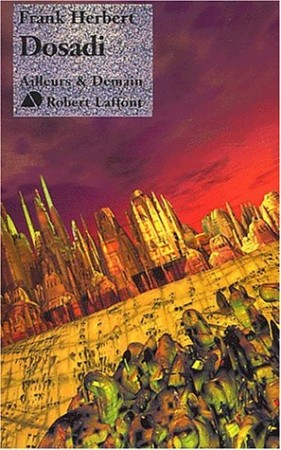
The Dosadi Experiment takes place in the same universe as The Whipping Star, but can be read on its own.
I dipped my toes into the waters of Frank Herbert’s writing with The Dosadi Experiment. It’s been ages and ages, back in the days of the dinosaurs, so I cannot really remember what I thought, but it must have been positive because I kept on exploring Herbert’s world. I reread The Dosadi Experiment from time to time, and each time I discover new bits to love. As I change, so does my understanding of The Dosadi Experiment, and that is a sign of a classic to me.
The ConSentiency is composed of many species who have different abilities. The Taprisiots provide instant mind-to-mind communication between two minds anywhere in the universe. The Caleban provide instantaneous travel between any two points in the universe.
Our extremely intelligent and empathic Saboteur Extraordinary, Jorj X. McKie, gets an assignment that he soon discovers is probably a set-up. He is sent by the agency to Dosadi as their “best”. Compared to those already living on Dosadi, he was like an infant in swaddling clothes.
What he discovers on Dosadi is shocking in its blatant disregard of any and all ConSentiency regulation. Dosadi has been placed behind an impenetrable barrier called “The God Wall”. Humans and Gowachin have been dumped together in numbers that defy description. The planet itself is poisonous except for a narrow valley, containing the city “Chu”, containing nearly 89 million citizens.
Senior Liator Kaila Jedrik starts a war and Jorj becomes a pawn in her hope of saving the population of Dosadi.
I started reading Artemis Fowl to my oldest son until he got into the whole reading thing himself. Once there, he took over and went through the books below. After I’d thoroughly brainwashed him, I set out to do the same with my youngest – first by reading to him and then through audiobooks. Audiobooks are a miracle for dyslectics. A dyslectic brain is just as brilliant as any other brain, it’s just the whole sorting letters into the right order thing that baffles them. Needless to say, I managed to convert my youngest as well. You’ve probably guessed by now that I’m a fan of Eoin Colfer’s creation of the less than legal character of Artemis.
Artemis Fowl II is the main character of Eoin Colfer’s Artemis Fowl series. Artemis is a teenage criminal mastermind on the lookout for enough gold to restore his family fortune. He considers himself fairly wicked, but as the series progresses we see that there is plenty of good deeds to balance the bad. My kids loved all of the tricks he played on both his friends and enemies. We have not read it yet, but the conclusion to the series was released in July 2012 – The Last Guardian.
Eoin Colfer begins our journey into the world of Artemis Fowl II in the novel Artemis Fowl. Some of the characters we meet will appear in all of the novels while some of them we’ll only see in a few of them. His faithful bodyguard, Butler is one of the characters that will appear again and again.
Artemis is 12 years old. His father is an Irish crime lord, Artemis Fowl, who has disappeared. Through research Artemis thinks he can prove the existence of faeries and when he tracks down The Book of the People he has his proof.
Artemis decodes the book – only natural for someone of his genius – and travels the world looking for locations for a magic-restoring ritual. They discover and capture Captain Holly Short who is out restoring her magic. Holly is then brought to Fowl mansions. The faeries are not pleased with Artemis and sends a crack team (LEP) to recover her.
A graphic novel adaptation was released in 2007. A film adaptation was reported to be in the writing stage in mid-2008, with Jim Sheridan directing.
AWARDS:
W. H. Smith Book Award
British Book Award
Whitbread Book of the Year Award: Shortlist
Lancashire County Library Children’s Book Award: Shortlist
Bisto Book of the Year: Shortlist
New York Times Best-Selling Series
Massachusetts Children’s Book Award Master List (2003)
Bulletin of the Center for Children’s Books Blue Ribbon Award (2001)
In The Arctic Incident, Artemis is a year older (13). We once again meet Butler, Captain Holly Short and Commander Julius Root.
Artemis is set up to take the blame for supplying contraband to goblins. When Artemis and Butler defeat the real baddy, the LEP decides to help Artemis recover his father from the Russian mafia. The rescue group is ambushed by goblins.
It becomes apparent that Opal Koboi of Koboi laboratories is involved somehow, leaving it to Artemis and Holly to figure out how to save the day – both for Artemis’ father and the LEP.
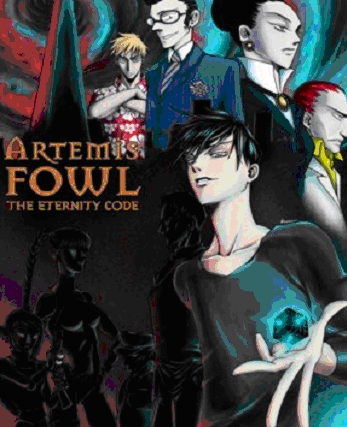
The story in Eternity Code happens shortly after the Arctic Incident. While Artemis has changed somewhat since the first book, he still loves to scheme and steal from the fairies. Artemis has created a supercomputer which he calls the “C-Cube”. It gets stolen and in the process Butler is killed. However, Artemis comes to rescue – along with a bit of fairy magic.
Artemis convinces the fairies to help him recover the Cube and they agree – but with one condition. Artemis is to be left with no memory of the fairy world.
Our lovely Opal Koboi (from The Arctic Incident) has gotten away from the asylum where she was being held by the LEP.
She then sets out to revenge herself on Commander Root, Captain Short, Artemis and Butler.
Holly is desperate for help and turns to Artemis – against the wishes of the LEP. The only problem is that Artemis is left with no memory of the fairy world.
While Artemis likes to think of himself as someone who chooses to do bad, it turns out he is a softy after all. He is still full of trouble and deviousness, but it is difficult to come out of reading the book and not liking Artemis. Mulch provides all the laughs a kid could need.
Artemis and Butler are demonhunting. He is somehow able to predict when a demon materializes. This comes to the attention of our trusted Foaly. This brings Holly and Mulch (who now have their own PI business) into the story.
In the meantime, there is trouble on Hybras (demon island where time is nonexistent). However, it seems that the spell holding Hybras in stasis is fraying and an answer to the problem is needed. Bullying is a favorite pastime, and No1 is one of the victims. He is convinced to come to the human world.
Right now, its glaringly obvious that everyone is going to meet – probably with a huge bang somewhere. The Artemis series does have a habit of loads of action and humor. Thankfully Colfer is keeping up the good work.
When Artemis’ mom contracts a fatal disease, Artemis turns to the fairies for help. Unfortunately the only cure to the disease is through the silky sefaka lemur of Madagascar. It is extinct. The last specimen was killed 8 years ago with the help of Artemis. Talk about the past coming back to haunt you.
Through lies and deception, Artemis gets the fairies to help him time travel. The goal is to save the lemur – hopefully for good. Holly and Artemis go back in time and need to avoid their younger selves.
Everything has a price, so too Artemis’ lies to Holly. Colfer portrays this rather well. He also brings up the issue of the cost of abusing our environment. I find myself wanting to preach here, but The Time Paradox does a much better job of illustrating the issue.
One of the consequences of The Time Paradox is that Artemis is left with a clearer sense of responsibility toward the environment.
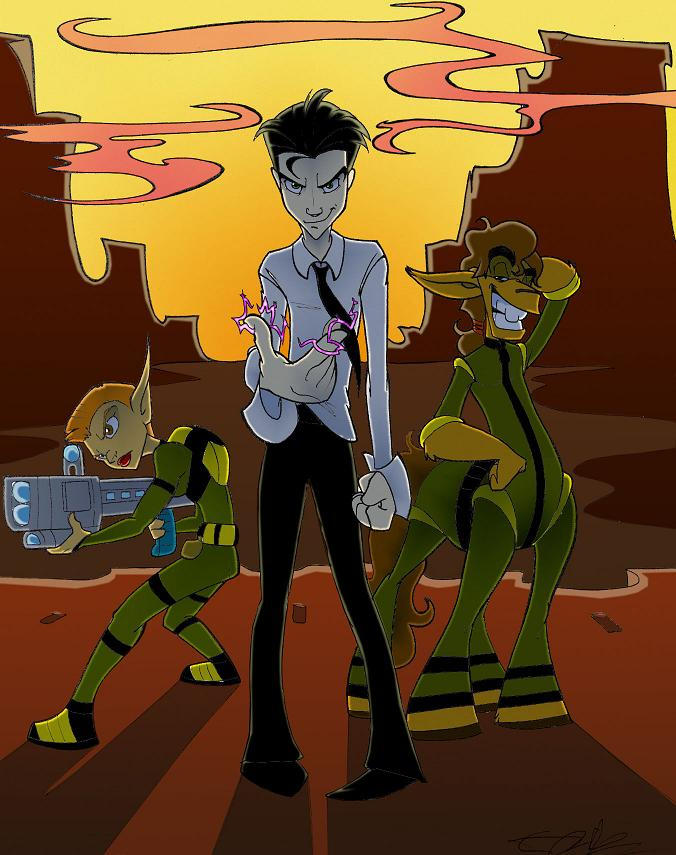
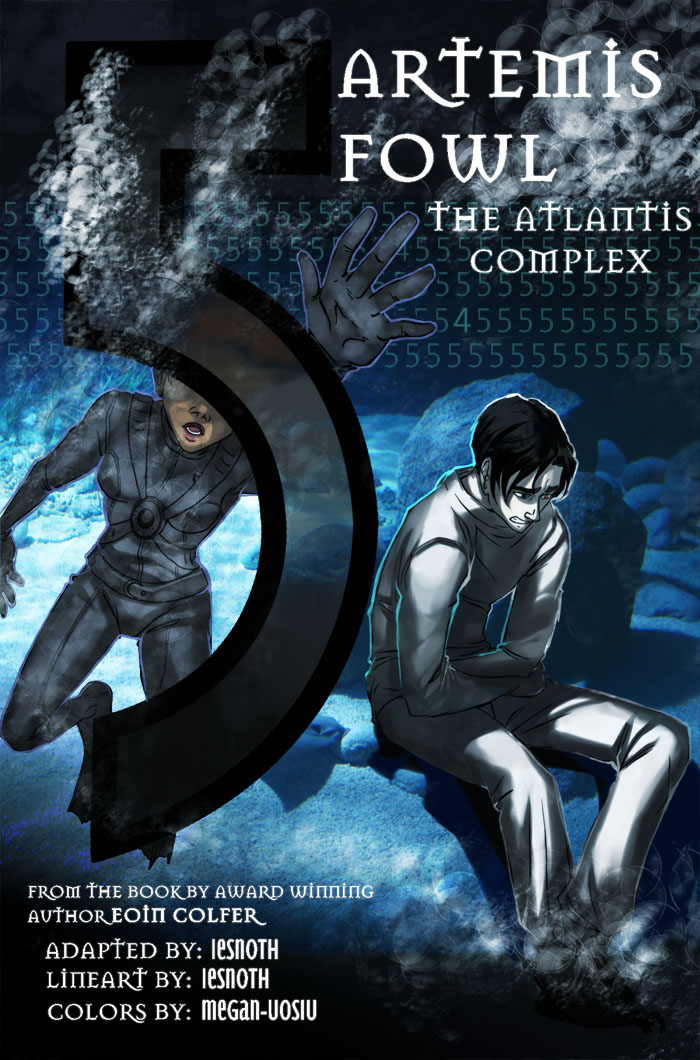
When Artemis unveils the Ice Cube – an invention to stop global warming – the fairies discover that Artemis has developed something called Atlantis Complex (including OCD, paranoia and split personality). Artemis has a break-down during the presentation. Holly and Mulch are left taking care of things, while Artemis is dealing with his episode.
In the meantime, Butler is on an adventure in Mexico. Artemis tricked into travelling to help Butler’s sister. Turns out it was a good thing after all.
The Foundation series continues on from the Elijah Bailey series. The reason I call it a continuation of the series becomes apparent as one reads the books (too much of a spoiler to tell). If you go to Wikipedia, they will tell all. Having said that, their page carries quite an excellent description of the books along with analysis and links. For another in-depth analysis of Asimov’s work go to Wimmer & Wilkins’ blog. Asimov’s home page contains more general information about his life’s work.
Isaac Asimov brought fresh air into science fiction when he arrived on the scene in the 40’s. He wasn’t afraid of taking a hard look at the possible future of mankind based on what he knew of the day’s theories on sociology and psychology. The Foundation series is considered one of the most important contributions to the field of science fiction, a well-deserved opinion.
PRELUDE TO FOUNDATION (1988) AND FORWARD THE FOUNDATION (1993)
Cover for Polish Prelude to Foundation by Slawek Wojtowicz
The Foundation series was started in the 1940’s, but for easier reading you should start with Prelude to Foundation and Forward the Foundation. In Prelude we meet Hari Sheldon, the inventor of psychohistory. Hari’s goal was to be able to predict the general future of humanity, and during a conference he presents his fledgling theory to fellow scientists on the planet Trantor. Unfortunately the Empiror finds Hari’s theories a threat and begin to persecute him. This makes it necessary for Hari to flee, and his flight takes him around Trantor. In Forward the story of how Hari develops his theory continues. Sadly for Hari, the people he loves die off (naturally and unnaturally). Hari refuses to give up and finally develops what ends up being called the Seldon Plan, a way to save the future of humankind.
FOUNDATION (1951) / FOUNDATION AND EMPIRE (1952) / AND SECOND FOUNDATION (1953)
Cover for Polish Prelude to Foundation by Slawek Wojtowicz
After this introduction to the future Galactic Empire, The Foundation Trilogy with the books Foundation, Foundation and Empire and Second Foundation, follow. These are Asimov’s first installments in the Foundation history. When you read these books, please keep in mind that the series was written well before Wikipedia or the internet came into existence. As such, they seem a bit dated. Some of the theory can be tedious, but the adventures and people we meet are quite fun. The titles are a dead give-away, so we know well ahead of time that the Foundation is bound to survive. But we know nothing about the road taken.
In Foundation and Empire the leaders of the Foundation has become corrupt. The internal strife that arises from that makes the organisation susceptible to “The Mule”. The Mule advances, conquering planet after planet, making the Empire deviate from Seldon’s plan. The Foundation does not have it in them to win over the Mule, and desperately some of the members begin seeking a rumoured Second Foundation.
The title Second Foundation kind of gives it away. In this novel we are going to discover the rumoured savior of the Empire while enjoying adventure, science and social interaction. The only way to kill the Mule is by allowing members of the Foundation to find members of the Second Foundation. But this also reveals the fact that there is a Second Foundation and that its nature is somewhat different to the First one’s. Herein lies the conflict.
Foundation’s Edge by Michael Whelan
FOUNDATION’S EDGE (1982) AND FOUNDATION AND EARTH (1986)
And so we come to the two final books in the Foundation series: Foundation’s Edge and Foundation and Earth. We meet Golan Trevize as main protagonist in both books. He is convinced the Second Foundation has survived the attempt to exterminate its members, and goes looking for them. His search brings him to many planets and finally to the ancient planets (no longer on any star-chart) of Solaria, Aurora and Melpomenia. Each journey brings Trevize closer to a conclusion that may or may not satisfy the reader. I felt ambiguous, and that seems to be the intent of the author.
1966 – Best All-time Novel Series Hugo Award for the Foundation series
1983 – Hugo Award for Best Novel for Foundation’s Edge
1983 – Locus Award for Best Science Fiction Novel for Foundation’s Edge
1996 – A 1946 Retro-Hugo for Best Novel of 1945 was given at the 1996 WorldCon to “The Mule“, the 7th Foundation story, published in Astounding Science Fiction
Isaac Asimov was my introduction to science fiction. I imagine he has been for a lot of people. The libraries here in Norway didn’t have a lot of fantasy/science fiction material in my youth. But there were a few robot anthologies with Isaac. I fell in love.
It’s incredible to me that Asimov began the Foundation series in 1942. I would begin my reading with the Robot series (Elijah Bailey series). These four books give the reader an excellent starting point for understanding Foundation: The Caves of Steel, The Naked Sun, The Robots of Dawn, and Robots and Empire(these are links to Wikipedia so spoiler warning is necessary).
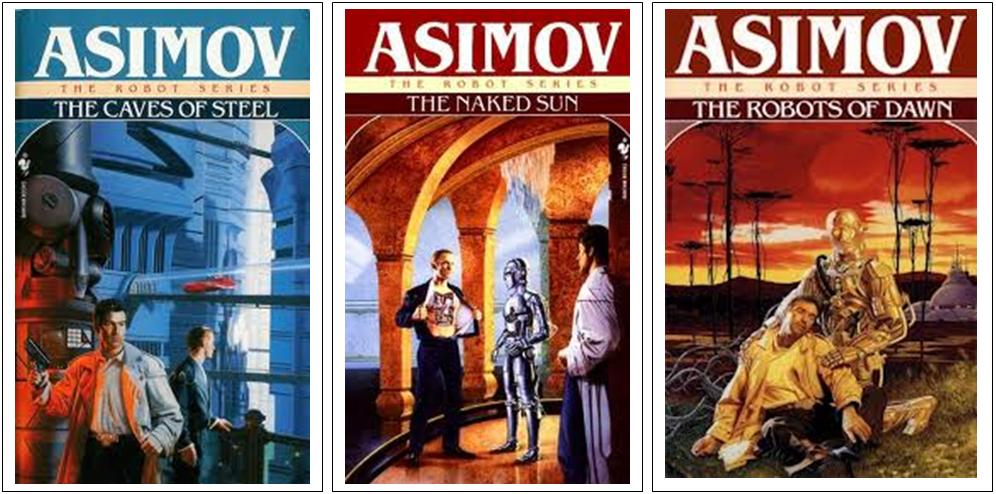
The Caves of Steel (1954) is the very beginning of the Foundation series. Far into the future (approx. 3000 years) mankind has discovered hyper-travel and has emigrated to the stars. Fifty planets, known as the Spacer worlds, have been terraformed and enjoy a low density of humans. Robots are used for labor intensive jobs. In the meantime Earth is over-populated and have passed laws against the use of robots. Elijah Bailey lives on Earth in one of the domed cities.
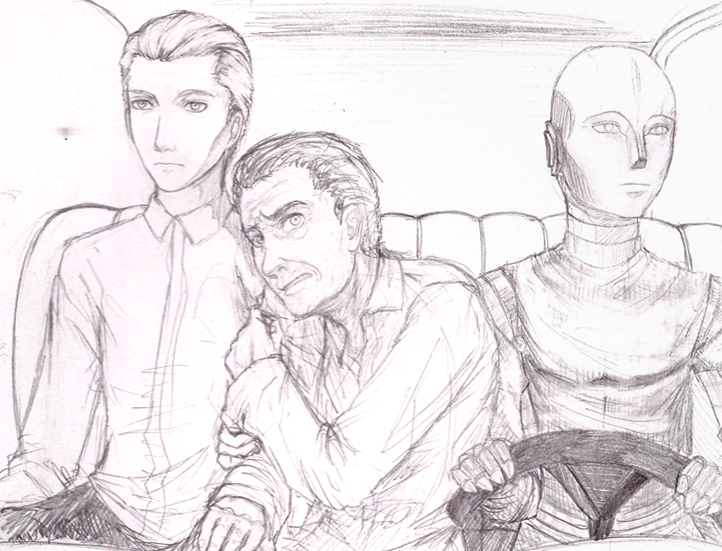
A Spacer ambassador has been found murdered outside his domicile. Elijah is forced to go work with his partner, R. Daneel Olivaw, a human-looking robot. Unfortunately one of things Elijah holds against Daneel is the fact that he looks just like the murder victim. On their journey of discovery they end up visiting the Spacer worlds.
Some of the themes Asimov explores in this combination of sci-fi and mystery are over-population, technology and prejudice.
The Naked Sun (1957) brings us to the world of Solaria. Solaria is a planet where the population is kept at 20000 and robots serve the human population. In fact robots outnumber the humans greatly. This time the victim is a genetic specialist in the birthing center of the planet. On a planet where contact between people is kept at a minimum, we get a real locked-room mystery. Once again Elijah and Daneel need to solve the murder mystery.
In the Elijah books robots are for the most part treated as property and expected to do as their masters say. When Elijah calls the robot “Boy” it might be seen as Asimov’s way of breaching the topic of racism/slavery/prejudice. Asimov was agoraphobic and as such Solaria would probably be the exact opposite of his heaven. Elijah certainly has to struggle quite a deal with his own agoraphobia in this novel. We also get a look at the way we tend to make assumptions without enough information. The rest of Solaria just “knows” that Gladia has to be guilty of the crime, but Elijah is not as certain of that.
In The Robots of Dawn (1983) we once again meet Gladia from Solaria. She has settled on the planet Aurora. A roboticide has occurred and Elijah and Daneel need to find the killer. R. Jander Panell was another humaniform robot created by Han Fastolfe. The robots of Aurora are incredibly lifelike and their interaction with their humans can be quite intimate.
To aid in their investigation, Daneel and Elijah are assisted by another of Fastolfe’s creations, R. Giskard Reventlov. They discover that Jander was a member of Gladia’s staff. In fact, she considered him her husband. Some of the possibilities for motives are jealousy, power and greed. While Asimov’s Robot books are mysteries, they are also an exploration of sociological possibilities. The impact of technology (in this case robots) is one of Asimov’s recurrent themes. How far do we take technology or let technology take us? The Robots of Dawn is also very much about human relationships. How much do we let our urges, the taboos of society and our individualism steer our lives?
Robots and Empire (1985) is the final book in the Elijah Bailey/Robot series. By this time Elijah has died and we encounter one of his descendants, Daneel Giskard. In it we get a step closer to Asimov’s Foundation series – a natural continuation of the Elijah/Robot’s series.
For most of the Spacer population Earth people are seen as vermin. They have been forbidden emigration to other planets and are forced to stay on over-populated, capped earth.
However, Earth people are overcoming their agoraphobia and are using faster-than-light transportation to get to planets away from the Spacer Empire. These “Settlers” see the Earth as something to revere. One of these Settlers is Daneel Giskard.
On a trade journey Daneel discovers that Solaria seems empty of humans. The robots are left, still working with their previously assigned jobs. Gladia Delmarre is still alive on Aurora and she is asked by Daneel to help figure out what has happened on Solaria. She brings R. Daneel and R. Giskard to aid in the investigation.
Once again Asimov explores the theme of technology and its effect on humans. The ending of Robots and Empire was quite touching and a fitting end to the Robot series. When you read the Foundation series, you will see just how Robots and Empire merges these two series. These books are a treat. While they are dated in some respects, their themes are incredibly relevant today.




 I’m trying to decide what I thought about


 Shockball is book no. 4 in the Stardoc series, but the first one I’ve read. Starting here was no problem. These are all pretty much stand-alone novels that concern the doctor Cherijo Viehl. Warning right away. If you do not like descriptive surgery in your novels, you will have a problem with parts of this novel.
 In Eternity Row Reever, Cherijo and Marel finally live together as a family on the star vessel Sunlace. Duncan and Cherijo are trying to figure out how to combine parenthood with their duties, as most parents do. Some children are more precocious than others. Marel is one of them. She has a tendency to appear in the oddest places.
 I have one complaint about the series – Where is the next book????? My goodness, this series was riveting. Kirstein needs to keep on writing – well, actually, in all selfishness, I need her to keep on writing. I think this was my third read-through and I was still captured by the writing and held prisoner until the end.
 THE LOST STEERSMAN (2003) –
  THE LANGUAGE OF POWER (2004) –








 humanitysdarkerside