Category Archives: Fantasy

Norton, Andre: High Sorcery (1970)

Wizard’s World (1967)

His decision had shaken the “hound”. Craike bared teeth in a death’s-head grin. Now the mob would speed up. But their quarry had already chosen a part of the canyon wall where he might pull his tired and aching body up from one hold to another. He moved deliberately now, knowing that, having lost hope, he could throw aside the need for haste. He would be able to accomplish his purpose before they brought a gas rifle to bear on him.

At last he stood on a ledge, the sand and gravel some fifty feet below. For a long moment he rested, steadying himself with both hands braced on the stone. The weird beauty of the desert country was a pattern of violent color under the afternoon sun. Craike breathed slowly; he had regained a measure of control. There came shouts as they sighted him.

He leaned forward and, as if he were diving into the river which had once run there, he hurled himself outward to the clean death he sought.

Through the Needle’s Eye

“She’s a witch, you know!” She teetered back and forth on the boards of the small front porch. “She makes people disappear; maybe she’ll do that to you if you hang around there.”

“Ruthie!” Cousin Althea, her face flushed from baking, stood behind the patched screen. Her daughter was apprehensively quiet as she came out. But I was more interested in what Ruthie had said than any impending scolding.

“Makes people disappear – how?”

“That’s an untruth, Ruthie,” my cousin said firmly. True to her upbringing, Cousin Althea thought the word “lie” coarse. “Never let me hear you say a thing like that about Miss Ruthevan again. She has had a very sad life -“

By a Hair (1958)

Father Hansel had been one of the three Varoff shot out of hand, and there was no longer an open church in the valley. What went on in the oak glade was another matter. First our women drifted there, half ashamed, half defiant, and later they were followed by their men. I do not think the Countess Ana was their priestess. But she knew and condoned. For she had learned many things.

The wise women began to offer more than just comfort of body. It was a queer wild time when men in their despair turned from old beliefs to older ones, from a god of love and peace, to a god of wrath and vengeance. Old knowledge passed by word of mouth from mother to daughter was recalled by such as Mald, and keenly evaluated by the sharper and better-trained brain of the Countess Ana. I will not say that they called upon Odin and Freya (or those behind those Nordic spirits) or lighted the Beltane Fire. But there was a stirring, as if something long sleeping turned and stretched in its supposed grave.

 Ully the Piper

There was only one among them who was not satisfied with things as they comfortably were, because for him there was no comfort. Ully of the hands was not the smallest, nor the youngest of the lads of Coomb Brackett – he was the different one. Longing to be as the rest filled him sometimes with pain he could hardly bear.

He sat on his small cart and watched the rest off to the feasting on May Day and Harvest home; and he watched them dance Rings Around following the smoking great roast at Yule – his clever hands folded in upon themselves until the nails bit sorely into the flesh of his palms.

Toys of Tamisan (1969)

“If you have any wish, tell it to Porpae.” Kas dropped his hold on her arm and turned to the door. “When Lord Starrex wishes to dream, he will send for you.”

“I am at his command,” she mumbled; it was the proper response.

She watched Kas leave and the looked at Porpae. Tamisan had cause to believe that the android was programmed to record her every move. But would anyone here believe that a dreamer had any desire to be free? A dreamer wished only to dream; it was her life, her entire life. To leave a place which did all to foster such a life – that would be akin to self-killing, something a certified dreamer could not think on.

Goodreads


Translations:

  • Italian: Le terre degli incantesimi (1979)

Miéville, China: Railsea (2012)

“Well, no one knows,” Caldera said, “but they’ve got a sense of the possibilities. What do they say where you come from? Streggeye, you said? What do you think? Were the rails put down by gods?” Her questions came faster. Were they extruded from the ground? Were they writing in heavenly script, that people unknowingly recited as they travelled? Were the rails produced by as-yet-not-understood natural processes? Some radicals said there were no gods at all. Were the rails spit up by the interactions of rock, heat, cold, pressure & dirt? Did humans, big-brained monkeys, think up ways to use them when the rails emerged, to stay safe from the deadly dirt? Was that how trains got thought up? Was the world an infinity of rails down as well as around, seams of them through layers of earth & salvage, down to the core? Down to hell? Sometimes storms gusted off topsoil & uncovered iron below. The most excavation-gung-ho salvors claimed to have found some tracks yards underground. What about Heaven? What was in Heaven? Where was it? (Railsea, p. 181)

Certain subjects will probably interest me until I die. The lengths to which we go to justify our beliefs and avoid being wrong is one of them. We cling so hard to our philosophies that we end up with mechanised arms, like Captain Naphi, or send our navys out to get hold of two children, the way Maniniki did.

Realizing that my childhood faith was not based on facts, had an immense effect on my ability to handle the thought of being wrong. Debating an issue is now merely fun. No longer do I see other people’s beliefs as something to be feared. Some of the lies I told myself are no longer necessary.

Lying to ourselves, even if we are not aware of lying, holds us firmly in our socially accepted places. Sham Yes ap Shoorap is a brave kid. He often needs to be prompted; but by asking himself difficult questions, he manages to defy conventions and seeks answers. Answers are sometimes only found in dangerous waters, and the metaphoric waters of the railsea are indeed dangerous. The Railsea seethes with life wanting to devour anything and anyone in their paths. One has the choice between being eaten by giant burrowing owls, giant moldywarpes, giant earwigs, giant naked mole rats, giant turtles, blood rabbits, tundra worms and so on. Being on the moletrain was one thing. Going from that to his handcart was quite another.

The Railsea‘s culture is post-apocalyptic. A huge war between rail-barons and other big corporations has caused environmental damage that has lasted long enough for cute creatures to mutate into threats for humans. The heavens are only seen as a smog cover containing angels. Yes, angels. And quite scary ones, too. Scientific knowledge has more or less died along with anything resembling healthy ecology for humans. Yet people keep on messing up the ground even more, especially when greed prompts justification. Greed is a fairly common motivator for destroying our habitat in today’s world. I suppose it always has been. I admit that my own attempts at being an environmentally responsible person are inconsistent, yet I keep on trying. George Carlin has a fitting commentary on the effect humans have on the Earth. Railsea seems a fitting vision of it getting revenge.

While Railsea is indeed a young adult story, it is also very much an adult story.

Definitely recommended.


Reviews:


Railsea can be found at Amazon


Translations:

Abbey, Lynn: Rifkind’s Challenge (2006)

Rifkind's Challenge - Lynn Abbey
Cover art by Julie Bell

Stories about strong female characters have always been important to me. In my younger days these stories were difficult to find. Usually the women depended on a man to be heroic and choices we laud in women were not acceptable in the so-called “weaker sex”. Female authors have been just as guilty as male authors in perpetrating this stereotype. But some authors dared break through unwritten rules and wrote about women who might still struggle to be accepted by readers. Rifkind is one such woman. Her author is Lynn Abbey.

Rifkind’s Challenge is about adventure taking place in a medieval type of society. There are necromancers, possessions, zombies, strange power and sword fighting. Rifkind is tiny and usually underestimated by her much larger opponents. The smart ones quickly learn no to. Other opponents cannot deal with a woman defeating them. Often they end up with their entrails hanging out due to that stupidity.

Rifkind’s Challenge is about difficult choices we make in life. Rifkind leaves the Ashereen because of her dreams. As eldest son to Chief Hamarach, Tyrokon is supposed to take over; but with his handicap, he would just be putting his clan into danger. Chief Hamarach asks Rifkind to go with Tyrokon part of the way. Cho considers himself Tyrokon’s second and goes along. He happens to be Rifkind’s son. Tyrokon ends up being a mediator between Cho and Rifkind. Their family skills are complicated by Rifkind’s fame, youthful appearance and abilities.

“Where does she come off fighting like that? She is a healer … a healer! Isn’t that enough? Does she have to have men’s honors, too? Who does she think she is?”

I have not read the previous two installments in this series, but Rifkind’s Challenge works well as a stand-alone novel and is a great sword and sourcery adventure.

Recommended.


Reviews:


Rifkind’s Challenge available at Scribd.com

Meaney, John: Bone Song (2007)

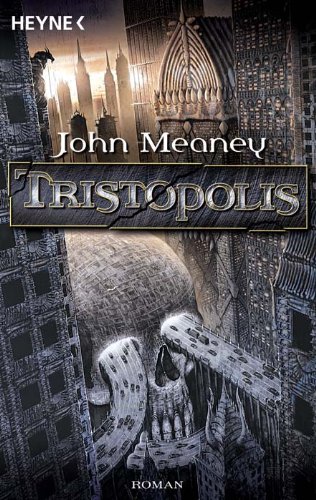
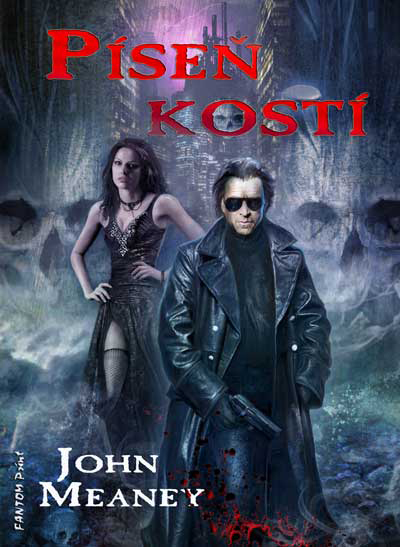
My introduction to John Meaney came through the Nulapeiron series with the book Paradox. I was blown away by the quality of the writing. Then I placed the novel on my shelf and sort of forgot about it (I read a lot). Through my library Bone Song came to my attention. Talk about pleasant reunion with an author. This reminder led to the purchase of the remainder of the Nulapeiron Sequence and the later continuation of Tristopolis with Dark Blood.

John Meaney writes a mean book, a novel that draws me into its lair waiting to be consumed by it. And I was. Bone Song was incredibly difficult to put down. Meaney’s description of Tristopolis is beguiling and dark. Atmosphere and personalities light up like a beacon in my mind.

Considering the title of my blog Bone Song is the perfect first novel to review. In it we find the darker side of humanity described in a manner that shows us the lure of power – power-hunger – power-addiction and the concept that some people are more equal than others.

Bone Song is the first book in the Tristopolis series. Tristopolis is the city of Lieutenant Donal Riordan, the good guy in this plot. It is also a city where the dead are sent to give energy to the generators that keep the city running. Zombies, wraiths and gargoyles are only some the races inhabiting this world along with humans, and Donal manages to interact and make friends with them all.

Bone Song is supposedly a horror book but I’m not sure I agree with that assessment. It’s certainly a dark enough world, but it seems bleak rather than horrifying and creepy.

Donal has been assigned to protect an exceptional opera singer who the authorities suspect is on the hit-list of a mysterious serial killer. The job does not go well. Donal gets drawn into a world of deception and betrayal, a world where he has to find someone hidden by powerful connections.

There is murder and mayhem, but Donal shines like a beacon in this book. He’ll kill and maim if he has to, but he’d prefer it if he didn’t. His opponents (mysterious as they are) are quite different. “The end justifies the means” seems to be their motto. This does seem to be the motto of power-addicted people.


Reviews:


Bone Song available on Amazon US

Thater, Glenn G.: The Gateway (Harbinger of Doom 0.5) (2008)

“Talbon!” said Lord Eotrus. “Dispel the mist. Now!”

At his liege’s command, the sorcerer uttered forgotten words of eldritch power; secret words lost to all but the chosen few. The ancient sorcery he called up crushed the unnatural mist back against the night, though the darkness lingered beyond the limits of the soldiers’ torchlight.

“For glory and honor,” shouted Lord Eotrus. “For Odin! For Lomion!”

“For Lomion,” shouted the men.

Glenn G. Thater

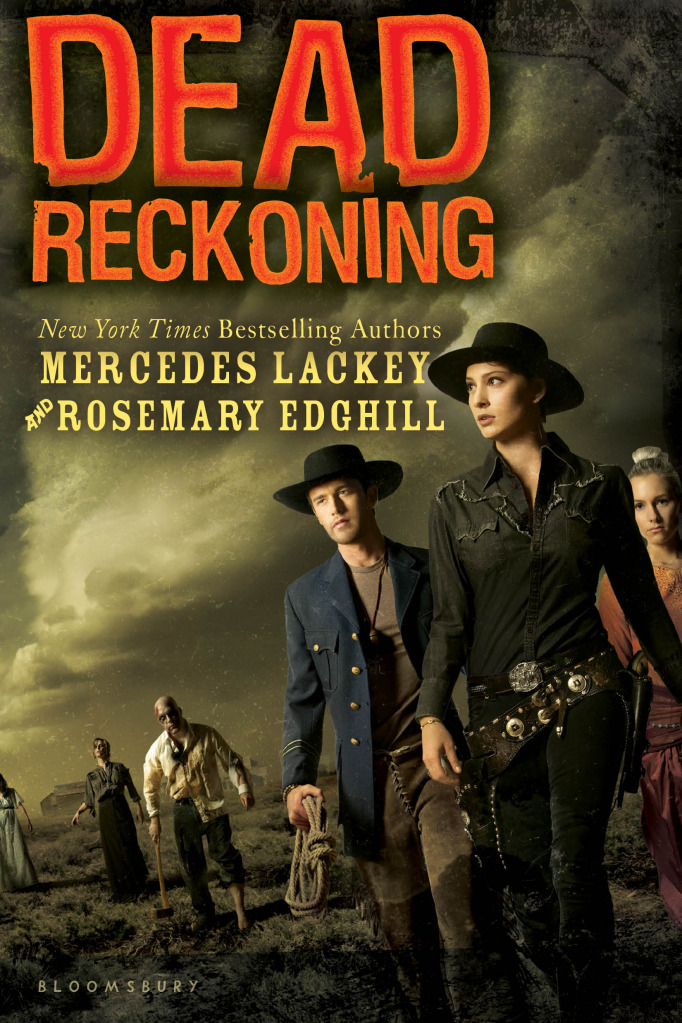
Lackey, Mercedes & Edghill, Rosemary: Dead Reckoning (2012)

Artist: Regina Hoff
Artist: Regina Roff

I have been looking for an updated website for Rosemary Edghill. This link is old (2013). I haven’t found one anywhere else, but she is still alive. She and Mercedes Lackey wrote Dead Reckoning together.

The setting of Dead Reckoning is the Wild West a couple of years after the Civil War. Two of our characters are from either side of the issue while the third is indirectly an American Indian. Jett’s story set me looking for how likely it was that a woman would cross-dress around the time of the Civil War. Well, it happened and not that seldom either. There really wasn’t much choice for any of them. Not for Jett either. If she/he wanted to go off and try to find her brother she would have trouble doing so as a woman. It simply was not accepted. But all of her female habits had to be set aside and Jett had to learn how to walk, talk and adapt the mannerisms of the men of her time to be left alone. She also had to shoot really well, because sometimes seeming like a post-adolescent boy brought many of the same challenges women had. Gunslingers were the shooters who were quick draws and fast shooters.

Honoria had the advantage of an unconventional childhood with an eccentric father. Perhaps eccentric isn’t the correct word. Her father was a genius whose ideas kept interrupting his life and drawing him into new mind-zones. With a daughter just as bright, that may have been a good thing. Honoria was given the freedom to study what she wanted and that enabled her to do what other unusual women of her time also did, invent. I found myself rather liking her insistence upon science over all. Sometimes I wanted to tell her to get over herself, but she was consistent with her character all the way through.

In fact, that can be said of all three characters. Jett remained the male she wanted to be taken for. The last of the three compatriots, White Fox, was consistent with the civilian scout and Algonquin adoptee he was supposed to be. White Fox was on a mission for the 10th Cavalry to find out what had happened to his Captain’s mother at Glory Rest. What he discovered was that the town was completely deserted. There had, in fact, been several incidents of people disappearing or groups of people being slaughtered by unknown parties. The disappearing people fit with the allegations Honoria was investigating.

Their encounters with zombies and cultists are fun and full of action.

Recommended.


Reviews:


Dead Reckoning available at


Ebook available for kindle US, kindle UK & nook


1993: Women in the Civil War
2000: Women Inventors By: Ping Chen W S 301
Way of Life – Algonquian Indians

Meskwaki-Sauk language
Meshkwahkihaki/Sauk history
10th Cavalry Regiment

Ee, Susan: End of Days (Penryn and the End of Days III) (2015)

… “Hey, you! Dinnertime! I’m over here, you scabby rats! Come and get me!”

The Hyundai is rocking with hellions as they pile on. I’m about to screech out of the lot – or at least make donuts until all the hellions head my way and leave the rest of the people alone – when I feel a thump. The car drops on one side. Then I see the shredded rubber of a tire being flung over the hood.

That was the front tire.

I stare dumbly at the ripped-up tire as it flops and wobbles to a standstill in the parking lot.

Then so many hellions pile onto my car that I can’t see the tire anymore.

I stroke the fur of my teddy bear. It’s all I can think to do.

Pooky Bear can’t help me in a vehicle. Not a lot of room to slice and dice.

That means I need to exit the car if I want a chance at getting out of this.

I sit in the car.

I wonder how long a person can stay in a vehicle.

But then, of course, the hellions begin pounding on the windshield. (p. 105)

Susan Ee, End of Days

Wrede, Patricia C.: Daughter of Witches (Lyra II) (1983)

My copy of Daughter of Witches is the revised version. Daughter of Witches is Patricia C. Wrede’s second story.

Bond servants in Chaldon were servants with only one right: a half-day off every three weeks. Their masters could, in all other respects, treat their bond servants as they would. Ranira, our main character, is one such bond servant. She was bonded for nine years because her parents had been judged and killed for being witches. When we meet her, she has two more years of her bond to serve. She is somewhere in her teens.

When strangers come to Lykken’s inn at Festival time, they ignore the danger they place themselves in. Being foreigners in Drinn at Mid-Winter festival is enough to get you arrested. Hosting foreigners is also enough to get you arrested and sentenced as bond servant. In fact, all of your employees and family are placed in bond service for not having reported your crime. Earlier in the story, Ranira unintentionally offended the priest that is her “arresting officer”. It turns out she offended The High Priest of Chaldon. Her sentence is his way of getting revenge.

“For three days more I will be seated in the place of honor in the Temple, next to the High Priest, while he teaches the people the new rites and leads them in the old ones. Then the High Priest himself will perform the wedding ceremony. And consummate it. Publicly,” she added as an afterthought. She stared resolutely at the door of the cell. She was determined to finish, to make them understand, so that they would leave her to whatever little peace and sanity she could find and cling to. “When he is finished, the god will take me. For two days, Chaldon will walk in my body and speak with my voice, and there will be nothing left of me at all. On the last day of the Festival, when both moons are full and Chaldon has accepted the other sacrifices, the nine High Masters will kill me as well.”

Through history human sacrifice is not uncommon: Aztec, Japan, Serbia, Hawaii, India and Rome are only some places where ritualized human killings were/are practiced. Religion seems to make human sacrifice acceptable to the general populace once propaganda becomes common belief. But I wonder if religion is the only area of sacrifice in human society. What about the squandering of young lives in the fights we have with each other to enforce our own points of view? Or the death penalty?

Anyways. Ranira is not too happy about her future fate. Nor are the strangers once they realize what is going to happen to Ranira. What is about to happen to them as well. Although their fate is probably not the privilege of sacrifice to the god Chaldon, they will likely end up as sacrifices to Drinn’s version of justice. Getting away would seem hopeless yet highly desirable for all of them. Ranira and the strangers now set off on what are narrow escapes, much use of magic and new friendships.

Recommended.


Reviews:


Daughter of Witches at Goodreads

Lackey, Mercedes & Edghill, Rosemary: Legacies (Shadow Grail I) (2010)

“She’s gone, what’s the harm?” Muirin said. She flipped through the manila folder. “Transcripts, notes from the teachers – huh, she was getting better grades in Art than I am – evaluations from her magic coach – Kissyface Bowman always was too easy on anybody with a flashy Water Gift – Demerits …” She stopped suddenly, as she got to the last page, and stared down at the folder in silence.

“What?” Loch said. Muirin simply held the folder out to him mutely.

He took it, and looked down at the last page. Spirit looked over his shoulder. There was just a single page there at the end, something it would be easy to take out and dispose of if for some reason you were going to hand it over to someone. At the top of the page there were several lines of illegible handwriting. The rest of the page was blank.

Except for a large red stamp that said: “Tithed.”

And the date.

Halloween. (Mercedes Lackey and Rosemary Edghill)

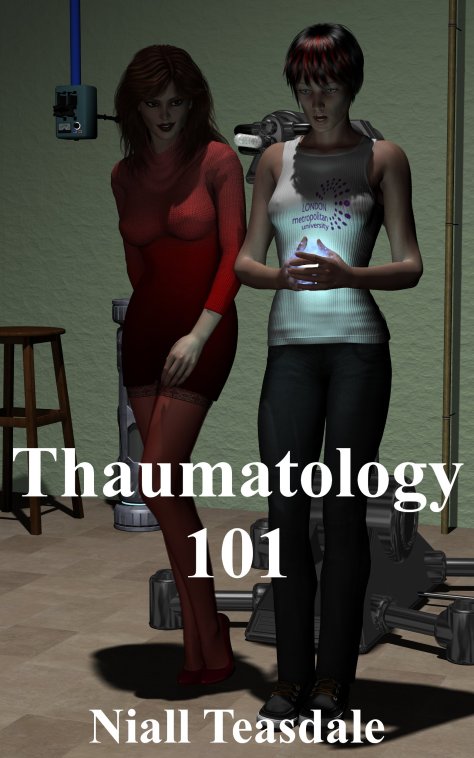
Teasdale, Niall: Thaumatology 101 (2011)

thaumatology-101-Niall Teasdale

Thaumatology 101 is a mystery. Ceridwyn (Ceri) Brent has been hired as a research assistant to Dr. Tennant at the Metropolitan University in London at the High-energy Thaumatology Building. Thaumatology is the magic of Teasdale’s world. Dr. Tennant has been working for a couple of years on finding a solution for the containment of T-Null. It turns out her other assistant, Shane Walters, has hampered her work. After an accident occurs that almost kills Ceri, Ceri and Lily begin searching for an answer to why Shane is out to stop Ceri.

I like the way Teasdale introduces us to the world (and the house) both Ceri and Lily are part of. Thaumatology 101 is very much about the friendship between Lily and Ceri. Ceri experiences major changes in her life during the story and Lily is there to both support and hamper her. Thaumatology 101 celebrates sexuality without being preachy or crude. I found that refreshing. Not being a romance was also great. Violence in the story was toned down. Because of the toned down violence and joyful sexuality, I would call this an older Young Adult urban fantasy tale.  The story is somewhere between a novella and a novel in length (137 pgs).

Recommended.


Reviews:


Thaumatology 101 available at Smashwords, Amazon.com, Amazon.uk

Gee, Emily: The Sentinel Mage (Cursed Kingdoms I) (2011)

Jáume was in his father’s barn when the curse broke free of its dormancy on the easternmost rim of the Seven Kingdoms.

The story of the Sentinel Mage begins with Jáume, eight years old. Ancient magic turns his father into a monster and the boy has to flee to save his life. Reading up on orphaned children showed me that homeless, orphaned pre-teens looking to survive are more common than I thought. That type of homelessness made Jáume’s tale more believable. Where a lot of children would have died from helplessness, Jáume is crafty and cunning. Sometimes he is not proud of what he has to do to live, but he still does them. Choices we seem to be left with, may not be real choices after all. Do or die?

Magic, like the terrible curse, is the reason witches were hunted until thought extinct on the mainland. But complete extinction of a genetic trait when prophecy is around would never be possible for a fantasy trilogy. In life the complete extinction of a genetic trait seems unlikely. Eventually it might turn up again. In the Sentinel Mage that is even more so the case, as Prince Harkeld is about to discover.

Every prophecy needs its tool and these tools are people who vary from the young and innocent to the old and unwilling. Prince Harkeld starts off with power, wealth and a sense of entitlement. He is 22 years old when he meets the feared witches at his father’s court in Osgaard. King Esgar has called him to meet the diplomatic convoy from Rosny in the Allied Lands. When Prince Harkeld hears what the witches (or “mages” as they prefer) have to say about his destiny and his background he is shocked. It turns out the blood of monsters is in him and he needs to choose between honor and his father’s approval. Fortunately for Prince Harkeld, he choses honor. He is not aware of the personal consequences of doing what his father wishes.

Monsters or not, Harkeld is stuck with the mages (or witches as he curses them). A solution to his distrust is found by the mages. However, this solution requires distraction and a certain amount of naivete on Harkeld’s side. Perhaps the mages figure he is distraught enough that he will not discover the discrepancies that occur when Justen appears.

I understood why Harkeld would act like the distrustful, arrogant and annoying person that he was with the mages. His background, the suddenness of his leaving and the shock of his discovery along with the constant fear of discovery and being on the run would all play a part in leaving him a somewhat unlikable person. I’m not certain I cared much for the mages either. They were dishonest toward Harkeld and very open about the possibility of needing only his hands and blood for the fulfillment of the prophecy. Only as a last resort, of course ….

In leaving the castle behind he also leaves his beloved younger sister and two younger brothers behind. Princess Brigitta wants to come with him but Harkeld feels she will be safer with her father. Hmmmm. Time will show. But Harkeld worries. And with cause. Princess Brigitta and her two helpers, armsman Karel and handmaid Yasma were all that were left to protect her brothers, six-year old Rutgar and four-year old Lukas. But eighteen-year old Brigitta is about to encounter her own set of terrible problems leaving her with little will or ability to look after her brothers. She is also all that stands between Yasma and constant abuse. Being a bondservant in Osgaard equates to slavery and terror. At least with the Princess Yasma had escaped daily rape and beatings.

Gee’s writing is what drove the story on. There were some hiccups but for the main part she kept me caught in her words. Recommended.


Reviews:


The Sentinel Mage is available at Amazon, Amazon UK, IndieBound, Barnes and Noble, Book Depository

Larke, Glenda: The Aware (The Isles of Glory I) (2003)

Researcher (Special Class) S. iso Fabold, from the National Department of Exploration of the conquering nation Kell, has come to the Isles of Glory. His project is to discover what he can about its history and beliefs. As part of that mission, he interviews Blaze Halfbreed. It is her story we hear in The Aware. Fabold comments on Blaze’s story at regular intervals. I don’t particularly like Fabold. I find him an annoying, misogynistic git.

Blaze takes us back 50 years to a time before the Change, when magic was known. She telles us of her third visit to the Island of Gorthan Spit. Gorthan Spit is the place where those who have no where else to go end up. Blaze calls it a:

middenheap for unwanted human garbage and the dregs of humanity; a cesspit where the Isles of Glory threw their living sewerage: the diseased, the criminals, the mad the halfbreeds, the citizenless. Without people, Gorthan Spit would have been just an inhospitable finger of sand under a harsh southern sun; with them it was a stinking island hell.

Halfbreeds (children of two people from different islands) seldom survive to adulthood. None of the Isles of Glory wish to admit such children exist. Citizenship is only for the purebred. Usually, halfbreeds are abandoned as soon as their mixed background becomes apparent. Blaze, herself grew up

on the streets of the Hub with a group of other outcasts, mainly children of varying ages. Our home was the old graveyard on Duskset hill, where once upon a time the wealthy of the city had buried their dead in tombs above the ground. The place was ancient, the tombs neglected. They made good hiding places, fine home for a pack of feral street kids with no money and no respectability and, in my case, no history or citizenship.

That childhood, her later tutelage by the Menod and her treatment and training by Keepers laid the groundwork for the kind of adult Blaze Halfbreed became. What she learned was that if she wanted to be looked after Blaze was the one who had to do the looking. No one else could be trusted. And she is fine with that. She has no illusions about being some kind of wonderful person who needs to save her world. That she happens to become a pivot is due to Blaze being in the right/wrong place at the right/wrong time.

Sometimes life is like that. Very few people get to become pivots upon which the fate of the world rests. Choices are made at such times that may or may not change the immediate course of history. Long-term very little changes where humans are involved.

I particularly appreciated a few scenes in The Aware. There is an amputation sequence that takes us through the process. Part of that process is letting us know what chance and amputation patient should have had somewhere like Gorthan Spit. There is also an explanation of how a woman like Blaze would be able to handle a two-handed sword for a longer period of time. There is her size, strength, training and practice. In addition the steel of her sword is more refined and therefore a little lighter than the regular ones of that time. Only blood-debts would get you such a sword if you were not from Calmeter. But Blaze needs to take better care of her weapons.

There was plenty of action, an explanation of the magic, a good description of how the Islands worked politically and practically and good character development.

Recommended.


Reviews:


The Aware available at Scribd.com


Translations:

Hyndman, Jennifer Elizabeth: Grinch, Demon Slayer (2013)

Bryce didn’t see the string attached to a fishing hook which Noah had hid, with the direction of Samuel, under his drinking glass. He looked at Brooklyn and said, “You dipped your hair in your gravy again.”

Brooklyn squealed, looking down at her hair and examining it for food. When Bryce had his full attention on Brooke’s hair Noah quickly slipped the fishing hook into the wrist cuff of the head elf’s button up shirt. Bryce didn’t notice nor did anyone else.

“Well it looks like I was wrong.” Noah chuckled at his own genius. Well, technically it was Samuel’s genius. Keeping the string loose, he waited until Bryce was about to lift a spoonful of mashed potatoes to his mouth. That was when he held the string tight so that Bryce had to pull extra hard to lift his hand.

When Bryce pulled harder on his hand, confused at the resistance, the string broke and he quite literally punched himself in the face with a spoon of potatoes. He was not amused. Luckily, Noah was faster than Bryce. …

Gaiman, Neil: The Ocean at the End of the Lane (2013)

Thank you, to my sister-in-law for giving me a copy of The Ocean at the End of the Lane.

In December, right before I turned seven my family moved from Australia to Norway. One of my memories tied to that move is stepping outside the plane into the middle of Norwegian winter. Moving was not something I wanted, and winter did not help.

Soon I was driving slowly, bumpily, down a narrow lane with brambles and briar roses on each side, wherever the edge was not a stand of hazels or a wild hedgerow. It felt like I had driven back in time. That lane was how I remembered it, when nothing else was.

Memory can be triggered by scent, sound and sight. All of a sudden you find yourself re-visiting a time you had forgotten. Neurons spark neurons and whatever filing system you have going for you opens a memory file.

If you’d asked me an hour before, I would have said no, I did not remember the way. I do not even think I would have remembered Lettie Hempstock’s name. But standing in the hallway, it was all coming back to me. Memories were waiting at the edges of things, beckoning to me. Had you told me that I was seven again, I might have half believed you, for a moment.

As others have mentioned, we never discover what the name of the main character is. For the most part he is called “the boy”, and that is how I think of him. Neil Gaiman’s statement that the story is meant for adults fits my feeling while reading the book. There is enough terror (not violent) for a younger audience to enjoy it as well.

At seven years of age, children have little say in their lives. Moving to Norway was not my choice. Nor does the boy have much influence on his own life. There are a few episodes that illustrate this. To me, the episode with the cat stands out the most. Utter disregard of the possibility that the boy might be devastated shocked me. Yet, looking back at my own life, children were presumably fine with whatever the adults chose. In The Ocean at the End of the Lane, adults are judged more believable than the boy. So it is when I look around at the parts of the world I have encountered. My Asperger brain is completely baffled by this phenomenon. When the boy’s enemy states

“And what can you say to her that will make any difference? She backs up your father in everything, doesn’t she.”

I am reminded of many family situations that have crossed my life-path. No matter what one parent does or says, they have the backing of the other. Utterly incomprehensible.

Being without power to decide anything about their lives is something children come to semi-accept. At the same time there is a continuous battle between adults and children to have the ability to decide. We see some of that in The Ocean at the End of the Lane. The boy does not give in to the powers that be, although it might, at first, seem that way to the adults.

The Hempstock women became a safe haven for the boy. For me that is hilarious because some of the most dangerous episodes happen while together with one of them. But they sought to protect him and make his life safer by fighting for him with the means at their disposal. These means aren’t exactly regular ones.

I loved the Hempstock women. I want to be like the Hempstock women.

Definitely recommended.


Reviews:


The Ocean at the End of the Lane can be found at biblio.com


Adaptations:


Trivia:


Translations:

Don’t Fart in Bed (2002)

https://i0.wp.com/cdn.shopify.com/s/files/1/0032/7882/products/fart_1024x1024.jpg
“Farting in bed” by Matthew Inman (theoatmeal.com)
This is a story about a couple who had been happily married for years.

The only friction in their marriage was the husband’s habit of farting loudly every morning when he awoke. The noise would wake his wife and the smell would make her eyes water and make her gasp for air. Every morning she would plead with him to stop ripping them off because it was making her sick. He told her he couldn’t stop it and that it was perfectly natural. She told him to see a doctor; she was concerned that one day he would blow his guts out.

The years went by and he continued to rip them out! Then one Thanksgiving morning as she was preparing the turkey for dinner and he was upstairs sound asleep,she looked at the bowl where she had put the turkey innards and neck gizzard, liver and all the spare parts and a malicious thought came to her.

She took the bowl and went upstairs where her husband was sound asleep and, gently pulling back the bed covers, she pulled back the elastic waistband of his underpants and emptied the bowl of turkey guts into his shorts.

Some time later she heard her husband awaken with his usual trumpeting which was followed by a blood curdling scream and the sound of frantic footsteps as he ran into the bathroom. The wife could hardly control herself as she rolled on the floor laughing, tears in her eyes! After years of torture she reckoned she had got him back pretty good.

About twenty minutes later, her husband came downstairs in his bloodstained underpants with a look of horror on his face. She bit her lip as she asked him what the matter was. He said, “Honey, you were right. All these years you have warned me and I didn’t listen to you.”

“What do you mean?” asked his wife. “Well, you always told me that one day I would end up farting my guts out, and today it finally happened. But by the grace of God, some Vaseline, and these two fingers, I think I got most of them back in.”

http://www.greenspun.com/bboard/q-and-a-fetch-msg.tcl?msg_id=009kNX