Category Archives: Mystery

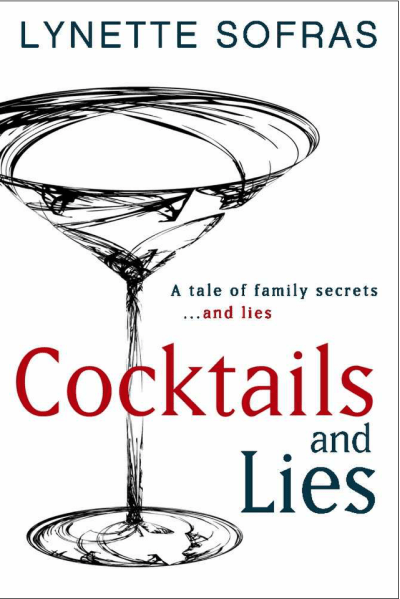
Sofras, Lynette; Cocktails and Lies (2016)

Cover by Nika Dixon
Cover by Nika Dixon

Until I was asked to review Cocktail and Lies by Lynette Sofras, I had not heard the term “cozy mysteries“. I needed to look it so I would read the story in the proper frame of mind.

Cocktails and Lies is a mystery and romance story. Our main character is Hannah James. She lives in London in a house squeezed in behind an apartment building. Hannah works as an insurance loss adjuster. We first meet her when she is picking up her mail:

“Are you stealing our junk mail?”

Voice accusing, mocking even, with a hint of an accent; masculine, unfamiliar and unexpected – so much so that it made me lose my precarious balance and topple sideways, cracking my knee on the cold, marble floor and putting me at an even greater disadvantage. I bit back my sarcastic retort, realising I must appear pretty suspicious, crouching in front of the mailboxes in a building in which I didn’t even live.

This clumsy meeting introduces another important character, Jansen (Jan) Behrendt. Jan owns an auction house in London and is an expert on fine arts and collectibles. He is also one of Hannah’s love interests and a suspect when Hannah’s house is burgled.

Detective Sergeant Callum Connors is the CID detective in charge of investigating the burglary. DS Connors’ other role is as Hannah’s second love interest, a typical romance story move. I suppose authors use love-triangles because they are supposed to create tension. That must be a non-aspergers thing.

There are two mysteries in the story. Well, one mystery and one kind of mystery.

The mystery is, obviously, who the burglar is, and her/his motive. Hannah inherited her house from Grandmother Elouise. The house is two cottages knocked into one. The burglars seemed to be looking for something specific. They had searched all rooms, yet taken only Elouise’s art deco stuff and some antique crystal and china. Other valuables were left behind.

From her work as loss adjuster, Hannah knows this type of non-violent crime has low priority with the police. Although DS Connors investigates the crime, it soon becomes clear that he has little to go on. Most of his attention is due to his interest in Hannah and suspicions of Jan. So, Hannah decides to investigate the crime herself and tries to discover what there is about her grandmother’s house that might interest a burglar.

The other investigation is on behalf of her best friend, Rachel. Rachel suspects her husband is cheating on her and asks Hannah if she might look into it. The reason Hannah is able to help is because Rachel has discovered that Max is a few online dating sites.

Sofras seems to know people well. She has managed to portray how utterly self-absorbed we are most of the time, showing spurts of worrying about others. Except for Ted, all of her characters are like this. Completely normal. I kept on going “hang on” because I would have moments of “oh dear” introspection. Well, done.

When it comes to the romance bit, I am lost. I find three-somes unnecessary and my ASD is extremely romance-challenged. I have no idea how realistic it was. I never do. Cocktail and Lies has very mild sexual and violence content. I would guess its intended audience is upwards from young adult.

Recommended.


Available at Amazon UK and Amazon US


I was given an Arc copy by the author

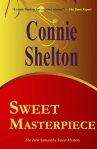
Shelton, Connie: Sweet Masterpiece (Samantha Sweet I) (2010)

Samantha (Sam) Sweet‘s  dream is to open her own pastry shop. In the meantime, she has to work for the USDA cleaning out abandoned properties where the owners have defaulted their loans. Both mysteries in Sweet Masterpiece have to do with her USDA job.

Cake-baking weaves in and out of sleuthing. Sam is no exception from the rule of amateur sleuths. Amateur sleuths always solve the mystery. Either they announce their success or they lead the police by the hand until the police cannot but figure out the answer. Sweet Masterpiece is of the second category. Shelton has added in a little romance. Her beau is Deputy Beau Cardwell, the detective in charge of both sites.

Violence, swearing and sexual content are practically non-existent. You would have to work hard to be offended by any of it.

In Taos, New Mexico, Bertha Martinez dies after Sam has broken into her home. But not until Bertha manages to convince Sam to keep a worn wooden box safe, claiming that Sam is its new secret-keeper. Turns out, this box has strange powers to share. Powers that at first freak Sam out. Witchy stuff is suspected.

House number two does not have anything paranormal about it. A man’s body is discovered buried on the property. Turns out the body belongs to an artist who had disappeared from the art-world some years ago. Mystery number two is, of course, the one that Sam helps the police solve. Along the way, she is lectured by her deputy that forcing your evidence to fit your theory is a bad idea.

Sweet Masterpiece is a mystery of the light-hearted kind. I had fun reading it.

Recommended.


Reviews:


Sweet Masterpiece is available free of charge on Smashwords

Peters, Elizabeth: The Ape Who Guards the Balance (Amelia Peabody 10) (1998)

I had read one other story in the Amelia Peabody series before I read The Ape Who Guards the Balance (The Ape).  The Ape occurs before my previous read. As each story solves its mystery, that was not a problem. Nor did I have difficulty jumping into the overarching story of the Emerson family.

Elizabeth Peters writes about the adventures of the Emerson family and their friends, servants and enemies. The family consists of Amelia Peabody Emerson (matriarch) and Radcliffe Emerson (patriarch). Both Amelia and Radcliffe have been with the series from the beginning. Walter (Ramses) is their son and Nefret their ward. In The Ape we also have Lia, the daughter of Radcliffe’s brother and sister-in-law and their ward, David. All six travel to Egypt for the 1906-07 excavation season.

Their adventures begin before leaving England. A mysterious man appears at a suffragette picket that Amalie and Ramses attend. This man later turns up in connection with a break-in and hauls away a large collection of Egyptian antiques. Shortly after, the stranger also seems to be involved in a kidnapping attempt of Amalie. The entire family suspects an old “enemy”, Sethos.

Once they arrive in Egypt, Ramses and David go on an adventure including a stolen papyrus, mysterious strangers and a blackmailing Nefret. The Professor is livid when he finds out what the threesome has done. But he is also intrigued. Then a mysterious bearded man turns up in Egypt as well, and it is not Sethos.

The Emerson family is egalitarian for the time it is written for (and for many families and places today). Nefret has just finished her clinical practice and Peters show us what a feat that was for a woman:

“Acquiring that training had been a struggle in itself. Over the violent objections of its (male) medical faculty, the University of London had, finally, opened its degrees to women, but the major universities continued to deny them, and the difficulty of obtaining clinical practice was almost as great as it had been a century earlier. Nefret had managed it, though, with the help of the dedicated ladies who had founded a woman’s medical college in London and forced some of the hospitals to admit women students to the wards and dissecting rooms.”

Lately, I have begun wondering whether I read male and female leads differently. Many of the comments on The Ape seem to be consistent with comments on strong women both in fiction and real life. A woman as strong as Amelia Peabody will be dissed for being strong but not perfect.  In The Ape she certainly shows that she is far from perfect. Her own bias surprised her when David and Lia announced their engagement. She and Emerson are peas of a pod when it comes to stubbornness and a sense that their opinion is the only correct one, even if that opinion changes later on. Both see the other as emotional, adorable and hot. The words used to describe these qualities are different for each of them, further cementing both the standards of the time and the continued power language has today. We do get a taste of what it would be like if language was equal for both men and women in this thought from Amelia:

“… it was time for me to take charge of the discussion, which had degenerated into a series of emotional exchanges. This is often the case when men carry on a conversation.”

Gender is far from the only topic discussed in The Ape. Racism and classicism are very much present in the Victorian English who come to Egypt to loot the graves of ancient rulers and take their loot back to England. Peters points out the difference in the handling of this loot. Sometimes graves were completely vandalized by so-called archaeologists. Others, at least, tried to maintain both loot and their chambers as intact as possible. The Emersons’ are of the last category.

Issues and mystery are both weaved together in an enchanting story in the Agathaian (Agatha Christie) style. I definitely recommend The Ape Who Guards the Balance.


Reviews:


Translations:

Ford, Jeffrey: The Shadow Year, 2008

The Shadow Year begins and ends with Mr. Softee, the ice-cream man. At the beginning of the story our narrator, and main character, is “listening carefully for that mournful knell, each measured ding both a promise of ice cream and a pinprick of remorse.”

Our narrator describes a family learning to cope with a new financial reality. Their father lost his old job and was now working three jobs, while their mother worked one job, to pay the bills that still kept on coming in. Even though their father is not present in much of the book, Jeffrey Ford still manages to show a man who loves his family passionately and whose family loves him back. But because of his need to work so much, we also see children who view their father as a distant figure.

Their mother is clearly depressed and self-medicates with alcohol and The Complete Sherlock Holmes. She seems to be manic depressive, and we get to watch her come down from one of her manic episodes.

In those few seconds, I saw the recent burst of energy leaking out of her. As usual, it had lasted for little more than a week or so, and she’d used it all up. Like a punctured blow-up pool toy, she seemed to slowly deflate while shadows blossomed in her gaze.

Childhood is such a passionate time. If you have ever seen a three-year old express anger, joy, sadness or love, you know what a I mean. Everything is new and everything is normal. An adult might see a child’s circumstances as horrible, but that child knows of nothing else. As they grow and learn to compare, some of their passion is sloughed off.

There are three children in our main character’s family: Jim (seventh grade), narrator (sixth grade) and Mary (fourth grade/Room X). All three seem to be pretty smart with Mary as the probable winner. Her placement in a special class is due to the inability of her teachers to get an answer from her. All three are authority adverse. There is an hilarious episode regarding Jim’s personality/IQ test. All three get this self-confidence from their mother, who allows them quite a bit of leeway when it comes to school.

I found myself loving this family. Perhaps Mary in particular (although I probably identified most with the narrator). Mary is a child who follows her own paths. Her friends, Sally O’Malley and Sandy Graham, lived in a closet in her room and sometimes they go to school with Mary in the family basement where they are taught by their teacher, Mrs. Harkmar (all three make-believe). Mary also sports an alter-ego, Mickey. Her math abilities are pretty astounding and all learned while listening to Pop working out his horse races. Those abilities are used to identify the mystery behind the disappearance of Charlie Edison.

Poor little Charlie Edison. Lost in the battleground of Elementary (Primary) school. He is first on the list of who Bobby Harweed (bully and coward) beats up. Charlie is, sadly, also on the bully-list of some of the teachers. He does his best to stay invisible. Then one day he truly becomes invisible by disappearing for good. Our three siblings begin looking and use Botch Town as their aid.

Botch Town is Jim’s creation. It is a model of their neighborhood made from little bits and pieces Jim has picked up and glued together. Mary seems to have super-natural powers in predicting where people will be and what might happen. One of those predictions is regarding their neighborhood’s recent prowler.

Then we have the ghosts.

I loved Jeffrey Ford’s writing. Definitely recommended.


Dick van Dyke (hated by Pop, loved by the narrator): Shanty Town, I’ll Be Seeing You (comedy)

Herman’s Hermits, There’s a Kind of Hush (1967) (marks a transition)


Reviews:


Translations:


Awards:


The Shadow Year available at Amazon US

Estep, Jennifer: Spider’s Bite (Elemental Assassin I) (2010)

Jennifer Estep‘s Ashland, Tennessee, is like many corrupt cities/towns/countries. “Ashland might have a working police force and government, but the city was really run by one woman. Mab Monroe.” Monroe is your typical mobster. She has a respectable front powered by charity, fund-raising and activities appearing to give back to the community. Behind that façade, bribes and intimidation are favorite tools but she does not hesitate to stoop to kidnappings and murder if necessary. If you happen to be a law-abiding police officer, district attorney or judge, you are doomed one way or another.

In William Shakespeare’s Hamlet, Prince of Denmark, Prince Hamlet says to his mother Queen Gertrude:

“Nay, but to live
In the rank sweat of an enseamèd bed,
Stewed in corruption, honeying and making love
Over the nasty sty—”

Into such a bed of corruption, Estep places Spider (Gin Snow), assassin, main character and story-teller. Gin is known as Gin Blanco, part-time cook and waitress at the Pork Pit. She regularly takes classes at Ashland Community College – the eternal student. Pork Pit is owned by Fletcher (foster-father, ex-assassin and handler/go-between). Gin loves and trusts both Fletcher and Finnegan/Finn (foster-brother and bankier). As Spider’s Bite unfolds, we discover how Gin came to be in Fletcher’s household.

We first meet Spider in Ashland Asylum. She is there to kill one of the therapists. As an introduction, this assignment serves to introduce us to Gin, her profession, the types of inhabitants in Ashland and what kinds of magic exist. Ashland is a place of magic, vampires, giants, dwarves and humans. Gin is human and a stone- and ice-elemental. The other two main forms of magic are fire- and air-magic. Most elementals have the use of one magic. If they have two, one of them is normally a minor one. Ashland’s magic is not without its dangers, addiction being one of them. Insanity another. Fletcher and Finn are humans and without magic. Early on in the story, Gin takes on an assignment that has devastating effects on her relationship with Fletcher and Finn and has the potential of bringing her within reach of Mab.

Her assignment certainly brings her within reach of Detective Donovan Caine. Caine is one of the few honest public service-people in Ashland. Of course, he and Gin are bound to clash and end in the inevitable should/should not have sex situation. Fortunately, Estep chooses to portray Gin as the instigator and Caine as the doubting, shameful one. It would be strange if they had the usual roles in paranormal literature due to Caine being the upright police officer that he is. Happily, this romance bit did not take up too much of the story. Most of their interaction was through their investigation.

Finn, Gin’s foster-brother, is something worse than an assassin (as Gin puts it). He is a bankier and Gin’s go-to person in Spider’s Bite. It would be a safe bet to say that Finn and Gin are best friends. Their friendship is vital to the success of the investigation. When Caine becomes involved he and Finn go through the usual (is it like this all over the world?) who’s-the-manlier-man procedure. Thankfully, again, Estep does not force us to endure yet another threesome (god, I hate those). No mushy stuff and no threesome. What is the world coming to?

I had fun reading Spider’s Bite. There was plenty of action. Some violence and sex. Definitely recommended.


Reviews:


Translations:


Spider’s Bite is available at Amazon

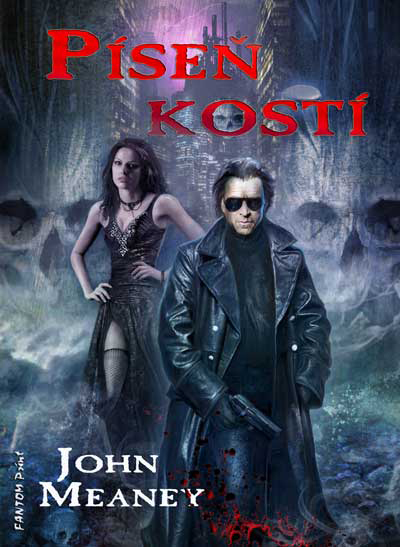
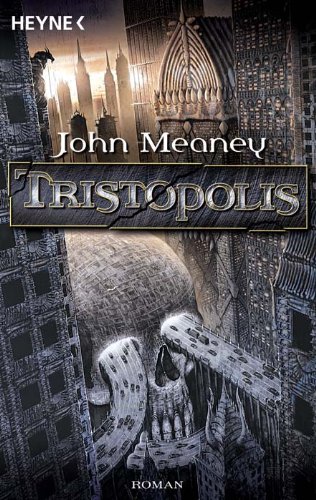
Meaney, John: Bone Song (2007)

My introduction to John Meaney came through the Nulapeiron series with the book Paradox. I was blown away by the quality of the writing. Then I placed the novel on my shelf and sort of forgot about it (I read a lot). Through my library Bone Song came to my attention. Talk about pleasant reunion with an author. This reminder led to the purchase of the remainder of the Nulapeiron Sequence and the later continuation of Tristopolis with Dark Blood.

John Meaney writes a mean book, a novel that draws me into its lair waiting to be consumed by it. And I was. Bone Song was incredibly difficult to put down. Meaney’s description of Tristopolis is beguiling and dark. Atmosphere and personalities light up like a beacon in my mind.

Considering the title of my blog Bone Song is the perfect first novel to review. In it we find the darker side of humanity described in a manner that shows us the lure of power – power-hunger – power-addiction and the concept that some people are more equal than others.

Bone Song is the first book in the Tristopolis series. Tristopolis is the city of Lieutenant Donal Riordan, the good guy in this plot. It is also a city where the dead are sent to give energy to the generators that keep the city running. Zombies, wraiths and gargoyles are only some the races inhabiting this world along with humans, and Donal manages to interact and make friends with them all.

Bone Song is supposedly a horror book but I’m not sure I agree with that assessment. It’s certainly a dark enough world, but it seems bleak rather than horrifying and creepy.

Donal has been assigned to protect an exceptional opera singer who the authorities suspect is on the hit-list of a mysterious serial killer. The job does not go well. Donal gets drawn into a world of deception and betrayal, a world where he has to find someone hidden by powerful connections.

There is murder and mayhem, but Donal shines like a beacon in this book. He’ll kill and maim if he has to, but he’d prefer it if he didn’t. His opponents (mysterious as they are) are quite different. “The end justifies the means” seems to be their motto. This does seem to be the motto of power-addicted people.


Reviews:


Bone Song available on Amazon US

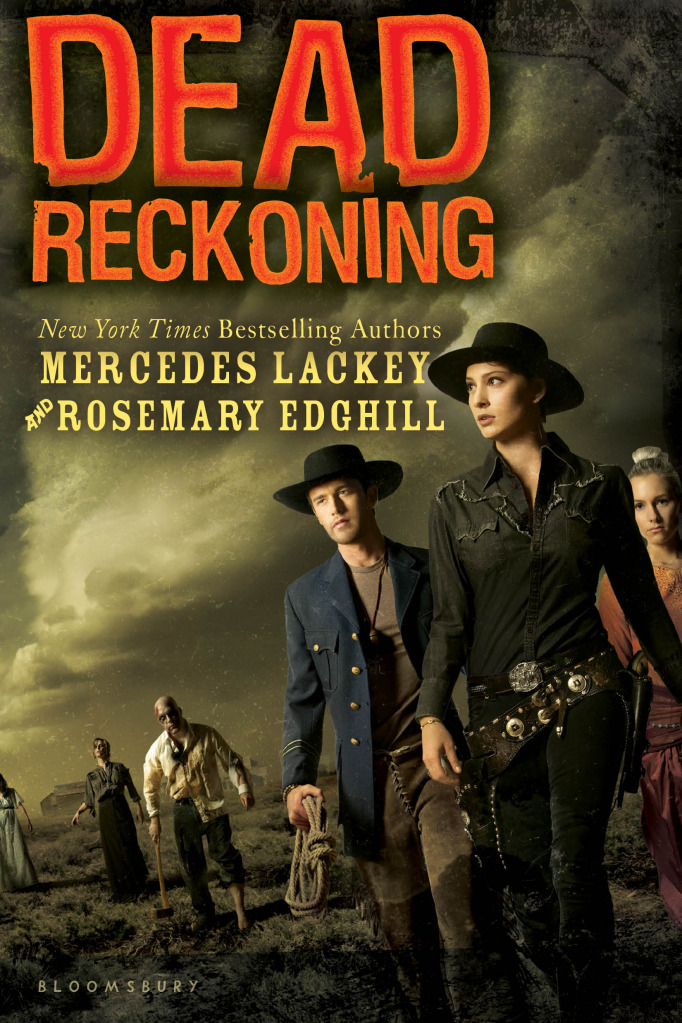
Lackey, Mercedes & Edghill, Rosemary: Dead Reckoning (2012)

Artist: Regina Hoff
Artist: Regina Roff

I have been looking for an updated website for Rosemary Edghill. This link is old (2013). I haven’t found one anywhere else, but she is still alive. She and Mercedes Lackey wrote Dead Reckoning together.

The setting of Dead Reckoning is the Wild West a couple of years after the Civil War. Two of our characters are from either side of the issue while the third is indirectly an American Indian. Jett’s story set me looking for how likely it was that a woman would cross-dress around the time of the Civil War. Well, it happened and not that seldom either. There really wasn’t much choice for any of them. Not for Jett either. If she/he wanted to go off and try to find her brother she would have trouble doing so as a woman. It simply was not accepted. But all of her female habits had to be set aside and Jett had to learn how to walk, talk and adapt the mannerisms of the men of her time to be left alone. She also had to shoot really well, because sometimes seeming like a post-adolescent boy brought many of the same challenges women had. Gunslingers were the shooters who were quick draws and fast shooters.

Honoria had the advantage of an unconventional childhood with an eccentric father. Perhaps eccentric isn’t the correct word. Her father was a genius whose ideas kept interrupting his life and drawing him into new mind-zones. With a daughter just as bright, that may have been a good thing. Honoria was given the freedom to study what she wanted and that enabled her to do what other unusual women of her time also did, invent. I found myself rather liking her insistence upon science over all. Sometimes I wanted to tell her to get over herself, but she was consistent with her character all the way through.

In fact, that can be said of all three characters. Jett remained the male she wanted to be taken for. The last of the three compatriots, White Fox, was consistent with the civilian scout and Algonquin adoptee he was supposed to be. White Fox was on a mission for the 10th Cavalry to find out what had happened to his Captain’s mother at Glory Rest. What he discovered was that the town was completely deserted. There had, in fact, been several incidents of people disappearing or groups of people being slaughtered by unknown parties. The disappearing people fit with the allegations Honoria was investigating.

Their encounters with zombies and cultists are fun and full of action.

Recommended.


Reviews:


Dead Reckoning available at


Ebook available for kindle US, kindle UK & nook


1993: Women in the Civil War
2000: Women Inventors By: Ping Chen W S 301
Way of Life – Algonquian Indians

Meskwaki-Sauk language
Meshkwahkihaki/Sauk history
10th Cavalry Regiment

Lyon, J.J.: Truth is Relative (A Truth Inducer Mystery) (2014)

Artist: Caitlin Willey

The Monday before Thanksgiving, my car disappeared. Or it might have been late Sunday night. The day was half over before I even looked outside. Instead I focused on an ugly painting until I realized I was hungry. I was out of bread and low on groceries in general. I cleaned my brushes, grabbed my keys, opened the front door, and stared at gray asphalt where my Mazda used to be. A few dead cottonwood leaves swirled there before the wind swept them off.

I didn’t bother calling the police. My car hadn’t been stolen, it had been repossessed.

Anthony has had a rough time during the year after his gift/curse emerged. All it takes is thirty seconds within a ten-foot circumference of him and people cannot help telling him their secrets. Just going to the store is a challenge. And the things he hears. “My wife left me this morning.”, “And then their dad comes home and he needs dinner and he wants sex.”, “I knew it was you and I don’t want to talk to you, but it looked bad.” and “So how did a totally hot man get a gift like that?“. Some of the secrets are much worse than this, and they are part of the trouble Anthony is in and is going to land himself in.

I liked the way J.J. Lyon looked at Anthony’s talent. One of my talents is having no filter on what I hear. Concentrating on my conversation while others are going on around me is extraordinarily difficult. I usually end up commenting on other conversations, or my companions tell me to stop listening in. Sadly, there isn’t an off-button on my talent. That can make talking to me annoying. I just upped my difficulty to the nth degree and probably arrived at Tony’s challenges. So, I truly get why he has made himself a hermit, does not want to visit his family and avoids any close contact with other people if he is able to. However, doing so has gotten him as close to bankrupt as a person could get.

He needs to come up with some way of getting hold of money and using his gift for other things than hitting on girls. His older brother Bart comes up with what he considers a really smart scheme. Why doesn’t Anthony become a PI? Yes, a PI. At first Tony is reluctant. But once he realizes what is really going on, his’s involvement becomes truer.

Recommended.


Reviews:


Truth is Relative is available at Amazon

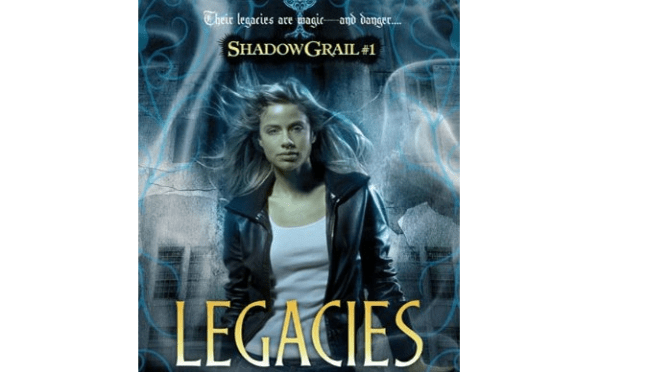
Lackey, Mercedes & Edghill, Rosemary: Legacies (Shadow Grail I) (2010)

“She’s gone, what’s the harm?” Muirin said. She flipped through the manila folder. “Transcripts, notes from the teachers – huh, she was getting better grades in Art than I am – evaluations from her magic coach – Kissyface Bowman always was too easy on anybody with a flashy Water Gift – Demerits …” She stopped suddenly, as she got to the last page, and stared down at the folder in silence.

“What?” Loch said. Muirin simply held the folder out to him mutely.

He took it, and looked down at the last page. Spirit looked over his shoulder. There was just a single page there at the end, something it would be easy to take out and dispose of if for some reason you were going to hand it over to someone. At the top of the page there were several lines of illegible handwriting. The rest of the page was blank.

Except for a large red stamp that said: “Tithed.”

And the date.

Halloween. (Mercedes Lackey and Rosemary Edghill)

Gilman, Laura Anne: Hard Magic (Paranormal Scene Investigations I) (2010)

Sharon looked at him as thought he’s just suggested she take up pole dancing. “You think the five of us, here in an unmarked office, with no reason to be here except a mysterious phone message, and a dead body just happens to be in the other office, aren’t going to become the immediate persons of interest to the cops, no matter how he died? You think they’re going to believe how we all ended up here on the basis of some strange phone message from god knows who, for an unspecified interview for an unnamed, unknown company none of us sent a résume to? I don’t know about you, but I don’t need that shit in my life.” (p. 61)

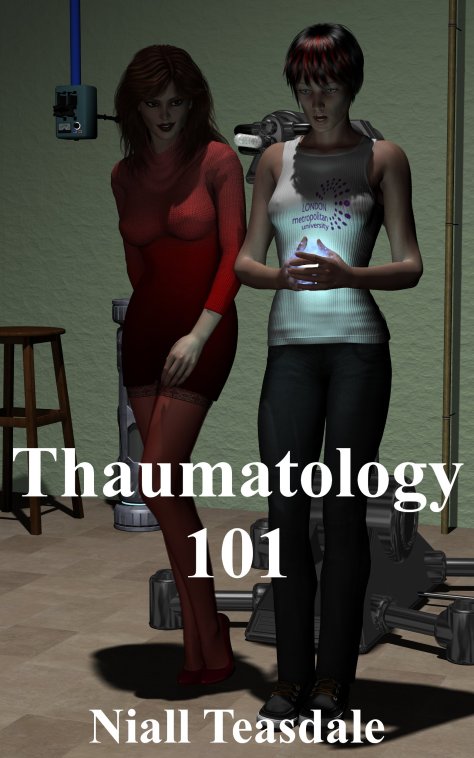
Teasdale, Niall: Thaumatology 101 (2011)

thaumatology-101-Niall Teasdale

Thaumatology 101 is a mystery. Ceridwyn (Ceri) Brent has been hired as a research assistant to Dr. Tennant at the Metropolitan University in London at the High-energy Thaumatology Building. Thaumatology is the magic of Teasdale’s world. Dr. Tennant has been working for a couple of years on finding a solution for the containment of T-Null. It turns out her other assistant, Shane Walters, has hampered her work. After an accident occurs that almost kills Ceri, Ceri and Lily begin searching for an answer to why Shane is out to stop Ceri.

I like the way Teasdale introduces us to the world (and the house) both Ceri and Lily are part of. Thaumatology 101 is very much about the friendship between Lily and Ceri. Ceri experiences major changes in her life during the story and Lily is there to both support and hamper her. Thaumatology 101 celebrates sexuality without being preachy or crude. I found that refreshing. Not being a romance was also great. Violence in the story was toned down. Because of the toned down violence and joyful sexuality, I would call this an older Young Adult urban fantasy tale.  The story is somewhere between a novella and a novel in length (137 pgs).

Recommended.


Reviews:


Thaumatology 101 available at Smashwords, Amazon.com, Amazon.uk

Nesbø, Jo: Police/Politi (Harry Hole X) (2013/2014)

I read Police/Politi in Norwegian.

Some reviewers felt Police was too violent for them. All of Jo Nesbø’s mysteries are dark literature. He delves into the murky and seedy side of people and society. Police deals with consequences and corruption. This time Nesbø looks at corruption within the Norwegian police force. Not only the leaders seem to have trouble staying within the framework of the law. Some of its officers define the law in a manner that allows it to make sense to them. Justice, is after all not the purpose of the law. The purpose of the law is the law and how to define it.

Police was in no way a philosophical work. Entertainment and commentary seems to have been Nesbø’s purpose in writing it. However, I do not have a clue as to what his purpose was because I have read none of his interviews only some of the reviews out there. But it does raise some questions. The nature of corruption being one of them.

What we are willing to sacrifice on the alter of power? If there is one subject that keeps on popping up in stories and research papers, power seems to be it. Sometimes in the form of helplessness – as that poor gay kid must have felt when he came out to Bellman and got beaten up for it. At other times it comes in the form of wanting more power over others. Having power over Berntsen was never enough for Bellman. And sometimes power is portrayed as something we hope to get through others, kind of like the hope Ulla was left with once she and Michael had met in the hotel.

Nesbø also takes a closer look at another reason people kill. Love can influence people’s choices. My definition of love might not fit your. When the love of one person was killed many years ago, that person felt a need for revenge. Revenge took a long time coming, but once it arrived it was certainly thorough. Harry Hole came back to policing due to the path revenge wandered on.

Jo Nesbø is sneaky. Not until seconds or minutes before the culprit was revealed did I figure out who the killer was. No wonder with all the shady characters in the land of Nesbø’s imagination. Just as when I watch magicians, I was fooled by Jo Nesbø’s misdirection. Every time an author manages to trick me I am both pleased and annoyed at the same time.

What I like with police procedurals like Police is that there are no magic solutions to finding a culprit. Harry Hole certainly has Poirot-like qualities in his intuitive ability to see what others cannot. However, Harry makes mistakes and depends on his crew to find the data needed to draw his conclusions. My enjoyment of a mystery/thriller increases with the type of craftsmanship that Nesbø shows.

Warning: Descriptive violence

I had fun. Definitely recommended.


Reviews:


Police is available at bokkilden.no / amazon (various countries) / others


Translations (Original language Norwegian – my edition) Politi:

Sagara, Michelle: Cast in Secret (Chronicles of Elantra III)

Once again, my son and I have finished reading a book together. He enjoyed the first two books of the Chronicles of Elantra, which is why we just finished the third one, Cast in Secret. My son’s conclusion about Cast in Secret was to get me to begin reading the next in line. He laughed a couple of times, giggled some and seemed touched by certain parts of the story. I had similar feelings in about the same places of the story as he did.

Kaylin’s attention deficit disorder is a good thing for us, the readers. This way Sagara has an excuse to introduce us to concepts Kaylin missed in class. Even though Kaylin knows she needs to learn certain principles about magic and ought to know more about racial relationships in Elantra, she seems to struggle with the same inability to pay attention to subjects she considers irrelevant to her job as I do. In social settings this proves a problem for her, and Lord Sanabalis is clear on her being a long way from ready to meet the Emperor (unless she wishes to be eaten). Some people need to learn from experience rather than theory (well, actually, I think that most of us only get true learning through experience). Kaylin needs this more than most people. This inability to learn any other way tends to get her into trouble.
I like Michelle Sagara writing about a person like this. With one dyslexic son, one autistic son and one autistic mother in this family, we are all stuck in that mode. My reading ability, age and gender have probably all contributed to the theoretical understanding I have of people. Face to face encounters can go really well, but like Kaylin I tend to break social rules. Admittedly, some of that disobedience comes from not seeing the importance of the rules, but there again Kaylin, I and both of my sons find common ground. Other rules are broken because we do not understand them.

Words. Such a powerful tool. And what a difficult tool it is to wield. Sagara does a great job portraying the difficulties that arise from not understanding what is being taught. Kaylin has a theoretical understanding of what the Tha’laani are, but she is petrified of them. Her terror is a common one in humanity – fear of the unknown. In this sense, all humans are autistic. But just because a race is physically able to read your secrets, does not mean that they want to. Unfortunately, we humans seem wired to think that if a person is born a certain way, then that means that they wish to wield that “power” over you. We seldom stop to think that the other person might be just as afraid of us, disgusted with us or simply does not care about who and what we are. I suppose that comes from our ego-centrism.

Thankfully, Kaylin is also the kind of person who tries her hardest to face her fears. Facing our fears is so stinking hard. But sometimes a situation arises that forces us to do so. And what do we usually discover? Well … The answer is given considering the story and the obviousness of the question. In Kaylin’s case, the Tha’laani children helped her face and overcome her fears . Children are great fear-breakers that way – if we let them be.

Definitely recommended.

—————————————————————

Reviews:

—————————————————————

Cast in Secret available at Scribd.com

—————————————————————

My review of:

  1. Cast in Shadow
  2. Cast in Courtlight

—————————————————————

Translations:

Le secret d’Elantra: T1 – Le Cycle d’Elantra

Lewis, Gareth: Street of Lost Gods (Tales of the Thief-City I) (2011)

Street of Lost Gods - Gareth Lewis

I had a grand time reading Street of Lost Gods. Mr. Lewis’ writing was a delightful combination of humor and mystery. Rax did the Mautheri eaters proud with his handling of Angel Arden.

The Thief-City is an idea I haven’t seen before. Thieves of all kinds of races, human and alien, are somehow brought to the city by the city. So too are gods who are losing their believers.

Other than that, Street of Lost Gods is a mystery. As the Thief-City is a city of thieves of all sorts, the citizens aren’t exactly upstanding people. Instead, they are a collection of the underbelly of the various societies of Mr. Lewis’ imagination.

Street of Lost Gods is a short-story with a whole lot of fun packed into it. Definitely recommended.


Street of Lost Gods available at Smashwords

Jemisin, N.K.: The Hundred Thousand Kingdoms (Inheritance I) (2010)


Lately, I have had reason to think about the many ways in which people surprise us. Usually, I find that the greatest surprises come at times of stress. Some people end up inviting strangers into their homes and others end up reneging on deals made. People we think we know, turn out to be just as unknowable as the rest of the world.

When Yeine arrives at Sky, people meeting her have already made assumptions about who and what she is. In the case of the full-blood Arameri, Yeine is ONLY a half-blood (dear, oh dear) and probably headed for servility. Except she isn’t. Yeine’s dead mother still seems to have plans for her daughter’s stay in Sky even though that same mother has not lived in Sky for the past 20 years. Finally, the gods and goddesses stuck in Sky have their share of expectations tied to their own idea of who Yeine is.

What I have discovered is that people aren’t as we think. Even close family members who we like to think we know well. All of the people with ideas about Yeine end up being wrong. Their own dreams and projections of self onto her, muddy their ability to predict her completely. Even the gods and goddesses. Or maybe especially the gods and goddesses. They are stuck in their aspects and change does not come readily to them. Nor does the idea of having been mistaken in their conclusions about a person.

But life is like that. Isn’t it. We all draw conclusions about others based on projections of self onto them. Changing whatever opinion we might have made is painful to the extreme. Sometimes enmity ensues and sometimes relationships become deeper after the rift heals. Finally, we become able to see each other as something more. In her search for answers about her mother, Yeine struggles with letting go of her pre-conceived ideas about her mom. In Yeine’s eyes her mother is a person who could do no wrong. Even at 19 Yeine still feels the same way. If that vision is challenged, Yeine is quick to anger. But slowly, ever so slowly, Yeine begins to know her mother, the person. Knowing that person is essential if Yeine is to discover who murdered her (and possibly getting revenge).

Perhaps The Hundred Thousand Kingdoms (The Skygod’s Lover) is more about letting go than anything else. In addition to letting go of her ideas and dreams, Yeine slowly learns to let go of her fear. Fear is such a strong component of our personhood. It binds us into roles we may not want but ultimately fear to break out of. Change is frightening. Our own personal change is probably the most feared change of all – at least it seems that way to me. But Yeine discovers what most of us do when we embark on that letting-go process. For one, we generally do not die. More importantly, our fear lessens. Perhaps slowly, but nevertheless. So, too, it is for Yeine.

There is some sex and violence. Definitely recommended.


Reviews:


The Inheritance Trilogy omnibus available at Barnes & Noble