
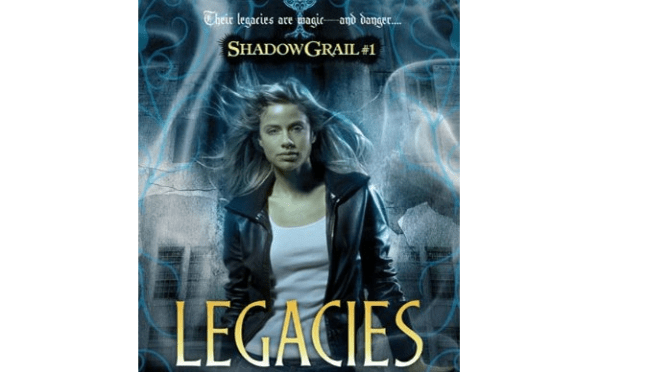
“She’s gone, what’s the harm?” Muirin said. She flipped through the manila folder. “Transcripts, notes from the teachers – huh, she was getting better grades in Art than I am – evaluations from her magic coach – Kissyface Bowman always was too easy on anybody with a flashy Water Gift – Demerits …” She stopped suddenly, as she got to the last page, and stared down at the folder in silence.
“What?” Loch said. Muirin simply held the folder out to him mutely.
He took it, and looked down at the last page. Spirit looked over his shoulder. There was just a single page there at the end, something it would be easy to take out and dispose of if for some reason you were going to hand it over to someone. At the top of the page there were several lines of illegible handwriting. The rest of the page was blank.
Except for a large red stamp that said: “Tithed.”
And the date.
Halloween. (Mercedes Lackey and Rosemary Edghill)
Tag Archives: #Friendship
Larke, Glenda: The Aware (The Isles of Glory I) (2003)

Artist: Perdita Phillips | Source: Glendalarke.com

Source: Amazon


Source: Glendalarke.com

Cover image by h.koppdelaney | Cover design by Tehani Wesseli

Source: Amazon

Source: Glendalarke.com

Source: Amazon
Researcher (Special Class) S. iso Fabold, from the National Department of Exploration of the conquering nation Kell, has come to the Isles of Glory. His project is to discover what he can about its history and beliefs. As part of that mission, he interviews Blaze Halfbreed. It is her story we hear in The Aware. Fabold comments on Blaze’s story at regular intervals. I don’t particularly like Fabold. I find him an annoying, misogynistic git.
Blaze takes us back 50 years to a time before the Change, when magic was known. She telles us of her third visit to the Island of Gorthan Spit. Gorthan Spit is the place where those who have no where else to go end up. Blaze calls it a:
middenheap for unwanted human garbage and the dregs of humanity; a cesspit where the Isles of Glory threw their living sewerage: the diseased, the criminals, the mad the halfbreeds, the citizenless. Without people, Gorthan Spit would have been just an inhospitable finger of sand under a harsh southern sun; with them it was a stinking island hell.
Halfbreeds (children of two people from different islands) seldom survive to adulthood. None of the Isles of Glory wish to admit such children exist. Citizenship is only for the purebred. Usually, halfbreeds are abandoned as soon as their mixed background becomes apparent. Blaze, herself grew up
on the streets of the Hub with a group of other outcasts, mainly children of varying ages. Our home was the old graveyard on Duskset hill, where once upon a time the wealthy of the city had buried their dead in tombs above the ground. The place was ancient, the tombs neglected. They made good hiding places, fine home for a pack of feral street kids with no money and no respectability and, in my case, no history or citizenship.
That childhood, her later tutelage by the Menod and her treatment and training by Keepers laid the groundwork for the kind of adult Blaze Halfbreed became. What she learned was that if she wanted to be looked after Blaze was the one who had to do the looking. No one else could be trusted. And she is fine with that. She has no illusions about being some kind of wonderful person who needs to save her world. That she happens to become a pivot is due to Blaze being in the right/wrong place at the right/wrong time.
Sometimes life is like that. Very few people get to become pivots upon which the fate of the world rests. Choices are made at such times that may or may not change the immediate course of history. Long-term very little changes where humans are involved.
I particularly appreciated a few scenes in The Aware. There is an amputation sequence that takes us through the process. Part of that process is letting us know what chance and amputation patient should have had somewhere like Gorthan Spit. There is also an explanation of how a woman like Blaze would be able to handle a two-handed sword for a longer period of time. There is her size, strength, training and practice. In addition the steel of her sword is more refined and therefore a little lighter than the regular ones of that time. Only blood-debts would get you such a sword if you were not from Calmeter. But Blaze needs to take better care of her weapons.
There was plenty of action, an explanation of the magic, a good description of how the Islands worked politically and practically and good character development.
Recommended.
Reviews:
The Aware available at Scribd.com
Translations:
- French: Clairvoyante
- German: Die Wissende
- Russian: Та, которая видит
Gaiman, Neil: The Ocean at the End of the Lane (2013)

Artist: Tim Hodge


Source: Graham Tiller on Flickr


Source: Sognando Leggendo


By Amber (Hearing Sounds)

By Elizabeth (The Bosetsu)


Artist: Marco Serpieri

Source: Amazon.de

By Carlos Lerma

By Jana Checanty


By Sarah (Sawebee)

Source: Economy decoded

By Mia (On a moonlit night)

By Katya Shvedova


By Sunil Kainth

By Margie

Artist: Kyle Scott


Limited edition: Subterranean Press

Artist: Prisca Ludwig


By Audrey Benjaminsen

Source: Inglisz komon


By Grant Ake

By Macreff, 2013


Artist: ???


By Wenderss

By Stênio Santos


Artist: ???

By Arwen (Silver moon lioness)

Ursula Monkton by Erik Evensen


By Mr. Fryday


Artist Clifford Harper | Agraphia Press


Cartoon by Letícia Robini

Ursula Monkton’s transformation by Link Choi

Artist: Margreet DeHeer


By Laura Ketcham


Source: Amazon

By Michael Fox


Source: City Magazine


Artist: MarimoLee (Ifleebells)

By Anna Irilaya
Thank you, to my sister-in-law for giving me a copy of The Ocean at the End of the Lane.
In December, right before I turned seven my family moved from Australia to Norway. One of my memories tied to that move is stepping outside the plane into the middle of Norwegian winter. Moving was not something I wanted, and winter did not help.
Soon I was driving slowly, bumpily, down a narrow lane with brambles and briar roses on each side, wherever the edge was not a stand of hazels or a wild hedgerow. It felt like I had driven back in time. That lane was how I remembered it, when nothing else was.
Memory can be triggered by scent, sound and sight. All of a sudden you find yourself re-visiting a time you had forgotten. Neurons spark neurons and whatever filing system you have going for you opens a memory file.
If you’d asked me an hour before, I would have said no, I did not remember the way. I do not even think I would have remembered Lettie Hempstock’s name. But standing in the hallway, it was all coming back to me. Memories were waiting at the edges of things, beckoning to me. Had you told me that I was seven again, I might have half believed you, for a moment.
As others have mentioned, we never discover what the name of the main character is. For the most part he is called “the boy”, and that is how I think of him. Neil Gaiman’s statement that the story is meant for adults fits my feeling while reading the book. There is enough terror (not violent) for a younger audience to enjoy it as well.
At seven years of age, children have little say in their lives. Moving to Norway was not my choice. Nor does the boy have much influence on his own life. There are a few episodes that illustrate this. To me, the episode with the cat stands out the most. Utter disregard of the possibility that the boy might be devastated shocked me. Yet, looking back at my own life, children were presumably fine with whatever the adults chose. In The Ocean at the End of the Lane, adults are judged more believable than the boy. So it is when I look around at the parts of the world I have encountered. My Asperger brain is completely baffled by this phenomenon. When the boy’s enemy states
“And what can you say to her that will make any difference? She backs up your father in everything, doesn’t she.”
I am reminded of many family situations that have crossed my life-path. No matter what one parent does or says, they have the backing of the other. Utterly incomprehensible.
Being without power to decide anything about their lives is something children come to semi-accept. At the same time there is a continuous battle between adults and children to have the ability to decide. We see some of that in The Ocean at the End of the Lane. The boy does not give in to the powers that be, although it might, at first, seem that way to the adults.
The Hempstock women became a safe haven for the boy. For me that is hilarious because some of the most dangerous episodes happen while together with one of them. But they sought to protect him and make his life safer by fighting for him with the means at their disposal. These means aren’t exactly regular ones.
I loved the Hempstock women. I want to be like the Hempstock women.
Definitely recommended.
Reviews:
The Ocean at the End of the Lane can be found at biblio.com
Adaptations:
- 2013: BBC4 radio play (abridged)
- 2014: Unoffical soundtrack
Trivia:
- 2013: Portsmouth Street To Be Renamed The Ocean At The End Of The Lane
- 2014: Locus Award for Best Fantasy Novel
Translations:
- Bahasa Malaysian (BM): Lautan Di Hujung Lorong
- Bulgarian: Океанът в края на пътя
- Czech: Oceán na konci uličky
- Croatian: Ocean na kraju staze
- Dutch: De oceaan aan het einde van het pad (Interview on Boekerij.TV)
- Estonian: Ja tee lõpus on ookean
- French: L’Océan au bout du chemin
- German: Der Ozean am Ende der Straße
- Greek: Ο Ωκεανός στο τέλος του δρόμου
- Hebrew: אוקיינוס בקצה המשעול
- Hungarian: Óceán az út végén
- Indonesian: Samudra di Ujung Jalan Setapak
- Italian: L’oceano in fondo al sentiero
- Latvian: Okeāns ielas galā
- Norwegian: Havet i enden av veien
- Polish: Ocean na końcu drogi
- Portugese: O Oceano no Fim do Caminho
- Romanian: Oceanul de la capătul aleii
- Russian: Океан в конце дороги
- Serbian: Okean na kraju puteljka
- Slovak: Oceán na konci ulice
- Spanish: El océano al final del camino
- Swedish: Oceanen vid vägens slut
- Thai: มหาสมุทรที่สุดปลายถนน
- Turkish: Yolun Sonundaki Okyanus
Clement, J.A.: Song of the Ice Lord (On Dark Shores 0) (2014)
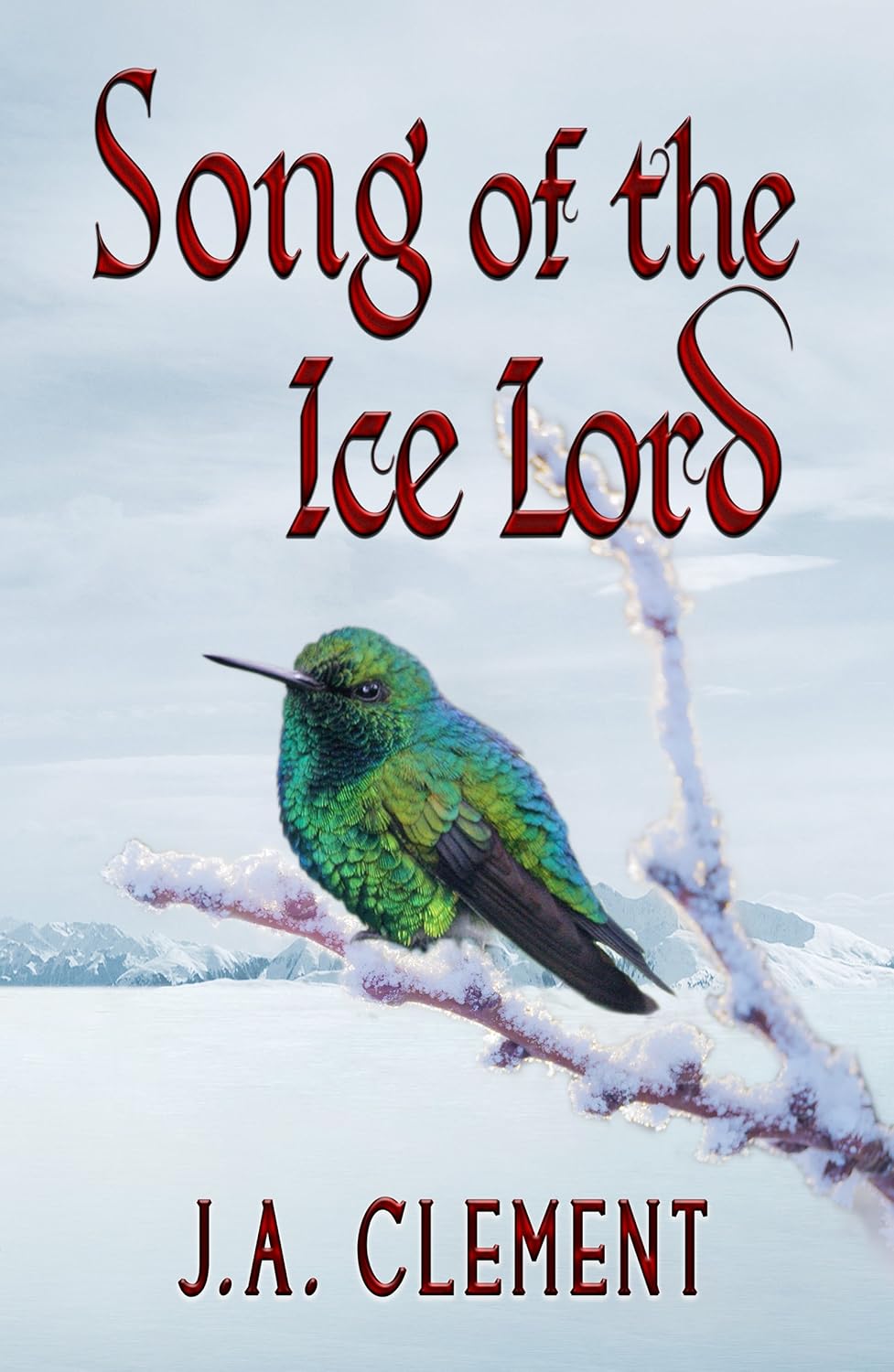
As usual, I get hung up on the “baddies” in a story. In Song of The Ice Lord, the Ice Lord is our baddie, most likely a spirit/god/demon of destruction and hunger. Not hunger for food, but hunger for everything. The Ice Lord seems to be driven by a desire or need to devour all it touches. Once a place has come into contact with the Ice Lord, it is completely destroyed by it/him/her and its armies. The Ice Lord’s method of gathering armies is through fear, the fear of being devoured. Thinking about the Ice Lord made me think about humanity’s hunger and destructiveness. We are good at that. Sadly, too good. Perhaps we will be lucky and find ourselves a Lodden and Maran to save us from ourselves.
War is one of the many mysteries I struggle to understand. I do realize that humans are incredibly territorial. As a breed, we seem to want to expand our own lands and ideas of right and wrong, even if that means killing other humans. The Skral, Sharan and Gai Ren are no exception to this. What started out as one people developed into competing tribes and nations. At regular intervals they would attack their neighboring countries, city-states or tribal competitors. When the Ice Lord arrives on the scene a few people from each nationality escapes and they are taken to the islands of the Skral. These, usually competing, people band together in an attempt to dethrone the Ice Lord without destroying every last remnant of themselves and their cultures. Changing alliances. What a bizarre phenomenon and terribly confusing to my asperger brain. One of my thoughts on reading this was the same as the thought whenever I hear of this happening in the real world: “How long will it take before they are killing each other again?” Historically speaking, not very long at all.
Song of the Ice Lord is in many ways a terrifying story. Horror it ain’t, not in any kind of manner. But its way of nailing the future of nations (historical and current) makes me want to shout: “can’t we just be friends, please, and stop all of this destruction”. A girl can dream.
The flow of words was very different to the other stories in this series. Most of that probably has to do with the insertion of the three short stories, all three important in the context of the over-all story.
Definitely recommended.
Reviews:
Song of the Ice Lord available at Smashwords
I was given a copy by the author
Flynn, S. (2014). King’s Folly (Legends of Fyrsta II)


Cover art by Nele Diel

Cover art by Nele Diel
Rape. Such an ugly and common act. Some have likened it to theft, others to a form of murder. Isiilde has become one rape-victim among many on Fyrsta. Having been one such statistic, I am aware of how little understanding the commonness of rape comforts the victim. Before anything comfort is able to reach your mind, you have to work through some of the fear.
Isiilde was an innocent at the time she was raped, a child in most ways, much like myself. Isiilde feels the loss of that innocence keenly and Sabrina Flynn manages to get across how complicated that loss is. Fear is not only complicated but also invasive, probably more so than the act itself. King’s Folly adds to Isiilde’s struggles by bringing her and her traveling companions into one harrowing experience after the other.
Rape is not the only way to gain power over people. Children are highly vulnerable. Even at times and in areas where children have to fend for themselves to survive, children remain the vulnerable ones in our society. Easily ignored and easily used for whatever deeds greedy people might want. King’s Folly does not ignore the challenges such vulnerability brings.
Greed. Hungering for what you do not have, whether that be sex, money or property, can lead people to rationalize themselves into deeds they might claim repulsive if others do them. Especially if “they” do them. Tharios is one of the greedy people whose ability to rationalize is no longer required. He is that far gone. But he holds power over others who do lie to themselves about the necessity of what they are doing.
Isek’s betrayal is difficult for Marsais to handle. As a seer, Isek’s betrayal hit his blind-spot because such behavior did not fit with the kind of person Marsais had thought Isek to be. Ironically, Isek soon discovers that Tharios would not hesitate to betray him. Now survival becomes a challenge for Marsais’ old friend.
Oenghus is loyal and nuts. Both Oenghus and Marsais are a little insane. Oenghus’ variety comes mainly through his berserker nature while Marsais has gained his through some awful choices he has had to make. Being a seer does not seem to be an ability to strive for and I imagine any person with a true ability would do their utmost to keep knowledge of it from the public. People do not seem to like it when they are told the truth about themselves.
I did only the necessary life things yesterday evening and today. Other than that, I read. King’s Folly was well-written, dragging me screaming and kicking (yeah, right) into its stream. Sleep was a duty I did not want to embrace. Definitely recommended.
King’s Folly available at Smashwords
My review of A Thread in the Tangle
I was given King’s Folly to review
Bertauski, Tony: The Discovery of Socket Greeny (The Legend of Socket Greeny I) (2010)


Sixteen years old and ripped away from all that was familiar into a new world where his whole identity needs to be re-discovered is pretty much what The Discovery of Socket Greeny was about for me.
My son is doing a paper on tourism, and in it he mentions the possibility of replacing our corporeal experiences with virtual reality ones. In the life of Socket Greeny and his friends technology has gotten to a point where this is possible. Teaching is done this way. Although the students come to a physical school and sit in classrooms with a teacher present, most of the teaching is done in VR rooms. Gaming takes on new meaning when you get to integrate yourself so fully into the experience.
But when Socket Greeny is taken from his friends he discovers that such immersion brings its own hazards, and that he is one of the tools needed to fight the dangers of the virtual world. The world he enters is brutal. His tests are intense. I suppose people who have gone through training as CIA spies would recognize the horrible invasiveness of it all. Yet Socket endures.
Much of that endurance is due to his friend Spindle. Spindle is always there for Socket. His patience and kindness is limitless. One might almost be tempted to think that he was programmed to be that way. And perhaps he was. But then again maybe not.
I am thrilled not to be Socket Greeny, but I am thankful for having met him and his unusual world. Definitely recommended.
—————————————————-
Reviews:
Aspergers and dating
Even as one of the opposite gender, I could recognize a lot of what was going on in this video.
Winchester, C.S.: Half Past (Past II) (2010)
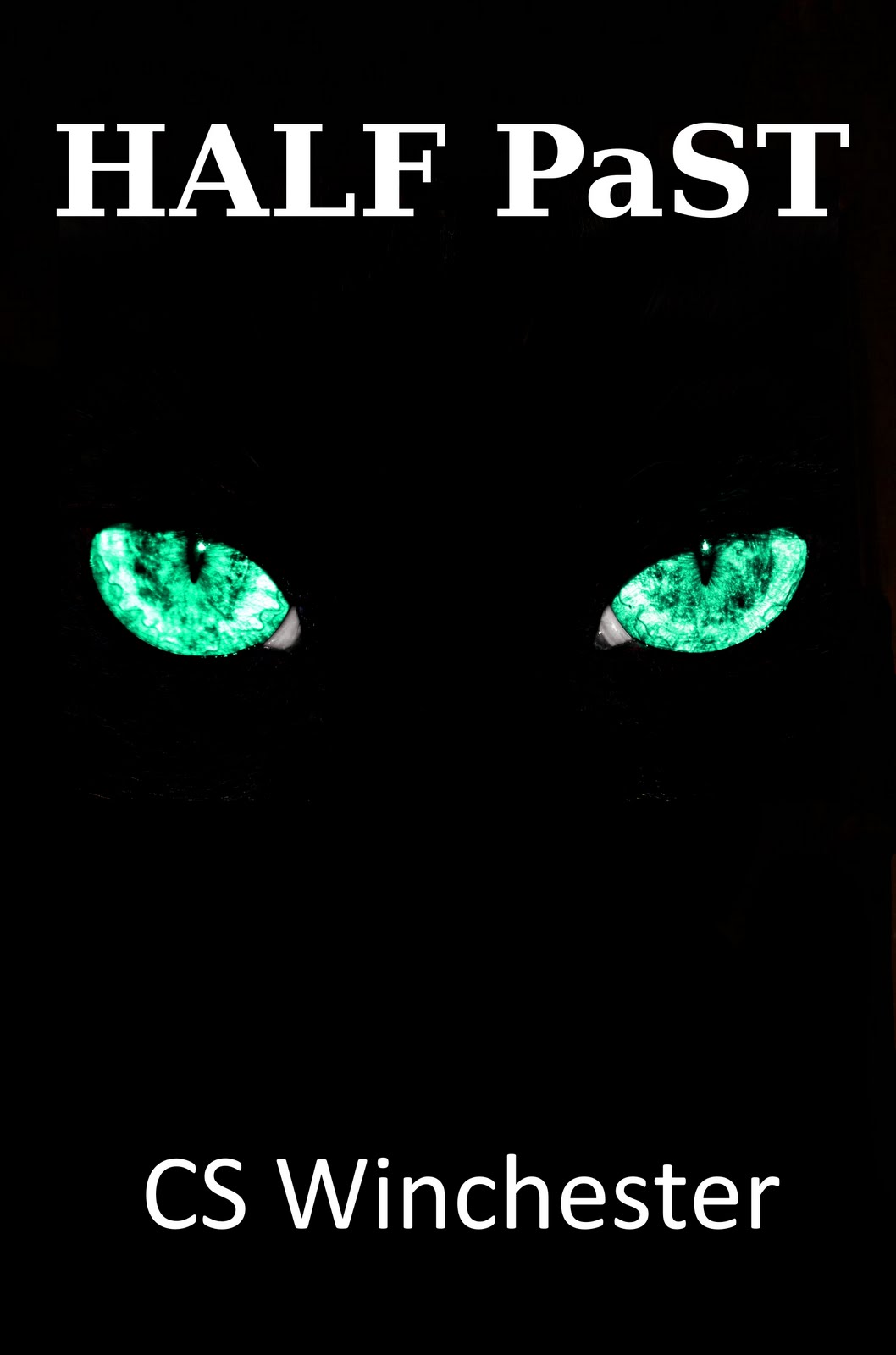
Thankfully, Half Past did not become mushy. Romance is fine. Once it becomes the focus of the story and reaches into bizarro-land I become confused and hope that no one actually has to go through that kind of stuff. There was romance in Half Past. Maybe romance is the wrong word. This is a confusing field for me. Frankie made decisions about her life that included Alex and Josh. Alex made a decision about himself and Frankie that stank to high heaven. Josh made a decision about his life that increased Frankie’s understanding of her feelings and value.
CS Winchester‘s vampires are far from glittery. These vampires are predatory creatures who do not hold back from what they deem necessary violence. Once a person has lived centuries their views on ethics and morals are bound to differ from whatever the fashionable view might be. Josh is the kind of person who can rip off a person’s head. He is also the kind of person who is willing to take in those in need of protection.
Frankie Wright’s powers are growing. She has a little more control over them now and is better able to use those powers to help the people around her. You see, Frankie suffers from an empathetic personality. Even though a person has been a complete dufus toward her, she has the ability to see that person’s suffering and need. Perhaps this has something to do with her psychic abilities. Or it could just be that Frankie is a pretty decent kind of person. Being decent doesn’t stop her from protecting society from the dangers the supernatural community might pose. I like Frankie. At times I find her annoying – like the people around her also do. It’s interesting being able to empathize with a fictional character’s compatriots.
I’m not sure what I think of Alex. He is seriously patronizing and seems to think that he owns Frankie. 700 years ago – when he began life – he would have. I wonder what it must be like to have to adjust to changing morals and ethics over and over again. I wonder if you would get to a point where you become stuck and lose the ability to fit in.
Half Past was a fun story with plenty of action, silliness and just a little bit of romance. I look forward to reading the next in line.
Reviews:
Half Past available on Amazon US
My review of: Past Due
McGuire, Seanan: The Winter Long (October Daye VIII) (2014)
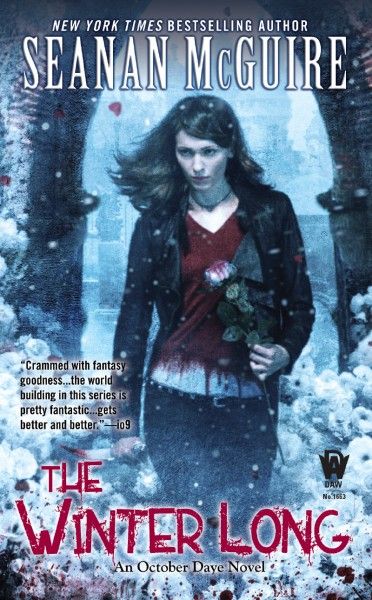
Cover artist: Christian McGrath
A geis can be compared with a curse or, paradoxically, a gift. If someone under a geis violates the associated taboo, the infractor will suffer dishonor or even death. On the other hand, the observing of one’s geasa is believed to bring power. (Wikipedia)
Imagine a person strong enough to place a geas on the Luidaeg, one of the Firstborn. Daughter of Maeve and Oberon. Doesn’t seem possible does it? Except there is a person who is just as connected to Oberon as the Luidaeg is, although Titiana is this person’s mother. And we know who this person is. We have, in fact, been given clues as to this person’s identity several books ago. Not that I got it, of course. Ms. McGuire had to give it to me in tiny helpings. Shows how good a detective I am.
Family is a strange matter. All of us are born to one family, one we do not choose. Some of those families are extremely dysfunctional. Toby’s mother is a great example of that. Amandine is a nutter. Perhaps being immortal does that to you even if you are genetically engineered for it. After all, what is there to see and strive for once you have lived for hundreds, maybe thousands of years? How would you deal with the death of mortals and their envy? Humans would envy immortals. Just look at the research that is being done to extend our lives and find the key to eternal life.
Toby is just starting her way down the path of an extremely long life – if she isn’t killed during one of her heroic deeds. It’s a good thing her human part has receded as much as it has. Without being faery to the degree that she has become, Toby would surely have died during The Winter Long. She comes close enough as it is.
I’m wondering what Toby’s chosen family will end up being like. The beginnings of it are there. We have the changelings, May and Jade, Tybalt, Raf, Quentin and the Luidaeg. Beyond that, well? Perhaps in some instances Toby has misinterpreted her relationships or maybe refused to see the world as it really is rather than as she wishes it to be. We all do that. Lie to ourselves. Except the Luidaeg. She can’t lie. But the rest of us? Some truths about ourselves and our surroundings aren’t fun to acknowledge, so we change them to fit our desires. So too with Toby.
I have to say that Seanan McGuire is an excellent writer. She keeps her text tight and tense while interspersing it with bits of humour and goo. I love goo. Ever since I met her through her Mira Grant persona, I have loved her writing. Definitely recommended.
Reviews:
My review of:
dePierres, Marianne: Chaos Space (The Sentients of Orion II) (2008)
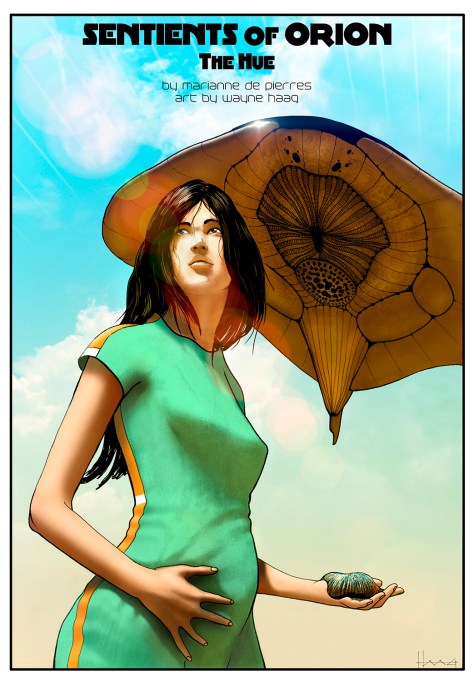
The end of Dark Space has left Mira pregnant, raped by Trin so he could ensure his progeny with a pure-blood noble from Araldis. Rast states it so well
“Women get raped,” said Rast harshly, her pale skin flushed with emotion. “Sometimes in war, sometimes just for the hell of it. That’s what happens.” She gripped Mira’s wrist and pulled her close. Then she hugged her tightly for a long moment.
“We’ll get your world back for you, Baronessa. But tell me something: are you sure you really want it?”
Not only did Trin rape Mira and send her off-planet to get help. While staying behind he makes certain to besmirch Mira’s reputation by claiming that she has run off. For Trin does not want Mira to become more popular than he. After all, that might endanger his own shot at becoming Principe after the war.
War, ambition, greed, death.
Trin is more concerned with saving his men than with saving the population of Araldis. Cass Mulravey sees that he has no clue that if he wishes to rebuild his world, he will need women to bear children. The two of them are at odds through all of Chaos Space. Only Djeserit’s attempts to broker a peace between them keeps them from open dispute. Until Trin has managed to finagle the loyalty of the women who have followed Cass, he has to at least give the appearance of working for the greater good. Perhaps all of this pretending will turn to true behavior eventually???
We find out who Djeserit’s mother is. Oh, dear! Poor girl. None of us choose our own parents, but some of us are left with worse parents than others. Bethany Farr is no ideal mother. She seems to have repented of sending Djeserit off and now wants to save Djeserit and thereby Aldaris. But will Bethany carry through or perhaps only work towards the redemption of her daughter until her next “love” comes along??
Insignia, the biozoon carrying Mira, turns out to have an agenda of its own. The vessel has repeatedly tried to get Mira to understand that it does not care about humanesques in general, only the ones with which it can communicate. When its contract with the Fedor clan runs out in the middle of an escape, Mira fully comes to understand how true and real that is.
Mira is one severely traumatized person who is thrown from one chaotic episode to the next. Needing to make decisions pronto goes against her socialization, and tearing herself loose from that socialization is incredibly painful for her. In Dark Space Mira learned to handle a gun, something that was forbidden to the upper-class women. In Chaos Space she has to learn to see through the fallacies of her traditions. Having worked my way out of fundamentalism, makes it easy for me to relate to what Mira must have gone through. Being brought up in a society where women are taught from a young age that they are less and also taught how to internalize this tradition and accept it as right and proper makes the reach through the fog of indoctrination severely painful and self-actualizing. Mira is forced to grow once she makes the choice to make her way through her fog and grow she does.
Asking for help is more complicated than Mira had thought. Naively, Mira had expected that explaining her planet’s situation to OLOSS would bring OLOSS to the rescue. But OLOSS is concerned with what is in it for them and want to get hold of Insignia so they can study it. Having read something about the history of our own world this concern with profit in the face of aid is nothing new. In fact, I wonder if the need to profit from another person’s tragedy is embedded in the human psyche?
DePierres’ writing is as riveting in Chaos Space as it was in Dark Space. Again I found myself struggling to stop reading.
Reviews:
Jacks, Jon: Wyrd Girl (2013)

Jon Jacks has written his story in first person and it took a couple of pages for me to settle into this uncommon style of writing. Wyrd Girl is written in British English.
Ghosts, ghasts, the nyxt, after-life, the under-world, possessed. Being able to see and communicate with the other-world has never been usual practice in the world. Not even the world of Twice Hadday. Zoofelt, Dunnstedt & Ernst Advertising are the go to people in the area of life/death.
Twice/Tracey/Trace came into contact with ZDEA after she and her boyfriend, Chris, had witnessed the death of one of their couriers. Or was that really how Twice came into contact with them. As the story unfolds we discover that Twice’s world is seldom as clear-cut as we might at first think.
There’s something more powerful, more frightening, than all these things.
Something that could tear every connection apart with an angry squint of an eye.
We only get to know people through Twice’s point of view and are therefore limited in our knowledge by what she focuses on.
Wyrd Girl is clearly meant for young adults (or new adults as Jon Jacks calls them). Mr. Jack’s writing is highly accessible and strange and interesting. I believe I have become a fan.
Reviews:
- Published: May 07, 2013
- Words: 32,590
- Language: English
- ISBN: 9781301866502
Harrison, Kim: The Undead Pool (The Hollows XII) (2014)


“That’s because pixies think with their hearts,” Quen said, ignoring Trent’s peeved expression. “This decision is already causing problems.”
“Most warriors think with their hearts,” I said, telling the mystics to back off and that I wasn’t angry with anything they could crush or explode. “It’s what keeps them alive through the crap they have to deal with to keep the rest of you safe.”
…
Quen smiled, deep and full. “Rachel,” he amended, then headed into the hall. “Jenks, a word?”
“What the hell is it with you people?” Jenks griped as he followed him out. “Can’t you make a decision without talking to the pixy?”
“Warriors build empires around the kernel of truth that others overlook,” came Quen’s soft voice …
Who are the warriors? Well, in the world of The Undead Pool the warriors are pretty much all of Rachel’s friends. They save the world from the chaos caused by others and sometimes themselves (unintentionally). Some of them crave the adrenalin that comes from the fight while others fight for what they believe even though they are frightened half to bits.
When you take away the trappings of fantasy, you quickly see that Rachel Morgan is like many of us.
She grew up a sickly child. Her father died while she was young and her mother lost it for a while after that. Rachel was an outsider and bullied for being different. As she grew up Rachel learned to keep to herself and was afraid of bonding with others. But her personality was of one that stands up for what she believes in and one that fights for the weak in society. In time the force of her personality drew people to her and because of Rachel’s willingness to sacrifice for others those bonds became strong. Due to her fear of intimate relationships, Rachel had a tendency to choose lovers who spoke to her self-destructive side. But eventually her choices and the choices of others opened her eyes to the fact that it is OK to choose a partner who will be just that – a partner.
What Rachel has learned is that life is about so much more than surviving our pasts. In letting people into her life and taking the chance of being hurt further, Rachel has opened up for possibilities that would not have been there otherwise. In her fight for the protection of the weak, Rachel now has support that enables her to do what has become her “job”. She is still an outsider, but no longer is she alone.
Then we add the trappings of fantasy and we have a rip-roaring yarn told by one of my favorite authors.
- Series: Hollows
- Hardcover: 432 pages
- Publisher: Harper Voyager; First Edition edition (February 25, 2014)
- Language: English
- ISBN-10: 0061957933
- ISBN-13: 978-0061957932
- Product Dimensions: 9.1 x 6.4 x 1.6 inches
My review of Ever After
Adina, Shelley: Brilliant Devices (Magnificent Devices IV) (2013)

I admit it. The whole Magnificent Devices serial sent me off on tangents of exploration causing me to spend about as much time exploring as I did reading the novels. I become overwhelmed by curiosity when I sit down to write some reviews and find that I “just have to” see what I can dig up about whatever it is that sets me off. Below are some more links.
Did you know that there was actually a Dunsmuir that was the richest man in Canada at the time Adina Shelley placed the Earl of Dunsmuir there? You didn’t? I’m shocked. Well now you do. That Dunsmuir (James) was machinist, entrepreneur, industrialist, politician, and lieutenant governor. I’m thinking someone must have looked into the area before she wrote her novel. Not mentioning any names or anything.
Not only the US was a place of “Wild West” during the European invasion. People had to be killed and one-sided treaties signed. I am reworking my review on Zane Grey, going into more detail, and man is it ever depressing. Canada’s Wild West mirrors the US Wild-West in many ways. Humans are the same wherever we invade.
In Brilliant Devices Queen Victoria and her spy Isobell Churchill work for the protection of the Equimoux. In our history, Queen Victoria did no such thing. She probably would have put you in Bedlam for even suggesting such a thing. That Davinia and John Dunsmuir are on their side is something Isobell Churchill does not know. I wonder why the Queen did not tell her.
I like the beginning of Brilliant Devices when Lady Claire Trevalyan, Mr. Andrew Malvern, Ms. Alice Chalmers, the Mopsies, Tigg and Jake pull off a miracle using the invention of Andrew, Claire, Tigg and Dr. Craig. It is fun the way Shelley Adina throws in little technical challenges along the way for the gang.
Claire and her little flock are as always ingenious and independent. The Mopsies are as obedient as always, spying for Claire whether she wants them to or not. I wonder at Claire’s reticence, considering how often the Mopsies have come in handy. I guess Claire struggles with her own prejudices and her own fears, constantly forgetting that her charges have been exposed to dangers long before Claire entered their lives. All four charges prove their abilities several times.
Alice Chalmers is another character I like. She turns up in Magnificent Devices saving Claire three times and Andrew once. Alice continues her life-saving in Brilliant Devices. Both the Dunsmuirs and Graf von Zeppelin are impressed by her inventiveness. Her role is not limited to one of invention and rescue but also functions as an addition to the personality of Brilliant Devices.
As with the other three novels in the Magnificent Devices serial Brilliant Devices is a fun and adventurous addition giving me a few hours of fun.
Review:
- File Size: 3065 KB
- Print Length: 252 pages
- Publisher: Moonshell Books, Inc. (December 19, 2013)
- Sold by: Amazon Digital Services, Inc.
- Language: English
- ASIN: B00BLRLLZO
My review of:
Harrison, Kim: Ever After (The Hollows XI) (2013)

Ever since I read the first novel in this now 11 book long series about Rachel Morgan I have been hooked. How Ms. Harrison manages to keep up the quality of her writing is beyond me.
In Ever After the story is mainly about Rachel, quite a bit about Trent and Jenks with some Quen and Al thrown in. The rest of the players have minor parts this time and some of them are only mentioned in passing.
I have been wondering if I would be able to make decisions based on “the greater good”. Could I harm an individual I knew/liked/loved to save the many? Rachel faces this choice in Ever After. She faces this same choice in just about every single one of Kim Harrison’s stories about her.
Rachel is an interesting person. She is an outsider among outsiders, the peg having to accept that she will never fit into any of the holes. If I was going to choose a main theme for the series it might be how to figure out how to accept your inability to fit in. I felt Rachel managed to do that in The Undead Pool. Like all people who get to that point, the Rachel we now meet is safer in her knowledge that she is who she is. That helps when trouble keeps on following her around.
In many ways Rachel’s life stinks royally. Yes, she is an adrenaline junkie. As with all other addictions, I am assuming that your fixes need to be larger over time. If there is one thing Rachel cannot complain about in Ever After, it is the dose of trouble Ms. Harrison feeds her. Ka-boom, ka-boom, ka-boom. From one fire to the next Rachel tries to keep up dragging along her leaking bucket. Ms. Harrison loves doing that to her Rachel.
Another thing Rachel has discovered she needs in these past few years is friendship. Being friends with Rachel is difficult but rewarding. Once you have her for a friend it takes an awful lot to lose her. All you have to do is ask Nick. He has done his utmost to turn her against him (although he does not see it that way). Nick is one of those persons who is never at fault – never. He and Ku’Sox are alike in that regard and as such make a pretty good team (or maybe not).
What must it be like to think that you are never to blame for anything? I get that most things in life are plain luck of the draw while others are a direct result of what we have done. From what people say to me, the majority seems to find it incredibly easy to see its own flaws. I’m finding myself completely mystified at how a person is able to accept absolutely no blame but be glad to take credit for good things happening. Narcissism is one of the weirder disorders out there and Nick fits the bill in so many ways.
As usual, you get no synopsis from me. There is as always with Rachel Morgan action, character growth, justice, unfairness, tragedy, mystery, love and closure. You can read Ever After without reading the other novels in the series, but why deprive yourself of that much fun?


Hoffman, Paul: The Beating of His Wings (The Left Hand of God III) (2014)
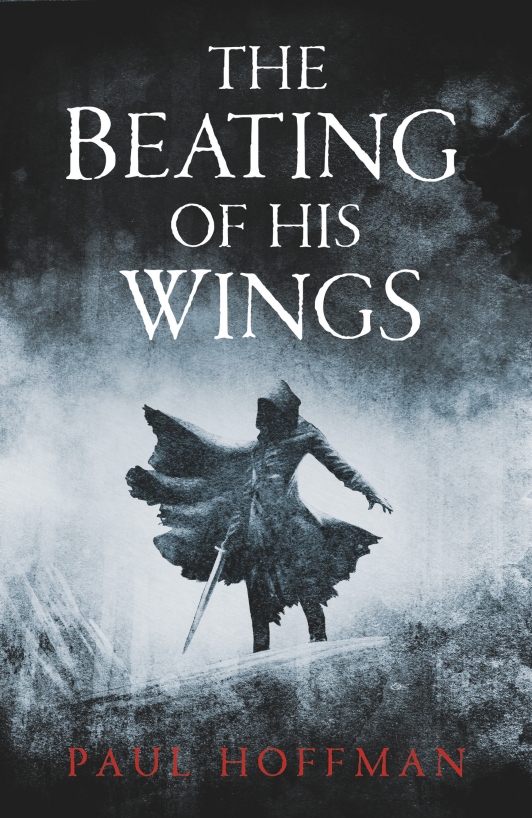
The Left Hand of God trilogy has kept me thinking. I fell hard from book one and Hoffman has kept me going all the way through The Beating of His Wings. I have had to take a couple of days to digest the series properly. Hoffman’s essay at the end of The Beating of His Wings added to my thinking cauldron.
There is something devastating about having reality thrown in my face. What really started me thinking was Hoffman’s description of his Catholic school being less than two miles from Oxford. That got me thinking about my trip to New York ages ago. I’m the kind of person that easily gets distracted from staying on the short and narrow. My mom and I wandered off the beaten path a couple of blocks and started encountering the homeless. Just two blocks away from a regular business street people had to live on the street. That started me thinking about other cities where there are so many homeless that they are everywhere. Cities where the level of crime is so high and the police are part of the criminal world. Onward my thinking went to the discoveries made at the Dozier School for Boys or the abuse found to be rampant in Catholic schools and orphanages.
Back to The Beating of His Wings. What Mr. Hoffman does is hold up a mirror to society. Sure he wraps it in post-apocalyptic paper, but he is basically saying: see the world as it really is. I have friends who claim that my view of the world is too dark. After all, they themselves have not seen or experienced the underbelly of society. What my friends do not realize is that the underbelly of society is in fact the part of the ice-berg that is below water and that they live in the tiny part that remains above the water line. Perhaps one needs to experience the darker side of humanity in order to appreciate just how much space it takes. Or maybe we have to take a closer look at ourselves and our own potential for darkness. I have never really had need or my darker side once I was old enough that I realized it was there. Now, though! I might not have the abilities of the trio of Cale, Henry or Kleist, nor the power or influence of the Materazzi or Vipond, but the wells are there.
While reading all three books I have felt kinship with our trio struggling for survival. They are so incredibly damaged but no more damaged than a great many children of today. And why is the world like this? Well, in the world of Hoffman we see the old story of fanaticism and greed or corruption and power-hunger. On the side-lines are all of the victims of these four drugs, victims whose only concern is survival by any means. And who among us would be able to stay true to our morals and standards once our lives or the lives of our loved ones were on the line?
I sometimes wish the world was different, but perhaps it is as Idris Pukke says to Thomas Cale:
In the paradise that you’ve decided to believe in as your ultimate goal everything comes to you without much trouble and the turkeys fly around ready-roasted – but what would become of people even much less troublesome than you in such a happy place? Even the most pleasant-natured person would die of boredom or hang themselves or get into a fight and kill or be killed by someone who is even more driven to madness by the lack of struggle. Struggle has made us what we are and has suited us to the nature of things so that no other existence is possible. You might as well take a fish out of the sea and encourage it to fly.
————————————————-
Reviews:
————————————————-
- Paperback: 512 pages
- Publisher: Penguin (16 Jan 2014)
- Language: Unknown
- ISBN-10: 0141042400
- ISBN-13: 978-0141042404
 humanitysdarkerside


