Lewis, Gareth: Street of Lost Gods (Tales of the Thief-City I) (2011)

Street of Lost Gods - Gareth Lewis

I had a grand time reading Street of Lost Gods. Mr. Lewis’ writing was a delightful combination of humor and mystery. Rax did the Mautheri eaters proud with his handling of Angel Arden.

The Thief-City is an idea I haven’t seen before. Thieves of all kinds of races, human and alien, are somehow brought to the city by the city. So too are gods who are losing their believers.

Other than that, Street of Lost Gods is a mystery. As the Thief-City is a city of thieves of all sorts, the citizens aren’t exactly upstanding people. Instead, they are a collection of the underbelly of the various societies of Mr. Lewis’ imagination.

Street of Lost Gods is a short-story with a whole lot of fun packed into it. Definitely recommended.


Street of Lost Gods available at Smashwords

Lewis, Gareth: Street of Lost Gods (Loc 148)

It’s not like you’ll find any gods of wisdom or thinking here. Not that there are many gods of thinking. It’s counter-intuitive. Plenty of gods of making noise and hitting things, but there’s plenty of mortals who do that. To be fair, I suppose the proportion of thinking gods to hitting gods probably matches the proportions among their worshippers.

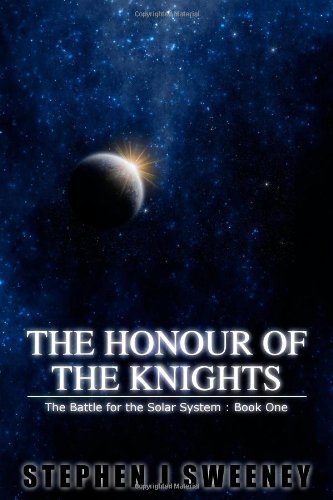
Sweeney, Stephen J.: The Honour of the Knights (The Battle for the Solar System I) (2009)

The Honour of the Knights - Stephen L Sweeney

Stephen L. Sweeney states in the front of the 2009 edition of The Honour of the Knights that if you are interested in reading the whole trilogy then you would be wise to favor the 2011 edition. I read the 2009 edition (Mr. Sweeney’s first novel).

The Honour of the Knights is pure space opera with a military setting. I have no idea as to how realistic that setting is. Placing the fighting in space opera gives Mr. Sweeney the freedom to play with reality. In many ways space opera is fantasy due to the many breaches of physical laws that occur. This story is no exception to that.

I see that Estelle has been changed into a less ambitious person in the second edition. Bummer. I kind of liked that about her. I’m not sure I like her, but her character was fun and like some real life people I have met. Considering the type of work Mr. Sweeney used to have, I imagine he has met his share of Estelles. Kelly seemed to be the opposite of Estelle.

Kelly’s character was the one that was most difficult to fit in with a pilot and military culture. She seemed too spaced out most of the time. Perhaps that is a prejudice of mine – that spaced out people won’t fit with a pilot and military unit. Other than that she seemed to fit well with her unit. Maybe I just read her wrong.

Dodds is the main character in the 1st edition. We meet him at the beginning of the story and follow him through to the end. He seems to have a hero complex, one that led him into serious trouble in the past. He travels from his parents’ farm to his assignment in another solar system and meets up with his team. Parks, his commanding officer, expects Dodds to clean up his act, but once Dodds is back with his unit, old habits surface.

The Honour of the Knights is a good first novel. There are hiccups here and there but they did not interfere with the story. This was Mr. Sweeney’s unique take on a space yarn. I recommend it – but go for the 2nd edition rather than the 1st.


Reviews:


The Honour of the Knights links available on author’s website

McCaffrey, Anne & Ball, Margaret: Acorna: The Unicorn Girl (Acorna I) (1997)

The Acorna books are part of Anne McCaffrey‘s Federated Sentient Planets Universe stories. Acorna I and II are written in conjunction with Margaret Ball.

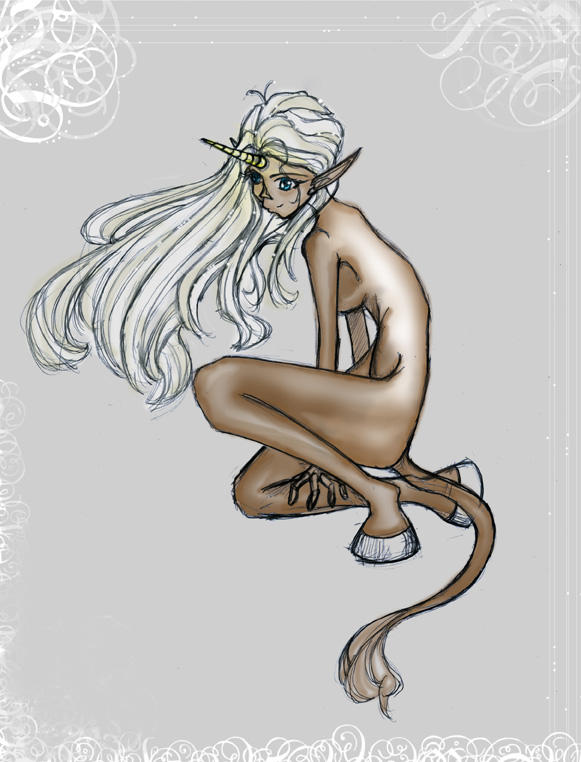
As you see from the art above, very few artists have tried to depict Acorna as she is described in Anne McCaffrey and Margaret Ball’s stories about the Unicorn girl/woman. Acorna’s characteristics are: a silvery mane and silvery curls on her calves, cloven hooves, two jointed fingers, and finally silvery eyes with pupils that can narrow. In The Unicorn Girl, Acorna is flat-chested.

I find myself unable to place any sort of age-group on this story. At times the writing has a very young feeling, possibly even entering the Children’s category. Then it changes and both writing and content is a little older. Perhaps that is due to the collaboration between the two authors. The first rescue of Acorna is one example of the very young style. As if by magic the young alien and her three benefactors get out scotfree of what ought to have been a difficult situation. In the labor camps the writing style is older and harsher. These changes confused me and led me to pay less attention to the story.

The plot itself is pretty good. There are aliens, escapes, human/alien interaction, corruption and goodies and baddies. As good and evil characters go, most of the ones in the story weren’t solidly into one or the other category. There are a couple of exceptions, but these are mainly minor characters.

Anne McCaffrey and Margaret Ball address an incredibly serious issue in their story – that of child slavery. Child slavery is in the real world becoming increasingly visible. At the time Acorna I was published (1997) child slavery was becoming something journalists brought into the light more often. Closing our eyes to troubles around the world is now becoming something we have to choose to do.

I liked Acorna’s adoptive fathers. There was enough silliness in them to make for humor in the story of orphan Acorna. Along with humor, there is action and conniving. I recommend Acorna I. I have to warn you that it is somewhat different to Anne McCaffrey’s other writing.


Reviews:


Acorna: The Unicorn Girl available at Scribd


Translations

Pollard, Belinda: What is a beta reader and why do I need one?

You might have seen the term ‘beta reader’ as you’re browsing writing websites, or maybe this is the first time you’ve heard of it.

Basically, a beta reader gives you feedback on your finished manuscript, so you can adjust it before you set it loose on the world. I consider them the superheroes of self-publishing (and great for traditional publishing, too).

What a weird term!

“Beta reader” has apparently been adapted from the software industry, where programmers release a ‘beta’ version of a new program to people who will test it. The beta version comes after the alpha version (which to a writer might be the first draft). I would have thought the alpha version was the one that goes on sale, but apparently not. Confusing, huh?

Don’t worry, just remember: Beta Reader means someone who evaluates a manuscript.

Beta testers find the bugs and improve the software’s usability before the final “release” version goes on sale. A beta reader tests your manuscript (by reading it), and tells you about the ‘bugs’ so you can improve its readability, its usefulness and even its saleability.

It’s an especially valuable step if you are planning to self-publish, but can also help you in the quest to get an agent or publisher if you are planning on going the traditional route with your book.

How to say it

Unfortunately, it’s one of those tomayto-tomahto kinda words. I say it “beeta”, like most Australians and quite a few Brits. In the US, it often seems to be “bayta”. And apparently in some parts of the world, it’s more like “betta”!

I think the take-home message is: Say “beta readers” however you like, just get some! :-)

Why do I need a beta reader?

The fact is, we spend so much time on our own manuscripts that we can’t see them objectively — no matter how diligently we self-edit. These can be some of the outcomes (there are plenty more):

  • We create anticipation or an expectation early in the book, but forget to deliver on it.
  • We describe events in a way that is clear to us but not clear to a reader who can’t see the pictures in our head. (At least, we hope they can’t see them. Are you looking inside my head??? Eek!)
  • We leave out vital steps in an explanation and don’t realise it, because we know what we mean.
  • The characters in our books (whether fictional, or real as in a memoir or non-fiction anecdote) are not convincing, because we know them so well we don’t realise we haven’t developed them thoroughly on paper………………………….

You can read the rest of this article and other articles regarding Beta-readers on Small Blue Dog Publishing

McDermott, J.M.: We Leave Together (Dogsland III) (2014)

We Leave Together - JM McDermott
Coverart by Julien Alday / Coverdesign by Scott R. Jones

We Leave Together marks the end of the story of Joni Lord Jona, Rachel, Djoss, Calipari and the Walkers. The Dogsland trilogy has been terribly painful yet wonderful to read. J.M. McDermott’s prose brought me through the terrors, pain and love expressed in this story about two extremely different yet similar couples.

The Walkers are feared representatives of the goddess Erin. As ham-shifters they are part human and part wolf. Rachel and Jona are half-human and half-demon. Their heritage comes from the Nameless one and expresses itself both in temperament and looks. Both are feared by the general populace.

Similar as they might be, the Walkers and Rachel and Jona are also extremely dissimilar. Rachel and Jona’s half-demon nature makes even their sweat dangerous to other people. Sharing food and drink is impossible because of the effect doing so has on others. Half-demons are hunted down and burned (alive for the most part) along with their properties and very likely any person they might love. The Walkers hunt half-demons and eradicate (as much as possible) any dangerous trace of them.

With Jona’s skull being found at the beginning of the trilogy, we have always known that, for Jona at least, there was never going to be a happily ever after. Considering the nature of Dogsland, happily ever after probably does not happen to any one in the land of McDermott’s mind. But does happily ever after happen even in the real world? Not likely. I suppose there could be a happier after, but never a happily ever after. Humans just aren’t built for it. We all die, we all get sick and we all suffer through pain. Some of us experience more sickness and pain than others, but we all go through such experiences. So too for the citizens of Dogsland.

Homelessness for adults and children, orphans (both homeless and not), class differences, poverty, greed, power-struggles, charity, love, helplessness and need are all visible in Dogsland and our world. Just look around and you will find all of these without needing to look very hard. Djoss becomes one of the helpless ones through his desire to get money quickly. His motives were fine – a better life for himself and his sister. The way he went about it led him into helplessness. Devil-weed is incredibly addictive once you smoke it. Djoss did and now all of his money goes to the drug. Rachel is desperate to get him out of the city with her. But getting out of the city is not a simple thing unless you get hired by a caravan. Who is going to hire a person who is so obviously a drug-addict? Jona wants her to stay because he has fallen for her or possibly the fact that he has finally found another like himself.

So many things work against Jona and Rachel and Djoss. Their own nature, others finding out about that nature and using it against them, having to hide what they are and people hunting them are all factors that make the descent into death for Jona inevitable.

We Leave Together is dark and painful. Somehow it is always the children that get to me.

The boy pulled his dead rat off the fire with two scraps of wood. He picked at it with his bare hands like a hairy chicken wing.

“Where you from, mudskipper?” said Nicola, to the boy.

He shrugged. “Ma said we were from a farm, once.”

“Where’s your ma.”

“I don’t know,” he said.

“Just, you then?”

“I got two brothers. I don’t know where they are, but they’re around.”

Children around the world live in conditions like these. We just don’t see them. Or maybe we choose not to see them. Sometimes they live far enough away from us that we have to make an effort to acknowledge their existence. But even in my wealthy country there are children who know the pangs of hunger unless charity reaches them. What about them? Am I part of the brutality and violence of Dogsland if I choose to ignore that our world is in many ways just like the world of J.M. McDermott?

Did I say We Leave Together was painful? Yes, I believe I did. That area of my chest that aches right before the need to cry engages hurt through most of the story. Definitely recommended.


Reviews:


We Leave Together available at Powell’s

McDermott, J.M.: We Leave Together – page 44

“She felt into the Unity for all the energy hidden in the air, where people live and love and the threads of life swell into one pattern.

In every room – every single room – her breaking heart was not alone.

A thousand upon a thousand snowfalls, and the city weeps in the dark, alone.”

Tuttle, Frank: The Mister Trophy (The Markhat Files) (2008)

The Mister Tropy - Frank Tuttle

Humans are herd animals with a strong need to belong to some kind of group. Markhat is seemingly a loner, but as The Mister Trophy develops, I got more a sense of loneliness. The ending cinched my suspicion.

Markhat is a detective. He finds what is lost and returns whatever is lost to the person looking for it. The race of his clients is of no matter, as long as their currency is good. When The Misters come a-knocking Markhat is reminded of their recent war and worries about his survivability. But these trolls are honorable creatures, and any deal made is a deal that must be upheld. Whether Markhat inhabits the same kind of honor is a question Markhat finds himself needing an answer to.

The opposition this time is the half-dead. Half-deads are a sort of vampire. These post-humans are of the decaying sort in the sense that there is an odor of the grave about them. They aren’t healthy looking, but they aren’t zombie-like either. As post-humans they have strength and agility unlike regular humans. Half-deads aren’t people you want to mess with. But that is exactly what Markhat needs to do in order to fulfill his deal with the Misters.

Fortunately, being human doesn’t mean that he is without resources. From the story it does not seem that Markhat has any super-natural/para-normal powers, but he does have access to them. His latest source surprises and frightens him. Some of his preconceived ideas are torn down and Markhat reevaluates his perception of reality.

The Mister Trophy was short, action-packed and fun to read. Recommended.


Reviews:


The Mister Trophy can be found at Samhain Publishing

Sullivan, Samuel and Justin: Darkroot (Rhyme of the Willow II) page 179

“The Blood Demon rushed at him, pure bloodlust in her eyes. Axton held out his scarred hand and envisioned the Green Witch’s vines.

To his astonishment, emerald vines sprouted from his palm, fast as the Darkblades from the skin of a Crow. The vines wrapped around the Blood Demon’s arm, and as Axton stumbled onto his back they flung her overhead. Aniva spun and whirled through the air until she ricocheted off a wall and came toppling behind the fleeing advisors.

Axton cursed while Aniva roused more violent than ever. The Blood Demon caught sight of him and roared, her lips curled back to reveal dozens of sharp yellow teeth.”

The Light Fantastic page 225 (omnibus)

“In the beginning was the word,” said a dry voice right behind him.

“It was the Egg,” corrected another voice. “I distinctly remember. The Great Egg of the Universe. Slightly rubbery.”

“You’re both wrong, in fact. I’m sure it was the primordial slime.”

A voice by Rincewind’s knee said: “No, that came afterwards. There was firmament first. Lots of firmament. Rather sticky, like candyfloss. Very syrupy, in fact -”

In case anyone’s interested,” said a crackly voice on Rincewind’s left, “you’re all wrong. In the beginning was the Clearing of the Throat -” “-then the word -”

“Pardon me, the slime -”

“Distinctly rubbery, I thought -”

There was a pause. Then a voice said carefully. “Anyway, whatever it was, we remember it distinctly.”

(Picture found on Chris Brecheen‘s website – Paul Kidby artist)

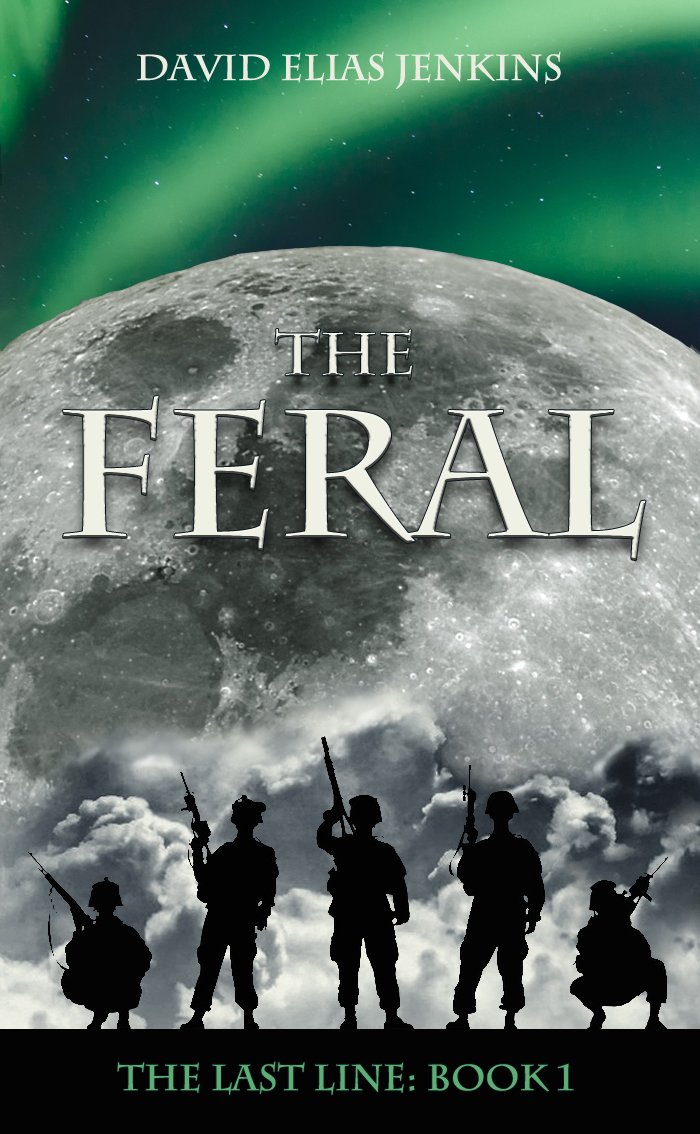
Jenkins, David Elias: The Feral (The Last Line I) (2014)

The Feral - David Elias Jenkins

The life of a soldier in action is a whole lot of wait for a few minutes of terror. This seems to hold true for all who lead adventurous lives. Some of those soldiers are so caught in the grip of adrenaline kicks that they would never ever be able to function in a regular 9-5 job again. The members of the STG (Special Threats Group) Empire one are such adrenaline junkies.

Usher and Isaac Marlowe are the members of that group who stand out the most as three-dimensional people. The rest of the group: Kruger, Charlie, Brock and Christie add flavour to the dynamics of the group and their work. All of them are from different backgrounds. The only thing they have in common is that at one point or another “The Veil” was lifted from their eyes and they had an undeniable encounter with the Unseelie Court (Faery). Since that time the various member have worked toward getting the Unseelie off the Earth and back to whatever parallel world they are from. But the Unseelie have the opposite aim. They wish to invade the Earth, eradicate humans and make the Earth their own home.

Mr. Jenkins introduces a variation on vampires that I loved. More different to the glitter and Oooh-Aaahing of people around the world cannot exist. If there is, please let me know. Amoral, hungry, arrogant and bizarre are only a few terms that describe the vampire we get to meet. Vampires and werewolves are part of the Faery world. That makes more sense than them being converted humans. We even meet a zombie-like creature in the form of the infiltrator Owen Sibelius. This is the kind of zombie I understand.
Soldiers around the world have a tough lot in life. For some reason the public seems to expect them to be invisible. If they see fighting, we do not wish to hear about what effect that action has on them. Killing other people as a job must necessarily affect the person doing the killing. But these people are ordered to accomplish whatever aims their idiotic leaders wish to pursue and are not in a position to constantly question orders they are given – even if those orders make no sense. A soldier who reaches Special Forces level must be aware of the questionable legality of some of their orders, yet they have the mental strength that allows them to follow through. For the Special Threats Group, this is seldom a problem. They know that the enemy is a real threat to them and the rest of humanity, and they want these Faery gone. Sadly, of late, recruitment to the fighting groups is slower than the demise of their members and that leaves these people overworked and in serious need of decompression.

I would make a stinky soldier. Part of that has to do with my autism. Sucky balance, don’t know right from left, problem with orders and will have melt-downs when my sensory system is overloaded. Not great soldier material. In fact, I would probably be one of the first people killed if my country was ever invaded again. But I have the ability to see the necessity of soldier-like people in a world where the definition of peace is something we would kill to be right about. While the Faery are a clearly defined group and more or less easy to spot, humans who believe that the Faery need to own the world are a bit more difficult to separate from regular humans. Empire One also fights to rid the world of humans who (once again) have pitted themselves against humanity by providing the Faery with technology and biology that makes taking over the world easier. Because that is how stupid humans are. We really are. We do it all the time. Just take a look around and you will see how incredibly self-destructive humans are.

Another stinky soldier is Ariel – tasked to infiltrate Isiah Argent’s organization. Poor geek. He does a marvelous and terrified job considering what he has to work with. This is another three-dimensional character that Mr. Jenkins portrays well.

There is one part of the story where I feel the need to comment on believability. In one of the scenes with Kruger something was supposed to take around 1-1.5 hours to finish. Once the two things had been taken, that would not be a likely scenario due to stuff leaving. (As clear as I can make it without spoiling the story.)

Warning on lots of violence and gore. Very dark story. Definitely recommended.

Mr. Jenkins provided me with a copy of The Feral to review or not.


Reviews:


The Feral available at Amazon UK


The Unseelie Court

Autism – Is it really our duty to educate you?

seventhvoice's avatarSeventh Voice

Artwork by San Base

Many within the Autism community seem to feel that we have a duty to help educate ‘professionals’ by exposing our own personal experiences of Autism to them with in Autism specific forums.

Personally I’m not at all sure that I agree with this premise, as it all too often holds the potential to place  those of us with Autism,  in the unenviable  positions of feeling over exposed.

Which for many, can also amount to making us feel vulnerable.

The belief that it’s up to any one particular minority group to educate the wider community in order to create the understanding that they have the right to be treated as equals, is an issue that many other minority groups have faced.

And just like those within the Autism Community, many other minority groups have also had to cut their teeth on the harsh reality that not everyone who’s interested in you…

View original post 861 more words

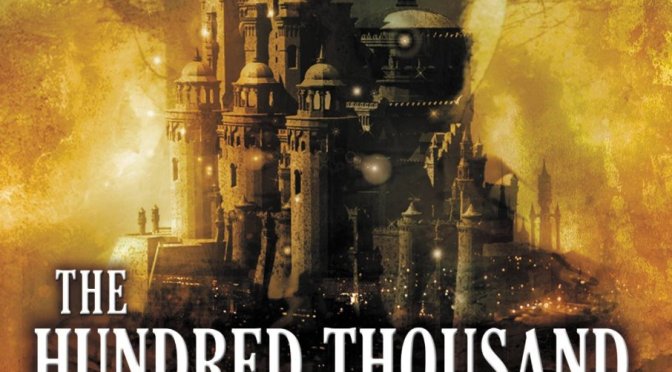
Jemisin, N.K.: The Hundred Thousand Kingdoms (Inheritance I) (2010)


Lately, I have had reason to think about the many ways in which people surprise us. Usually, I find that the greatest surprises come at times of stress. Some people end up inviting strangers into their homes and others end up reneging on deals made. People we think we know, turn out to be just as unknowable as the rest of the world.

When Yeine arrives at Sky, people meeting her have already made assumptions about who and what she is. In the case of the full-blood Arameri, Yeine is ONLY a half-blood (dear, oh dear) and probably headed for servility. Except she isn’t. Yeine’s dead mother still seems to have plans for her daughter’s stay in Sky even though that same mother has not lived in Sky for the past 20 years. Finally, the gods and goddesses stuck in Sky have their share of expectations tied to their own idea of who Yeine is.

What I have discovered is that people aren’t as we think. Even close family members who we like to think we know well. All of the people with ideas about Yeine end up being wrong. Their own dreams and projections of self onto her, muddy their ability to predict her completely. Even the gods and goddesses. Or maybe especially the gods and goddesses. They are stuck in their aspects and change does not come readily to them. Nor does the idea of having been mistaken in their conclusions about a person.

But life is like that. Isn’t it. We all draw conclusions about others based on projections of self onto them. Changing whatever opinion we might have made is painful to the extreme. Sometimes enmity ensues and sometimes relationships become deeper after the rift heals. Finally, we become able to see each other as something more. In her search for answers about her mother, Yeine struggles with letting go of her pre-conceived ideas about her mom. In Yeine’s eyes her mother is a person who could do no wrong. Even at 19 Yeine still feels the same way. If that vision is challenged, Yeine is quick to anger. But slowly, ever so slowly, Yeine begins to know her mother, the person. Knowing that person is essential if Yeine is to discover who murdered her (and possibly getting revenge).

Perhaps The Hundred Thousand Kingdoms (The Skygod’s Lover) is more about letting go than anything else. In addition to letting go of her ideas and dreams, Yeine slowly learns to let go of her fear. Fear is such a strong component of our personhood. It binds us into roles we may not want but ultimately fear to break out of. Change is frightening. Our own personal change is probably the most feared change of all – at least it seems that way to me. But Yeine discovers what most of us do when we embark on that letting-go process. For one, we generally do not die. More importantly, our fear lessens. Perhaps slowly, but nevertheless. So, too, it is for Yeine.

There is some sex and violence. Definitely recommended.


Reviews:


The Inheritance Trilogy omnibus available at Barnes & Noble

McGuire, Seanan: Indexing page 1

“My day began with half a dozen bluebirds beating themselves to death against my window, leaving little bloody commas on the glass to mark their passing.”

(Picture by Lifllane)

Jemisin, N.K.: The Hundred Thousand Kingdoms (location 2317)

“It was very bad if the council had resorted to recruiting men. By tradition men were our last line of defense, their physical strength bent toward the single and most important task of protecting our homes and children.”

Use public libraries