Tag Archives: #Religion

Briggs, Patricia: Raven duology

“Traveller’s Orders” by Robin Walker

RAVEN’S SHADOW (2004)

Prejudice and fear seem to be recurring themes in Patricia Brigg’s novels. Raven’s Shadow is no exception. In this instance, the Travellers are the persecuted people. We see instances of this today. In general there seems to be a lack of trust towards people who do not stay in one place and become part of the community. It makes it a whole lot easier to blame them for something, as our links to them won’t be a strong as they would be towards a neighbor. Such is the world of Travellers in Briggs Raven duology.

Tier and Seraph are our two main protagonists in Raven’s Shadow. We meet Tier as he is on his way home from the war. Tier is a rebel. His father was a baker and the expectation was that Tier would take over the craft. But Tier wanted to see the world and did that. Unfortunately, he also ended up disillusioned about the state of the world.

As he enters a village he see a large bon-fire in the town square. A Traveller was burned suspected of using magic. Inside the town’s inn the citizens have joined in drinking to their “brave deed”. Left behind is a young woman. The innkeeper has decided to sell the girl to the highest bidder. Tier ends up buying her, Seraph a Raven traveller who has no reason to trust Tier. This is the beginning of the journey of Seraph and Tier, a journey fraught with danger and betrayal – you know the spiel. I liked both Raven’s Shadow and Raven’s Strike. While not complicated, they are easy to read.

Raven`s Strike

“Traveller’s map” by Michael Enzweiler

RAVEN’S STRIKE (2005)

Tier has been rescued and the family is taking it easy on the way home from the Capitol after the run-in with the wizards. Part of the way, they have chosen to travel with Benoin and his tribe. On the way they come to a village where a shadow creature has killed some of the villagers. The creature is taken care of, but the family soon realises that it is just a symptom of what is happening in the land.

At the same time, Tier seems to be having trouble recovering his magic. It seems to be fraying and drawn away from him. Seraph cannot figure out what the problem is, but slowly the family is being led to the ancient city of Collosae – the city where the Travellers came from.

Raven’s Strike gives us more background information on the Travellers and their roots. This background information turns out to be vital to Tier’s ability to solve the puzzle. The romance between Jes and Hennea takes up a bit of space.

Raven’s Strike tied up a few loose ends and was a good follow-up to Raven’s Shadow. They are both typical examples of Brigg’s writing: light, fun and accessible.

Pratchett, Terry: The Watch/Vimes

Streets of Ankh-Morpork (wow)

Samuel Vimes is a beautiful character. He grew up in Cockbill Street, the poorest area of Ankh-Morpork. They were so poor that while they had practically nothing to eat, at least their floors were clean enough to eat off. Getting into the Night Watch was quite a change for Sam. Now he had money for food. Being a guard runs in Vimes’ family. In fact one of his ancestors, old Stoneface, beheaded the last king of the city. Vimes’ worldview is that everyone is guilty of some kind of crime.

Guards! Guards! (1989)

[nightwatch.jpg]Nobby, Colon, Carrot, Vimes and the Librarian by William Bradford

Our first proper meeting with Captain Samuel Vimes occurs with him falling over drunk into one of Ankh-Morpork’s streets. It had been a hard day for the Watch. Poor old Herbert Gaskin had broken one of the fundamental rules of being a guard. He forgot to run away from trouble. Now the most despised group of men in the entire city consisted of only three men: himself, Sergeant Colon and Nobby.

In the meantime a young man is heading for the city with “all the openness, sincerity and innocence of purpose of an iceberg drifting into a major shipping lane.” Carrot is the name of this young man, due to the color of his hair but also due to the shape of his body. One day at sixteen his dad sat him down and told him he was not the six-foot dwarf he had always thought he was. Human was his race. His dwarven parents had in fact found him in the woods next to a burned out carriage. Now it is time for him to depart and seek his fortune as a watch-man in Ankh-Morpork. With him his father sends a sword, a dwarven woolen shirt, a golden cod-piece and The Laws And Ordinances of The Cities of Ankh and Morpork.

The Unique and Supreme Lodge of the Elucidated Brethren of the Ebon Night have a plan to overthrow the Patrician. They are going to summon a dragon. Against all odds they actually succeed in calling one forth. It turns out that this is a double-edged sword. Now that they have called the dragon forth, the dragon figures out a way to get back on its own.

One of the themes that we will encounter again and again in the Watch series is the power play between Vimes and Vetinari (patrician). Vetinari plays Vimes like the strings on a guitar. Carrot is the person who manages quite well to live between a rock and a hard place. His literal interpretation of the laws of Ankh-Morpork and his ability to own any situation makes it possible for him to soften Vimes’ explosiveness after meetings with Vetinari.


Adaptations

  • 1992: BBC4 produced a 6-episode serial dramatisation by Michael Butt of Guards! Guards!
  • 1997: Stage play scripted by Stephen Briggs,
  • 1997: Geoffrey Cush’s stage-adaptation,
  • 2000: Comic adaptation of Guards! Guards! Graham Higgins
  • 2011: Board Game by Backspindle Games in conjunction with Z-Man Games

Men at Arms (1993)

Scenes from Men at Arms by Justyna

Edward d’Eath’s father has just died, leaving him the thirty-seventh Lord d’Eath and an assassin to boot. Unfortunately his father had not left Edward any money. Quite a single-minded person whose belief in a King as ruler of Ankh-Morpork was quite fervent. Coincidentally, he stumbles upon Corporal Carrot, who just happens to look like one of the old Kings. Edward sets about trying to get Carrot and kinghood into fashion.

Captain Vimes is retiring from the police to marry Sybil Ramkin, Countess and the richest woman in Akh-Morpork. He is about to become one of the posh, a gentleman of leisure. But Vimes is finding it difficult to let go of policing.

Thankfully, an important artifact disappears from the Assassin’s Guild. The mystery must be solved. But the Assassin’s Guild aren’t interested in help from the Watch. Vimes loves the chase and the opportunity to get out onto the streets again. The chase after the weapon/artifact turns out to be both challenging and bloody.

Gaspode the wonder dog makes his appearance in Men-at-Arms. Gaspode the talking dog (too much time at the UU can change someone). He is rather keen on Angua (the werewolf).

In Men-at-Arms Pratchett plays with our biases. Here we get to see racism in all its “glory”. Even though the cops in the Watch are only supposed to be cops, they still have to overcome biases towards each other. Like so many others of the Discworld books, Men-at-Arms looks at the power of belief. We get a look at what that belief makes it possible for people to do.


2000: Stage adaptation of Men At Arms by Stephen Briggs

Feet of Clay (1996)

  • 1996: Winner of SFX award for best SF/Fantasy Original Novel
  • 1997: Nominated for 1997 Locus Awards – best Fantasy novel

Warhammer’s miniature grouping

Commander Sir Samuel Vimes is shaving, thinking on the horrors he has to face as a gentleman. People doing things for him, formal dinners and not being able to sit with the servants any longer playing cards and drinking beer. And then: “There was a flicker in the glass. He moved sideways and ducked. The mirror smashed. There was the sound of feet somewhere beyond the broken window, and then a crash and a scream.” The Assassin’s Guild are at it again. Some of the other gentle-people of the city do not want Vimes alive, and the Assassin’s Guild keeps on trying to do their job.

Captain Carrot has made it through his first two years in Ankh-Morpork. The love of his life is Corporal Angua, a werewolf, whose bad-hair days he takes in his stride. She is quite handy to have around when people want scaring. So when some incredibly thick thieves rob Ironcrust’s Dwarf Bakery she does just that – earning the “respect of the community.”

The body of Father Tubelcek is discovered. The watch have just hired their new alchemist, a dwarf by the name of Cheery Littlebottom. She is sent along to investigate the clues she discovers, of which one of them is a strange light in the dead eyes of Father Tubelcek.

Weirdly enough, it turns out Nobby is posh. He has his own coat of arms and has now become a peer. Poor guy, how is he going to deal with this? With increasing desperation it seems.


Adaptation

2007: Stage adapatation of Feet of Clay by Stephen Briggs.

jingo

Jingo by Marc Simonetti

Jingo (1997)

An Ankh-Morporkian and a Klatchian fisher are both at the scene when a strange island rises above the sea. Both immediately lay claim to the island and this leads to a dispute between Ankh-Morpork and Klatch. The Klatchian crown prince is sent to Ankh-Morpork and diplomacy ensues (kind of). One of the funniest scenes Terry has ever written comes when Vimes has to lead a parade. The whole thing came alive in my head and I almost fell over laughing.

An assassination attempt is made on the prince and the Klatchian embassy declare war against Ankh-Morpork. Vetinari resigns and Lord Rust takes over. He is slightly eager for war and his decision leads to Vimes and the gang ending up in the Klatchian desert.

At the same time Vetinari, Colon, Nobby and Leonard of Quirm take a u-boat ride to the island and then to Klatch. Nobby ends up having the time of his life with “nubile” women. This is also an extremely funny scene. Poor Nobby. But while there is plenty of humor in the foursome’s trip, there is also a serious reason for their trip (obviously since Vetinari is involved).


2005: Jingo stage adaptation by Stephen Briggs

French cover by Marc Simonetti – Simonetti has become my favorite Pratchett artist

The Fifth Elephant (1999)

Uberwald – the land of vampires, werewolves, trolls and dwarves, is becoming restless. Something very important is happening in a few weeks time. A new Low King is being crowned, and that is causing fighting in Ankh-Morpork. With 50000 dwarves living in the city, people are bound to notice that something is going on.

The old grievances between trolls and dwarves have not yet been resolved and large areas are controlled as fiefdoms by vampire or werewolf clans. Into this “suet pudding” Vetinari plans to send an ambassador for Ankh-Morpork, and he wants to send the Duke of Ankh. Cunning man that he is, Vetinari had already spoken to Lady Sybil about it. Vimes knew when he was beaten.

The replica of the Scone (dwarf throne) is stolen from The Dwarf Bread Museum. Vimes finds an aboundance of clues, to many in his opinion. To him it is a stupid crime that does not feel stupid.

Vimes goes off to Uberwald, leaving Carrot in charge of the city. Thankfully, Sybil is along. She will take care of the negotiations, while Vimes will represent Ankh-Morpork in his unique style.

Angua discovers that her xenophobic brother Wolfgang has decided to take over Uberwald. She leaves Ankh-Morpork and Carrot to stop Wolfgang. Carrot makes a difficult choice. He chooses love over duty and goes after Angua. This time Colon is left in charge of the Watch – a recipe for disaster.

The Fifth Elephant follows these three journeys – Vimes and Sybil/Carrot and Angua/Colon as head of Watch.

In a sense, The Fifth Elephant is a love story. Sometimes the choice is between the people we love, duty and tradition. Can we have it all?


2002: Stage adaptation of The Fifth Elephant by Stephen Briggs

Ankh-Morpork found at The Same Old Song (I need help finding the name of the artist – Kidby, Kirby ???)

The Night Watch (2002)

The Night Watch for the most part happens in the past. Through a freak accident, Vimes is thrown back to the time when he was a younger man and new to the Watch. Along for the ride is Carcer, a cold-blooded murderer. Carcer’s goal in the past is to kill Sybil, thereby wounding Sam beyond repair. Sam’s goal on the other hand is to make the city safer from people like Carcer. To do that he has to establish a new identity as his old self cannot know who he is. Luckily/unluckily Vimes assumes the identity of John Keel, his old sergeant. John Keel has been killed by Carcer. Vimes knows that changing the past will also affect his future. There might not be a wife and child-to-be when he gets home to modern Ankh-Morpork. But Vimes is who he is and cannot leave the Watch or his old self in their old shape.

Unfortunately, Carcer joins the Unmentionables. They are the secret police, carrying out the whims of Lord Winder (patrician of the time). This often includes people going missing, torture and terror. Vimes sets out to make life difficult for both Carcer and the Unmentionables.

Would we try to change the past if we could? Many of us probably would. In trying to influence his younger self to be a better copper, Vimes changed himself. But the big lines of the city. Hmmm – read and see. Corruption and incompetence are dangerous qualities in rulers, but also in the ones set to carrying out the rules. So, what happens when Vimes sets out to change his old world, trying to make it a better place?

———————————-

2008: BBC Radio 4 2008 radio adaptation dramatised by Robin Brooks

2004: Night Watch stage adaptation by Stephen Briggs

Thud (2005) 2006 Locus F Nominated 

Dribble the dragon, Samuel Vimes, Sam Jr. by Kiriban

Vimes really, really does not like Vampires. Until now he has refused to have any of them on the Watch. That choice is taken away from him by his “beloved” Vetinari. Sally is employed to assist in the investigation around the death of the dwarven demagogue, Grag Hamcrusher. Apparently a troll is the culprit. Sergeant Angua and Captain Carrot are the other Watch member assigned to the case.

Corporal Nobbs and Sergeant Colon get the job of investigating the disappearance of a 50-foot painting titled The Battle of Koom Valley. The discovery of the disappearance leads to several things happening. Trolls vs. dwarves, assassination attempts, a Kube and the Summoning Dark all lead to Vimes, Sybil, Young Sam, Wilikins, and several members of the Watch going to the Koom Valley where Vimes discovers the secret of the valley.

Young Sam has become the mainstay of Vimes’ life. This will prove essential in keeping Vimes alive and sane. Family is all to him. Vimes’ dedication to peace is strong throughout the book, as can be seen clearly in his fight with the Summoning Dark. Racism is prevalent in the book through the animosity between dwarves and trolls. Once again we are confronted by our own biases. One might even replace racism with religious conflict: Protestant/Catholic (Ireland) or political conflict: Palestine/Israel.

Snuff (2011)

Samuel Vimes and one of his weapons (dragon) by Jan Pospisil(Perfect)

Snuff’s focus is for the main part on Vimes and his family. Lady Sybil makes him take a family vacation to her mansion Crundells. Of course Wilikins comes along. Here all is peaceful and Sam is enjoying being able to concentrate on being with his wife and son. But that is not the way things stay. The house-staff seems to hate Sam and Vimes nose is itching with the smell of wrong-doings.

Samuel discovers a grotto of goblins living nearby. For some inexplicable reason the local gentry seems to hate/despise/revile the goblins and treat them as disposables. When the murder of a local blacksmith occurs, all of a sudden the whole country side is involved. On his side, Vimes has Sybil, Wilikins, a young police officer called Upshot and the goblins. Against him are Lord Rust (who has interests in the area) and most of the local gentry and quite a few of the peasants.

It’s time to call in the cavalry. While he has no jurisdiction at Crundell, Vimes is able to ask his people to investigate certain aspects of his discoveries. The Watch does not play a large part in Snuff, but they are present.

I was touched by Snuff. In a sense I felt as though I was saying goodbye to Samuel Vimes, Duke of Ankh-Morpork and Commander of the Watch. Pratchett writing has gotten darker as the years have passed for the Discworld. The topics are no longer solely focused on making fun (in his gentle way) of current sci-fi and fantasy fashions, but very much on personal development and the conflicts people meet in life. The slavery of the goblins in Snuff very much reminded me of the slavery that has gone on and is going on in the world. Somehow people find it in themselves to treat others as nothing. Rising up to fight this slavery, both on a large and a small-scale is incredibly difficult. Thankfully Pratchett always leaves us with a sense of hope that things might get better.


SOURCES:

Pratchett, Terry: Death

Death as illustrated by Paul Kidby

The Grim Reaper in the form of a skeletal body in a black robe, with a scythe and speaking in CAPITAL LETTERS appears for the first time in The Colour of Magic. His job is to collect human souls. Death is the servant of Azrael, the “Death of Universes”. Opposing him are the Auditors, who want nothing more than the end of all life (it’s soooo messy).

At home Death has a servant, Albert and a daughter, Ysabelle. Kittens and swans are his favorite animals and his horse Binky is with him on each collection.

Because of his fascination with humans, Death sometimes leaves his post to seek understanding. This tends to cause problems because humans don’t like to see what they do not understand and the universe likes the souls of dead people collected. The only ones who can see Death for who he is are witches, wizards, cats and children.

In The Art of Discworld Terry tells us that he has received a number of letters from terminally ill fans in which they hope that Death will resemble the Discworld incarnation (he also says that those particular letters usually cause him to spend some time staring at the wall).

Mort (1987)

“Mort” by Amianna

While Death appears in the previous books, Mort is the first book in which he becomes a main character.

Mort’s family specialized in distilling wine from reannual grapes. (“Reannual are plants that grow backwards in time. You sow the seed this year and they grow last year.”) These growers tended to be big, serious men, much given to introspection and close examination of the calendar. Mort (the youngest son) on the other hand, was tall, red-haired and freckled, with the sort of body that seems to be only marginally under its owner’s control; apparently built out of knees.

Hopeless as he is, Mort’s father decides to take his son to the hiring fair at Sheepridge. At this hiring fair men looking for work would stand in ragged lines in the centre of the square waiting for a tradesman to hire them as apprentices. Noone seems to want Mort, but just before the clock has struck its final strike at midnight, a prospective tradesman enters the square. It is Death and Mort can see him as he really looks. Mort is hired as an apprentice and Death and Mort ride off on Binky.

And so, Mort is off on the adventure of his life learning all sorts of useful things – like how many shades of black there are and how to walk through walls. Obviously death is a theme of all of the books in the Death series. Terry treats this subject with warmth and a light heart. Death comes to us all, after all. Poor old Death is going through a mid-life crisis, and Pratchett’s gentle mocking of the phenomenon is heartwarming.


Adaptions

  • 1994: The graphic novel, Mort: The Big Comic is illustrated by Graham Higgins.
  • 2004: BBC4 broadcast Mort in 4 parts. Adapted for radio by Robin Brooks. It is re-sent regularly.
  • 2007: German musical adaptation of Mort.
  • 2008: English musical adaptation of Mort by Jenifer Toksvig.
  • 2011: English stage adapation of Mort by Stephen Briggs

Reaper Man (1991)

“Death of Rats” by Alex Thomas

The terrible Auditors of Reality have been at it again. To them the fact that Death seems to be developing a personality is the sin beyond sins. So, they decide to retire Death and Death is resigned to that decision. What happens when there is no longer a collector of spirits?

Back at the Unseen University Windle Poons – the oldest wizard – is waiting for his collection by Death. He knows to the minute when this is supposed to happen. But does it? Windle Poons certainly dies, but no one shows up for his spirit, so he decides to go back into his body. This tendency seems to be spreading to other people.

Bill Door’s harvesting machine

Now that Death has his own hourglass with sand running down, he has decided to make the most of the life left to him. High up in the Ramtops a figure on a horseback turns up. He knocks at the door of Miss Flitworth asking for help. The stranger goes by name Bill Door. The main qualification needed is the ability to use a scythe, and one might say that Bill is excellent at the job.

Back at Ankh-Morpork Cut-Me-Own-Throat Dibbler has discovered something that he thinks will make his fortune (again). This time he has found some strange globes. When they are shaken a cloud of little white snowflakes swirl up in the liquid inside and settle on a tiny model of a famous Ankh-Morpork landmark.

And finally, magic is behaving strangely at the UU. It seems all of the Life drifting accross the Discworld is acting like water building up behind a dam when the sluice gates are shut. Needing a place to go, it manifests itself in all sorts of phenomena. The wizards decide they have to meddle with all of the strangeness.

Terry addresses fate, life, death, consumerism and relationships in Reaper Man. I’ve seen reviews that praise Reaper Man to the sky and others that despair of Pratchett’s writing this books. For my own part, I rather liked the book. It juggles the serious and the silly quite well in the jump between Flitworth and the wizards.


Adaptations

  • 1996: 8-minute animated television adaptation produced by Cosgrove Hall Animation Studios of Reaper Man.
  • 2012: Australian stage adaptation of Reaper Man by Pamela Munt

Soul Music (1994)

Soul Music moments by Justyna

Mort and Ysabell married and had a baby – a little girl they named Sarah. At age six, Sarah, makes her teachers at Quirm College for Young Ladies extremely nervous. Strangeness tends to happen around the girl and she says the most bizarre things. But Susan didn’t really worry about what other people thought about her. And that continues through the years at school.

Sometimes the gods listen to the words people say. Imp Y Celyn (Buddy) said to his dad: “You don’t know anything! You’re just a stupid old man. But I’m giving my life to music! One day soon everyone will say I was the greatest musician in the world.” In retrospect, perhaps not the wisest words, but they do make for a good story. When he chances upon a pawn shop guitar and becomes possessed by it, rock and roll enters the Discworld. This means some serious hip-rolling and swooning fans. Imp’s band “Music With Rocks In” acquires a manager in Cut-Me-Own-Throat-Dibbler. He tries to do what any good manager would, cash in on the band while keeping them in the dark.

Death has decided to go on another of his walkabouts. Unfortunately, for Susan Sto Helit (Death’s granddaughter) that means leaving boarding school to carry on the family business. Having Death for a grandfather does not make for an easy life and Susan struggles to stay on top of the job. Chaos and mayhem ensue.

Part of the theme of this book is music groups and their managers in all their glory. The generation gap is also something that is experienced at the Unseen University. Ridicully’s thoughts on the younger wizards’ fascination with the new fad is typical. Idealism vs. rationality is a struggle Susan has to face. To let or not to let people die.


Adaptation

1996: An animated mini-series adaptation of Soul Music was produced by Cosgrove Hall Films for Channel 4.

Hogfather (1996)

  • 1997: British Fantasy Award nominee
  • 2007: Winner of BAFTA TV Award for Best Visual Effects and Interactivity
  • 2007: Nominated for BAFTA Tv Award for Best Photography & Lighting
  • 2007: Winner of BPG Multichannel Award
  • 2007: Nominated for RTS Award for Best Drama Serial
  • 2007: Nominated for VES Award

The bad guys by Stato Bizley

“”Something” began when the Guild of Assassins enrolled Mister Teatime, who saw things differently from other people, and one of the ways that he saw things differently from other people was in seeing other people as things (later, Lord Downey of the Guild said, “We took pity on him because he’d lost both parents at an early age. I think that, on reflection, we should have wondered a bit more about that”).”

At the Unseen University the wizards are standing before a nailed shut door, wondering if they should open it – despite the sign that read “Do not, under any circumstances, open this door”. But curiosity is one of the prevailing “talents” of wizards. Ridicully is one of the more curious ones. The door is opened, and what do they find? Bloody Stupid Johnson has been at it again. A wise person would have closed the door again at this moment, but alas. There are not many wise wizards in Ankh-Morpork.

Susan Sto-Helit is enjoying a quit evening at the home she is governessing at. As usual she has put the fear of something into her employer while the children adore her. All of a sudden images formed in her mind. “A red ball … The sharp smell of snow … And then they were gone, and instead there were …

“Teeth?” said Susan, aloud. “Teeth,” again”?”

“Susan and the … Hogfather?” by Rebecca M.

She knows right then that trouble is afoot, and its name is most likely DEATH. As you can see from the picture, DEATH does make a lovely Hogfather – travelling to all the children calling HO, HO, HO in his own unique style.

Absurdity, chaos and laughter are only some words to describe Hogfather. When the assassin Teatime is sent to kill the Hogfather, you just know you have to buckle up for a crazy ride. Christmas and all of its stranger sides (consumerism and altruism) are all examined. This is the ultimate Christmas story, one that might make you want to believe in Santa Claus again.


Adaptation:

2006: Hogfather adapted by Vadim Jean as a two part TV-serial for SKY

French cover by Marc Simonetti

Thief of Time (2001)

Nanny Ogg is called to a birthing – a very unusual one. Some years later Jeremy Clockson was enjoying dismantling and putting a clock back together again. He’d grown up as a child-prodigy at the Guild of Clockmakers since he was a few days old. Then Lady Myria LeJean with her two troll body-guards steps into his shop. Something about her bothers Jeremy. She wants him to build the most accurate clock in the world.

Miss Susan is a very strict and popular teacher with her pupils. Her main concern is to get her pupils to see things for what they are. But her popularity stems mainly for the class-trips she takes her students on – quite unusual ones that should not be possible. Her view on parents was that there ought to be an exam before they were allowed children. When the Death of Rats comes by to tell her that Death needs her help dealing with the Auditors, she sets off to do her duty.

The Order of Wen or the History Monks have a duty to see that tomorrow happens. One of the novices, Ludd, is causing problems. As a baby, he’d been raised by the Guild of Thieves. Then the monk Soto had stumbled upon Ludd and send him to the temple. There all sorts of unusual things happened our young Ludd. To solve the Master of Novices’ problems, Ludd is placed with another troublemaker – the sweeper Lu Tze. Both Ludd and Lu Tze are surprised by the other.

Going along for a ride with Pratchett is bound to be an insane experience and Thief of Time is no exception to the rule. His way of dealing with events of the day – and usually themes that are relevant no matter when or where one lives (like education, family, duty, propaganda, differences and prejudice) is admirable. It’s the warmth in his work that makes Pratchett so worthwhile to me.

For this blog, I’ve used Wikipedia, L-Space, and the above books as my sources.

Pratchett, Terry: Discworld cultures/Gods

Discworld political map
By Blamed Thande

As you can see from the above map, the Discworld consists of many countries and continents. Each country has its own culture and religion. From my reading there are three books in Terry Pratchett’s Discworld series that are specifically about religion and culture. These three stories are about the countries of Djelibeybi (Pyramids) – try saying it, Omnia (Small Gods) and Zlobenia vs. Borogravia (Monstrous Regiment).

PYRAMIDS (1989)

Pyramids consists of four books: The Book of Going forth, The Book of the Dead, The Book of the New Sun and The Book of 101 Things a Boy Can Do.

As a young boy Pteppic was sent to Ankh-Morpork by his father, King Teppicymon XXVII. The Assassin’s Guild had accepted him as their student. The reason they had chosen the assassins’ school was because it offered the best all-round education in the world.

At home all Teppic had was a kingdom two miles wide and onedred and fifty miles long. Its stronger neighbors only tolerated their existence because anything else would lead to war between the two countries.

Assassin profile
By Cathy

Djelibeybi’s days of glory were over. Now all they had to attract visitors was pyramids – enough pyramids to bankrupt the country.

Teppic’s stay was Ankh-Morpork is a success. He survived his finals (assassin’s school finals can be quite deadly) through knowledge and a great deal of luck. The test was to arrive alive and well at a site and then kill someone. He passed by accident.

Then Teppic’s father dies and Teppic becomes King Teppicymon XXVIII and has to go back to Djelybeybi. When he gets there he discovers that the High Priest Dios pretty much runs the country. Any change that Teppic wants to bring in to Djelibeybi, like plumping, is fought. All Teppic is supposed to do is get a consort and bring an heir into the world. Most importantly, a new pyramid has to be raised and his father’s pyramid has to be capped.

Pratchett plays with time and space in Pyramids. The pyramid of Teppic’s father has become so large that upon capping, Djelibeybi comes out of alignment with the rest of the disc. Chaos ensues in Djelibeybi as the dead come alive and the kingdom’s various gods want a part in ruling the kingdom. The power of belief is strong on the Discworld. There gods gain power through their believers. If the people believe the pharaoh is a god, then the pharaoh has godlike powers. Egyptian mythology along with Christianity get their fair share of Pratchett’s attention.


1989: Winner of BSFA


SMALL GODS (1992)

On the Discworld there are gods for everything. On Wikipedia you’ll find a list over the gods and their function. They come in all shapes and sizes. Lack of belief decreases power while belief increases the power of the gods. If they have no believers, the gods are small gods crying out for belief.

History has to be observed. Otherwise it’s not history. It’s just … well, things happening one after another.

This is why history has its own caretakers making sure things happen as they should. These caretakers live in a hidden valley in the Ramtops. The 493rd Abbot sends his most experienced monk, Lu-Tze, to Omnia to make certain that nothing messes up the course of history.

Brutha and Om
By Thaumivore

In Omnia the time of the 8th prophet was imminent. The Church of the Great God Om has “very punctual prophets. You could set your calendar by them, if you had one big enough.” Brutha, the novice monk hears a voice. This voice is trying to get his attention. Due to a lack of belief Om finds itself stripped of power and has therefore become one of the Small Gods. When Brutha discovers that the voice he has been hearing in his head belongs to a small tortoise, Brutha is astounded. No less astounded does he become when the tortoise wants to see the High Priest. A mere novice will never be allowed into such august company.

Waiting for Vorbis
By danseusenoire

Vorbis, the Deacon, is the head of the Quisition. Their job is to do all those things that need to be done that other people would rather not do. Their methods of garnering information were like the Spanish Inquisition’s, rather unpleasant. Along with General Iam Fri’it of the Divine Legion and Bishop Drunah of the Congress of Iams Vorbis is planning on forcing the word of Om on the Ephebians. Once Ephebe has been converted, the way onward to Djel and Tsort lies open.

Religion and its inquisitions, philosophy, and the battle between reason and belief end up on the playground of Pratchett’s satiric hand. Terry gives us a look at how some people seek power to the extent that they will do anything to gain it.


ADAPTATION

  • 2006: Small Gods adapted for radio at BBC4
  • 2010: Small Gods adapted for stage by Ben Saunders
  • 2011: Small Gods on Speed fan animation on You Tube

MONSTROUS REGIMENT (2003)

File:Firstblast.jpg

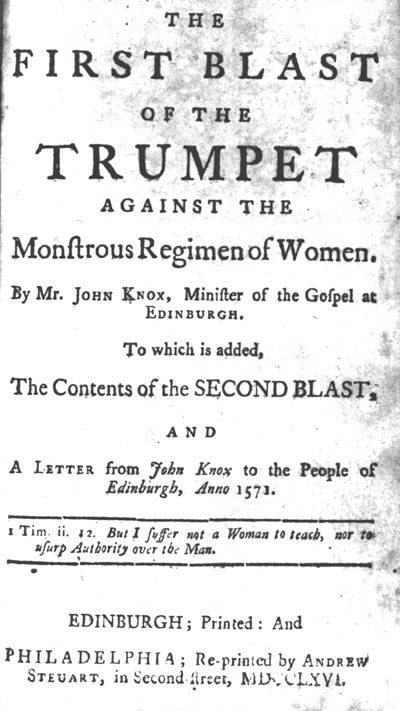
Some gods are crazier than others. In Borogravia Nuggan passes decrees that are increasingly bizarre. Borogravians are ruled by the Abominations – a list of taboos: no garlic, no cats, ginger hair is out and so are six-buttoned shirts, chocolate and the color blue. You can see that being a Borogravian can be a challenge for the most devout. Due to these Abominations Borogravia is constantly at war with their neighbors.

Even though women aren’t allowed pants, Polly dons them, cuts her hair short and sets off after her brother Paul, who has gone missing in the Borogravian army. She needs him back at the family pub so the pub won’t be passed on to their terrible cousin if their dad dies. All she has to do is join the Borogravian army.

French cover art by Marc Simonetti

The recruiting sergeant and his corporal assistant Strappi give Polly (or Oliver Perks as she calls herself) a shilling to kiss and a picture of the queen. Along with Polly, several other recruits join up: a vampire, one troll, an Igor and humans. Strangely enough all the of the recruits have very light voices. The tiny regiment makes their way toward the keep where the enemy is based. Guess who we get to meet there.

Commander Samuel Vimes has been sent to Zlobenia to figure out how to deal with Borogravia. To Vimes Borogravia is just another criminal that has to be dealt with as such, and he is going to treat Zlobenia and Borogravia as he would two scrappers back in Ankh-Morpork.

As you can probably imagine the main themes of Monstrous Regiment are the battle between the sexes and repressive religions. Deprivations caused by a war-happy country are only all too apparent in this story. Along with young males, food and clothing are scarce. We don’t have to look too far back into our own histories to see how all of these themes are sadly relevant for us.

The characters in Monstrous Regiment are delightful. The lengths these women go to in order to hide their gender is funny (socks in pants etc.). Their reactions to discovering the true identities of their compatriots and the difficulties that come with hiding their gender create weird scenes (especially in relation to Lieutenant Blouse – an incredibly inept soldier).


ADAPTATION

  • 2004: Monstrous Regiment adapted for stage by Stephen Briggs
  • 2011: Monstrous Regiment trailer fanfilm by Michelle

SOURCES

Asimov, Isaac: Foundation series

The Foundation series continues on from the Elijah Bailey series. The reason I call it a continuation of the series becomes apparent as one reads the books (too much of a spoiler to tell). If you go to Wikipedia, they will tell all. Having said that, their page carries quite an excellent description of the books along with analysis and links. For another in-depth analysis of Asimov’s work go to Wimmer & Wilkins’ blog. Asimov’s home page contains more general information about his life’s work.

Isaac Asimov brought fresh air into science fiction when he arrived on the scene in the 40’s. He wasn’t afraid of taking a hard look at the possible future of mankind based on what he knew of the day’s theories on sociology and psychology. The Foundation series is considered one of the most important contributions to the field of science fiction, a well-deserved opinion.


PRELUDE TO FOUNDATION (1988) AND FORWARD THE FOUNDATION (1993)

SciFi and Fantasy Art PRELUDE TO FOUNDATION by Slawek Wojtowicz
Cover for Polish Prelude to Foundation
by Slawek Wojtowicz

The Foundation series was started in the 1940’s, but for easier reading you should start with Prelude to Foundation and Forward the Foundation. In Prelude we meet Hari Sheldon, the inventor of psychohistory. Hari’s goal was to be able to predict the general future of humanity, and during a conference he presents his fledgling theory to fellow scientists on the planet Trantor. Unfortunately the Empiror finds Hari’s theories a threat and begin to persecute him. This makes it necessary for Hari to flee, and his flight takes him around Trantor. In Forward the story of how Hari develops his theory continues. Sadly for Hari, the people he loves die off (naturally and unnaturally). Hari refuses to give up and finally develops what ends up being called the Seldon Plan, a way to save the future of humankind.


FOUNDATION (1951) / FOUNDATION AND EMPIRE (1952) / AND SECOND FOUNDATION (1953)

Cover for Polish Prelude to Foundation
by Slawek Wojtowicz

After this introduction to the future Galactic Empire, The Foundation Trilogy with the books Foundation, Foundation and Empire and Second Foundation, follow. These are Asimov’s first installments in the Foundation history. When you read these books, please keep in mind that the series was written well before Wikipedia or the internet came into existence. As such, they seem a bit dated. Some of the theory can be tedious, but the adventures and people we meet are quite fun. The titles are a dead give-away, so we know well ahead of time that the Foundation is bound to survive. But we know nothing about the road taken.

In Foundation and Empire the leaders of the Foundation has become corrupt. The internal strife that arises from that makes the organisation susceptible to “The Mule”. The Mule advances, conquering planet after planet, making the Empire deviate from Seldon’s plan. The Foundation does not have it in them to win over the Mule, and desperately some of the members begin seeking a rumoured Second Foundation.

The title Second Foundation kind of gives it away. In this novel we are going to discover the rumoured savior of the Empire while enjoying adventure, science and social interaction. The only way to kill the Mule is by allowing members of the Foundation to find members of the Second Foundation. But this also reveals the fact that there is a Second Foundation and that its nature is somewhat different to the First one’s. Herein lies the conflict.


Foundation’s Edge
by Michael Whelan

FOUNDATION’S EDGE (1982) AND FOUNDATION AND EARTH (1986)

And so we come to the two final books in the Foundation series: Foundation’s Edge and Foundation and Earth. We meet Golan Trevize as main protagonist in both books. He is convinced the Second Foundation has survived the attempt to exterminate its members, and goes looking for them. His search brings him to many planets and finally to the ancient planets (no longer on any star-chart) of Solaria, Aurora and Melpomenia. Each journey brings Trevize closer to a conclusion that may or may not satisfy the reader. I felt ambiguous, and that seems to be the intent of the author.


  • 1966 –  Best All-time Novel Series Hugo Award for the Foundation series
  • 1983 –  Hugo Award for Best Novel for Foundation’s Edge
  • 1983 –  Locus Award for Best Science Fiction Novel for Foundation’s Edge
  • 1996 –  A 1946 Retro-Hugo for Best Novel of 1945 was given at the 1996 WorldCon to “The Mule“, the 7th Foundation story, published in Astounding Science Fiction

Cooper, Elspeth: Songs of The Earth (The Wild Hunt I) (2012)

Songs of The Earth is Elspeth Cooper’s debut novel and a pretty good one at that. There are some rough patches (text hiccups mainly), but all in all Songs of The Earth is solid. There is content that somewhat detailed sexually and there is some descriptive violence.

Songs of The Earth is book one of The Wild Hunt series. In it Cooper brings us into the world of Gair, a world where hearing music is considered of the devil. Historically, we know what happens to people who are considered devilish. They are burned. This is to be Gair’s fate, but against all odds he is saved and gets to live out his story.

Cooper’s novel is concentrated on Gair and his path into magic. It touches upon his main enemy, Elder Goran and one of the good guys, Masen, a gatekeeper.

These three are well-developed characters. I feel their fear, lust and worry. Fortunately Cooper manages to avoid black and white thinking. We see this in the personalities of her characters, except for Goran. He is pretty dark.


Translations:

Kay, Guy Gavriel: Under Heaven (2010)

Under Heaven

Under Heaven affected me profoundly. I believe it was the depth of Shen Tai’s mourning for his father and his offering to his father’s spirit that moved me most. Imagine setting yourself the task of burying all the bones from a battle twenty years past in order that those spirits might find peace. A more appropriate place for restless spirits than a battleground I cannot imagine.

Kay went on to say that he’s interested in how the course of a person’s life can change in a moment, and how “small moments and events can ripple outwards.” Whether it’s an individual or the life of a people, he pointed out, “significant consequences can begin very inconsequentially. That’s one thing that fascinates me. The other thing that fascinates me is how accident can undermine something that’s unfolding, something that might have played out differently otherwise.”

To Kay, “the human condition is redolent with this aspect of randomness, and I try to work that into all of my books.” (CBC Books)

The choices Shen Tai, his older brother and their younger sister, Shen Li-Mei, make end up having both intended and to a great extent unintended consequences. All three discover that assistance and opposition comes in many forms and sometimes from unexpected quarters.

In this story there aren’t any really bad people. There are mainly just people with the regular gamut of human emotions and with varying degrees of ability to do something about their desires. While the Tang Dynasty was a better place for women than the ones before it, women held less room in society than men. As with most places in the world today, women had to be a lot more creative in their maneuvering than men did. Their accepted roles were also very different from the one men were able to hold. To become a warrior like Wei Song, one who even guarded a man, was not something that was open to most women (much like today).

Reading about the role of women was both a painful process but also a delight. Delightful because of the intelligent and brave women I got to meet and painful due to the few changes that have happened in the world when it comes to the roles of women and how true their power is.

Under Heaven is a fairly dark story. Considering the times and the rebellion it portrays that is no wonder. I am trying to decide if I would call it dark fantasy, but I don’t know if that would be appropriate. I love its complexity and many threads that all come together one way or another in the end. What an awful race we humans are. It really is rather sad to see us revealed in all our terrible glory. Under Heaven was an intensely touching book that left me thankful for having found it. According to the author, his goal in writing is to keep the reader turning pages. It worked.


Reviews:


Women of the Tang Dynasty

Song Dynasty (the Kitai Empire in Under Heaven)

An Shi Rebellion (simplified Chinese: 安史之乱)

Hua Mulan (Chinese: 花木蘭): female warrior

Uyghur Khaganate


  • Winner of the 2011 Sunburst Award for Adult Litterature
  • Nominated for the 2011 World Fantasy Best Novel
  • Nominated for the 2011 Mythopoeic Fantasy Award for Adult Literature

deRosnay, Tatiana: Sarah’s Key (2007)

Sarah's Key

Sarah’s Key was lent to me by my sister. Serendipity. I found it a page-turner. No question about it. The author manages to switch from present to past without effort. Tatiana deRosnay is a truly gifted author.

Sarah’s Key is about poor little Sarah Starzynski. The Germans come to collect her family. To protect her little brother she locks him in a cupboard and tells him that she will be back in a few hours. Alas. The fates want it otherwise.

There are two time-lines to Sarah’s Key. The first one, of course, follows Sarah. The second time-line follows the story of the journalist, Julia Jarmon, who delves into the story behind a hidden skeleton. Along follows the secrecy behind Jews in France during WWII.

Some truths are painful for a nation to acknowledge. Nevertheless, healing comes through shining a light on both what we want visible and what we want hidden.

The story is wholly fictional, but as Leo Bretholz (Holocaust survivor) says: “The perusal of Sarah’s Key evoked memories of my own experiences during the war in the Vichy zone of France.” It tells a terrible story, one that has happened over and over again in history. It reminds us of how easily we turn our heads from what is happening around us.


French film-adaptation (Elle s’appelait Sarah) in 2010 by Stéphane Marsil (won two awards and had three nominations)


“Holocaust in France was encouraged by French anti-Semitic trends which created a climate where the French offered assistance to the German forces, who without such aid, could not have carried out, to such ends, the Final Solution in France.” (Elizabeth Ciarrocca)