Tag Archives: #Family

Ford, Jeffrey: The Shadow Year, 2008

The Shadow Year begins and ends with Mr. Softee, the ice-cream man. At the beginning of the story our narrator, and main character, is “listening carefully for that mournful knell, each measured ding both a promise of ice cream and a pinprick of remorse.”

Our narrator describes a family learning to cope with a new financial reality. Their father lost his old job and was now working three jobs, while their mother worked one job, to pay the bills that still kept on coming in. Even though their father is not present in much of the book, Jeffrey Ford still manages to show a man who loves his family passionately and whose family loves him back. But because of his need to work so much, we also see children who view their father as a distant figure.

Their mother is clearly depressed and self-medicates with alcohol and The Complete Sherlock Holmes. She seems to be manic depressive, and we get to watch her come down from one of her manic episodes.

In those few seconds, I saw the recent burst of energy leaking out of her. As usual, it had lasted for little more than a week or so, and she’d used it all up. Like a punctured blow-up pool toy, she seemed to slowly deflate while shadows blossomed in her gaze.

Childhood is such a passionate time. If you have ever seen a three-year old express anger, joy, sadness or love, you know what a I mean. Everything is new and everything is normal. An adult might see a child’s circumstances as horrible, but that child knows of nothing else. As they grow and learn to compare, some of their passion is sloughed off.

There are three children in our main character’s family: Jim (seventh grade), narrator (sixth grade) and Mary (fourth grade/Room X). All three seem to be pretty smart with Mary as the probable winner. Her placement in a special class is due to the inability of her teachers to get an answer from her. All three are authority adverse. There is an hilarious episode regarding Jim’s personality/IQ test. All three get this self-confidence from their mother, who allows them quite a bit of leeway when it comes to school.

I found myself loving this family. Perhaps Mary in particular (although I probably identified most with the narrator). Mary is a child who follows her own paths. Her friends, Sally O’Malley and Sandy Graham, lived in a closet in her room and sometimes they go to school with Mary in the family basement where they are taught by their teacher, Mrs. Harkmar (all three make-believe). Mary also sports an alter-ego, Mickey. Her math abilities are pretty astounding and all learned while listening to Pop working out his horse races. Those abilities are used to identify the mystery behind the disappearance of Charlie Edison.

Poor little Charlie Edison. Lost in the battleground of Elementary (Primary) school. He is first on the list of who Bobby Harweed (bully and coward) beats up. Charlie is, sadly, also on the bully-list of some of the teachers. He does his best to stay invisible. Then one day he truly becomes invisible by disappearing for good. Our three siblings begin looking and use Botch Town as their aid.

Botch Town is Jim’s creation. It is a model of their neighborhood made from little bits and pieces Jim has picked up and glued together. Mary seems to have super-natural powers in predicting where people will be and what might happen. One of those predictions is regarding their neighborhood’s recent prowler.

Then we have the ghosts.

I loved Jeffrey Ford’s writing. Definitely recommended.


Dick van Dyke (hated by Pop, loved by the narrator): Shanty Town, I’ll Be Seeing You (comedy)

Herman’s Hermits, There’s a Kind of Hush (1967) (marks a transition)


Reviews:


Translations:


Awards:


The Shadow Year available at Amazon US

McCoskey, Scott: Bad Mojo Blues (2014)

Bad Mojo Blues by Scott McCoskeyMerriam-Webster defines mojo as: “a power that may seem magical and that allows someone to be very effective, successful, etc.” Bad Mojo is certainly something Marcus suffers from during the three days that we walk with him.

“The cards were screaming at him to hop a plane to anywhere else … Right now they told him to change his fucking direction and fast.”

But Marcus’ father is dying. If not for that, he would have stayed away from his dysfunctional family another ten years. His mom and dad are conservative Christians, his cousin is a blood-bag to a vampire and his sister (who begged him to come home) keeps away from Marcus. He is thought, by his family, to be dirty and evil  because he practices magic.

Marcus’ relatives aren’t the only dysfunctional people we meet. Old friends try to mess with him, and some of their requests are pretty unfriendly. All, in all, the tarot cards seem to have been correct, this time, in their predictions.

Scott McCoskey has written about a mess of a person and done it in a manner that I enjoyed. This is a self-published book and there were flaws, but McCoskey’s style makes up for that. Bad Mojo Blues is a fun crime-filled novella set in an unnamed small town in South-West New Mexico.

Recommended.


Bad Mojo Blues available at amazon.com

Priest, Cherie: Four and Twenty Blackbirds (Eden Moore 1) (2003)

Book design by Nicole de las Heras

“Hey,” I said, not to greet her but to get her attention. “Hey.”
Her eyes rolled to meet mine.
She opened her mouth but did not yet speak. Instead it seemed
every sound in the forest was pulled inside her gasping lungs and I was standing in the vacuum. I knew my friends were only yards away but I did not hear their small, fast feet shuffling through the undergrowth. No birds sang and no squirrels knocked winter nuts down into empty trees. Even the shadows stopped crawling across the rocks as the sky held the clouds above in place.
My breath snagged in my throat and refused to leave my chest.
Tears came to the woman’s eyes and dripped to the forest floor
unchecked. Her head swiveled slowly, looking past her left shoulder and then her right. Her choked, thin voice cried out to the others.
Willa, Luanna—she’s over here.
Two other women appeared, one on either side of her. They had
the same vaguely African features as the first, with hair bound into submission by scarves tied in loose knots. Their faces might have been round once, but their skin was drawn back and their wide cheekbones made shelves that shadowed their hollow jaws. Their teeth were exaggerated by fleshy lips robbed of their firmness, and when they spoke to one another it was a terrible sight.
There she is, his darling one.
His pretty one.
Oh, Mae, she’s returned to you. She’s returned to us.
Mae crouched low to examine me with her enormous, brimming
eyes. My baby, she said, reaching one scrawny arm to my face. Mybaby. Miabella.

Who wants to live forever? Not I. Some people do and this greed is explored in the story about Eden Moore, her convoluted family tree and ghostly followers.

In Four and Twenty Blackbirds the John Gray death-cult uses a dark combination of Songhaien Sorko lore and Seminole lore to bring their founder back to life. Somehow John Gray is tied to young Eden, who we meet for the first time when she is five.

Five years old, Eden hears her three ghostly followers speak for the first time with the words in the quote above. As a child, I had no concept of dead or alive, and I imagine my reaction would have been much as Eden’s was. She was used to these women. They were different to other women, but, you know, people! As she grew older, she realized that others considered Eden a bit of an oddity. Apparently, at least until her first time at camp, no other person she met saw what she now understood were ghosts.

Cherie Priest is not afraid to tackle serious issues. One of the most serious issues in Southern USA is racism. As a child, I was bullied a lot. So, to some extent, I can imagine what it must have been like for Eden to be bullied for something she had no control over. Some of her class-mates and her pale faced relatives were horrible and on one occasion a co-student made it really simple for Eden to break the rules.

“You guys who aren’t all white and aren’t all black. You’re not anything except the worst mix of a bad lot, and it don’t surprise my dad at all that a family like yours would have something crazy like this going on.”

Auntie Lulu, Eden’s adopted mother and aunt, keeps the truth of Eden’s ancestry from her in an attempt to shield her. Being the last to know does not make for a happy Eden.  But Eden must wait until she is old enough to search for the truth on her own.

Works well as a stand-alone, but is part of a series. Definitely recommended. I had trouble putting it down.


Reviews:


Four and Twenty Blackbirds may be found at McMillan

Abbey, Lynn: Rifkind’s Challenge (2006)

Rifkind's Challenge - Lynn Abbey
Cover art by Julie Bell

Stories about strong female characters have always been important to me. In my younger days these stories were difficult to find. Usually the women depended on a man to be heroic and choices we laud in women were not acceptable in the so-called “weaker sex”. Female authors have been just as guilty as male authors in perpetrating this stereotype. But some authors dared break through unwritten rules and wrote about women who might still struggle to be accepted by readers. Rifkind is one such woman. Her author is Lynn Abbey.

Rifkind’s Challenge is about adventure taking place in a medieval type of society. There are necromancers, possessions, zombies, strange power and sword fighting. Rifkind is tiny and usually underestimated by her much larger opponents. The smart ones quickly learn no to. Other opponents cannot deal with a woman defeating them. Often they end up with their entrails hanging out due to that stupidity.

Rifkind’s Challenge is about difficult choices we make in life. Rifkind leaves the Ashereen because of her dreams. As eldest son to Chief Hamarach, Tyrokon is supposed to take over; but with his handicap, he would just be putting his clan into danger. Chief Hamarach asks Rifkind to go with Tyrokon part of the way. Cho considers himself Tyrokon’s second and goes along. He happens to be Rifkind’s son. Tyrokon ends up being a mediator between Cho and Rifkind. Their family skills are complicated by Rifkind’s fame, youthful appearance and abilities.

“Where does she come off fighting like that? She is a healer … a healer! Isn’t that enough? Does she have to have men’s honors, too? Who does she think she is?”

I have not read the previous two installments in this series, but Rifkind’s Challenge works well as a stand-alone novel and is a great sword and sourcery adventure.

Recommended.


Reviews:


Rifkind’s Challenge available at Scribd.com

Baxter, Joanne Bailey: When I’m an old lady (1991)

Old lady tagger

When I’m an old lady

When I’m an old lady, I’ll live with my kids,
And make their life happy and filled with such fun.
I want to pay back all the joy they’ve provided.
Returning each deed! Oh, they’ll be so excited!

When I’m an old lady and live with my kids

I’ll write on the wall with reds, whites and blues,
And I’ll bounce on the furniture wearing my shoes.
I’ll drink from the carton and then leave it out.
I’ll stuff all the toilets and oh, how they’ll shout!

When I’m an old lady and live with my kids

When they’re on the phone and just out of reach,
I’ll get into things like sugar and bleach.
Oh, they’ll snap their fingers and then shake their head,
and when that is done I’ll hide under the bed.

When I’m an old lady and live with my kids

When they cook dinner and call me to meals,
I’ll not eat my green beans or salads congealed.
I’ll gag on my okra, spill milk on the table,
And when they get angry, I’ll run as fast as I’m able!

When I’m an old lady and live with my kids

I’ll sit close to the TV, through the channels I’ll click,
I’ll cross both eyes just to see if they stick.
I’ll take off my socks and throw one away,
And play in the mud ’til the end of the day!

When I’m an old lady and live with my kids

And later in bed, I’ll lay back and sigh,
I’ll thank God in prayer and then close my eyes.
My kids will look down with a smile slowly creeping,
And say with a groan, “She’s so sweet when she’s sleeping!”

God Bless All Moms and Grandmas Everywhere!

© 1991 Joanne Bailey Baxter https://suitableformixedcompany.blogspot.ro/2005/04/when-im-old-lady-and-live-with-my-kids.html

This copyright has been disputed in below comment. ©2002 May Baker Winkel https://grammie.andrewlives.com/

McGuire, Seanan: Midway Relics and Dying Breeds (2014)

“Thing was, the westward portage rope was attached to Billie’s harness, and Billie, for all her advantages as a draft animal, is about as smart as damp moss when it comes to things like “noticing external stimuli.” She’s a genework Indricothere (link by ed) that my Uncle Ren and I bought from a fly-by firm about six years back—a sort of precursor to the rhinoceros, and one of the largest land mammals ever to walk on the planet. When she put down her foot, the ground shook. There were no predators that could take her down and no threats that she recognized as worth giving a damn about, all of which combined to mean that there wasn’t much that could distract her from the essential task of eating her way through the foliage of the world. All nine tons of her continued plodding relentlessly forward, her massive teeth stripping branches as she walked. Her grazing license typed her as a firebreak, preventing fires by clearing out all the dead stuff before it could go up. It was more than halfway true, and it hadn’t caught us any trouble yet.”

Seanan McGuire

Midway Relics and Dying Breeds

Lyon, J.J.: Truth is Relative (A Truth Inducer Mystery) (2014)

Artist: Caitlin Willey

The Monday before Thanksgiving, my car disappeared. Or it might have been late Sunday night. The day was half over before I even looked outside. Instead I focused on an ugly painting until I realized I was hungry. I was out of bread and low on groceries in general. I cleaned my brushes, grabbed my keys, opened the front door, and stared at gray asphalt where my Mazda used to be. A few dead cottonwood leaves swirled there before the wind swept them off.

I didn’t bother calling the police. My car hadn’t been stolen, it had been repossessed.

Anthony has had a rough time during the year after his gift/curse emerged. All it takes is thirty seconds within a ten-foot circumference of him and people cannot help telling him their secrets. Just going to the store is a challenge. And the things he hears. “My wife left me this morning.”, “And then their dad comes home and he needs dinner and he wants sex.”, “I knew it was you and I don’t want to talk to you, but it looked bad.” and “So how did a totally hot man get a gift like that?“. Some of the secrets are much worse than this, and they are part of the trouble Anthony is in and is going to land himself in.

I liked the way J.J. Lyon looked at Anthony’s talent. One of my talents is having no filter on what I hear. Concentrating on my conversation while others are going on around me is extraordinarily difficult. I usually end up commenting on other conversations, or my companions tell me to stop listening in. Sadly, there isn’t an off-button on my talent. That can make talking to me annoying. I just upped my difficulty to the nth degree and probably arrived at Tony’s challenges. So, I truly get why he has made himself a hermit, does not want to visit his family and avoids any close contact with other people if he is able to. However, doing so has gotten him as close to bankrupt as a person could get.

He needs to come up with some way of getting hold of money and using his gift for other things than hitting on girls. His older brother Bart comes up with what he considers a really smart scheme. Why doesn’t Anthony become a PI? Yes, a PI. At first Tony is reluctant. But once he realizes what is really going on, his’s involvement becomes truer.

Recommended.


Reviews:


Truth is Relative is available at Amazon

Gaiman, Neil: The Ocean at the End of the Lane (2013)

Thank you, to my sister-in-law for giving me a copy of The Ocean at the End of the Lane.

In December, right before I turned seven my family moved from Australia to Norway. One of my memories tied to that move is stepping outside the plane into the middle of Norwegian winter. Moving was not something I wanted, and winter did not help.

Soon I was driving slowly, bumpily, down a narrow lane with brambles and briar roses on each side, wherever the edge was not a stand of hazels or a wild hedgerow. It felt like I had driven back in time. That lane was how I remembered it, when nothing else was.

Memory can be triggered by scent, sound and sight. All of a sudden you find yourself re-visiting a time you had forgotten. Neurons spark neurons and whatever filing system you have going for you opens a memory file.

If you’d asked me an hour before, I would have said no, I did not remember the way. I do not even think I would have remembered Lettie Hempstock’s name. But standing in the hallway, it was all coming back to me. Memories were waiting at the edges of things, beckoning to me. Had you told me that I was seven again, I might have half believed you, for a moment.

As others have mentioned, we never discover what the name of the main character is. For the most part he is called “the boy”, and that is how I think of him. Neil Gaiman’s statement that the story is meant for adults fits my feeling while reading the book. There is enough terror (not violent) for a younger audience to enjoy it as well.

At seven years of age, children have little say in their lives. Moving to Norway was not my choice. Nor does the boy have much influence on his own life. There are a few episodes that illustrate this. To me, the episode with the cat stands out the most. Utter disregard of the possibility that the boy might be devastated shocked me. Yet, looking back at my own life, children were presumably fine with whatever the adults chose. In The Ocean at the End of the Lane, adults are judged more believable than the boy. So it is when I look around at the parts of the world I have encountered. My Asperger brain is completely baffled by this phenomenon. When the boy’s enemy states

“And what can you say to her that will make any difference? She backs up your father in everything, doesn’t she.”

I am reminded of many family situations that have crossed my life-path. No matter what one parent does or says, they have the backing of the other. Utterly incomprehensible.

Being without power to decide anything about their lives is something children come to semi-accept. At the same time there is a continuous battle between adults and children to have the ability to decide. We see some of that in The Ocean at the End of the Lane. The boy does not give in to the powers that be, although it might, at first, seem that way to the adults.

The Hempstock women became a safe haven for the boy. For me that is hilarious because some of the most dangerous episodes happen while together with one of them. But they sought to protect him and make his life safer by fighting for him with the means at their disposal. These means aren’t exactly regular ones.

I loved the Hempstock women. I want to be like the Hempstock women.

Definitely recommended.


Reviews:


The Ocean at the End of the Lane can be found at biblio.com


Adaptations:


Trivia:


Translations:

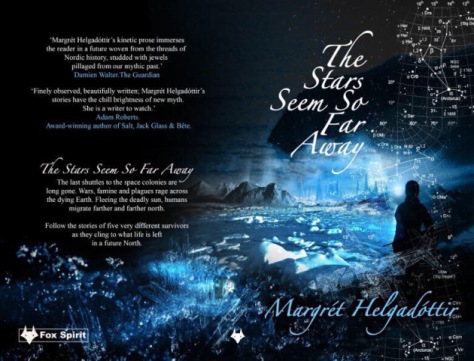
Helgadóttir, Margrét: The Stars Seem So Far Away (2015)

Cover artist: Sarah Ann Langton

I am glad Ms. Helgadóttir asked me to review her book, The Stars Seem So Far Away. Its completion left me feeling weepy and I have been trying to figure out why that is.

How much loss can we endure before we decide that death is for us? I have never truly been alone. Somewhere, within my ability to contact them, have been people I have cared about. I am 50 and both my parents and all of my siblings are still fairly intact. My husband and my children are close, both geographically and emotionally, to me. In each of Ms. Helgadóttir’s stories we meet people who have, or think they have, lost all who they cared about.

When we meet Aida, she is in her early teens and on her way to becoming all alone once again. Her father and mother had died and her brother had disappeared during the plague. Another caretaker turned up, but he is also dying. We meet her grief and her decision to try to survive.

Could I keep from losing a sense of decency in my interactions with other humans in a world where those I encountered were likely to kill me? Nora did and her choice makes all the difference in a world where survival is, at best, a chancy thing. I loved her handling of the piracy situation that arose.

How do you reintroduce yourself to humanity if you have been alone for years? Bjørg has had to manage on her own with her isbos as her only company for some time. Her living conditions have been far superior to those of the other characters. Yet her mission, as set by her father and the Commander, has been traumatizing for her. Somehow she has muddled through it all. Finally, she is unable to do her “duty” yet another time, and that brings the soldiers of Svalbard into her life. Going from a solitary life to one filled with people (even if there are only four others) changes everything for her.

Loss of parents, siblings, children and friends are all losses that our characters experience. Loss of home and safety in a world where the only surviving animal seems to be human is another factor that adds to their burdens. Most plants are gone and the environment makes life difficult, or impossible, in most of today’s temperate zones. Ms. Helgadóttir’s future is entirely believable.

Tying her short stories together in the manner that she has was well done. Her prose is lovely and her portrayal of the Nordic is well done.

Definitely recommended.


Reviews:


The Stars Seem So Far Away available at Amazon here (UK) and here (US)


A copy was given to me by the author


Svalbard Global Seed Vault

2013: Melting Sea Ice Keeps Hungry Polar Bears on Land

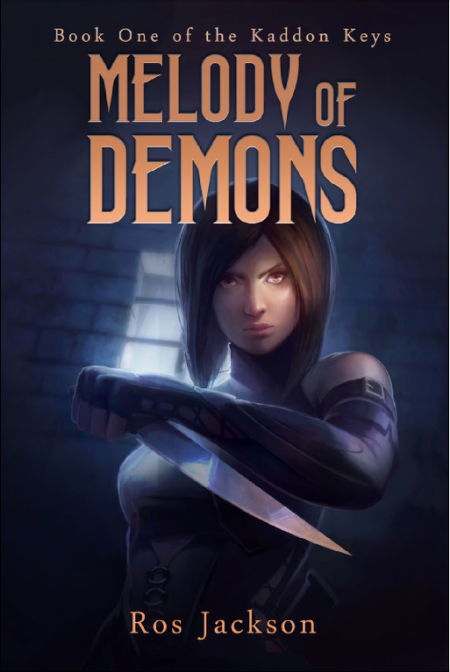
Jackson, Ros: Melody of Demons (Kaddon Keys I) (2015)

Melody of Demons

I had an “aha” experience reading Melody of Demons. Asperger that I am, life apparently affects my ability to read a story. A recent family crisis brought out chaos in my head. To deal with that chaos, I unconsciously shut off certain cognitive processes, one of which was my ability to digest stories. Not until now, have I recognized doing this. What this meant with regards to Melody of Demons was that I had to keep on reading it until I could absorb what I was reading. Annoying as hell, yet an interesting observation for myself and possibly for others out there.

“Well, that was … a sermon. That’s certainly what it was. I think we all learned a valuable, no a lesson. That we already knew. Yes, one thing you can say for my father’s froth-mouthed rants, is they’re definitely spoken with words.”

Statements like this are in part why I enjoy Ms. Jackson’s writing so much. Her sense of humor fits my own. Yet that humor points to serious issues. In this instance, Ms. Jackson showed me how much certain people enjoy going on and on about their prejudices. Poor Aivee had to endure the rantings of a man who had it in for her kind of people, i.e. half krin/half human.

In this medieval world called Tazelinn, magic exists. For some people, only certain types of magic are acceptable. Krin aren’t human-looking at all (except maybe the bi-pedal part), but somehow they have an innate magic that enables them to shift to human and even interbreed. Aivee is the result of this ability. In all ways she seems human. But that shape must be maintained at all times. Her default shape is krin and her greatest fear is that others discover that she is different. I like the way Ms. Jackson shows us what a strain passing is for Aivee.

“She hadn’t noticed before how disconcerting the rhythm was, like the breath of a monstrous beast in her ear. Now everything was more solid, more real. She ran her fingers of the floorboards and felt the grain of them and their unyielding hardness, as though for the first time.”

Aivee’s innate magic appears to be based on sound or music. In Aivee’s case she uses music. As the story unfolds, we see her gain confidence in her abilities while she remains desperate in her need to hide her krinness.

Through misadventure, Aivee comes in contact with the Kaddon Keys. Finding a less qualified vigilante group would take some work. Yet the Kaddon Keys is the only thing The Missing have between themselves and being lost forever. Kaddon’s Guards (police) certainly aren’t looking for them.

Good intentions are a great place to start, but planning would make the difference between being beat almost to death and success. The Kaddon Keys tend to end up with a severe need for healing. Thankfully, they have their own healer. Duando uses crystal magic to help the Keys survive. Three other members are the owner of the Cross Keys, Fendo, and his two children Riko and Lendia. Riko is a prime example of a patriarchal society with his views on women and their abilities.

The only one of the three women in the group who fights to be seen as equal to the men is Niro. Niro’s sister has become one of the many missing in Kaddon. Not knowing where her sister is, drives Niro to demand a place in the group. Soon after she becomes possessed by a voice that fights for control of Niro’s brain. There is one advantage to this possession. Niro gains the ability to fight with and without weapons, but she must allow the voice control of her body while still remaining in charge herself. I do not envy her that challenge. This voice is the reason Aivee became a member of the Kaddon Keys.

Kaddon has its own gangs, and they each have a territory. Like all gangs, the Neffar are extremely territorial and they think the Keys are competitors. Their fearless and feared leader Leussan does her best to make the Keys history. The Neffar aren’t the only ones who end up wanting the Keys gone. They have angered the Guards, the corrupt nobles and whoever is behind the kidnappings as well. How they are going to do the missing any good is a mystery only Ms. Jackson knows how to solve. She will have to guide the Keys to the missing and save them from the above and several others who come their way.

Melody Demon was a fun adventure story to read. It can be read on its own, yet we are left in no doubt that there will be at least one more story. I look forward to it.


Melody Demon was given to me by the author.

Hurley, Kameron: Infidel (Bel Dame Apocrypha II) (2011)

Nyx is a hero I have fallen in love with. As mentioned in my review for God’s War, I am drawn by her passion and love for the people she considers hers. Given the wrong kind of circumstances, my aspergers might have formed me into such a predator. Her emotions are easy to access, and her reasons are simple to understand.

She does her best to protect what is hers. Her ownership of both her people and her country enables Nyx to do what she considers the right thing for her country and her people.

Hurley’s Tirhani is in some ways like my Norway. Norway is a small country known for its apparent peaceful approach to life enabled by the safety of wealth. However, as exporters of arms and ammunition over whose end-location we have no control, we are also guilty of bringing war to other countries. All we have to do is look at the result of the US destruction of both Afghanistan and Iraq. Considering the US is one of our largest customers, this really isn’t something to be proud about. Yet we go about our peaceful lives without giving women and children whose men have been torn out of their lives a single thought. All weapon producing countries whose citizens live fairly peaceful lives share in this destruction.

Rhys and Inaya have settled in peaceful Tirhani hoping that Nyx will never turn up again. Understandable, really, as Nyx represents an excruciating time of both of their lives. But the Beldame rebellion brings them all together effecting a new period of needing to kill or be killed. Who needs enemies when they have a friend like Nyx. Perhaps this is the greatest difference between the three. Rhys and Inaya (and Khos) cling to the idea of not needing to involve themselves in keeping their families safe by keeping the world safe. It is the simplest path to choose in life. I venture in and out of it. Nyx dives head-on into her attempt to keep Umayma as safe as possible.

Once Rhys and Inaya seem to no longer have a choice, they to do their very best to stay alive. Most people seem to wish to live and they will go to great lengths to stay alive. Umayma can be both heaven and hell for its inhabitants. For Nyxnissia, Nasheen and Chenja it seems to be a never-ending hell.


Reviews:

Kameron Hurley on Nyx as a hero


Infidel available at Amazon US


My review of God’s War


Norway Tirhan

Rust, Angelika: Once a Rat (Istonnia III) (2014)

once-a-rat - Angelika Rust

Angelika Rust displays one of my favorite traits in an author. She evolves and improves over time. Once a Rat shows just how far Rust has come in her writing. The only thing she continues to do that annoys me is to overuse the word “whom”.

“It’s worse than I thought,” she groaned, rolling onto her back. “It isn’t innocence, it’s honor. You’re the son of a rich bastard of a trader and a madwoman. Whom, for fire’s sake did you inherit your honor from?”

Honor is a strange concept. For one thing, honor varies from person to person. There does seem to be a common denominator across nations, namely that to be considered honorable, one must keep promises/oaths made. Nivvo seems to have honor as an in-born character trait. Such a trait makes Nivvo perfect for some roles but disqualifies him when breaking promises might be needed. There are several high-status professions, in real life and in Istonnia, involving deception and deceit, that Nivvo could not fill.

In Once a Rat Nivvo is sent on a joint mission for the Regent and Underlord of Istonnia in the hopes that Istonnia might be saved from more fighting. Being the kind of story that Once a Rat is, the likelihood of Nivvo surviving that mission is in doubt. But Nivvo accepts that as his duty. Part of that duty has to do with his promises to obey Vicco, but Nivvo also seems to feel that his relationship with the Regent obliges him to serve Istonnia as best he can.

Part of his mission terrifies him. Practical experience of slavery turns out to be completely different from the theoretical understanding of its nature.

“…, he knew they’d come back to haunt him for the rest of his life … a child, little more than a toddler, on his hands and knees, and a soldier stomping on the tiny fingers till they broke with a sickening crunch … a woman his own age, tears streaming from her closed eyes as a slave handler cut her clothes away to reveal her body to a customer … a man hugging the pole he was tied to, screaming relentlessly as a lash opened up gash after gash on his already scarred back …”

Slavery, the objectification of people taken to extremes. The real world still embraces slavery and most of us are quietly complicit in letting it carry on. Nivvo’s mission is to get to the person trying to work against slavery in Baredi and help that person succeed. But the odds are against the abolitionists.

There are some very angry people left in Istonnia. Choosing to smother his loved ones in protectiveness happens to be one of Nivvo’s greatest failings. Even Vilores is kept in the dark. Shame on Nivvo and his father for breaking that law once again.

While Nivvo is gone Cambrosi is having fun trying to stay alive. Fedoro is helping him. Someone in his organization is trying to overthrow the Underlord. If it works, then Istonnia seems doomed to enter what might become a civil war.

Plenty of action, some violence, some sex – neither very explicit.

Definitely recommended.


Once a Rat available at Amazon US

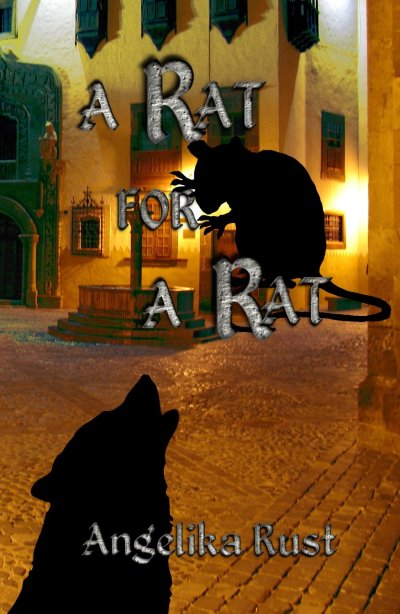
Rust, Angelika: A Rat for a Rat (Istonnia II) (2014)

A Rat for a Rat - Angelika Rust

Everyone self-harms in one way or another. Calling ourselves names or making ourselves less is one way we love to harm our self-confidence. Others self-harm through physical means. In the there and then, self-harming usually relieves some kind of pressure or stress. Long-term, though, we damage ourselves. Taken to extremes we might even lose body parts or become permanently damaged in other ways. Autistic people know about self-harming that may come a part of a stim.

The Baredians see women as doormats. To them, women are to be used without regard for their feelings, growth or well-being. In A Rat for a Rat we meet Miniri, a seriously troubled girl. She is addicted to self-harm, even if that self-harm means putting herself in the way of being trampled on and sexually abused by the Baredi. Imagine what a person like that could get up to in striving to fill the void inside of her.

Healers are revered people in Istonnia. They may go where no other person may and expect no harm to come to them. Like all work groups, some healers are more popular than others. Inna Malduri is definitely lowest on the totem pole and only the worst students get sent to her. Which is why Anniscia is shocked when she is sent to be Malduri’s  apprentice. You see, Anniscia happens to be at the top of her class and feels she is much to good to serve the poorer part of town. She is about to be exposed to a side of life of life she is unused to.

The Regent, being used to living out in the desert with his group of followers, is having trouble adjusting to politics and people who have different goals. He forgets that in politics revealing the identity of people you love is dangerous to yourself and the one you care for, at least if that person is to be a secret. The world is not supposed to know that Nivvo is his son, but the Regent is not able to avoid reaching out to him.

Nivvo tries to protect his father and brother by being absent. He knows the way the city works and what a wonderful weapon Vicco Cambrosi gains in knowing how much the Regent cares about his long-lost son. Both father and son suffer from a need to over-protect, a trait that exasperates the people around them.

Reka is the one who is most annoyed by this father and son interaction. If she could beat some sense into their heads, she would. Instead she treats both like the brats they are. Nivvo is used to her way of showing anger. The Regent, however, is used to getting his own way, and is at a loss about what to do when Reka treats him the way she does.

A Rat for a Rat was an action-filled and fun story that also dealt with consequences that may arise from our actions.

Definitely recommended.


Reviews:


A Rat for a Rat available at Amazon US

Rust, Angelika: Ratpaths (Istonnia I) (2013)

Yes, I went looking for ratpaths and the history of the Sicilian Cosa Nostra. There really was no choice after reading what Ms. Rust had to say about her inspiration for the story.

Poverty is something I think about a lot. Not because I am poor, but because I have escaped it. My dad could have been Nivvo. When his father was arrested for underground work during WWII, my grandmother slowly but surely went mad with paranoia. My dad would have been six at the time his father was arrested and his little sister four. They went from getting by to being hungry a lot. But things never became as dire as they did for Nivvo and his mom (and soon after his sister).

I suppose this is one reason why I like Nivvo so much. There is no doubt in my mind that given the right/wrong people in his life, my dad could have become a Nivvo. Whether his sister would have been a Reka I do not know. Both characters are survivors and very likeable. Both love each other and do their best to take care of each other – and others in need. Again this is very much like my father and his sister.

Reka has grown up without her mother and was taken care of by a poor fire priest. At the beginning of the story, Bappo Andori had died not many months previously. At this point Reka is thirteen years old. In many places today being thirteen and poor grows you up awfully fast. With the help of Nivvo’s contractor, she gains control of the estate and keeps up the good work for the homeless.

Nivvo is a thief and a good one. The underworld’s boss, Vicco Cambrosi, wants Nivvo as part of his organization, but that would mean loss of freedom to choose assignments. Nivvo does not want this, but fears a point may be reached when he no longer has a choice.

Ratpaths is for the most part about Nivvo stealing a person, and the mess that makes of life in Istonnia and Nivvo’s life. Ratpaths also gives us a look at Nivvo’s past and gently prods us toward realizing a vital thing about him. Ratpaths was a fun and flowing story.

Definitely recommended.


Reviews:


Ratpaths available on Amazon


The Daily Mail: The secret world of Italy’s other Mafia. Jim Shelley goes underground to uncover the organisation that is scarier than La Cosa Nostra

The Seattle Times: Going underground: In Vienna, a maze of tunnels and cellars beneath the city contains variety of treasures

Wikipedia: Sicilian Mafia

McCaffrey, Anne & Ball, Margaret: Acorna: The Unicorn Girl (Acorna I) (1997)

The Acorna books are part of Anne McCaffrey‘s Federated Sentient Planets Universe stories. Acorna I and II are written in conjunction with Margaret Ball.

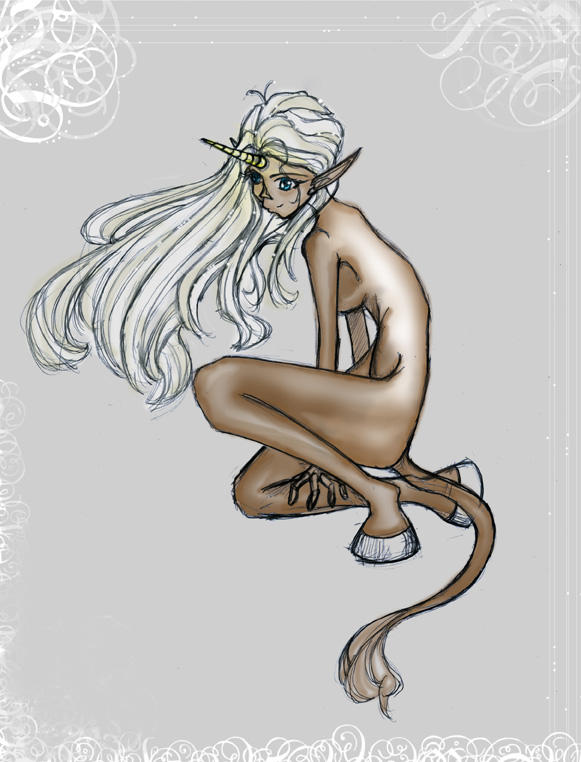
As you see from the art above, very few artists have tried to depict Acorna as she is described in Anne McCaffrey and Margaret Ball’s stories about the Unicorn girl/woman. Acorna’s characteristics are: a silvery mane and silvery curls on her calves, cloven hooves, two jointed fingers, and finally silvery eyes with pupils that can narrow. In The Unicorn Girl, Acorna is flat-chested.

I find myself unable to place any sort of age-group on this story. At times the writing has a very young feeling, possibly even entering the Children’s category. Then it changes and both writing and content is a little older. Perhaps that is due to the collaboration between the two authors. The first rescue of Acorna is one example of the very young style. As if by magic the young alien and her three benefactors get out scotfree of what ought to have been a difficult situation. In the labor camps the writing style is older and harsher. These changes confused me and led me to pay less attention to the story.

The plot itself is pretty good. There are aliens, escapes, human/alien interaction, corruption and goodies and baddies. As good and evil characters go, most of the ones in the story weren’t solidly into one or the other category. There are a couple of exceptions, but these are mainly minor characters.

Anne McCaffrey and Margaret Ball address an incredibly serious issue in their story – that of child slavery. Child slavery is in the real world becoming increasingly visible. At the time Acorna I was published (1997) child slavery was becoming something journalists brought into the light more often. Closing our eyes to troubles around the world is now becoming something we have to choose to do.

I liked Acorna’s adoptive fathers. There was enough silliness in them to make for humor in the story of orphan Acorna. Along with humor, there is action and conniving. I recommend Acorna I. I have to warn you that it is somewhat different to Anne McCaffrey’s other writing.


Reviews:


Acorna: The Unicorn Girl available at Scribd


Translations