
“Life, in all its imperfect variation, was nothing compared to the scale of nothingness that made up most of the known universe.”
Shattered Destiny (loc 19537)

“Life, in all its imperfect variation, was nothing compared to the scale of nothingness that made up most of the known universe.”
Shattered Destiny (loc 19537)

As part of a lecture by Julien S. Bourrelle my husband was handed The Social Guidebook to Norway: An Illustrated Introduction. When he showed to me, I stole it.
In some ways Norway is a dream come true for an Aspie. Touch and chit-chat are not recommended. In other ways, not so much. Facial expressions, understanding when people are joking and when conversation is allowed are areas where I mess up a lot. Our non-verbal language is extremely controlled, something that can make us stimming highly visible. “Janteloven”, that Bourrelle has translated to English, as presented in Bourrelle and Lund’s book, is one that I have yet to understand and am not certain is correct any longer.
The Social Guidebook is designed with a short text that explains a social rule on the left-hand page. On the right-hand page there is a cartoon that partly illustrates that text. All of the cartoons must be read together with the text for the cartoon to make any sense. Bourrelle first gives an example of what “the rest” of the world does in a given situation. Then he gives an example of Norwegian behaviour in a similar setting. As he points out, these are stereotypic examples. I believe I have seen all of them in real life.
When travelling to Norway, or any country, finding easy to understand explanations of social rules can be difficult. The Social Guidebook to Norway, illustrated by Nicholas Lund, helps solve that problem. I liked it.


The clerks who’d tended Alan’s many stores—the used clothing store in the Beaches, the used book-store in the Annex, the collectible tin-toy store in Yorkville, the antique shop on Queen Street—had both benefited from and had their patience tried by Alan’s discursive nature. Alan had pretended never to notice the surreptitious rolling of eyes and twirling fingers aimed templewise among his employees when he got himself warmed up to a good oration, but in truth very little ever escaped his attention. His customers loved his little talks, loved the way he could wax rhapsodic about the tortured prose in a Victorian potboiler, the nearly erotic curve of a beat-up old table leg, the voluminous cuffs of an embroidered silk smoking jacket. The clerks who listened to Alan’s lectures went on to open their own stores all about town, and by and large, they did very well.
He’d put the word out when he bought the house on Wales Avenue to all his protégés: Wooden bookcases! His cell-phone rang every day, bringing news of another wooden bookcase found at this flea market, that thrift store, this rummage sale or estate auction.
Alan (or any name beginning with the initial A) reminds me of myself in so many ways. Not only was my mother a washing-machine, my father a mountain and one of my brothers a zombie, but I also like to have bookshelves full of books. But I want to have read the books. Well, actually, my family isn’t exactly like that, but Alan’s family is. We are similar in other ways as well. Like Alan, I tend to want to offer solutions to problems people have. Even when they haven’t asked for one. Maybe that is one way the Asperger brain works. Our passions often express themselves in the same manner Alan’s renovation of his house followed. I could totally live in a house like that, but would not want to go through all the hassle he did. But I have other areas where I can be as focused as Alan was with his house. Registering everything he ever owned onto a database is something I have known Aspies to do. Another way in which the Aspie brain can work is by following our own set of social rules, rules not generally accepted by neurotypicals. Take Alan’s relationship with his neighbors on Wales Avenue in Toronto, Canada.:
Alan rang the next-door house’s doorbell at eight a.m. He had a bag of coffees from the Greek diner. Five coffees, one for each bicycle locked to the wooden railing on the sagging porch plus one for him.
He waited five minutes, then rang the bell again, holding it down, listening for the sound of footsteps over the muffled jangling of the buzzer. It took two minutes more, he estimated, but he didn’t mind. It was a beautiful summer day, soft and moist and green, and he could already smell the fish market over the mellow brown vapors of the strong coffee.
A young woman in long johns and a baggy tartan T-shirt opened the door. She was excitingly plump, round and a little jiggly, the kind of woman Alan had always gone for. Of course, she was all of twenty-two, and so was certainly not an appropriate romantic interest for him, but she was fun to look at as she ungummed her eyes and worked the sleep out of her voice.
“Yes?” she said through the locked screen door. Her voice brooked no nonsense, which Alan also liked. He’d hire her in a second, if he were still running a shop. He liked to hire sharp kids like her, get to know them, try to winkle out their motives and emotions through observation.
“Good morning!” Alan said. “I’m Alan, and I just moved in next door. I’ve brought coffee!” He hefted his sack in her direction.
“Good morning, Alan,” she said. “Thanks and all, but—”
“Oh, no need to thank me! Just being neighborly. I brought five—one for each of you and one for me.”
Not quite understanding what makes up neurotypicals, and having to stand on the outside looking in, brings with it the danger of being deemed less than human, much like Krishna does with Alan. It does not take much for such a thought to take hold. People who work within healthcare are in particular danger of falling into this trap. As are people within the school system and, I suppose, any kind of bureaucrat. It is something I have observed happen again and again to people who are dissimilar enough to any given average.
Someone Comes to Town, Someone Leaves Town mixes present and past into a tale of a dysfunctional family and a repressed present. Using any excuse to avoid dwelling on his family’s messed up relationships, Alan is a great example of escapism and dissociation. Only one thing can make him try to face his past and that is his neighbour Mimi. She reminds Alan, and us, of his old sweetheart Marci. Except for the wings. Bat-like wings that get cut off whenever they reach a certain size. Cut off, that is, until her relationship with Krishna changes.
Marci is part of the story about David and his brothers. Or maybe that is Alan and his brothers. David and Alan are intertwined so tightly that only one apparent recourse seems open to the brothers. Or could something perhaps change this doomed relationship?
David (or any name starting with D) is the brother wronged by the rest. We find out how as the story moves along, but the reason is a common one in sibling relationships. Suffice it to say that being wronged had left its marks on him and his anger is most definitely deserved. Alan was the first of eight brothers. While the Golems tried to help, Alan ended up being the one who had to take care of his younger brothers. B and C had been easy to take care of.
Billy, the fortune-teller, had been born with a quiet wisdom, an eerie solemnity that had made him easy for the young Alan to care for.
Carlos, the island, had crawled out of their mother’s womb and pulled himself to the cave mouth and up the face of their father, lying there for ten years, accreting until he was ready to push off on his own.
However, the needs of the other four brothers were much more difficult for a child to understand.
Daniel had been a hateful child from the day he was born. He was colicky, and his screams echoed through their father’s caverns. He screamed from the moment he emerged and Alan tipped him over and toweled him gently dry and he didn’t stop for an entire year.
It is difficult to love colicky and needy children. Daniel had been both. Plus his first reaction to most things was violence. Some years later, Edward, Fredrik and George came along with one month between them.
Ed was working on his suspenders, then unbuttoning his shirt and dropping his pants, so that he stood in grimy jockeys with his slick, tight, hairy belly before Alan. He tipped himself over, and then Alan was face-to-face with Freddy, who was wearing a T-shirt and a pair of boxer shorts with blue and white stripes. Freddy was scowling comically, and Alan hid a grin behind his hand.
Freddy tipped to one side and there was George, short and delicately formed and pale as a frozen french fry. He grabbed Freddy’s hips like handles and scrambled out of him, springing into the air and coming down on the balls of his feet, holding his soccer-ball-sized gut over his Hulk Underoos.
What began as a relationship where their need for each other comforted them, slowly deteriorated into one of resentment and possibly hate. Doctorow does a great job of creating brothers that represent their role in their family’s dysfunction through their bodies and minds.
In spite of all of the commentary I have read, Someone comes to town is not particularly unusual for a reader of science fiction and fantasy. But it is well-written and well-edited and flows, even through the geeky parts. Retro-techno junkies are always fun. Recommended.
Reviews:
Available at:
Translations:


My mom lay on the bed, motionless.
Elvis crouched on her chest.
The lamp in the corner flashed on and off like a child was toying with the switch.
…
“Mom?”
Elvis’ head whipped around in my direction.
I ran to the bed and he leapt to the floor. (p. 21)
Unbreakable is about five families who seriously messed in 1776 by opening the door to the demon Andras. Apparently the Black Dove Legion wanted to use the demon to stop the Illuminati from taking over the world. They had planned to use the angel Anarel to hold the demon back. Alas. More than 200 years later, the descendants are still doing damage control.
After Kennedy’s mom is killed, identical twins Jared and Lukas turn up, in the nick of time, to save her life. Yes, yes. I know. This part is extremely predictable. Right away Jared and Lukas seem interested in Kennedy as more than the descendant they are convinced she is. Those who have read my previous reviews know how I feel about these love-triangles. Blech.
Jared and Lukas take her to a warehouse where she meets the other two Black Dove members, Priest and Alara. Warehouse living came about because of the unexpected deaths of the guardians of all five youth. Each youth has their own talent to contribute to the group. They decide to go on a hunt for a mysterious tool they think would drive Andras back to hell.
What do I think of the writing? Somehow I felt like there was too much telling. Or maybe there wasn’t. I think that the problem was in how the information was presented. The story went from a smooth flow to a stilted teacher rhythm. Other than that, the story was well edited and internally consistent. The encounters with the various types of spirits were fun. All in all Unbreakable is the same old, same old. But that is fine. It is a fast read.
I generally post links to well-written reviews of the novel I am reviewing. I don’t think I have ever seen Supernatural, but after all the comments about the similarities, I had to see what Wikipedia had to say. There are definitely similarities, but I think only someone who has seen Supernatural would be provoked.
Unbreakable is the first novel of the Legion trilogy. The second novel, Unmarked, was published in 2014. The third, and final, novel of this serial has not been published yet and I have not found any indication that it will happen anytime soon. Because of that, I recommend you wait before beginning the Trilogy as it is written in serial form.
Reviews:
Translations:


Ultimately all stories (real-life or fiction) seem to be power. Mainly the power to control ones own and/or other people’s lives. Sometimes that includes war between nations on the pretext of one person. In the case of Truthwitch, that person is Safiya fon Hasstrel.
In the Witchlands series there are three kinds of people: witches, norms and the Cleaved. You have to read the story to find out who the Cleaved are. Witches have all kinds of strange powers. Thus far, I know about Truthwitches, Sightwitches, Threadwitches, Bloodwitches, Windwitches, Earthwitches and Waterwitches. The types cover every degree and permutation within their category. The category witch people on the world of Truthwitch seem to know least about is Truth.
Truthwitches have not existed for about 200 years. That is, until Safiya became one. In the past, people in power wanted a Truthwitch by their sides because Truthwitches knew if people were lying. They were either loved or hated thing. Imagine politicians having to speak in front of congress/parliament knowing that a Truthwitch was there to “tell” on them. Or if you had a sister/father/daughter who happened to be one. Truthwitches were often murdered. Over those 200 years information about Truthwitches has been hidden or destroyed. All Safi knows about her powers is that they can tell whether any person is lying. Due to the danger, Safi tries to hide her witchery from as many people as possible. But she sucks at being inconspicuous. Fortunately, she has level-headed Iseult to hold her back. Sadly, there is only so much Iseult can do no matter how level-headed or good at strategizing she is.
Iseult is a Threadwitch. “Threads” are ties that bind people together and to life. Except for their own, other Threadwitches’ and those of Bloodwitches the world is filled with threads that Threadwitches can see. These threads bind people together to varying degrees, but can also be bound into stones to help members of a thread-family find each other. Unlike most Threadwitches, Iseult cannot make threadstones nor is she able to control her feelings (stasis) as much as a Threadwitch must to keep those around them safe.
Both women are trained in martial arts and fighting with various weapons. Both started fighting by themselves, but soon became an unbreakable team and later Threadsisters. The two of them have trained together for years, and that is the only thing that saves them when they are unfortunate enough to encounter the Carawen martial monk Aeduan. To make things worse for them, he happens to be a Bloodwitch, a type of witch no longer thought to exist. Bloodwitches can smell a person’s blood and the witchery within it. Like bloodhounds, they follow blood-smell across continents. It is debatable whether anything can kill them. Safi and Iseult fear Aeduan smelled their witchery and so they run, run, run. And they will need to run far as not only Aeduan, but also the guards, soldiers and Hell-Bards of Emperor Henrick end up being after them. And then, of course, come the Purists.
Purists are non-magical people who do not want others to have powers they do not have themselves. They are an odd and violent group. Real life history is full of what people like that are able to do in the name of “purity”.
Another important encounter for the two women is Prince Merik of Nubrevna who is a Windwitch. Windwitches control air currents. Prince Merik has been sent on a diplomatic mission to Emperor Henrick, except he has problems with his temper. Not setting air on the Guild leaders he is meant to make trade agreements with is nigh to impossible. To make matters worse, he already knows that most Guild leaders have no interest in a trade agreement with Nubrevna. In fact, the opposite is more likely. Nubrevna is full of magic but empty of most other things that keep people alive.
Truthwitch is the first story in what looks to be a 4-novel & 1-novella series. Number two, Windwitch, has already been published. According to Goodreads the next stories are titled Sightwitch (novella), Bloodwitch, and untitled. The story is written in third person – my favorite POV and has been well edited. Considering the people Dennard works with, anything else seems impossible. Its musicality drew me in.
Plotwise, Truthwitch has been told many times – both in fantasy and in real life. War, peace, growing up, freedom, starvation, death, love and hunting others are all topics we have heard before. As is magic. But the refreshing thing is our main pair, Safi and Iseult. They are both amazing and annoying at the same time. Humour abounds between them. Their support of each other, even when blame could be placed on the other person, is not often seen in teen fantasy.
I’m not sure any of the characters are particularly likeable from the onset. But they are fun all the way through. Even when I think they ought to be drowned. But then drowning does not always help get rid of them. What seems inevitable is that a pairing off of at least two of them will happen. It would be nice if it didn’t, or at least if it did not happen in the usual YA-fantasy manner = love-triangle. Truthwitch is one of the better stories I have read.
Reviews:
Translations:
The relative merits of my weapon of choice all became a little academic when my phone began to play the Mexican Hat Dance. I rummaged in my pocket, wishing I was better at technology so that I could change the ringtone or at least mute the damn thing. It’s hardly appropriate for a Specialist Funeral Director to have such a chirpy tune ringing out across a graveyard. I pulled the phone out and stabbed randomly at the buttons, trying to silence the thing. It was then I realized that in doing so, I had inadvertently stood up, revealing myself to the dead head.
“Hello?” Detective Inspector savage’s voice sounded incredibly loud. Somehow, I’d managed to put him on speakerphone. “Are you there, Coffin?”
The dead guy spun round. He looked fast for someone who had died a few weeks ago and just finished the impossible journey from six feet under the soil to the surface. He also looked like every one of the days of those weeks had taken its toll on him. His face was bloated and grey, the skin splitting around his forehead to reveal white bone and a lining of something creamy. He gave a low growl from his black lips which gave me a lovely view of his yellowed, uneven teeth.
“Hi, Savage, can I ring you back? It’s not a good time right now.”
Savage was one of those people who never took the hint. “It won’t take a minute, Coffin. We’ve had a report of an open grave in a place called Hampton Green…”
“I’m dealing with a lich, right now, Savage, I can’t really…” I didn’t finish the sentence. The dead guy launched himself forward and rammed his shoulder into my gut, grabbing me round the waist and forcing me backwards onto the ground. (ch. 1)
Blood, Bone and Coffin is a prequel to Demons. It is a novella about the Specialist Funeral Director whose job it is to lay the undead to rest. Sometimes the police give him work to do. Usually, they do not call him at such an inconvenient time as the one in the quote. Or perhaps Coffin learns how to silence his cell-phone.
What begins with the request to lay a zombie to rest, ends up being a search for the killer of residents at the Twilight Grove Nursing Home in Hampton Green, England.
BB&C is a fun little paranormal whodunit with odd people all over the place. Recommended.

My copy of The Sister, is the 2014 edition. Apparently, some of the problems in the 2012 edition have been corrected.
“You should have learned to swim.”
The perfect murders are the ones where the murderer is never discovered. As The Sister is a traditional mystery-thriller, that cannot happen. Having said that, the boiler-suit murderer seems a likely candidate for a murderer who might never have been caught in real life. That has to do with his methods.
When we are introduced to him, we find ourselves in Cornwall during the summer of 1967. The year my sister was born.
“You told Lei you were coming here?” the girl asked. “Are you sure she won’t get lonely and come down to join – us?”
“No. She won’t come here. Like I said, we argued, and now we’re not talking … besides, she is scared of this place, what with all those old stories …?”
20 August 1967 three things happen simultaneously. The Milowski family decides to go on a picnic not far from a haunted site. Something he sees through a telescope unsettles seven-year old Bruce, and he decides to investigate that feeling. He is too young to realize how dangerous following such hunches might be.
At the same time, the above-mentioned Lee follows in the foot-steps of her disappeared boy-friend.
Rescuers found his tent pitched near the mine’s entrance. It was empty, his equipment missing. Unable to find any trace of him outside, the rescue team concluded that he must have decided to sleep in the mine. …
At the same time, at Celtic Deep, Vera begins seeing things, and the first thing she sees is the death about to happen.
All three lives are irrevocably changed, while the boiler-suit serial killer gets to keep on doing what he enjoys most in the world.
The Sister is about power. The lengths to which we are willing to go to have it and the lengths to which others choose to go to take it from us. Max China also shows us some long-term effects of traumatic events. Some of these ways of dealing with trauma, reminds me of how I used to deal with my own experiences. I was also reminded of the strength it took to discover how to live with PTSD and to acknowledge the effects of that survival.
China’s serial killer is frightening because he is believable. Watching programs and reading articles about real life serial killers has shown me that the boiler-suit killer would fit right in. Vera’s powers are what brings The Sister into the realm of fantasy/paranormal fiction. I would not want a stone like the obsidian stone in my life, nor would I wish the slightest ability to see into the future. I liked Vera. She is a woman who chooses to bear burdens that most of us would be unable to carry.
The editing of The Sister is good. It is a relief to read a story where the author understands the words he uses, has a basic understanding of spelling and grammar, seems to have the ability to listen to what editors and beta-readers suggest and understands the music of words. In addition, the characters are believable. While I might not like all of them, they are people I can relate to on some level. Yes. Even boiler-suit man. Finally, I prefer the third-person point of view China uses in his storytelling.
Reviews:
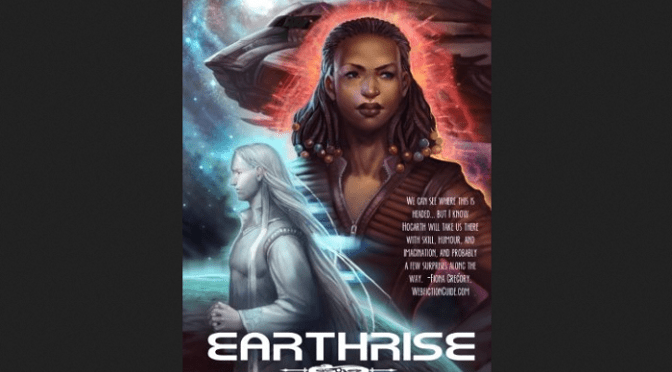
“Great,” Reese said, losing what little energy she had. She imagined it bleeding into the ground beneath her tailbone and shoulders. “You were supposed to be in a jail cell we could get you out of for money, not underground in a place pirates hide people they want to make disappear.”
The Eldritch canted his head, hair hissing against one shoulder. “I’m sorry for the inconvenience.”
“Yeah, well, I’ll send you a bill,” Reese said, trying to get a hand under herself so she could sit up.
(Earthrise, p. 29)
 I completely agree with the criticism of some of the reviewers of Obsidian Son. Much in the way of the Paranormal Romances I have read, Obsidian Son has a bizarre view of looks and what attracts people to each other. Instead of big cocks, there are big racks. The main character is shallow, obnoxious and has few redeeming qualities. In addition, there is a lack of research. Finally, there are grammatical problems.
In spite of all that, I had fun. Imagine what Shayne Silvers could have accomplished with a better team. So many of the authors I read, or try to read, claim their stories have had editors and beta-readers. As does Silvers. Hmmm. Who are these editors and beta-readers?
I still had fun. This is an urban fantasy interspersed with mythological and magical creatures. The main character has magic, is wealthy and is extremely attractive to the opposite gender. Some of that attraction is because of out-of-control magic. There are dragons. They are the best part of the story. Really fun dragons.
Not recommended.
Reviews:


When we last left Sophia, unfriendlies came to visit.
She deposited her empty glass beside Aviary’s phone on the coffee table. The phone flashed.
Infrared cameras.
Stingball grenades hit the floor. Everyone dropped their drinks and scattered. The grenades detonated, deafeningly loud, blasting the nearby windows into pieces.
Everything around Sophia turned white.
Enclave begins with Hal’s point of view of the attack. He is not, at all, happy with Sophia and her people and is set on destroying them. Except things aren’t really going his way lately. His one goal in life is to capture Sophia alive and kill the rest of the members of her crew.
There are some seriously messed up people in Farrugia’s world and many of them hide behind the cover Purity. Purity is anti-genetic tinkering (except the kind they approve of) and as with many ideologies most of the grunts in Purity want to believe its propaganda while the higher-ups are in it for other reasons. Once propaganda gets a hold it is difficult to fight and keep from spreading. Lithuania’s border guards have started testing people for genetic tinkering making it too dangerous for people with specific genetic tags.
Sophia needs a new safe-house and Olesya brings Sophia and her crew with her back to the enclave in Kaliningrad in Russia. When she gets there she finds out that Illarion is leaving her in charge of the enclave. To top it all, Olesya discovers there is a mole in their midst. It might be fair to say that things aren’t really going very well for any of our players, except for Purity. Or are they?
Nathan M. Farrugia writes the serial Helix. So far, it consists of six episodes (see links to reviews below), each the size of a novellas, each ending with cliff-hangers. Three of these episodes together consist of around 7000 words. Farrugia had to crowd-fund Enclave and will probably have to do the same for the remaining three episodes. Due to his background and interests, Farrugia makes his specialist soldiers believable and that goes for the technology as well. Enclave is a fast-paced cyberpunk thriller with lots of fighting and stunts. Crazy stunts that require the regenerative genes of the gang.
The author gave me a copy of Exclave. Update 13.03.3018. I later bought my own copy. I have changed the review a bit.
Reviews:
My reviews of:

Originally The Locket was one of the short stories in the Christmas Lites II anthology edited by Amy Eye.
The Locket takes us back to a time before On Dark Shores begins. A Scarlock before war, poverty and desperate choices visits the life of Nereia. It is also a tale about Yule and family.
“Is it true that I don’t have to go to bed till midnight, Mama?” Nereia cut into her memories, coming away from the window to sit next to her mother. “Papa said that if you said yes, I could stay up and see the actual Yule ceremony this year. May I, Mama? I’d really like to, may I?”
The Locket is a sweet story that had me thinking about all the things I am grateful for and how they have both changed and stayed the same through my life. It also had me re-visiting my thinking on the excuses leaders make for going to war with other people.
I’m not sure my review is completely neutral as I was one of the betas for the 2016 edition of The Locket.
The Locket is available at Amazon UK, Amazon US, Smashwords
My reviews of
His best hope of escape was to reach the hedge and look for a gap to crawl through.
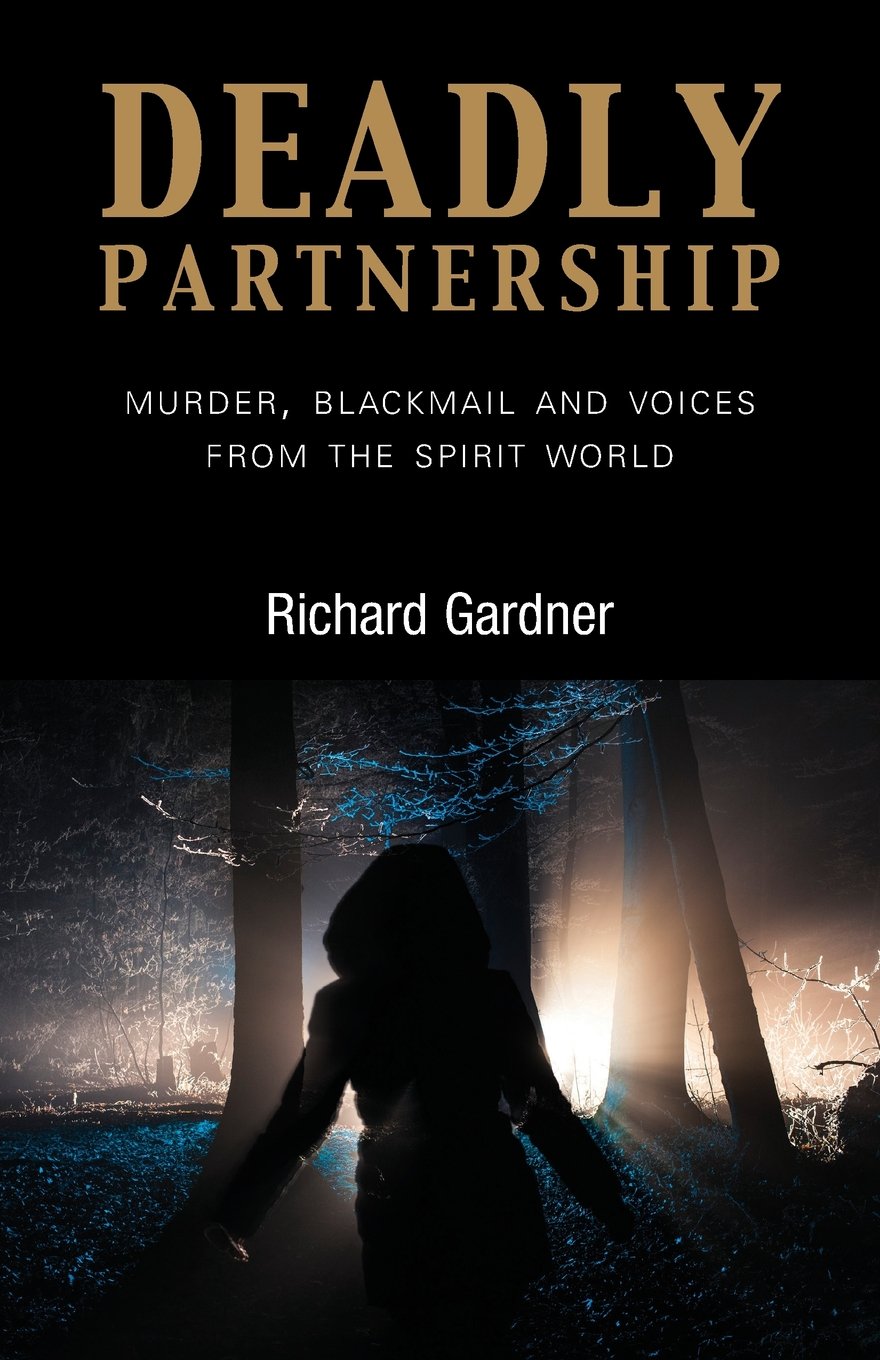
Deadly Partnership begins with a roundabout introduction of our main character. The story then takes us to Paul Jenkins’ retirement and the decisions that he makes regarding the years ahead. One of those includes living with his sister, Julie, in their child-hood home. Tsk, tsk. Some decisions are disastrous.
At last the medium got to her feet. Middle-aged, she was small and round with short, dark hair and smiling eyes behind her glasses. Julie could imagine her sitting in a tent behind a crystal ball at a fairground, perhaps using the name of ‘Mystic Mary’ or something very similar.
Our first meeting with ghosts comes when Julie attends a spiritualist meeting. The medium turns out to be a true one. If her warnings had been heeded things would have gone differently for quite a few of the characters. Of course, then there would have been no Deadly Partnership. The story weaves its way through secrets, murders, relationships, and has a dash of ghostly activities.
“If I didn’t know you better I’d think you actually enjoyed murdering the poor bastard,”
The main character is fairly well-rounded. He is an example of not judging people from appearances. Paul is a bit mental but he hides it well. Maybe mental isn’t a fair description because his insanity only comes out to visit when his world view is challenged. He does excel at rationalizing his behaviour. Secondary characters are much flatter, but they are essential to the story. Julie is Paul’s sister and Gary is his son. Gary is a pretty good example of how regular people sometimes do terrible things. I doubt many people set up an appointment to murder.
Deadly Partnership has a good plot line and we get excellent examples of rationalization processes. There aren’t many spelling problems. At times confusion about correct word usage arises: “conscious” instead of “conscience”. Quite a few paragraphs need tightening. Lengthy explanations lower the quality of Deadly Partnership.
I was given a copy of Deadly Partnership in exchange for a review
Reviews:
Deadly Partnership is available at Amazon UK and Amazon USA

There was nothing for Amber to fear in this fight; the ghost was already dead.
Amber is essential to the story of Freya Snow, a girl who was born right before her mother died. Lily bound Amber to Freya as a protector and teacher.
Freya awoke the familiar sound of her sister screaming.
Although not sisters in a biological sense, Freya and Alice have been sisters in the foster system in England. Alice is the only of the two diagnosed as autistic. Alice’s autism is so obvious that mental health professionals are unable to deny it. Freya is another matter. She falls into my category, and, therefore, it was obvious to me that her suspicion that she is also autistic is true. They are the only people who take each other’s hang-ups seriously and know that meltdowns are not tantrums.
She was quiet, bright, and didn’t cause trouble for those looking after her. That was enough for everyone to overlook her trouble making friends, her obsessive nature, and her feeling faint in crowded spaces as “quirks”. It was only because of Alice that Freya recognized a lot of her behaviour as stemming from autistic traits.
Freya also happens to be the Hero of Hunt. In typical Hero style, Freya is an orphan, at the cusp of discovering her magic and acts as a magnet for powerful people. Apparently, she has little say over her life.
“I don’t know, getting fostered kind of loses its “special day” status once you get past the tenth time.”
Alice and Freya are about to be parted from each other. Alice has been found by her aunt and Freya will be going to the Big city. Well, larger than the town she is currently living in. She does not expect much of the new family or of the new school. Her expectations will be met but they will also prove invalid. Past experiences do not have to predict the future. She will get a friend. One who is not put off by her behaviour and that friendship sets all sorts of things into motion.
Hunt was well-written. Not great, but fun. I liked it enough to get the next book in line, and White‘s writing was much better. Again, it was freaking amazing to read about a supernatural Aspie girl. Talk about breaking stereotypes. Thank you L.C. Mawson.
Reviews:

Steamfunk! is my first encounter with the genre. Like all anthologies I have ever read, some of the stories appealed to me while others did not. No wonder, given the span of genres. Steamfunk is a US-centric collection of stories that love their steam. I keep on wondering to what extent steam could be an energy source. There are some ideas here that I have not seen before.
According to Balogun Ojetade the Steamfunk! anthology came about because:
The Steamfunk anthology came about from a conversation that I and several authors had online about the lack of Steampunk stories told from a Black / African perspective. We all agreed we would create an anthology in which we would tell such stories. Author Maurice Broaddus suggested we call it Steamfunk and author / publisher Milton Davis agreed to publish it.
They chose the correct person to illustrate the cover. Marcellus Shane Jackson has done an excellent job capturing the essence of each story. There are cosmetic problems with my kindle version, mostly to do with ↵. It’s a distraction from the stories themselves.
In the late 1800’s women needed chaperones to go anywhere. Anthony Wainright paid for one of the puppet-men (steam-powered robot) from GWC Factories to escort his fiancée, Miss Appelgate, from Freedonia to New York City. Upon arrival they cannot find Mr. Wainright. Instead, Miss Appelgate is kidnapped by Beuregard Clinton. Clinton shot the puppet-man and managed to hit one of the steam veins. Mr. Stiles, from the airship, fixes him. After that the puppet-man and Mr. Stiles set off to find and save Miss Appelgate from her kidnappers.
Problem-solvers Rudy and Boatwright get off the hopper at Thomasville. They have been hired by head gang-boss of the underbelly of Thomasville, Stanford “Rip” Tatum, to solve the problem of Rip’s ex and her river-wolf. Grace Baptiste-Neely and Lloyd “Daddy” Green supposedly hijacked and killed people Rip would prefer lived. Plenty of surprises, like a marching band on coke, line up to whack them in the face.
The title does not have anything to do with cockroaches invading earth. Whitewood and Blackwood are neighbouring towns. Mainly whites live in one of them and only Blacks live in the other. 40 years after slavery ended tensions still run high and it takes little to get lynching blood cooking. Laurence, from Blackwood, heard his dad say that this next lynching of a coloured man was unjust. So Laurence convinces Big Walter to see what it is all about. Whitewood certainly gets the surprise of its life during the sham trial.
Genetic tinkering brought about Aeshna with her compound eyes and insect mouth parts. All she and Petal want is to be left alone. But that cannot be when Aeshna is able to judge a person’s soul and mete out appropriate punishment. Petal is another changed human fitted with a steam clock for a heart and a compost boiler for guts. One day Bald Man Head comes on an errand from the Hanged Man. I liked these two women and the story was fun to read. Especially towards the end.
A Will of Iron is based on the well-known The Ballad of John Henry.
A man is nothing but a man,
But before I let your steam drill beat me down,
I’d die with a hammer in my hand, Lord, Lord,
I’d die with a hammer in my hand
People fighting to keep their jobs from being replaced by new technology is an old and familiar one.
Zahara and Porter are left in the desert to die. Finances had fallen a long way from their steady income with Cross Continental Airship Line. Was all that was left for the two friends a slow and painful death in the desert?
In the world of Kochava Green, humans must be extremely careful around bodies of water or they risk the fate of those infected with Lepidoptera larvae. St. Lauritz All-Mother cloister is extremely lucky when a woman from San Lazare wishes to become a novice there. The All-Mother cloisters accept women from all walks of life, no-holds-barred. Sister Amelia brings unique strengths that aid in the survival of the women. She, in turn, finds a new purpose to life. Refugee is one of my favourite stories.
Revolutions seldom bring change, only new overlords. Z100 had been a key player in the revolution that made women property. Because she had been a spy, she was exempt from those rules. But only as long as she did not marry. She was careful in her choice of men by never having humans for lovers. Life-like robots were her get-out-of-jail card. What she forgot is that all security protocols have weaknesses.
Slavery is a common tool in human history. One of the many problems with slavery is the de-humanizing of people. In rare cases that might actually work to a slave’s advantage because their owners generally do not see slaves or servants. Infiltrating a particular group of slaves is the only way our investigator, Sam, has to find out what Cicero Jensen and Secretary Patterson try to hide inside Jensen’s barn. During his investigations, Sam learns a bit about himself, his attitudes and how far people will go to keep a secret.
This was another favourite. Nansi is a shape-changing human/spider. Imagine the size of that spider! Her dual identity is a result of her Trickster father. At night Nansi, the spider, fights crime in the city. She is not the only shape-changer. There are wolves and tigers as well. One night, to protect a new-born baby, Nansi kills a tiger. That choice changes her life and the life of the city.
Through the journal of the Headmistress of a women’s college we learn what happens when the ocean brings a dock, or part of it, to the beach by the college. A decision is made to bring the dock inside city walls. A short time later, body parts turn up on the same beach. Then a sub-mariner hears a pulse coming from the depths of the ocean.
I really liked this one as well. It is time for the initiation of the Masai boy Saitoti into the ranks of lion-hunters. Eleven lion-hunters travel to Mombasa to meet with Ethiopian Bahati Mazarin. She tells them that there are two lions she wants killed. That is, if they are lions. Rumours would have it otherwise. Bahati Mazarin comes with them on the hunt. Saitoti cannot help but wonder why she is going with them and why she specifically asked for their group. He hopes it has nothing to do with his own background.
Clara Perry is on the strangest journey of her life. Unbeknownst to her, Clara’s cryogenic chamber was not sitting in Las Vegas waiting to be opened years into the future. Instead, persons unknown had sent her to the planet Pless to introduce them to technology. It turns out Pless has human-like people on it, people who breathe air Clara can breathe, eat food Clara can eat and behave in a manner Clara can relate to. She soon establishes herself as a woman to be reckoned with. Widow Perry breaks gender roles and class roles, enabling Clara’s integration with people from the various walks of life on Pless. I really liked this story as well. There is something about realistically portrayed strong women that I like. Not that steamfunk is realistic, but I hope you understand what I mean.
Every ‘jack knew that secrets were death on the rim. But secrets had been kept from the younger generations of Breaktown. When a rip tears Kally Freeman from Other Country to somewhere else, Bannecker Jack does not hesitate to jump after her. “Where did we come from?” “How did we get here?” were questions the child Bannecker often asked his mother. He is about to find out.
Warden Clemons tells prisoner John William Henry that he is about to experience the breeze of the Virginia wind and the smell of its dirt again. Only thing is, John Henry will do that by being part of a chain-gang laying tracks for The C and O Railway. Oh joy. John Henry uses this as a chance to run away. He is shot but manages to make his way into an opening in the side of a hill.
Reviews:
Pritchard asked me to review her story about a potential future.
At some point in the future the huge division between rich and poor became the excuse revolutionists needed. As with all revolutions, all that had changed was who was in power. From the descriptions in the book we are in a fairly small Monarchy. Citizens are divided between seven sectors. The central one is the capitol city. The other six sectors produce what the population needs to survive, including members of the military. The military is made up of the oldest children of people in six of the sectors. Constance is one such youth. These youth are sent to the capitol the year they turn 16.
Once there, the group of teens first go through an induction week that is supposed to break them. After that, they are given whatever job society (Lex) thinks they qualify for. Once Constance has been inducted into the Brigadiers, she must follow orders (just as we would expect of any soldier). There is romance and all of the other relationships we often find in young adult stories.
Monarchy is not a finished product. It did have potential. With more editing and a couple of beta-reads it would have been fun. Basic stuff like getting “pallet”, “palette” and “palate” right.
Not recommended.
Reviews:

 humanitysdarkerside