Tag Archives: #Prejudice

Gay, Kelly: The Darkest Edge of Dawn (Charlie Madigan) (2010)

Cover art by Christian McGrath

Christian McGrath’s portrayal of Charlie Madigan is gritty and strong complementing the writing of Kelly Gay. Gay’s writing continues to engage me as a reader. She maintains the balance between too much and too little keeping her novel tight and well-written.

The Darkest Edge of Dawn begins where The Better Part of Darkness left off. Atlanta became more in tune with the Charbydons living there. Charlie feels responsible for the “accidental darkening” and in a sense that is true. So, being the kind of person she is, Charlie sets a goal of saving Atlanta.

 As we all know, the world is full of nutters. Being from Charbydon or Elysia makes no difference. Crazy people are found among all races. Sadly, some of the crazies go serial. In The Darkest Edge of Dawn Charlie and Hank investigate a warehouse where a dead body was found. Both find the place creepy and for good reason. In this lovely warehouse a pile of dead bodies and a pregnant hellhound is discovered. Something is off about the mound of bodies.

That was the second problem Charlie feels the need to save the world from. On a more personal level, the changes in her DNA are worrisome. What is she turning into and how is she supposed to control the powers she seems to have gained?

Trying to deceive your own daughter works like a charm unless she is psychic. And guess what, Emma is psychic. When Will died and his body was taken over by Rex, Charlie decided that they had to wait until Emma was ready before she could be told. Talk about messed up life. But Charlie also has the pleasure of having a hellhound living at her home, a hellhound that Emma has a mysterious link to.

That’s not all that is going on in Charlie’s life. Her sister Bryn was affected by the drug Ash while trying to help Charlie. Now she has to take regular doses of the drug in order to stay alive.

Charlie’s partner, Hank, still has his voice modifier fused to his neck – joy of joy – hindering his ability to be a proper Elysian.

One of the things Charlie has trouble with is accepting help from others. She is going to need help in The Darkest Edge of Dawn just as she did in The Better Part of Darkness. I get that. Asking for help is difficult even when it is obvious assistance is needed. Just because you are adult age, does not necessarily mean that you are able to act maturely. I guess that is part of the reason why I like Charlie so much. She is vulnerable and strong, prejudiced and willing to look beyond those prejudices.

I think Charlie Madigan could a be a good role model for young women out there.


My reviews on books 1 (The Better Part of Darkness), 2 (The Darkest Edge of Dawn), 3 (The Hour of Dust and Ashes), and 4 (Shadows Before the Sun)

Cheney, Kathleen J.: Iron Shoes (Hawk’s Folly Farm) (2011)

Cover designed by Cheney/ photography by Alex Gorstan

Kathleen J. Cheney writes in minor key. I’m getting the mushy parts of her story. Maybe mush has be written in minor for me to understand it???

Ms. Cheney has written a lovely story about coming to terms with prejudice, betrayal and power-hunger but also about loyalty, love and unexpected friends.

Imogen Hawkes is a conflicted young widow who not only has to come up with money to prevent foreclosure but also has to find a way to accept herself for who she is. Not an easy thing in the early 1900’s in Saratoga.


2010: Nominated for the Nebulla award for best Novella: Iron Shoes’, J. Kathleen Cheney (Alembical 2)

McMillin, Dean C.: Shadewright (Shadewright Cycle) (2012)


shadewright

What an excellent beginning Shadewright is to the Shadewright Cycle. I liked it enough to buy book two of the serial (Shadowslave). Shadewright is also my introduction to the writing of Dean McMillin.

I suspected I was reading steampunk as I got a ways into the novel. Machines that enabled lightning magic turned up. I could be wrong.

I loved McMillin’s writing. It has all the elements I like. Most of all it flows. I love it when that happens. Somehow the author manages to get through to me and we have fun together.

In the world of Phantist there are shadewrights (Phantist is one), arcwrights (Arick is one), flowmen, and bloodwrights.

Shadewrights manipulate shadows. Arcwrights manipulate the electricity in the air. Bloodwrights are flowmen who are able to affect the very nature of living species. Flowmen heal and kill with their power. There are probably other types of Wrights, but these were the only ones that were in Shadewright.

Phantist is a shadewright who is born an orphan. There are plenty of those in the world. He is a greyskin – which means that his skin, hair and eyes are grey. Greyskins are sensitive to light, but have an inborn ability to manipulate shadow (some better than others). Since Phantist is our protaganist, he is bound to end up being good at shadowmastering.

On his journey to fulfill his destiny Phantist is thrown into life-threatening situations. The action is well-written. Dean keeps his writing tight and does not fall for the temptation to embroider into infinity. I imagine he has had to edit quite a bit to get this feeling accross to me.

The people Phantist meets on his journey vary from helpers and goodies to side-kicks and baddies. Most of them are a bit insane but insane in an interesting way. Crazy is good.

I liked the world of the Shadewright. I hope I enjoy Shadowslave as much.


Dean Chalmers: Power of Shadow (Earth, Blood & Shadow I)

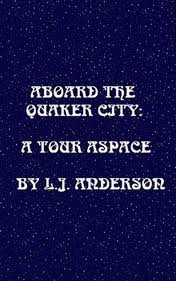
Anderson, Lorraine J.: Aboard the Quaker City: A Tour Aspace (2011)

uten navnI am finding myself having quite a bit of fun with Lorraine Anderson’s short stories. Aboard the Quaker City is another addition to my enjoyment.

Aboard the Quaker City is basically about a guy who meets an ex while stuck on a cruise in space. It is completely absurd yet sweet. Anderson manages to compress imperialism and prejudice into 22 pages of unbelievability. Yet this is all stuff that I observe in pople almost every day. Granted, we do not have gills nor do we go on cruises around the galaxy (unless you count the Earth as a space ship), but we really are silly.

Enjoy.

Flagg, Fannie: Welcome to the World, Baby Girl! (1998)

Fannie Flagg is four years younger than my mother and six years younger than my dad. As such, many of their experiences have been similar. Technological advances have followed the same tempo even though they are from different countries.

Cover photo: Elliot Erwitt/Magnum

The jump between the media world in the 1940’s, represented by Aunt Dorothy’s radio program, and the media world of the 1970’s, represented by Dena Nordstrøm’s television job, is immense yet non-existent. Gossip and social mores are often more important than politics and the “larger” issues.

Once again Fannie Flagg takes us to the lives of people living in the South of US. This time we visit Missouri and the phenomenon “passing”. Racial passing refers to a person classified as a member of one racial/social group attempting to be accepted as a member of a different racial/social group (Wikipedia).

It is one thing for me as a whiteish woman to sit here wondering at a world that makes so many of its citizens feel they need to hide their origins. To me it is an abstract exercise. For others it is not. People (probably myself included) attach shame to attributes that come with birth (whether these be physical or sociological). Imagine the fear of discovery of that “terrible/uncivilised/evil/…” quality. Sometimes these fears are founded and sometimes (fortunately) they are not.

Unravelling the mysteries of the past brings about surprises and feelings of betrayal, loss and love with the characters of Welcome to the World, Baby Girl! Fannie Flagg gives us an opportunity to face our own prejudices in a manner that brings us into the world of gossip and suspense that media is (whether it be new or old). As with Fried Green Tomatoes at the Whistle Stop Cafe, Welcome to the World, Baby Girl! is “utterly irresistible” (Time). You will miss something truly wonderful if you choose not to read this novel.

Aaron, Rachel: Spirit’s End (Eli Monpress) (2013)

Cover art by Sam Weber

The final story about our reluctant hero, Eli Monpress, is here in the form of Spirit’s End.

I really cannot tell you why, but there is just something about this cover that doesn’t work for me. It fits with the story and everything, but I’m not really into it. Oh well, personal taste and all.

The story is another matter all together. Rachel Aaron has nailed the ending of the Eli Monpress saga in the novel Spirit’s End. Eli is everything we have gotten used to. Still playful, creative and fiercely desiring to be free of the Shepherdess, Eli takes us on a journey that lets us get to know the Lord of Storms better and the make-up of his world.

Miranda is thrown into the role of Rector for the Spirit Court and her work is challenging, to say the least. As usual she suspects Eli of having devious goals. Her suspicions are based on experience, so they could be correct. Banage is arrested by his ex. Eli is arrested by his mother. That Eli’s mom and Banage’s ex happen to be one and the same person is kind of funny and all part of a cunning plan on Sara’s part. Joseph is king and HATES it while Nico acts as his companion. Nico is an interesting character. Possessed by a demon seed, she is now more demon than human. All the same, her human side rules the relationship.

I’ve reviewed The Legend of Eli Monpress and The Spirit War. Spirit’s End fits nicely with the other two books and carries with it the same carefree, yet serious character of the other two novels. Rachel Aaron has done a good job in portraying the world of Eli Monpress.

Rowland, Diana: Touch of the Demon (2013)

Cover art: Daniel dos Santos

Diana Rowland keeps on getting better by the book. Touch of The Demon is the best novel thus far in the Kara Gillian series. We have arrived at book no. 5 in the series and have at least one more to go. The other four are: Mark of the Demon, Blood of the Demon, Secrets of the Demon and Sins of the Demon.

The cover is taken from one of the scenes in the novel. This scene is one of the more action-filled ones. Action is something Touch of the Demon has plenty of. There is everything from snow-ball fights to flesh-carving. Some of the violence is quite explicit and so is some of the sex.

When Kara gets stuck in the demon realm, she discovers that her pre-conceptions about demons are quite faulty. I guess we all experience that when we are faced with the objects of our prejudices. Often, we have to revise our point of view. Some of us do it well, while others have to struggle. Kara struggles with the way she views the motives behind various actions.

Another thing I enjoy about Rowland’s writing is the way she deals with concepts of friendship and loyalty. What is friendship? Is it possible to be friends in spite of being from different races? How do you deal with betrayal of epic proportions? Reading Touch of the Demon will answer how Kara views these issues.

Rowland’s writing is tighter than ever and her text is reaching the point of flowiness that I claim is necessary for the exceptional writer.

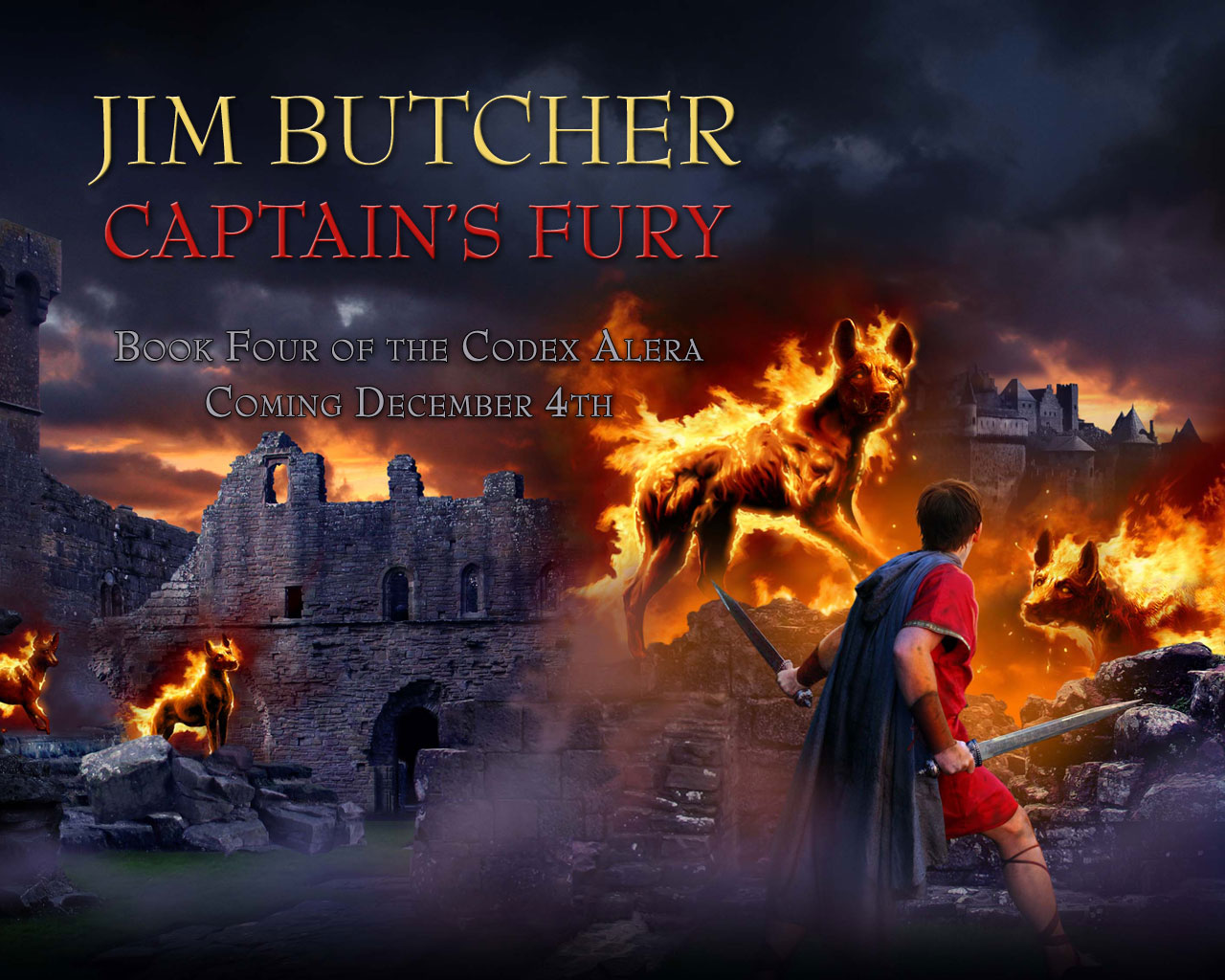
Butcher, Jim: Captain’s Fury (The Codex Alera IV) (2007)

Jim Butcher‘s series, The Codex Alera, is well worth a read. Captain’s Fury is book number four in the series. In it we meet a Tavi two years older from who he was in Cursor’s Fury.

The hard work that Butcher puts into his books shows. He himself says that being and author is about work, work, work and not giving up even if you are rejected.  I guess I must have been wrong about the Muses just dropping into people’s heads and taking over their hands.

I love it when I can tell that an author has worked for my pleasure. How selfish is that? However selfish, it is true. There is just something incredibly wonderful about an author that takes hold of me and brings me into their text.

That is the kind of author Jim Butcher has become.

Tavi is yet a couple of years older. As a character, Tavi is a warm-hearted person. Somehow he feels that friendship is possible with everyone and works toward that end. Unfortunately, not everybody agrees With that point of view. Senator Arnos is one such person. His goal in life is to destroy Tavy but also to destroy the Canim with what he considers Aleran superiority. Boy is he in for a surprise.

Sadly, Tavi will be impacted (in the shape of Captain Rufus Scipio) by Arnos’ scheming and Tavi’s captaincy hangs in a thread. When Tavi discovers who he really is, his life is not made any simpler.

The First Lord is quite a schemer himself. He knows that he is more or less alone in his battles and seeks a quick resolution to the problem of Kalare. That means that Gaius will have to og undercover and absent himself from the political infighting in Alera. To assist him in his quest, the First Lord brings along his faithful Amara and her Bernard.

——————————

My reviews of books  1 (Furies of Calderoon), 2 (Academ’s Fury), 3 (Cursor’s Fury), 5 (Princep’s Fury) and 6 (First Lord’s Fury)

Bishop, Anne: Ephemera

Musical writers. What a treat they are. Anne Bishop is one such writer, one who knows how to make all of her chords fit together into a song that satisfies the reader. She manages to portray the darkness in people without stepping into the land of horror. I love dark fantasy when it is performed like this.

Like all of Anne Bishop’s stories, Ephemera is character driven. Generally two or three of them are three-dimensional, while the rest end up complementing the main characters. Ephemera comes from an idea of our outer world reflecting our inner one. What if that were literal? Playing with that idea brought about the Ephemera world (Reading Cafe interview). As we discover in reading these books, the world of Ephemera is ephemeral (transitory). One can never know where one ends up, seeing as one’s heart shows the way.

SEBASTIAN (2007)

German cover

“Long ago, in a time that has faded from memory, a mother’s tears forged the bridge that, ever after, connected the power of the living, ever-changing world to the human heart. – Myth”

Sebastian is a love story, but more than that it is a story about the choices we make. Do we dare to follow our dreams, or will we make “safe” choices? In the end it might not really matter, because the choices we make could very well all be the ones we really want.

Sebastian is an incubus, an incubus who has begun longing for something more than the life he is living right now in the Den of Iniquity. The Den of Iniquity is a place of ever-lasting carnival, a place where people come to fulfill those dark desires they have.

You can relax if you are worried that we are being cast into a place where the sex and violence is explicit. While the Den of Iniquity might well be a place where that is the case, Anne Bishop has been kind enough to keep us as readers away from the details.

Anyways, back to Sebastian. The Den of Iniquity has been his home since he was about 15. His past was not a good one with a succubus mother and wizard father. Sebastian’s mother left early on and his father left Sebastian’s care to others, people who were afraid of incubi. But Sebastian has turned out pretty well, thanks to Nadia, Belladonna and Lee (adoptive family). They have shown him that there is sunshine in a person. Now he wants someone to love.

BELLADONNA (2008)

Australian cover

“Heart’s hope lies with Belladonna.”

The Eater of the World is once more loose in Ephemera, free to wreak havoc where it sees fit. Dreams are invaded, monsters set free and lives are becoming darker due to its influence.

The only hope lies with Belladonna. Glorianna Belladonna is of the old blood, the blood of the Guides and Guardians. Her heritage is one of light and darkness. Only through the combination of the two is there a possibility of winning.

Unfortunately, Belladonna and Lee do not have all of the answers to her search for a solution to the Eater. She sends out a Heart’s Wish to Ephemera with the hope that someone will come with what she needs to save Ephemera.

In a sense that says it all. What price are we willing to pay to save the ones we love? I have no idea myself. In the world of fantasy people are willing to go to extremes to save the world and not just those close to themselves. Sometimes the price could end up being horrendous.

BRIDGE OF DREAMS (2012)

Australian cover

Anne Bishop pulls it off again. This time we get to hear more about Lee.

Ever since Glorianna Belladonna became Belladonna in every sense of the word, Lee has been frustrated, hurt and angry. Part of his anger is at Glorianna for placing herself in this position and for not going back to how she was previously. Another part of his anger is toward Michael, the Magician, for giving Belladonna the chance to make her choice, and for stopping him when Lee wanted to jump in and save her. Quite a bit of his hurt is toward the relationship that has developed between Michael, Glorianna and Sebastian. Why was Sebastian the one to call Belladonna back and not Lee? It seems unfair. Lee feels unwanted, and unable to come to terms with the way things have turned out.

When he stumbles upon wizards trying to invade one of Belladonna’s landscapes, Lee uses a one-shot bridge taking the wizards with him. He ends up in a city called Vision having to endure torture and the insidious whispering of the wizards.

Danyal, the Shaman, is sent to Vision to figure out what needs to be done to save the city from those places that no Shaman is able to see any longer. Shamen are like the Landscapers in that they take care of their landscapes. But unlike Landscapers they do not seem to have access to Bridges. Upon meeting up with other ways of doing things, Danyal is about to have his beliefs about the world challenged.

So, what can I say about Bridge of Dreams? I liked it. I like Anne Bishop’s version of the darkness that lives in all of us. Our shadows balance out the light in us. When we accept both sides of ourselves our potential becomes greater. All three books in the Ephemera series (trilogy?) follow the pattern of Anne Bishop’s other novels. I guess most authors have a unique style of writing (much like musicians), and sometimes that style works. In Bishop’s case I find myself embracing and enjoying her characters. Getting people to care about the characters in a novel seems to be what being an author should be about.


SOURCES


TRAILERS

Briggs, Patricia: Raven duology

“Traveller’s Orders” by Robin Walker

RAVEN’S SHADOW (2004)

Prejudice and fear seem to be recurring themes in Patricia Brigg’s novels. Raven’s Shadow is no exception. In this instance, the Travellers are the persecuted people. We see instances of this today. In general there seems to be a lack of trust towards people who do not stay in one place and become part of the community. It makes it a whole lot easier to blame them for something, as our links to them won’t be a strong as they would be towards a neighbor. Such is the world of Travellers in Briggs Raven duology.

Tier and Seraph are our two main protagonists in Raven’s Shadow. We meet Tier as he is on his way home from the war. Tier is a rebel. His father was a baker and the expectation was that Tier would take over the craft. But Tier wanted to see the world and did that. Unfortunately, he also ended up disillusioned about the state of the world.

As he enters a village he see a large bon-fire in the town square. A Traveller was burned suspected of using magic. Inside the town’s inn the citizens have joined in drinking to their “brave deed”. Left behind is a young woman. The innkeeper has decided to sell the girl to the highest bidder. Tier ends up buying her, Seraph a Raven traveller who has no reason to trust Tier. This is the beginning of the journey of Seraph and Tier, a journey fraught with danger and betrayal – you know the spiel. I liked both Raven’s Shadow and Raven’s Strike. While not complicated, they are easy to read.

Raven`s Strike

“Traveller’s map” by Michael Enzweiler

RAVEN’S STRIKE (2005)

Tier has been rescued and the family is taking it easy on the way home from the Capitol after the run-in with the wizards. Part of the way, they have chosen to travel with Benoin and his tribe. On the way they come to a village where a shadow creature has killed some of the villagers. The creature is taken care of, but the family soon realises that it is just a symptom of what is happening in the land.

At the same time, Tier seems to be having trouble recovering his magic. It seems to be fraying and drawn away from him. Seraph cannot figure out what the problem is, but slowly the family is being led to the ancient city of Collosae – the city where the Travellers came from.

Raven’s Strike gives us more background information on the Travellers and their roots. This background information turns out to be vital to Tier’s ability to solve the puzzle. The romance between Jes and Hennea takes up a bit of space.

Raven’s Strike tied up a few loose ends and was a good follow-up to Raven’s Shadow. They are both typical examples of Brigg’s writing: light, fun and accessible.

Briggs, Patricia: The Hob (2001)

We humans are a fearful lot. If anything or anyone differs from the accepted norm, most of us will find some way to avoid that thing or person. Sometimes we’ll use the opportunity to bully and taunt the person exhibiting “strangeness”. The Hob’s Bargain illustrates this ability to pretend that we know how the world should be, even if that means hurting someone we love.

Aren’s (our protagonist) family is not excepted from this. They have an hereditary clairvoyant ability that sometimes expresses itself in a more magical one. That makes them fodder for the blood magicians – who feed on death. Aren’s brother was wanted as a magician by those in power, but he did not want to consequences of such a choice. Rather than have his death be used by the blood magicians, he chose to suicide.

You can imagine this has affected Aren. It seems she is beginning to experience visions, making her worry about her new husband. When the cottage is broken into, she manages to hide in the food cellar, but Aren knows something is terribly wrong.

While hiding in the cellar, Aren suddenly feels a change in the way magic feels. Something has broken, but she has no idea what – being too busy surviving, and all. From that point on Aren’s visions are clearer and the first one concerns the death of her father and husband. Turns out her whole family is gone. Now Aren has to deal with her grief, her out-of-control magic and the changes in the land and her neighbors.

Briggs, Patricia: Alpha and Omega series

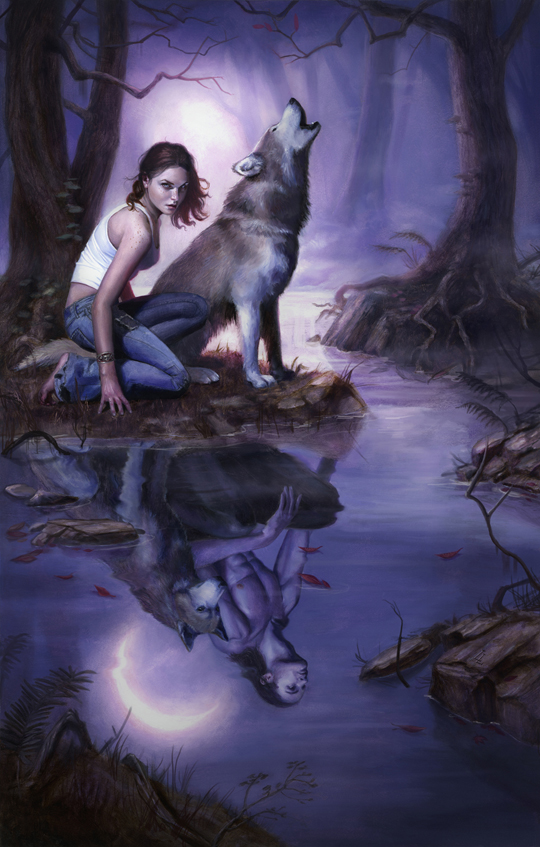
Patricia Briggs books fall into the light-reading fantasy section. Her books are fun and easy to read. In the Alpha and Omega novels we meet werewolves and witches, vampires and fae, all capable of wickedness and heroic deeds. As usual in such tales the characters tend to survive the most amazing things. There is plenty of humor, some romance and lots of action in this series. The Alpha and Omega series has been set in the same world as the Mercy Thompson series.

Bran – the leader of the werewolves (Marrock) in the US lives in the hills of Montana. He has two sons, Samuel and Charles. We’ve met Samuel already in the Mercy Thompson books, although he does make a brief appearance in his function as a doctor. Charles is Bran’s other son. He has been born a werewolf, not something that should be possible. Charles is Bran’s assassin. If a werewolf steps out of order, it is his job to take care of the problem. His ability to remain cool and collected while killing is one of the main reasons for having such a job.

CRY WOLF (2008)

“Cover for omnibus” by Lindsey Look (Stunning cover)

Anna, Charles’ mate (to her surprise), has been living with a pack in Chicago. The other werewolves had been abusing her severely. When that came to the attention of Bran, Charles was sent to take care of the matter. That led to Charles and Anna’s wolves recognizing each other as mates. Anna is brought to Bran’s pack to live with them.

Walter Rice, a Vietnam veteran, lives up in the Cabinet Wilderness in Montana. One day he witnesses the attack on a young man and steps in to protect him. Rice ends up being mauled, but survives. When other mysterious deaths occur in the area a rogue werewolf is suspected and Charles is asked to look into it. He and Anna go.

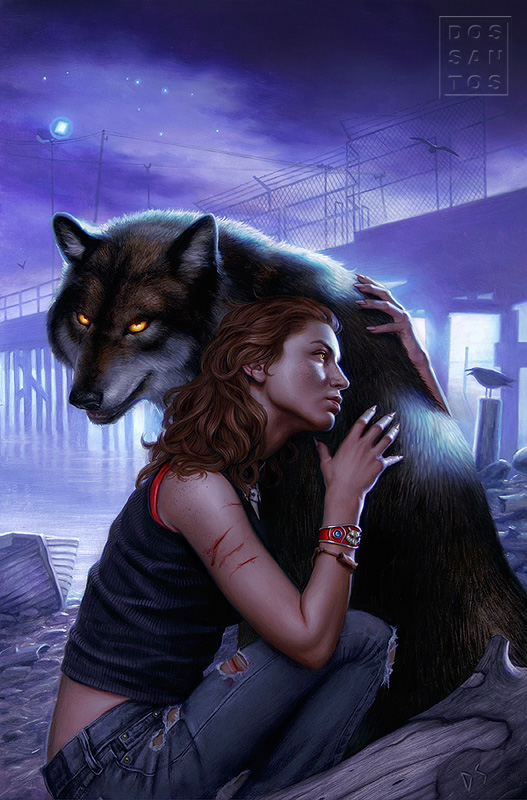
HUNTING GROUND (2009) – Nominee for the Endeavour Award – for best book by a Pacific Northwest writer 2010

Cover by Dan Dos Santos

Charles is trying to convince his father to stay away from a convention of werewolves in Seattle. He feels his father will be in unnecessary danger from the European delegation. Charles’ intuition is acting up. Being an Omega, Anna is able to stand up to Bran without his Alpha influence taking over. After she has yelled at Bran, he is able to listen to what the two have to say.

Bran accepts Charles’ feelings and sends Charles and Anna instead as his representatives. Together they are to try to convince the other delegates of the need to go public. The other delegates aren’t exactly thrilled at the idea of going public. Here we see that the timeline is a bit back in time from the Mercy Thompson series. There the decision to go public has already been made and Adam is the werewolves’ outward face.

In Seattle people are being found dead and mauled. When Anna is attacked by vampires using werewolf tricks and magic, Charles has to figure out how to save the situation without getting killed by former lovers and new enemies.

FAIR GAME (2012)

Young Leslie has moved to California with her father. There she ends up in the capable hands of Mrs. Cullinan. When animals and children start disappearing (even Leslie’s new puppy) three people turn up at the neighbors and take her away. The neighbor and the three new people turn out to be fae. When one of them offers Mrs. Cullinan a favor as thanks for her warning, she says no thanks. Instead Leslie ends up being the one owed. But having learned that the fae were powerful and charming and that they ate children and puppies, Leslie was not eager to cash in her favor.

Fair Game is set a while after Hunting Ground but shortly after River Marked. Charles is struggling in his capacity as an assassin and Anna seems the only one capable of seeing it. She keeps on confronting Bran about it, and only Omeganess keeps her from shaking in her shoes. Because of the new rules, Charles no longer feels he is dispensing justice but rather murder and this is causing ghosts to haunt him.

When the FBI call the Marrock for help in solving a spree of murders, Bran chooses to send Charles and Anna to take a look. Anna gets to play good guy and Charles her bodyguard. In Boston Anna meets Leslie and they get to test each other’s intentions.


Alpha and Omega: Cry Wolf Graphic Novels published 2012 by Dynamite. Adapted by David Lawrence,  illustrated by Todd Herman with additional art by Jenny Frison and a cover by Dan Dos Santos.

Kirstein, Rosemary: Steerswoman

The Steerswoman's roadI have one complaint about the series – Where is the next book????? My goodness, this series was riveting. Kirstein needs to keep on writing – well, actually, in all selfishness, I need her to keep on writing. I think this was my third read-through and I was still captured by the writing and held prisoner until the end.

THE STEERSWOMAN’S ROAD (2003)

Rosemary Kirstein Steerswoman’Road is an omnibus containing The Steerswoman and The Outskirter’s Secret. In it Kirstein tells the story of the friendship between Rowan, the Steerswoman, and Bel, the Outskirter. Rowan and Bel meet right at the beginning while they are both about their own business. Bel has been travelling with other Outskirters and Rowan has been investigating strange blue jewels that are neither cut nor dug up.

Steerswoman are men and women who travel around the land asking questions and answering them. One must tell the true answer to any question and the Steerswomen must also do so. If one refuses to answer a Steerswoman, they can ban you. That means that no matter what the question you ask is, they will not answer it. Strange rule, but as knowledge is their whole purpose perhaps not.

Rowan’s questions about the jewels seem to have stirred up interest from the wrong parties. Thankfully, she and Bel have decided to travel together for a while because the next day brings an attack. From that point on there is tension, action, betrayal, discovery, friendships and travel. In fact, Rowan’s search for the truth of these blue jewels brings her into the Outskirts.

The Outskirter is about this part of her journey of discovery, and The Outskirter is just as exciting as The Steerswoman. The Outskirters are nomads who live at the border of where people can actually survive. Every day for them is about destroying and seeding the land so humans can live there. Steerswomen are unfamiliar territory to the Outskirters, yet Rowan manages to gain their trust and help them in her own way. The importance of her work becomes clearer and clearer as the role of the wizards in the attacks on Rowan begins to make a strange sort of sense. Rowan is also beginning to realize that perhaps wizards aren’t quite as wizardly as she had thought.

We as readers should have started realizing this long ago. What does not make sense to Rowan and the regular citizens of both the Outskirts and the Inland does to us. This is a science fiction series that to begin with might seem to be a fantasy one. Quite a few science fiction books are like that. The meeting between different sorts of technologic knowledge can, after all, make it seem like magic is afoot. Pressing a button on the wall to make light in the ceiling is pretty magical if you ask me – and I know how it all happens.

The Lost SteersmanTHE LOST STEERSMAN (2003) – 2004 Locus Science Fiction Award Nominee

Rowan and Bel have parted ways (on friendly terms). Bel is in the Outskirts spreading the bad news, and Rowan has ended up at the Annex in the town of Alameth looking for more information about Slado and the wizards. The Annex is a mess. Mira, the last Steerswoman living there, had not cared one whit about her duties. She was tired of being a Steerswoman and left everything a mess when she died. Now Rowan has to try to find desperately needed information in this chaos. On top of that the townspeople have problems accepting Rowan because she is so different from Mira.

When Rowan meets Janus, a Steersman who resigned the job and was considered lost, she is happy and confused. He was one of her oldest friends and Rowan finds the ban on him difficult in their conversations. After a while, Rowan begins to suspect that things are quite complicated with Janus.

The Lost Steersman is every bit as suspenseful as The Steerswoman’s Road. Kirstein keeps the standard of her writing amazingly high. It goes against the grain, but I think I’m going to put her along with Pratchett. Their styles are completely different. However, they both manage to involve me as a reader in some very serious topics with skills beyond anything I could aspire to.

The Language of Power THE LANGUAGE OF POWER (2004) – 2005 Locus Science Fiction Award Nominee

Rowan and Bel are once again together in their adventures. The Outskirts have been warned and Rowan is finally beginning to get somewhere in her search for the answers to Slade. All roads lead to Rome, it is said. In the Inlands, all roads seem to lead to Donner. To Donner Rowan and Bel go and there they unexpectedly meet Will – our lovable wanna-be apprentice – from the first book.

Will is on the run from Corvus, trying to hide in Donner and looking for revenge on the wizards. Rowan and Bel are overjoyed at meeting their old friend and seek to help him in his quest. But, as would be expected from an adventure novel, things never turn out as one would wish. Will is surprised at Rowan’s grasp of “magic”. Because he knows so much more about science than she, he tends to be a bit overbearing with her. Just because she doesn’t have the background Will has, certainly does not mean that she is without the ability to infer and deduce. After all, her whole life has been about the quest for knowledge – a true addict.

Unfortunately the next book in this series has not come out yet. Aaaargh. Please, Kirstein! We need the next installment! I love the intelligence and wit of Rosemary Kirstein. She actually expects me as a reader to think and doesn’t divert my attention with loads of sex and violence. Sex and violence can be fun, but this is sooooo much more thrilling.

Colfer, Eoin: Artemis Fowl

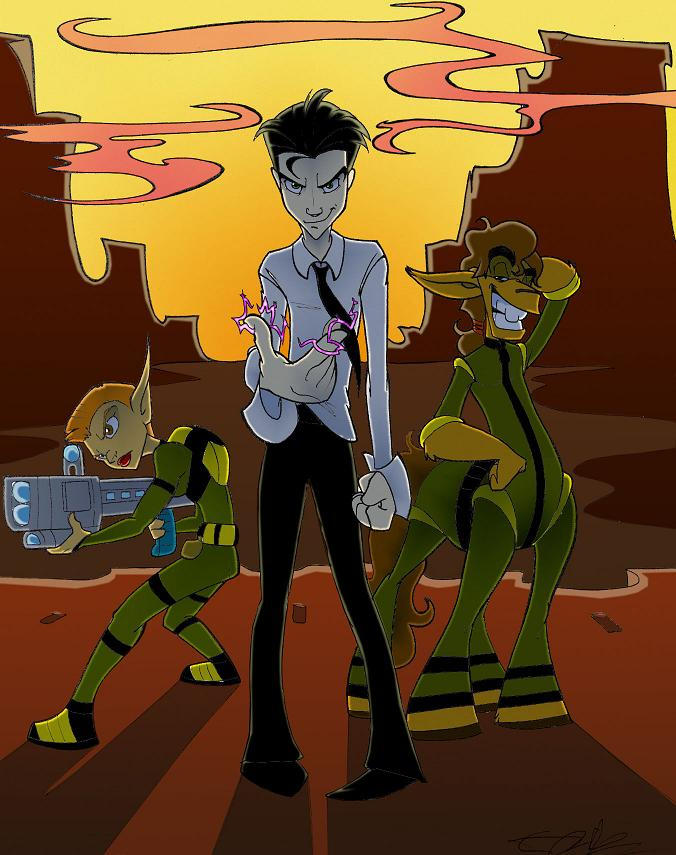
Artemis Fowl II
Artist: cat-cat (Catherine Wu)

I started reading Artemis Fowl  to my oldest son until he got into the whole reading thing himself. Once there, he took over and went through the books below. After I’d thoroughly brainwashed him, I set out to do the same with my youngest – first by reading to him and then through audiobooks. Audiobooks are a miracle for dyslectics. A dyslectic brain is just as brilliant as any other brain, it’s just the whole sorting letters into the right order thing that baffles them. Needless to say, I managed to convert my youngest as well. You’ve probably guessed by now that I’m a fan of Eoin Colfer’s creation of the less than legal character of Artemis.

Artemis Fowl II is the main character of Eoin Colfer’s Artemis Fowl series. Artemis is a teenage criminal mastermind on the lookout for enough gold to restore his family fortune. He considers himself fairly wicked, but as the series progresses we see that there is plenty of good deeds to balance the bad. My kids loved all of the tricks he played on both his friends and enemies. We have not read it yet, but the conclusion to the series was released in July 2012 – The Last Guardian.

ARTEMIS FOWL (2001)Young Readers Choice Award 2004

Artemis Fowl Chinese cover
Chinese cover

Eoin Colfer begins our journey into the world of Artemis Fowl II in the novel Artemis Fowl. Some of the characters we meet will appear in all of the novels while some of them we’ll only see in a few of them. His faithful bodyguard, Butler is one of the characters that will appear again and again.

Artemis is 12 years old. His father is an Irish crime lord, Artemis Fowl, who has disappeared. Through research Artemis thinks he can prove the existence of faeries and when he tracks down The Book of the People he has his proof.

Artemis decodes the book – only natural for someone of his genius – and travels the world looking for locations for a magic-restoring ritual. They discover and capture Captain Holly Short who is out restoring her magic. Holly is then brought to Fowl mansions. The faeries are not pleased with Artemis and sends a crack team (LEP) to recover her.


A graphic novel adaptation was released in 2007. A film adaptation was reported to be in the writing stage in mid-2008, with Jim Sheridan directing.


AWARDS:

  • W. H. Smith Book Award
  • British Book Award
  • Whitbread Book of the Year Award: Shortlist
  • Lancashire County Library Children’s Book Award: Shortlist
  • Bisto Book of the Year: Shortlist
  • New York Times Best-Selling Series
  • Massachusetts Children’s Book Award Master List (2003)
  • Bulletin of the Center for Children’s Books Blue Ribbon Award (2001)
  • New York Times Best-seller
  • Publishers Weekly Best-seller
  • Texas Lone Star Reading List (2002-2003)
  • Book Sense Best-seller
  • USA Today Best-seller
  • ALA Popular Paperback for Young Adults (2002)
  • Garden State Teen Book Award (2004)

THE ARCTIC INCIDENT (2002)

Disney; Reissue edition (April 27, 2010)

In The Arctic Incident, Artemis is a year older (13). We once again meet Butler, Captain Holly Short and Commander Julius Root.

Artemis is set up to take the blame for supplying contraband to goblins. When Artemis and Butler defeat the real baddy, the LEP decides to help Artemis recover his father from the Russian mafia. The rescue group is ambushed by goblins.

It becomes apparent that Opal Koboi of Koboi laboratories is involved somehow, leaving it to Artemis and Holly to figure out how to save the day – both for Artemis’ father and the LEP.


A graphic novel adaptation was released in 2009.


Book Magazine Best Book of the Year 2002


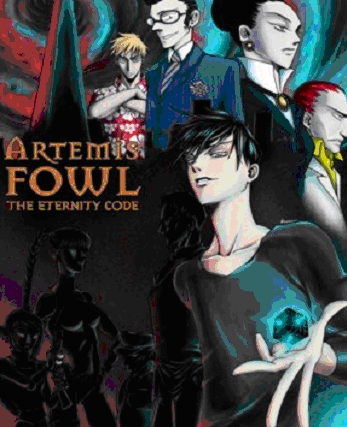
THE ETERNITY CODE (2003)

Cover art by Rowein

The story in Eternity Code happens shortly after the Arctic Incident. While Artemis has changed somewhat since the first book, he still loves to scheme and steal from the fairies. Artemis has created a supercomputer which he calls the “C-Cube”. It gets stolen and in the process Butler is killed. However, Artemis comes to rescue – along with a bit of fairy magic.

Artemis convinces the fairies to help him recover the Cube and they agree – but with one condition. Artemis is to be left with no memory of the fairy world.

THE OPAL DECEPTION (2005)

“Opal Koboi and her assistant” by Jisuk Cho

Our lovely Opal Koboi (from The Arctic Incident) has gotten away from the asylum where she was being held by the LEP.

She then sets out to revenge herself on Commander Root, Captain Short, Artemis and Butler.

Holly is desperate for help and turns to Artemis – against the wishes of the LEP. The only problem is that Artemis is left with no memory of the fairy world.

While Artemis likes to think of himself as someone who chooses to do bad, it turns out he is a softy after all. He is still full of trouble and deviousness, but it is difficult to come out of reading the book and not liking Artemis. Mulch provides all the laughs a kid could need.

THE LOST COLONY (2006)

“The Lost Colony” by Tanya Roberts

Artemis and Butler are demonhunting. He is somehow able to predict when a demon materializes. This comes to the attention of our trusted Foaly. This brings Holly and Mulch (who now have their own PI business) into the story.

In the meantime, there is trouble on Hybras (demon island where time is nonexistent). However, it seems that the spell holding Hybras in stasis is fraying and an answer to the problem is needed. Bullying is a favorite pastime, and No1 is one of the victims. He is convinced to come to the human world.

Right now, its glaringly obvious that everyone is going to meet – probably with a huge bang somewhere. The Artemis series does have a habit of loads of action and humor. Thankfully Colfer is keeping up the good work.

THE TIME PARADOX (2008)

The Time Paradox by Brittany

When Artemis’ mom contracts a fatal disease, Artemis turns to the fairies for help. Unfortunately the only cure to the disease is through the silky sefaka lemur of Madagascar. It is extinct. The last specimen was killed 8 years ago with the help of Artemis. Talk about the past coming back to haunt you.

Through lies and deception, Artemis gets the fairies to help him time travel. The goal is to save the lemur – hopefully for good. Holly and Artemis go back in time and need to avoid their younger selves.

Everything has a price, so too Artemis’ lies to Holly. Colfer portrays this rather well. He also brings up the issue of the cost of abusing our environment. I find myself wanting to preach here, but The Time Paradox does a much better job of illustrating the issue.

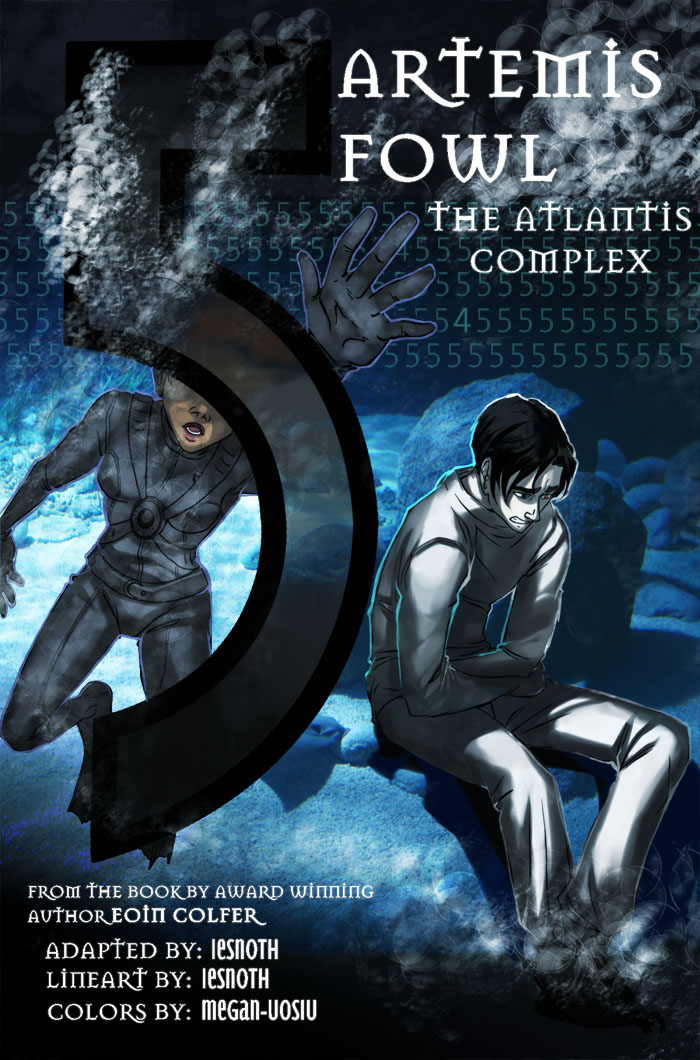
THE ATLANTIS COMPLEX (2010)

Cover art by iesnoth

One of the consequences of The Time Paradox is that Artemis is left with a clearer sense of responsibility toward the environment.

When Artemis unveils the Ice Cube – an invention to stop global warming – the fairies discover that Artemis has developed something called Atlantis Complex (including OCD, paranoia and split personality). Artemis has a break-down during the presentation. Holly and Mulch are left taking care of things, while Artemis is dealing with his episode.

In the meantime, Butler is on an adventure in Mexico. Artemis tricked into travelling to help Butler’s sister. Turns out it was a good thing after all.

Pratchett, Terry: The Watch/Vimes

Streets of Ankh-Morpork (wow)

Samuel Vimes is a beautiful character. He grew up in Cockbill Street, the poorest area of Ankh-Morpork. They were so poor that while they had practically nothing to eat, at least their floors were clean enough to eat off. Getting into the Night Watch was quite a change for Sam. Now he had money for food. Being a guard runs in Vimes’ family. In fact one of his ancestors, old Stoneface, beheaded the last king of the city. Vimes’ worldview is that everyone is guilty of some kind of crime.

Guards! Guards! (1989)

[nightwatch.jpg]Nobby, Colon, Carrot, Vimes and the Librarian by William Bradford

Our first proper meeting with Captain Samuel Vimes occurs with him falling over drunk into one of Ankh-Morpork’s streets. It had been a hard day for the Watch. Poor old Herbert Gaskin had broken one of the fundamental rules of being a guard. He forgot to run away from trouble. Now the most despised group of men in the entire city consisted of only three men: himself, Sergeant Colon and Nobby.

In the meantime a young man is heading for the city with “all the openness, sincerity and innocence of purpose of an iceberg drifting into a major shipping lane.” Carrot is the name of this young man, due to the color of his hair but also due to the shape of his body. One day at sixteen his dad sat him down and told him he was not the six-foot dwarf he had always thought he was. Human was his race. His dwarven parents had in fact found him in the woods next to a burned out carriage. Now it is time for him to depart and seek his fortune as a watch-man in Ankh-Morpork. With him his father sends a sword, a dwarven woolen shirt, a golden cod-piece and The Laws And Ordinances of The Cities of Ankh and Morpork.

The Unique and Supreme Lodge of the Elucidated Brethren of the Ebon Night have a plan to overthrow the Patrician. They are going to summon a dragon. Against all odds they actually succeed in calling one forth. It turns out that this is a double-edged sword. Now that they have called the dragon forth, the dragon figures out a way to get back on its own.

One of the themes that we will encounter again and again in the Watch series is the power play between Vimes and Vetinari (patrician). Vetinari plays Vimes like the strings on a guitar. Carrot is the person who manages quite well to live between a rock and a hard place. His literal interpretation of the laws of Ankh-Morpork and his ability to own any situation makes it possible for him to soften Vimes’ explosiveness after meetings with Vetinari.


Adaptations

  • 1992: BBC4 produced a 6-episode serial dramatisation by Michael Butt of Guards! Guards!
  • 1997: Stage play scripted by Stephen Briggs,
  • 1997: Geoffrey Cush’s stage-adaptation,
  • 2000: Comic adaptation of Guards! Guards! Graham Higgins
  • 2011: Board Game by Backspindle Games in conjunction with Z-Man Games

Men at Arms (1993)

Scenes from Men at Arms by Justyna

Edward d’Eath’s father has just died, leaving him the thirty-seventh Lord d’Eath and an assassin to boot. Unfortunately his father had not left Edward any money. Quite a single-minded person whose belief in a King as ruler of Ankh-Morpork was quite fervent. Coincidentally, he stumbles upon Corporal Carrot, who just happens to look like one of the old Kings. Edward sets about trying to get Carrot and kinghood into fashion.

Captain Vimes is retiring from the police to marry Sybil Ramkin, Countess and the richest woman in Akh-Morpork. He is about to become one of the posh, a gentleman of leisure. But Vimes is finding it difficult to let go of policing.

Thankfully, an important artifact disappears from the Assassin’s Guild. The mystery must be solved. But the Assassin’s Guild aren’t interested in help from the Watch. Vimes loves the chase and the opportunity to get out onto the streets again. The chase after the weapon/artifact turns out to be both challenging and bloody.

Gaspode the wonder dog makes his appearance in Men-at-Arms. Gaspode the talking dog (too much time at the UU can change someone). He is rather keen on Angua (the werewolf).

In Men-at-Arms Pratchett plays with our biases. Here we get to see racism in all its “glory”. Even though the cops in the Watch are only supposed to be cops, they still have to overcome biases towards each other. Like so many others of the Discworld books, Men-at-Arms looks at the power of belief. We get a look at what that belief makes it possible for people to do.


2000: Stage adaptation of Men At Arms by Stephen Briggs

Feet of Clay (1996)

  • 1996: Winner of SFX award for best SF/Fantasy Original Novel
  • 1997: Nominated for 1997 Locus Awards – best Fantasy novel

Warhammer’s miniature grouping

Commander Sir Samuel Vimes is shaving, thinking on the horrors he has to face as a gentleman. People doing things for him, formal dinners and not being able to sit with the servants any longer playing cards and drinking beer. And then: “There was a flicker in the glass. He moved sideways and ducked. The mirror smashed. There was the sound of feet somewhere beyond the broken window, and then a crash and a scream.” The Assassin’s Guild are at it again. Some of the other gentle-people of the city do not want Vimes alive, and the Assassin’s Guild keeps on trying to do their job.

Captain Carrot has made it through his first two years in Ankh-Morpork. The love of his life is Corporal Angua, a werewolf, whose bad-hair days he takes in his stride. She is quite handy to have around when people want scaring. So when some incredibly thick thieves rob Ironcrust’s Dwarf Bakery she does just that – earning the “respect of the community.”

The body of Father Tubelcek is discovered. The watch have just hired their new alchemist, a dwarf by the name of Cheery Littlebottom. She is sent along to investigate the clues she discovers, of which one of them is a strange light in the dead eyes of Father Tubelcek.

Weirdly enough, it turns out Nobby is posh. He has his own coat of arms and has now become a peer. Poor guy, how is he going to deal with this? With increasing desperation it seems.


Adaptation

2007: Stage adapatation of Feet of Clay by Stephen Briggs.

jingo

Jingo by Marc Simonetti

Jingo (1997)

An Ankh-Morporkian and a Klatchian fisher are both at the scene when a strange island rises above the sea. Both immediately lay claim to the island and this leads to a dispute between Ankh-Morpork and Klatch. The Klatchian crown prince is sent to Ankh-Morpork and diplomacy ensues (kind of). One of the funniest scenes Terry has ever written comes when Vimes has to lead a parade. The whole thing came alive in my head and I almost fell over laughing.

An assassination attempt is made on the prince and the Klatchian embassy declare war against Ankh-Morpork. Vetinari resigns and Lord Rust takes over. He is slightly eager for war and his decision leads to Vimes and the gang ending up in the Klatchian desert.

At the same time Vetinari, Colon, Nobby and Leonard of Quirm take a u-boat ride to the island and then to Klatch. Nobby ends up having the time of his life with “nubile” women. This is also an extremely funny scene. Poor Nobby. But while there is plenty of humor in the foursome’s trip, there is also a serious reason for their trip (obviously since Vetinari is involved).


2005: Jingo stage adaptation by Stephen Briggs

French cover by Marc Simonetti – Simonetti has become my favorite Pratchett artist

The Fifth Elephant (1999)

Uberwald – the land of vampires, werewolves, trolls and dwarves, is becoming restless. Something very important is happening in a few weeks time. A new Low King is being crowned, and that is causing fighting in Ankh-Morpork. With 50000 dwarves living in the city, people are bound to notice that something is going on.

The old grievances between trolls and dwarves have not yet been resolved and large areas are controlled as fiefdoms by vampire or werewolf clans. Into this “suet pudding” Vetinari plans to send an ambassador for Ankh-Morpork, and he wants to send the Duke of Ankh. Cunning man that he is, Vetinari had already spoken to Lady Sybil about it. Vimes knew when he was beaten.

The replica of the Scone (dwarf throne) is stolen from The Dwarf Bread Museum. Vimes finds an aboundance of clues, to many in his opinion. To him it is a stupid crime that does not feel stupid.

Vimes goes off to Uberwald, leaving Carrot in charge of the city. Thankfully, Sybil is along. She will take care of the negotiations, while Vimes will represent Ankh-Morpork in his unique style.

Angua discovers that her xenophobic brother Wolfgang has decided to take over Uberwald. She leaves Ankh-Morpork and Carrot to stop Wolfgang. Carrot makes a difficult choice. He chooses love over duty and goes after Angua. This time Colon is left in charge of the Watch – a recipe for disaster.

The Fifth Elephant follows these three journeys – Vimes and Sybil/Carrot and Angua/Colon as head of Watch.

In a sense, The Fifth Elephant is a love story. Sometimes the choice is between the people we love, duty and tradition. Can we have it all?


2002: Stage adaptation of The Fifth Elephant by Stephen Briggs

Ankh-Morpork found at The Same Old Song (I need help finding the name of the artist – Kidby, Kirby ???)

The Night Watch (2002)

The Night Watch for the most part happens in the past. Through a freak accident, Vimes is thrown back to the time when he was a younger man and new to the Watch. Along for the ride is Carcer, a cold-blooded murderer. Carcer’s goal in the past is to kill Sybil, thereby wounding Sam beyond repair. Sam’s goal on the other hand is to make the city safer from people like Carcer. To do that he has to establish a new identity as his old self cannot know who he is. Luckily/unluckily Vimes assumes the identity of John Keel, his old sergeant. John Keel has been killed by Carcer. Vimes knows that changing the past will also affect his future. There might not be a wife and child-to-be when he gets home to modern Ankh-Morpork. But Vimes is who he is and cannot leave the Watch or his old self in their old shape.

Unfortunately, Carcer joins the Unmentionables. They are the secret police, carrying out the whims of Lord Winder (patrician of the time). This often includes people going missing, torture and terror. Vimes sets out to make life difficult for both Carcer and the Unmentionables.

Would we try to change the past if we could? Many of us probably would. In trying to influence his younger self to be a better copper, Vimes changed himself. But the big lines of the city. Hmmm – read and see. Corruption and incompetence are dangerous qualities in rulers, but also in the ones set to carrying out the rules. So, what happens when Vimes sets out to change his old world, trying to make it a better place?

———————————-

2008: BBC Radio 4 2008 radio adaptation dramatised by Robin Brooks

2004: Night Watch stage adaptation by Stephen Briggs

Thud (2005) 2006 Locus F Nominated 

Dribble the dragon, Samuel Vimes, Sam Jr. by Kiriban

Vimes really, really does not like Vampires. Until now he has refused to have any of them on the Watch. That choice is taken away from him by his “beloved” Vetinari. Sally is employed to assist in the investigation around the death of the dwarven demagogue, Grag Hamcrusher. Apparently a troll is the culprit. Sergeant Angua and Captain Carrot are the other Watch member assigned to the case.

Corporal Nobbs and Sergeant Colon get the job of investigating the disappearance of a 50-foot painting titled The Battle of Koom Valley. The discovery of the disappearance leads to several things happening. Trolls vs. dwarves, assassination attempts, a Kube and the Summoning Dark all lead to Vimes, Sybil, Young Sam, Wilikins, and several members of the Watch going to the Koom Valley where Vimes discovers the secret of the valley.

Young Sam has become the mainstay of Vimes’ life. This will prove essential in keeping Vimes alive and sane. Family is all to him. Vimes’ dedication to peace is strong throughout the book, as can be seen clearly in his fight with the Summoning Dark. Racism is prevalent in the book through the animosity between dwarves and trolls. Once again we are confronted by our own biases. One might even replace racism with religious conflict: Protestant/Catholic (Ireland) or political conflict: Palestine/Israel.

Snuff (2011)

Samuel Vimes and one of his weapons (dragon) by Jan Pospisil(Perfect)

Snuff’s focus is for the main part on Vimes and his family. Lady Sybil makes him take a family vacation to her mansion Crundells. Of course Wilikins comes along. Here all is peaceful and Sam is enjoying being able to concentrate on being with his wife and son. But that is not the way things stay. The house-staff seems to hate Sam and Vimes nose is itching with the smell of wrong-doings.

Samuel discovers a grotto of goblins living nearby. For some inexplicable reason the local gentry seems to hate/despise/revile the goblins and treat them as disposables. When the murder of a local blacksmith occurs, all of a sudden the whole country side is involved. On his side, Vimes has Sybil, Wilikins, a young police officer called Upshot and the goblins. Against him are Lord Rust (who has interests in the area) and most of the local gentry and quite a few of the peasants.

It’s time to call in the cavalry. While he has no jurisdiction at Crundell, Vimes is able to ask his people to investigate certain aspects of his discoveries. The Watch does not play a large part in Snuff, but they are present.

I was touched by Snuff. In a sense I felt as though I was saying goodbye to Samuel Vimes, Duke of Ankh-Morpork and Commander of the Watch. Pratchett writing has gotten darker as the years have passed for the Discworld. The topics are no longer solely focused on making fun (in his gentle way) of current sci-fi and fantasy fashions, but very much on personal development and the conflicts people meet in life. The slavery of the goblins in Snuff very much reminded me of the slavery that has gone on and is going on in the world. Somehow people find it in themselves to treat others as nothing. Rising up to fight this slavery, both on a large and a small-scale is incredibly difficult. Thankfully Pratchett always leaves us with a sense of hope that things might get better.


SOURCES: